Established under Government Decree No. 15/CP on December 9, 1992, Bach Long Vi Island District is known as a living maritime landmark in the Gulf of Tonkin, holding vital importance for Vietnam’s national defense and security. In this guide, VDS Travel introduces readers to Bach Long Vi Island.
About Bach Long Vi
Under Vietnam’s sovereignty, Bach Long Vi is the farthest offshore island in the Gulf of Tonkin. Serving as a key frontline island of the nation, it sits within one of the eight major fishing grounds of the Gulf of Tonkin—holding strategic value for economic development as well as special significance for safeguarding maritime sovereignty, defense, and security in Vietnam’s waters.
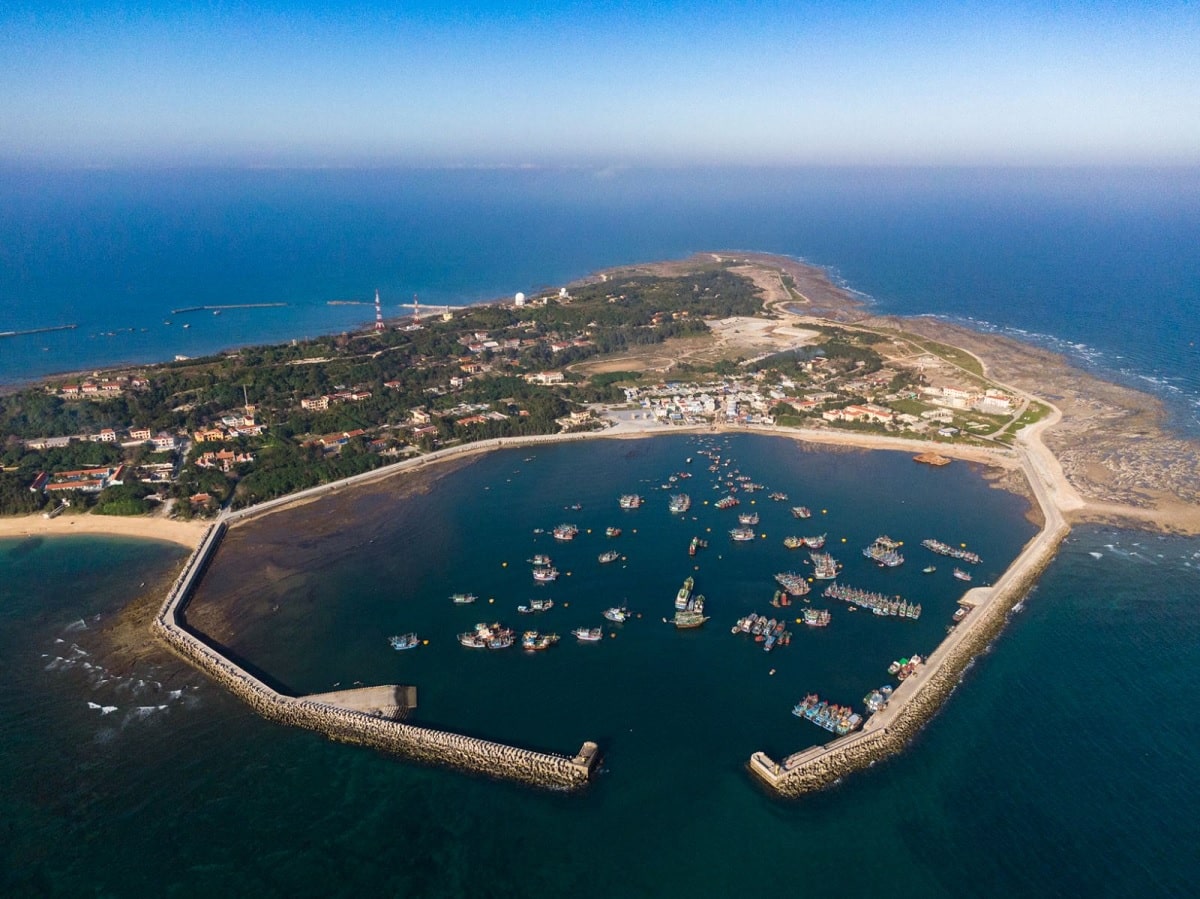
Bach Long Vi Island
Bach Long Vi Island District—whose name means “White Dragon’s Tail”—belongs to Hai Phong City and lies about 130 km from the mainland. It has also been known by other names over time, including Dao Vo Thuy (“waterless island”), Phu Chau Thuy (“pearl floating on water”), and Hai Bao Chau (“land of abalone”). Bach Long Vi sits roughly 110 km from Hon Dau in Hai Phong, 70 km from Ha Mai Island in Quang Ninh, and 130 km from Cape Dajiao in China. The island covers a natural area of 2.33 km², of which 1.78 km² remains above high tide and more than half a square kilometer consists of intertidal flats. With its distinctive geography, Bach Long Vi offers not only strategic maritime defense importance, but also strong economic potential thanks to regional exchange and rich local and neighboring marine resources.
Bach Long Vi is also tied to Vietnam’s legend of dragons descending to earth. Lore tells that long ago, a great dragon family descended from the sky to help Vietnamese people repel invaders. Parent dragons and baby dragons breathed out precious jewels that formed islands and reefs across the sea. After driving back the invaders, the parent dragons ascended into the sky, leaving the young dragons behind with the people. Some young dragons in Hai Phong formed the Cat Ba Archipelago, while others in Quang Ninh formed Ha Long Bay. As the parent dragons rose skyward, part of a dragon’s tail fell into the sea—becoming a dragon-shaped island known as Bach Long Vi.
Carrying out government policy to establish civilian governance on Bach Long Vi Island, on February 18, 1993, the Standing Committee of the Hai Phong Party Committee issued Decision No. 428/QD establishing the Bach Long Vi District Party Committee, followed on February 26, 1993, by Decision No. 537/QD from the Hai Phong People’s Committee establishing the Bach Long Vi District People’s Committee. Alongside this, Hai Phong authorities, the Municipal Youth Union, and the Youth Volunteer Brigade formed the Bach Long Vi Youth Volunteer unit to settle and build livelihoods on the island, contributing to socioeconomic development and maritime sovereignty in the Gulf of Tonkin. In March 1993, district officials and young volunteers set out across rough waves for Bach Long Vi—the farthest offshore island in the Gulf of Tonkin, then marked only by white sand and cactus, no permanent residents, basic facilities, and harsh weather. Yet those hardships never dampened the determination of people committed to building a homeland offshore.
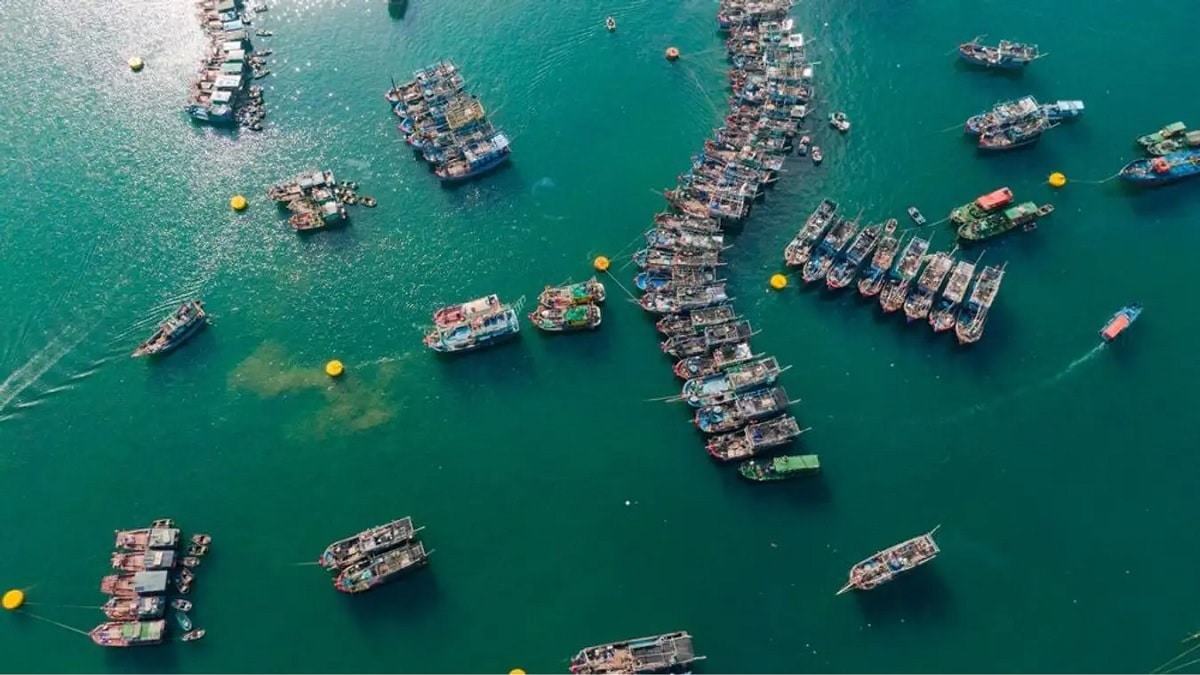
Fishing life of residents on Bach Long Vi Island
Thirty years after the first settlers arrived, Bach Long Vi today wears a vibrant new look—transforming from an isolated stretch of forest and sea into an island equipped with power, roads, schools, and medical stations that improve quality of life for residents and service personnel. Notably, its sheltered boat basin and harbor can accommodate up to 20,000 fishing vessel calls in the Gulf of Tonkin for storm shelter, seafood trading, fuel, provisions, and fresh water, while investment in a fisheries logistics and search-and-rescue center supports aquaculture, fishing, and emerging tourism. Economic restructuring tailored to each stage of growth has steadily raised living standards and drawn more settlers, making Bach Long Vi a bright symbol of nation-building and defense.
How to Get to Bach Long Vi & Travel Tips
If you plan to visit Bach Long Vi—the farthest offshore island in the Gulf of Tonkin—careful planning is essential. Here are helpful tips for your trip:
- To reach Bach Long Vi, take the Bach Long high-speed ferry departing from Ben Binh Pier in Hai Phong. The boat typically runs once daily at 7:00 AM and takes around seven hours to reach the island. Book tickets in advance and arrive early for check-in; onboard seating, air conditioning, and entertainment help you relax while enjoying open sea views and fresh ocean air.
- Check marine weather forecasts before departing to avoid storms or rough swells. If bad weather or a storm hits en route or while on the island, you must follow maritime safety instructions and wait until conditions clear for return crossings—an important reality of offshore island travel to factor into your schedule. Bring motion-sickness medication if you are prone to seasickness.
- Once on Bach Long Vi, you can rent a motorbike (roughly 200,000 to 300,000 VND per day) or bicycle (roughly 50,000 to 100,000 VND per day) to get around, or walk between nearby spots such as the lighthouse, beaches, and historic sites. Because the island is compact, getting between sights does not take long.
- Carry valid identification—such as a citizen ID card or passport—since Bach Long Vi holds sensitive national defense and security significance. Follow local and military regulations while on the island, avoid photographing or filming restricted or sensitive areas, and respect local customs and community life.
Experiences on Bach Long Vi
Setting out by boat toward Bach Long Vi lets you feel the open breath of the sea right away. Passing major coastal landmarks—such as Hoang Van Thu Bridge, Bach Dang Bridge, Dinh Vu Port, and the Cat Ba cable car—lets you see how Hai Phong and Vietnam have grown over time, sparking deep pride in your homeland.
Stepping ashore on this remote island, any seasickness fades quickly amid warm hospitality, friendly smiles, and candid stories from locals—making every conversation feel as welcoming and natural as talking with family.
First-time visitors often feel an immediate, quiet sense of belonging, as if connected to the island and its people all along—rooted in shared love for the sea, islands, and country.
Bach Long Vi unfolds in layers of blue—broad skies meeting deep ocean waters where sea and sky seem to embrace one another. Standing there can quiet everyday noise until even a light sea breeze feels enough to carry stress away.
Rocky coves, rolling waves, and blue water come together in a vivid island memory. You can walk barefoot along white sand, spot coral along rocky edges, climb up to the lighthouse for panoramic views of the small offshore island framed by sky and sea, and experience simple daily life far from the mainland.
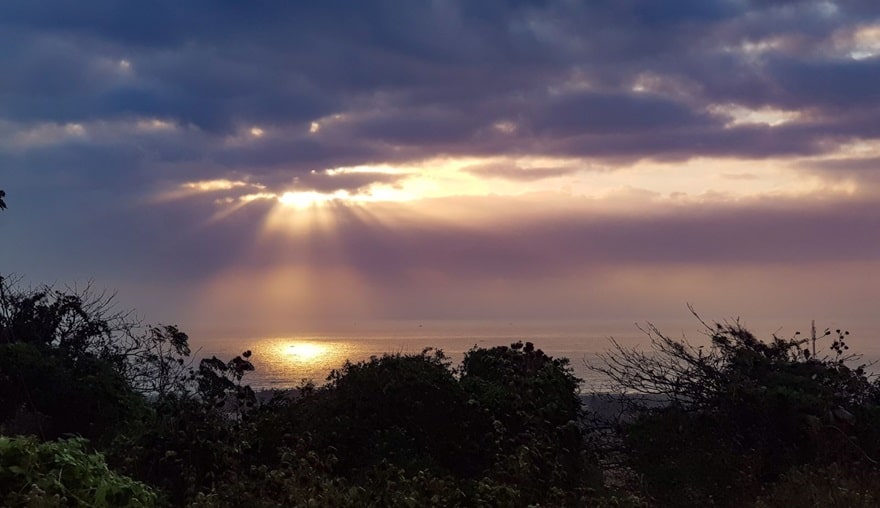
Watching sunrise over the sea from the lighthouse is an unforgettable experience on Bach Long Vi
In the morning, watching sunrise from the lighthouse offers sweeping views across the island as coastal scenery glows like a living painting.
At sunset, gathering with friends to enjoy fresh seafood brought in by the day’s fishing boats is a special highlight. Positioned offshore amid the Gulf of Tonkin’s eight major fishing grounds, Bach Long Vi yields remarkably fresh catches—and sharing a meal beneath starry skies with gentle surf, acoustic guitar melodies, and a warm campfire makes the evening unforgettable.
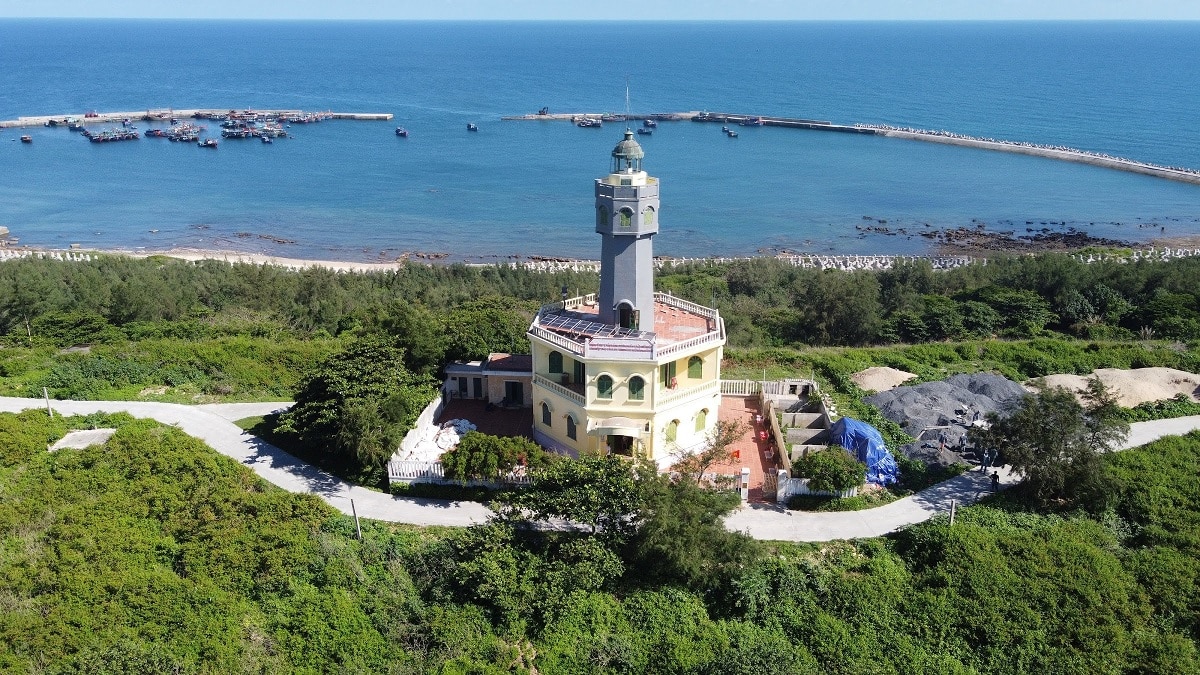
Bach Long Vi Lighthouse – Safeguarding Maritime Navigation
You can also join locals on fishing trips or coral viewing, take part in everyday island routines, connect with nature, or try night squid fishing—each offering lasting memories.
That is the essence of Bach Long Vi: wide blue skies, vast ocean waters, genuine human warmth, and songs, laughter, wind, and waves blending into a sweet melody. Once people visit, many return for their own reasons—to relive memorable moments, support community life and island development, or simply answer their love for the sea and islands.