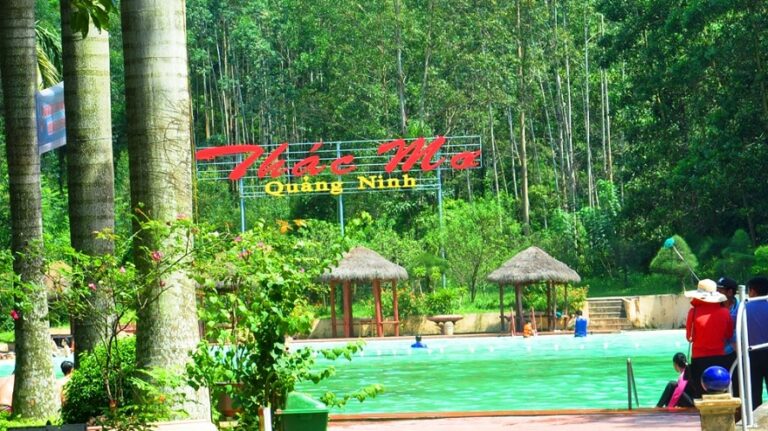
Quang Ninh is a famous travel province in Vietnam, home to Ha Long Bay—a natural World Heritage Site. Yet beyond the bay lies Yen Tu Mountain, a distinctive spiritual and cultural destination drawing millions of visitors every year. Yen Tu Mountain preserves numerous historic sites closely tied to the Truc Lam Zen school and Buddha-Emperor Tran Nhan Tong.
Read more: Discover Notable Travel Destinations in Quang Ninh
Key Features of Yen Tu Mountain
Yen Tu Mountain is recognized as a Special National Monument under Prime Minister Decision No. 1419/QD-TTg dated September 27, 2012. In addition, it forms part of the Yen Tu Relics and Scenic Landscape Complex—encompassing four special national historic clusters: the Yen Tu Historic and Scenic Site (Uong Bi City, Quang Ninh), the Tran Dynasty Historic Site (Dong Trieu Town, Quang Ninh), the Tay Yen Tu Scenic and Historic Site (Bac Giang), and the Con Son – Kiep Bac – Thanh Mai Complex (Hai Duong)—nominated for UNESCO World Heritage recognition. Below are three key aspects of Yen Tu Mountain.
1. Location and Geography of Yen Tu Mountain
The Yen Tu mountain range lies in northeastern Vietnam, stretching across three provinces: Quang Ninh, Bac Giang, and Hai Duong. Its southern slopes (East Yen Tu) belong primarily to Quang Ninh Province with a small portion in Hai Duong Province, while its northern slopes (West Yen Tu) lie in Bac Giang Province. Forming one of four major mountain arcs in the Dong Trieu range, it stretches roughly 80 km long and 50 km wide.
Yen Tu forms the second segment of the four-part Dong Trieu mountain arc, running sub-latitudinally from west-northwest to east-southeast—extending from Yen Tu Peak (along the border of Quang Ninh and Bac Giang) toward Con Son – Kiep Bac – Luc Dau River before tapering down near the left bank of the Cau River (Viet Yen District, Bac Giang). Its concave northern flank opens onto low hills and plains in Luc Ngan and Luc Nam districts (the Luc Nam – Luc Ngan basin in Bac Giang), while its convex southern flank fronts the Bach Dang River estuary. Viewing Yen Tu Mountain as the crest of the Dong Trieu arc, the Bach Dang estuary sits along the outer seaward edge of the arc.
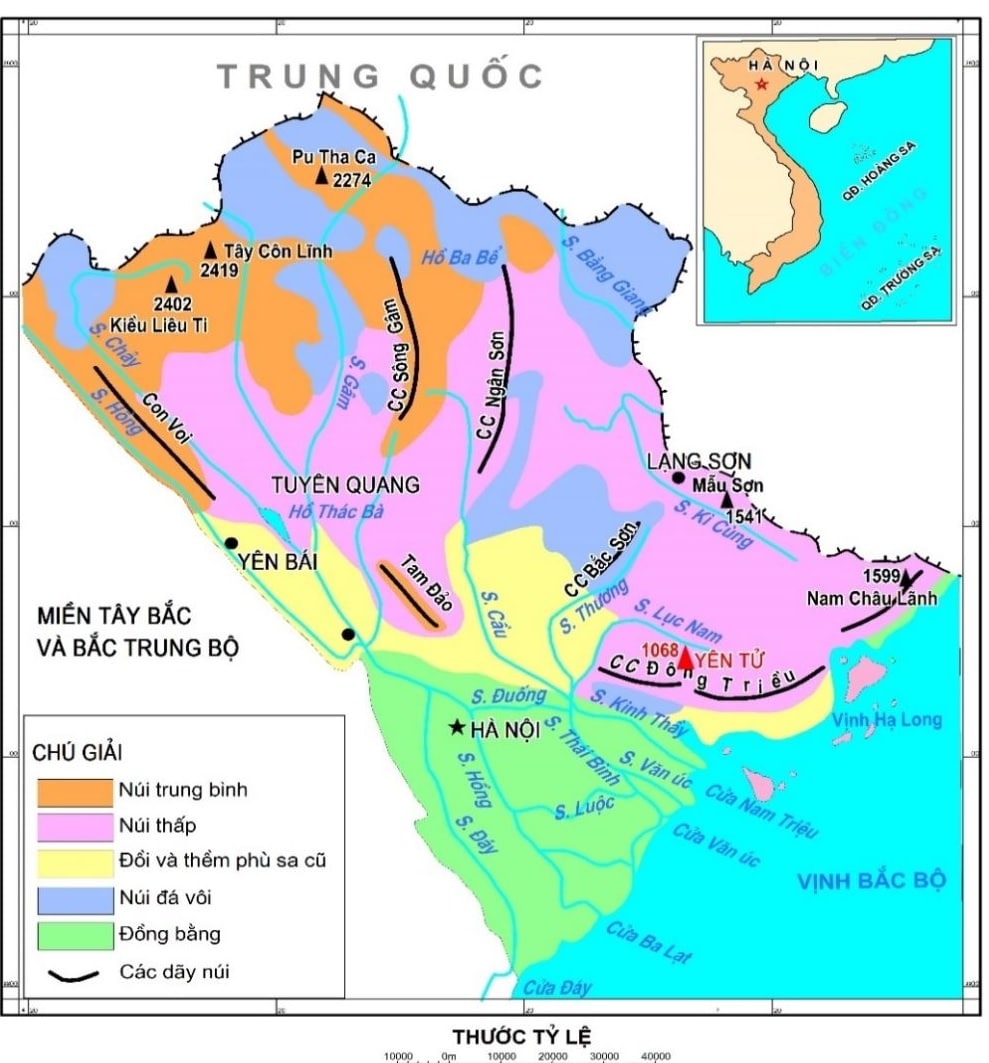
Yen Tu Mountain on the second segment of the Dong Trieu mountain arc
The Yen Tu range features undulating peaks rising like a great dragon reaching toward the sea, averaging over 600 meters in elevation. Highest of all is the “dragon’s head”—Yen Tu Peak, also called Phu Van (“Floating Cloud”) Peak at 1,068 meters above sea level, frequently veiled in clouds (from which the range takes its name)—stepping down westward through Phat Son (1,000 m), Ngoa Van, Ho Thien (900 m), Thanh Mai (800 m), Quan Am (780 m), Huyen Dinh, Hinh Nhan (700 m), and Long Thuyen (600 m), lowering to around 200 to 240 meters around Con Son – Kiep Bac – Luc Dau River and lower still toward Phuong Hoang Mountain at the tail of the range. Saddle passes between peaks have served for centuries as travel routes linking northern and southern sides of Yen Tu.
2. Flora and Fauna on the Mountain
A hallmark of Yen Tu is its special-use forest ecosystem covering a natural area of 2,783 hectares. Shaped by tropical-to-subtropical humid weather and abundant rainfall, Yen Tu’s flora is rich across phyla, genera, and families—comprising five plant divisions with 830 species, led by angiosperms (670 species), including 38 rare endemic species. Among them, 547 useful plant species serve 13 practical categories, including roughly 300 medicinal species such as spiny eleuthero, jewel orchid, Codonopsis, Fokienia, Circaea, polygonatum, he shou wu, jiaogulan, and wild vegetables—alongside 20 rare species listed in the Vietnam Red Book and priority conservation species such as ironwood (lim xanh), gu lau, sen mat, tau mat, and hong tung.
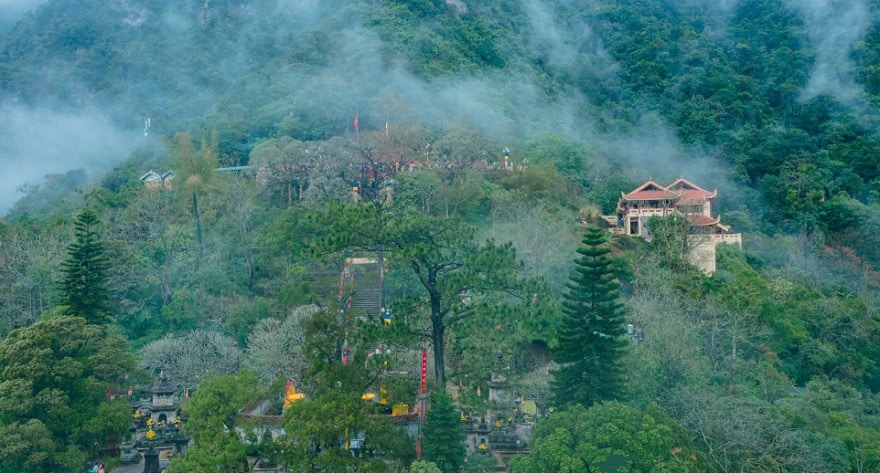
Yen Tu National Forest
Yen Tu also preserves ancient trees spanning hundreds of years tied to Tran Nhan Tong’s monastic life and Buddhist heritage. In 2016, Yen Tu National Forest recognized 144 Heritage Trees—including 1 purple banyan, 1 thi tree, 102 hong tung trees, 10 giant resin pines, 21 endemic Yen Tu yellow apricot trees, and 9 ancient trees—distinguished not only by historical and spiritual value, but also by ages ranging from 300 to over 700 years.
Wildlife is likewise diverse, recording 151 animal species—including 20 species listed in the Vietnam Red Book such as Delacour’s langur, giant flying squirrel, mountain frogs, and crocodile lizards, offering major value for genetic conservation, scientific research, education, and ecotourism.
3. Historical and Cultural Value of Yen Tu
In 1299, King Tran Nhan Tong founded the Truc Lam Yen Tu Zen school based on a philosophy and practice uniting spiritual cultivation with worldly engagement. Following his passing in 1308, his disciples Phap Loa and Huyen Quang carried forward and expanded the lineage. Yen Tu became the spiritual heart of Truc Lam Buddhism across dynasties. Over centuries, temples, hermitages, stupas, tombs, steles, and statues took shape harmoniously across tens of kilometers of forested mountains, while Truc Lam cultural values spread widely across Vietnam and abroad to this day.
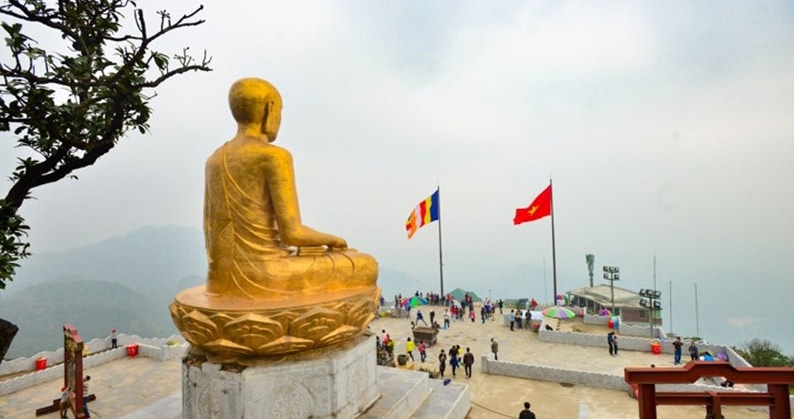
Statue of Buddha-Emperor Tran Nhan Tong on Yen Tu Mountain[/caption>
Tran Nhan Tong and the Truc Lam Yen Tu Zen School
Tran Nhan Tong (1258–1308)—born Tran Kham, courtesy name Thanh Phuc—was the third emperor of the Tran dynasty, reigning over Dai Viet from 1278 to 1293. Eldest son of Emperor Tran Thanh Tong and grandson of Emperor Tran Thai Tong, Tran Nhan Tong is remembered as an enlightened ruler who contributed greatly to sustainable national development, defending independence, and expanding territorial stability.
[caption id="attachment_1867" align="aligncenter" width="880"]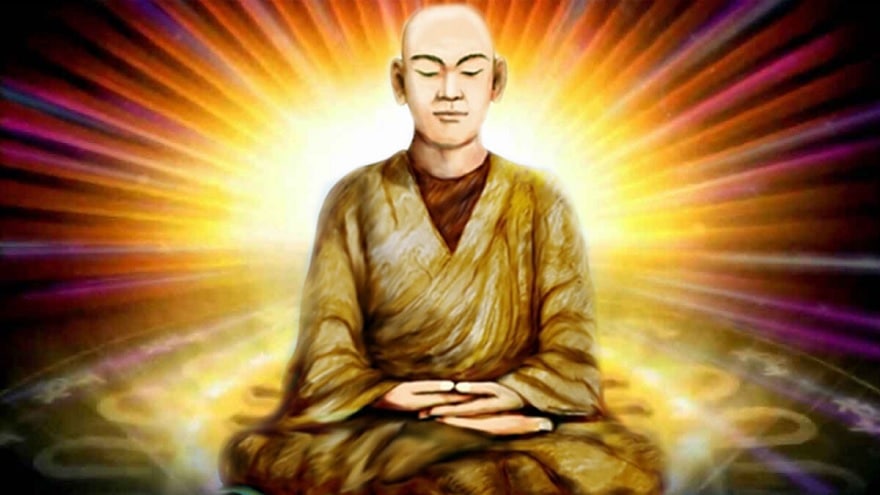 Tran Nhan Tong
In history, Tran Nhan Tong is best known for leading resistance in two wars against Mongol-Yuan invasions. Together with his father, Retired Emperor Tran Thanh Tong, and Grand Marshal Tran Hung Dao, he led Dai Viet’s forces and people to victory in 1285 and 1288, achieving landmark triumphs in national and world history.
After abdicating in favor of his son Tran Anh Tong (born Tran Thuyen) in 1293, Tran Nhan Tong entered monastic life in Zen Buddhism and founded the Truc Lam Yen Tu Zen school—a distinctly Vietnamese lineage infused with an engaged, socially mindful spirit that elevated Vietnamese Buddhist philosophy and reflected the strength and wisdom of the Vietnamese people.
After 1298, he traveled widely in monastic robes to preach Dharma. Truc Lam teachings did not urge followers to abandon everyday duties or practice extreme self-mortification; instead, they emphasized compassion, moral conduct, humanitarian values, equality across wealth, and gratitude toward one’s roots—drawing thousands to his teachings.
In 1299, Tran Nhan Tong retreated to Yen Tu Temple to practice under the Dharma name Huong Van Dai Dau Da or Truc Lam Dai Dau Da, gathering many disciples and coming to be revered by generations as Buddha-Emperor Tran Nhan Tong.
In 1308, Tran Nhan Tong passed away at Ngoa Van Hermitage on Yen Tu Mountain.
Why Did Tran Nhan Tong Choose Yen Tu Mountain for Monastic Practice?
Regarding this choice, 18th-century Zen master Hai Luong—who styled himself the “fourth patriarch of Truc Lam”—offered a conjecture suggesting the former emperor picked Yen Tu as a high vantage point to watch northern borders and coastal security.
Yet for anyone who has climbed Yen Tu Peak and looked out across the surrounding terrain, that speculation hardly holds up: Yen Tu’s elevation does not overlook the northern frontier or reach the open East Sea, nor would a revered sovereign who had just led the realm to victory retreat to a mountain peak merely to act as a frontier lookout.
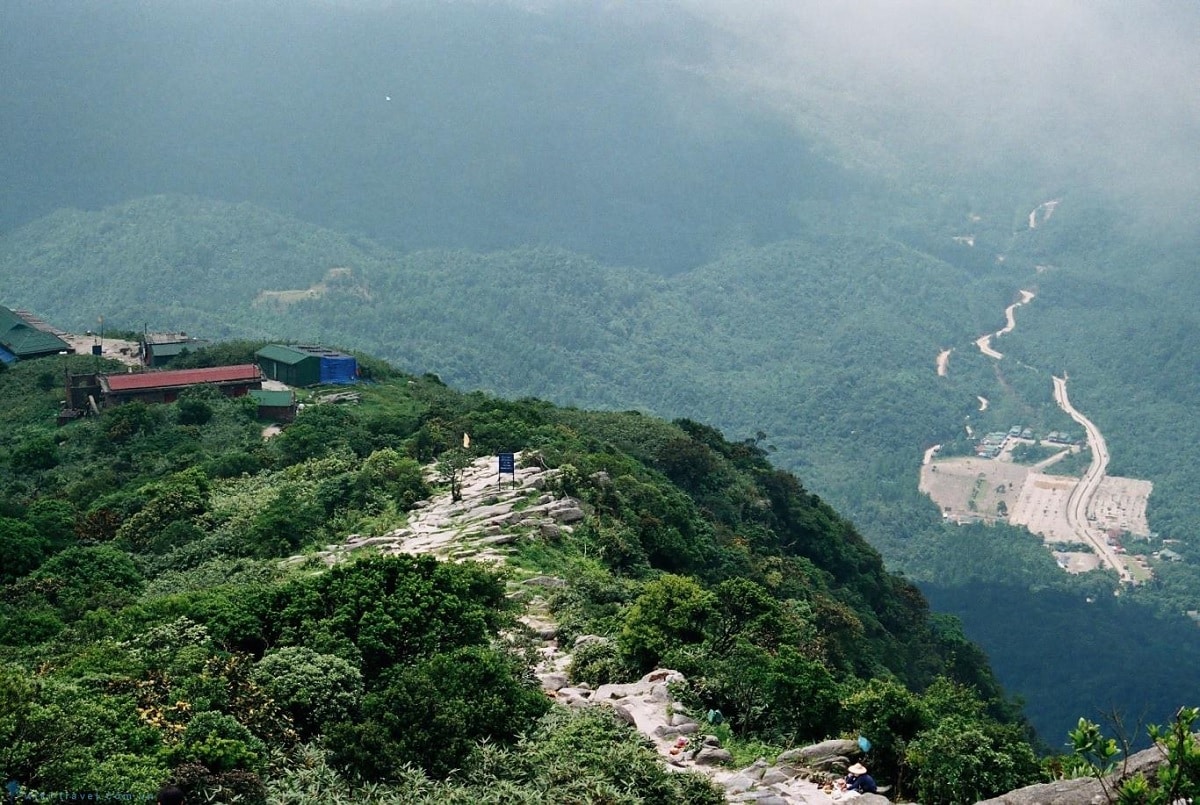
Yen Tu Mountain – a sacred mountain of Vietnam
Because Tran Nhan Tong did not state his reasons publicly upon entering monastic life, later commentators offered various interpretations that sometimes obscured his lofty spiritual intent. Looking at historical and geographic context, several grounded reasons stand out:
First: Yen Tu held special ancestral and spiritual significance for the Tran clan and Tran Nhan Tong.
Late scholar Tran Quoc Vuong noted that the Tran clan had early coastal roots in the Dong Trieu area before rising to prominence. Historical records in Dai Viet Su Ky Toan Thu also trace the royal ancestors to southern coastal origins.
In gazetteer records of the region (Dai Nam Nhat Thong Chi), the Tran royal tombs at Yen Sinh in Dong Trieu are noted alongside generations of restoration and veneration.
Devoting his final years to monastic life at Yen Tu aligned closely with ancestral ties to the Dong Trieu – Yen Tu region.
Accordingly, the Dong Trieu – Yen Tu area carried deep meaning for the Tran dynasty—making Tran Nhan Tong’s return there after abdication natural within his family heritage.
Second: Yen Tu was long regarded as a place of spiritual cultivation by earlier seekers.
Long before, Yen Tu was associated in folklore with An Ky Sinh practicing immortality arts, reflected in rock formations near the summit and early traditions of mountain retreat.
In the late Ly and early Tran periods, masters such as Hien Quang, National Master Dao Vien, National Master Dai Dang, Zen Master Tieu Dao, and Zen Master Hue Tue practiced and awakened along Yen Tu, laying spiritual groundwork for the Truc Lam lineage.
Notable Historic Sites on Yen Tu Mountain
- The main route cluster (Yen Tu Road), including Trinh Pagoda, Suoi Tam Pagoda, Cam Thuc Pagoda, and Lan Pagoda (Truc Lam Zen Monastery).
- The central mountain cluster from Giai Oan Pagoda to Dong Pagoda, including Giai Oan Pagoda, Hon Ngoc, Thap To (Patriarch Stupa), Hoa Yen Pagoda, Mot Mai Pagoda, Hoa Hermitage, Duoc Hermitage, Thien Dinh Hermitage, and Ngoa Van Hermitage.
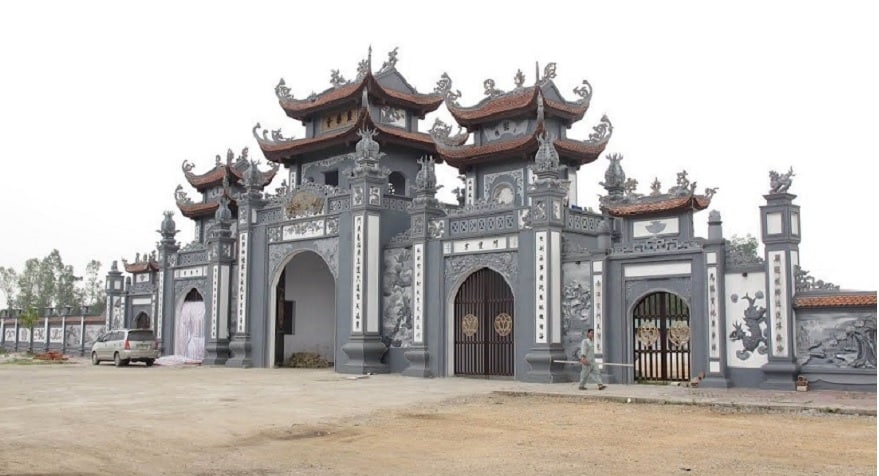
Trinh Pagoda on Yen Tu Mountain
Trinh Pagoda: Built during the Later Le period and restored in 1993 and 1999, this pagoda serves as the traditional starting gateway on the pilgrimage up Yen Tu Mountain. Built in a single-hall (nhat) layout with front hall, main Buddha hall, side wings honoring the Eighteen Arhats, and ancestral halls dedicated to the Three Truc Lam Patriarchs, Tran rulers, and Mother Goddesses, it houses finely crafted bronze and jackfruit-wood statues.
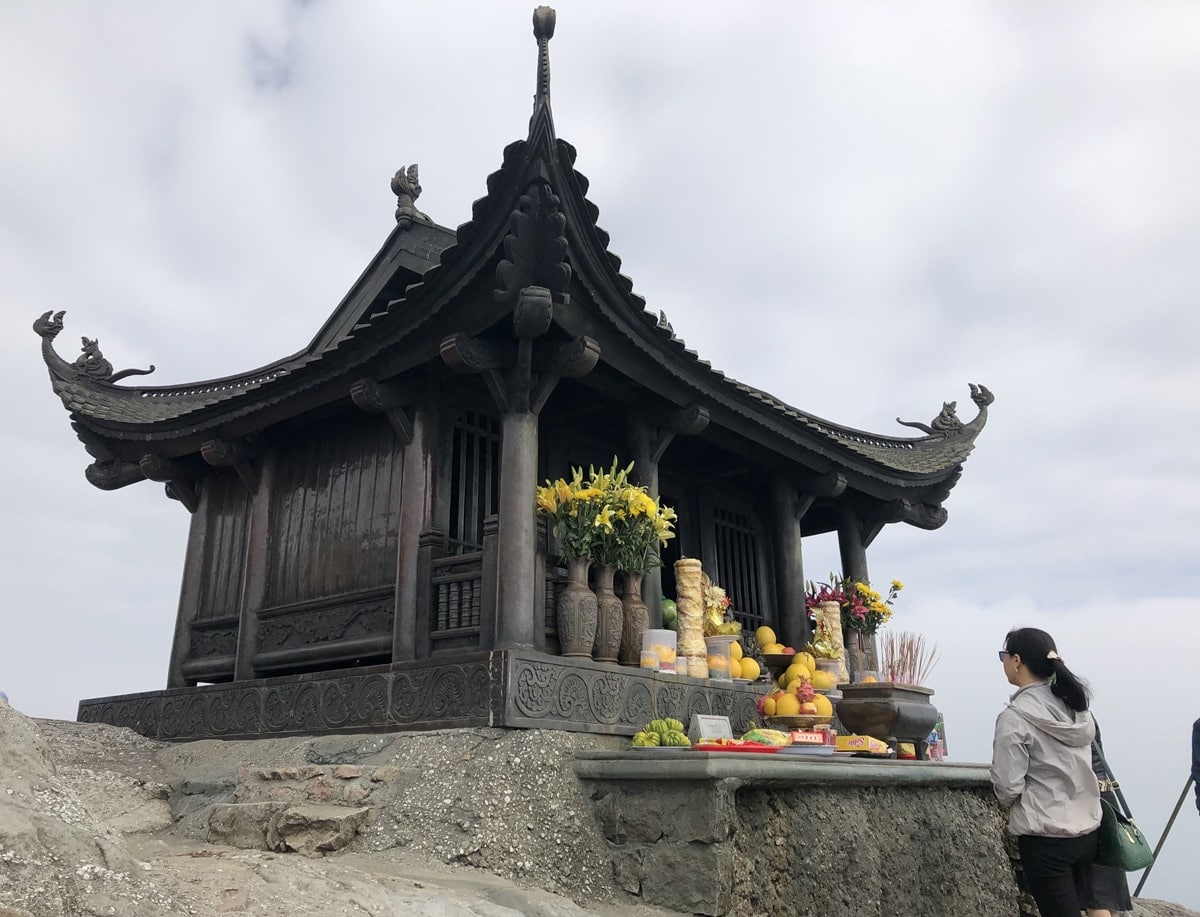
Dong Pagoda on Yen Tu Mountain
Dong Pagoda (Bronze Pagoda): Located at 1,068 meters atop Yen Tu Peak, this is one of Asia’s largest cast-bronze pagodas—measuring roughly 20 square meters and weighing around 70 tons. Modeled after Keo Pagoda with four upturned eaves and Tran-style dragon motifs, it enshrines Shakyamuni Buddha and the Three Truc Lam Patriarchs.
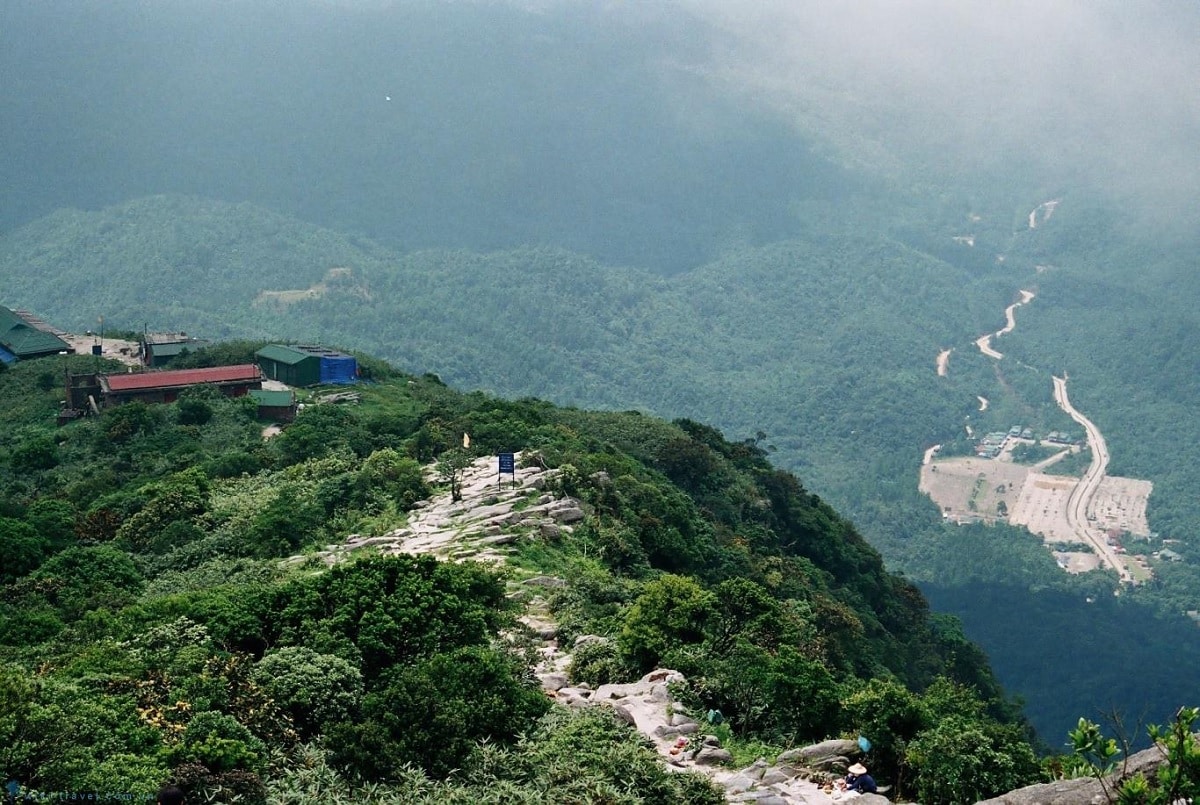
Truc Lam Yen Tu Zen Monastery: One of Vietnam’s major Zen monasteries and a center for studying and practicing Truc Lam Buddhism, featuring classical architecture with a Three-Gate entrance (Tam Quan), main hall, Buddhist library, and monastic quarters set amid scenic mountain surroundings.
Ngoa Van Pagoda – Spring pilgrimage and Buddhist destination
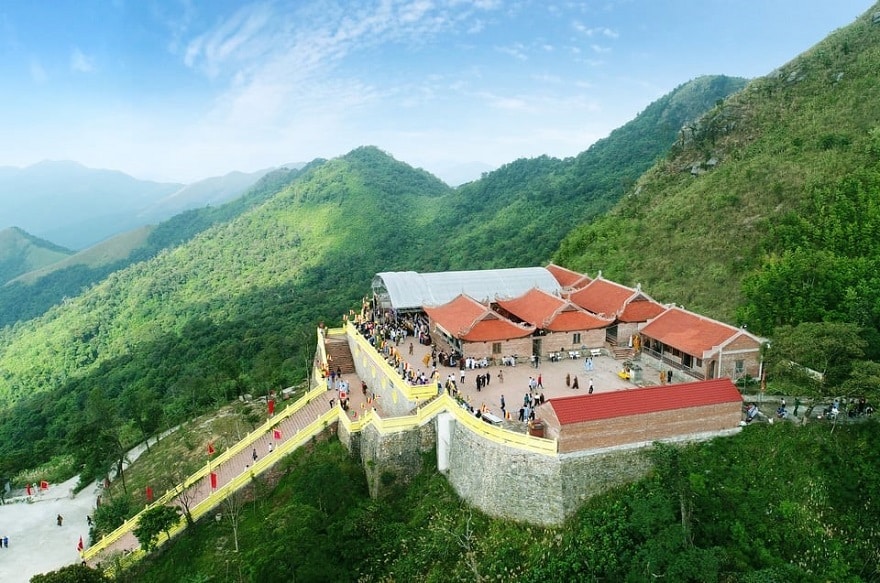
Ngoa Van Hermitage: The site where King Tran Nhan Tong entered monastic life in 1299 after abdicating to Tran Anh Tong. Built with two stories of ironwood and brick with eight square windows symbolizing the Eight Trigrams (Bagua), it houses a statue of Tran Nhan Tong and artworks depicting his life.
An Ky Sinh Statue: A 2.5-meter stone statue carved in the 17th century near Van Tieu Pagoda, depicting the legendary immortal figure associated in folklore with mountain retreat and Tran-era spiritual lore.
Statue of Buddha-Emperor Tran Nhan Tong: A 3-meter stone statue carved in the 17th century near Van Tieu Pagoda and recognized as a National Treasure in late 2020, now enshrined near Hue Quang Stupa at Hoa Yen Pagoda—honoring the third Tran king who founded the Truc Lam Yen Tu Zen school.
Heaven Gate (Cong Troi) & Buddha Stele (Bia Phat): Two distinctive stone landmarks near the upper mountain. Heaven Gate is a rectangular stone portal roughly 1 meter high and 0.5 meters wide symbolizing the threshold between earthly and sacred realms, while the Buddha Stele—roughly 3 meters tall and 2 meters wide—features a carving of Shakyamuni Buddha on a lotus throne inscribed with “Truc Lam Yen Tu Buddha Patriarch.”
Festivals on Yen Tu Mountain
Festivals on Yen Tu Mountain are spiritual and cultural gatherings honoring Buddha-Emperor Tran Nhan Tong and the Truc Lam Zen school, typically held during spring from the 1st to 3rd lunar months. Notable festivals include:
- Dong Pagoda Seal-Opening Festival: Held on the 10th day of the 1st lunar month at Dong Pagoda atop Yen Tu Peak, opening the spring festival season with traditional offerings, prayers for peace and prosperity, seal-opening rites, and charitable blessings that draw thousands of pilgrims and visitors.
- Giai Oan Stream Festival: Held on the 15th day of the 1st lunar month at Giai Oan Stream, honoring devotion and remembrance tied to local Tran-era folklore with offerings, prayers, processions, and traditional performances.
- An Ky Sinh Festival: Held on the 20th day of the 1st lunar month near the An Ky Sinh statue, celebrating mountain hermitage lore and virtuous cultivation with offerings, prayers for peace, and lion and dragon dances.
Yen Tu Mountain is a renowned spiritual destination in Vietnam preserving heritage tied to the Truc Lam Zen school and Buddha-Emperor Tran Nhan Tong. Its spring festivals honor forebears while wishing for peace and good fortune in the new year—allowing visitors to experience sacred traditions, mountain scenery, and cultural heritage on any trip to Quang Ninh.
Read more: 1-Day Yen Tu Mountain Tour