Nestled among the majestic limestone mountains on Cat Ba Island, Trung Trang Cave stands out as a signature heritage site filled with the mysterious and splendid beauty of nature. Formed millions of years ago, this karst cave is a masterpiece with a diverse system of stalactites in countless shapes that leaves visitors awestruck by creation’s wonders. More than just a natural masterpiece, Trung Trang Cave also preserves historical imprints and serves as home to many unique creatures. Join us as we set out to explore Trung Trang Cave and admire the mysterious beauty and fascinating stories hidden within.
Introduction to Trung Trang Cave
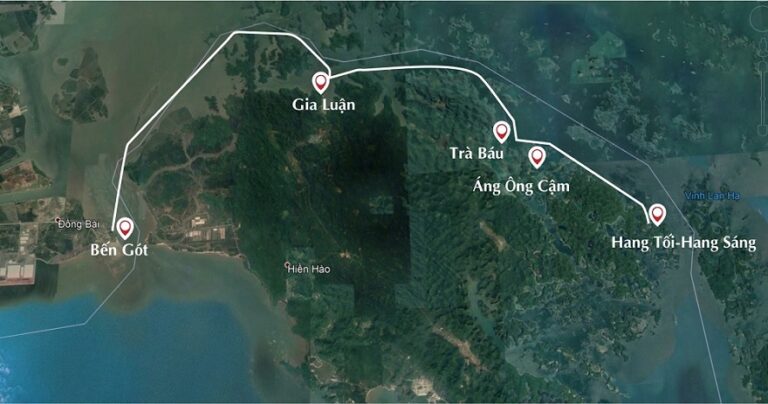
Trung Trang Cave lies deep inside the rocky area of Trung Trang Valley and sits right along the cross-forest road linking northern and southern Cat Ba Island (Hai Phong). Thanks to this convenient access, in recent years Trung Trang Cave has also been integrated into sightseeing routes for Cat Ba National Park. The name “Trung Trang” comes from a legend about Lady Trung Trang (Ba Chua Trung Trang), who helped protect islanders from foreign invaders and later practiced spiritual cultivation inside this very cave. Legend has it that the cave holds the lady’s treasure trove with glittering pillars of gold and silver.
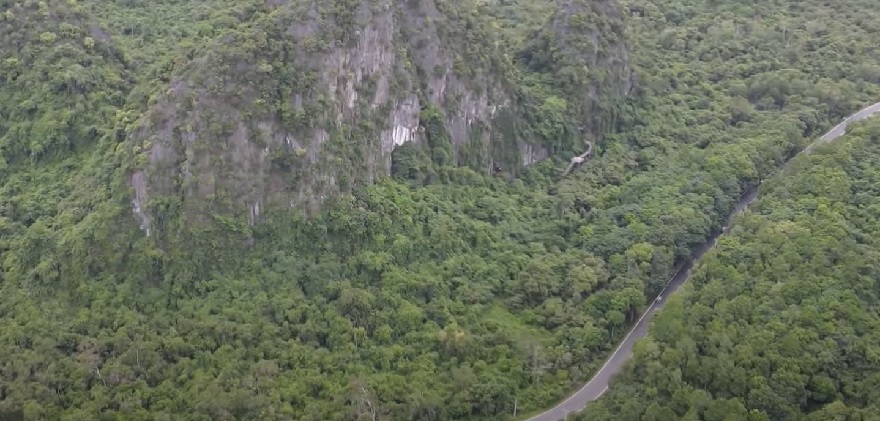
Trung Trang Cave sits along the cross-forest road linking northern and southern Cat Ba Island
Trung Trang Cave is one of more than 20 caves on Cat Ba Island placed under conservation management. As a karst cave formed inside limestone through the dissolution and erosion of rainwater over millions of years, Trung Trang Cave was first discovered in 1938 by a French archaeologist and stretches about 300 m through the mountain, creating a grand, majestic space. Inside the cave, temperatures stay steady at around 20°C, offering a cool, pleasant feel—especially on sweltering summer days.
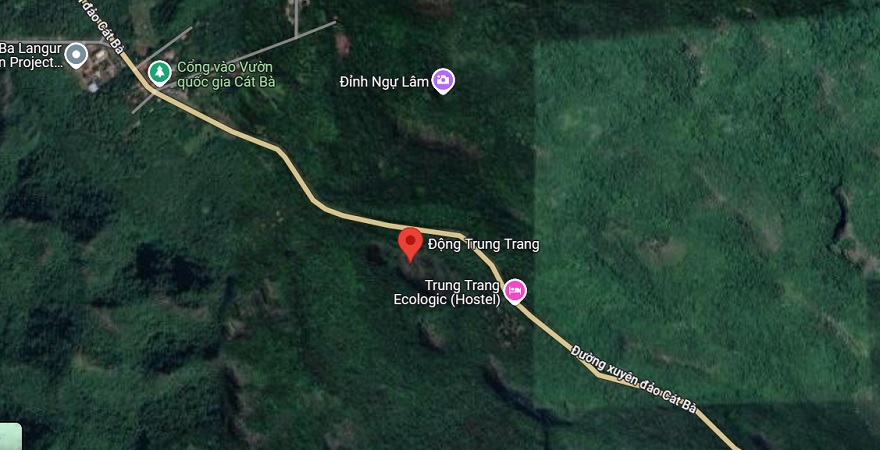
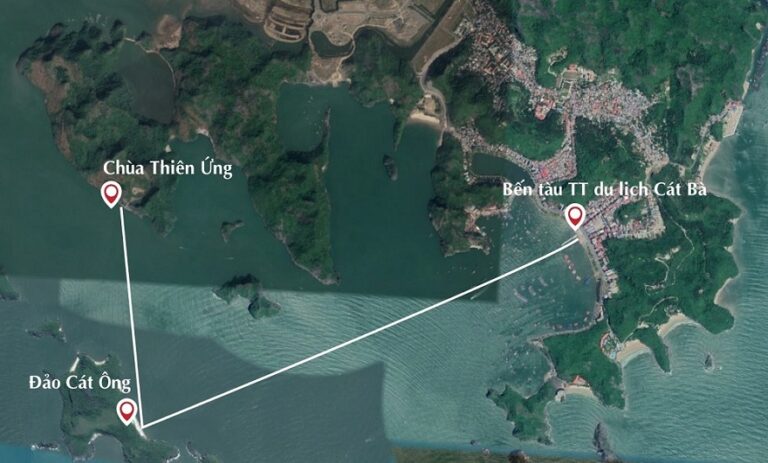
Location of Trung Trang Cave on Google Maps
To reach Trung Trang Cave, you can ride a motorbike or take a bus from central Cat Ba, then walk about 15 minutes along a shaded forest path. Stepping inside the cave, you will feel the cool, airy atmosphere and admire works of natural art shaped over millions of years.
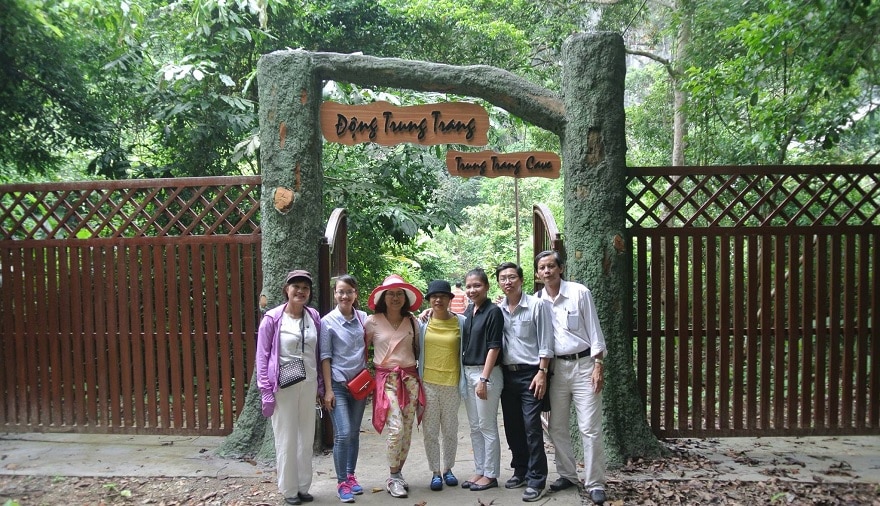
Trung Trang Cave Ticket Prices and Opening Hours
To make your trip exploring this “hidden gem” with its imaginative, unusually shaped rock formations smooth and well-paced, checking how to visit and the updated admission fees is an important preparation step. Below are details on two common options to help you plan your visit to Trung Trang Cave:
Option 1: Independent visit
With this option, you travel on your own to Cat Ba National Park, where Trung Trang Cave is located, and buy tickets directly at the counter to enter. Popular sightseeing routes including Trung Trang Cave and nearby spots in the National Park follow fee rates set under Resolution No. 06/2024/NQ-HĐND of the Hai Phong City People’s Council, effective August 1, 2024. Details are as follows:
- Buy tickets directly at the counter: ticket prices apply to the route including Trung Trang Cave (usually also covering Kim Giao Forest and Ngu Lam Peak)
- Adults: 120,000 VND/person
- Children: 60,000 VND/person
- Note: Trung Trang Cave welcomes visitors daily from 7:00 AM to 5:00 PM.
- In addition, if you want a professional tour exploring Trung Trang Cave and Cat Ba, you can check out our service: https://vdstravel.com/tour-kham-pha-cat-ba
Option 2: Join a tour (especially overnight cruises on Lan Ha Bay – Cat Ba)
Many Cat Ba itineraries—especially overnight cruises on Lan Ha Bay—often combine visits to highlights inside the National Park, including Trung Trang Cave. When choosing this option, cave admission fees are usually bundled into the overall tour cost, offering convenience so travelers don’t have to worry about buying individual tickets. This option suits anyone who wants a neatly arranged trip with a complete itinerary and all-inclusive services. For detailed advice on cruises that visit Trung Trang Cave, please contact VDS Travel for thorough consultation.
See more: Lan Ha Bay Cruise Tours
History Connected to Trung Trang Cave
Trung Trang Cave is also called Bat Cave because many bat species live inside. These bats play an important role in maintaining the area’s ecological balance by pollinating flowering plants and decomposing organic matter. Bats here also hold scientific and medical value, as they can produce effective antibiotic and anti-inflammatory compounds. Visitors can hear bats squeaking when entering the cave or watch them fly out at dusk.
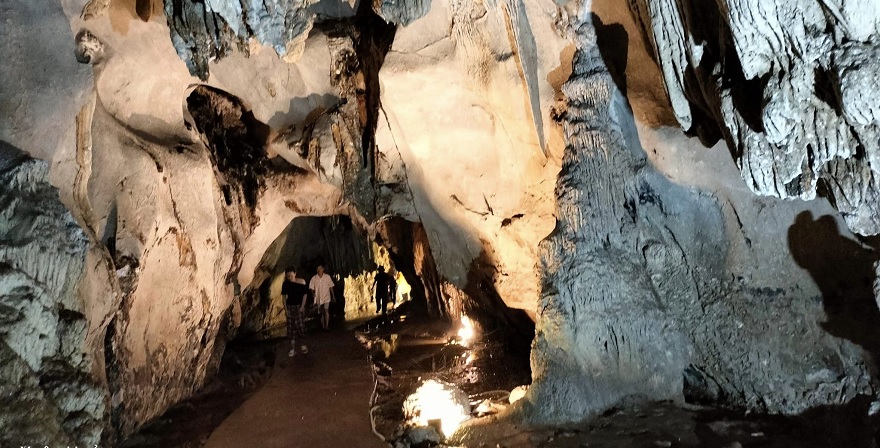
Trung Trang Cave has geology typical of the cluster of more than 150 large and small caves across the Cat Ba archipelago. Here, scientists have found fossilized bones and stone tools of prehistoric Vietnamese people.
Trung Trang Cave is also one of the sites providing evidence of ancient Vietnamese presence thousands of years ago. According to archaeological studies, the ancient Vietnamese belonged to an Austroasiatic group living from the lower Yangtze River to northern Vietnam, broadly known as the Bach Viet, sharing genetic links with present-day Indigenous Australians. They lived by hunting and gathering in the forest and developed a flourishing culture called the Hoa Binh culture. At Trung Trang Cave, archaeologists uncovered many stone tools, human bones, and animal bones left behind by ancient Vietnamese people. These stone tools show they knew how to use fire and craft knives, axes, arrowheads, and other implements for hunting and food preparation, while the human and animal bones indicate they practiced farming and animal husbandry and had a varied diet.
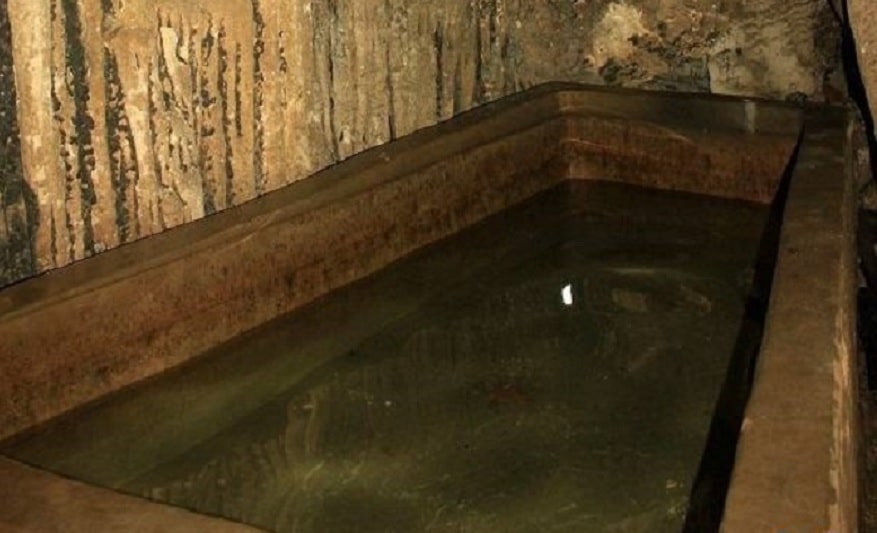
Traces of the Vietnamese military once stationed here
In addition, during the resistance war years, Trung Trang Cave was also known as Navy Cave because it was used by the Command as a stationing site and preserves many heroic historical traces of Vietnam’s military and people. Inside the cave is a wall inscribed with verses praising the sacrifices and merits of fallen heroes and martyrs. There are also items inside—such as a water tank, living quarters, and a meeting room—used for soldiers’ daily life, carefully preserved and displayed for visitors.
Exploring Trung Trang Cave
To reach the cave entrance, visitors must climb 140 uneven stone steps along the mountainside. Climbing more than 140 stone steps in hot weather can leave many people tired and warm. Yet upon reaching the cave mouth, visitors feel a cool draft blowing out from deep inside the cavern. Amid the vast old-growth forest in front of the cool rocky cave, after just a few deep breaths, visitors feel refreshed and energized as if just waking up on a crisp morning.
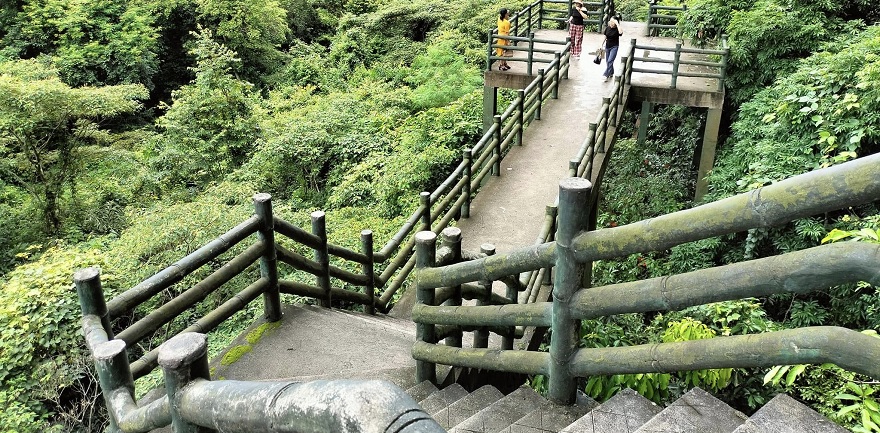
To reach the cave, visitors must climb a stretch of about 140 stone steps
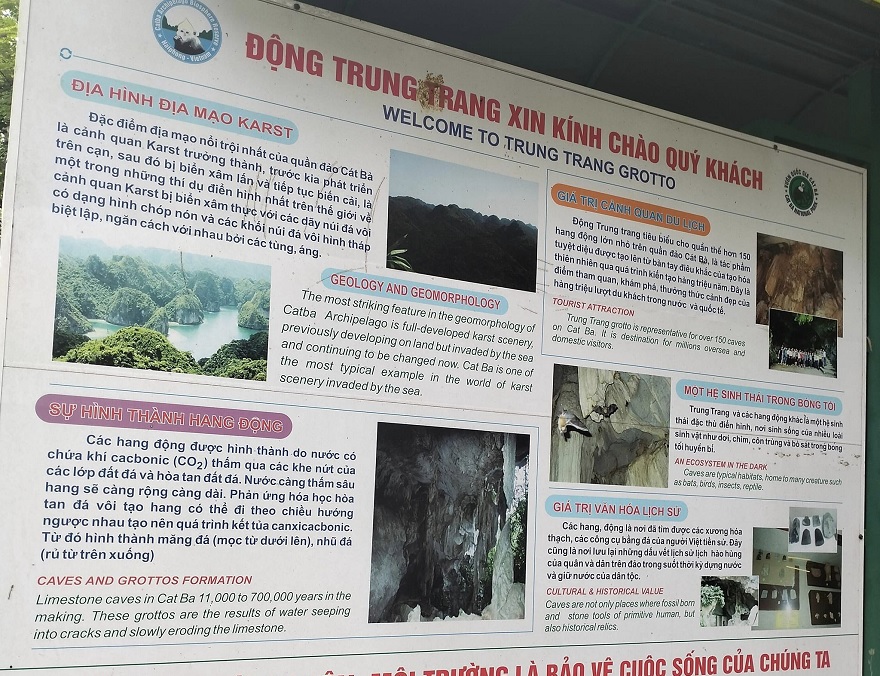
Introduction sign for Trung Trang Cave placed at the entrance
Right in front of the cave entrance, visitors can easily spot stalactite and stalagmite formations, especially a massive stalactite-stalagmite column right at the entryway. Shaped over 6–7 million years, stalactites first form on the cave vault. During rains, rainwater seeps through the soil and rock above, dissolving part of the limestone and carrying calcium carbonate minerals into the cave. Meeting the cave air, the water gradually evaporates and leaves tiny calcium carbonate crystals. Over millions of years, these crystals accumulate to form gleaming stalactites hanging from the ceiling like frozen waterfalls. On the cave floor, droplets falling from the stalactites continue building stalagmites rising like towers—and when stalactites and stalagmites meet, they fuse into large stone columns like those standing tall at the cave entrance today.
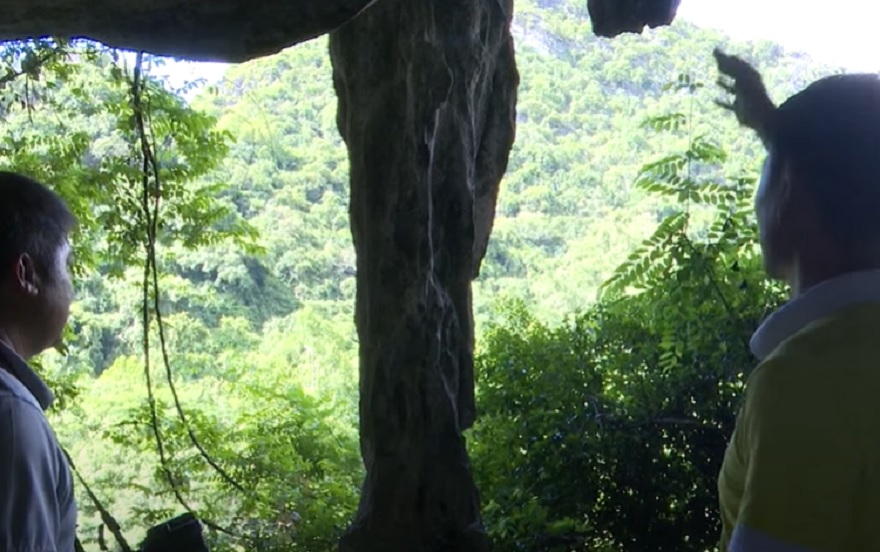
Massive stalactite-stalagmite column right in front of the cave entrance
Caves in the Cat Ba area shelter several creatures adapted to darkness. Today, the Trung Trang area is home to two notable species: the Ha Long leaf-nosed bat and the Cat Ba eyelid gecko, adding to Trung Trang Cave’s distinct character. That covers the flora and fauna on the cave’s exterior—while what makes caves in general, and limestone caves in particular, truly special is the stalactite system inside. Stalactites form as rainwater seeps from the outer surface above the limestone mountain and filters down into the cave. Along the way, the water carries rock-eroding solutions and minerals from the earth, collecting into droplets inside the cavern to build stalactites above and stalagmites below. Over millions of years of formation and buildup, those droplets have created the natural masterpieces inside the cave today.
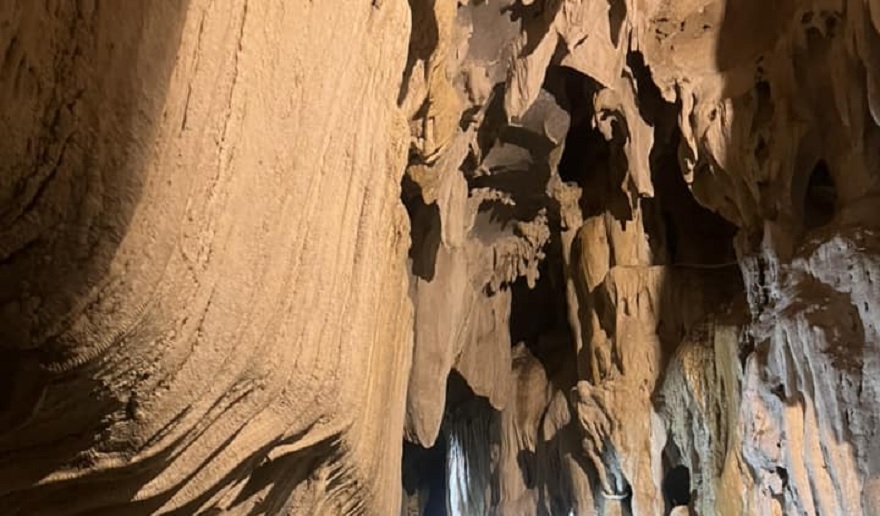
Massive stalactite system inside Trung Trang Cave
The geological structure of Trung Trang Cave also changes along its length. Because it runs more than 300 m through the mountain, each section of the cave differs in the natural shapes and colors of its stalactites and stalagmites. While the entrance area features abundant white stalactites and stalagmites tinged with sparkling pink and green hues, deeper toward the back of the cave they take on gray or more muted tones. Because of these variations in shape and color inside the cave, the curving sections and areas near the back serve as habitats where certain endemic species of Cat Ba National Park survive.
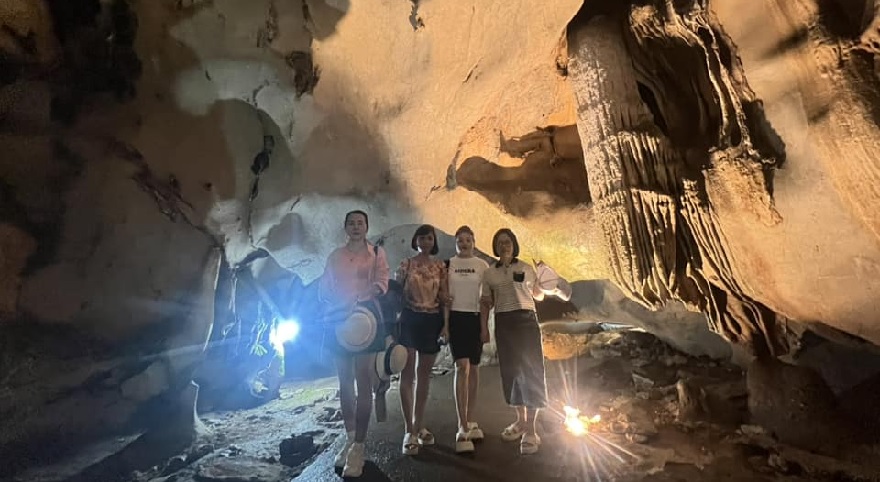
Stalactite and stalagmite formations inside the cave changing along its length
Like many other limestone caves in the Ha Long Bay – Cat Ba archipelago region, Trung Trang Cave’s stalactites and stalagmites are concentrated heavily near the entrance with myriad strange shapes, varied sizes, and shimmering, enchanting colors. There are stalactites as pure white as crystal, stalagmites as crimson as coral, and giant stone columns in a striking jade-green hue. Yet the deeper you go into the cave, the scenery gradually shifts, with the colors and shapes of the stalactites and stalagmites becoming less vivid and mostly gray or more subdued tones.
This is explained by several factors. First, rainwater seepage through the mountain is uneven. The entrance area regularly receives rainwater rich in calcium carbonate filtering through rock fissures, creating favorable conditions for stalactites and stalagmites to grow. The deeper inside you go, the less rainwater reaches the area and the lower the mineral concentration becomes—having already precipitated closer to the outside—resulting in less pronounced growth.
Second, the geological characteristics of the limestone also vary from one section to another. Differences in rock structure and mineral composition affect how easily calcium carbonate dissolves and precipitates, thereby influencing stalactite and stalagmite formation.
In addition, water flow volume and speed play an important role. Near the entrance, water generally flows faster, carrying more minerals and causing stronger erosion, which helps create greater variety in stalactite and stalagmite shapes and colors. Toward the back of the cave, flow is weaker and precipitation happens slowly, leading to less developed formations.
Finally, the cave’s microclimate cannot be overlooked. Temperature, humidity, and air circulation also contribute to differences in stalactites and stalagmites across sections of the cave. The subtle interplay of these factors gives Trung Trang Cave its varied, shifting beauty, making it an appealing destination that draws visitors to explore and admire.
After walking more than 300 m through Trung Trang Cave, the final spot visitors reach is a spacious cavern chamber in both height and width. This space also serves as a habitat for the Ha Long leaf-nosed bat, an endemic species newly discovered in the Ha Long (Quang Ninh) and Cat Ba (Hai Phong) area.
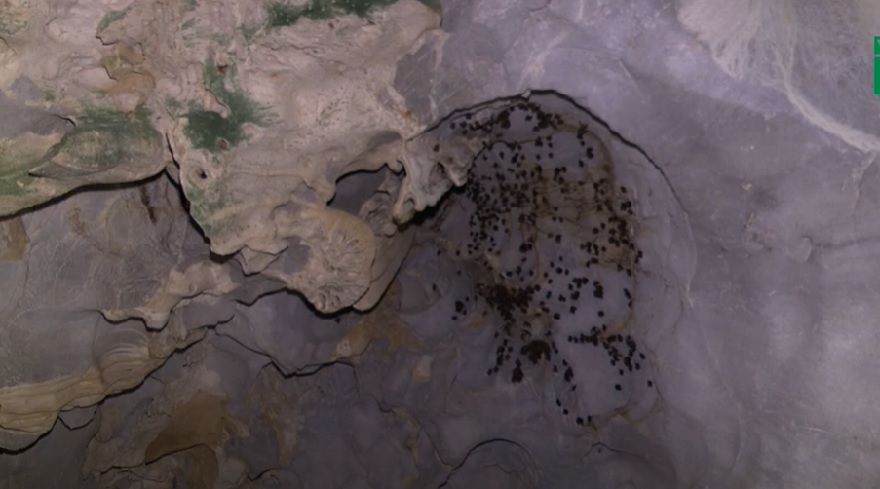 The final section of Trung Trang Cave is a large chamber that serves as a roost for the Ha Long leaf-nosed bat[/caption>
With its cool atmosphere, unique scenery, and thrilling stories, Trung Trang Cave offers memorable experiences. Why wait—plan your visit to Trung Trang Cave today and feel the wonders of nature!