Introduction to Bo Dai Waterfall
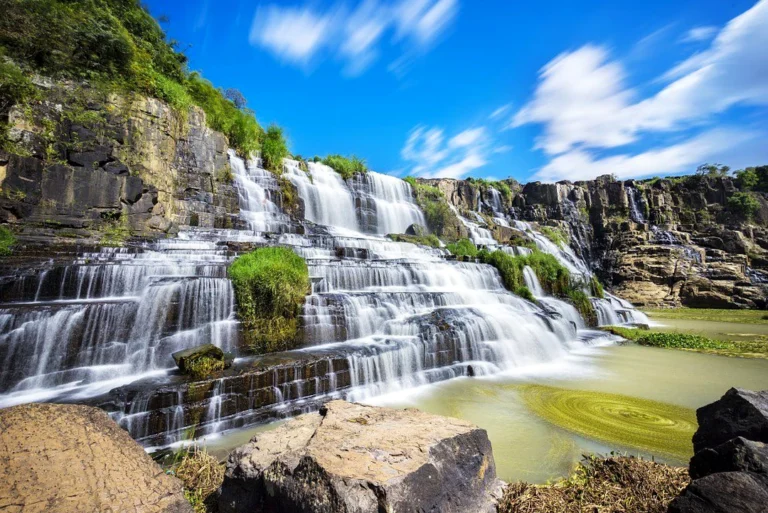
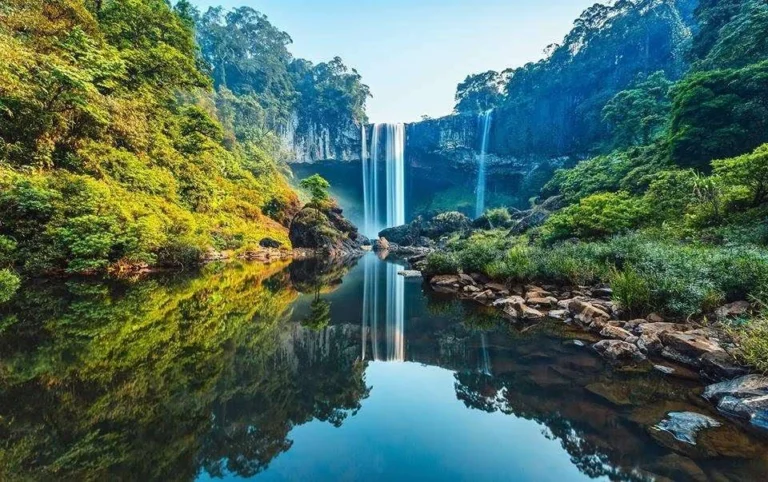
Bo Dai Waterfall, also known as Phieu Linh Waterfall, is located in Binh Khe commune, Dong Trieu, Quang Ninh Province. According to locals, the waterfall got such a peculiar name because the cascading water collects into pools with a yellowish hue resembling cow urine. The waterfall consists of four majestic tiers with an estimated height of over 100 meters. The water flows powerfully, especially during the rainy season, producing a roaring murmur like an epic symphony of the mountains and forests day and night. Each tier of the waterfall possesses its own distinct beauty:
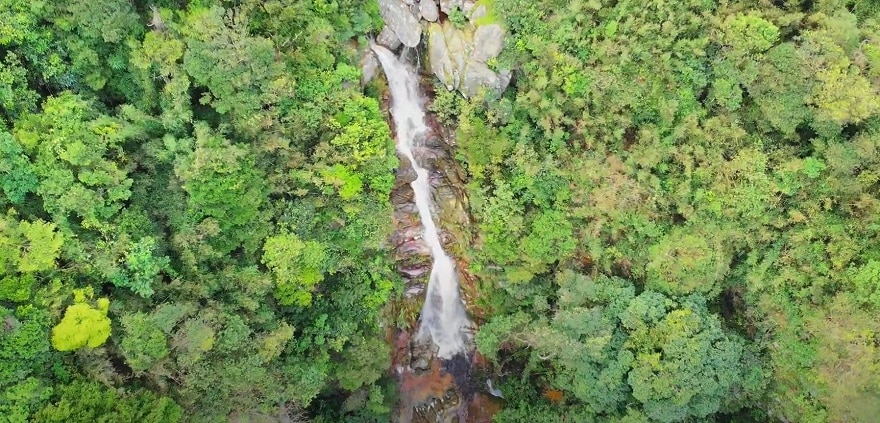
Bo Dai Waterfall
The first tier offers the widest expanse among the four distinct tiers of Bo Dai Waterfall. The torrent rushes over five to six stacked rock ledges resembling natural stone steps. At the foot of the falls lies a broad pool formed by the powerful cascade pouring down from above. Crystal-clear emerald water, white spray shooting skyward, and greenery and wildflowers clinging to the cliff faces make the scenery all the more picturesque and poetic. Looking down from above into the clear stream water, two large boulders resting deep at the bottom of the pool are clearly visible.
The second tier splits into two streams: one side flows gently, while the other crashes against rocks to create plumes of white foam. At the base of the falls sits a small, crystal-clear, refreshingly cool pool. Here, visitors can see large boulders stacked together like a natural embankment holding the water in place.
The third tier is the longest drop, estimated at over 30 meters. Water plunges from high above, striking multiple rock ledges to form a winding cascade like a flowing silk ribbon. At the base rests a three-tiered stack of boulders. Unlike the first and second tiers, the third tier does not form a pool at its foot.
The fourth tier is the highest level of Bo Dai Waterfall. Here, headwaters from Bo Dai Stream flow down gently, babbling year-round. Very few visitors climb up to this tier due to the rugged, difficult terrain.
According to local residents, during the rainy season the surging water lends the falls an imposing grandeur. The roar of the cascading water creates a sound signature unique to Ngu Dai Son. This is also the source of Da Mai Stream, where forest travelers traditionally pause to rest and sharpen their knives.
How to Get to Bo Dai Waterfall
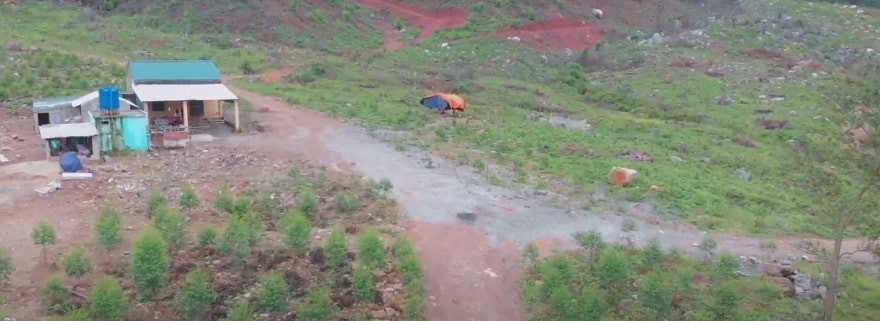
Road to Bo Dai Waterfall
The access route to Bo Dai Waterfall is merely a narrow dirt path cleared by locals. The terrain is fairly steep and challenging to navigate. If traveling by motorbike, a semi-automatic bike is the best choice. Notably, once entering this area, there is no mobile signal or 4G reception. Therefore, visitors should come well prepared—especially with a map—to avoid getting lost. After riding along the dirt track for a few kilometers, you will spot a stream gully on the left side of the road, signaling that the foot of the falls is close. Visitors should park their bikes in this area and continue on foot, as the trail leading to the base of the waterfall is far rougher than the preceding road, covered in rocks and puddles.
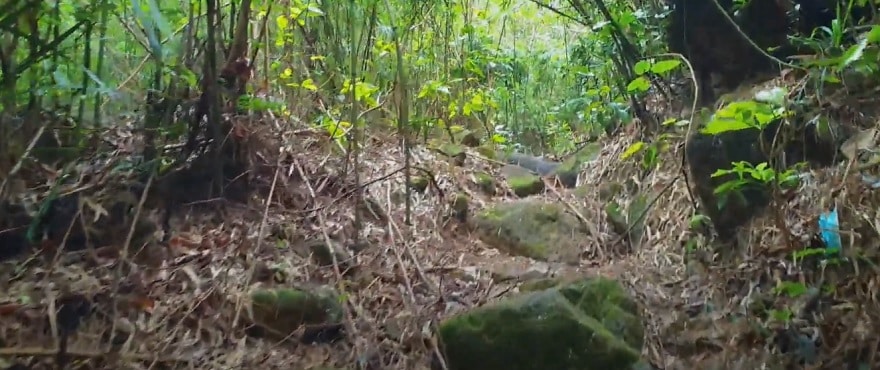
Hill trail leading to the waterfall
The path to the waterfall is a single narrow trail, so visitors hardly need to worry about losing their way. Roughly every 30 meters, a small red arrow is painted on stones along the ground. After covering two-thirds of the route, turn left following the painted arrows to reach tiers 1 and 2. Beyond this point, there is no longer a defined footpath; visitors must climb along a hillside route through the forest, following tracks where grass and brush have been trampled down. Generally, visitors are advised to visit only the first and second tiers, as the climb to tiers 3 and 4 is considerably more strenuous and best attempted only by those seeking extra adventure.