Exploring the Te Puia geothermal valley begins with the heroic epics of grand voyaging across the Pacific Ocean, when resilient Polynesian settlers bravely rode the ocean waves to reach the land of Aotearoa around the mid-fourteenth century. According to whakapapa oral genealogies and kōrero tuku iho legends cultivated over millennia, the renowned high priest and spiritual navigator Ngātoroirangi aboard the legendary waka Te Arawa canoe made landfall at the Bay of Plenty. Confronting the harshness of the southern cold winds, he petitioned the deities to bestow ancestral warmth from the distant primordial origin of Hawaiki. His prayer transformed into underground streams of fire tearing through the earth’s crust, erupting through geological strata to form the majestic geothermal expanse of Rotorua today, turning this land into a sacred symbol bound to the soul of the indigenous tribes.
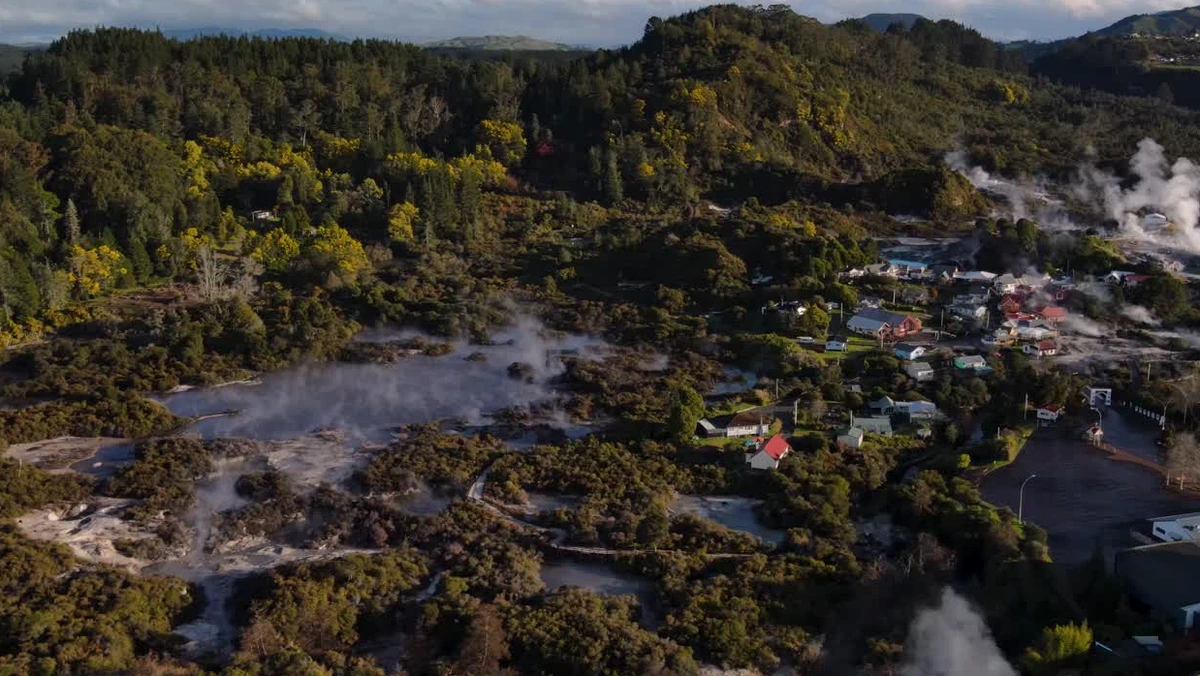
From around 1325, the rugged basin terrain enclosed by sheer cliffs and boiling mineral pools was skillfully utilized by the Māori people to construct the formidable Te Pā military outpost. Geothermal activity was not only an impenetrable natural barrier protecting the community from tribal attacks, but also the very source nurturing their unique lifestyle. The land witnessed the alliance and solid territorial shaping between two hapū sub-tribes, Tūhourangi and Ngāti Wahiao. The name Te Whakarewarewa, an abbreviated version of the ancient moniker Te Whakarewarewatanga-o-te-ope-taua-o-Wahiao, grandly signifies the gathering place and uprising of the elite army under the command of the illustrious leader Wahiao. This leader masterfully turned natural advantages into military prowess and an enduring symbol of the indigenous community’s self-determination through centuries of turbulent change.
The fiercest vicissitudes of circumstance struck at dawn on June 10, 1886, when the neighboring Mount Tarawera suddenly awakened after a thousand-year slumber. The fury of the earth unloaded millions of tons of ash, lava, and hot mud, completely burying the Pink and White Terraces wonders alongside many prosperous ancient villages. Faced with the catastrophic natural disaster that altered the region’s entire ecological map, surviving members of the Tūhourangi and Ngāti Wahiao sub-tribes were forced to undertake a historic migration toward the Te Whakarewarewa valley. Here, amidst billowing smoke and endless underground springs, they valiantly rebuilt their new lives, turning the wild mineral springland into a spiritual sanctuary and a center for community bonding after the horrifying catastrophe.
Entering the twentieth century, the valley’s unique historical and geological value was recognized with systematic planning vision when the Whakarewarewa Hot Springs Reserve was officially established in 1926. A milestone bringing this heritage to the international stage occurred in 1963, when Parliament enacted the New Zealand Māori Arts and Crafts Institute Act. This historic legislative event gave birth to today’s Te Puia complex, laying a solid foundation for preserving and reviving ancient essences that seemed on the verge of fading away. Under Te Puia’s roof, exquisite whakairo wood carving and traditional raranga flax weaving techniques are passed down through generations of artisans, turning the smoky valley into a living museum reflecting the full rebellious vitality of indigenous culture.
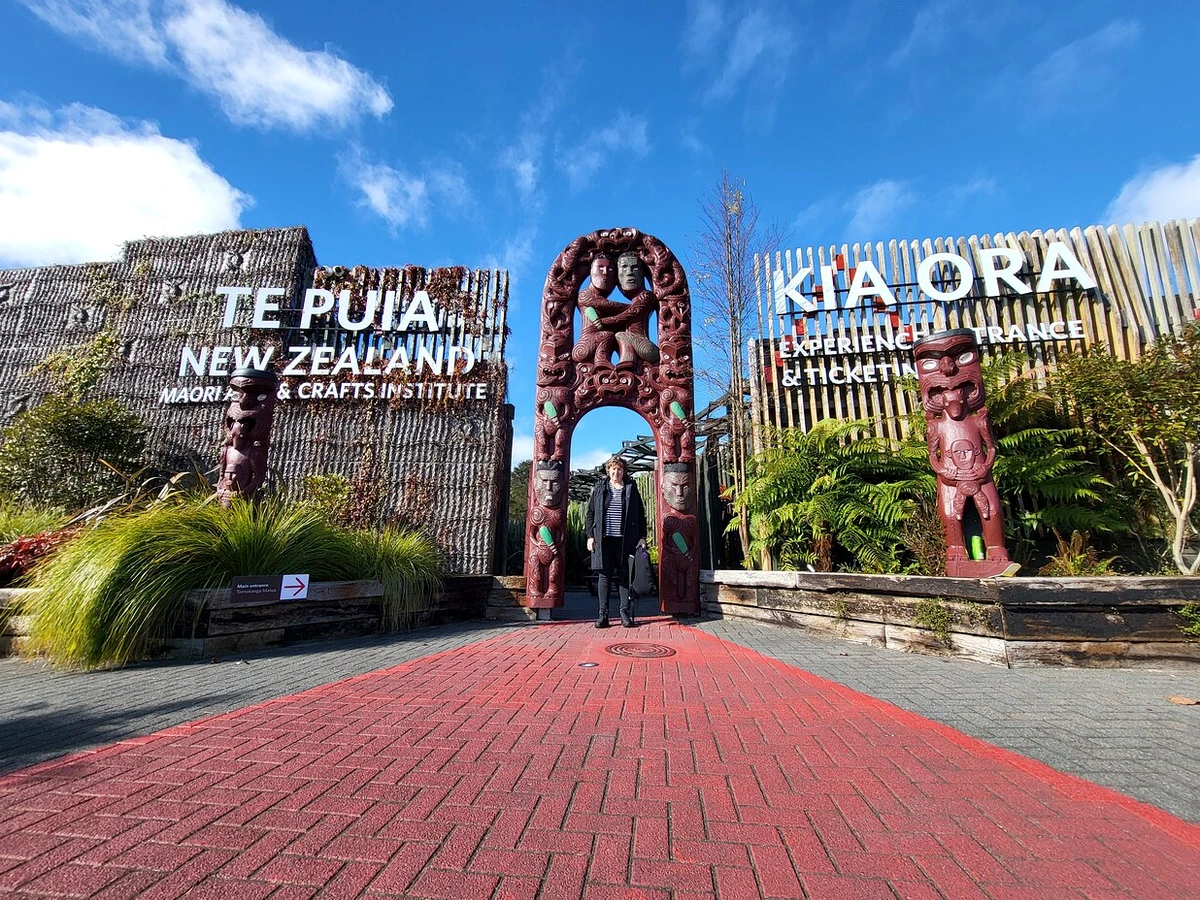
Nestled snugly within the volatile Pacific Ring of Fire, the Te Puia geothermal valley spans across an expansive campus of 60 to 70 hectares, equivalent to roughly 173 acres. This is a majestic geological link belonging to the renowned Taupō Volcanic Zone, one of the planet’s most intensely active volcanic belts stretching continuously from the towering snow-capped peak of Mount Ruapehu to the distant fiery island of Whakaari. Geomorphologically, Te Puia reigns right at the southern boundary of the Rotorua collapse caldera—a vestige of earth-shattering cataclysms from approximately 240,000 years ago. The landscape here has been forged through countless eras by the complex stacking of dense rhyolite lava domes, sheer gray ash ignimbrite cliffs, and meandering alluvial plains patiently nourished by the Puarenga Stream over the years.
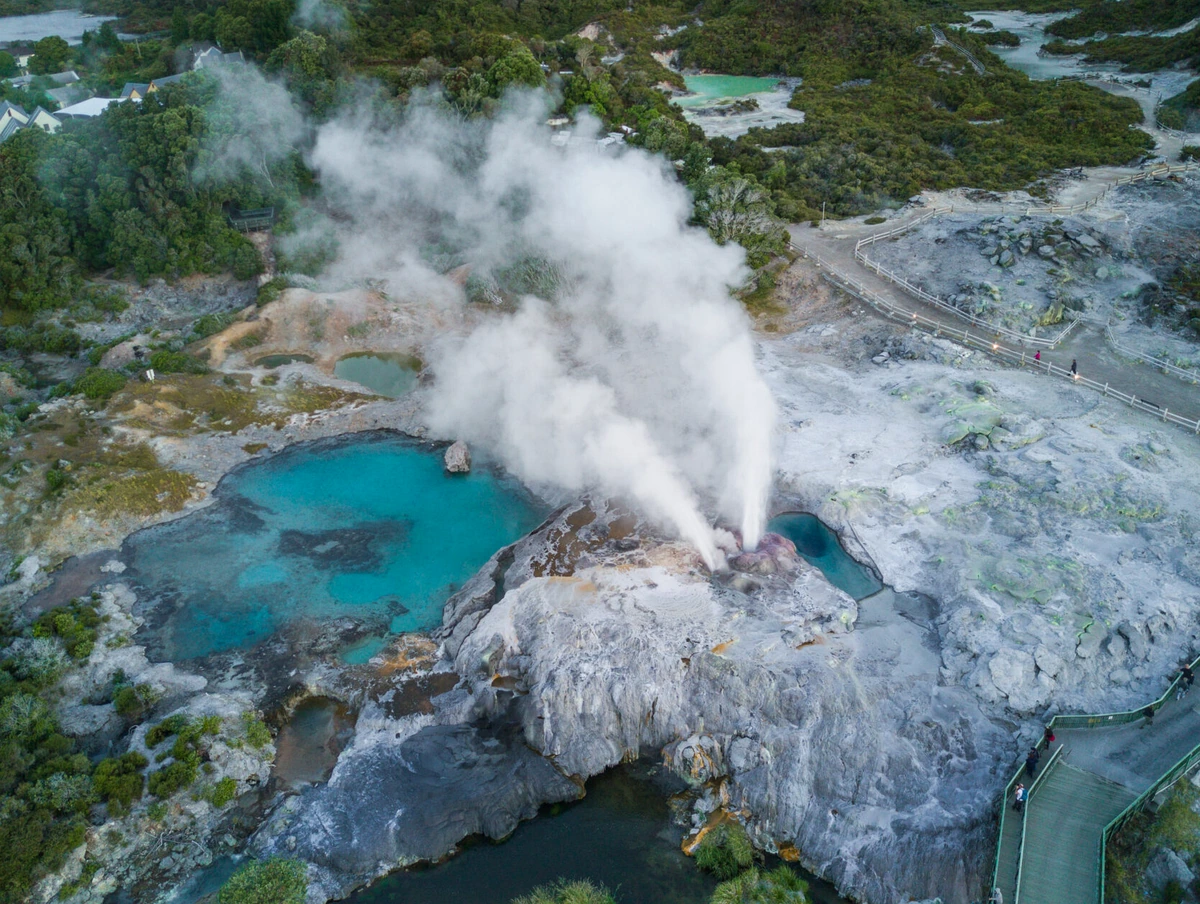
Perched at an altitude of approximately 280 meters above sea level, Te Puia valley’s terrain resembles a gigantic lid resting upon the eternal thermal engine of Mother Earth. Beneath the seemingly calm topsoil lies an intricate network of deeply fractured volcanic rock layers, forming a natural plumbing system that brings massive hydrothermal resources from a depth of two to three kilometers underground up to the surface. Groundwater cooked by boiling magma reaches temperatures exceeding 250°C, dissolving countless minerals and accumulating extreme pressure before tearing through stratigraphic fissures to shoot straight up into the sky via underground springs and eruptive vents. Wisps of steam blend tightly with the pungent sulfur odor, creating a surreal atmosphere that is simultaneously wild, mysterious, and imbued with the solemn breath of primeval nature.
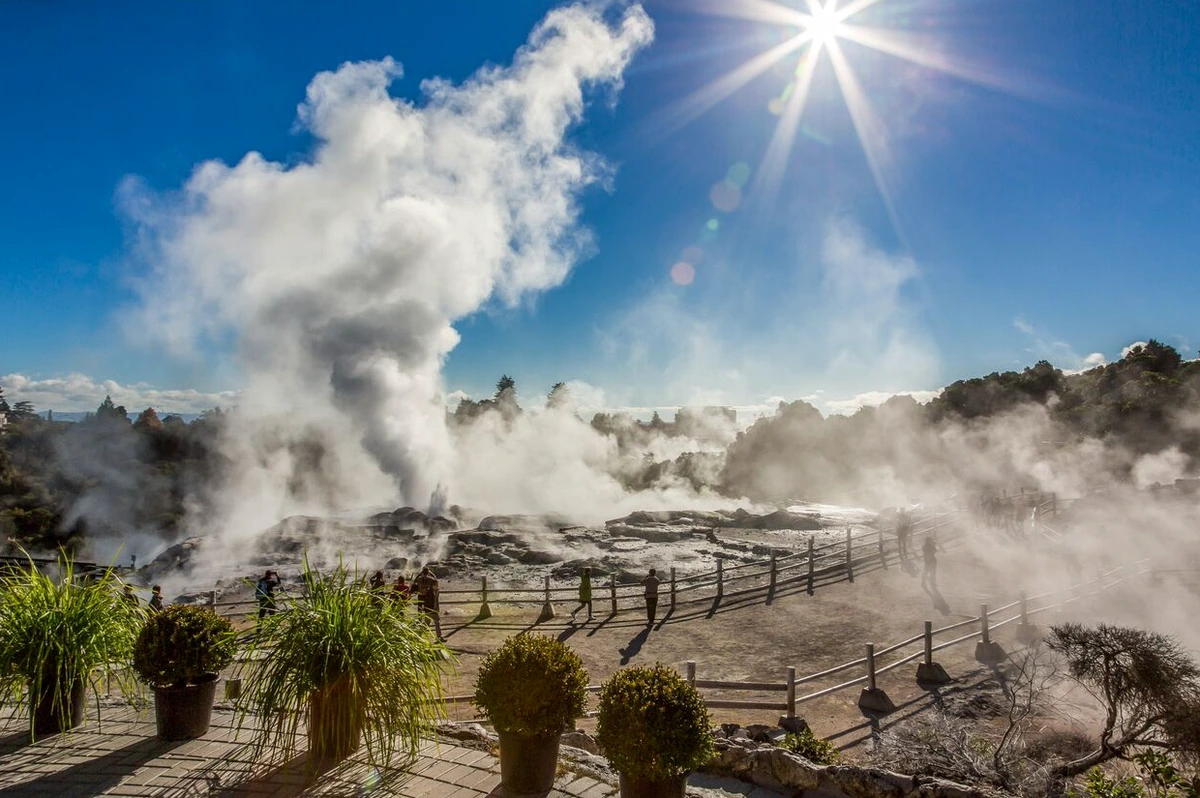
The ecological environment enclosing the valley possesses a rare extreme nature, challenging all conventional survival laws as surface temperatures around gas vent holes frequently hover above 60°C. Yet, wondrous nature has not turned Te Puia into a lifeless desert; on the contrary, it nurtures a resilient indigenous flora with extraordinary adaptability. Interspersed among layers of snow-white silica deposits and bubbling gray mud pools is the durable green of heat-tolerant kānuka and mānuka bushes, diffusing a sweet fragrance from their pure essential oils. Accompanying this breathtaking landscape wrapped in mist are proud, towering silver punga fern fronds—a sacred cultural symbol representing the undying vitality and indomitable spirit of the people of the land of the long white cloud, Aotearoa.
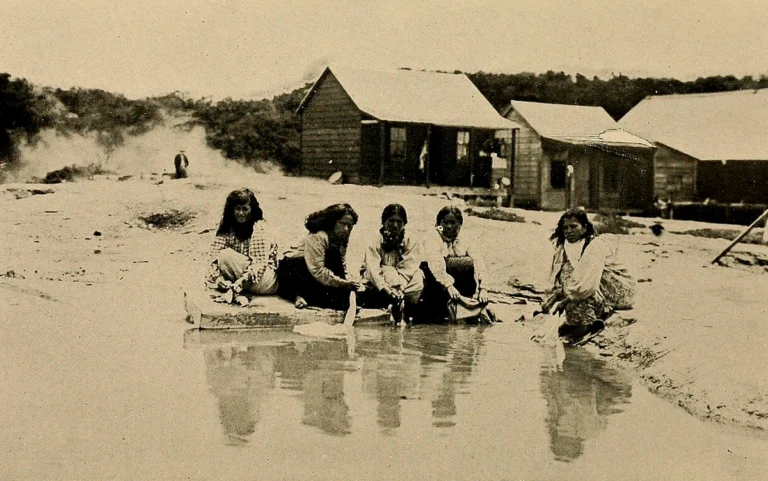
Far from opposing or attempting to subdue geological fury, indigenous Māori clans since ancient times have built a consummate settlement model, harmonizing community life into every hot pulsing beat of the valley. With inherited folk wisdom passed down through generations, they thoroughly harnessed geothermal energy to serve daily life with skill and reverence. Natural thermal pits are meticulously planned into traditional hāngī stone cooking ovens, where food is cooked slowly by underground mineral steam, retaining the rustic and pure flavors of native produce. In cooled streams, locals established open-air waiariki therapeutic baths, turning the nutrient-rich mineral water into a magical remedy to restore vitality, heal joints, and soothe souls after long hunting trips or arduous ocean crossings.
Located right in the heart of the misty Te Whakarewarewa valley, the Te Puia architectural complex is a majestic epic of harmonious crossover between traditional Māori construction thinking and modern engineering solutions adapted to extreme external environments. The greatest challenge dictating all spatial planning here stems from the harsh geothermal environment: the atmosphere is constantly dense with sulfur vapor, hydrogen sulfide gas, and acidic mist rising from the ground, capable of corroding metals and rotting structures after just a few rainy and sunny seasons. To stand proudly through time, the entire space is created around the focal point of the sacred marae ātea courtyard—an expansive yard carpeted with native vegetation, hosting the most solemn pōwhiri welcoming ceremonies before guiding pilgrims into community living sanctuaries.
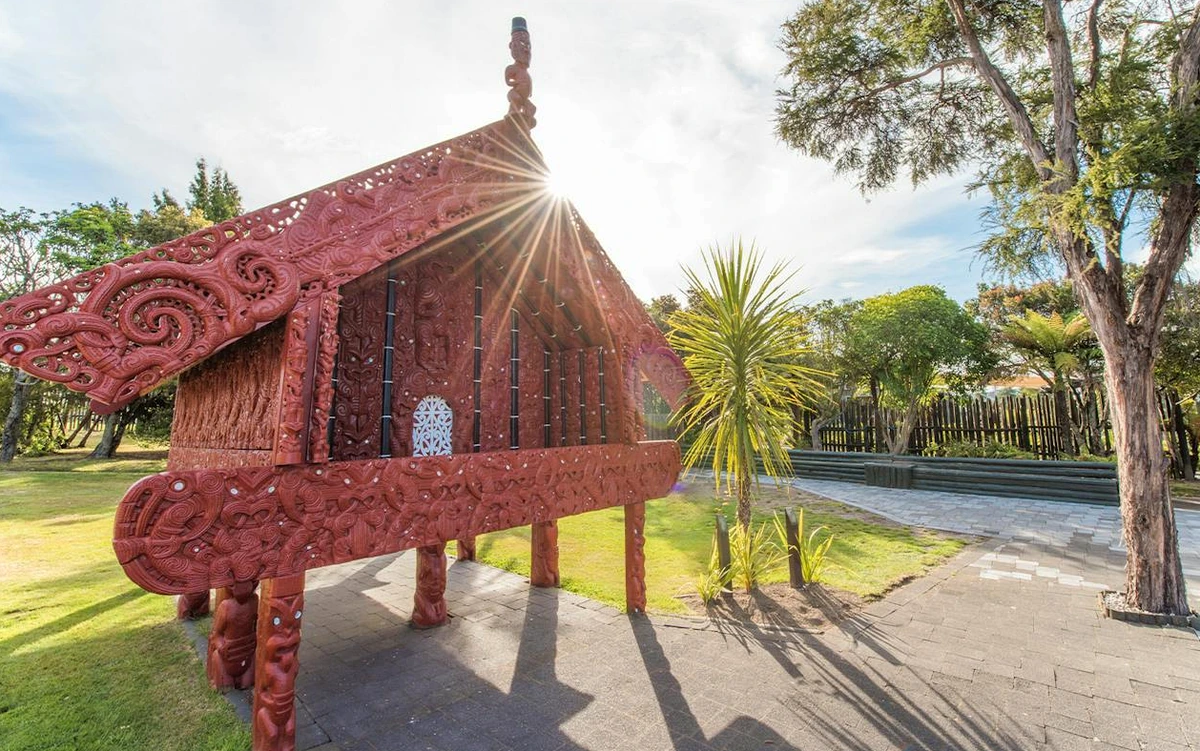
The majestic focal point of the complex is the wharenui meeting house named Te Aronui a Rua adjacent to the wharekai community dining hall, a brilliant manifestation of Māori geometry and cosmology. Every timber grain constituting the structure undergoes rigorous selection: hundreds of years old tōtara giant tree trunks were felled from primeval forests to carve the sturdy pouaho load-bearing pillars alongside maihi porch boards stretching out like an ancestor’s open arms sheltering descendants. While tōtara possesses natural moisture-resistant and sulfur-repelling essential oils, the flooring is paved with dense monolithic kauri wood planks, growing darker and more lustrous with every bare footstep of friction. Manual braiding techniques from pliable kareao (supplejack) vines and traditional muka flax fiber once served to bind structural beams; however, to comply with modern New Zealand Building Code (NZBC) standards, engineers skillfully threaded high-strength stainless steel frames deep within the timber core, creating an earthquake-resistant load-bearing skeleton without harming the original soul of carving artistry.
The Te Puia space does not turn into a static museum but shines brightly as a living heritage revival center through the headquarters of the New Zealand Māori Arts and Crafts Institute (NZMACI). This research institute complex is seamlessly arranged into three elite training spaces: the National Wood Carving School (Te Wānanga Whakairo Rākau), the National Weaving School (Te Rito), and workshops for polishing animal bones and sacred pounamu greenstone. Beneath open workshops bathed in natural light, master artisans and students transmit techniques of carving kōwhaiwhai patterns, pitau spiral motifs symbolizing growth, and inlaying ancestral eyes with iridescent paua seashells. Each kahu huruhuru feather cloak woven from muka or whakairo ancestral statues is not merely an artwork, but living whakapapa genealogical pages preserving ancient breath amidst the contemporary world.
The practical scale of Te Puia today affirms its stature as an international-class conservation project with tens of millions of dollars invested to rebuild high-tech infrastructure. The Te Rāwhitiroa exhibition gallery is built separately with a micro-climate air conditioning system to shield priceless taonga ancestral treasures from the oxidative impact of geothermal gas. Even more impressive is the closed underground geothermal heat exchange system, applying the intense thermal energy deep within Te Whakarewarewa’s earth to warm the entire complex in winter without carbon emissions. Enveloping bubbling geysers and mineral mud basins is an extended network of elevated boardwalks winding along, lifting visitors smoothly into mid-air, offering both spectacular viewing angles and absolute preservation of the fragile silica sinter crust accumulated over millennia of geological change.
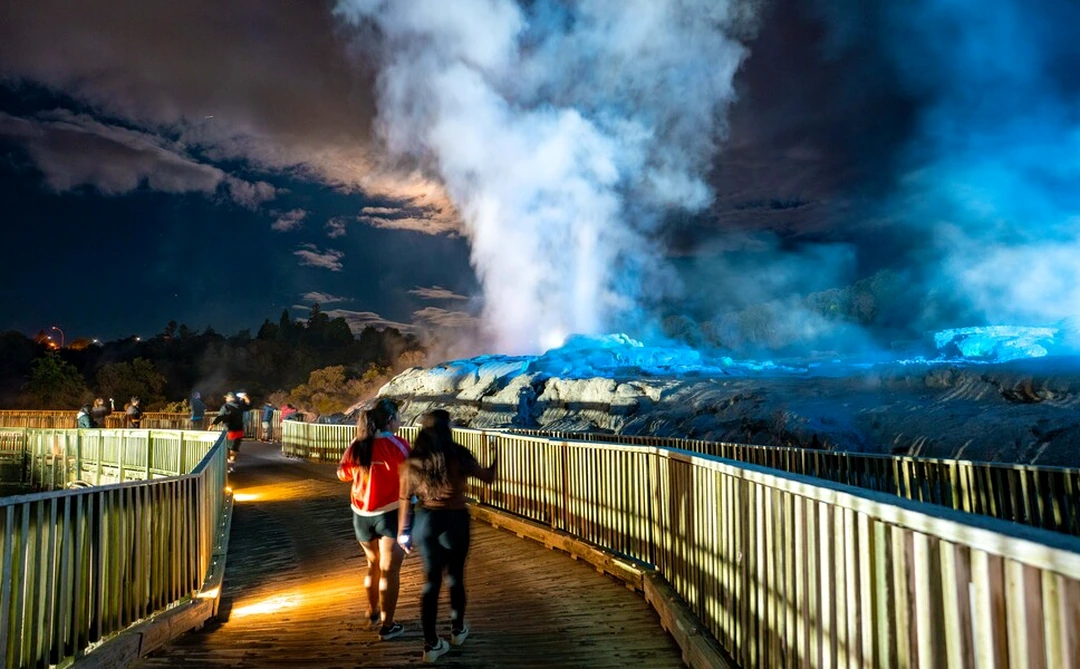
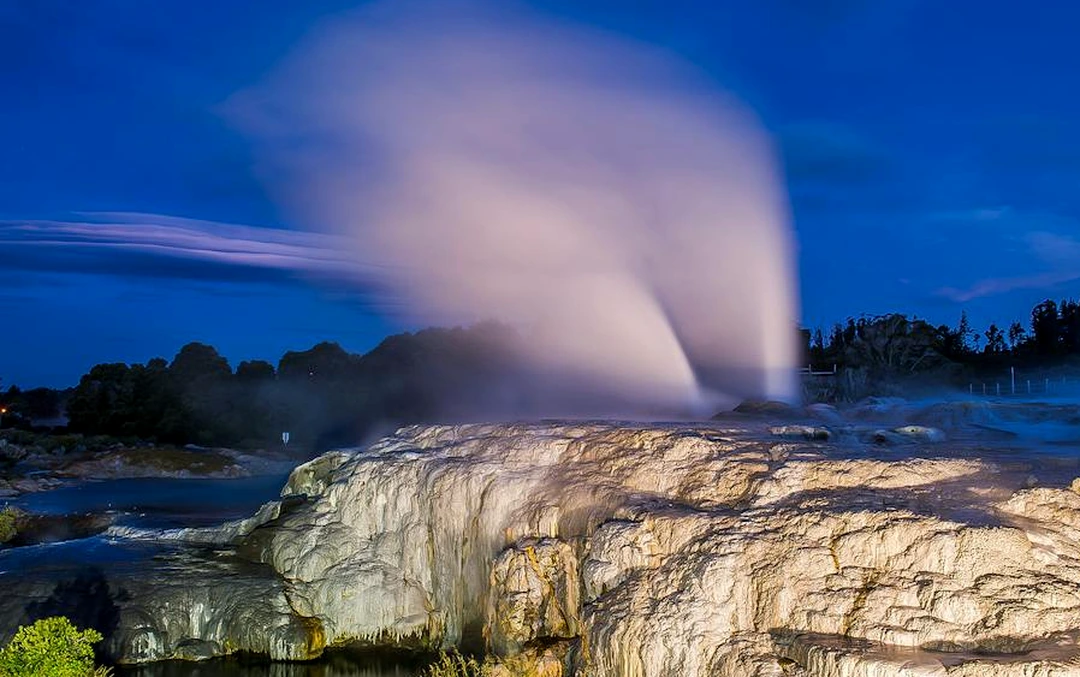
When dusk gradually falls behind the Rotorua hills, the Te Puia geothermal valley sheds its daytime gray ash cloak to transform into a mystical dimension through the Te Puia Night Experience. Without abusing flashy theatrical colored lighting effects, the lighting art system here is carefully calculated by engineers with warm LED color spectrum bands ranging from 2700K to 3000K, cleverly hidden deep beneath volcanic slag cracks and native fern canopies. This indirect lighting technique both highlights billowing steam columns surging from the deep earth and completely eliminates artificial light pollution, keeping the southern night sky pristine so visitors can gaze at the sparkling Southern Cross constellation against a mysterious black velvet background.
The night journey begins with an ancient welcoming ritual called pōwhiri conducted solemnly at the marae ātea courtyard. Under warm light illuminating every intricate pearly shell carving, resonant sounds from a sea snail shell trumpet pierce the silent night, blending with the emotional chanting calls of an indigenous woman welcoming distant guests into the sacred space. Stepping across the threshold of the wharenui community house, where every pillar is personified as the ribs and spine of tribal ancestors, visitors admire a panoramic picture of Maori spiritual life through traditional folk songs and dances. The crisp, infinitely varied tapping rhythms of the tī rakau stick game display agility honed in battle reflexes, contrasting smoothly with soft poi balls flying in the air simulating the wings of native birds amidst brisk winds.
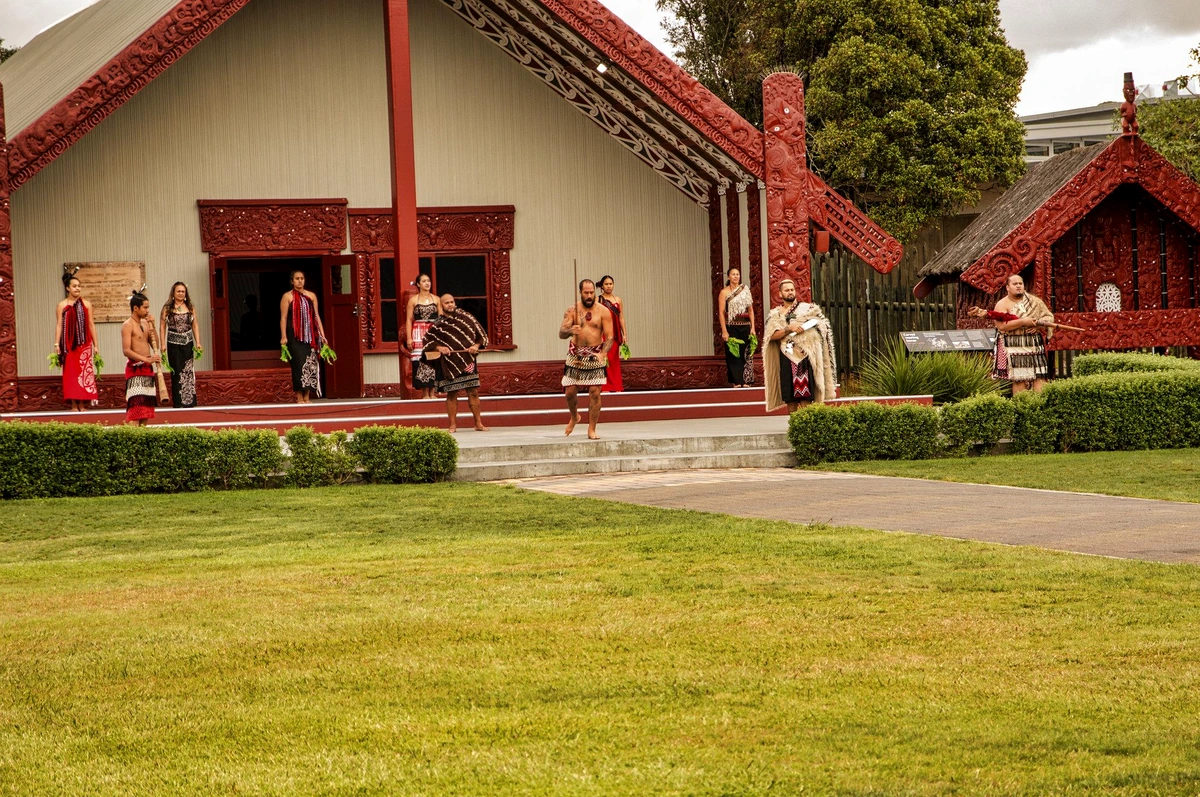
The climax of the live-action performance inside the wharenui erupts when male Maori warriors let out intimidating roars during the renowned haka war dance. The floor-shaking stomp of takahi reverberates synchronously like the rumble of an underground geological pulse, combining with rapid chest-slapping movements, glaring threatening eyes, and defiant pūkana tongue protrusion. This ritual is not merely physical performance, but spiritual communication to awaken and release mauri—the sacred internal life force flowing through the veins of all things, making the atmosphere inside the common house condense with an overwhelming primeval energy tier.
Leaving the cozy space of the wharenui, travelers’ footsteps continue into the heart of the night valley via rustic wooden walkways illuminated by flickering torches. The highlight of Te Puia’s darkness is the complete interaction between magical optics and the vibrant acoustic blend of Mother Earth, Papatūānuku. Standing on cliffs watching the magnificent Pōhutu Geyser violently blast scalding water columns dozens of meters high into the quiet space, one cannot help shuddering at the roaring echoes from the deep abyss, blending with the bubbling thick sizzle of thousand-year mineral mud pools and the unceasing whistling steam from fumarole vents scattered across valley slopes. The characteristic sulfur mineral scent lingers in the hazy mist, blending with warmth radiating from natural stone steps, completing an all-sensory night journey at the gateway to New Zealand’s underworld.
Amidst the hazy steaming space of Te Puia valley, culinary arts are not merely food preparation to sustain life, but a spiritual harmony reflecting the indigenous Māori philosophy of absolute harmony with nature. Inheriting infinite thermal energy hidden deep within Mother Earth Papatūānuku, indigenous generations here created the famous Kai Horomanga geothermal cuisine, turning steam columns and boiling mineral springs into magnificent natural kitchens. Mineral smoke carrying the primeval breath of the earth has forged a tasting style that is both rustic and sophisticated, retaining heritage food traditions dating back hundreds of years that no place else in the world can completely replicate.
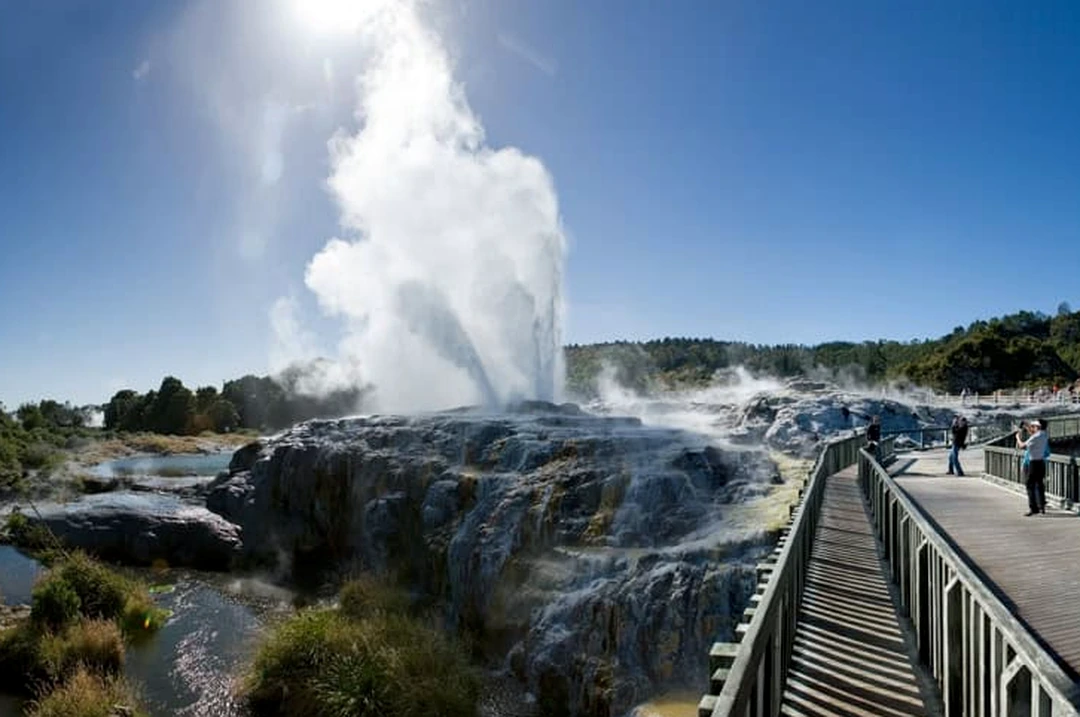
Geothermal cooking techniques in the valley are divided into two unique hereditary branches, highlighted by the whua steaming method using kete wera flax baskets. Māori skillfully weave native harakeke flax leaves into sturdy baskets, fill them with fresh tubers, sweet corn, or seafood, and submerge them directly into open hot mineral pools or hang them just above high-pressure steam vents. When sealed with natural woven mats, the mineral-rich steam instantly envelops the ingredients, cooking food smoothly while retaining every drop of pure sweet juice and original nutritional content, leaving a lingering mineral aftertaste on the palate.
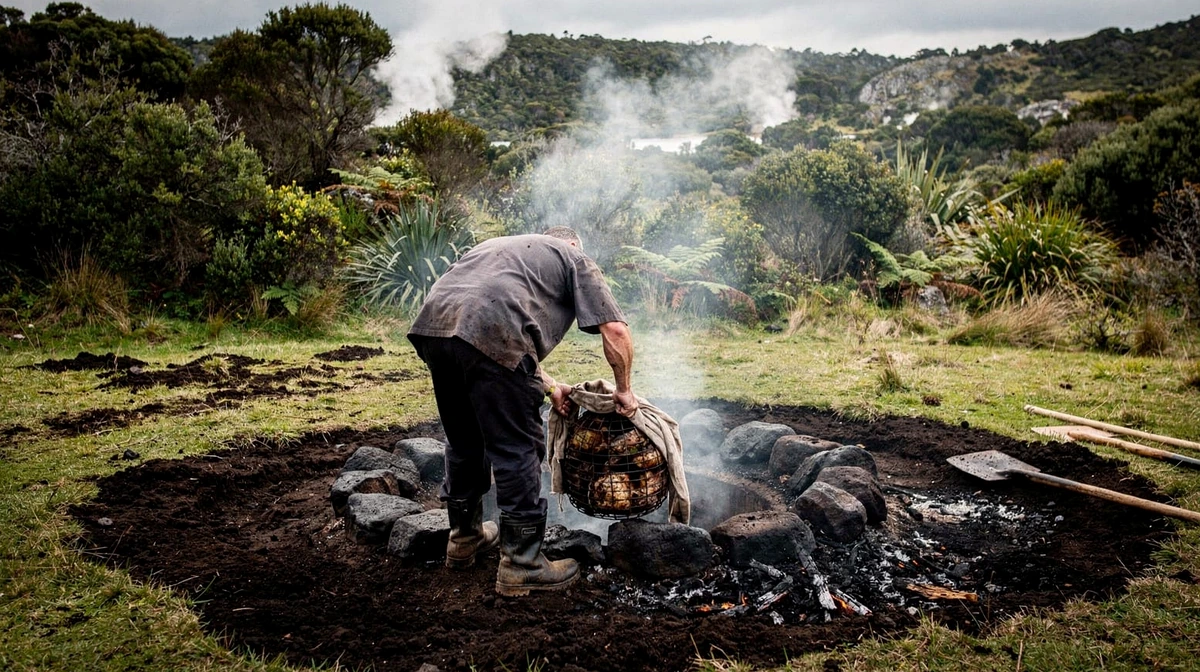
Most elaborate and deeply culturally symbolic is the Hāngī underground earth oven, a slow-roasting feast passed down through countless generations of the Te Arawa tribe. The ritual begins by digging a pit in the valley floor, laying native hardwood and placing dark volcanic basalt rocks called whatu on top. When fire burns fiercely heating basalt stones until glowing red, ash is cleared to make way for food baskets containing lamb, pork, chicken, and traditional tubers like kūmera sweet potatoes, potatoes, and pumpkin. A large damp cloth is draped over before the entire oven pit is completely sealed with a thick layer of soil, turning the earth into a giant natural pressure cooker.
Under simmering heat and moisture rising from basalt whatu stones for 3 to 4 hours, meat fibers slowly turn tender, melting in the mouth without becoming dry, while absorbing wood smoke mixed with earthy soil aromas. Accompanying the classic Hāngī feast are wild ingredients carefully foraged from nature, typically the soothing bitter taste of wild-growing pūhā greens, or crisp watercress sprigs drenched in dew picked along the cool winding Puarenga stream meandering around the valley, creating perfect balance for rich fatty meat dishes.
Entering the contemporary era, traditional geothermal culinary art is elevated and fully honored at the Pātaka Kai restaurant complex, where diners can admire the magnificent water column of the Pōhutu geyser through transparent glass walls while tasting Pacific cuisine combined with authentic Māori elements. Alongside fragrant Hāngī meat trays imbued with traditional colors, the feast is incomplete without warm slices of rēwena bread. This traditional bread is fermented from natural potato yeast, boasting a golden crust, chewy crumb with an elegant sour aftertaste, awakening all senses and completing the ancient gourmet experience of the Te Puia thermal valley.
The Te Puia geothermal valley is open year-round, facilitating cultural exploration regardless of seasonal shifts. Daytime operating hours run from 09:00 to 17:00 New Zealand Standard Time, opening spaces with billowing smoke blending into sunlight. As dusk falls, the space transitions to evening cultural activities from 18:00 to 21:30, where traditional welcoming rituals and hāngī feasts are recreated beneath the night sky. To preserve the ecosystem’s pristine nature and maintain a solemn atmosphere, management enforces visitor capacity limits, requiring exploration to be planned and booked days in advance.
Transportation infrastructure connecting to Te Puia valley is systematically planned and convenient for multiple access methods. For domestic flights landing at Rotorua Regional Airport (ROT), the southward journey takes only about fifteen minutes driving via State Highway 30 connecting to Hemo Road leading straight to the valley gates. Departing from bustling Auckland, the interprovincial route spans an estimated 230 km, equivalent to three leisurely hours driving along State Highway 1 turning onto State Highway 5, taking travelers across lush green plains of the Waikato region before entering the smoking geothermal basin. Choosing long-distance buses or self-drive rentals both offer magnificent geographical views along the central volcanic belt route of the North Island.
Stepping into Te Puia means entering a living cultural territory protected by indigenous Māori customary tikanga laws. The philosophy of ancestral reverence requires visitors to maintain decorum, especially inside the wharenui—the tribal community meeting house. Absolutely no unauthorized filming or photography is allowed inside this sacred space during solemn chanting and prayer ceremonies unless explicit consent is granted by elders. Tikanga laws also forbid sitting on dining tables, tea tables, or placing bodies on carved pillars symbolizing ancestors, as these structures possess tapu status—a sacred inviolable state that must be kept pure.
Besides social behavioral standards, personal safety and ecological security at Te Whakarewarewa are vital rules everyone must engrave in their minds. Hidden beneath colorful mineral crusts are rolling thermal currents where mineral mud and boiling water temperatures regularly exceed 100°C. Travelers must walk entirely on firmly designed wooden boardwalks, never straying from designated boundaries into fragile sediment zones. Touching smoking soil or throwing stones, coins, and foreign objects into the Pōhutu geyser mouth not only directly threatens life but violates New Zealand government’s strict nature conservation laws, carrying heavy penalties.
To fully enjoy the trip, preparing comfortable walking shoes with good traction and windproof layered clothing is essential to adapt flexibly to cold winds carrying sulfur scents. All experience costs from basic admission tickets, expert guide services to gourmet feasts are transparently listed, reflecting true millennial cultural preservation value. To turn these magnificent imaginations into a vivid reality with an itinerary seamlessly combining wild nature and Māori heritage, you can explore the comprehensive New Zealand tour package to fully immerse yourself in the magical land where the earth’s core always pulses with ancestral breath.