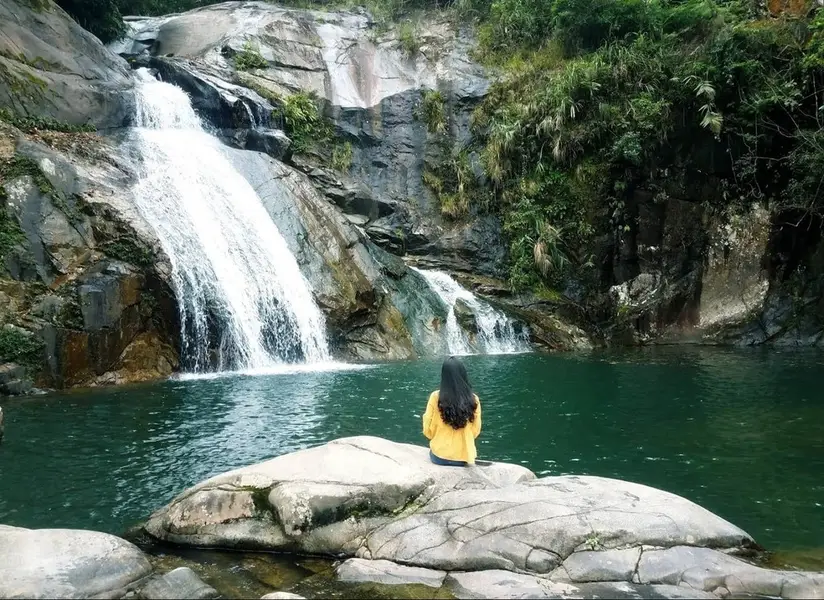
With its pristine natural beauty, the mountainous district of Binh Lieu in Quang Ninh province is known as an attractive destination for adventurous travelers. One of the lesser-explored gems is Khe Van Waterfall in Huc Dong commune. Visitors will be impressed by the majestic three-tiered waterfall, especially during the rainy season from May to August, when the cascading white water creates a picturesque scene.
See more: Binh Lieu Tourism
Introduction to Khe Van Waterfall
With its steep mountainous terrain, the ravines in Binh Lieu district have formed magnificent and poetic waterfalls, serving as a getaway for locals and tourists during the sweltering summer days. The most famous is Khe Van Waterfall, a unique natural waterfall located in Huc Dong commune, 12km southeast of Binh Lieu town center.
Khe Van Waterfall gets its name from the stream flowing down from Khe Van village. However, according to locals, it was originally called Khe Van (where ‘khe’ means stream and ‘van’ means cloud, hence it is also known as Khe May Waterfall), but over time, the name evolved into Khe Van.
Khe Van Waterfall consists of 3 majestic tiers with a height of approximately 100m. The water flows strongly, especially during the rainy season, creating a roaring sound like an epic symphony of the mountains and forests day and night. Each tier of the waterfall possesses a different beauty:
The first tier has the largest space among the three sections of Khe Van. This is also the most visible tier that captures the attention of tourists. It is situated on a large rock formation in the middle of the stream, resembling the trunk of a docile elephant lying down. At the foot of the waterfall is a wide lake formed by the large volume of water cascading down. The clear blue water, combined with the white spray of the waterfall and the greenery on the cliffs, makes the scene even more beautiful and poetic. Surrounding the waterfall are thousands of large and small stones, layered impressively to create a stunning natural landscape.
The second tier of the waterfall features a stream that splits into two—one side larger than the other. Water flows from high above and crashes against the rocks, creating multiple layers of white foam. At the foot of the waterfall lies a large, crystal-clear, and cool lake. Here, visitors can observe interesting rock formations eroded by the water.
The second tier offers a vivid connection as it continues to split into two streams, one large and one small. Water flows from above, hitting the rocks to create multiple tiers and spraying white foam. At the foot of the waterfall, the water flows strongly into the rocky basin, gradually forming a clear and cool pool. Here, visitors can see large, flat, and interestingly shaped rocks eroded by the water, where one can rest.
The highest tier leaves visitors in awe of nature’s majesty. The waterfall resembles a landscape painting from above, with a vast area of water like a swimming pool. In the distance, the highest mountain in Binh Lieu and the terraced fields and villages look like a natural painting brought to life.
Khe Van Waterfall takes on different nuances with each season. When the rainy season arrives, the waterfall flows fiercely, creating a symphony that echoes throughout the mountains. But when the dry season comes, the flow slows down, and the water narrows into a single, gentle stream, as warm and lyrical as a love song. The water from Khe Van Waterfall flows into the Pac Hooc stream and continues into the Tien Yen River. Therefore, Khe Van Waterfall can be considered the headwaters of the Tien Yen River.
How to get to Khe Van Waterfall
Khe Van Waterfall is located 12km southeast of Binh Lieu town, on the road to Huc Dong commune, which winds like silk ribbons around the mountains and beautiful rice fields of the Tay ethnic people. Khe Van is not far, but the journey takes about 30 minutes because the road is relatively narrow and difficult to navigate, even though it is paved with concrete. Visitors should use a manual transmission motorbike to better handle this route. However, drivers must stay focused; when you spot an oncoming vehicle, honk, turn on your signal lights, and find a place to pull over. From the parking lot, visitors must walk an additional 3km through the forest to reach the waterfall. Along the way, you may encounter San Chi and Dao ethnic people working.
If you want to experience the mountain atmosphere, you can camp overnight in the waterfall area, admire the majestic beauty of the water rushing through the rocks, and enjoy the fresh air. Visitors should prepare a tent to set up camp and have a place to rest at night. Additionally, it is recommended to bring food or buy some buffalo meat in the village on your way to the waterfall area. Another interesting experience is catching lamprey, a fish species characteristic of the stream pools at the foot of the waterfall. You can grill the fish and enjoy the unique flavor of this dish.
If you want to experience the mountain atmosphere, you can camp overnight in the waterfall area, admire the majestic beauty of the water rushing through the rocks, and enjoy the fresh air. To be safe, visitors should prepare and carefully check their tents and find a suitable spot to set up camp for the night. Since this is a mountainous forest area with no services, you need to bring food before camping here. If you like smoked buffalo meat, you can buy some in the village on your way to the waterfall. In the pool at the foot of the waterfall, there are quite a few types of fish, especially lamprey, a species characteristic of this place. You can catch and grill the fish to enjoy its unique flavor.
Visitors should also note to choose good weather for the trip, as there can be sudden rain, especially at night. If it rains all night, the area will be covered in fog the next morning, making it very difficult to climb the waterfall at that time.
Looking up from the bottom of the waterfall, many visitors may feel challenged by the path leading to the top. Although stairs are designed to make it easier for visitors to climb, the waterfall is relatively high, and the moss makes it slippery, so visitors need to be careful to avoid slipping.
The paths to the second and third tiers from the first tier are different, but both have stairs leading up. However, visitors can take a shortcut from the second to the third tier, but this path is quite dangerous, so if you are not used to forest trails and mountain climbing, it is better to stick to the main path.
Culture of the people in the Khe Van Waterfall area
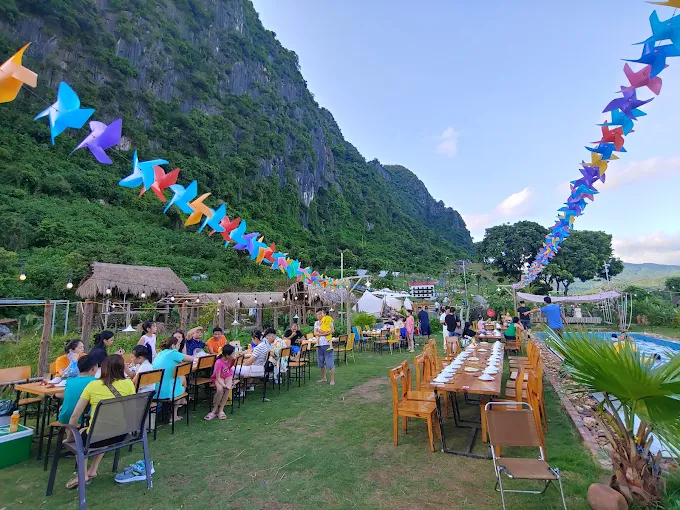
Despite the beauty and cultural significance of this location, tourism is not yet developed, and visitors can only stay in local homestays. On the other hand, this has allowed the site to retain its pristine charm, attracting adventurous backpackers. They can stay in the homes of local residents, enjoy traditional singing, and savor local delicacies such as grilled stream fish, as well as boiled snails and crabs caught in the mountains.
At night, visitors can gather around a campfire. After the singing and dancing, the hosts will treat them to boiled buffalo-horn-shaped cakes. Guests can join the local women in wrapping these cakes; it is not too difficult, so anyone can do it. The filling consists of mung beans and sticky rice, wrapped in bamboo leaves and boiled to serve hungry travelers late at night.