Stretching 193 kilometers along the surging Yangtze River, the Three Gorges canyon cluster traces a magnificent geopolitical and cultural corridor, beginning from the White Emperor City in Fengjie County, Chongqing in the west to the Nantan Pass in Yichang, Hubei in the east. Dating back to prehistoric times some 5,000 to 3,000 years BCE, the Neolithic Daxi culture sprouted right at the entrance of Qutang Gorge, laying down the first stepping stones for indigenous civilization. Entering the turbulent Spring and Autumn and Warring States periods, this perilous land became a fiercely contested battleground where the open-minded Ba-Shu culture and the mystical Jing-Chu civilization collided, leaving behind unique hanging coffin burial customs where ancient wooden caskets were suspended precariously on cliffs thousands of feet high, defying all physical laws of the ancients.
The Three Gorges are deeply etched into historical consciousness as a tragic yet heroic witness to the Three Kingdoms period. In the autumn of the first year of Zhangwu (221 CE), Liu Bei, Emperor Zhaolie of Han, personally led a massive army on an expedition against Wu to avenge Guan Yu, kicking off the historically seismic Battle of Yiling, only to be utterly crushed when the young general Lu Xun used fire attacks to annihilate his contiguous camps stretching seven hundred miles. By the third year of Zhangwu (223 CE), the founding monarch of Shu Han retreated with lingering resentment to Yong’an Palace in Fengjie before passing away, but not before performing the poignant “Entrustment of the Orphan to Liu Bei”, entrusting his young heir to Prime Minister Zhuge Liang. Along the rolling riverbanks, the remains of the Eight陣 Diagram stone formation, allegedly arranged by Kongming, still silently reflect upon the Yangtze River, preserving the peerless wisdom of an eternal mastermind.
By the Tang and Song dynasties, the river transformed into an immortal “Three Gorges Poetry Path”, a repository for the essence of Eastern poetry. In the first year of Qianyuan (759 CE), the Poet Immortal Li Bai, unexpectedly receiving an amnesty order while exiled to Yelang, was overcome with euphoric joy, prompting him to pick up his brush and compose the masterpiece “Early Departure from Baideng City”, which remains legendary to this day. During the Dali era (766–768 CE), the Poet Saint Du Fu sought refuge in Kuizhou for nearly two years, wrestling with the turbulent times amidst poverty to produce over 430 exquisite poems, including “Ascending”, revered by posterity as the pinnacle of classical regulated verse. In the fourth year of Jiayou (1059 CE), Su Xun and his two sons, Su Shi and Su Zhe, sailed downriver through the gorges toward the imperial capital, stopping to leave their inscriptions at Three Travelers’ Cave and the legendary Shibaozhai, weaving glorious pages of literary history.
Entering the modern era, the aspiration to tame the dragon river was first conceptualized in 1919 when Sun Yat-sen proposed a plan to build dams for water storage and power generation in his work “The International Development of China”. This grandiose reservoir idea was further shaped by founding father Mao Zedong during his field inspection in 1953 and officially approved by leader Deng Xiaoping in 1982. On December 14, 1994, the Three Gorges Dam officially commenced construction, passing through historic milestones such as reaching the 135-meter water storage level in 2003, the main concrete dam officially closing with a crest elevation of 185 meters in 2006, achieving the 175-meter normal pool level in 2009, putting all 32 generating units into operation in 2012, and completing overall acceptance in 2020. This monumental engineering feat simultaneously triggered a historic resettlement campaign with over 1.31 million residents leaving their ancestral homelands, completely restructuring the cultural and ecological landscape of the entire region.
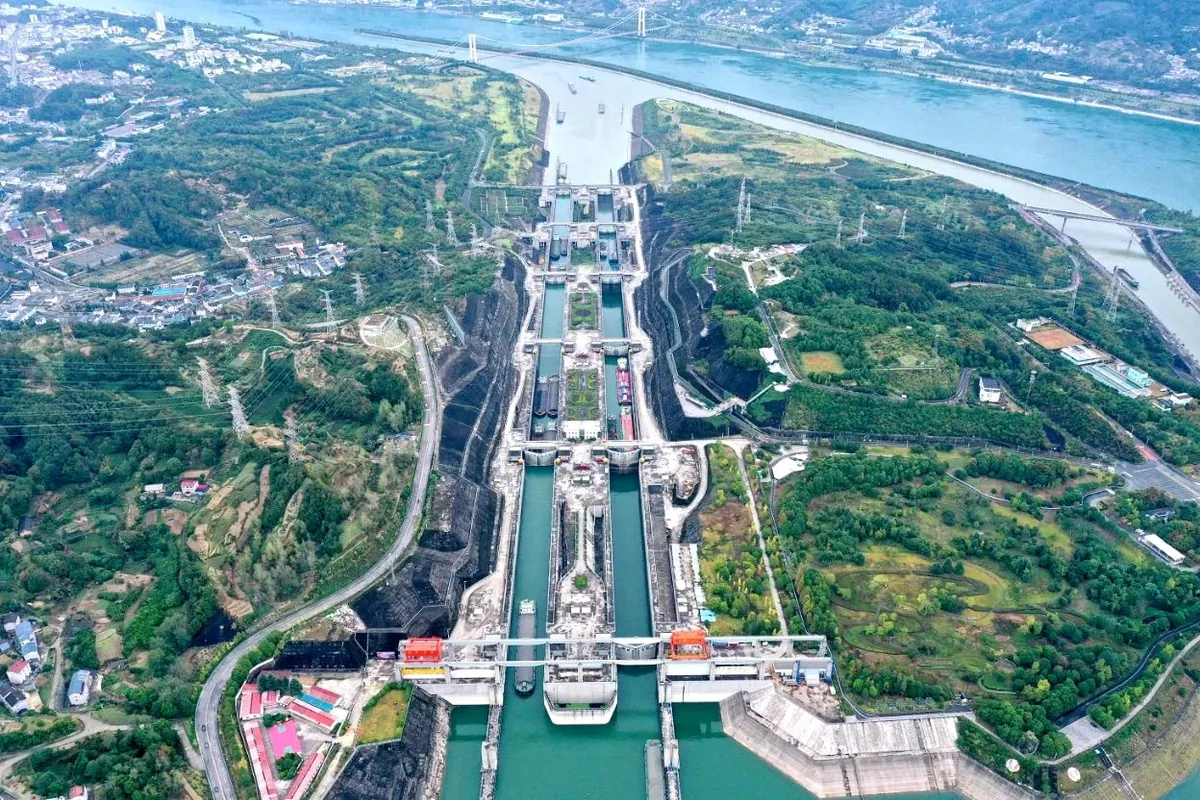
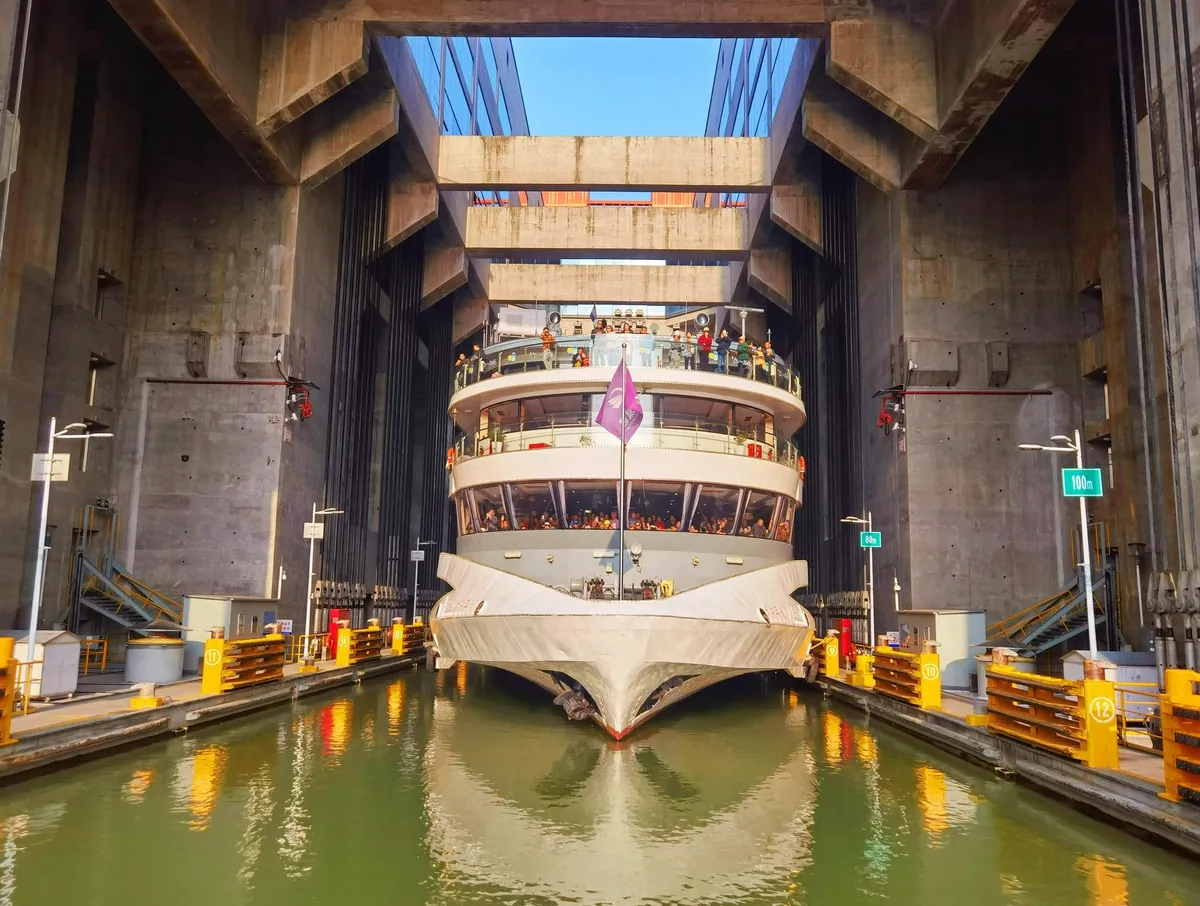
Viewed from above, the five-tier ship lock system of the Three Gorges Dam emerges as an extraordinary engineering marvel cutting across the surging Yangtze River. The structure resembles a colossal water staircase made of reinforced concrete, where cargo barges and ocean-going cruise ships line up neatly, navigating smoothly through each water-level lifting chamber to overcome an elevation difference of over a hundred meters. Enrounding this massive industrial ecosystem is the boundless greenery of rolling mountains, blending with large-span cross-river bridges soaring into the sky and modern transportation networks winding along the rocky slopes, creating a breathtaking tableau of human triumph over nature harmonizing with the grandeur of ancient landscapes.
Through thousands of years of geological formation and historical vicissitudes, the Three Gorges today is no longer merely a scenic waterway route, but has transformed into a repository of communal memory for the entire Chinese civilization. The fusion of millennia-old archaeological culture, the shadows of legendary generals and poets of yore, and the monumental dam symbol have turned this river valley into an endless epic, where every sheer cliff and roaring wave conceals soaring tales of survival instinct and epoch-making prowess.
Nestled in the crucial transitional zone between the second and third terrain steps of the Chinese mainland, the Three Gorges possess a magnificent orographic and hydrological structure rarely seen in the world. The geological formation originating from the Yanshanian movement, spanning from the Late Jurassic to the Cretaceous period—about 70 to 140 million years ago—generated intense folding pressures, thrusting thick marine limestone layers from the Triassic period up from the earth’s surface. Entering the Pleistocene epoch some 1.8 million years ago, a massive volume of water accumulated from the ancient Sichuan Basin lake forcefully breached eastward. The surging current with its headward erosion power tore through the limestone anticlines, carving out a classic V-shaped canyon valley system with sheer cliffs thousands of feet high, forming the feng shui geographical pattern of “gathering waters to generate vital energy”, making it one of the most treacherous stretches of the Yangtze River basin.
This breathtaking natural landscape axis stretches from west to east across three canyon segments with completely contrasting aesthetic and geomorphological characteristics. It begins with Qutang Gorge, spanning a mere 8 kilometers yet possessing an overwhelming momentum, where the towering Qumen Gate acts like a gateway to heaven guarding the throat to the Land of Shu, well-deserving of its title as the empire’s most formidable pass. Next is Wu Gorge, extending 46 kilometers with a melancholic and mesmerizing beauty, where the twelve peaks of Mount Wu pierce through wispy mists, creating a distinctive microclimatic phenomenon of ethereal “Mount Wu clouds and rain” lasting for millennia. Finally, Xiling Gorge extends 66 kilometers downstream, formerly a treacherous stretch of turbulent waters rushing through a series of hazardous rock reefs tied to local legends such as the Military Books and Sword Gorge or the Ox Liver and Horse Lungs Gorge, painting a deeply dramatic landscape painting.
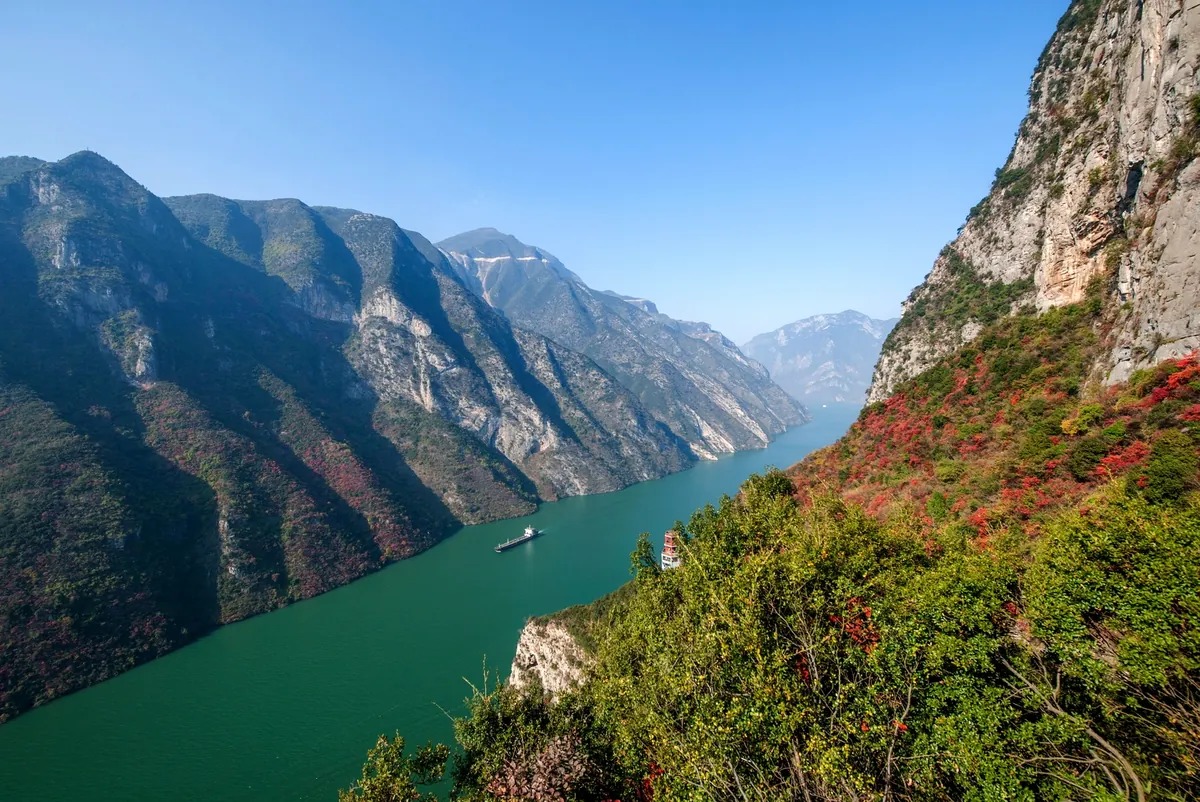
From a landscape appreciation perspective, the Three Gorges transform miraculously according to the hydrological cycles and seasons of the year. In spring, from March to May, when the reservoir water level reaches the designed storage threshold of 175 meters, the entire riverbed expands, becoming as flat and mirror-like as a polished surface, donning a pure turquoise hue resembling a jade silk ribbon winding around the stone cliffs. Conversely, the summer months of July and August welcome floodwaters combined with sediment flushing, turning the water into a churning, turbulent reddish-yellow. Standing from the peak of Fengjie’s landform known as the “Peak of the Three Gorges” at 1,388 meters above sea level looking down at Qutang Gorge, travelers can truly grasp the majestic, overlapping spatial structure that once carried ancient wooden boats across thousands of miles of magnificent rivers and mountains.
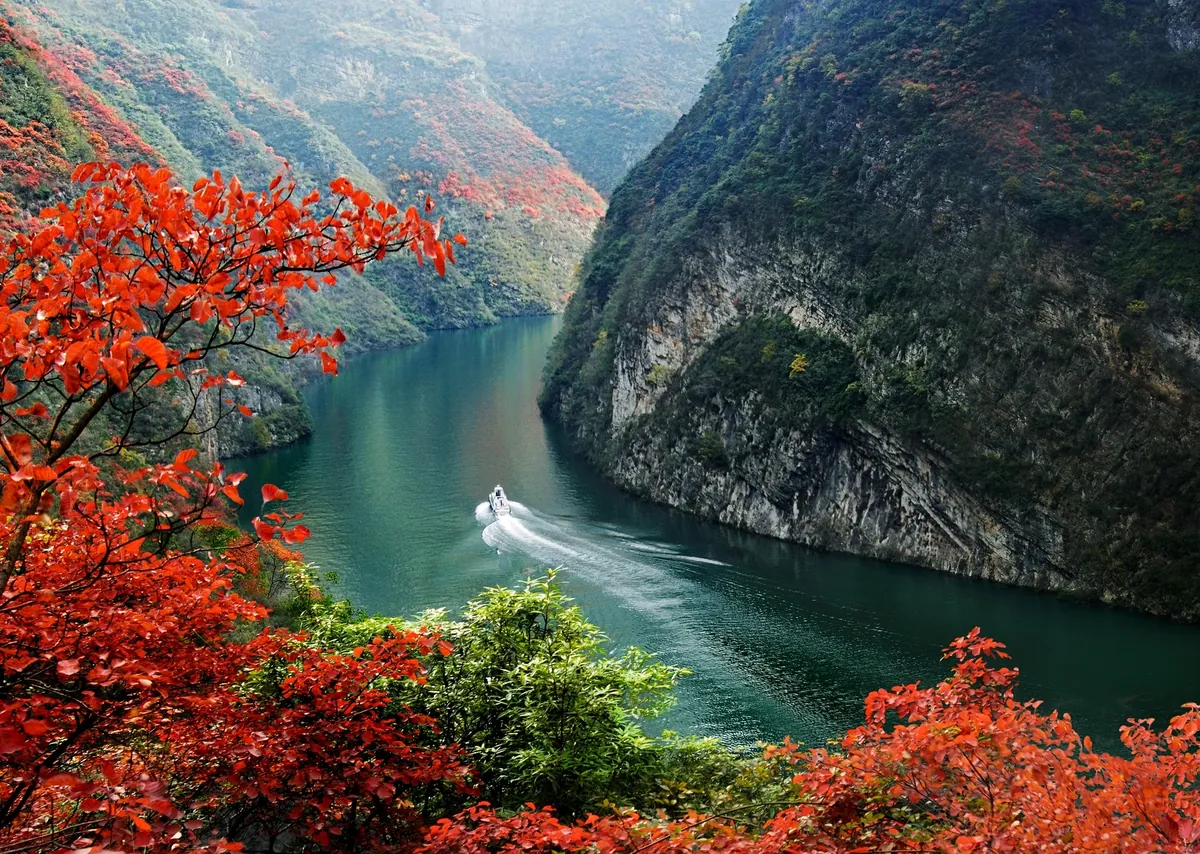
When autumn arrives in October and November, the phenomenon of the “Wushan red leaves” brilliantly dyes more than 100,000 acres of forests across the cliff slopes. The view opens up to a panoramic scene of a large, tranquil river section winding through deep gorges, where towering limestone cliffs reveal multi-layered, multicolored rock strata stretching endlessly. Below the calm water surface, a few cargo vessels navigate back and forth, cutting through the waves and leaving faint white wakes in the depths of the abyss. Highlighting the foreground are the canopy of maple leaves turning brilliantly crimson under the crisp autumn sun, creating a magnificent and poetic contrasting border that embraces the eternal majesty of the boundless wilderness.
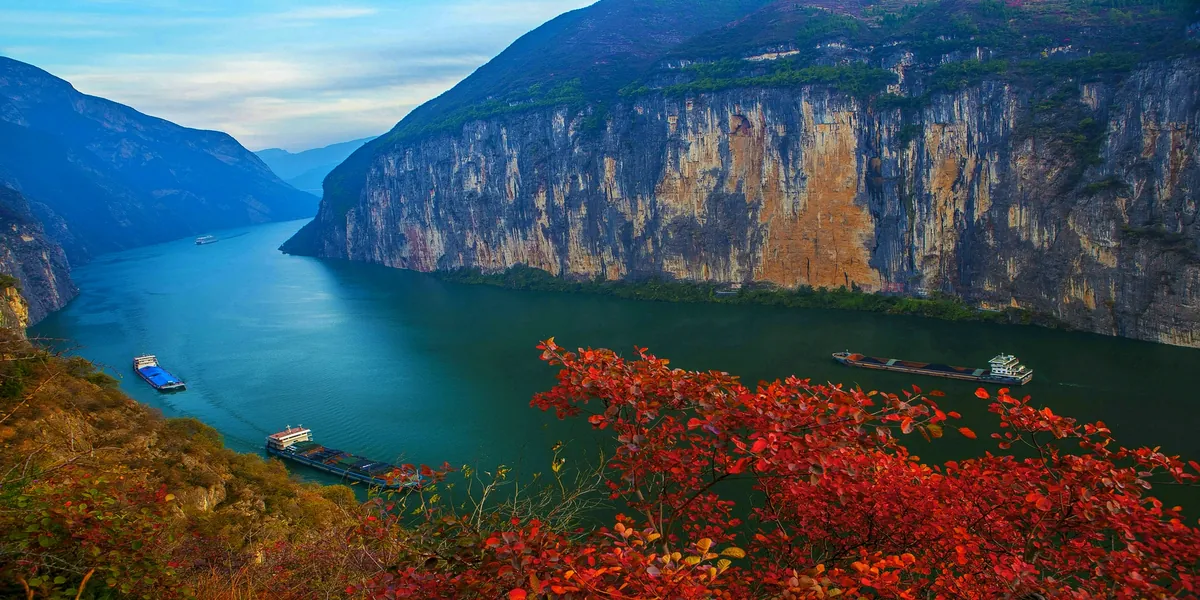
The unique topography of the Three Gorges not only defines a magnificent natural wonder but also serves as the geomantic backdrop that shaped an eternal cultural flow. The thousands of towering mountains gripping the churning currents once served as endless inspiration for the poetic immortal Li Bai to pen the immortal lines: “The gibbous cries on both banks cannot stop, the light boat has already flown past ten thousand rugged mountains.” The river is not merely a lifeline of water transport that divides and connects the Sichuan basin with the central plains, but the combination of millennia-old stratigraphy and the roaring river currents has turned this place into a symbol of resilience and the majestic spirit of East Asian rivers and mountains.
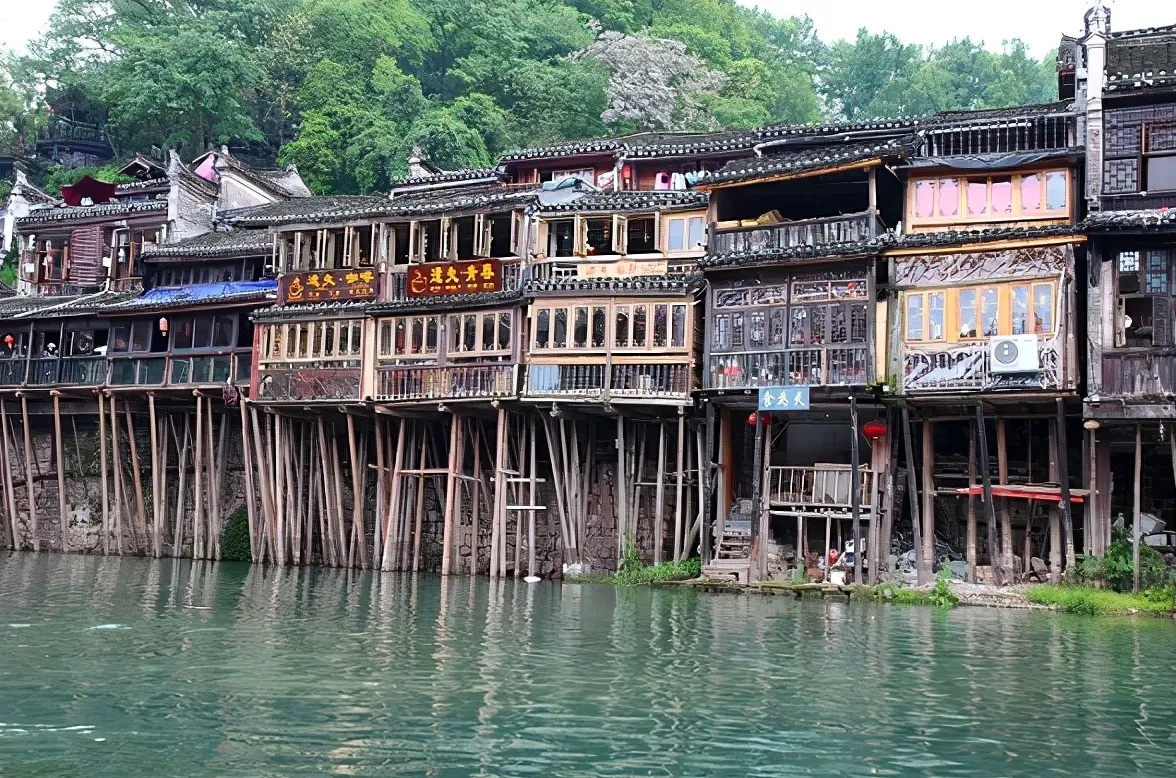
The architectural philosophy spanning thousands of years in the Three Gorges is encapsulated in the principle of “adapting to the landform, constructing around the terrain”—relying on the ruggedness of nature to create living spaces. Typical of this indigenous mindset are the stilt houses (“diaojiaolou”) of the Tujia and Miao ethnic groups, built with hundred-foot fir trunks deeply anchored into cliffs inclined at 45 to 70 degrees. The lower cantilevered column structures suspend the living quarters above, which not only helps ventilate and ward off humidity and wild beasts in the deep forests and treacherous waters, but also turns each structure into a proud unity clinging tightly to sheer cliffs amidst the floating clouds.
The pinnacle of woodworking craftsmanship is achieved with the Shibaozhai Pagoda in Zhong County, a masterpiece hailed as the “Pearl of the Yangtze River.” Standing 56 meters tall with 12 tiers leaning against a towering, isolated rock formation, this entire structure utilizes traditional mortise-and-tenon interlocking beam and column joints without a single iron nail. It underwent meticulous construction from the Wanli era of the Ming Dynasty to the Qianlong era of the Qing Dynasty. Further upstream, the White Emperor City, standing proudly on an isolated peninsula in Fengjie, exudes a solemn appearance with its solid arched greenstone defense walls, temple structures covered with brilliant yellow glazed tiles, and over 70 ancient steles recording the vicissitudes of history across dynasties.
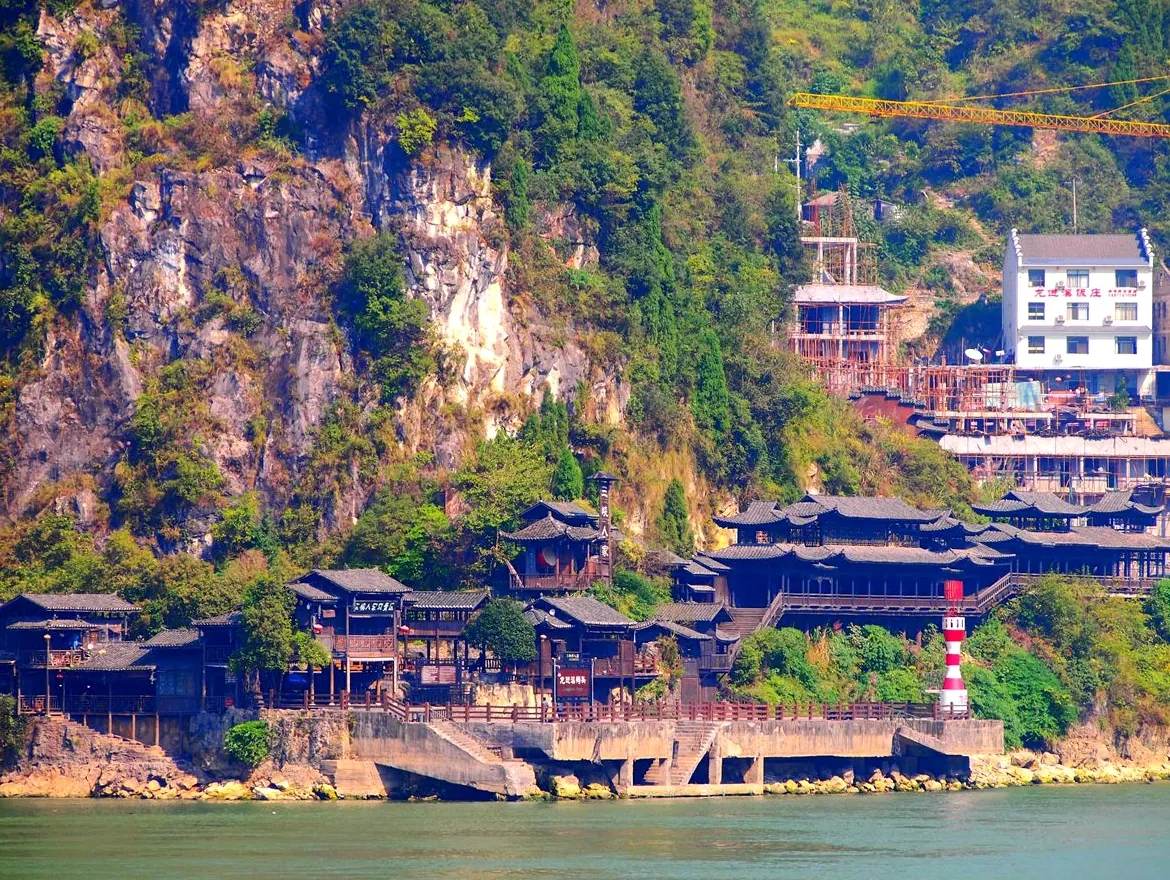
Following the riverbank at the foot of the towering limestone mountain range, the architectural rhythm of the Three Gorges vividly unfolds through the interwoven blend of tradition and modernity. Along the water’s edge, a cluster of ancient structures stands out with their subdued dark-tiled roofs nestled beneath green foliage, guided by a solemn red-and-white striped lighthouse serving as a navigational beacon amidst the waves. Higher up the steep hillside, construction scaffolding, yellow tower cranes, and modern white-painted hotel buildings rise high, vividly outlining the spectacular transformation of this core heritage tourism region.
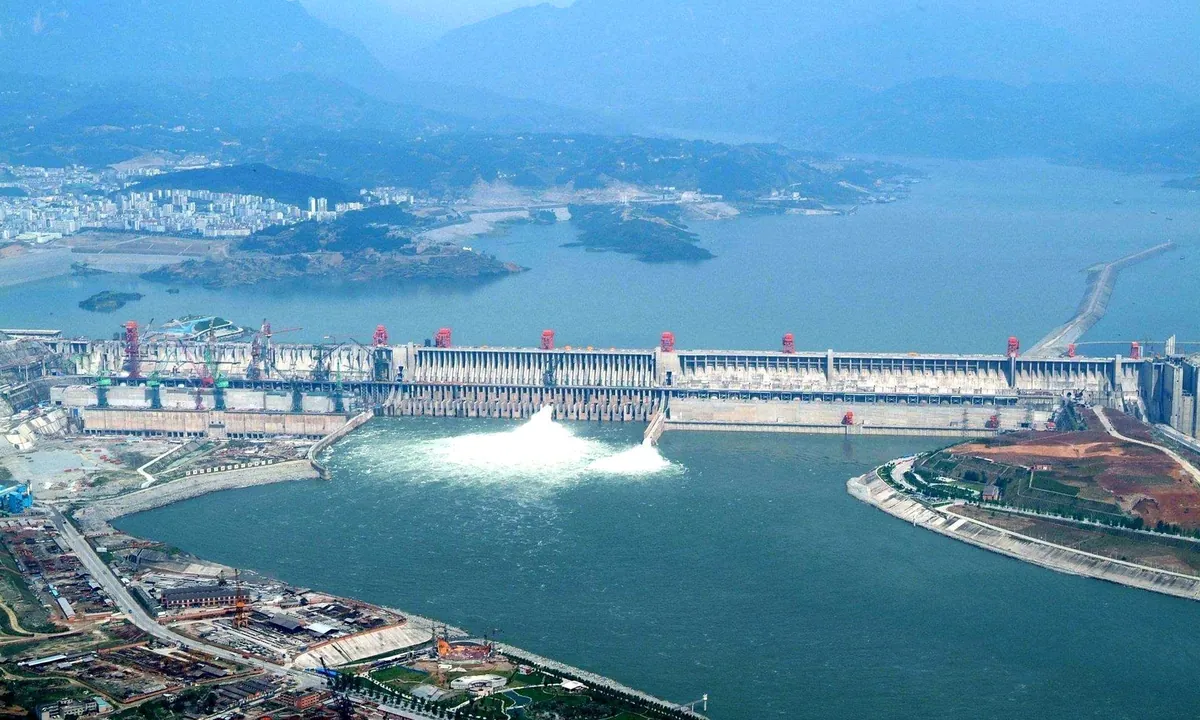
Alongside ancient traces, the contemporary marvel of the Three Gorges portrays the power of subduing nature through the monumental Three Gorges Dam project. The main dam body stretches for a total length of 2,309 meters, stands 185 meters above sea level, and is cast from 28 million cubic meters of reinforced concrete. This energy heart operates with a total installed capacity of up to 22.5 million kilowatts across 32 gigantic generating units of 700 megawatts each, maintaining an average annual power generation exceeding 100 billion kilowatt-hours and once setting a world record with 111.8 billion kilowatt-hours in a single year.
The ability to reshape the basin’s space is also demonstrated through a multi-layered transport infrastructure network precise to the millimeter. A five-tier ship lock system combined with the world’s leading vertical ship lift boasting a lifting height of 113 meters can transport passenger and cargo vessels of 3,000 tons past the dam body in just 40 minutes, clearing a smooth path for 10,000-ton fleets to head straight to Chaotianmen Port in Chongqing. This infrastructural convergence further expands into the skies and through the mountains with Wushan Airport perched above the clouds at an altitude of 1,770 meters and the Zhengzhou–Chongqing high-speed railway operating at 350 km/h, creating a super-modern trade network enveloping the legendary gorge.
As dusk gradually falls over the Yangtze River valley, the Three Gorges sheds its daytime quiet grandeur to don a magnificent evening gown woven from modern lighting technology and millennia of poetic sediment. The pinnacle of nighttime appreciation here converges at the sacred waters of White Emperor City (Baiheliang/Baidi Cheng) in Fengjie County, where director Zhang Yimou created the masterpiece real-scene production titled “Returning to the Three Gorges”. Breaking all traditional stage templates, the show operates on a massive hydraulic mechanical lifting platform weighing up to 1,600 tons floating smoothly amidst the water’s surface. The most prized element of the work is transforming the towering thousand-zhang cliffs of Qutang Gorge into a gigantic natural projection screen. Through sophisticated 3D mapping digital projection technology, every stroke of the dragon-flying and phoenix-dancing calligraphy from the immortal poems of the Poet Immortal Li Bai and the Poet Saint Du Fu is brilliantly magnified, hovering between the vast sky and water, blending with a vibrant surround sound system to fully recreate the heroic spirit of the prosperous Tang Dynasty right upon the historical flow.
Nightlife on the great river is also led by the era of smart ecological cruising, whose proudest symbol is the 10,000-ton all-electric superyacht “Yangtze Three Gorges 1”. The heart of the ship is a lithium iron phosphate battery pack with a massive capacity of 7,500 kilowatt-hours, allowing the entire journey slicing through Xiling Gorge and the calm lake waters of Yichang to take place in absolute silence, free from smoke, dust, and engine noise. Standing on the 360-degree open-air observation deck on the top floor, visitors can sip a cocktail at the piano bar while immersing themselves in elegant poetry discussions. The cool river breeze blows through each gorge cliff, carrying the melodious tunes of music blended with magical color-changing artistic beams shining from high mountain slopes, creating a miraculous space of intersection between future technology and the pristine beauty of creation.
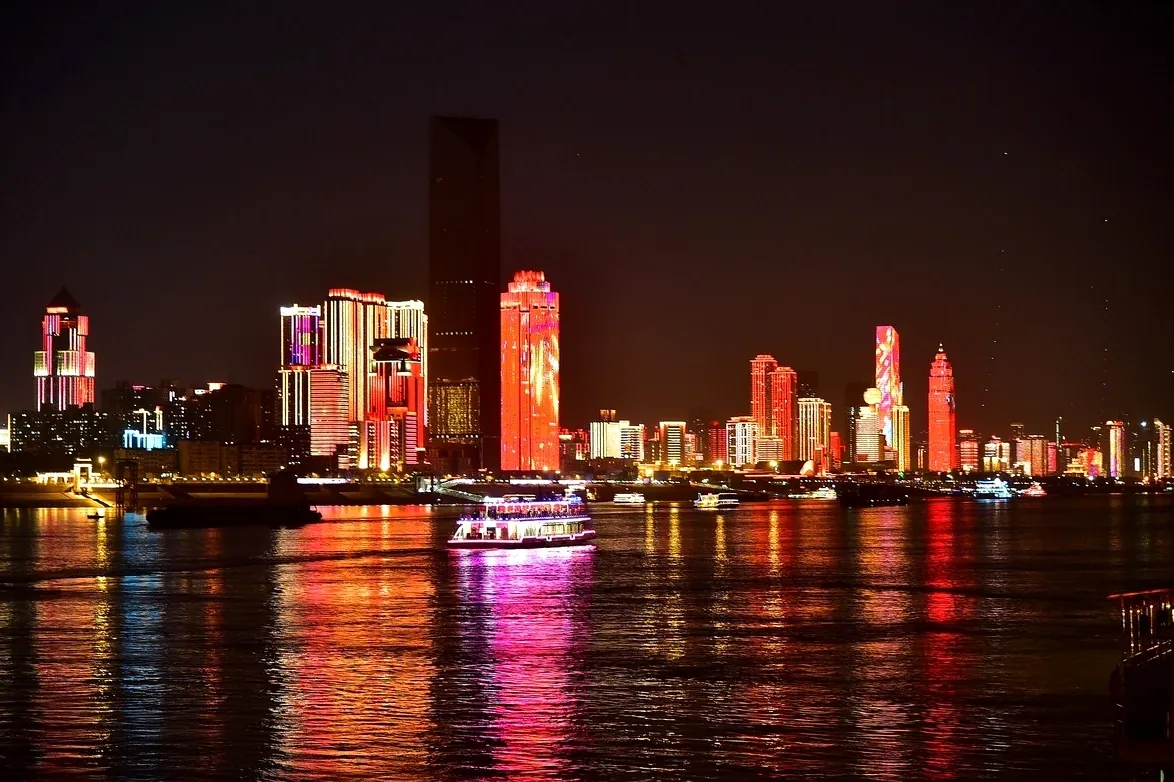
At the river sections widening through bustling port cities, the nighttime scenery bursts with a rare prosperous vitality. The riverbanks are brilliantly illuminated by a series of majestic high-rise buildings, wearing magical color-shifting light strips ranging from authoritative red and gorgeous pink to warm orange-yellow, casting shimmering reflections on the rippling water surface. Below, flower boats and luxury yachts adorned with glowing lights bustle back and forth, creating a magnificent visual feast where artificial light and the waves of the great river merge into one.
The night journey continues to anchor emotional experiences at famous historic ports such as Wanzhou, Zhongxian, and Wushan. Here, the nocturnal economy extends far beyond visual spectacles, serving as a cultural awakening of indigenous traditions across riverside food streets fragrant with the famously spicy Wanzhou grilled fish, or resounding Ba-Shu folk melodies echoing from traditional theater stages. The dazzling neon lights from modern architectural structures reflect upon the millions-of-years-old ancient river, transforming the Three Gorges night cruise into an endless epic where every rippling wave carries the vibrant heartbeat of a land that never sleeps.
Spanning hundreds of kilometers along the Yangtze Three Gorges, the rugged terrain has not only forged the resilient character of the riverbank dwellers but also nurtured a fascinating culinary crossroads between two ancient cultures: the fervent richness of the Ba-Shu region and the authentic purity of the Jing-Chu lands. In the upper reaches to the west, flavors lean heavily toward the Sichuan school with its bold mala philosophy, favoring rich oils and heavy seasonings that awaken every sense with the fiery spice of Shizhu red chilies and the deep, tingling numbness of Hanyuan Sichuan peppercorns. Drifting gradually downstream toward the east, as the river widens to embrace the winds of the Chu territory in Yichang, the palate gracefully shifts toward pure, delicate umami, emphasizing double-boiling and stewing techniques to preserve the pristine natural sweetness of local produce.
Amidst this picturesque landscape of flavors, Wanzhou grilled fish reigns supreme as the icon of riverside open-flame culinary artistry. Freshly caught grass carp or silver carp are slit open along the backbone, clamped in wire grates, and grilled over glowing charcoal until the skin blisters, turning golden and crispy while the flesh inside remains juicy. The fish is then placed neatly into a specialized iron tray, drenched in a spicy, numbing beef tallow sauce brewed with over twenty secret herbal ingredients, garnished with crunchy roasted peanuts and refreshing mung bean sprouts, and simmered over low heat so the herbal aromas deeply permeate every flake of fish. In contrast to the fiery passion of the grilled dish, the Three Gorges fish cake and tofu-string delicacies offer refined elegance. After carefully deboning, the fish meat is minced into a smooth paste, skillfully blended with premium soybean protein liquid, and steamed to perfection, creating golden cakes that are as smooth and soft as silk, melting effortlessly on the tip of the tongue.
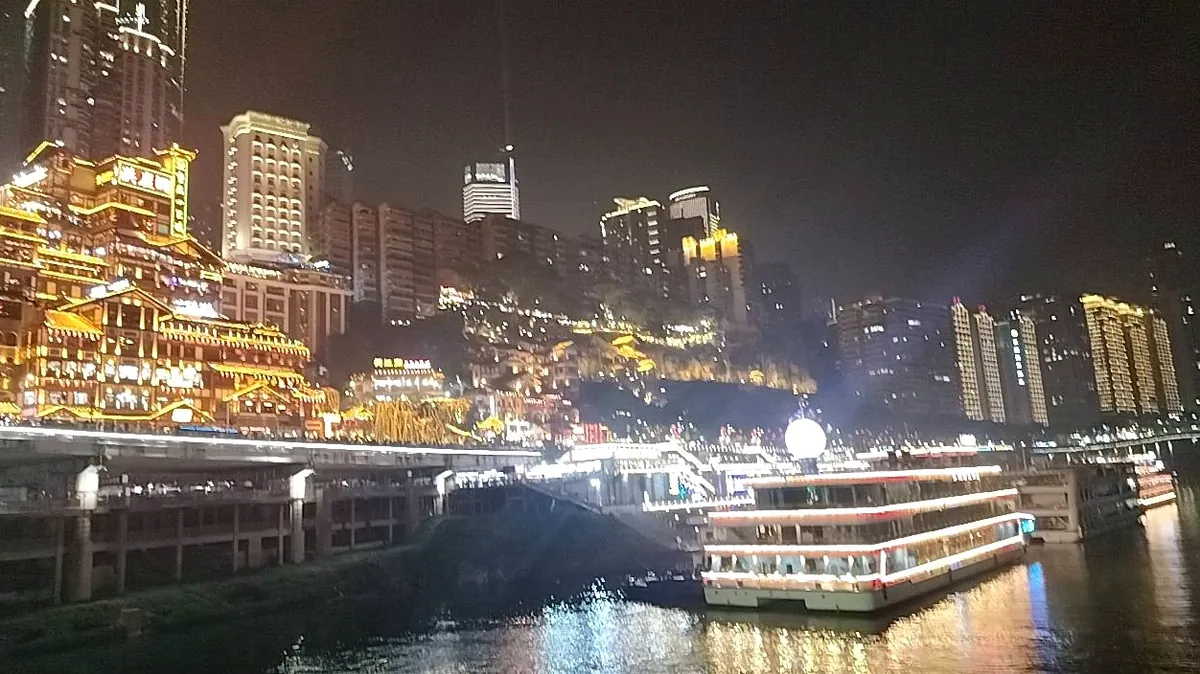
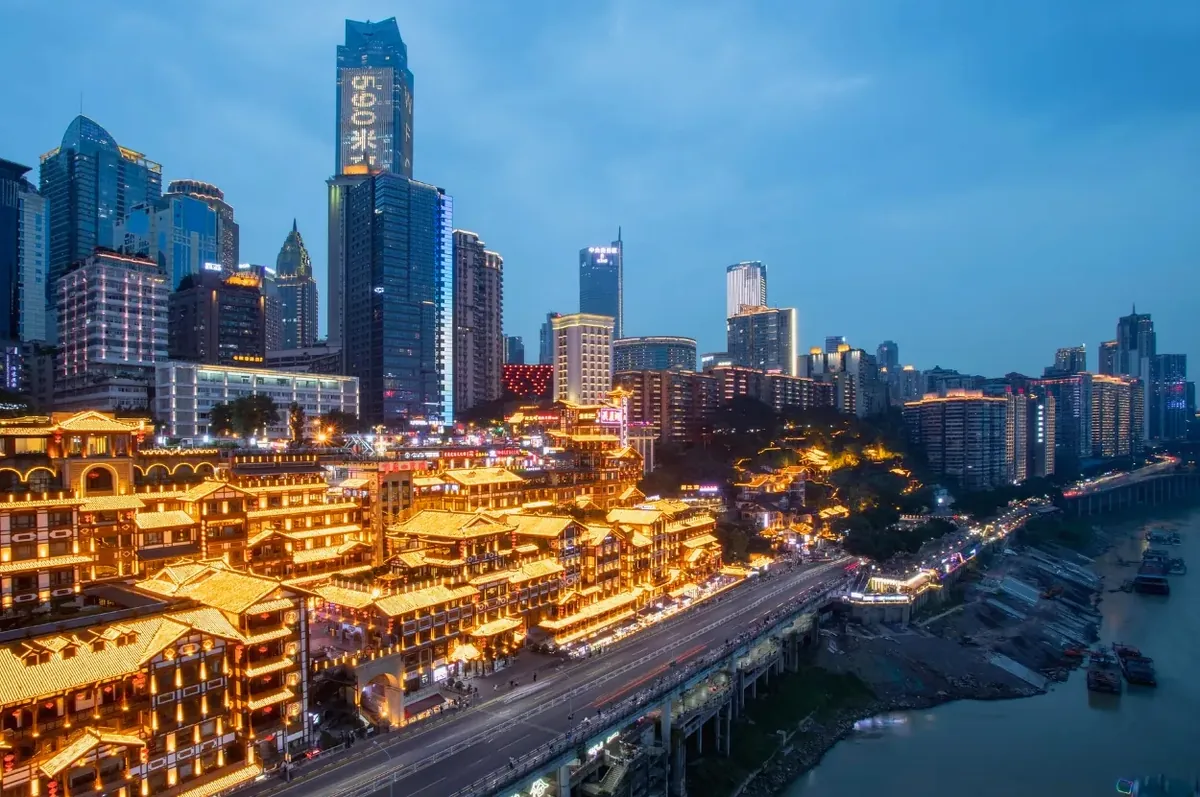
As dusk falls over the river convergence where the upstream journey through the gorges begins, Chongqing city illuminates in a magical interplay between a heroic past and contemporary life. The stilted architectural complex of Hongyadong clings to the sheer cliffside, glowing with golden lights like a fairytale palace floating in the mortal world, embracing the bustling streams of traffic flowing back and forth across the grand bridge. Behind those cascading layers of mossy tiled roofs stands a modern forest of skyscrapers reaching straight up into the darkening sky, highlighted by a majestic tower displaying a five-hundred-and-ninety-meter milestone in proud illumination reflecting upon the gently flowing water, lighting up the enchanting nocturnal culinary scene of the millennium-old dock.
Beyond the famous savory dishes, the mildly alkaline red-layer limestone gorge soils of the reservoir region have crystallized some of China’s sweetest delicacies. Most prominent are the Fengjie navel oranges hanging heavy on branches along steep slopes, which, thanks to the ideal day-and-night temperature differentials, accumulate a remarkably perfect sugar-acid ratio, achieving a rich sweetness ranging from thirteen to fifteen Brix. The gastronomic feast is further perfected by sipping a cup of Wushan peak snow tea with hints of morning dew, biting into a crispy sweet potato pastry made from earthy, tender sweet potatoes, or tasting a bit of creamy Zhongxian fermented tofu aged using traditional methods. The culinary experience here is also deeply intertwined with ecological conservation awareness; ever since the ten-year fishing ban across the entire Yangtze basin officially took effect on the first day of 2021, all forms of harvesting or trading wild fish have been strictly prohibited. All fresh fish sources served to travelers on wave-crossing cruise ships and riverside restaurants today are eco-friendly cultured fish raised in deep-water reservoirs, preserving a deep reverence for the mother river that has nourished gorge culinary culture for generations.

Conquering the Three Gorges landscape today has become convenient and leisurely thanks to a modern transportation network seamlessly connecting the Sichuan Basin and the Jing-Chu plains. Travelers from afar can easily fly into Chongqing Jiangbei International Airport or Wushan Airport—a uniquely impressive airfield perched above a sea of clouds at an altitude of over 1,700 meters above sea level. From the city center, the Zhengzhou-Chongqing high-speed railway serves as a flexible arterial route transporting travelers from Chongqing North Station to the gateway of Fengjie in just 1 hour and 45 minutes, reaching Wushan county town in about 2 hours and 5 minutes. Concurrently, the 144-hour transit visa-exemption policy connecting the two metropolitan areas of Chongqing and Wuhan, alongside streamlined tour group visa approval procedures, is creating exceptionally smooth customs clearance conditions for international visitors.
For experiencing the waterways of the Yangtze River, the most classic and aesthetically rich method is the 4-day, 3-night downstream cruise, departing from the brilliantly illuminated Chaotianmen Pier in Chongqing to Maoping Port in Yilgong (Yichang). Gliding smoothly down the serene, silt-laden waters, the ship gently passes through each narrow gorge, allowing passengers to take in the rhythm of nature effortlessly. Meanwhile, the 5-day, 4-night upstream cruise from Yichang back to Chongqing offers a more majestic, contemplative perspective, giving travelers extra time to admire the massive water conservancy project and experience the thrill of passing through giant ship lock elevators.
The sight of pristine white, multi-thousand-ton superyachts proudly parting the waves between Qutang Gorge and Wu Gorge is the ultimate symbol of modern Eastern slow travel. From the breezy open-air observation deck, travelers’ views stretch limitlessly toward the grayish-brown vertical cliffs rising straight into the blue sky, where strips of lush greenery intertwine with drifting clouds. Each ripple against the hull blends with distant temple bells from ancient shores, weaving a magnificent harmony between peak luxury amenities and the eternal, wild grandeur of the Yangtze landscape.

To ensure the complete integrity of the trip, staying vigilant against cheap commercial traps is crucial. Travelers must firmly decline abnormally discounted tours that use buses instead of cruise ships, cutting out 193 kilometers of breathtaking scenery to force tourists onto highway tunnels and only arranging one night on a flimsy wooden boat. At the same time, beware of stops disguised as herbal nurseries selling cordyceps and notoginseng through vague tricks between taels and grams, or the scam of pretending to be hometown acquaintances luring you into buying artificial jade. The most civilized choice is to sign a standard 5-star cruise contract committing to a strict three-no principle: no designated shopping stops, no hidden fees, and no arbitrary itinerary cuts.
The golden moments to set sail and explore the gorges are during warm spring or autumn when thousands of maple trees turn fiery red, reflecting on the mirror-like blue waters. It is best to avoid July and August as the scorching weather exceeds 40 degrees Celsius and surging floodwaters turn the river muddy with silt. When visiting the ancient Baidi City, the Three Gorges Summit stone stairs, or transferring to a covered wooden sampan to explore the Lesser Three Gorges tributaries, wearing slip-resistant shoes and fastening life jackets are core safety disciplines. To realize your cruise dream with meticulous service from visa procedures to the highest standard of accommodation, travelers can proactively explore and register for the all-inclusive tour package to peacefully immerse themselves in the epic romance of boundless landscapes.