The story of Hobbiton’s creation in the lush Matamata region of the Waikato begins with a fateful encounter in 1998, when acclaimed director Peter Jackson conducted aerial reconnaissance flights in search of an unspoiled paradise for his grand cinematic project The Lord of the Rings. Amid New Zealand’s rolling emerald hills, a 1,250-acre farm owned by the Alexander family unexpectedly caught the talented director’s eye thanks to its uncanny resemblance to the Shire described on the pages of J.R.R. Tolkien’s works. The land boasts sweeping, gentle slopes completely free of high-voltage power lines or modern rooftops, and notably features a lone pine tree reflected beside a tranquil pond—like a corner of Middle-earth slumbering across centuries, waiting only to be awakened.
The historical transformation of these peaceful sheep-grazing hills entered a new chapter between 1999 and 2002, when an unprecedented construction campaign unfolded with the unexpected involvement of the New Zealand Army. Defense engineers mobilized heavy machinery to grade and cut a winding 1.5-kilometer military road through challenging terrain to haul equipment and supplies into the valley floor. Under the hands of hundreds of artisans and soldiers, 39 initial Hobbit holes were sculpted into the earth. During this first stage, however, the set was built using temporary materials such as industrial plywood, specially painted polystyrene foam, and straw-and-earth plaster to meet the tight filming schedule of the classic film trilogy.
Once cameras stopped rolling and the film shoots completed their initial mission, the set faced strict land-remediation regulations from local authorities. Large-scale dismantling took place, leaving just 17 bare, hollow holes retained through ongoing negotiations between the Alexander farming family and the filmmakers. For many years afterward, this land quietly welcomed Tolkien devotees traveling from all corners of the globe, even though the site then consisted only of rustic earth hollows overgrown with wild grass, veiled in morning mist amid grazing sheep.
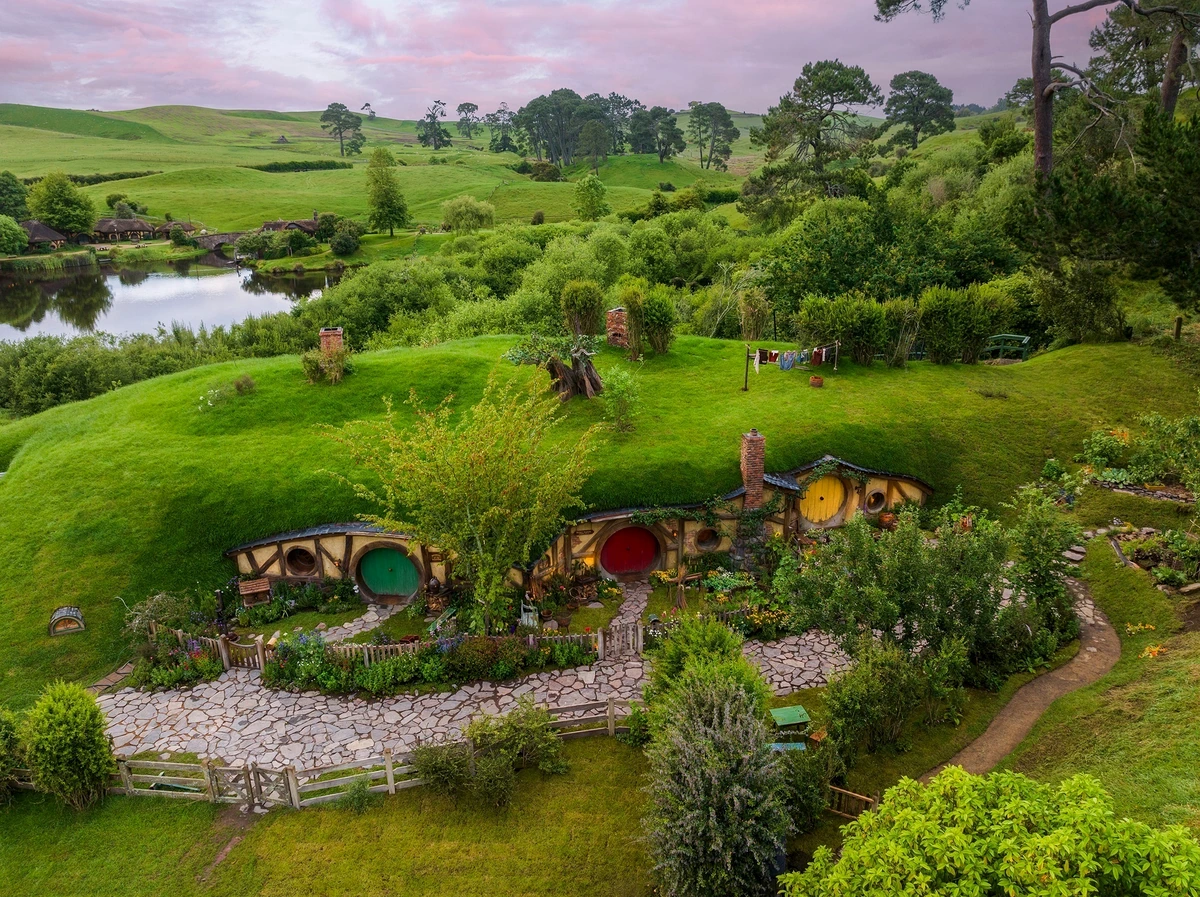
The most brilliant revival turning Hobbiton into an enduring living architectural museum took place from 2009 to 2011, when Peter Jackson returned to begin filming the epic The Hobbit. This time, with a vision to transform the film set into a permanent national cultural and tourism heritage site, a century-defining rebuild was carried out using thoroughly durable materials. Tens of thousands of handcrafted clay bricks, roughly dressed stone slabs, and thick aged oak timbers completely replaced the temporary structures of years past. The number of dwellings expanded to 44 Hobbit holes with finely carved latches and vibrant round doors, accompanied by a gracefully arched stone bridge and the famed Green Dragon Inn. The blend of human craftsmanship and unspoiled nature permanently etched a legendary Shire into reality, making Matamata the singular cultural heart of Middle-earth on the world map.
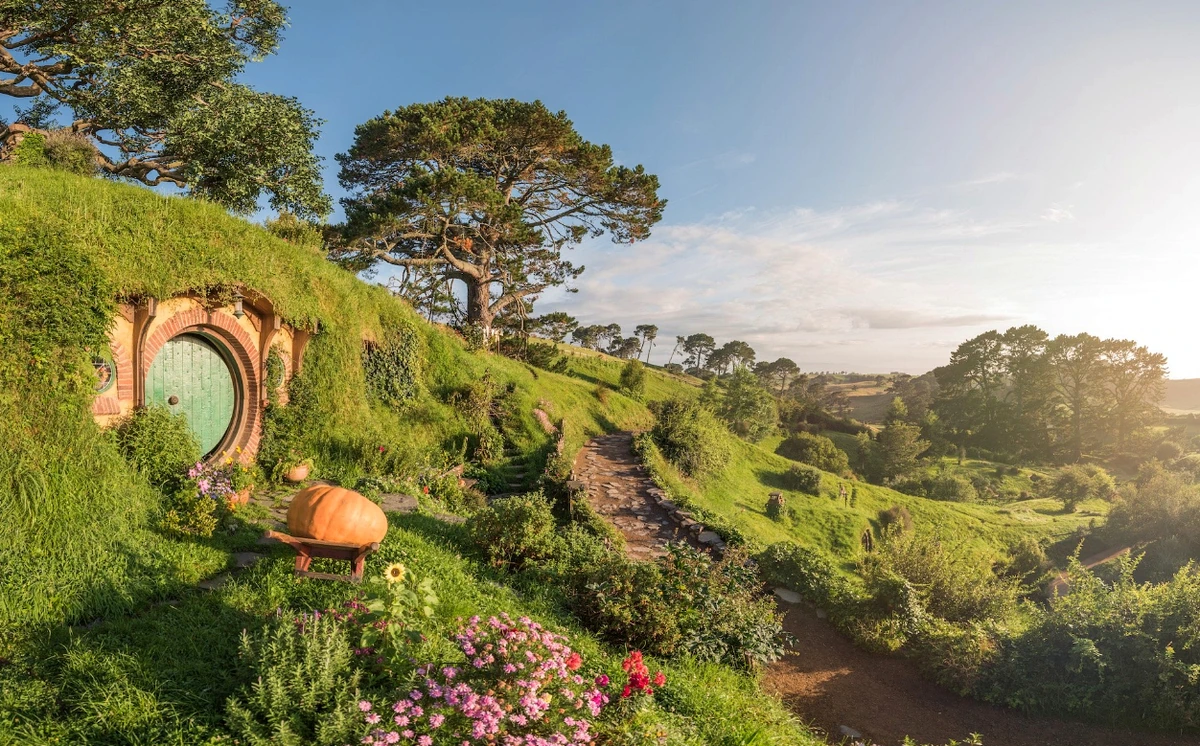
Viewed across the wider Waikato basin, the landform of the Shire faithfully reflects undulating “drumlin” hills—striking sedimentary features shaped by Quaternary glacial movement. This gentle whale-back topography not only creates endless green velvet waves of year-round pasture, but also forms a natural, wind-sheltered basin set apart from modern mechanized life. When the film crew searched for a setting for J.R.R. Tolkien’s world, the Alexander family’s expansive farm in Matamata stood out for its remarkable geomantic setting: a seamless harmony of rolling hills, a basin valley gathering natural vitality, and an exceptionally effective natural subsurface drainage system hidden beneath fertile topsoil.
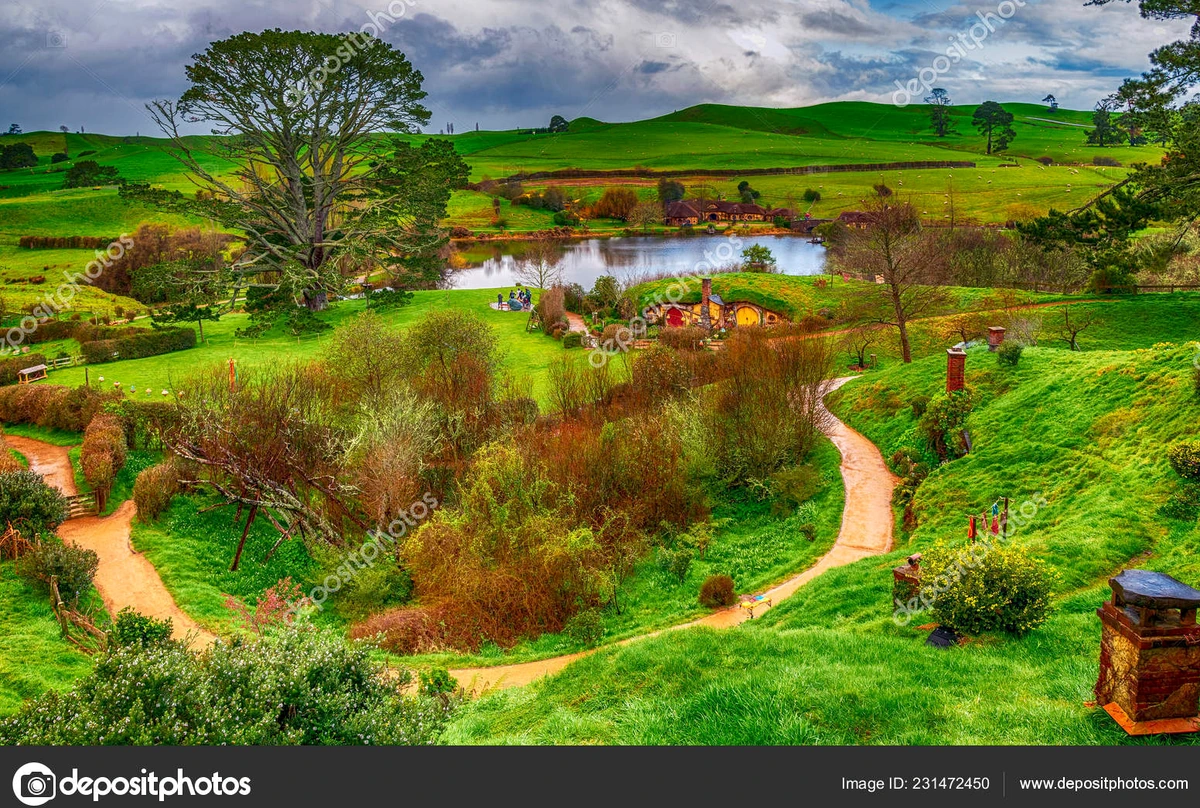
The centerpiece of the village’s spatial design is Bag End—the grand residence of the Baggins family, deliberately positioned atop the highest drumlin hill in the area. From this strategic elevation, the view opens along a classic pastoral landscape axis, taking in the entire central hollow. Below the hillside, the Party Tree—a towering, ancient pine/yew-like specimen with a spread spanning tens of meters—serves as a natural compass shaping the Hobbits’ communal gathering space. Right beside it, the pond known as The Water lies calm as a giant mirror, gathering sky and clouds while reflecting the double-arched stone bridge and watermill in a harmonious water-gathering composition where flowing water brings utter serenity to the setting.
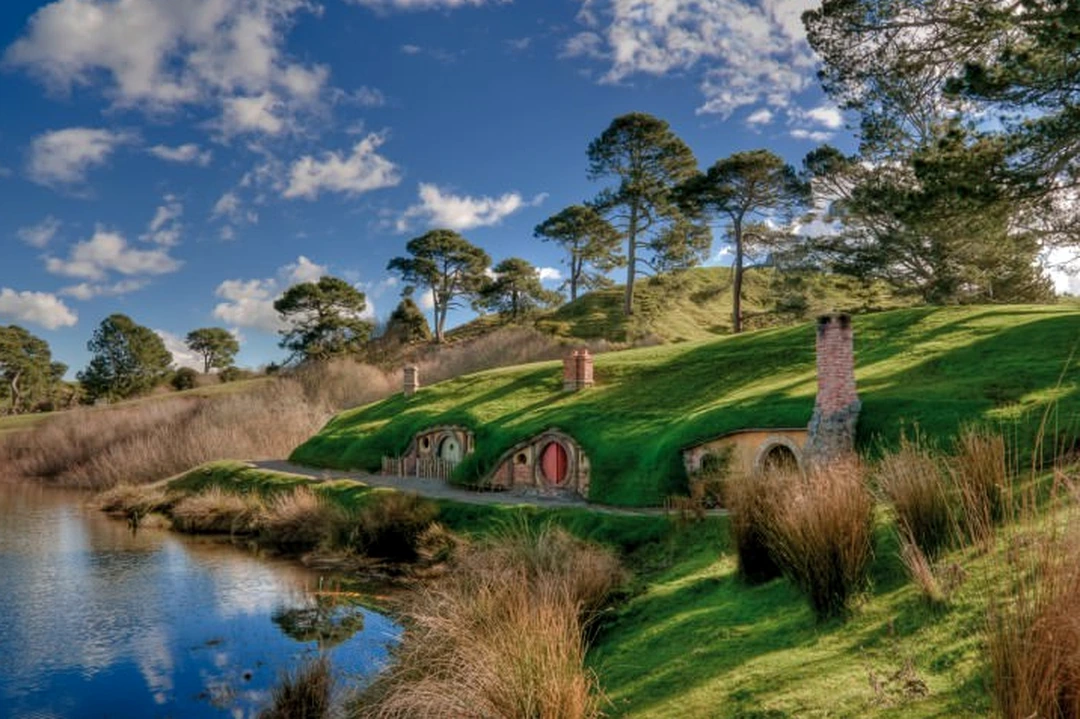
Turning a wild sheep hill into an authentic-looking settlement down to the grain of the wood without breaking its original landform required astonishing engineering precision. Civil and landscape engineers adapted the farm’s original irrigation channels into a complex diversion system, ensuring the 44 hobbit holes dug deep into clay-and-gravel soil would never erode or settle under New Zealand’s abundant rainfall. The hillsides were excavated by hand, reinforced with steel frames and rough-sawn old oak beams, and then topped back with thick soil so native vegetation could continue growing naturally. Attention to detail peaked in simulated aging techniques: crews brushed a mixture of live moss blended with yogurt and organic matter onto oak fences and handmade clay bricks to encourage lichen to take root within weeks, coating stone steps in a weathered patina as if they had stood through centuries of history.
Site orientation at Matamata is also a masterwork of cinematic optics and solar timing. The Bag End hillside faces west–southwest, catching the low angle of “Golden Hour” light as dusk settles. As the sun sinks behind the Kaimai Range, warm honeyed light filters through the artificial oak canopy above Bilbo’s residence—an engineering feat built from a 26-ton dried old oak trunk and more than 200,000 UV-resistant silicone silk leaves—bathing the colorful round doors in a fairy-tale glow. The blend of primeval drumlin terrain, painstaking construction craft, and natural lighting timing has made this precinct an enduring symbol of peaceful countryside, where the line between human handiwork and natural beauty dissolves completely.
Stepping gently around the winding bends hugging the Matamata hillside in the lush Waikato region, visitors feel as though they have crossed a rift in space into a pastoral portrait of pre-industrial English country life. Architectural excellence here does not appear in grand palaces or soaring domes, but lies deep within the harmony between human craftsmanship and the primeval geological crust. Unlike the temporary plywood-and-foam sets from early film shoots, the standing complex is a permanent construction feat. To hold firm against the test of time and New Zealand’s maritime climate, engineers concealed reinforced concrete and high-grade structural steel frames beneath meters of rich clay soil and lush native greenery.
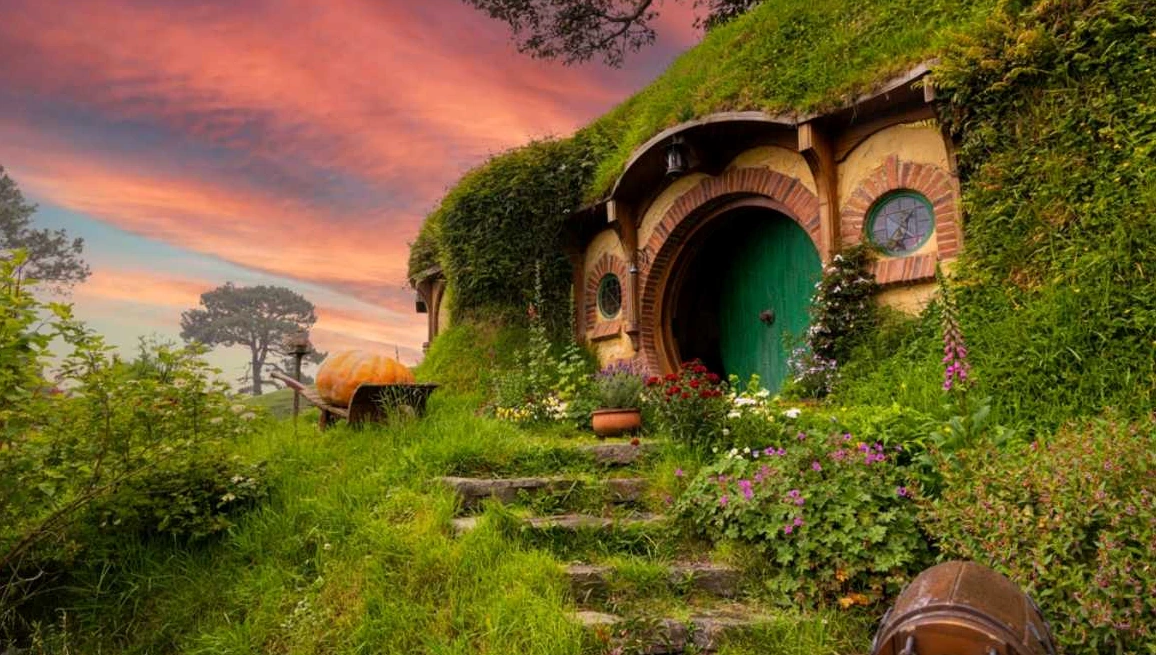
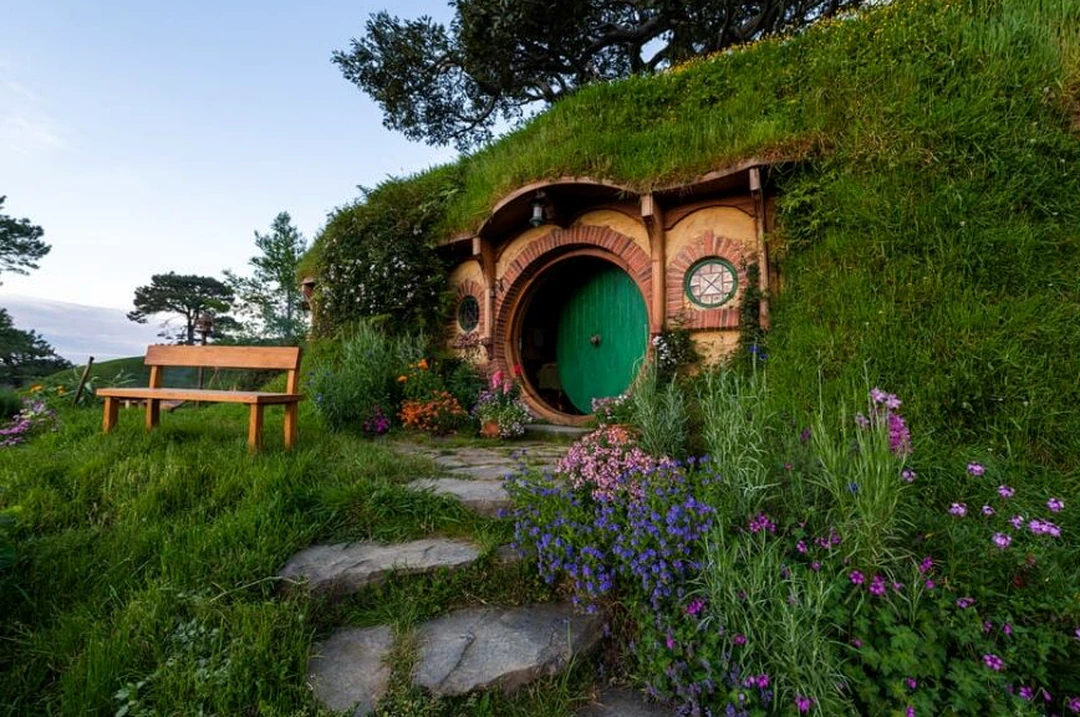
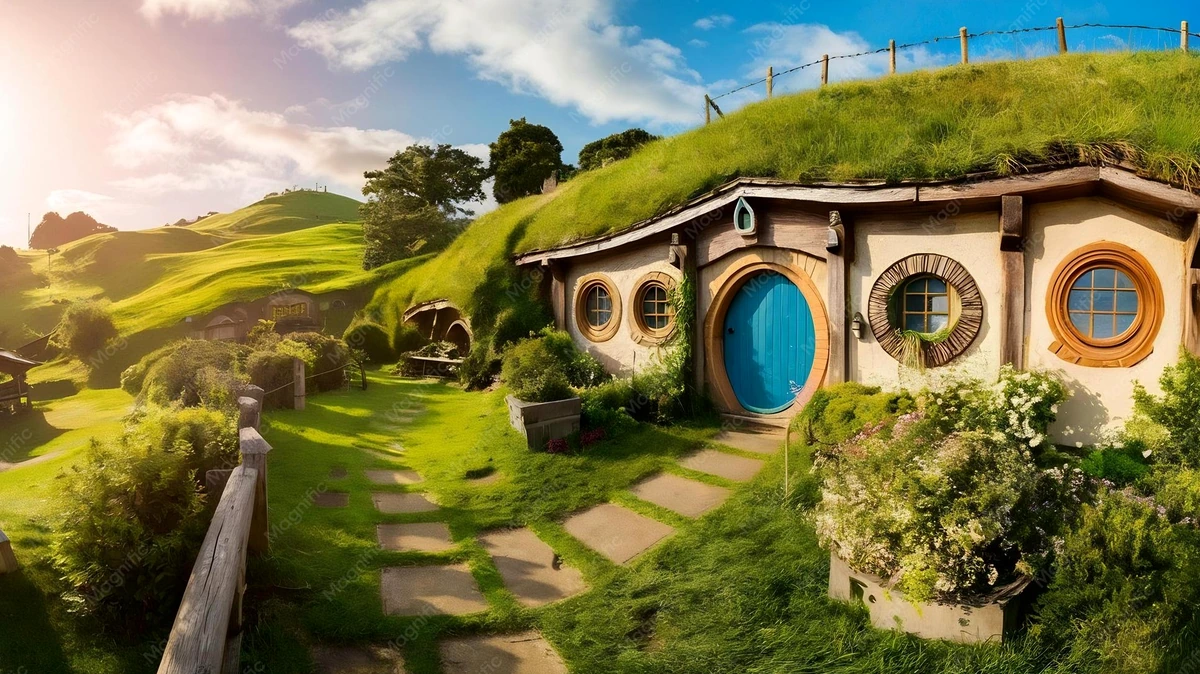
The spatial layout of the Shire is planned with forty-four one-of-a-kind Hobbit dwellings scattered across the slopes, guiding the eye along each natural fold of the valley. The pinnacle of set-building artistry here lies in “forced perspective”—a refined optical technique calculated down to the millimeter. Dwellings meant for the wizard Gandalf or full-sized humans were built at roughly sixty percent of full scale, making anyone standing by the porch immediately appear a towering giant. Conversely, homes for diminutive residents like Bilbo Baggins at Bag End on the hilltop were built at ninety to one hundred percent scale, making short-statured actors appear naturally small beside the iconic green round door.
The craftspeople’s care shines through in surface “patina” artistry, turning sturdy structures into cozy ruins that look weathered by centuries. Moss on oak fences and rain streaks on cracked clay chimneys come from carefully sprayed blends of natural moss, vinegar, and organic binders. Steam-bent wooden round-door trims, weathered brass latches, a tiny garden spade left beside a row of greens, and rustic carved wooden mailboxes all vividly portray the daily life of a peace-loving community deeply tied to the land.
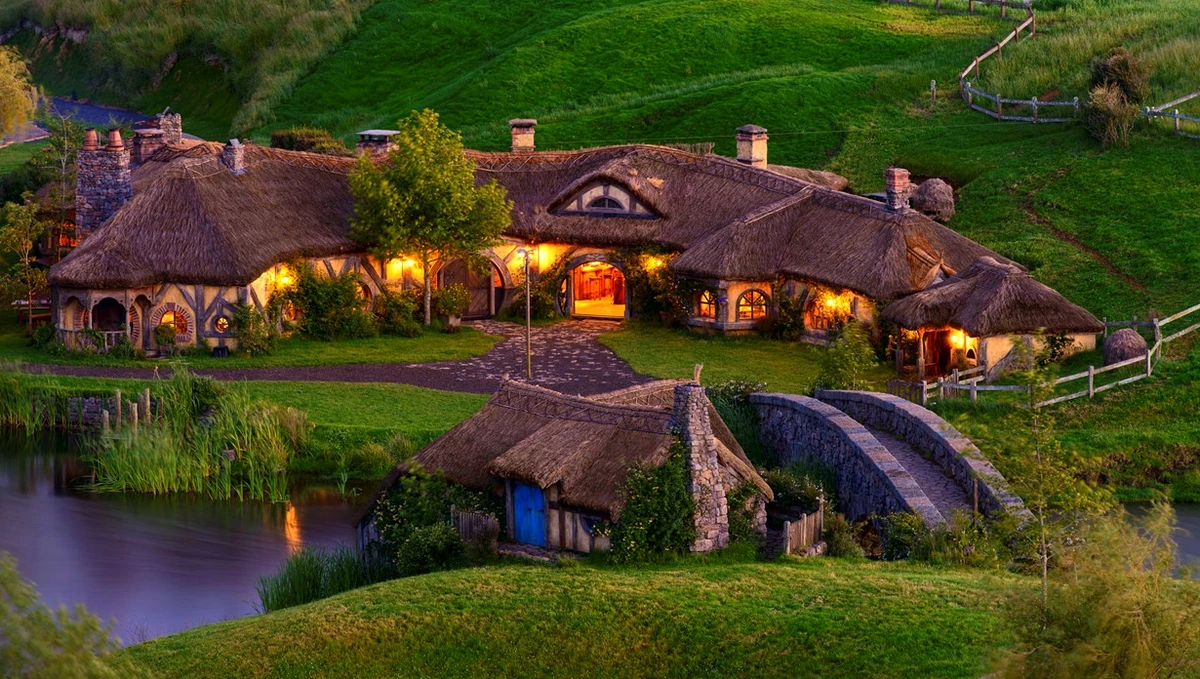
Crossing the historic double-arched stone bridge over the gentle stream and the mossy wooden waterwheel of the mill, the Green Dragon Inn stands as the living soul of the entire valley. Far more than an exterior prop, it is a complete interior architectural work with genuine practical function. Built from massive hand-hewn oak timbers that leave rough grain and bold chisel marks exposed, its steep roof is hand-thatched from thousands of golden reeds in traditional Saxon style, giving off a warm, dry, grassy scent in the morning sun.
Stepping across the low arched threshold, the interior opens into a cozy world filled with warm amber tones from a crackling fire in a solid cobblestone hearth. Every metal detail—from door hinges and hurricane-lamp brackets to fireplace screens—is hand-forged by renowned blacksmiths, faithfully capturing nineteenth-century European farmhouse character. Long rustic ash tables, a quiet curved bar, and steel-banded oak ale casks create a deep sense of nostalgia. The real-world scale of this space not only satisfies fans of fantasy literature, but also stands as strong proof of top-tier physical craft, where modern building engineering and classic aesthetics merge seamlessly.
As twilight settles over the fertile Matamata valley in the Waikato, Hobbiton sheds its daytime pastoral calm and enters a striking transformation of visual art and live atmosphere. The shining highlight of nighttime life here is the Evening Banquet Tour—an experience that carries visitors across the line between cinema and reality. To create a glowing, legendary Shire without breaking the authenticity of Middle-earth, lighting engineers and art-department makers designed a highly refined lighting system. They rejected cold industrial white light altogether in favor of hundreds of ultra-warm LED points around 2,200 Kelvin, paired with authentic gas lanterns mimicking pre-industrial flame light. From the forty-four round windows of Hobbit holes set into the hillside, warm amber-orange light filters through lace curtains and frosted glass, casting shifting shadows that make it feel as though Shire folk have just lit oil lamps and gathered beside a warm teapot right before your eyes.
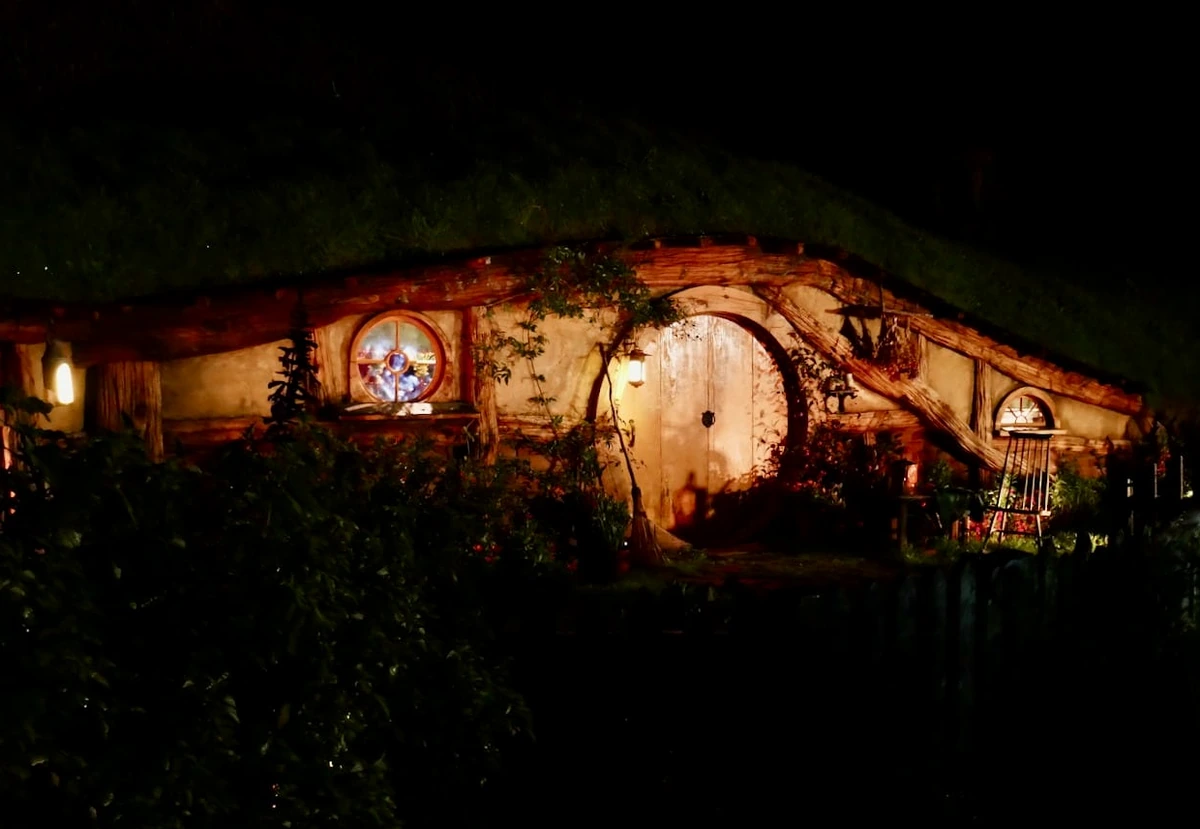
The evening experience begins with a quiet stroll along winding paths over dew-dampened grass. Each visitor is handed a hand-forged brass-and-glass lantern casting a soft glow past the shaded Party Tree and across the two-arch stone bridge spanning the still pond. Wisps of evening smoke rise from sculpted clay chimneys on the Alexander hillside, mingling with the scent of damp greenery and crackling pine wood in the quiet air. Passing the old waterwheel, lantern light guides guests to pause before the Green Dragon Inn—an enduring communal symbol in J.R.R. Tolkien’s imagination, once witness to historic gatherings of Hobbits.
Passing through the thick oak doors of the Green Dragon Inn, a warm setting unfolds with rough-hewn timber beams, slate floors, and a roaring hearth fire warming the hall. The banquet table is laid in the style of a nineteenth-century country feast, a long table laden with rustic ceramic platters showcasing famed Waikato fare. Guests are treated to slow-roasted New Zealand lamb leg fragrant with herbs and mint, honey-glazed free-range chicken with crisp skin, beetroot and potatoes roasted in duck fat, and rich beef stew served alongside crusty bread fresh from the oven. Every robust flavor is elevated when paired with exclusive brews made solely for the Shire by Good George: from nutty Oatbarton stout and malty Girdley amber ale to crisp Sackville cider and spicy Frogmorton ginger beer that awakens every sense.
The evening closes not with clamor, but with a captivating moment of reflection as guests carry their oil lanterns back out into the night. Beneath clear Southern skies, where the Southern Cross shines brightly against velvet black, the entire Hobbiton village appears like a constellation on earth with dozens of round windows aglow in amber. Echoes of laughter from the inn fade behind, leaving only chirping insects and soft footsteps on gravel—a lasting memory of a warm, living, magical fairy-tale land in the heart of New Zealand.
Crossing the arched stone bridge and old waterwheel beside The Water, travelers’ footsteps reach the rustic oak door of the Green Dragon Inn. More than a famous setting stepped out of J.R.R. Tolkien’s epics, this space is also the heart of Shire food culture, preserving the unhurried, down-to-earth agricultural spirit of the fertile Waikato plains. Dining here is built on a pure farm-to-table ethos, where every sprig of herb, root vegetable, potato, or cut of lamb carries the breath of endless green pastures beyond leaded glass panes.
A Hobbit feast in the Matamata valley is a warm chorus of traditional New Zealand dishes prepared with the utmost patience of country cooking. Prime lamb leg is seasoned with fresh rosemary, crushed garlic, and local spices, then slow-roasted for hours at low heat until the skin turns a crisp mahogany while the meat inside stays tender, juicy, and naturally rich. Alongside the lamb is a thick-simmered root casserole of honeyed carrots, beetroot, and pearl onions slow-cooked in rich beef stock, releasing warm herbal aromas into the misty air. Beside it sit handcrafted sourdough loaves fresh from the oven, with crisp, hearth-scented crusts and a chewy, gently sweet crumb from long natural fermentation, ready to spread thick with golden, whipped butter churned from fresh cream of the Matamata plains.
A highlight elevating local dining is the famed Southfarthing drink range—a signature collection of fermented beverages brewed exclusively to evoke the foodways of the Shire’s Southfarthing. Crafted by local brewers using fresh New Zealand hops and top-grade malt, Southfarthing offers four classic flavors poured straight from oak casks into rustic ceramic tankards. Guests can sip amber Girdley Fine Grain with its clean bitterness and rich caramel notes, or enjoy Traditional English Ale full of classic roasted-malt warmth. For those drawn to crisp orchard sweetness, Sackville Cider ferments bright and sparkling with the clean tang of ripe apples, while traditional non-alcoholic Frogmorton Ginger Beer awakens the palate with the warming spice of freshly crushed ginger root.
Food culture here also holds a deeper life philosophy of savoring simple everyday moments, echoing the gentle Hobbits’ custom of seven meals a day—from early morning breakfast and second breakfast to elevenses and a hearty supper by the fire. Seated on rough-hewn wooden benches, listening to pine logs crackle in the massive stone hearth, and raising a heavy ceramic mug with fellow travelers, Hobbiton cuisine not only delights the palate with rich local harvests but also brings the spirit back to the peace, warmth, and pure nostalgia of a fairy-tale age.
Turning the dream of visiting the Shire into reality takes careful planning, as the Hobbiton movie set is not an ordinary attraction but a living cinema heritage site within the Alexander family’s private farm. To protect the pasture ecosystem and keep the experience uncrowded, site management strictly caps visitor numbers across set daily time slots. For that reason, a top tip for every traveler is to book tickets three to six months ahead online, especially if you hope to join the Evening Banquet Tour at the Green Dragon Inn—where spots often sell out almost as soon as they open.
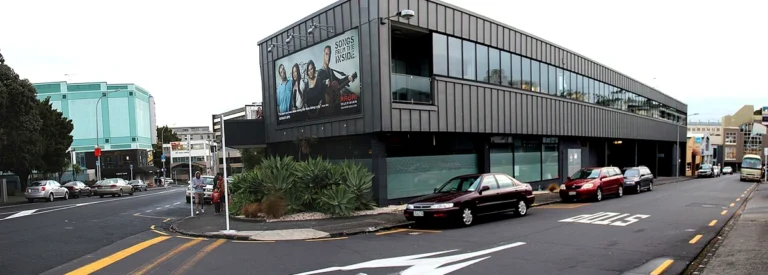
Geographically and in terms of access, this fairy-tale setting sits nestled in the fertile Waikato basin, roughly a two-hour drive south of Auckland along State Highway 1 and State Highway 27. For travelers who enjoy exploring New Zealand’s rural scenery at their own pace, driving a rental car across lovely rolling hills is an ideal choice. Approaching the destination, the first stop is The Shire’s Rest at 501 Buckland Road, where visitors gather to board dedicated buses into the movie set. If you prefer not to drive, you can take scheduled shuttles departing from the Matamata i-SITE visitor center—a Hobbit-domed building right in Matamata town—or catch intercity connections from the geothermal hub of Rotorua about forty-five minutes away.
Each standard tour typically lasts about two and a half hours led by a knowledgeable guide, winding past forty-four Hobbit holes and exploring the detailed interiors of the newly expanded Bagshot Row houses. Reference pricing for a standard adult tour generally ranges from around NZ$120 to NZ$150, while deeper packages including a hearty buffet dinner in The Green Dragon Marquee carry higher rates matching the Middle-earth feast. Throughout the visit, guests must strictly follow heritage etiquette: never step off designated gravel paths. Trampling natural grass slopes not only harms carefully tended vegetation but also risks erosion and settling of the original rammed-earth domes over the Hobbit holes.
A prized insider tip shared by photographers and travel specialists is to aim for the earliest departure of the day, known as the Early Bird slot. As the sun rises over the distant Kaimai Range, the entire Waikato valley still drifts with soft morning mist, lending mossy timber roofs and wildflower trellises a quiet, enchanting beauty. Choosing this time slot not only helps you capture clean photos before larger groups arrive, but also lets you breathe in crisp air, listen to birdsong, and watch wisps of smoke curl from tiny chimneys across green hills. After a leisurely stroll, pausing beside the crackling hearth of the Green Dragon Inn for a traditional ginger beer or a signature Southfarthing brew is the most complete way to close a dreamlike excursion.
To keep your trip seamlessly arranged—from securing timed tickets at an ideal hour and pairing smooth transport to exploring nearby North Island wonders—choosing a complete New Zealand tour package is an optimal way to relax and savor every magical moment in Middle-earth.