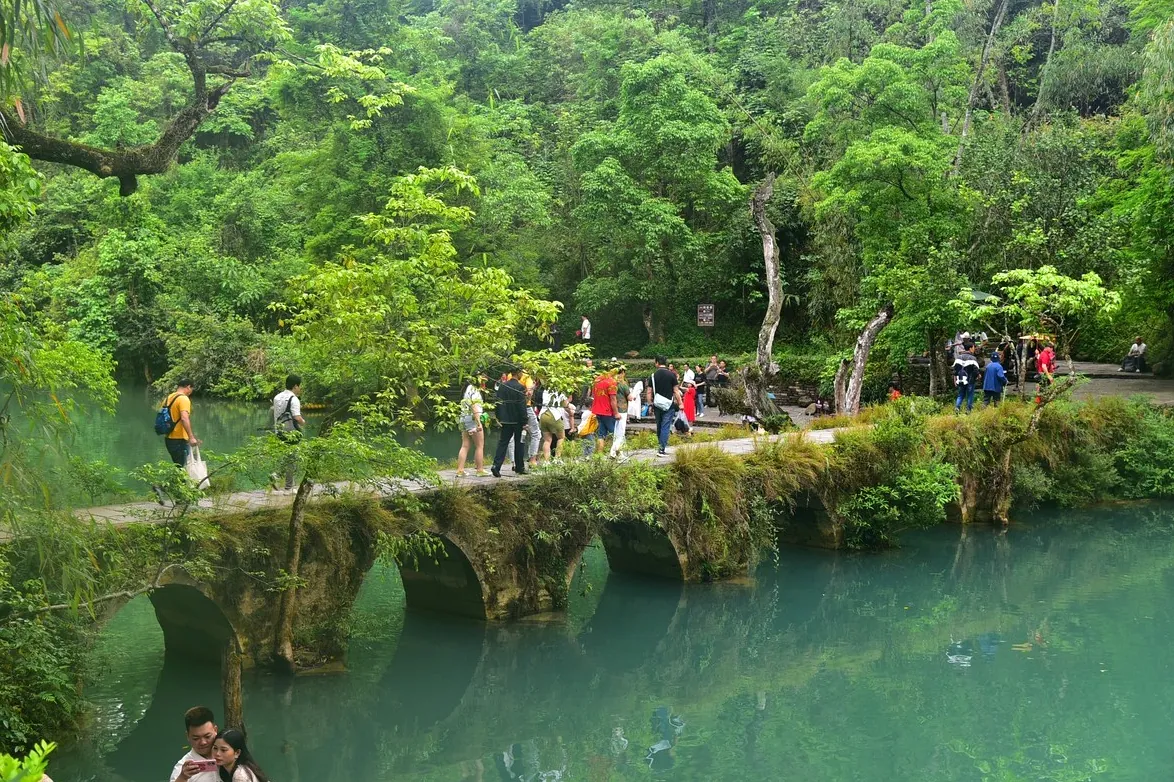
Nestled amidst the rolling folds of the southwestern Guizhou highlands, the Libo region has long been regarded as a vital gateway, marking the rugged natural boundary between Guizhou and Guangxi. The historical narrative of this scenic area is inextricably linked to the 15th year of the Daoguang Emperor of the Qing Dynasty, 1835, when the seven-arched Xiaoqikong stone bridge was sturdily constructed by local officials and residents to span the rushing Xiangshui River. This elegant architectural feat was not merely a flood-crossing bridge; it served as a strategic military outpost and the sole artery for trade along the ancient route connecting the North and South during the turbulent modern era.
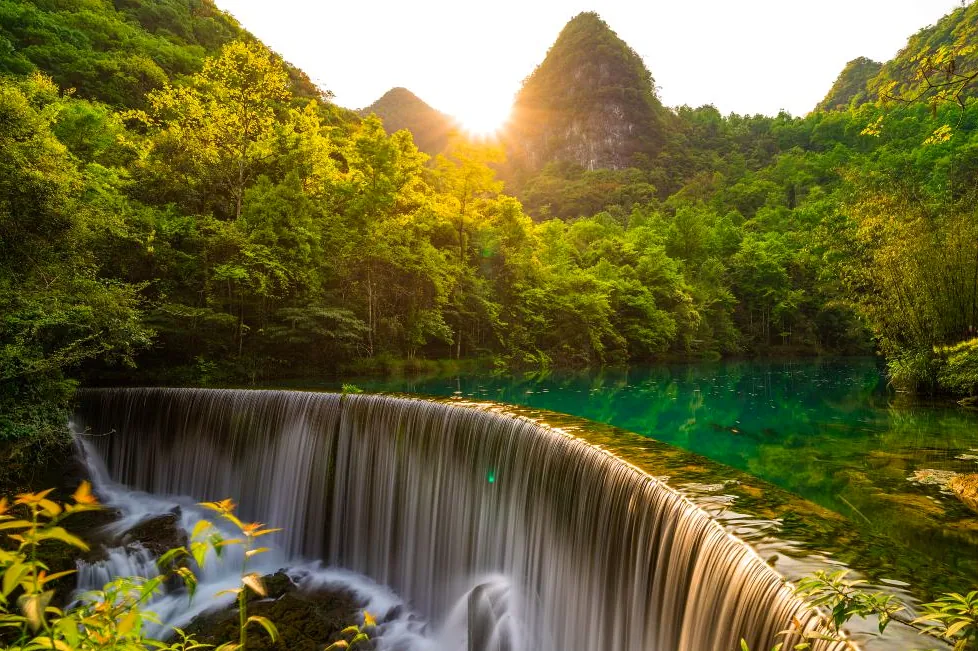
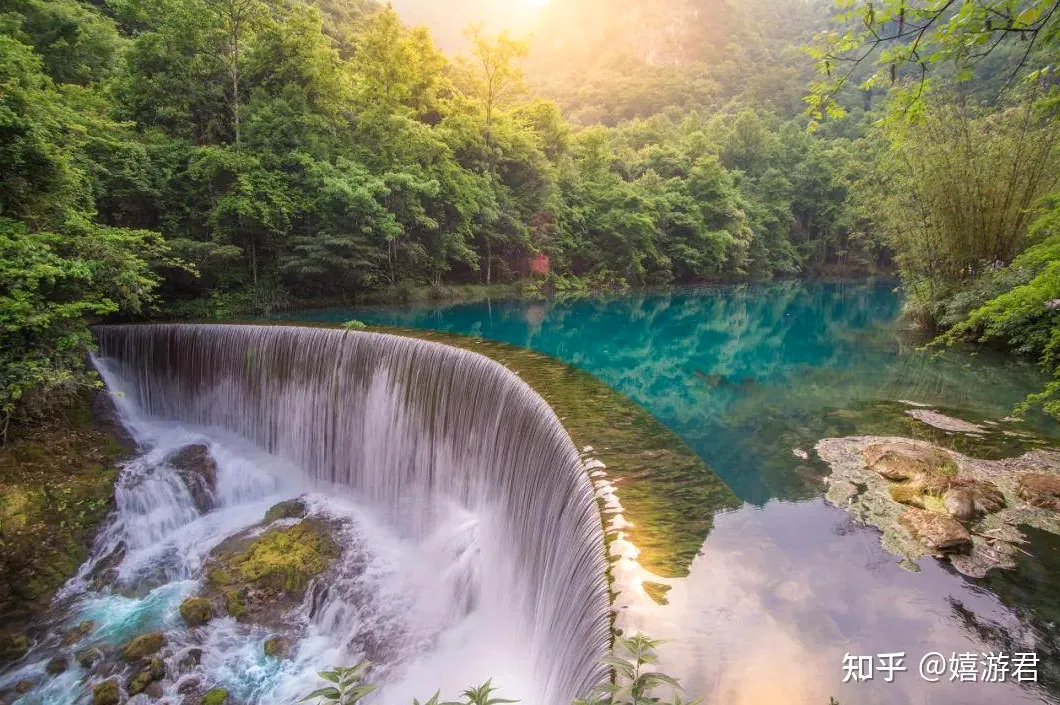
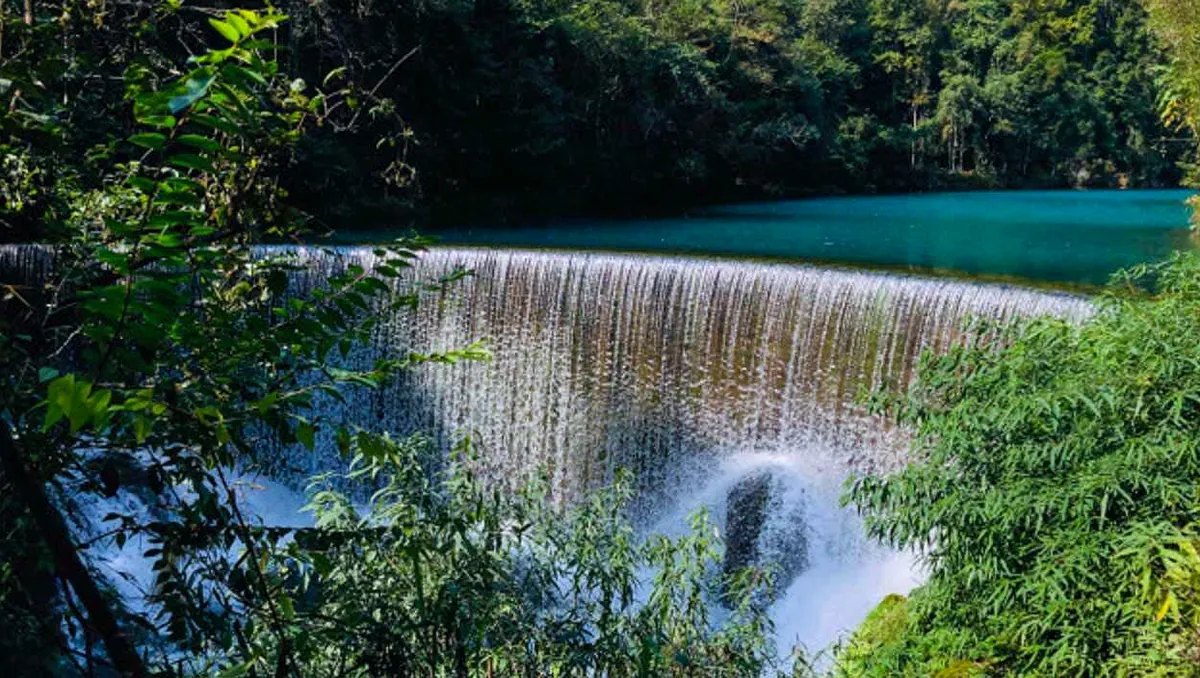
The breathtaking natural scenery of Libo comes to life with its signature arched waterfall, which flows gracefully, day and night, as white foam spills over the ancient stone dam. Behind the falls lies a tranquil lake with a deep, mesmerizing emerald hue, resembling a giant gemstone absorbing the essence of heaven and earth. In the background, towering karst limestone peaks reach toward the sky, fully enveloped by lush, dense tropical primary forests. As the sunset casts golden rays over the canopy and the rippling water, the entire space exudes a mystical, serene, yet primordial vitality.
Tracing back through the chronicles, during the reign of the Daoguang Emperor, the Manchu Qing court intensified efforts to pacify and open up postal routes in the remote southwestern frontier. The vital road passing through Libo once witnessed thousands of footsteps from express couriers and caravans carrying tea, salt, silk, and local produce between the Liangguang and Yunnan-Guizhou regions. Through wars, peasant uprisings, and dynastic shifts, the moss-covered stone bridge and its nearby fortifications have stood resilient against the ravages of time and the flash floods rising from the gorge. The hand-carved blue stones, fitted with precision, not only mark the pinnacle of ancient stone bridge construction but also stand as silent witnesses to migrations, border treaties, and the vibrant economic exchanges of the feudal era.
Beyond its strategic position on the imperial military map, Libo is also a cradle of unique cultural heritage for indigenous minority communities that have thrived for millennia, such as the Buyi, Shui, and Yao peoples. In the spiritual life of the locals, the towering limestone cliffs and deep pools at Xiaoqikong are considered the dwelling places of sacred mountain and water deities. The people maintain traditions of worshipping mountain and ancient tree spirits to pray for bountiful harvests and peace in the highlands. Notably, the ancient hieroglyphic script of the Shui people, known as ‘Shui Shu,’ has been passed down through generations as a priceless cultural treasure, meticulously recording philosophies on human life, astronomy, divination, and the history of this land, creating a unique depth of civilization amidst the magnificent scenery.
Located at the junction of the Guizhou plateau and the Liangguang basin, Libo possesses a unique geomantic energy accumulated over hundreds of millions of years of geological evolution. It is the heart of the South China Karst system, a masterpiece of tropical and subtropical limestone geomorphology officially recognized by UNESCO as a World Natural Heritage site in 2007. The terrain here is likened by the ancients to a sacred basin that gathers spiritual energy, where countless cone-shaped and tower-shaped limestone peaks rise in layers, enclosing hidden valleys and winding underground rivers, creating a perfectly harmonious ‘mountain-enclosed, water-wrapped’ feng shui layout.
Gazing at the stunning landscape photo of the Xiaoqikong scenic area, travelers are immediately captivated by the gracefully arched waterfall, which spills over the mossy stone dam to form a curtain of white foam amidst the vast space. Just behind the falls, the tranquil lake reflects a deep, pure emerald green, mirroring the towering limestone peaks wrapped in lush primary forests. As the sunset gradually descends, the soft evening light casts a golden glow over the water and cliffs, transforming the entire natural scene into a vivid, ethereal ink-wash painting.
The lifeblood nourishing the soul of the entire Libo landscape is the Xiangshui River, a magnificent waterway snaking through the tectonic fissures of the stone plateau. Rather than flowing flat and calm, the Xiangshui riverbed constantly shifts according to natural terraced terrain, creating a series of spectacular multi-tiered waterfalls, such as the 68-tier Duankiao Waterfall or the Lanya Waterfall, which plunges from the edge of a sheer cliff. The water here originates from deep underground springs within the ancient limestone massif, dissolving large amounts of calcium and magnesium minerals, which, combined with the reflection of sunlight, create a rich emerald color that shimmers like a jade silk ribbon draped across the ancient forest.
Beyond its extraordinary water sources, the Libo landscape is equally astonishing for its primeval forests growing on limestone—a rare ecological phenomenon globally. From the perspective of traditional East Asian geomancy (Feng Shui), the scenery here embodies a perfect balance of Yin and Yang: the rugged mountains and imposing stone formations, representing the Metal and Earth elements, are harmonized by the abundant Water source, which nourishes lush vegetation that clings to the limestone crevices to reach for the sunlight. Deep within these cone-shaped peaks lie magnificent karst cave labyrinths like the Tianzhong Cave, home to millions-of-years-old bell-shaped limestone stalactites that create a serene, secluded space, perfectly capturing the essence of traditional geographical harmony.
The rhythm of the Libo landscape is closely tied to the monsoon climate cycle of the highlands. The ideal time to fully appreciate the splendor of this landscape painting is from May to October. During this period, abundant rainfall from the headwaters brings the Xiangshui River to life, with powerful currents surging through the rapids, while the natural lakes retain their characteristic stillness and deep turquoise hue. This is the moment when the atmosphere of Libo reaches its peak, offering a refreshing vitality to anyone who sets foot here to explore.
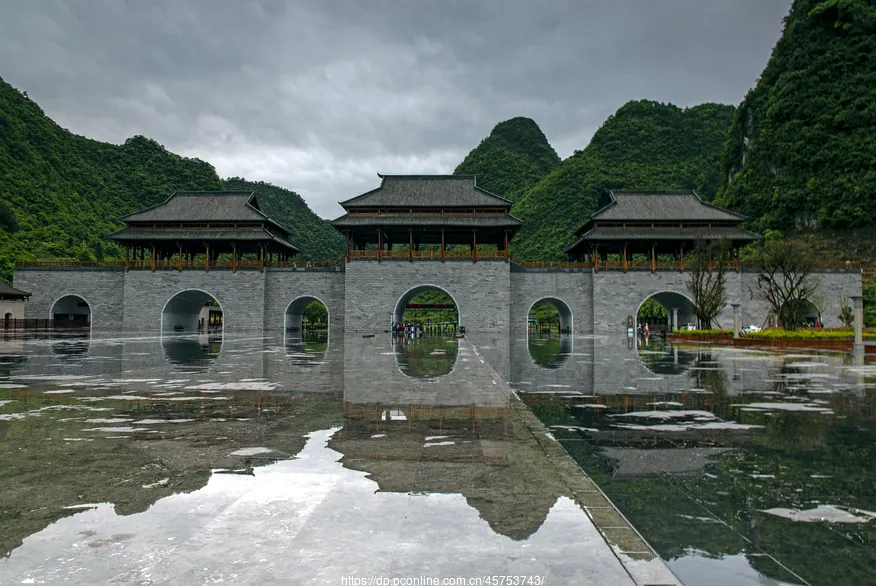
From the very entrance of the Libo scenic area, visitors are greeted by a masterpiece of planning where classical Oriental architecture blends spectacularly with the primeval karst topography. The imposing gateway opens with gracefully curved tiled roofs reminiscent of phoenix wings, supported by sturdy stone arches intricately carved with a blend of imperial elegance and local flavor. A vast plaza paved with natural slate stretches out in front, flat as a giant mirror reflecting the magnificent silhouette of the structure and the surrounding rolling mountains, signaling the start of a journey into a space of brilliant architectural culture.
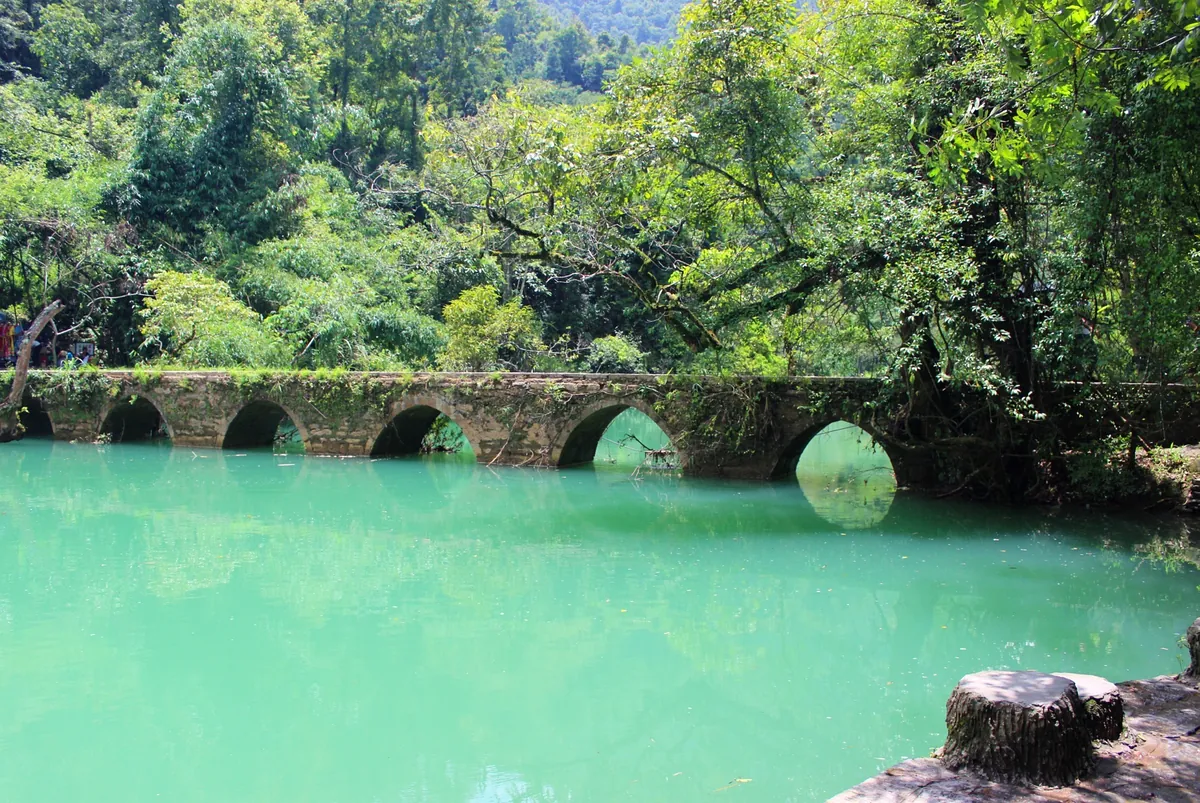
The centerpiece of ancient construction art here is the Xiaoqikong stone bridge, a vital artery that once served as the sole trade route connecting Guizhou Province and Guangxi. Commissioned in the fifteenth year of the Daoguang reign during the Qing Dynasty, the bridge is approximately twenty-five meters long and nearly two meters wide, spanning the turquoise waters of the Xiangshui River with seven graceful limestone semi-circular arches. Remarkably, the artisans of that era used no steel or industrial cement, instead relying on the principles of arch compression and a mortar mixture made from quicklime and local plant resins to bind the precisely hewn stone blocks. After nearly two centuries of enduring a humid subtropical climate and frequent valley floods, the seven stone arches remain steadfast, covered in lush moss, with ancient vine roots embracing the bridge to create a perfect, naturally sculpted masterpiece.
Beyond the marvel of the stone bridge, the human landscape of Libo preserves its ecological philosophy through the traditional Diaojiaolou (stilt house) architecture of the Buyi and Shui people. Nestled skillfully against steep hillsides, these stilt houses made of fir and red pine are built entirely using sophisticated mortise-and-tenon joinery, without a single iron nail or metal fastener. Sturdy ironwood support columns are driven deep into the rock face, elevating the floor to protect it from moisture rising from the karst vegetation and to deter dangerous reptiles and wild animals. Above, the gently sloping roof is meticulously covered with dark grey clay tiles. The alternating overlapping pattern of the tiles creates a rapid rainwater drainage system while forming intelligent air buffers that keep the house warm during freezing winters and cool during the sweltering summer days of the highlands.
From a modern planning perspective, the entire scenic area is a standard model for strategic investment aimed at maximizing the preservation of the world heritage core. Developers have established an ecological sightseeing corridor stretching over twelve kilometers along the rivers and streams, strictly adhering to the principle of minimal intervention in the natural geology. Walking paths have been replaced by elevated eco-friendly wooden boardwalks, which provide spectacular viewing angles for travelers while preventing soil compaction that could damage the precious aquatic forest root systems. A closed-loop network of pure electric shuttle vehicles connects the scenic stops, completely eliminating engine noise and carbon emissions, thereby preserving the pure atmosphere of the karst wilderness for generations to come.
In contrast to neon-lit mega-cities or noisy, commercialized ancient towns, nightfall over the karst core of Libo wraps the landscape in the solemn and magnificent cloak of untouched nature. As the crimson afterglow slowly fades behind the rolling cone-shaped limestone mountains, the winding Zhangjiang River at the foot of the cliffs begins to reflect the silvery moonlight, opening up a quiet and profound space for healing travel. The conservation philosophy in this heritage land strictly avoids high-wattage sound systems or artificial musical fountains that would damage the South China Karst ecosystem, instead proactively creating a rustic nighttime space where luxury is defined by pristine darkness, the sound of streams babbling over rock rapids, and the pure breath of the great mountains.

Though avoiding modern showy special effects, Libo still offers realistic night performances rich in ritual and the cultural depth of long-standing indigenous communities such as the Buyi, White-trouser Yao, and Shui peoples. The lighting art here is strictly regulated according to astronomical dark-sky conservation standards, punctuated only by soft, warm lights hidden beneath fern fronds or mossy rock crevices along the stream banks. On the open lawns along the Zhangjiang River, the warm glow of traditional wood-burning stoves becomes the visual centerpiece. Amidst the hazy night mist, ancient folk songs sung by Buyi maidens in indigo-dyed attire embroidered with beeswax patterns blend with the melodious sounds of the traditional reed pipe (khèn) and leaf flutes played by local youths. The rustic sounds, unamplified by electronic systems, echo against the steep cliff walls, creating a natural reverberation that leads travelers back to their primordial origins, feeling the sacred harmony between humanity and the millennia-old soil.
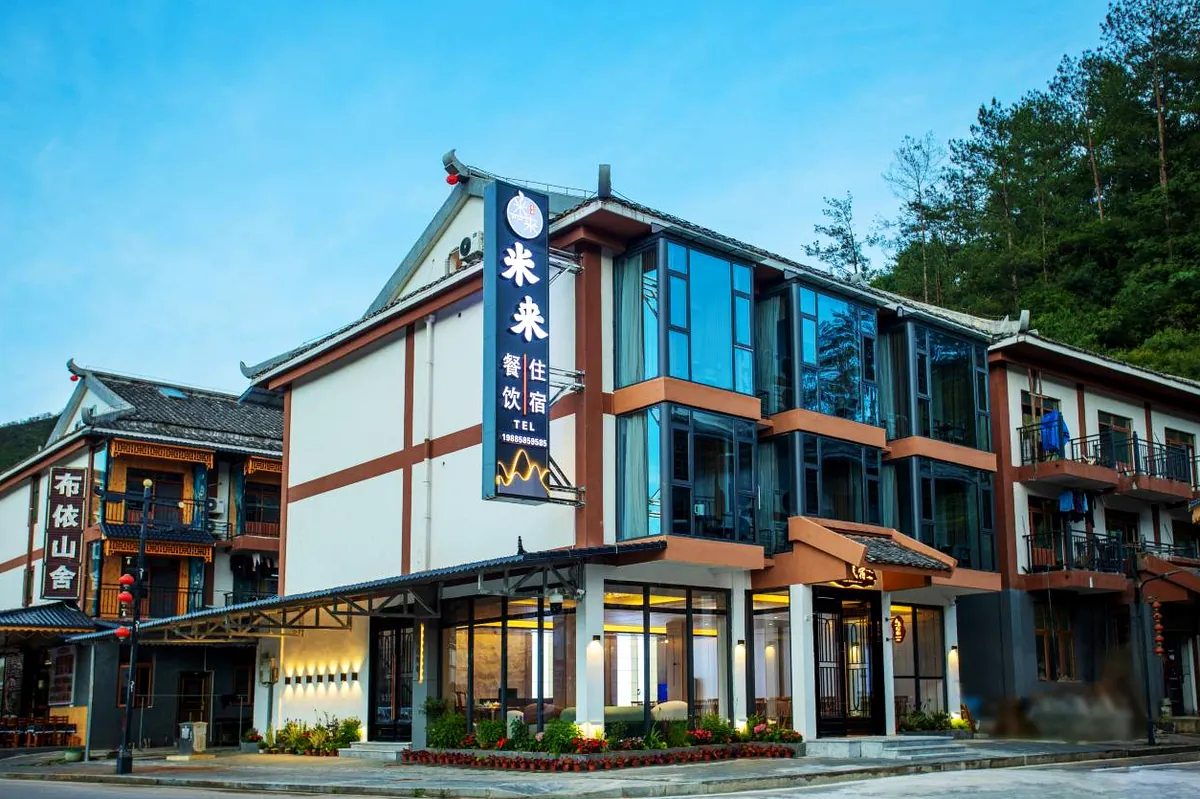
Libo’s nightlife settles most deeply in boutique resorts nestled along both banks of the Zhangjiang River, which inherit the essence of traditional Diaojiaolou stilt house architecture harmoniously combined with rustic wood and rough slate materials. Far away from the hustle and bustle of mass tourist night markets, visitors retreat here to enjoy the absolute relaxation of natural therapies. In the silent space broken only by the chirping of insects, savoring a pot of premium Ancient Tree tea on a wooden porch overlooking the tranquil water, or taking small sips of herbal rice wine brewed in earthenware jars by the Buyi people, brings a rare peace to the soul. This tranquility connects seamlessly with the historical memory of the seven-arch mossy Small Seven-Holes stone bridge built during the Daoguang Emperor’s reign in the Qing Dynasty, turning Libo’s night into a deeply cleansing meditative chapter.
For those wishing to fully absorb the local flavor, the nocturnal culinary scene of this mountainous region is an unforgettable low note. Under the eaves of ancient yin-yang tiled roofs, warmth rises from charcoal stoves grilling stream fish caught from the Zhangjiang River and seasoned with aromatic wild peppercorns, alongside smoked pork stir-fried with crispy, sweet bamboo shoots and a light, tangy, and spicy fish soup rich in local wellness traditions. As night deepens, the thin layer of clouds gradually disperses, revealing a dense starry sky stretching across the magnificent limestone mountain arches, completely unblemished by light pollution. Standing in the breezy valley, inhaling deeply the cool, negative ion-rich fresh air of the primeval forest, travelers realize that Libo’s truest and most precious theatrical performance is the eternal serenity of nature.
The picturesque beauty is best crystallized when footsteps pause before the solemn ancient Small Seven-Holes stone bridge, mirroring itself in the crystal-clear turquoise stream. The seven-arch architectural masterpiece built of bluestone from the Qing Dynasty’s Daoguang era curves softly over the jade-colored water, connecting the two banks of dense, pristine karst vegetation. Visitors leisurely stroll across the mossy bridge, listening to the murmuring stream blending with the cool, damp mist of the mountains, before returning to the rustic riverside villages to experience the unique traditional culinary flavors of Guizhou.
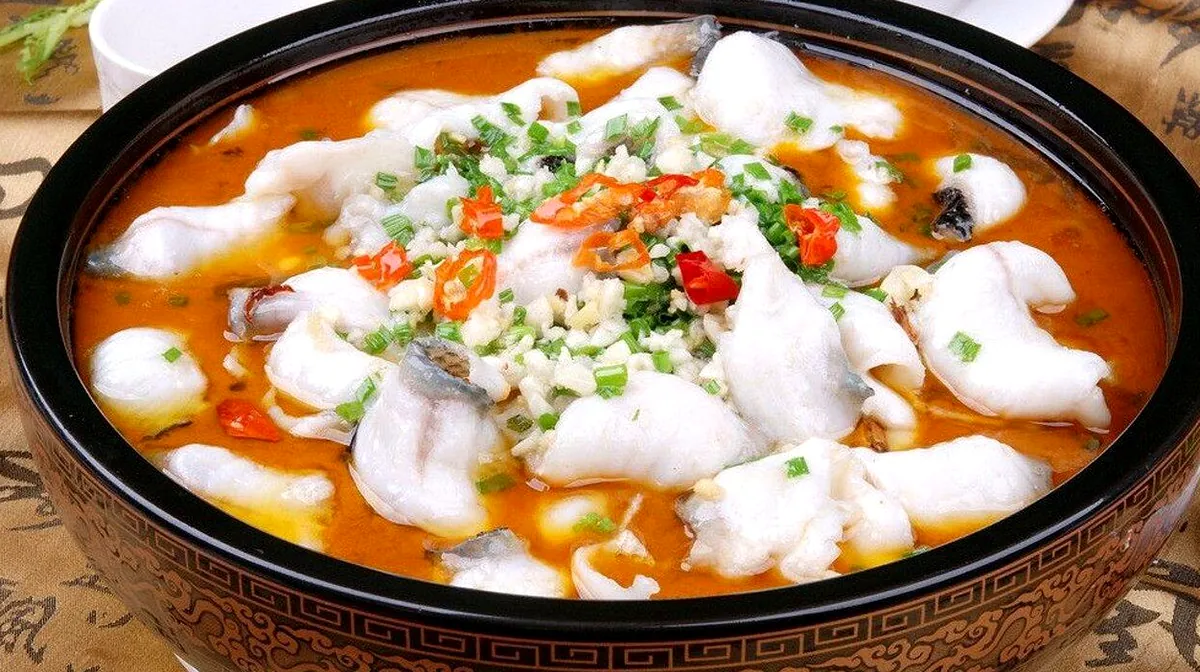
The culinary culture of Libo’s landscape crystallizes from a lifestyle closely tied to deep forests and hidden caves by the Buyi, Miao, and Shui peoples over centuries. Amidst the year-round misty and humid climate of the limestone plateau, the locals have created a unique culinary philosophy immortalized by the age-old proverb: three days without eating something sour will make one’s legs wobble and shake. The sourness in the local meals is not industrial harsh vinegar, but a soul distilled through patient natural fermentation, creating a culinary icon renowned throughout the Southwest: the sour soup fish hotpot, also known as Suan Tang Yu.
}
The soul of the sour fish hotpot lies in its vibrant red, shimmering broth, meticulously aged in traditional earthenware jars. The locals gather juicy wild tomatoes, fiery red chili peppers, and glutinous upland rice water, burying them in the earth to ferment for months until they transform into a crisp, tart flavor with a delicate aroma. When the clay pot bubbles furiously over glowing red charcoal embers, fresh stream fish caught directly from the cool underground springs of Libo are dropped into the stock. The fish meat is firm and intensely sweet without a hint of earthy muddiness, perfectly blending with the spicy, tingling fragrance of litsea cubeba essential oil, fresh lemongrass, and mountain ginger, awakening all the traveler’s senses from the very first sip of soup amidst the chilly weather.
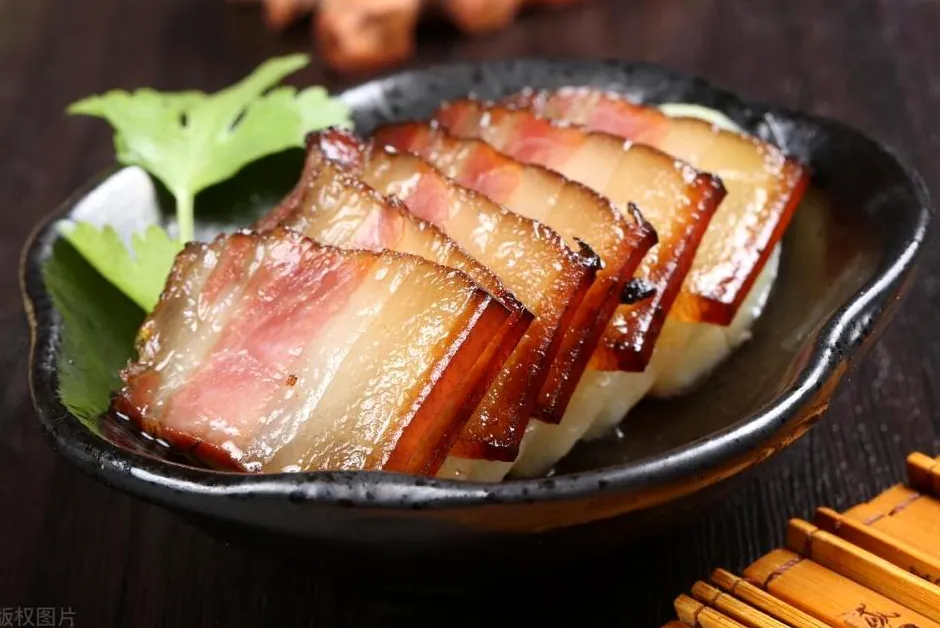
Accompanying the refreshing sour soup is Libo’s smoked beef, imbued with the smoky flavors of mountain villages. The firmest cuts of rump and thigh from free-range cattle grazing on limestone mountain slopes are seasoned with rock salt, coarse chili powder, Sichuan peppercorns, and various secret wild cardamom spices of the Buyi people. These bright red strips of meat are then neatly hung over ironwood fireplaces, absorbing the smoke of cypress wood and gentle heat for weeks. The dried meat firms up on the outside with a weathered dark brown hue, but when torn along the grain, it reveals a soft ruby-pink color. Chewing slowly, one can savor the original deep sweetness harmonizing with a lingering tingling spice at the tip of the tongue.
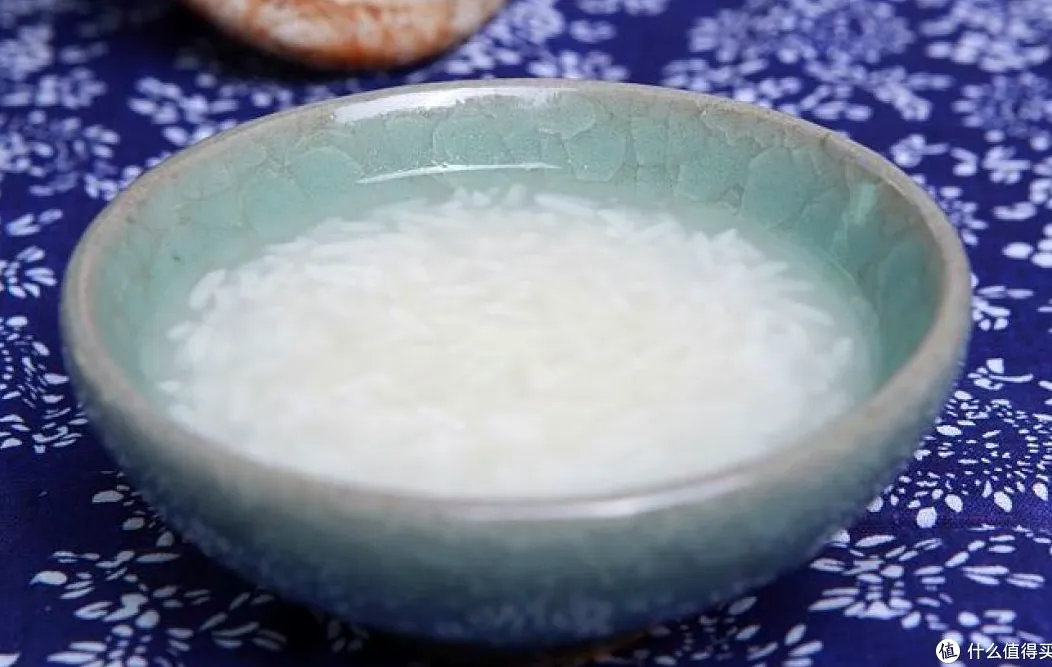
The highland culinary feast truly reaches its peak when a cup of shimmering leaf-fermented upland glutinous rice wine is raised in a toast. This magnificent nectar, with its lustrous color and smooth alcohol content, is handcrafted from glutinous rice grown on terraced fields hanging midway to the sky, fermented using a family recipe combining dozens of deep-forest herbs. During lively festivals or evening gatherings by stilt houses, the sweet rice wine, faintly fragrant with wild forest flowers, acts as an invisible bridge binding kindred spirits together, leaving travelers with a warm, unforgettable lingering aftertaste of a peaceful heritage region.
Once considered an unreachable land hidden deep within the treacherous karst gorges of southern Guizhou, the journey to the fairyland of Libo has today become extraordinarily convenient thanks to the miraculous infrastructure achievements of Southwest China. The most crucial connecting gateway is the modern Guiyang – Nanning high-speed railway, whisking trains across the magnificent limestone forest region to dock at Libo Station. From major transit hubs like Guiyang or Nanning, travel time has been slashed to just over an hour, opening up an unprecedentedly seamless heritage route. Alongside the railway lifeline, the G76 Xiamen–Chengdu Expressway winds spectacularly through sea mists and gigantic viaducts, creating ideal conditions for intercity bus journeys or luxury tour coaches to head straight to the Xiaoshikong Scenic Area entrance without any topographical obstacles.
The scenic area opens its gates to visitors from 07:30 to 16:30 during the peak summer-autumn season, and slightly shortens hours from 08:00 to 16:00 during the chilly winter-spring months. To fully absorb the soul of this global natural heritage region, geographical surveyors strongly advise visitors against making hasty day trips. The ideal duration is a minimum stay of 2 days and 1 night, balancing harmoniously between the delicate, serene elegance of Xiaoshikong and the majestic, mysterious grandeur of the Dashikong Gorge. This quiet span of time allows travelers to catch the moment when the mirror-like surface of Yuanyang Lake is still veiled in lingering morning mist, or quietly gaze at the late afternoon sunlight filtering through ancient tree canopies casting shadows on the seven-arch stone bridge built during the Daoguang era of the Qing Dynasty once the noisy crowds have completely emptied out.
A standout highlight in landscape preservation within the Libo Buyi and Miao Autonomous Prefecture is the local government’s enactment and strict enforcement of Civilized Tourism regulations. Nestled within a strict biosphere conservation network, any acts damaging the ecosystem—such as littering, breaking branches, picking leaves, or stepping into the jade-green lakebeds—face extremely severe administrative penalties. Aiming to preserve the dignity of the landscape and elevate the experience of upscale travelers, Libo thoroughly promotes and applies a high-end, shopping-free tourism model. This standard decisively eliminates forced commercial stops and shopping traps featuring fake jade or traditional herbal medicines, restoring absolute purity to a pristine journey through untouched nature and millennia-old heritage.

Regarding preparatory procedures, international travelers need to complete their tourist visas or group visa registrations through licensed tour operators before departure. Payment platforms in the mountainous towns of Guizhou now operate almost entirely on a digital ecosystem via QR code scanning linked to international cards, though visitors should still carry a certain amount of Chinese currency in cash for expenses in remote villages. With a highland monsoon climate characterized by high humidity and sudden showers, essential luggage must include high-traction trekking shoes with strong grip to cope with the slippery stone-paved paths along the Laya Waterfall or the year-round slick 68-tier waterfall cascading paths. After hours of walking that expend your energy, the highland culinary flavors of Qiannan will serve as a well-deserved reward, where travelers can savor the rich, spicy, and sour fish soup, traditional cured bacon of the White-trouser Yao people in the ancient Yao village, and sip a cup of traditional herbal-fermented glutinous rice wine brewed by the Buyi ethnic minority.
To enjoy a seamless journey without any worries—from visa arrangements and premium canyon-view accommodations to specialized transportation across Guizhou’s famous scenic spots—travelers can explore the detailed itineraries in our all-inclusive tour packages designed expertly and professionally.