
Nestled in the heart of Quang Nam’s rich cultural heritage and charming natural beauty is a world-class resort oasis, where architectural excellence harmonizes with tranquil landscapes. Quang Nam hotels are not just luxurious places to stay, but a gateway to a journey of rejuvenation and self-discovery, creating unforgettable experiences for every traveler.
Here, the value of relaxation is elevated through every moment. Wake up in a serene space, watch the sunrise over a romantic river or an expansive beach, enjoy world-class spa treatments, and savor fine local and international cuisine. Every detail is meticulously crafted to bring absolute relaxation, a deep connection with local culture, and an elevated resort experience. Let Quang Nam Hotels be your ideal destination, where all your senses are awakened and your soul finds true peace.
The history and development of the hotel system in Quang Nam, particularly in Hoi An, began from a very rudimentary foundation, virtually non-existent in the modern tourism sense at the beginning of the 20th century. Previously, Hoi An had been a bustling international trading port from the 16th to the 17th centuries. However, the decline of its port role from the 18th to the 19th centuries due to the siltation of the Thu Bon River caused the area to fall into relative obscurity. During this period, accommodation facilities primarily served domestic needs or passing merchants, lacking a specialized hotel system for tourists, marking the absence of the tourism and resort industry while the potential of this ancient town remained dormant.
Entering the Doi Moi (Renovation) period after 1990, the tourism industry and hotel system in Quang Nam, especially in Hoi An, began to undergo significant transformations. The early 1990s witnessed the arrival of the first backpacker tourists, unlocking the region’s tourism potential. Although initial accommodations were very limited, consisting mainly of mini-hotels, villas, and small-scale homestays, the authorities’ official interest was demonstrated through a thematic resolution on tourism in 1993. However, the most important milestone was in 1999, when the Hoi An Ancient Town was recognized by UNESCO as a World Cultural Heritage site. This event created a historic turning point, transforming Hoi An from a little-known destination into a prominent name on the international tourism map, strongly driving the surge in visitor numbers and the diverse development of tourism and accommodation services in the following years.
The modern period from 2020 to 2026 has witnessed a strong boom in the tourism and hotel industry in Quang Nam, making Hoi An a leading tourism center in Vietnam and reaching out internationally. The development of transport infrastructure such as expressways and international airports has created favorable conditions for visitors to access the destination. In this context, the hotel system has not only expanded in quantity but also improved in quality, moving towards international standardization and diversifying types from unique boutique hotels to wellness resorts and private pool villas, meeting the increasing demand of travelers for forms such as staycation or green tourism. However, recognizing the challenges from rapid growth such as infrastructure overload and the risk of commercialization, Hoi An is actively transforming into a more sustainable development model. The city focuses on elevating the quality of experiences, applying digitization, encouraging Slow Travel, developing in-depth tourism products associated with heritage conservation, building a civilized lifestyle, and especially promoting green tourism, plastic-free initiatives, and eco-tours. The goal by 2035 is to become a leading regional cultural-ecological tourism center, integrating digital technology into all aspects of tourism management and experiences, affirming its position as a destination that is both ancient and modern, and sustainable.
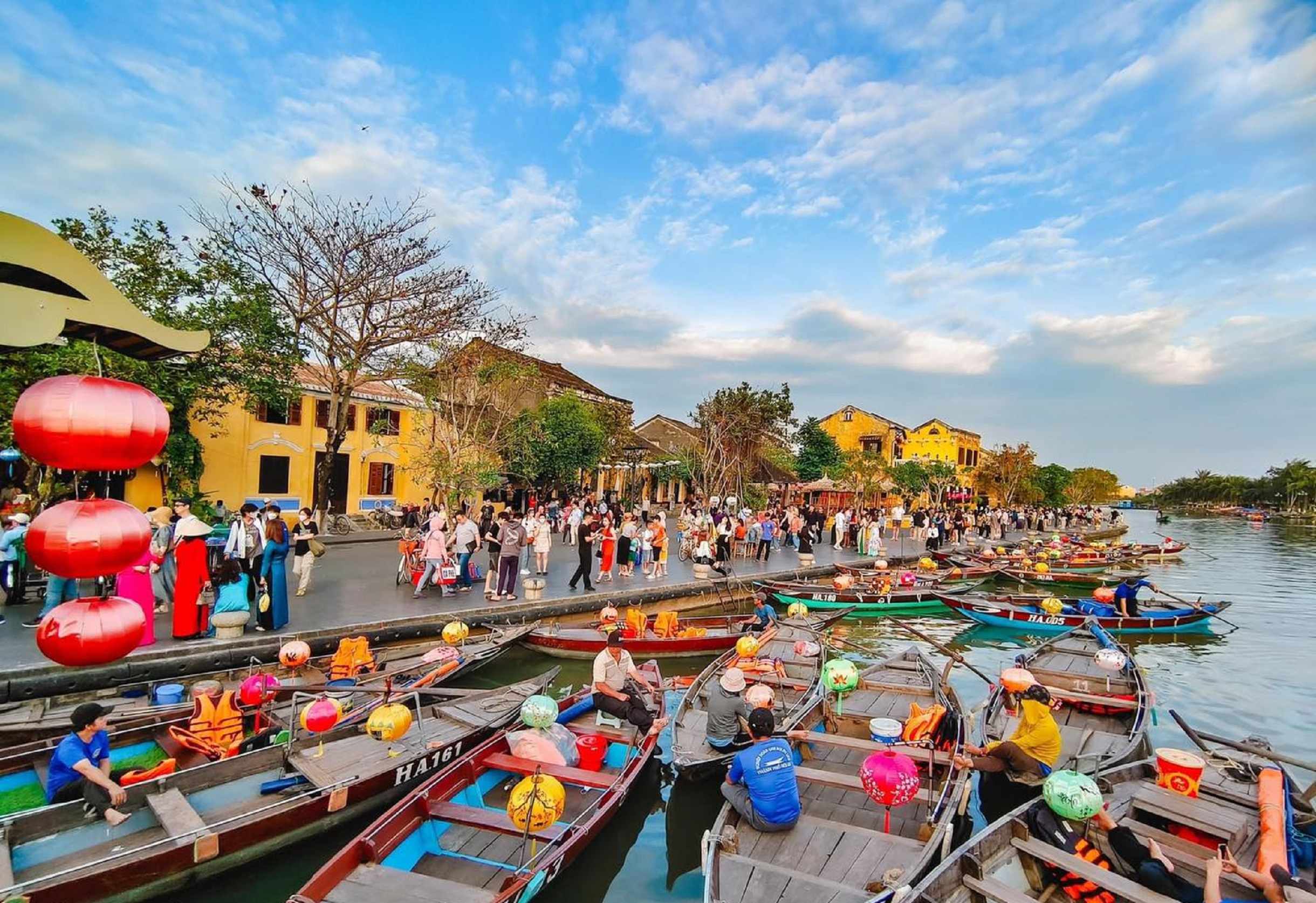
The mossy Hoi An Ancient Town space with bougainvillea trellises and brilliant lanterns along the heritage river of Quang land.
The core of Hoi An’s tourism appeal lies in the Ancient Town, a UNESCO World Heritage site, which serves as the primary center for cultural and historical exploration. This meticulously preserved area, characterized by its signature yellow walls, lantern-lit streets, and traditional architecture, offers a unique pedestrian-friendly experience, especially during vehicle-restricted hours. Accommodations here are predominantly charming boutique hotels, guesthouses, and homestays, blending seamlessly into the heritage landscape while ensuring guests have easy access to ancient houses, temples, bustling night markets, countless handicraft shops, and exceptional local cuisine.
Adjacent to the ancient town, the romantic Hoai Riverbanks create another sought-after accommodation zone, renowned for its peaceful ambiance and stunning river views. This area offers a romantic and tranquil retreat, with many hotels and resorts strategically positioned so guests can admire the gentle waters and vibrant river life. Establishments like Little Riverside are a testament to the beauty of this location, where visitors can enjoy a blend of ancient elegance and modern amenities, often accompanied by private balconies or terraces, enhancing the connection with Hoi An’s natural beauty.
For those seeking a beachfront getaway, the pristine Cua Dai and An Bang beaches are Hoi An’s premier coastal accommodation areas. These zones concentrate luxury resorts and hotels, offering direct access to the golden sands and clear blue waters of the East Sea. Resorts such as Bellerive Hoi An Resort and Spa and Boutique Hoi An Resort provide full amenities, including large swimming pools, diverse dining options, and wellness services, catering to travelers wishing to combine relaxation with beach activities while maintaining a convenient distance to the historic town center.
Beyond the bustling ancient town and serene coastline, the surrounding buffer zones of Hoi An—including traditional craft villages and lush ecological landscapes—are emerging as key areas for unique accommodation experiences. Locations near the Tra Que vegetable village, Thanh Ha pottery village, and Cam Thanh Bay Mau coconut forest are home to eco-resorts such as Hoi An Eco Lodge Resort & Spa, offering visitors an immersive journey into local culture and nature. These properties emphasize sustainable tourism, providing a tranquil setting amidst rice paddies, organic gardens, and waterways, ideal for travelers seeking a deeper connection with local life and a slower travel pace.
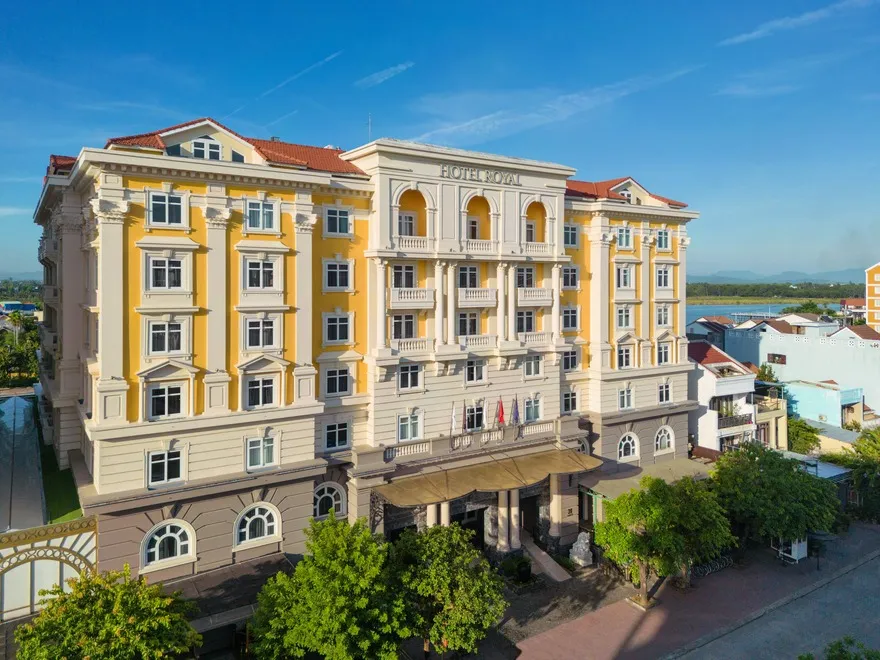
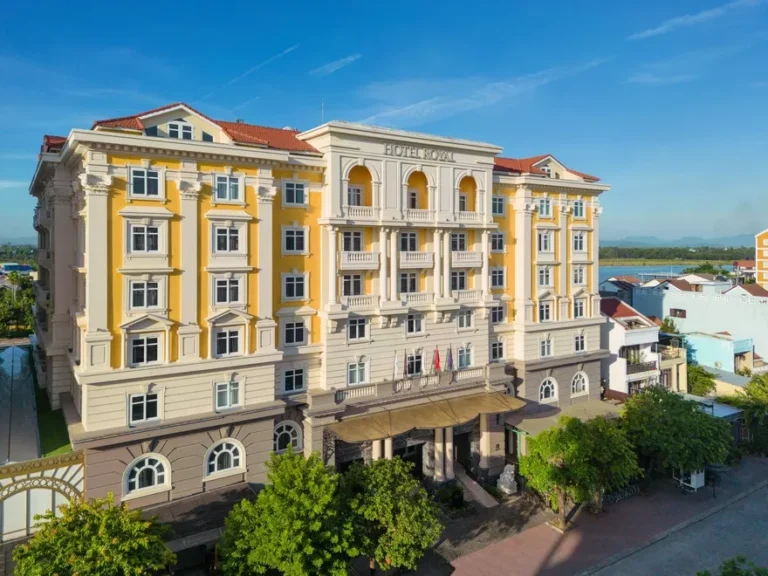
Artistic architecture tells the legendary 17th-century love story at Hotel Royal Hoi An – MGallery.
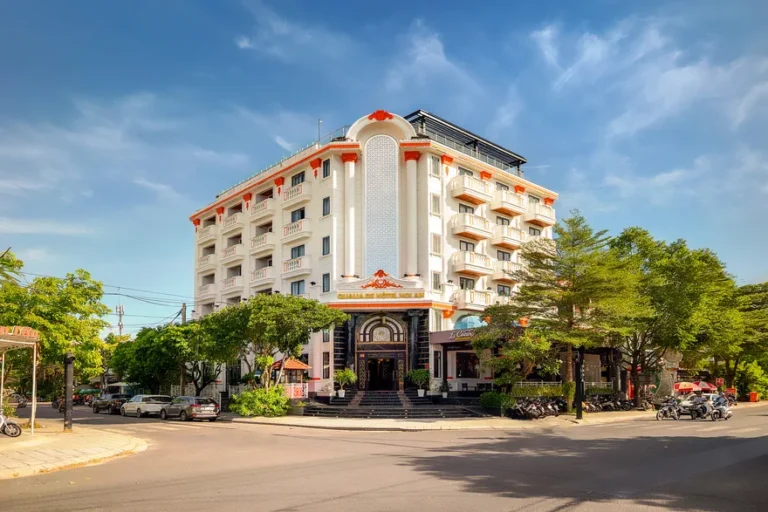
Hotel Royal Hoi An (MGallery by Sofitel): Situated along the banks of the Thu Bon River, Hotel Royal Hoi An is a unique international 5-star hotel under the prestigious MGallery brand, recreating the romantic love story between Japanese merchant Sotaro Araki and Princess Ngoc Hoa during the Faifo era. The hotel impresses with its two wings featuring graceful Japanese architectural styles and sophisticated classic French flair, boasting the highest rooftop pool in Hoi An alongside The Deck Bar for taking in breathtaking views of the ancient town’s sunset.
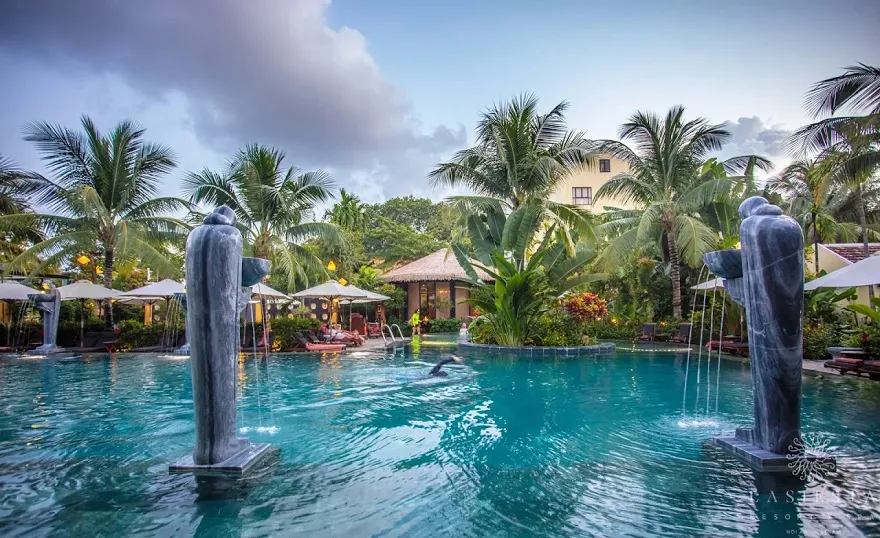
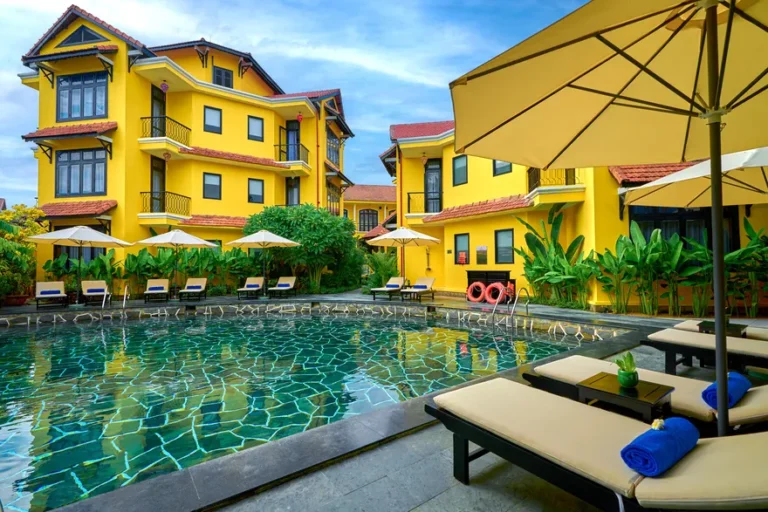
The saltwater pool and lush Indochine grounds at La Siesta Hoi An.
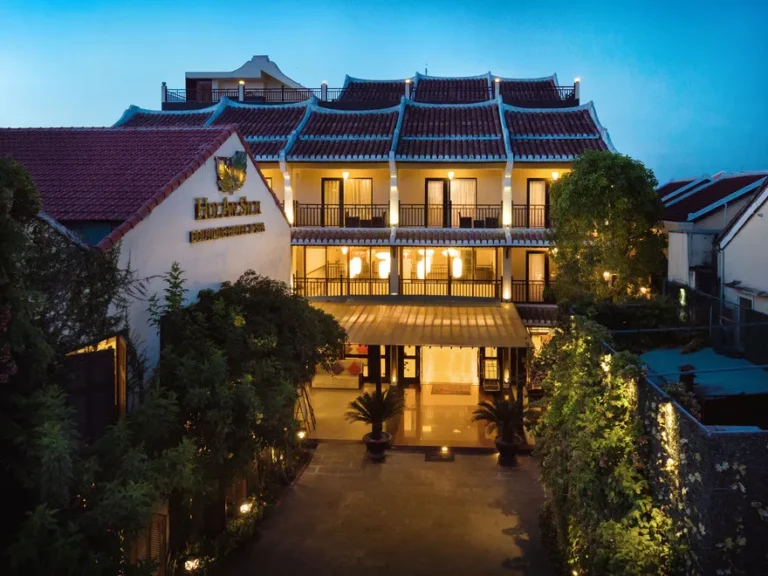
La Siesta Hoi An Resort & Spa: Nestled beside peaceful rice paddies near the ancient town, La Siesta Hoi An is one of Asia’s leading boutique hotels featuring a distinctive nostalgic Indochine design style. The resort offers luxurious rooms and suites with teak wood interiors, classic wooden bathtubs, and airy balconies, combined with 4 outdoor pools (including a saltwater pool and a rice-paddy-facing infinity pool), the renowned La Siesta Spa, and exceptionally attentive customer service.
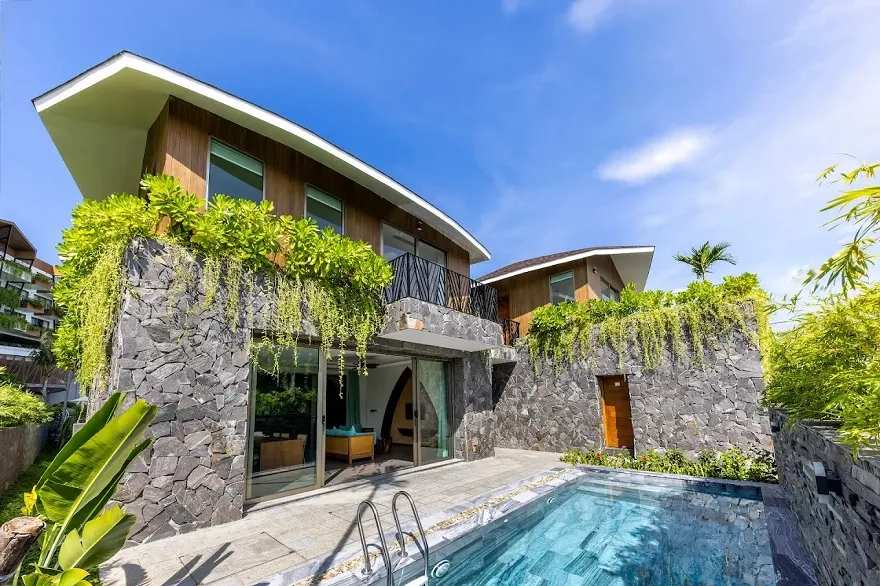
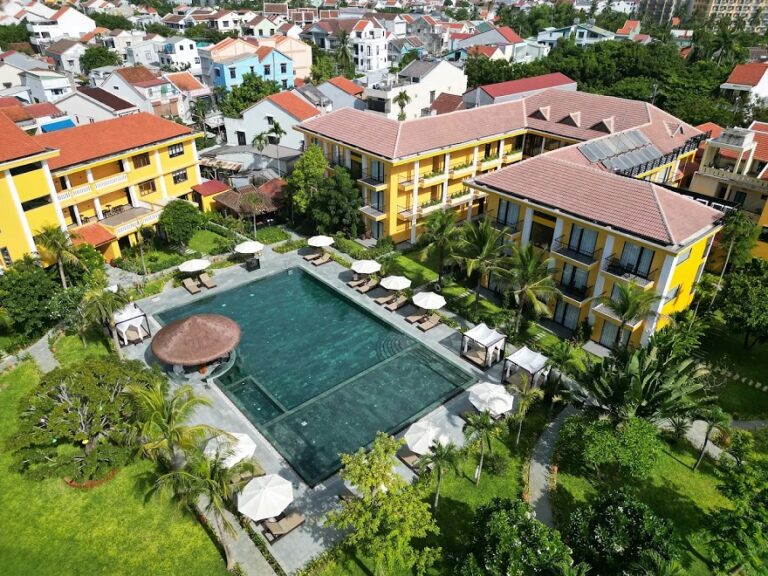
Modern architecture inspired by traditional fishing villages at Bellerive Hoi An.
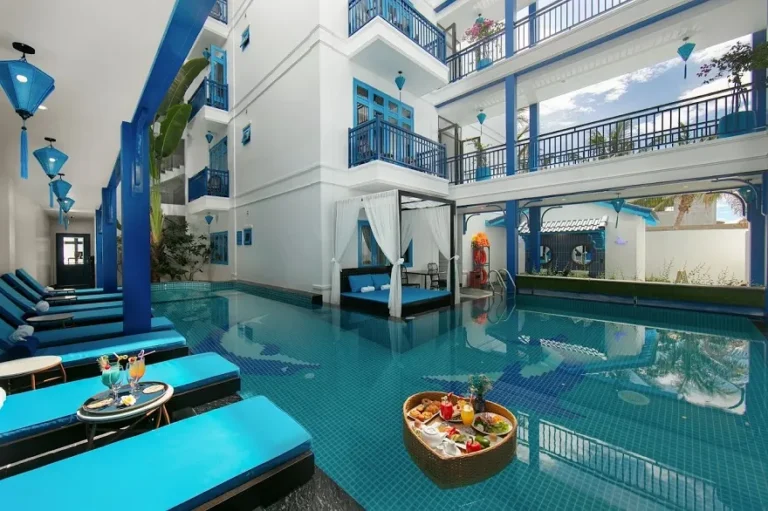
Bellerive Hoi An Hotel and Spa: Inspired by the rustic beauty of Hoi An’s river fishing villages, Bellerive Hoi An offers a sophisticated contemporary stay along the romantic Co Co River. The hotel impresses with its unique arched architecture, light-filled rooms with peaceful river views, a winding central swimming pool, and deep relaxation spa services, bringing a perfect balance to mind and body.
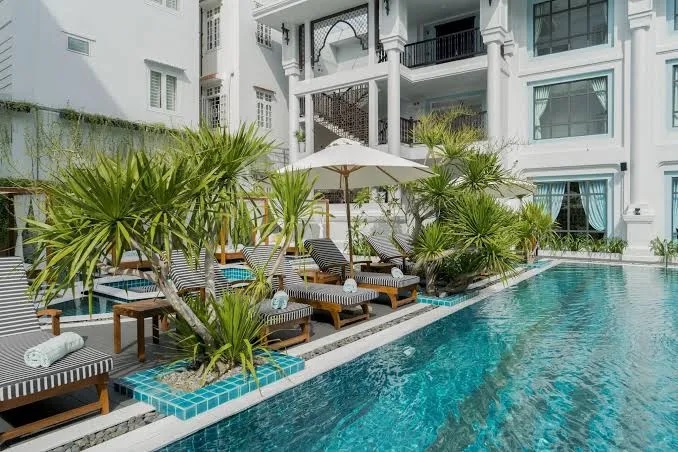
Exquisite Indochine boutique space and artistic swimming pool at Anio Boutique Hotel Hoi An.
Anio Boutique Hotel Hoi An: An artistic boutique hotel masterpiece in Hoi An, Anio celebrates the identity of East-West cultural exchange with jade green tones and intricate ceramic patterns. The hotel features a stunning central skylight swimming pool, high-end amenity rooms, The Hoi An Kitchen restaurant serving authentic cuisine, and attentive service style, bringing a cozy feeling like returning to a second home in the heart of the heritage.
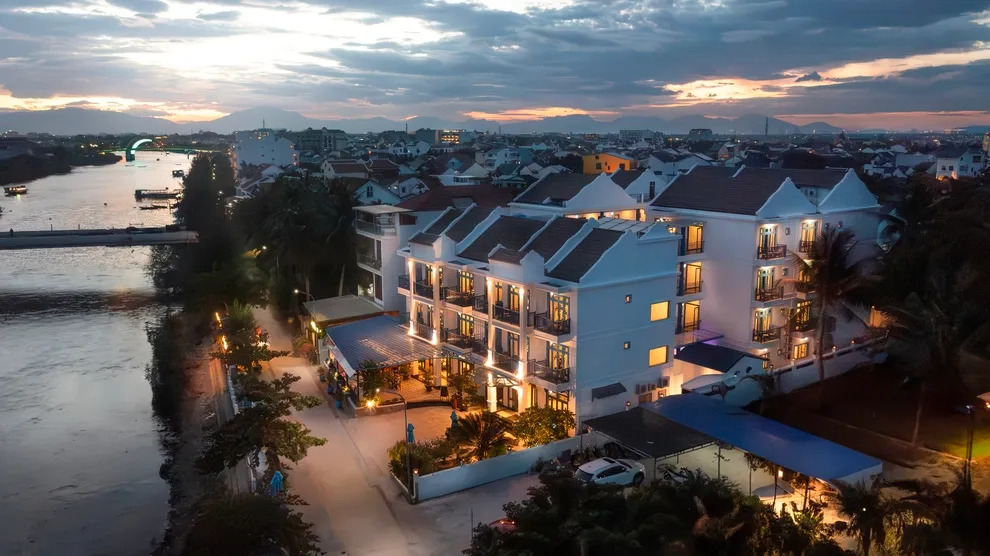
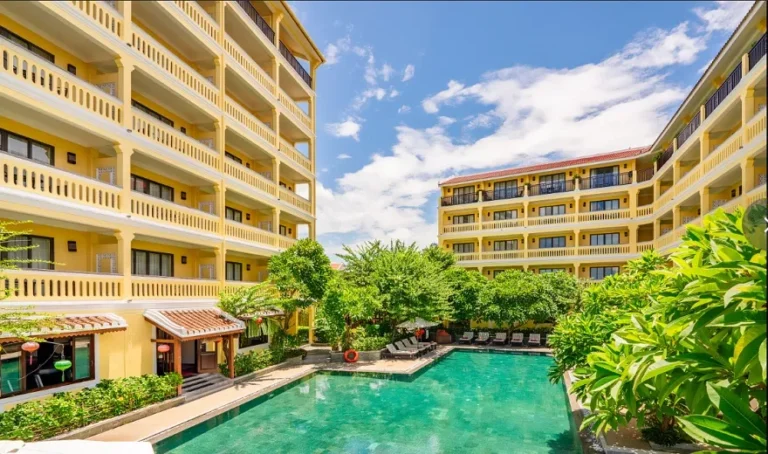
Panoramic views embracing the Thu Bon River and peaceful resort space at Silk River Hoi An Hotel & Spa.
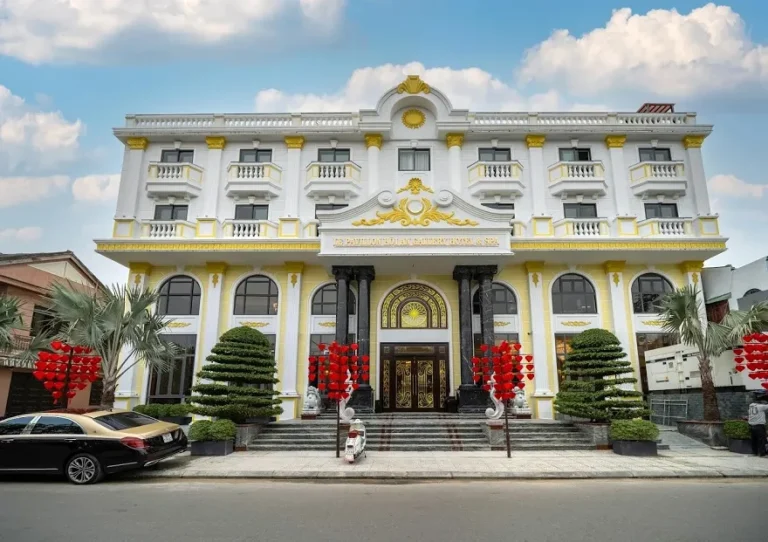
Silk River Hoi An Hotel & Spa: Nestled along the tranquil Thu Bon River, Silk River Hoi An is a 4-star resort hotel that harmoniously combines modern architecture with the traditional silk soul of Quang Nam. Featuring well-equipped rooms, spacious balconies overlooking the river and town, an airy outdoor swimming pool, and a friendly staff, the hotel is an ideal choice for travelers seeking relaxation and convenience when exploring the center of Hoi An Ancient Town.
| Accommodation Name | Location / District | Star Rating / Style | Notable Signature Amenities | 2026 Reference Rates (VND/Night) |
|---|---|---|---|---|
| Little Riverside Hoi An Luxury Hotel & Spa | Thu Bon riverfront, near the Ancient Town. | 5-star, antique and luxurious Faifo style. | Traders Waterfront Restaurant (Western-Vietnamese cuisine), romantic river views. | From 2,817,500 VND/night (estimated from $115) |
| Almanity Hoi An Wellness Resort | Near the Ancient Town. | Wellness and health resort. | Central Vietnam’s largest My Chi Spa (40 treatment rooms), saltwater pool, Yoga/Tai Chi classes, farm-to-table organic garden. | Around 2,075,239 VND/night |
| La Siesta Hoi An Historic Hotel (La Siesta Hoi An Resort & Spa) | About 1km from the Japanese Covered Bridge. | Classic, elegant, Hoi An ancient house architecture. | 4 swimming pools (including a 400m² saltwater pool), spa, free shuttle bus to An Bang Beach, creative activities for children (4-12 years old). | From 1,800,000 VND/night (estimated) |
| Bellerive Hoi An Resort and Spa | Cua Dai area, convenient beach access. | 5-star, modern resort. | Free kids’ club, pet-friendly. | No specific info, expected at 5-star level |
| Boutique Hoi An Resort | Located on Cua Dai Beach. | Classic, sophisticated style (black-and-white). | Located directly on the beach, airport shuttle service, cocktail party venue space. | Average 4,238,500 VND/night (estimated from $173) |
When choosing a place to stay in Hoi An, travelers can expect professional and attentive service standards, especially at boutique hotels and high-end resorts. Services generally focus on personalized experiences, friendliness, and basic amenities such as free Wi-Fi, air conditioning, hot water, and absolute cleanliness. For more luxurious establishments, amenities like spas, swimming pools, diverse restaurants, and shuttle services are a given, contributing to a complete vacation. For an optimal experience, choosing the right location and room category is crucial. If you love romance and the convenience of exploring the Ancient Town, riverside hotels along the Hoai River with poetic views are the ideal choice. Conversely, those wanting to enjoy the sea breeze can choose resorts in the Cua Dai or An Bang areas with ocean-view rooms. Additionally, eco-resorts nestled among rice paddies or near coconut forests offer a peaceful space close to nature, suitable for those seeking tranquility.
The peak tourism season in Quang Nam usually falls during the dry season, from February to August, when the weather is sunny, pleasant, and with little rain, making it very favorable for sightseeing and beach activities. In particular, the period from April to August is the busiest time, leading to higher room rates and service costs, which makes early booking an essential tip. The rainy season from September to January, although it may bring storms in October and November, is the low season with more affordable rates and a quieter atmosphere. When booking, travelers should pay attention to deposit or prepayment policies, as most accommodations require them to secure bookings, especially during holidays or peak seasons. At the same time, carefully research child surcharge policies and room capacities. Usually, children under a certain age stay free of charge when sharing a bed with their parents, but older children or extra bed requests will incur a surcharge. Each room type also has its own maximum capacity, and exceeding it may lead to additional fees or requirements to book an extra room.
Hoi An, with its harmonious blend of ancient charm and modern amenities, offers unique boutique accommodation experiences deeply connected to the local culture of Quang Nam, suitable for all types of travelers. Multi-generational families will find absolute comfort and privacy in private whole-villa rentals with private pools, where children can play freely in a safe environment or enjoy creative activities at free kids’ clubs in resorts like Bellerive and La Siesta. Eco-resorts like Hoi An Eco Lodge also open up opportunities to get close to nature, explore organic vegetable gardens and lotus ponds, and participate in traditional cooking classes together, creating memorable moments for the whole family. Meanwhile, couples seeking romance for a honeymoon or anniversary will fall in love with charming riverside boutique hotels like Little Riverside with private balconies overlooking the poetic Hoai River, or relaxing spa treatments at Almanity and La Siesta, along with a private romantic candlelit dinner. For energetic young travelers, exploring the ancient town, craft villages, and countryside by free bicycles, immersing themselves in eco-tours at the Bay Mau coconut forest or Tra Que vegetable village, and experiencing stays at unique boutique hotels with distinctive architecture like Reu Boutique will be an exciting journey. Even MICE corporate groups can take advantage of modern meeting room spaces at Almanity for conferences, combined with engaging team-building activities such as kayaking, cycling, or cooking classes, turning a business trip into a meaningful cultural exploration journey, supported by professional transfer and event organization services.
Many hotels and resorts in Hoi An are ideally located, close to the Ancient Town (such as Little Riverside, Almanity, La Siesta) or near the beach (such as Bellerive, Boutique Hoi An Resort). Most accommodations provide free bicycles. Some places also offer free shuttle buses to the beach or airport transfer services (fees may apply).
Typically, check-in time is 14:00 and check-out time is 12:00. Cancellation policies vary depending on each hotel, the type of room booked, and the time of cancellation. Travelers should carefully review these terms when confirming their reservation.
Most hotels and resorts in Hoi An feature outdoor swimming pools, and some even have saltwater pools (such as La Siesta, Almanity). Regarding child policies, many family-friendly resorts offer free Kids’ Clubs (e.g., Bellerive) or creative activities, as well as spacious areas suitable for families.
