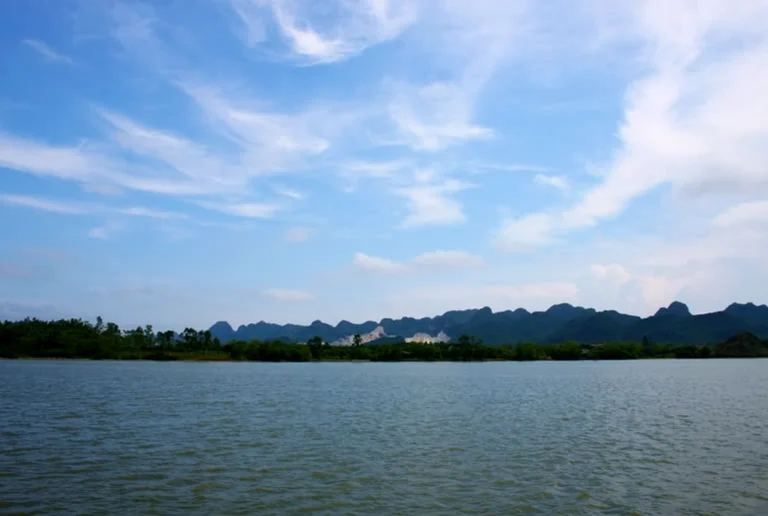
Nestled among the undulating folds of the Yunnan–Guizhou Plateau, the region of Duyun (Chinese: 都匀; pinyin: Dūyún) has served since antiquity as the ancestral homeland of indigenous ethnic communities including the Bouyei, Miao, and Shui peoples. When history was still veiled in mist during the Qin and Han dynasties, this rugged frontier was loosely administered by the central court through the Jimi (羁縻) system—a flexible “loose-rein” governance policy granting broad autonomy to tribal chieftains to maintain a delicate balance along the borderlands. Across thousands of years of wind and mist, its formidable terrain wedged between towering mountains and deep gorges forged a singular cultural identity in Duyun, where age-old customs blended seamlessly with the shifting tides of northern imperial dynasties.
Duyun’s strategic turning point emerged clearly during the Ming dynasty. In the eighteenth year of the Hongwu reign (1385), recognizing this corridor’s vital position in controlling the key trade artery linking Guizhou with Guangxi and Yunnan, Emperor Hongwu decreed the establishment of the Duyun Guard (Duyun Wei). This military measure not only transformed a remote mountain outpost into a major garrison anchored by sturdy fortifications, but also opened the way for waves of Han settlers bringing agricultural techniques, literary culture, and urban planning principles into the daily lives of the Miao and Bouyei communities. The presence of the Weisuo garrison system formally placed Duyun on the geopolitical map as one of Southwest China’s foremost hubs for military provisions and commercial exchange.
By the Qing dynasty, the region’s most profound historical transformation unfolded during the Qianlong era. Between the twelfth year of the Yongzheng reign and the early Qianlong period (around 1734), the Manchu court vigorously implemented the Gaitu Guiliu policy—permanently abolishing hereditary local chieftainships in favor of court-appointed magistrates—while formally elevating the region to Duyun Prefecture. During this prosperous era, local Maojian tea, prized for tender buds coated in fine snow-white down and curled delicately like fishhooks, was selected by provincial governors as tribute for the imperial capital. Captivated by its jade-green liquor, refined fragrance, and lingering sweet aftertaste born on mist-shrouded peaks, Emperor Qianlong personally bestowed upon it the title “Imperial Tribute Tea,” elevating Duyun Maojian into a courtly legend passed down through generations.
Inheriting the proud legacy of ancient ramparts and imperial tribute tea, the area experienced a magnificent renaissance through the master-planned development of Duyun Maojian Tea Town. This expansive architectural ensemble harmonizes the grand, stately sweep of Tang- and Song-style palaces with the refined, weathered elegance of Ming- and Qing-era merchant quarters. Gracefully upturned eaves, bluestone steps, and winding covered corridors recreate the splendor of an ancient commercial town in the heart of Guizhou. With its monumental scale and rare historical depth, the town not only preserves the soul of classical tea culture but has also earned renown as Guizhou’s “Second Hengdian,” welcoming travelers on a journey through time into history’s golden ages.
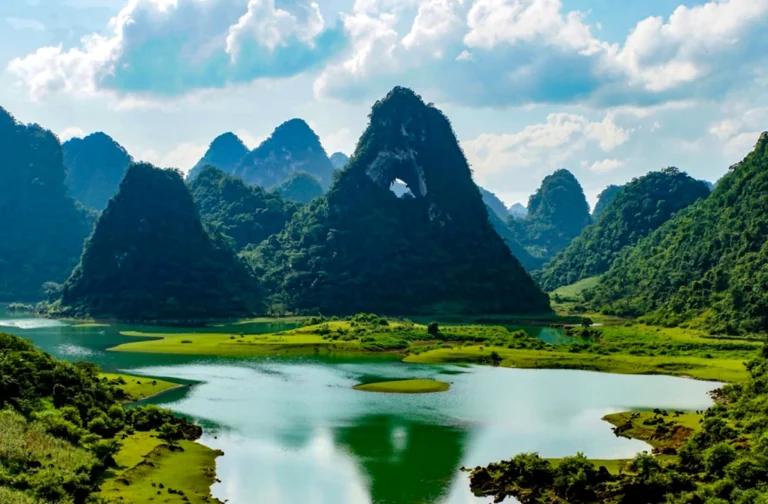
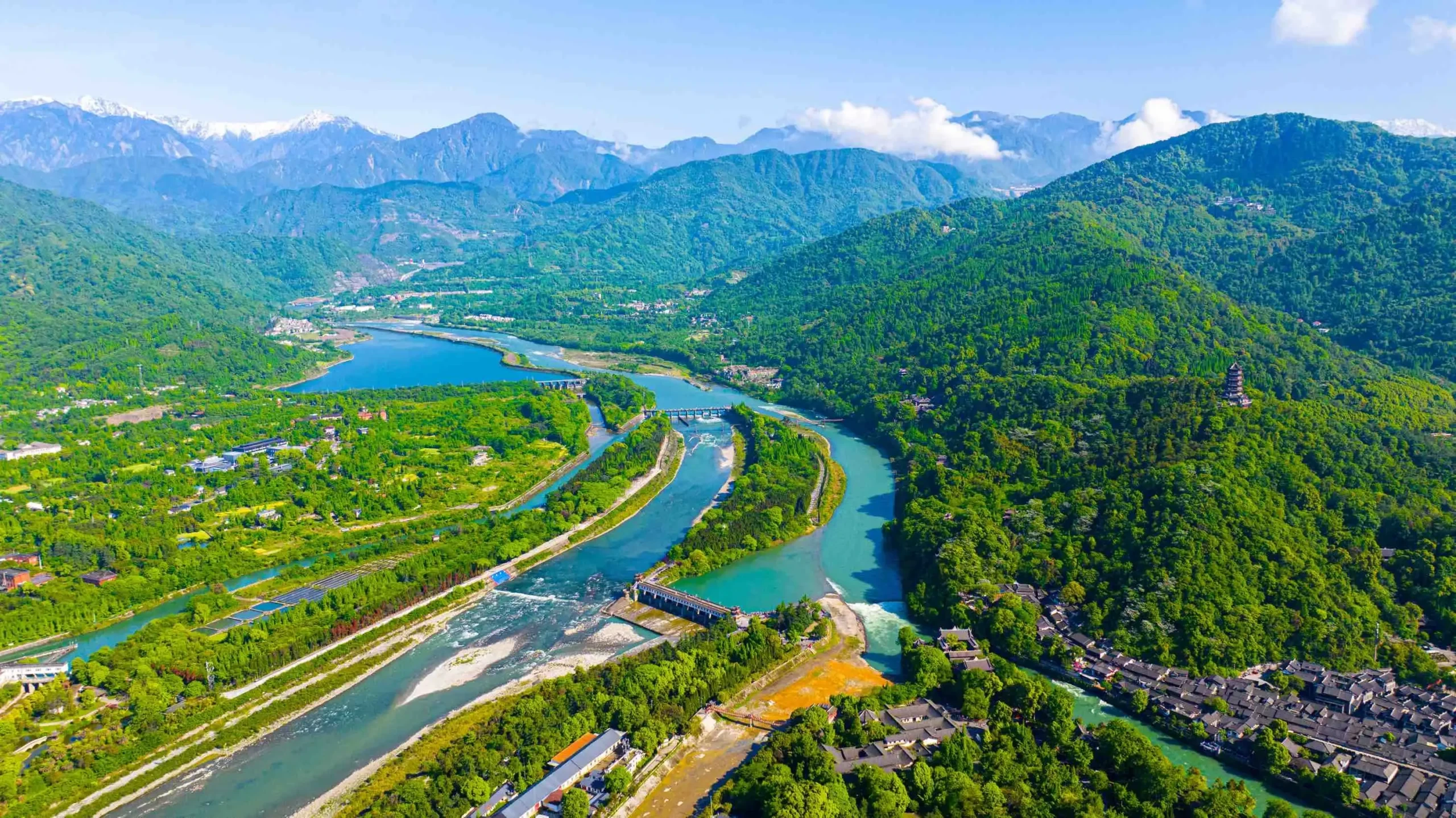
Tucked deep within the rolling folds of the majestic Yunnan–Guizhou Plateau, Duyun—seat of the Qiannan Bouyei and Miao Autonomous Prefecture—possesses one of the most intricate karst geomorphologies in Southwest China. Viewed through traditional geomantic principles, its terrain resembles a green lotus cradling a pearl, where layered mountain ranges coil around deep basin valleys. Dense blue-tinted mist condenses year-round from highland microclimates, enveloping the valley basin in a natural, mysterious veil. Historically, its rugged landscape of sheer limestone karst pinnacles, plunging gorges, and subterranean waterways made Duyun a strategic chokepoint—both an impregnable military bastion and a vital customs post governing ancient trade routes between Lingnan and the Guizhou highlands.
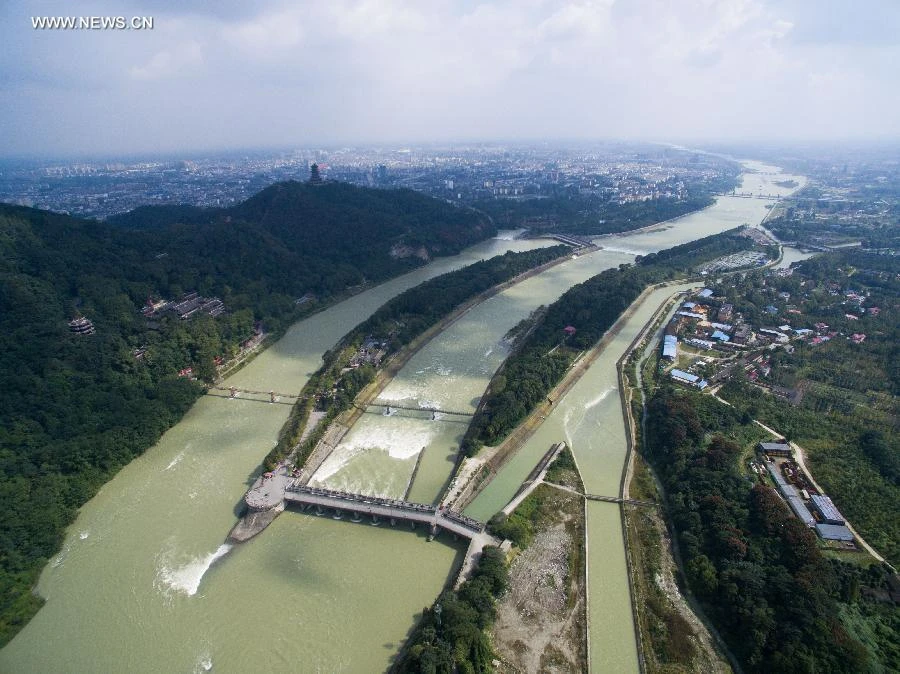
This extraordinary interplay of rugged highland terrain and abundant rivers and streams creates a distinctive microclimate free from scorching summer heat and bone-chilling winter frost. Moisture-laden southern winds colliding with towering limestone walls condense into drifting ribbons of cloud and mist lingering from dawn until dusk. Fertile weathered Paleozoic sedimentary soils rich in trace minerals, paired with ideal atmospheric humidity, cultivate the unrivaled cradle of famous Duyun Maojian tea. Emerald tea terraces follow natural elevation contours like soft silk ribbons draped across mountainsides—reflecting the Bouyei and Miao philosophy of living in harmony with earth and sky while forming an effective soil-retaining network protecting the fragile karst ecosystem against erosion.
Though its rugged mountains once daunted travelers with formidable isolation, modern Duyun has undergone a dramatic spatial transformation thanks to large-scale infrastructure tunneling through mountains and spanning valleys. Anchoring this connectivity is Duyun East Railway Station, a strategic stop along the Guiyang–Guangzhou High-Speed Railway. This engineering marvel has dramatically compressed travel times, allowing passengers to reach Duyun in just 45 to 50 minutes from provincial capital Guiyang and in roughly 4.5 hours directly from the southern metropolis of Guangzhou South. Alongside high-speed rail, Duyun sits at the golden crossroads of two major national expressways—the north–south Lanzhou–Haikou Expressway (G75) and the east–west Xiamen–Chengdu Expressway (G76)—opening wide gateways for trade and integrating central Qiannan into the national economy.
Thanks to the seamless union of picturesque mountain-and-water scenery and modern transportation, Duyun has emerged as an essential stop in Guizhou. It anchors an unforgettable overland circuit—moving from urban life in Guiyang down into the misty valleys of Duyun to admire emerald Maojian tea hills, onward to the turquoise waters of Libo’s Xiaoqikong Scenic Area, and culminating in the rich cultural tapestry of Xijiang Qianhu Miao Village. Its privileged geography and unspoiled natural beauty make Duyun a shining jade gem where contemporary ecological planning honors millennial landscapes.
Set amid the rolling peaks of Qiannan Autonomous Prefecture, Duyun Maojian Tea Town rises as a monumental architectural achievement developed with billions of yuan in investment. Far more than a tea heritage reserve or scenic stopover, this ambitious complex faithfully recreates a bustling historic trading town that once thrived along the Southern Tea Horse Road. Across vast grounds stretching through pristine valleys, architects painstakingly reconstructed an entire traditional urban ecosystem where every paving stone and upturned eave exudes historical gravitas.
The standout brilliance of the town’s design lies in its captivating dialogue between northern imperial court grandeur and southwestern highland vernacular heritage. Core structures follow classical Ming and Qing architectural canons with exacting discipline: massive solid timber columns supporting intricate roof trusses, crisp whitewashed walls framed by weathered gray stone lintels, and sweeping yin-yang clay roof tiles layered like dragon scales into the distance. Woven seamlessly into this formal symmetry is the free-spirited, rustic charm of traditional Diaojiaolou stilted timber dwellings of the Bouyei and Miao peoples. Built from aged pine and anchored against steep cliffs with slender wooden stilts extending over the water, these cantilevered homes create poetic visual drama while showcasing centuries of indigenous ingenuity in adapting to rugged karst terrain.
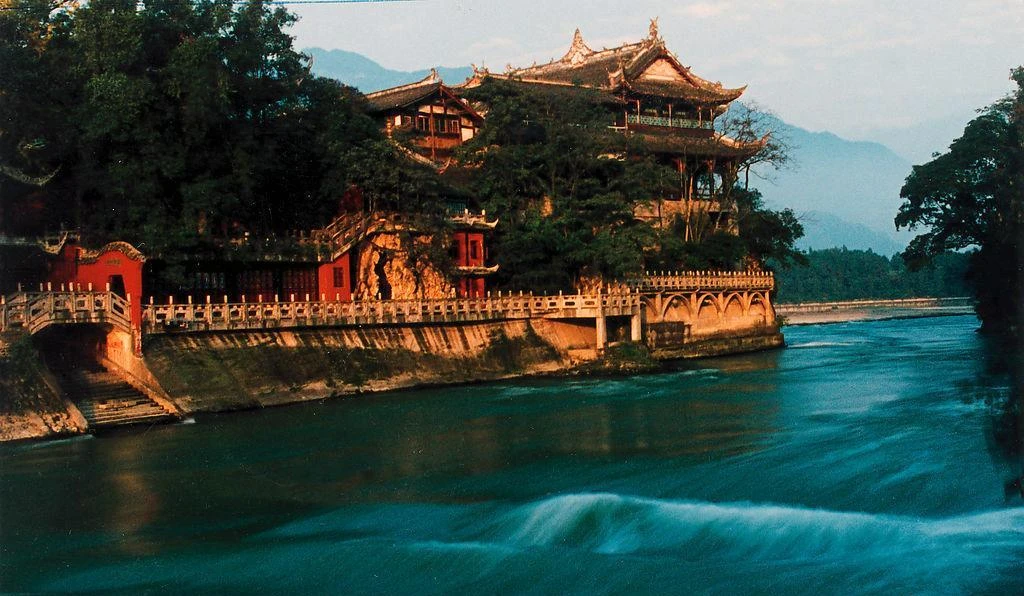
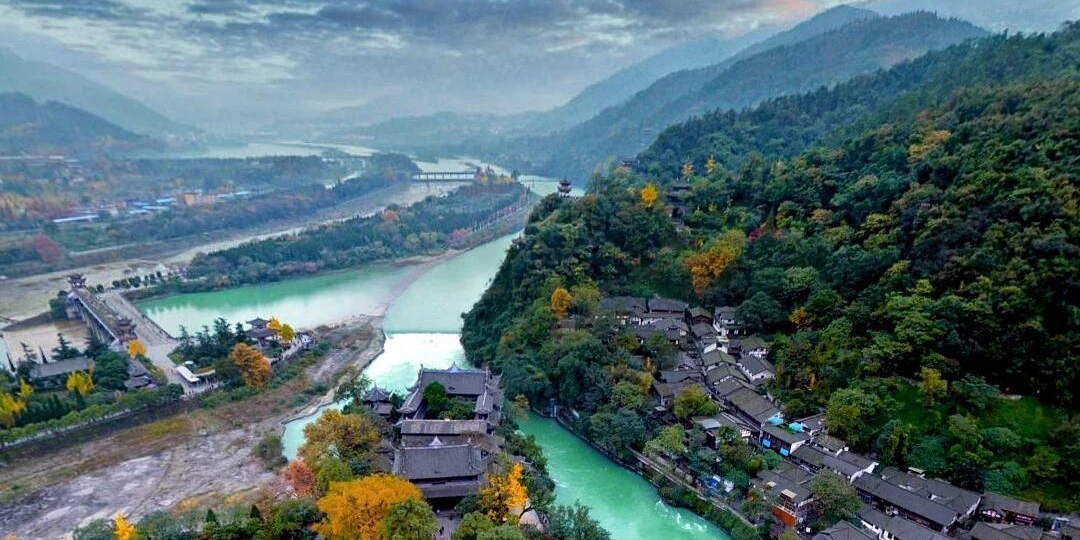
The visual centerpiece and spiritual emblem of the entire complex is the Tea Ceremony Tower soaring proudly from the heart of the valley. Styled after classical East Asian pagodas, the multi-tiered tower pierces the drifting mist characteristic of cloud-wrapped Guizhou. From its base, a carefully engineered network of waterways channels clear emerald streams gracefully through every lane of the fragrant ancient tea street. Spanning these murmuring canals is a rich variety of scenic bridges, from single-arch stone bridges curved like crescent moons to covered timber-and-tile bridges carved with intricate bird-and-flower motifs. Reflections of arched spans, glowing red eaves lanterns, and weather-worn teahouse banners ripple across jade-green waters, composing a breathtaking scene vivid down to the smallest detail.
Precision spatial proportions, authentic natural materials, and dense period architecture have turned the town into one of the region’s premier historical film sets. Moss-draped stone steps, secluded verandas, and stately courtyards have served as authentic filming locations for hit historical and xianxia dramas such as The Untamed and Noble Aspirations. Requiring little artificial enhancement, Duyun Maojian Tea Town—blending dynastic dignity with the untamed mystique of southwestern mountains—naturally radiates the atmosphere of a legendary martial-arts realm where time seems suspended in drifting wisps of tea steam.
As crimson twilight settles over the layered peaks cradling Duyun Valley, Maojian Tea Town undergoes an enchanting metamorphosis of sight and sound. Shedding the quiet serenity of midday, the town awakens in golden and cinnabar hues illuminated by tens of thousands of lanterns and state-of-the-art architectural lighting. Tang- and Song-inspired palace halls interwoven with moss-kissed Ming and Qing tiled roofs glow under carefully layered illumination. Grand pavilions and waterside gazebos cast shimmering reflections across the calm Jianjiang River and winding canals, transforming the entire town into a luminous ink-wash painting suspended between reality and dream.
The proud highlight of Duyun after dark is the Tea Ceremony Tower reaching toward the starry sky. Its entire facade glows in soft, shifting color gradients—evoking the fresh emerald green of dew-kissed spring tea buds before transitioning into warm radiant gold symbolizing the gentle roasting fire of master tea crafters. At the foot of the tower, live waterside performances bring history to life, blending classical dance with water-screen projections and swirling mist. Legends of tea porters crossing perilous mountain passes to deliver prized Maojian tribute tea to the emperor, alongside tales of caravans traveling the millennial Tea Horse Road, unfold with captivating realism—drawing visitors straight into a timeless world of chivalry in the heart of Guizhou.
Evening life in the town goes beyond visual spectacle to embrace unhurried sensory pleasures. Along time-polished bluestone lanes, traditional teahouses welcome guests beneath swaying red silk lanterns. Crisp notes of guzheng zithers and pipa lutes mingle with the gentle crackle of water boiling over glowing charcoal braziers. Local tea masters demonstrate the art of Maojian tea preparation with graceful precision—warming jade cups, awakening tender leaves, and pouring shimmering, herbaceous liquor into celadon bowls. The clean aroma of imperial tribute tea drifts through the cool night air, bringing deep tranquility after a day of exploration.
As the night deepens, food alleys come alive with billowing steam and rich aromas of local specialties. Travelers gather around rustic wooden tables to enjoy famous Duyun grilled stuffed tofu dipped in tongue-tingling chili and Sichuan pepper powder, savor bowls of silky sour rice noodles simmered with wild bamboo shoots, or sip fragrant sticky rice wine brewed by Bouyei villagers. Dazzling lantern light, lively laughter, and the deep resonance of lusheng reed pipes drifting from cultural squares weave an unforgettable nocturnal celebration that honors ancient heritage while pulsing with contemporary energy.
Enveloped by the mist-laden clouds of the Qiannan Plateau and the emerald windings of the Jianjiang River, Duyun preserves not only historic timber architecture but also a distinctive culinary heritage shaped by the Bouyei, Miao, and Shui peoples. Local gastronomy is a vibrant symphony of two signature flavor pillars—sour (suan) and numbing-spicy (mala)—born from centuries of highland wisdom holding that fermented tang and warming spice are essential to dispel damp mountain chill in limestone valleys. Every humble street dish and village specialty reflects pristine natural ingredients paired with artisanal techniques passed down through generations.
When speaking of Duyun’s signature delicacies, first honors always go to Duyun Sour Soup Fish (都匀酸汤鱼), celebrated as the crown jewel of Qiannan cuisine. The soul of this hot pot lies in its naturally ruby-red sour broth, brewed from fermented local glutinous rice liquor combined with wild mountain tomatoes aged in sealed earthenware crocks for months until achieving a clean, deeply layered tang. Fresh river fish netted directly from the clear Jianjiang River—prized for firm, snow-white, sweet flesh—are simmered in the bubbling broth alongside aromatic litsea pepper oil, wild bamboo shoots, and mountain herbs. Bright acidity infuses every tender morsel, harmonizing with tingling spice and crisp wild greens for an exhilarating yet refreshing meal in the cool highland air.
Alongside famous sour fish hot pot, everyday local life centers on a steaming morning bowl of Duyun Beef Noodles (都匀牛肉面). Golden wheat noodles are hand-kneaded and hand-pulled to order, retaining a springy, glossy bite that never turns mushy in broth. Heritage noodle shops simmer beef marrow bones continuously for twelve hours with more than ten traditional spices and medicinal herbs—including star anise, black cardamom, cassia bark, and cloves—to extract pure, sweet richness. Crowning the tender braised beef chunks is a generous spoonful of signature Bouyei red chili oil fried with beef tallow and Sichuan peppercorns, delivering bold aroma and brilliant crimson color that warms the chest from the very first sip.
Beyond savory specialties, Duyun’s culinary landscape preserves vibrant communal traditions through Pounded Glutinous Rice Cakes (打糍粑). During festivals and honored guest welcomes, the rhythmic thud of stone pestles echoes across Bouyei villages. Upland glutinous rice grown on mountain terraces is steamed until sticky and tipped into a heavy stone mortar, where two strong young men pound it in alternating rhythm with wooden mallets until the grains fuse into a smooth, snow-white, elastic dough. Pinched into warm rounds, rolled in fragrant roasted peanut powder, or drizzled with bubbling amber cane syrup, each chewy, nutty bite offers a taste of genuine Qiannan hospitality.
Rounding out this refined gastronomic journey is the everyday culinary presence of Duyun Maojian tea itself, extending well beyond the imperial teacups of the Ming and Qing courts. Local cooks creatively incorporate silver-downy young tea buds into inventive dishes, such as lightly battered crispy-fried Maojian tea leaves that retain their clean, herbaceous fragrance as an elegant appetizer. On warm days, rice porridge simmered with emerald Maojian tea infusion serves as a soothing tonic that cools the palate and settles the stomach after spicy meals—demonstrating how Duyun cuisine embodies holistic nourishment uniting mountain flora with daily life.
Experiencing Duyun Maojian Tea Town at its finest begins with timing your visit to the four-season rhythm of the Qiannan highlands. Two golden travel windows stand out: March through May and September through November. Spring brings the Qingming and Guyu solar terms, when sprawling tea gardens enter harvest for prized pre-Qingming and pre-Guyu Maojian leaves, while Duyun Valley bursts with golden rapeseed blossoms and late white pear blooms drifting in blue mountain mist. Conversely, autumn starting in September blankets terraced hillsides in shimmering golden rice paddies under crisp, dry, serene skies ideal for unhurried contemplation.
Modern transportation infrastructure makes reaching Duyun’s cultural heart easier than ever. The smoothest route for international travelers is flying into Guiyang Longdongbao International Airport, then transferring to the Guiyang–Guangzhou High-Speed Railway to reach Duyun East Station in under an hour. From the station plaza, dedicated tourist shuttle buses or ride-hailing taxis cover the roughly twenty-kilometer journey straight to the tea town gate. Cultural tea museums, art galleries, and traditional tea-roasting workshops generally welcome visitors daily from 8:30 AM to 5:30 PM, while the ancient riverside lanes along the Jianjiang River remain open freely at night for lantern-lit strolls.
For entry into mainland China bound for Guizhou, international travelers should secure a valid Category L tourist visa in advance or check applicable transit visa-exemption policies for multi-stop itineraries. Activating international mobile QR payment apps linked to supported bank accounts or foreign credit cards is essential for seamless daily spending, though carrying a small reserve of cash RMB in small denominations remains helpful at rural Bouyei and Miao markets. Because the town’s sloping alleys are paved with centuries-weathered bluestone slabs that grow slick in mist or sudden drizzle, sturdy rubber-soled walking shoes with strong grip are indispensable. To blend seamlessly into the town’s cinematic period atmosphere, consider wearing traditional Hanfu attire or neutral-toned outfits in beige, ivory, or indigo blue for timeless photographs.
Shopping for Duyun Maojian tea calls for a discerning eye to avoid inferior blended imitations. Knowledgeable buyers look for packages bearing official National Geographical Indication certification seals, featuring tightly curled hook-shaped dry leaves coated in snowy white down and exuding a sweet roasted-chestnut aroma. Responsible tourism here emphasizes transparent, zero-forced-shopping standards: visitors are completely free to sample tea in heritage teahouses, browse sun-dried local produce at farmers’ markets, or shop at state-regulated fixed-price stores without falling prey to cut-rate tour shopping traps. In the evening, be sure to enjoy signature Qiannan flavors such as tangy-spicy sour soup fish or smoked cured pork stir-fried with wild bamboo shoots at a riverside tavern.
To ensure your journey into the scenic highlands of Guizhou unfolds effortlessly—free from language barriers, visa complications, or complex mountain transit connections—consider joining a thoughtfully curated all-inclusive China tour package operated by a reputable travel specialist for a refined, seamless experience from start to finish.