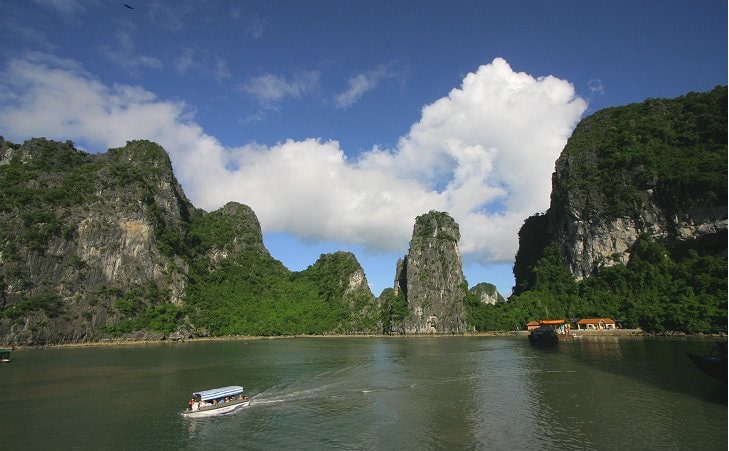
Introduction to Bo Hon Island
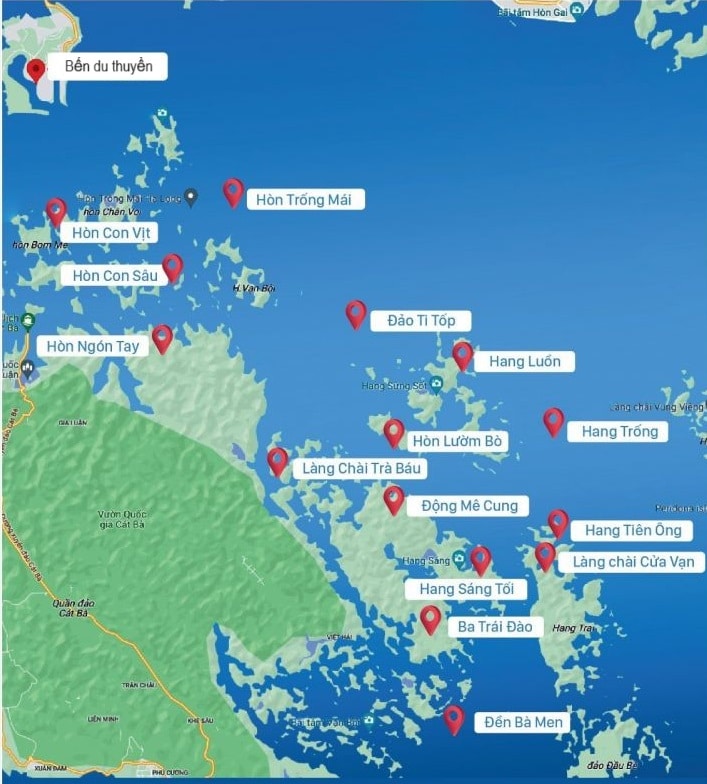
Located about 14 km from Bai Chay Pier in the central tourism zone of Ha Long Bay alongside Ti Top Island and Me Cung Cave, Bo Hon Island was discovered in the early twentieth century, though it gained wider fame among visitors once Ha Long Bay was recognized as a World Heritage Site. Its value spans both geological significance and rich ecological biodiversity.
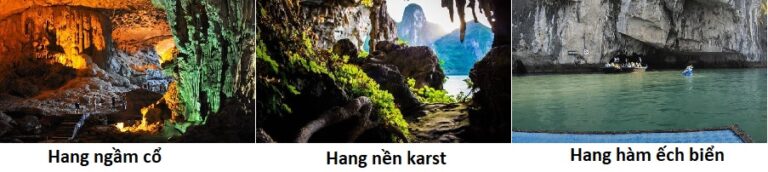
Covering nearly 3.8 square kilometers, Bo Hon Island hosts some of Ha Long Bay’s most impressive caves, including Sung Sot Cave, Luon Cave, Trong Cave, Trinh Nu Cave, and Dong Tien Lake. Shaped over millions of years by seawater, wind, and rain, the island’s karst topography draws strong scientific interest, while intricate stalactites and stalagmites of varied shapes and sizes illuminate the mysterious beauty hidden behind its limestone walls.
In terms of biodiversity, Bo Hon Island supports diverse flora and fauna. Its dramatic limestone cliffs sustain grasses, shrubs, and climbing vines, while providing habitat for birds and golden-haired monkeys—rare species requiring protection—and surrounding waters teem with colorful fish and marine life that enrich the island’s ecosystem.
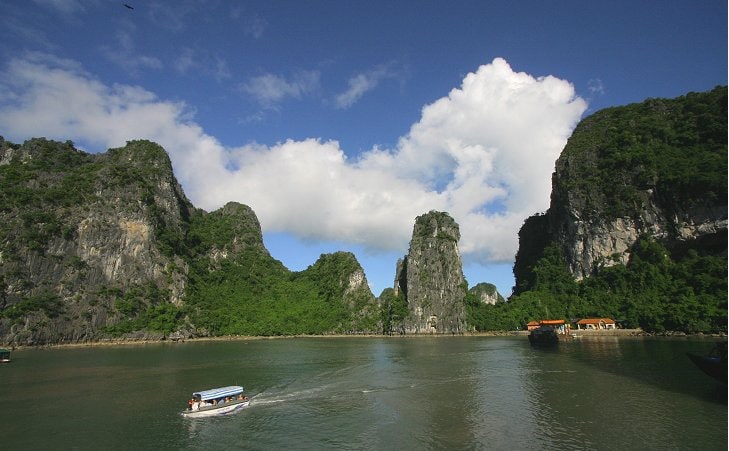
Every cave on Bo Hon Island holds its own story, and every stone carries its own spirit—feeling like a secluded wonderland set apart from the everyday world where you can connect with nature’s grandeur.
How to Get to Bo Hon Island
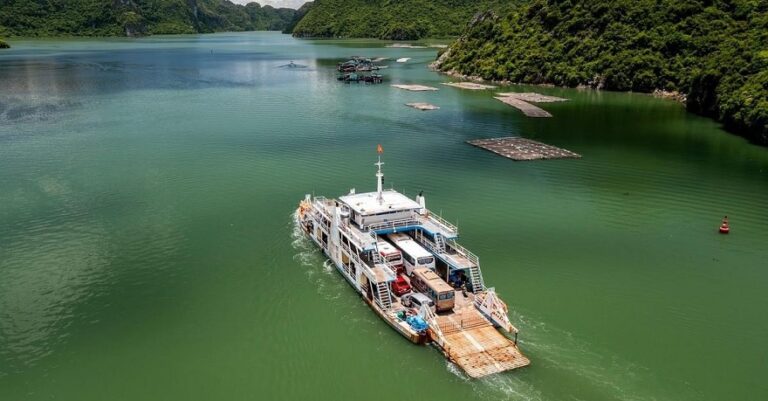
Bo Hon Island sits roughly 14 km from Bai Chay Tourist Pier and ranks among the most popular stops for sightseeing boats in Ha Long Bay, making it easy to reach by boat.
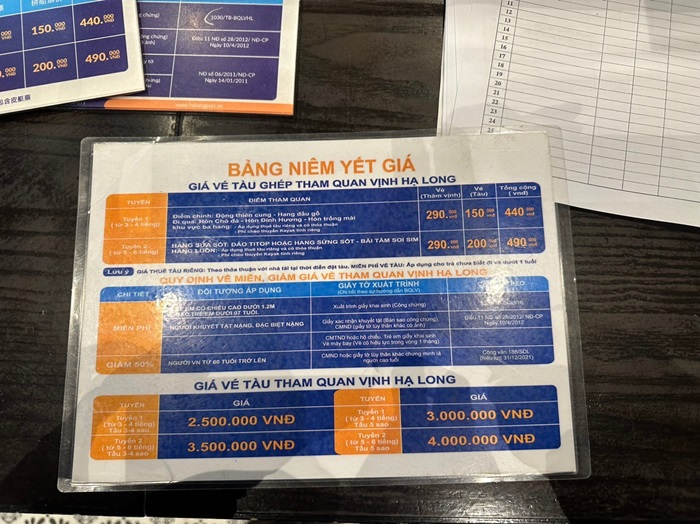
Posted boat price list and admission tickets at the port
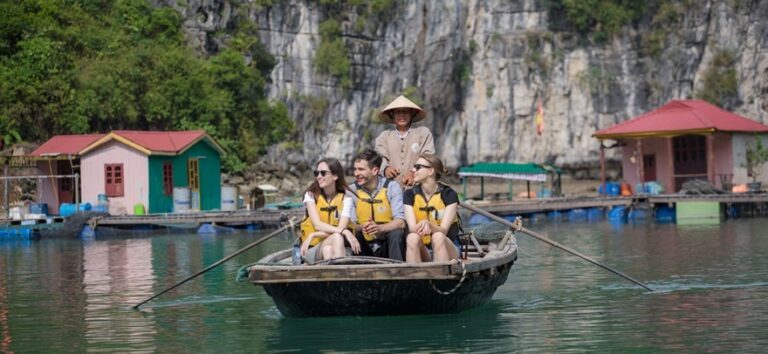
It features on Route 2 of Ha Long Bay sightseeing tours covering Bo Hon Island along with Sung Sot Cave, Luon Cave, Trong Cave, and Trinh Nu Cave, as well as popular stops like Me Cung Cave and Ti Top Island. The full route takes at least 6 hours and costs 290,000 VND per ticket (excluding boat charter fees).