If you are looking for a tourist destination that combines historical, cultural, and religious values with beautiful and peaceful natural scenery, Quynh Lam Pagoda in Quang Ninh is an excellent choice. Quynh Lam Pagoda is a famous ancient pagoda in Quang Ninh, located within the scope of the Tran Dynasty relic site in Dong Trieu. The pagoda enjoys a prime location, likened to a “throne” or “dragon crouching and tiger bowing” posture. Built during the reign of King Ly Than Tong by National Master Nguyen Minh Khong, it served as an important Buddhist center of the Truc Lam Zen sect. The pagoda was recognized as a special national historical and artistic relic site in 2013.
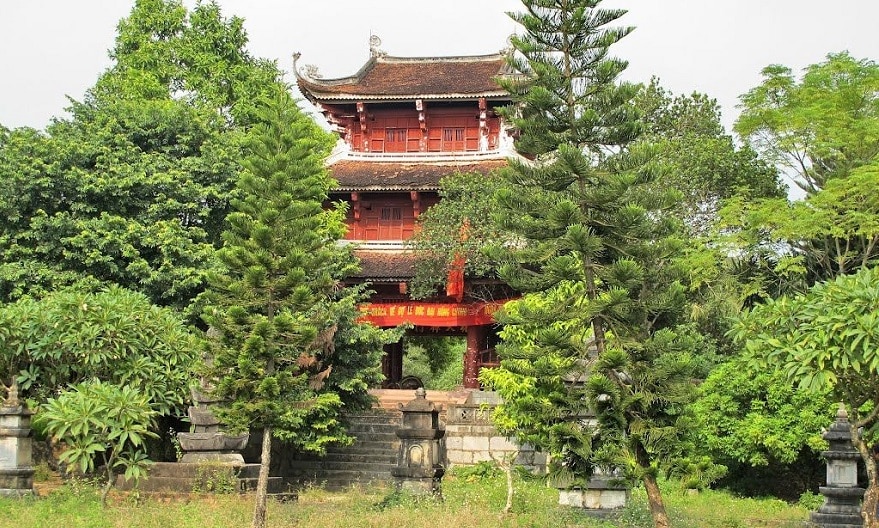
Quynh Lam Pagoda – the premier ancient heritage landscape
History of Quynh Lam Pagoda
Quynh Lam Pagoda boasts a history of over 900 years, experiencing numerous periods of ups and downs. Right after constructing the pagoda, National Master Nguyen Minh Khong had a gigantic bronze Maitreya Buddha statue cast, standing six Truong tall (about 20 m), which was once considered one of An Nam’s Four Great Bronze Treasures. This was one of the four pinnacle metal artifacts of Ly and Tran dynasty bronze casting art, classified among Đại Việt’s national treasures. The remaining metal artifacts were Bao Thien Tower (Sung Khanh Pagoda, Hanoi), Quy Dien Bell (One Pillar Pagoda, Hanoi), and Pho Minh Cauldron (Pho Minh Pagoda, Nam Dinh). To house this colossal statue, the temple had to construct a large hall reaching a height of up to 7 Truong (about 23.5m). Legend has it that when casting the statue, Master Minh Khong used a large bag to gather bronze from China and bring it back to the country to cast these massive metal objects. The Maitreya Buddha statue was considered a symbol of peace and prosperity, attracting many locals and visitors for worship.
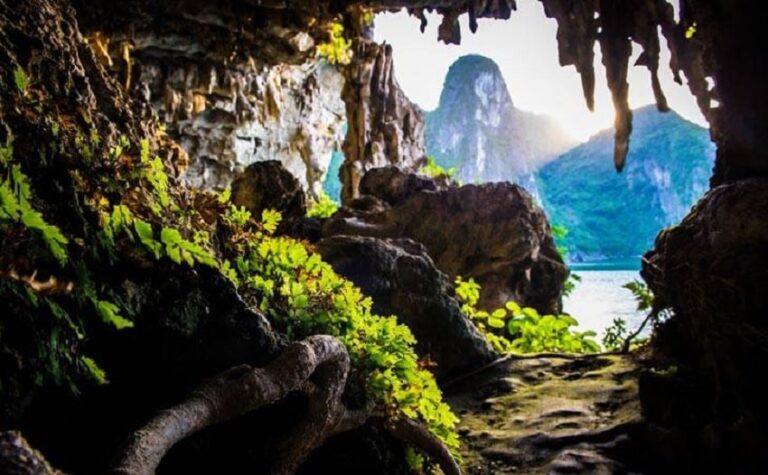
Later, Zen Master Phap Loa – the second patriarch of the Truc Lam Zen sect – constructed and established Quynh Lam Institute with massive and complete architecture. Quynh Lam Pagoda became the first Buddhist university in our country and a venue for hosting many renowned grand assemblies recorded in history books. In 1314, Phap Loa had 33 Buddhist worship halls and scripture storehouses built. In 1316, he established Quynh Lam Institute – the largest Buddhist university during the Tran dynasty. In 1329, he carved a pagoda stele recording that “Quynh Lam is the premier ancient heritage landscape of Nam country.” This served as a center for expounding scriptures, lecturing on the Dharma, and training monks for Buddhism. Many renowned grand assemblies recorded in history books were held here, such as the “Seven-Day, Seven-Night Thousand Buddha” assembly (1325). Legend says the institute could accommodate up to three thousand people at once. There was also Bich Dong Hermitage for seated meditation. Bich Dong Hermitage is a natural cave within the mountain interior, featuring three chambers for Zen masters to sit in meditation. According to ancient records, Bich Dong Hermitage features “nine-layered stone palaces,” “twin bright water moons,” “echoing aquatic sounds,” and “graceful stone ears.” This place is considered one of the four scenic landscapes of Quynh Lam, alongside the Maitreya statue, the pagoda stele, and Tich Quang Tower.
In the 15th century, when Ming invaders occupied our country, they destroyed the statue to cast weapons and ammunition. Folklore recounts that the invaders brought up to 24 bellows attempting to blow air to melt the bronze for ammunition casting but failed, while the pagoda stele recorded that “the statue gradually sank into the ground.” The pagoda stele is a large stone slab 2.5 m high and 1.5 m wide with gracefully curving dragon patterns. The stele was carved in 1329 by Phap Loa to record the merits of Master Minh Khong and other Zen masters in building Quynh Lam Pagoda. The stele also recorded that “Quynh Lam is the premier ancient heritage landscape of Nam country.” The pagoda stele stands as one of the most precious artifacts of Quynh Lam Pagoda. Afterward, the pagoda was also devastated multiple times during wars. By 2008, the pagoda was restored with an investment of nearly 200 billion VND. The pagoda was constructed following Tran dynasty architectural styles, comprising the Tam Quan gate, Tam The hall, Thai Bao hall, Ancestor Hall, Guanyin Bodhisattva Hall, and other auxiliary structures. The Tam Quan gate serves as the main entrance, featuring three doorways with fish-scale tiled roofs. Tam The hall worships Amitabha Buddha and two flanking Buddhas. Thai Bao hall worships Shakyamuni Buddha and two flanking Buddhas. The Ancestor Hall worships Master Minh Khong and the Truc Lam Zen masters. The Guanyin Bodhisattva Hall worships Guanyin Bodhisattva and other Bodhisattvas. The structures were built using ironwood and green ceramic tiles, featuring magnificent and solemn architecture.
Architecture of the Pagoda
The architecture of Quynh Lam Pagoda comprises numerous massive and complete structures, reflecting the high artistic and technical standards of the Vietnamese people during the Tran dynasty. The pagoda lies centrally among three areas: Upper, Lower, and Birth Zones. In front of the pagoda entrance is a large lake, while the remaining three sides are surrounded by hills and mountains. This land configuration is called the “throne” or “dragon crouching and tiger bowing” posture. The pagoda roof follows Tran dynasty architectural style, featuring curved red tiled roofs, with halls connected to one another by corridors.
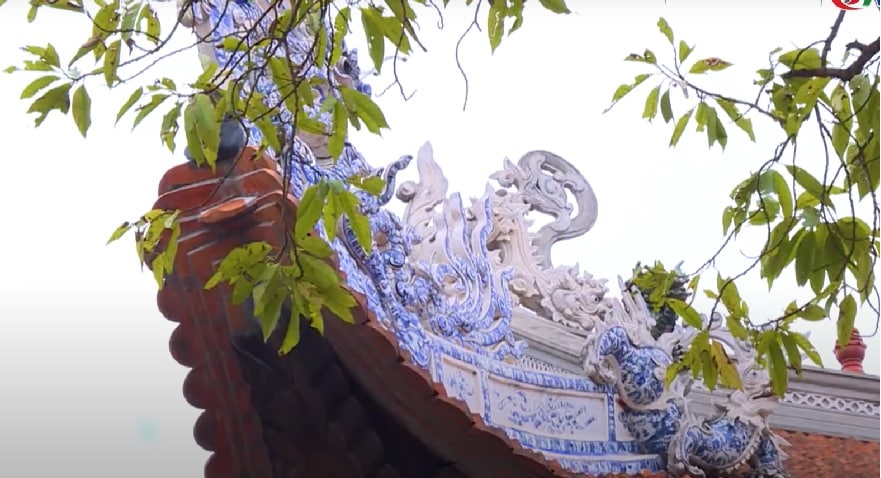
Curved red tiled roof architecture inlaid with dragon heads
The pagoda features a Tam Quan gate, Buddha worship hall, Bodhisattva worship hall, patriarch worship hall, scripture storehouse, and other auxiliary structures. The pagoda’s Tam Quan gate features three large portals, flanked by two 4m-high stone pillars carved with the words “Quynh Lam Tu” and “Dai Bi Tu.” The Buddha worship hall is where Shakyamuni Buddha and two Bodhisattvas, Ksitigarbha and Avalokiteshvara, are worshipped. The Bodhisattva hall worships Manjusri and Samantabhadra Bodhisattvas. The patriarch hall worships patriarchs of the Truc Lam Zen sect such as Nguyen Minh Khong, Phap Loa, Huyen Quang… The scripture storehouse preserves precious Buddhist scriptures. The pagoda also features Bich Dong Hermitage for meditation, a small hermitage built within a natural cave.
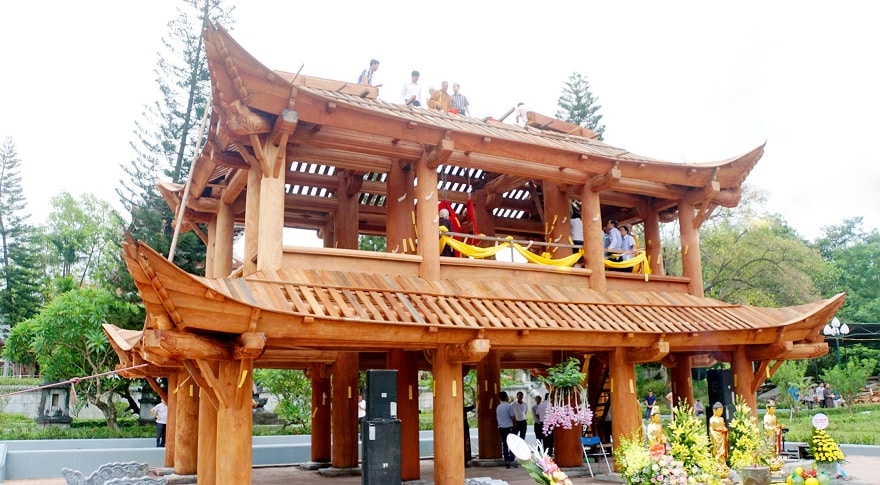
Tam Quan gate and bell tower are the fourth structure within the overall pagoda architecture
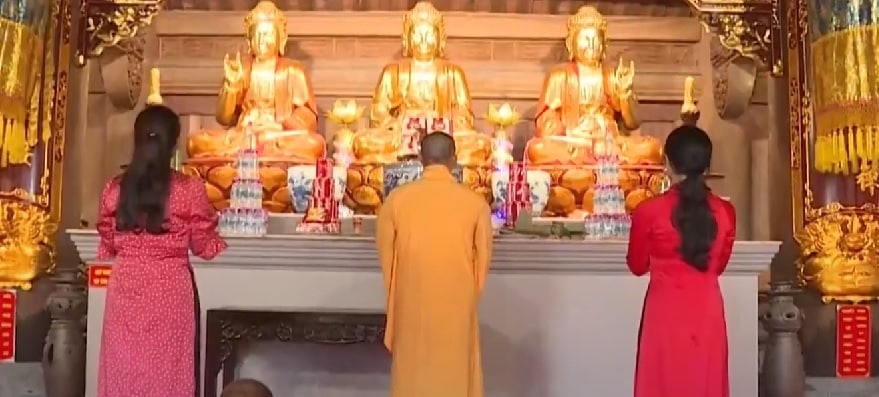
Tam The hall is where Amitabha Buddha and flanking Buddhas Guanyin and Mahasthamaprapta are worshipped
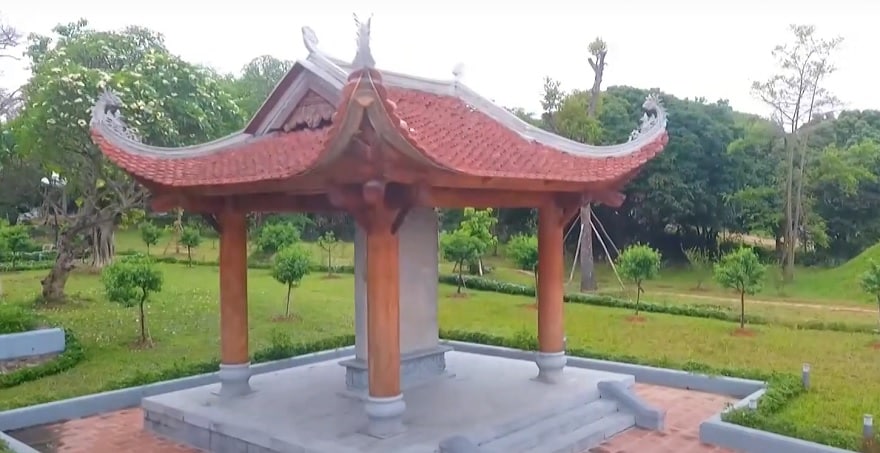
Pagoda stele carved by Phap Loa in 1329
One of the highlights of Quynh Lam Pagoda’s architecture is two colossal bronze Maitreya Buddha statues cast during two different periods. One from the Ly dynasty commissioned by Master Nguyen Minh Khong stood 6 Truong tall (about 20 m) and was once considered one of An Nam’s Four Great Bronze Treasures. This statue was placed in a hall 7 Truong high (about 23.5 m), visible from afar. One from the Tran dynasty commissioned by Zen Master Phap Loa stood 5 Truong tall (about 16 m) and was gilded. This statue was hauled from the hall to the throne pedestal in 1328 on the occasion of King Tran Minh Tong visiting the pagoda. Both statues were lost when Ming invaders occupied Đại Việt and destroyed the statues to cast weapons and ammunition.
Things to Note When Visiting the Pagoda
To reach Quynh Lam Pagoda, you can travel in two directions: from Hanoi or from Ha Long. From Hanoi, you can take a coach or motorbike along National Highway 18A passing Uong Bai, then turn onto National Highway 18B to Dong Trieu. From Ha Long, you can take a coach or motorbike along National Highway 18B passing Uong Bai before reaching Dong Trieu. Quynh Lam Pagoda lies about 3.5 km southwest of Dong Trieu township center.
Quynh Lam Pagoda opens from 6:00 AM to 6:00 PM daily. Admission is 10,000 VND/person. You can tour architectural structures, worship ancient stone steles, enjoy the scenery of the lotus and fish ponds, and learn about the history and culture of the pagoda and Dong Trieu region. You can also participate in spiritual activities such as chanting, reciting Buddha’s name, meditation, praying… If you wish to stay overnight at the pagoda, you can contact the pagoda management board to arrange lodging.
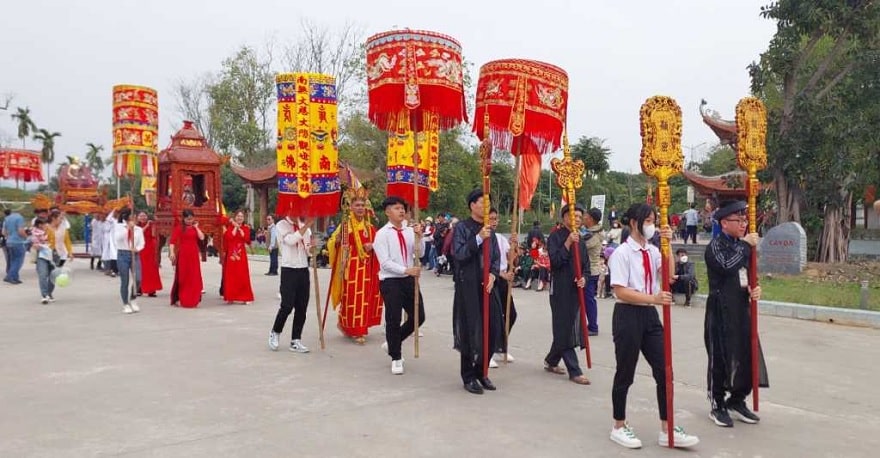
Water procession ritual
You should visit the pagoda on Buddhist holidays such as the full moon of the 1st lunar month, the full moon of the 7th lunar month, the full moon of the 9th lunar month, the full moon of the 11th lunar month… you can visit the pagoda to join Buddhist followers from everywhere in chanting, reciting Buddha’s name, praying, and worshipping… You can also participate in cultural activities like Quan Ho singing, lion dancing, lantern burning… You will perceive the sacredness and vibrancy of Quynh Lam Pagoda on these days
- The full moon of the 1st lunar month is the Parinirvana festival of Shakyamuni Buddha. This is the most important day of the year in Buddhism. You can visit the pagoda to worship the reclining Shakyamuni Buddha statue (reclining statue) and the statues of the Three Truc Lam Patriarchs beneath bamboo shades. You can also listen to Dharma talks on the festival’s significance and how to practice following the Buddha’s example
- The full moon of the 7th lunar month is the Vu Lan filial piety festival. This is a day for Buddhists to express gratitude to parents and ancestors who gave birth to, raised, and nurtured them. You can visit the pagoda to make offerings for parents and ancestors, wearing white or red roses depending on whether parents are living or deceased. You can also listen to Dharma talks on the festival’s significance and how to show filial piety to parents according to Buddhism
- The full moon of the 9th lunar month is the monastic ordination festival of Guanyin Bodhisattva. This is a day for Buddhists to express gratitude to Guanyin for compassionately saving sentient beings from suffering. You can visit the pagoda to worship the Guanyin statue and other Buddha and Bodhisattva statues. You can also listen to Dharma talks on the festival’s significance and how to practice following Guanyin’s example
- The full moon of the 11th lunar month is the birth festival of Amitabha Buddha. This is a day for Buddhists to express gratitude to Amitabha for establishing the Pure Land for sentient beings to attain peace. You can visit the pagoda to worship the Amitabha Buddha statue and other Buddha and Bodhisattva statues. You can also listen to Dharma talks on the festival’s significance and how to recite Amitabha’s name to be reborn in the Pure Land
Additionally, you can also visit the pagoda from the 1st to the 4th day of the 2nd lunar month to attend the Quynh Lam Pagoda festival. This is the pagoda’s traditional festival, organized to commemorate the patriarchs of the Truc Lam Zen sect and Tran dynasty kings who contributed to building and protecting the pagoda. You can visit the pagoda to participate in incense offering rituals and the jade Buddha statue procession.