Standing majestic on the banks of the ancient Salt Lake of Yanchi in Xiezhou Town, Yuncheng City, Shanxi Province, the Xiezhou Guandi Temple has long been revered as the “Ancestral Temple of Guanmiao,” the ultimate origin and largest center of Guan Yu worship in the Chinese-speaking world. The inception of this sacred sanctuary is closely tied to the ancient land of Hedong, adjacent to Changping Village—where the legendary military commander Guan Yu was born in 160 AD before stepping into the heroic pages of the Three Kingdoms era and passing away in 220 AD. Through the ups and downs of history, Guan Yu’s image gradually transcended that of a purely fierce warrior to become the ultimate embodiment of four core virtues: Loyalty, Righteousness, Benevolence, and Bravery. The earliest roots of this sacred temple complex were planted in the 9th year of the Kaihuang era under Emperor Wen of Sui (Yang Jian), namely 589 AD, when the imperial court decided to erect a fitting sacrificial space right in the administrative center of Xiezhou to eternally commemorate the merits of this loyal hero.
Entering the Song Dynasty, the wave of the deification of Guan Yu reached profound political and military turning points. In the 3rd year of Chongning, or 1104 AD, Emperor Huizong of Song issued an imperial edict conferring upon Guan Yu the title “Chongning Zhenjun,” which is also the origin of the majestic Chongning Main Hall that still stands today. Just over a decade later, in the 7th year of Zhenghe, or 1117 AD, the emperor further bestowed upon him the title “Righteous and Brave Wuan King,” while also drawing from the national treasury to comprehensively restore and expand the scale of the front hall and rear chambers. Amidst the threat of Jin cavalry forces sweeping down to menace the northern borders, the Song dynasty’s elevation of the Xiezhou temple to a national-level spiritual anchor turned it into a beacon reinforcing the indomitable will and patriotism of all soldiers and citizens alike.
The specifications of the temple were elevated to the pinnacle of imperial power during the Ming Dynasty. In the 42nd year of Wanli, or 1614 AD, Emperor Shenzong of Ming (Zhu Yijun) issued the supreme imperial edict, venerating him as the “Three Realms Subduing Demons Great Emperor, Divine Might Far-Reaching Trembling Heavenly Sovereign, Guan Sheng Emperor Lord.” With this ultimate title harmonizing Confucianism, Daoism, and Buddhism, the architectural complex in Xiezhou officially entered the ranks of Imperial temples. The Ming imperial court urgently reshaped the entire strict central ritual axis and core wooden frame system, transforming the local spiritual space into a miniature picture of imperial authority.
The harsh vicissitudes of the times once again tested the endurance of the sanctuary during the Qing Dynasty. A catastrophic major fire broke out in the 41st year of Kangxi, or 1702 AD, destroying almost the entire central area of the ancient temple. Faced with this massive loss, Emperor Kangxi personally allocated funds from the inner treasury while rallying the solidarity of the renowned Shanxi merchants and the Yanchi salt merchant guilds. The century-spanning major restoration lasted a grueling 11 years, officially completed in the 52nd year of Kangxi, or 1713 AD. All of the massive and exquisitely crafted wooden structures that still stand today heavily bear the mark of the high technical and aesthetic structural style of this Kangxi period. The temple’s solemn status was further consolidated when Emperor Qianlong personally bestowed the imperial calligraphy plaque “Divine Bravery,” and later Emperor Xianfeng bestowed the four golden characters “Endless Human Influence,” portraying the immortal vitality of human ethics.
Alongside the grace of monarchs, the brilliant prosperity of the Xiezhou Guandi Temple was further nourished by the economic lifeblood of the Shanxi merchant class (Jin merchants). Holding a monopoly on the extraction and distribution of edible salt from Yanchi, coupled with ultimate prosperity from the Piaohao banking system stretching its tentacles across the mainland, Shanxi merchants revered their fellow townsman Guan Yu as the “Military God of Wealth.” To them, the ironclad Righteousness and Trustworthiness of Guan Sheng were the absolute spiritual contracts guaranteeing business ethics. The massive funding streams from various merchant guilds continuously poured in to restore the temple, turning Xiezhou into the spiritual headquarters connecting the nationwide merchant network. Entering the modern era, the priceless value of the complex was firmly affirmed when it was recognized as a Shanxi Provincial Key Cultural Relic Protection Unit in 1957, upgraded to a 3rd Batch National Key Cultural Relic Protection Unit by the State Council in 1988, achieving AAAA National Tourist Attraction standards in 2012, and steadily appearing on UNESCO’s tentative World Heritage list within the Chinese Guandi Temples nomination.
Located in the center of the ancient southern Shanxi region in Xiezhou Town, Yanhu District, Yuncheng City, Shanxi Province, the Guandi Temple presides over a blessed land considered one of the most brilliant cradles of Huaxia civilization. The geographical space here resembles a mirror reflecting the millennia-long history of the northern region, intersecting ancient legends and vital trade routes throughout China’s feudal history. The ancestors’ choice of this fertile plain to construct the worship complex for Guan Sheng Emperor Lord was not merely based on the hometown origins of the Three Kingdoms military hero, but was also a supreme planning decision based on classical feng shui geographical principles.
Regarding the natural landscape and overall feng shui structure, the ancient temple firmly backs against the overlapping mountain ranges of the Zhongtiao Mountains to the south and opens its view to the north to welcome the prosperous energy of heaven and earth. The flat, open terrain at the foot of the mountain creates a terrain of “sitting against the mountain and facing the flatland,” perfectly converging both the majestic mountain energy and the harmonized field energy of the plains. Accentuating this picturesque feng shui landscape is the famous Yanchi—Yuncheng’s adjacent natural saltwater lake. This millennial saline lake not only serves as a giant water-gathering bright hall bringing full vitality to the entire area, but was also a strategic resource nurturing the economic lifeblood of the renowned Shanxi merchant guilds, turning this place into the premier wealth-gathering and prosperity-storing land in the north.
The prime location of the Guan Di Temple is further highlighted by its deep connection to the nearby Thuong Binh village—the birthplace and home to the ancestral shrine dedicated to the Guan clan. A rare dual spiritual axis has been formed between the intimate, ancestral home in Thuong Binh and the grand, imperial-level ceremonial center in Jiezhou. The symmetrical planning and perfect harmony between the majestic natural landscape and man-made structures have firmly established its status as the “Temple of Martial Temples,” making it the premier sanctuary in the global system of shrines dedicated to the God of War.
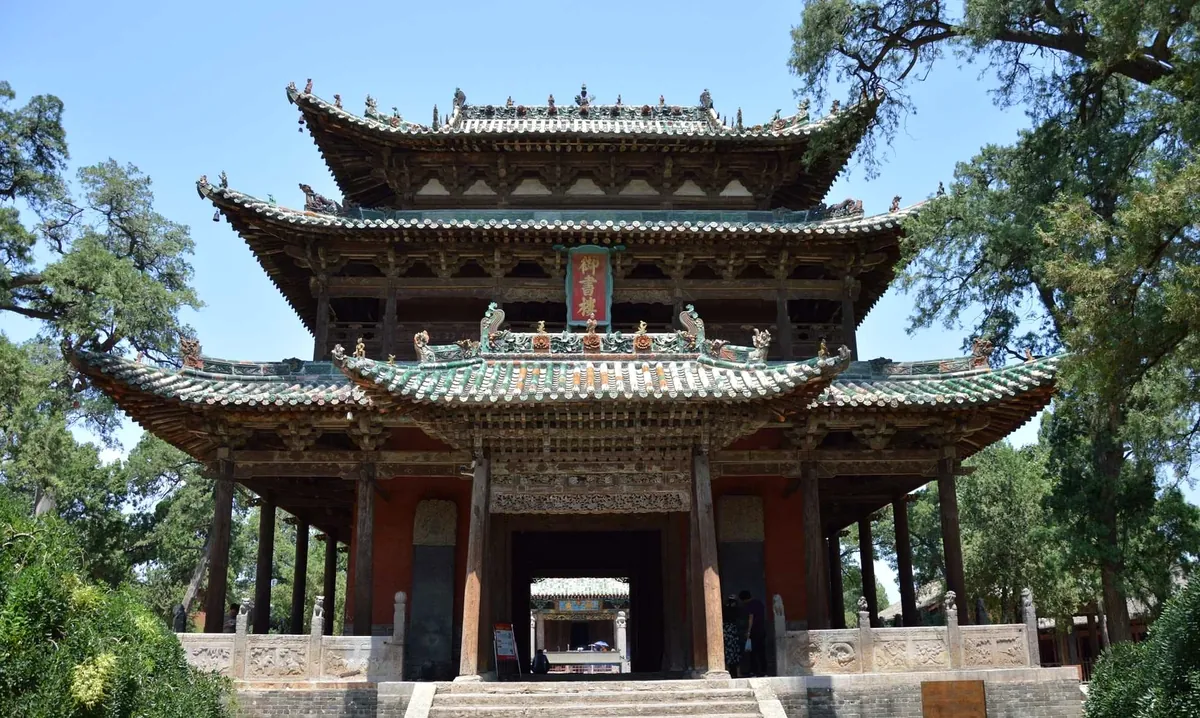
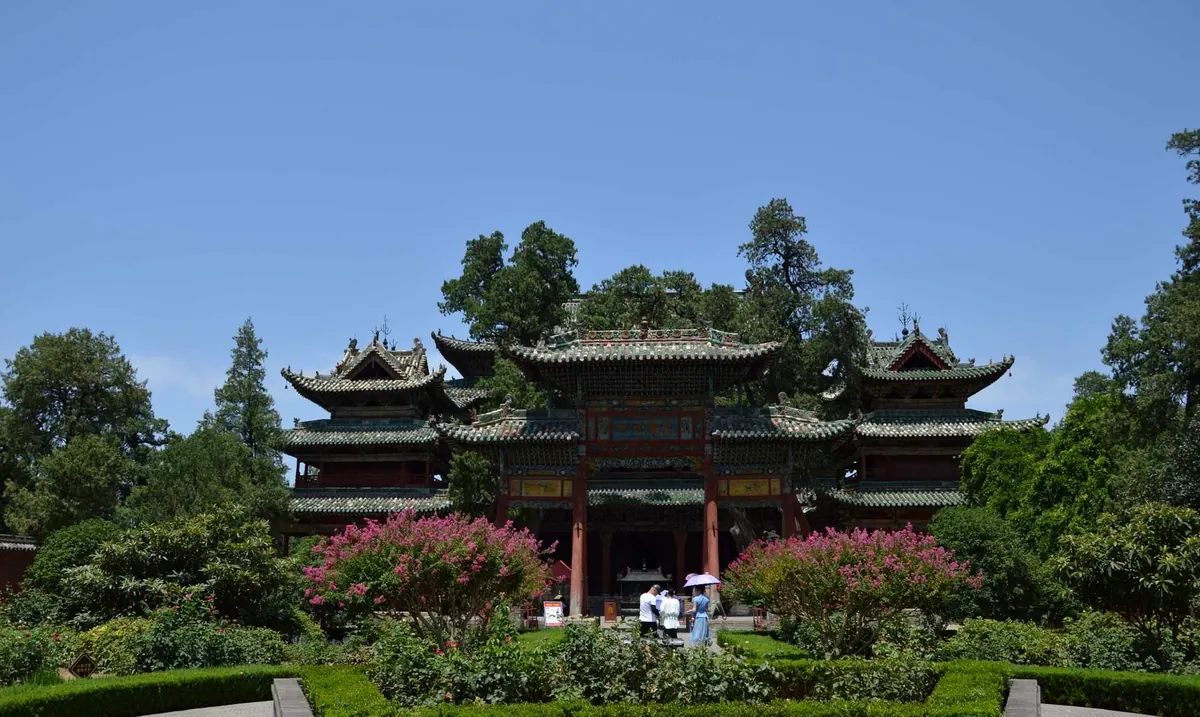
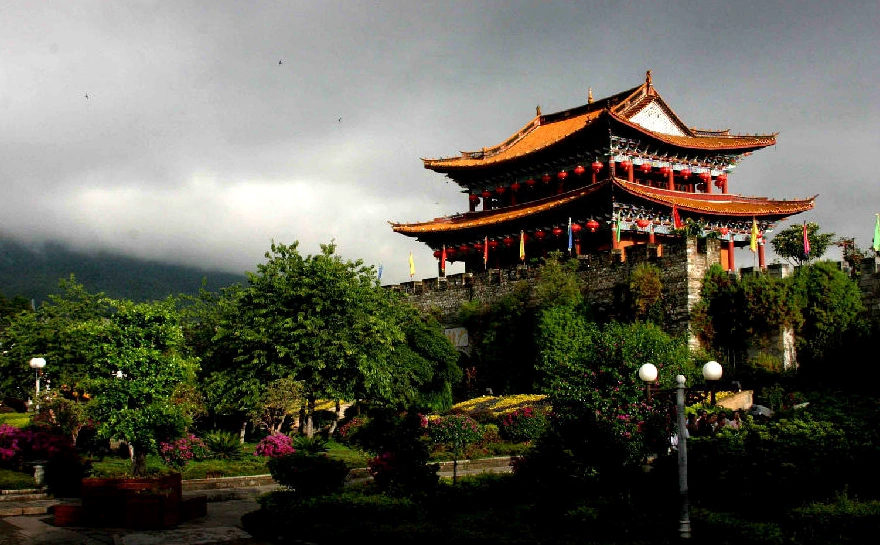
Admiring the simple yet profound beauty of the complex, visitors will encounter ancient, multi-story structures proudly rising with elegant green-glazed tiled roofs, accented by intricately carved wooden bracket sets. Standing out against the solemn architecture are elegant blue-painted Chinese character plaques, exuding the majestic aura of a sacred site. In front of the structure lies a vibrant garden, where smooth stone paths wind through lush greenery and brilliant red poppies blooming proudly under the golden sunlight.
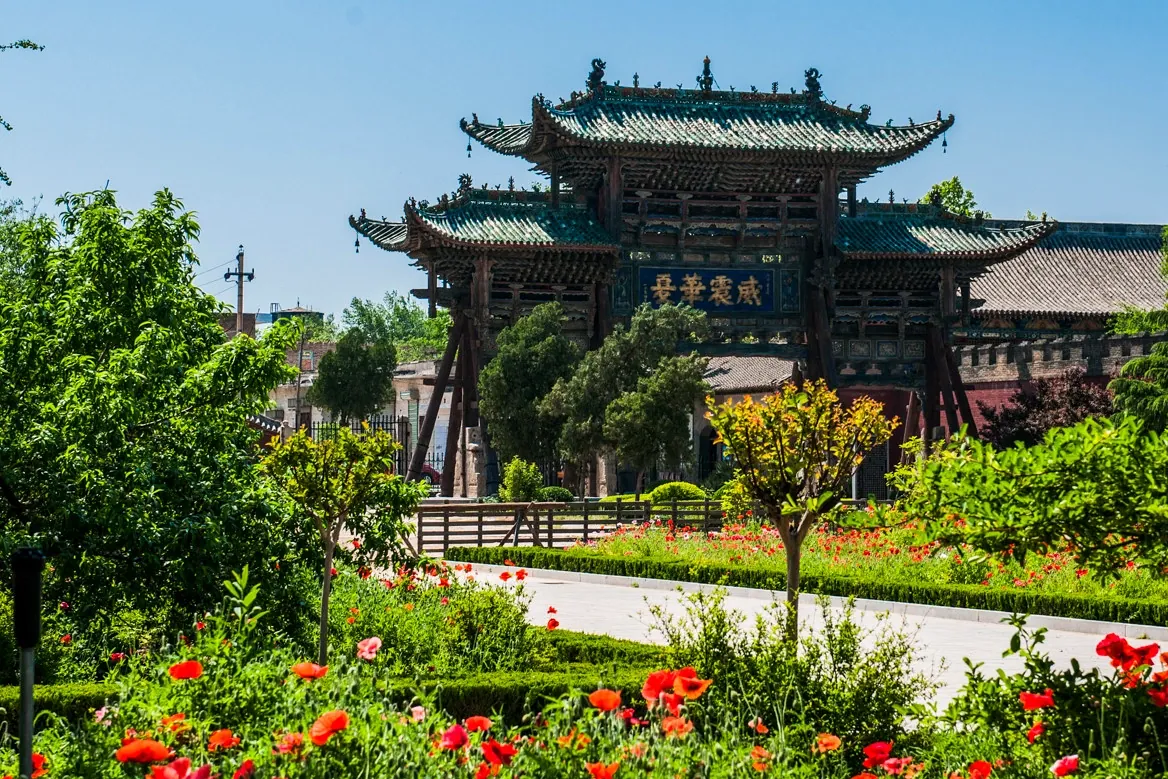
The perfect blend of the towering Zhongtiao Mountains, the cool breeze carrying the faint saltiness from the Salt Lake, and the masterful landscaping artistry of the ancients has turned the Jiezhou Guan Di Temple into a complete masterpiece of Feng Shui. Here, the steadfast and heroic spirit of humanity seems to merge with the immense spiritual energy of the Jinan mountains and rivers, creating a sacred space that is both solemn and filled with eternal vitality through the passage of time.
Visiting the Jiezhou Guan Di Temple, the first thing that overwhelms any researcher or traveler is its massive scale, resembling a miniature imperial city. Spanning a total area of 220,000 square meters with over 100 halls and auxiliary structures, the complex is strictly planned according to the “Front Court, Rear Palace” imperial protocol—the front hall is for solemn sacrificial ceremonies, while the rear hall is a tranquil sleeping chamber. This spatial layout is strictly symmetrical along a continuous North-South spiritual axis, rivaling the royal standards of the Forbidden City in Beijing or the Confucius Temple in Qufu. The entire sanctuary is clearly divided into two independent zones: the South is the Jieyi Garden, fragrant with plants commemorating the loyal oath of the Peach Garden, while the North is the towering Ancestral Temple, leading pilgrims through a majestic ritual path from the Duan Gate, Zhi Gate, Wu Gate, and Imperial Library, entering the Chongning Hall, and finally settling at the soaring Chunqiu Tower.
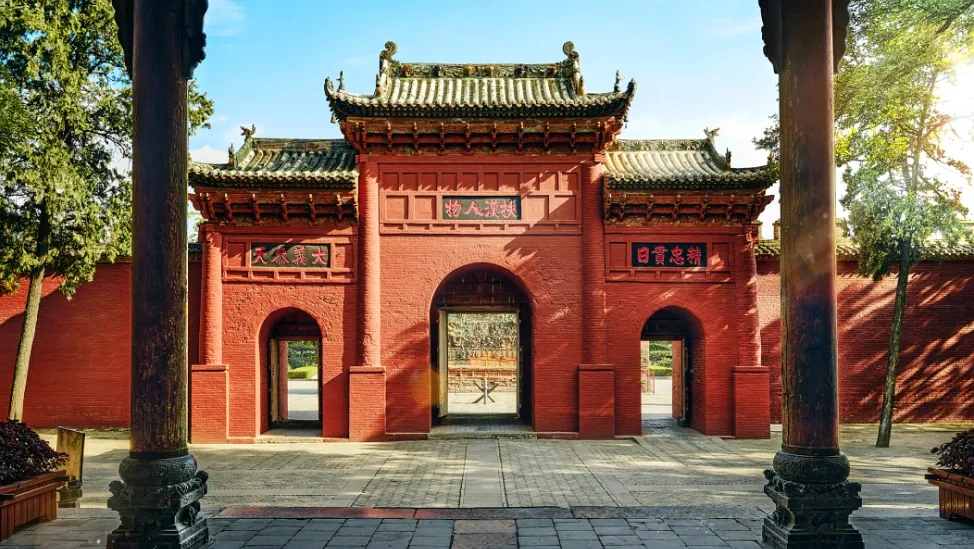
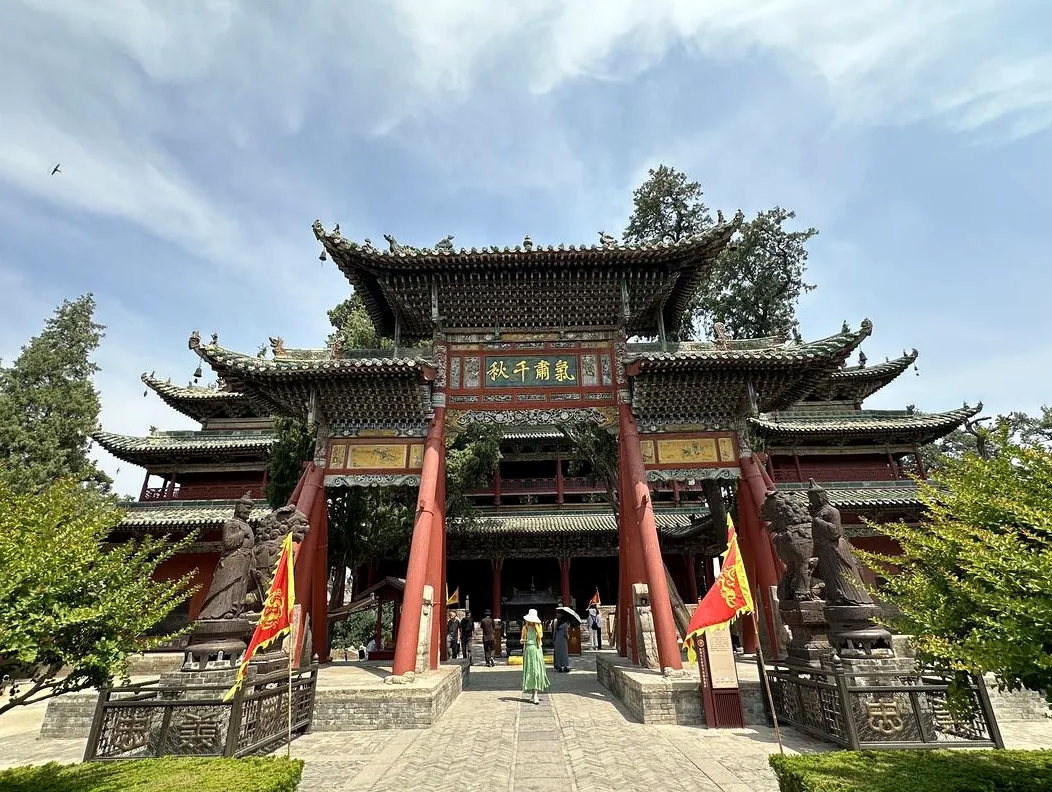
Stepping toward the entrance of the sacred site, the traveler’s gaze is immediately drawn to the magnificent archway, rich in ancient architectural flavor. The structure stands tall with its multi-tiered, curved roof proudly reaching toward the sky, tiles gleaming under the sun, and deep red painted wooden pillars exuding absolute solemnity. The entrance is guarded on both sides by valiant statues of Dharma protectors, standing silently to welcome the streams of devout visitors passing through the threshold of the spiritual path. Lush ancient trees surround the area, creating a space that harmonizes expansive nature with the profound solemnity of an imperial place of worship.
Presenting an impressive presence in the center of the front court area, Chongning Hall emerges as a pinnacle masterpiece of feudal construction technology. The main hall features a double-slope “chongchan yueshan” roof structure, covered with shimmering glazed tiles and supported by a multi-layered bracket system precisely interlocked without a single metal nail. The most striking feature here is the corridor surrounding the hall, which boasts 26 monolithic stone columns carved with relief dragons, considered by ancient art researchers to be the most exquisite dragon carving miracle in the country, far surpassing the dragon pillars at the Confucius Temple in Qufu. Each hard granite surface was tamed by the hands of ancient artisans, winding into dragon bodies swirling through clouds and tearing through the wind, appearing as if they are about to fly into the void. Stepping into the inner hall, hazy with incense smoke, the statue of Guan Sheng Di Jun sits on the throne, draped in a magnificent gold-embroidered imperial robe, radiating an imperial aura that captivates the heart.
Passing beyond Sung Ninh Hall to venture deep into the ultimate inner sanctuary, the Chunqiu (Spring and Autumn) Tower stands proudly at 33 meters high, setting a record as the most massive two-story wooden architectural structure in the entire temple complex. First built during the Ming dynasty and extensively restored in the Qing era, the tower conceals a startling architectural secret known as the “Suspended Column” technique, a system of pillars hovering mid-air. The primary load-bearing columns of the second floor do not touch the floor at all, but are instead suspended by cantilever brackets and double dougong interlocking bracket sets extending outward to bear the load. So miraculous is this design that visitors can easily slide their hands through the gap beneath the column bases. This extraordinary engineering solution serves as an ingenious seismic shock absorption mechanism, allowing the tower to stand firm through centuries of weathering and earthquakes. The site is also renowned for its famous “Three Wonders”: the statue of Lord Guan sitting by night reading the Spring and Autumn Annals under lamplight, the intricately gilded caisson ceiling of chrysanthemums that has preserved its original colors across centuries, and the complete text of the Spring and Autumn Annals delicately carved into every grain of wood on the wall panels, creating a sacred, epic-like library.
As dusk settles over Yuncheng, the Xiezhou Guandi Temple enters an entirely different dimension, where the spiritual rhythm settles into profound mystery and solemnity. A sophisticated non-thermal preservation lighting system has been meticulously designed to embrace every curve of the imperial glazed tile roof and the multi-layered dougong structures. Under the gentle warm glow cast from the base, the twenty-six exquisitely carved stone dragon pillars at the porch of Sung Ninh Hall project majestic shadows, vividly recreating the heroic spirit of the Sage Emperor amidst the tranquil night. This secluded atmosphere envelops the ancient brick courtyards, creating a sacred moment of pilgrimage that transports visitors into a deep dialogue between reality and eternity.
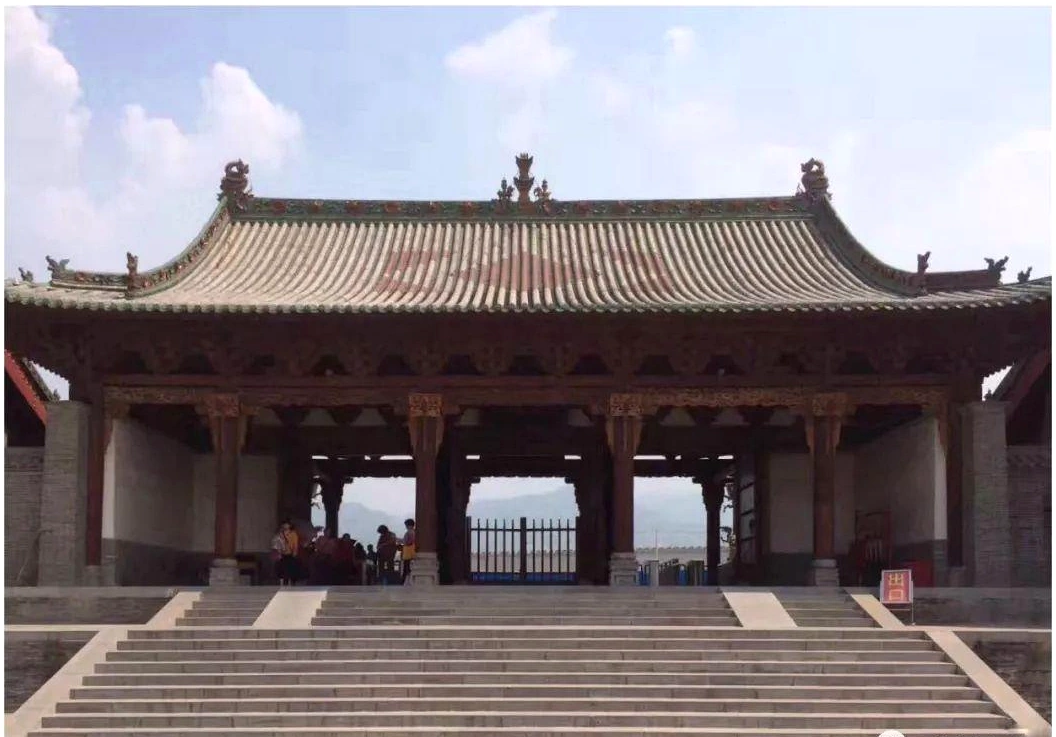
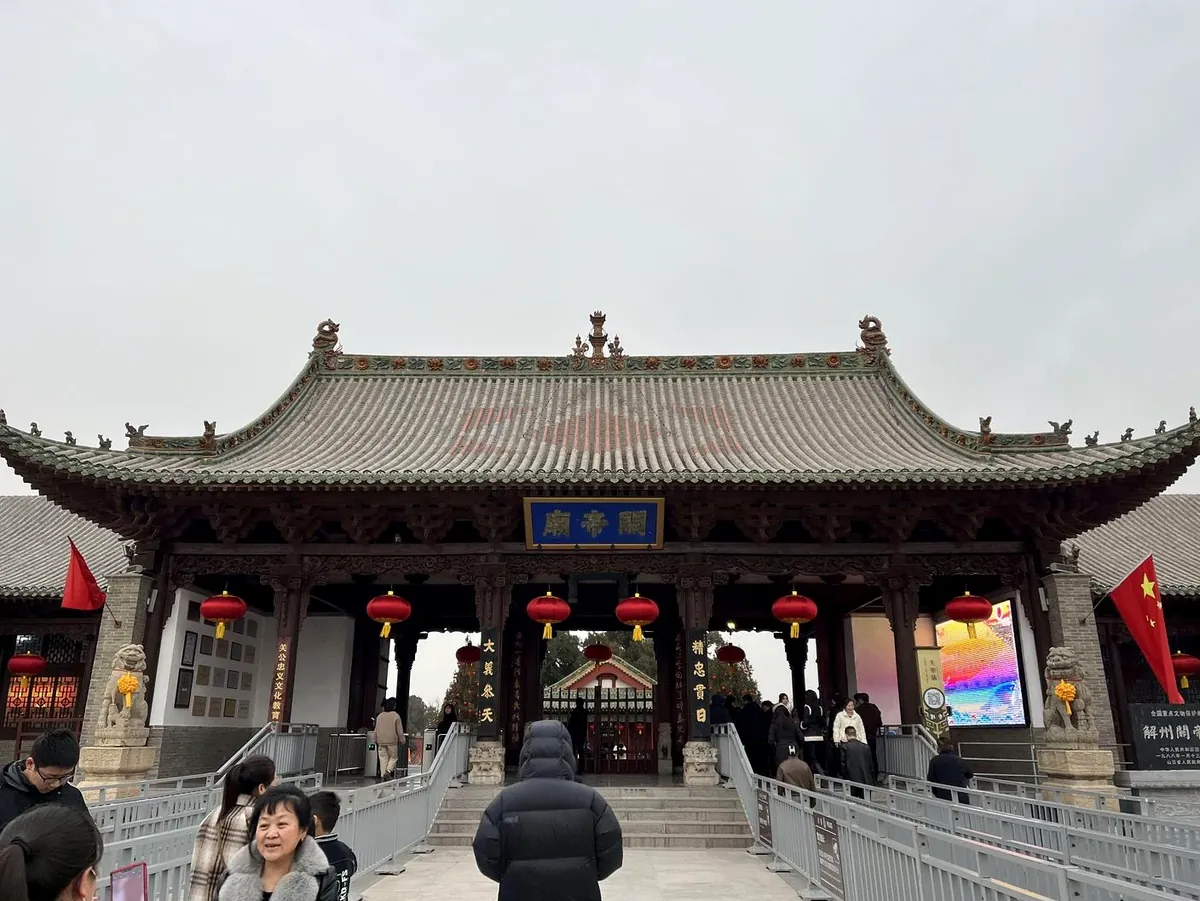
Right from the entrance gate, the solemn and serene ambiance of the complex is immediately apparent through the main gate leading into the inner courtyard beneath a hazy, cloud-covered sky. The gate’s architecture stands out with its multi-tiered curved roofs, upturned eaves, and intricately carved mythical beast reliefs along the ridge, sheltering the turquoise plaque on the lintel inscribed with the three golden characters “Guandi Temple”. Clusters of bright red lanterns hang solemnly under the wooden verandas, contrasting vividly with the muted tones of the stone steps welcoming the footsteps of pilgrims. Just on the right, a towering stone stela is engraved with the title “Xiezhou Guandi Temple – National Key Cultural Relic”, affirming its position as a millennia-old center of faith.
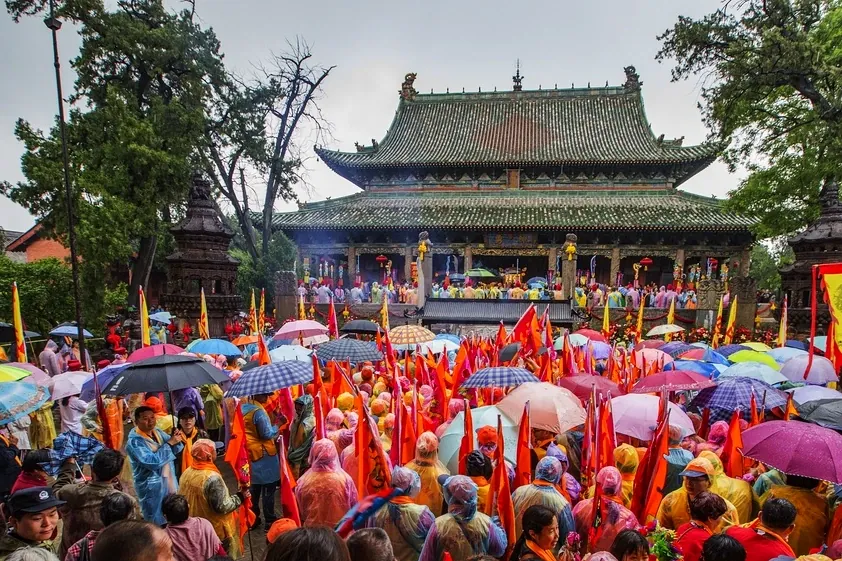
The ancient temple awakens to its most vibrant life every autumn, when the International Guan Yu Cultural Tourism Festival officially takes place in September. This is when the temple courtyard transforms into a vivid live-action stage, where standardized imperial court rituals of the feudal era are faithfully recreated with traditional court music, swirling incense smoke, and fluttering banners. Alongside the solemnity of the sacrificial rites are excerpts of folk-infused Jin opera from Shanxi, where the resounding voices and stylized gestures of master performers echo through the ancient corridors. The shimmering festival lights blend with the resonant melodies to create a multi-layered cultural banquet, seamlessly connecting folk consciousness with ancestral pride.
Beyond the depth of traditional rituals, the temple pioneers into the digital era with a comprehensive heritage digitization and Metaverse virtual reality project. Micro-point 3D laser scanning technology has captured millions of real spatial coordinates of every mortise-and-tenon joint, wooden grain, and statue, creating an architectural model with millimeter-level precision. This breakthrough opens up opportunities for visitors to experience VR virtual reality applications, exploring in detail the sacred space on the second floor of the Chunqiu Tower—which preserves the masterpiece of the ultimate suspended wooden floor—without exerting any mechanical pressure or causing wear and tear to the precious centuries-old wooden components.
The vitality of the Xiechi Guandi Temple in contemporary times has been powerfully galvanized by the cultural impact of the blockbuster entertainment masterpiece “Black Myth: Wukong”. The selection of the temple as the actual location for high-precision 3D spatial data scanning for its mythological scenes has triggered an unprecedented wave of cultural pilgrimage among youth and international academia. Travelers driven by research passion trace every detail of the dragon pillars, temple roofs, and statues to compare the real-world prototypes with the digital realm, transforming the millennium-old historical site into a brilliant intersection of ancient heritage and cutting-edge technology art.
A journey of pilgrimage to the sacred site of Xiechi Guandi Temple would hardly feel complete without experiencing the profound depths of Southern Shanxi’s culinary culture—a fertile land with a food tradition deeply rooted in grain culture and thousands of years of trade history. Stepping out of the solemn threshold of the sacred sanctuary, visitors are immediately greeted by a poetic, rustic lifestyle along the ancient streets. The melodious cries of vendors, the rich aroma of herbal-infused broth, and the steaming mist rising from roadside food stalls create a culinary landscape that is both humble and irresistibly charming.
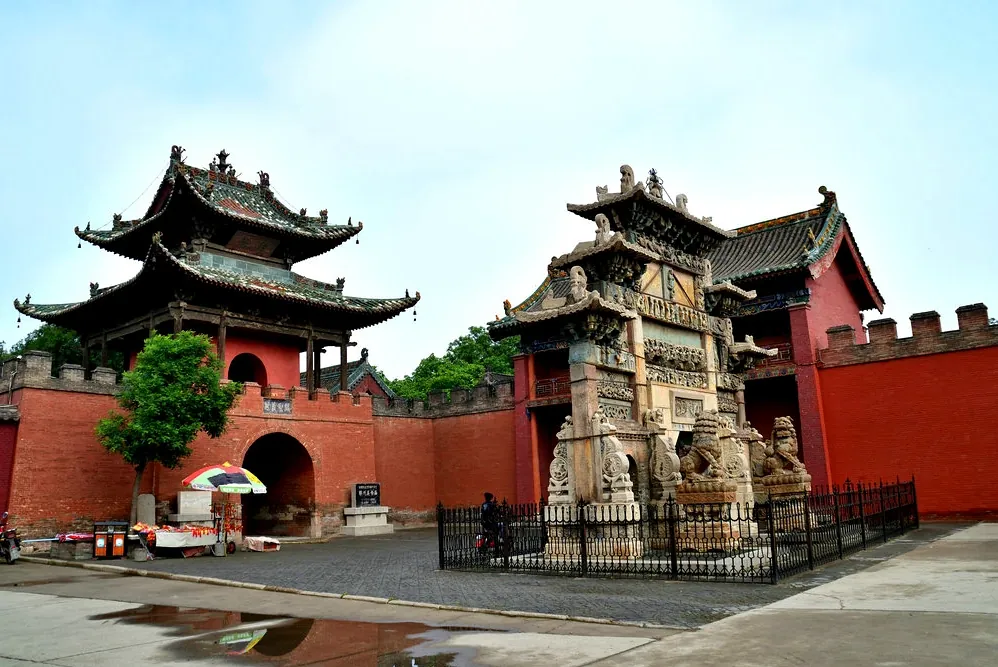
Just outside the heritage complex, an ancient space unfolds, featuring a harmonious blend of historical architecture and the daily life of the ancient town of Xiezhou. To the left stands the majestic two-tier gate with dark blue tiled roofs connected to mossy red brick walls, while the right side is highlighted by a stone archway carved with intricate patterns guarded by majestic stone lions. In front of the time-worn stone-paved courtyard, a street food cart nestles under the shade of a multi-colored umbrella, reflecting in a crystal-clear puddle left behind by a passing rain shower, painting a serene, nostalgic scene reminiscent of an ancient imperial capital’s eateries.
The shining star reigning supreme on the local culinary map is the legendary Xiezhou Mutton Paomo, renowned across the Southern Shanxi region. Fundamentally different from the thick, famous paomo version in Xi’an of neighboring Shaanxi province, Xiezhou’s shredded flatbread in lamb soup focuses strictly on the purity of the broth. The soup pot is simmered continuously for twelve hours using medium-aged lamb bones and over twenty traditional medicinal herbs, distilling a crystal-clear broth that completely eliminates any gamey odor while leaving behind an indescribably deep, sweet aftertaste. When dining at long-standing family-run eateries like the Old Xiezhou Paomo Restaurant, diners break crispy baked flatbread into pieces with their fingertips directly into a ceramic bowl, after which the chef ladles piping hot soup over it, garnishes it with thinly sliced lamb and fresh scallions, and serves it alongside crunchy sweet-and-sour pickled garlic cloves and Shanxi’s signature spicy chili oil.
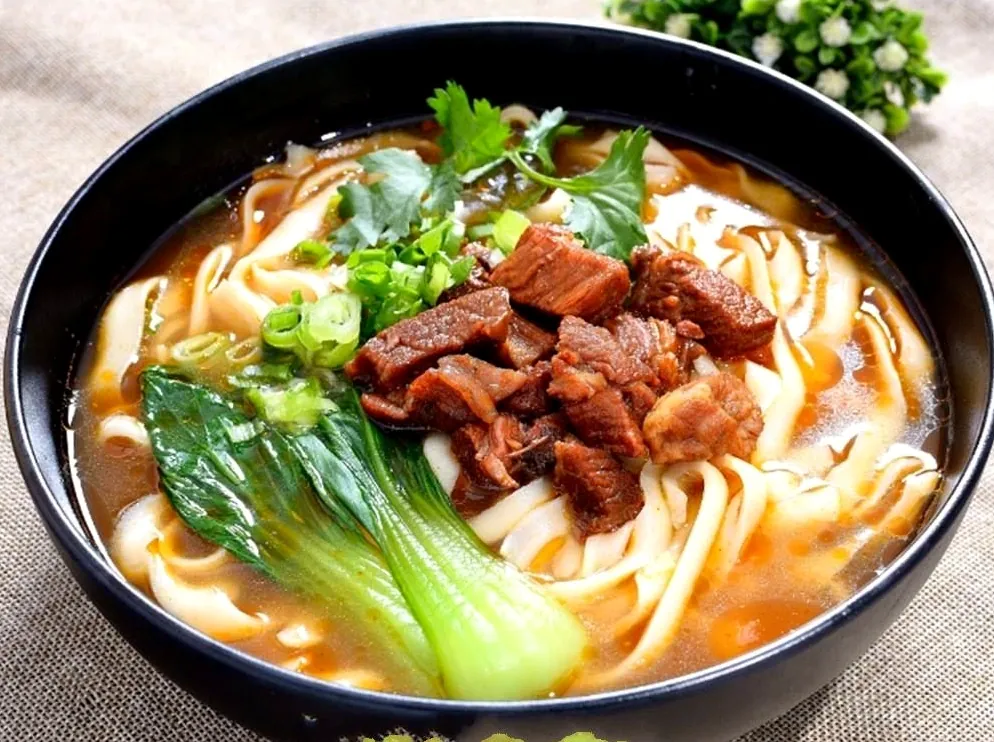
Alongside the bowl of mutton soup that warms the hearts of distant travelers, Yuncheng’s flour-kneading art is celebrated through the renowned Dao Xiaomian (Knife-Cut Noodles). Noodle artisans stand before a rolling pot of boiling water, holding a meticulously kneaded dough block in one hand while swiftly wielding a specialized curved shaving knife with the other. Thin slices of noodles fly into the pot like willow leaves dancing in the wind, creating one-of-a-kind noodles with a thick, chewy center and smooth, tender edges. The shaved noodles are smothered in a rich, savory braised pork sauce, perfectly harmonizing with traditional aged fermented rice vinegar and a touch of spicy chili oil, creating a flavor symphony of savory crunch and refreshing tang that intensely stimulates the palate.
In the picture of Xiezhou’s traditional culinary culture, Wenxi Chubing is a traditional pastry with deep origins dating back to the Warring States period, reaching its golden peak when Emperor Kangxi of the Qing Dynasty praised it as the finest pastry under heaven. The outer crust of the pastry is densely coated with fragrant roasted white sesame seeds, concealing a chewy filling made from brown sugar, wild forest honey, and pure sesame oil. When breaking the pastry in half by hand, glossy sugar threads stretch endlessly, exuding a gentle, sweet aroma without being cloying at all. Along with jars of Shanxi aged vinegar matured for five to ten years, chewy red jujube candies, and nutty walnuts associated with historical Shanxi merchant caravans, the culinary flavors around the Guandi Temple weave a vibrant food heritage, perfectly crystallizing the uniqueness of ancient tastes.
The journey to approach the Xiechi Guandi Temple takes travelers back through time to the geographical center of ancient Huaxia civilization, where modern transportation systems seamlessly connect with millennial ancient roads. For travelers departing from Vietnam, the optimal and most convenient route is to fly directly to Xi’an Xianyang International Airport (XIY), then take the Datong-Xi’an high-speed train from Xi’an North Station to Yuncheng North Station with an ideal travel time of just about 58 to 65 minutes. For those combining a comprehensive exploration of Shanxi from the north, the train journey from Taiyuan South Station to Yuncheng takes approximately 1 hour 45 minutes to over 2 hours. If choosing domestic air travel, Yuncheng Zhangxiao Airport (YCU), located about 35 km from the sacred site, is also a viable stop. From downtown Yuncheng, visitors can easily catch tourist bus route No. 11, which runs every 15 minutes, to arrive directly at the plaza in front of the temple after a leisurely 45-minute ride, or access it via the vital axes of the G5 (Beijing-Kunming) and G59 (Hohhot-Beihai) national expressways on the classic Southern Shanxi Circuit connecting Xi’an, Yuncheng, Hukou Waterfall, Pingyao Ancient City, and Taiyuan.
}
The climate of the Yuncheng Salt Lake basin requires careful calculation regarding the departure time. The most ideal periods of the year are the mild spring from April to May and the golden autumn from September to October. In particular, September is when the locality solemnly hosts the Guan Yu Cultural Festival, opening up a majestic traditional sacrificial space with millennia-old ritual music. Travelers should avoid the peak summer months of July and August, when the heat effect from the saline lake depression often causes outdoor temperatures to reach 38 to 40 degrees Celsius, leading to rapid exhaustion across the vast stone-paved courtyards. When taking photographs, the upward angle from the Royal Book Pavilion looking toward the grand Chongning Hall delivers an expansive visual depth, while a mid-range telephoto lens is an effective tool to capture the intricate details of the winding dragon heads carved on 26 monolithic stone dragon pillars. At the Spring and Autumn Tower, adjusting the focal length toward the magical hanging beam structure known as the “Suspended Pavilion” will fully capture the pinnacle of ancient architectural wisdom.
The cost structure for an expedition to the Guan Yu sacred site can be flexibly allocated across various tiers of experience. At a budget level ranging from 1 to 3 million VND per day, travelers can take a round-trip high-speed train from Xi’an for a day trip, purchase the listed admission ticket for 60 yuan (approximately 215,000 VND), enjoy a bowl of rich local Shanxi sliced noodles by the ancient town, and stay overnight in budget guesthouses. In the standard segment for family groups or groups of friends, a budget of about 4 to 9 million VND allocated for the Yuncheng leg within a total tour package starting from your hometown (approximately 18 to 25 million VND) will ensure four-star hotel accommodations, local specialty cuisine, and private pick-up and drop-off vehicles. Those who desire an in-depth heritage pilgrimage can increase their spending from 10 to over 25 million VND to hire local history experts for exclusive academic commentary (ranging from 1,000 to 2,000 yuan per session), consecrate bronze Guan Yu mascots that have undergone solemn ritual offerings, and stay at high-end lakeside eco-resorts.
In addition to preparing the itinerary and budget, equipping oneself with a defensive mindset against commercialized tourism traps is a key factor. Around the vicinity of the temple, travelers need to remain alert and decline invitations to enter enclosed rooms under the guise of “feng shui reception rooms” or “tea ceremony houses,” where theatrical setups often coerce visitors into consecration rituals before selling deity statues at prices inflated by 10 to 20 times their actual value. Similarly, remain cautious at stops along the highway that pressure you into buying aged Shanxi vinegar or red dates. To preserve the pristine condition of this future world cultural heritage site, the management board strictly prohibits the use of flash photography when taking pictures of ancient statues and original murals to prevent the degradation of mineral pigments. Regarding rituals, modest and neat attire is mandatory; sleeveless tops, shorts, or skirts above the knee are strictly prohibited from entering the sacred spirit path. To ensure academic authenticity and absolute satisfaction, travelers should choose standard non-shopping tours that strictly comply with Article 35 of the Tourism Law of China, featuring transparent penalties ranging from 30,000 to 300,000 yuan for forced commercial practices. To fully enjoy the historical depth without any arising worries, you can explore standard cultural itineraries via the all-inclusive tour packages specifically designed for lovers of ancient aesthetics.