Quang Ninh is considered the Buddhist heartland of Vietnam, famed for the Truc Lam Zen sect founded by King Tran Nhan Tong, which served as the state religion during the Tran Dynasty. The region is home to numerous sacred sites and pagodas such as Yen Tu and Ba Vang. Among them, Loi Am Pagoda stands out as a centuries-old sanctuary that has weathered multiple feudal dynasties. The complex comprises Upper Loi Am Pagoda (Loi Am Thuong) perched atop Mount Linh Thuu and Lower Loi Am Pagoda (Loi Am Ha) located in Dai Yen Ward, Ha Long City.
See more: Top 9 Sacred Pagodas in Quang Ninh
Lower Loi Am Pagoda (Chua Loi Am Ha)
Located in Dai Yen Ward, Ha Long City, Lower Loi Am Pagoda is a historic Buddhist sanctuary. According to local elders and researchers, the original temple was built in the 17th century as a center of worship and spiritual life for surrounding communities. During the resistance war against French colonialism, Lower Loi Am Pagoda supplied provisions to Upper Loi Am Pagoda, which served as a secret revolutionary base for cadres of the Hong Quang Special Zone and local guerrilla fighters. When French forces discovered this base, they sailed warships up the Hot River and heavily bombarded both Lower and Upper Loi Am Pagodas, reducing nearly all surrounding religious structures to ruins. Afterward, local residents climbed to the site and hid remaining sacred ritual objects inside a cave behind Lower Loi Am Pagoda. From then on, Lower Loi Am Pagoda also became known as Cave Pagoda (Chua Hang), and the mountain became known as Pagoda Mountain (Nui Chua). Later, villagers rebuilt a modest shrine beside the mountain, though only two ancient stone stupas enshrining the relics of two unnamed founding Zen masters survived.
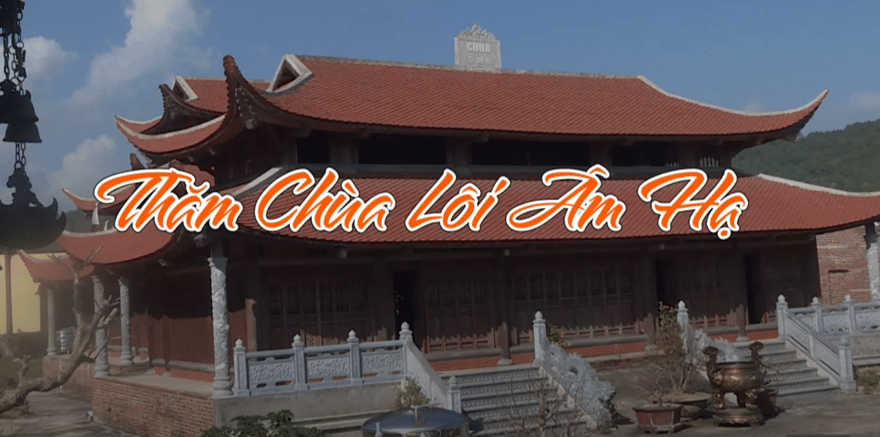
Lower Loi Am Pagoda (Chua Loi Am Ha)
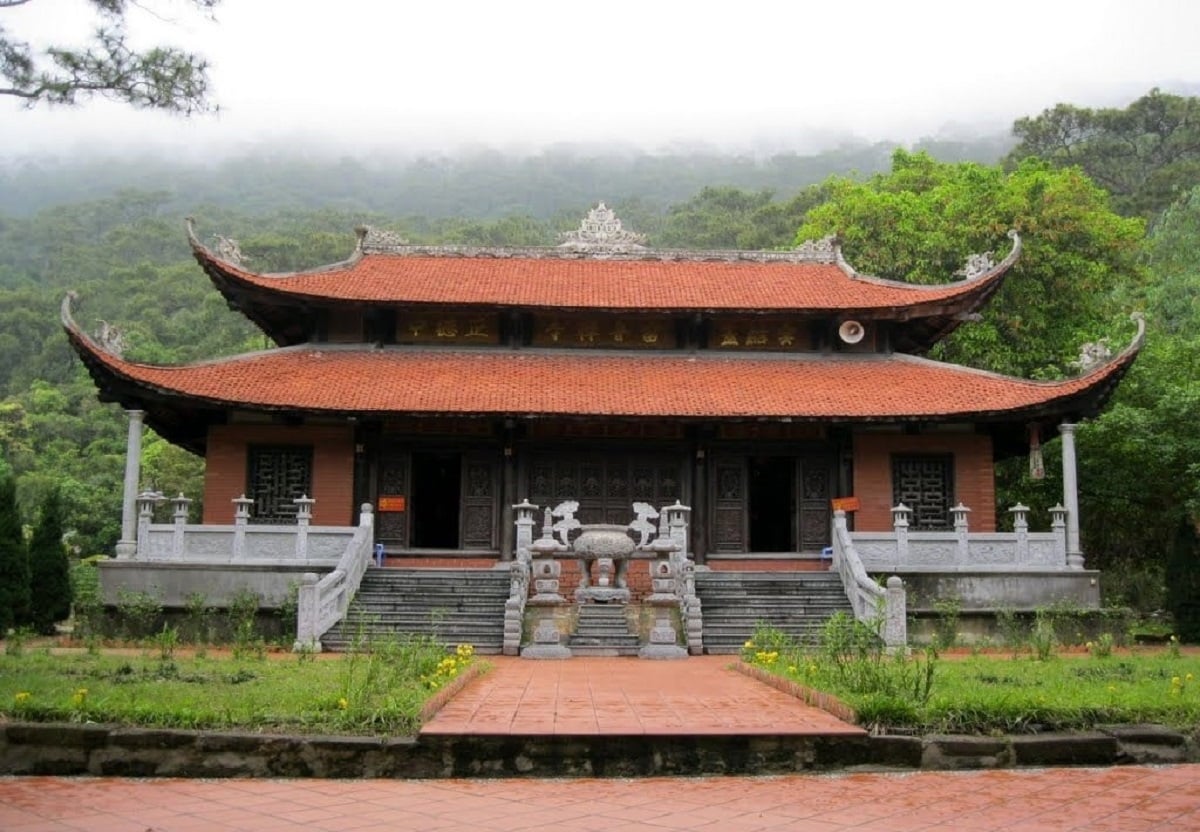
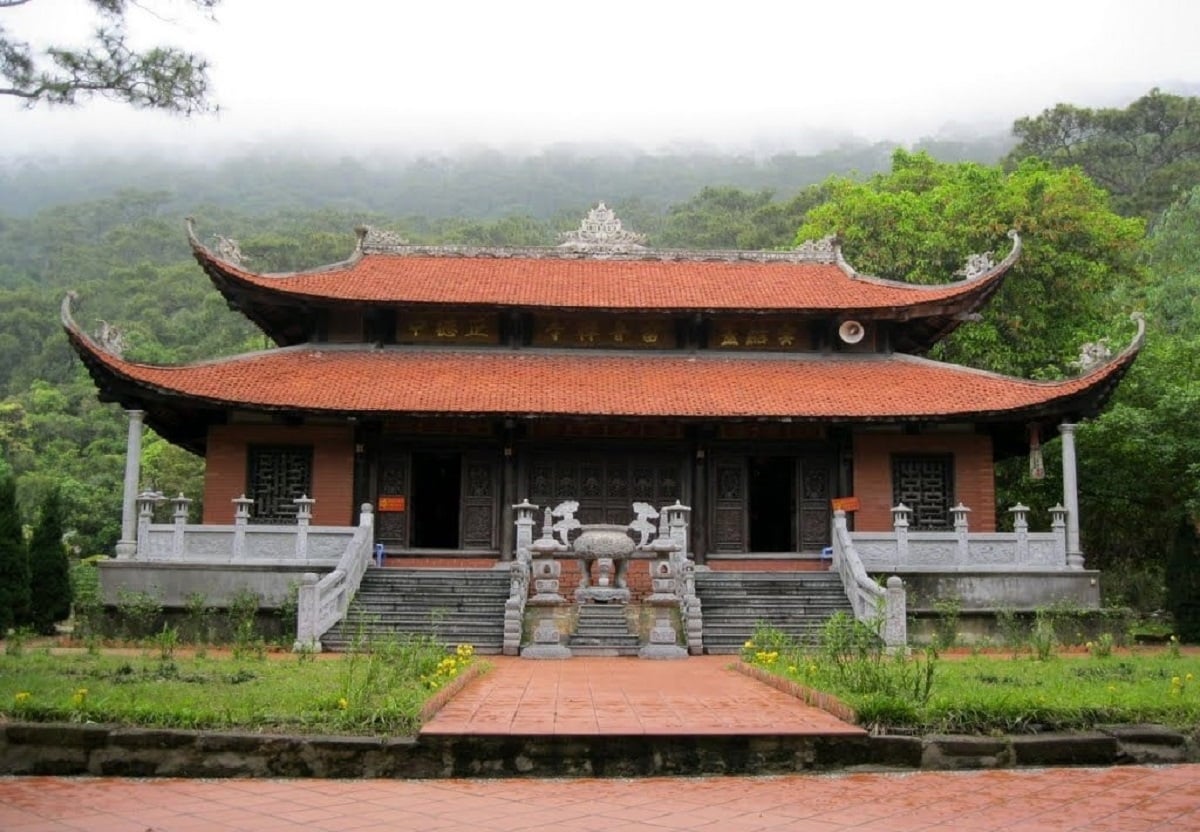
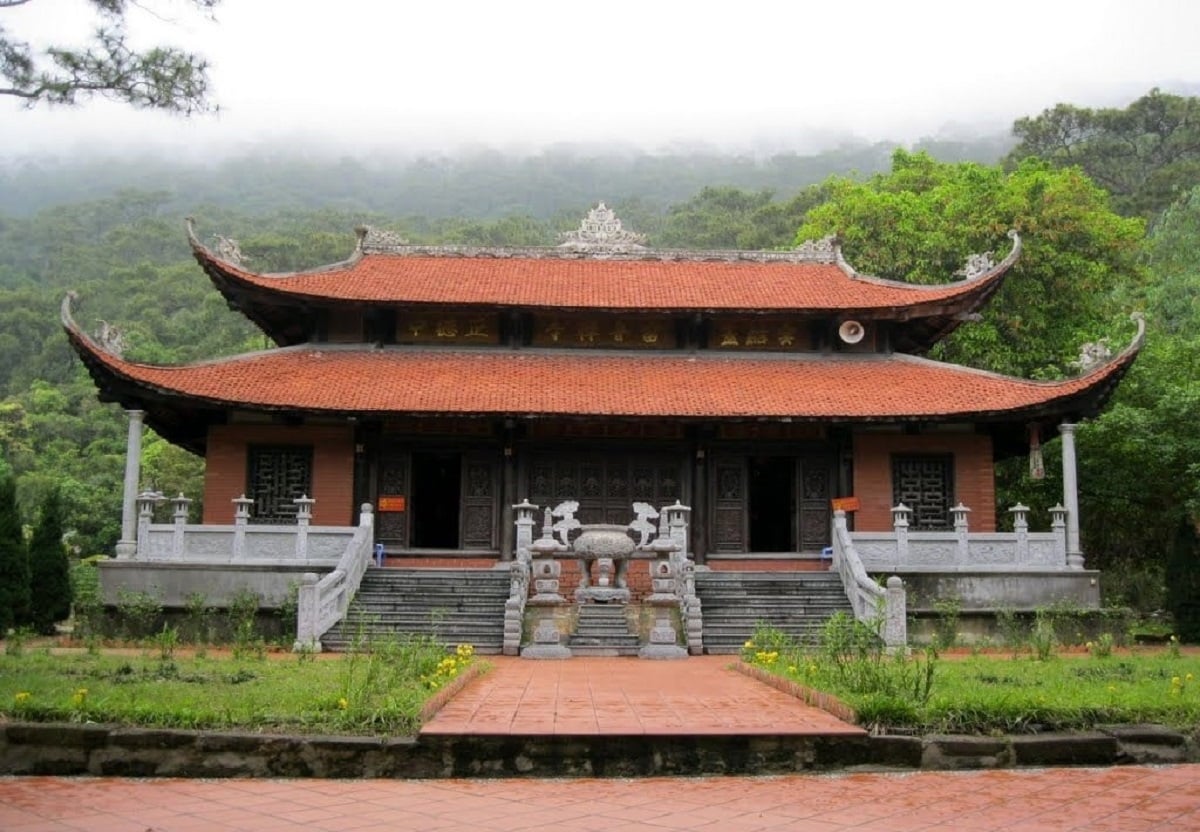
After decades in which only ruins remained, full restoration of Lower Loi Am Pagoda began in 2012. Rebuilt on its historic foundations across more than 20,000 m2, the revived complex features key structures including the Main Sanctuary (Tam Bao Hall), Ancestral Hall, Dharma Lecture Hall, Monks’ Quarters, Avalokiteshvara Pavilion (also enshrining Ksitigarbha Bodhisattva), Ceremonial Hall, Gong Tower, Drum Tower, Stupa Garden, and Triple-Arched Gate (Tam Quan). Notably, the Avalokiteshvara Pavilion is modeled after Hanoi’s iconic One Pillar Pagoda, offering panoramic views over the serene monastic grounds.
The pagoda is crafted with sturdy timber trusses and columns carved with dragons, phoenixes, and stylized floral motifs. Rather than ornate extravagance, the interior shrines are arranged with understated simplicity that radiates sacred grace. Laid out in the traditional Chinese character “Môn” (門) formation—with a central main hall flanked by two side wings and Buddhas enshrined in front with patriarchs behind—the sanctuary houses a complete, dignified pantheon including sages, Duc Chua Ong, Dharma Protectors, and Shakyamuni Buddha flanked by Manjushri and Samantabhadra in the main hall.
The restoration of Lower Loi Am Pagoda carries profound historical, cultural, and religious significance. Together with Upper Loi Am Pagoda, it forms a distinctive spiritual heritage complex in Ha Long City and a cherished pilgrimage destination each spring during Tet celebrations.
Upper Loi Am Pagoda (Chua Loi Am Thuong)
Overlooking the Hot River near Ha Long Bay, Upper Loi Am Pagoda is reached by taking a scenic ferry ride across Yen Lap Lake. Boats glide over clear green waters past rocky islets affectionately called Scenic Island and Crab Islet by locals, creating a poetic landscape of water and peaks. Upon reaching the far shore, visitors follow a mountain trail ascending to the pagoda. While the earthen path was once slippery and challenging during the rainy season, a newly paved pathway now makes the pilgrimage smooth and accessible. Shaded by towering ancient trees and lined with moss-covered boulders weathered by time, Loi Am stands more than 500 meters above sea level in Ha Long City and was designated a National Historical Relic in 1997.
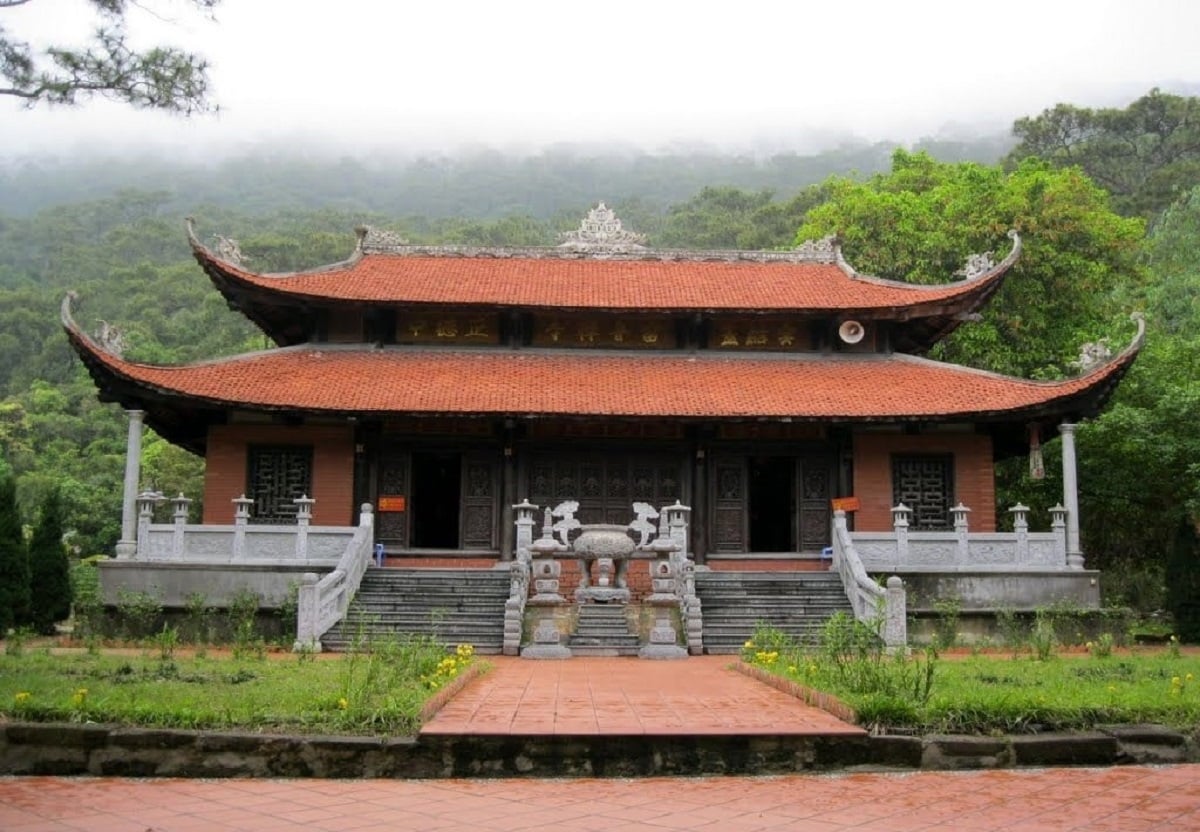
Upper Loi Am Pagoda (Chua Loi Am Thuong)
Perched atop Mount Linh Thuu at an elevation of 503 meters above sea level amid drifting mountain clouds, Upper Loi Am Pagoda exudes solemn tranquility. Originally built in the 15th century during the Quang Thuan reign of King Le Thanh Tong (1460–1469), the pagoda underwent three major restorations during the feudal era before time left only its stone foundations intact. Reconstructed in 2001 into its present 3,410 m2 complex, the temple blends classic Vietnamese pagoda architecture with traditional motifs inspired by the Ly, Le, and Nguyen dynasties. The grounds encompass the Main Sanctuary enshrining the Three Jewels and Mother Goddesses, a stupa garden, and a natural rock meditation shelter. Situated on a broad, level terrace, the Main Sanctuary features traditional wooden columns and roof framing.
To the right of the Main Sanctuary lies the Stupa Garden, preserving rich historical traces beneath towering old-growth trees with 20 ancestral stupas—several dating back hundreds of years and built from bluestone and fired clay bricks. Nearby stands the Mother Goddess Shrine, understated in design yet deeply solemn amid sacred mountain woodland. Visitors to Loi Am Pagoda should also see the Meditation Shelter—known locally as Cave Pagoda or Lau Cau—located roughly 200 meters from the Mother Goddess Shrine, where a natural rock overhang once served as a quiet retreat for meditating monks and offers sweeping bird’s-eye views over Yen Lap Lake.