Tucked along the breezy shore of False Bay in the historic town of Simon’s Town, Boulders Beach holds a grand chronicle where prehistoric geological shifts, the rise and fall of Western naval fleets, and a remarkable wildlife migration converge. The origins of this dramatic setting reach back roughly 540 million years, when molten magma pushed through Malmesbury shale and slowly cooled deep underground, crystallizing into the imposing Cape Granite pluton. Over hundreds of millions of years of weathering under relentless ocean swells and southern winds, massive, smooth-surfaced granite boulders emerged from the water, forming sheltered coves that cradle fine sand and giving rise to the iconic name Boulders Beach in global geography.
Before becoming a sanctuary for wildlife, this coast bore the earliest footsteps of colonial exploration around Cape Town. In 1687, Governor Simon van der Stel—one of the most prominent figures under the Dutch East India Company (VOC)—recognized the strategic value of this sheltered bay during a coastal surveying expedition to the south. He saw that it offered an ideal haven for ocean-going merchant vessels seeking shelter from the fierce northeast winds of Table Bay. The settlement of Simon’s Town took its name from the governor that very year, beginning its transformation from a rugged maritime supply outpost into a vital Dutch naval base, and later passing to the British Royal Navy across the following centuries as shipping lanes linking Europe and Asia continually shifted.
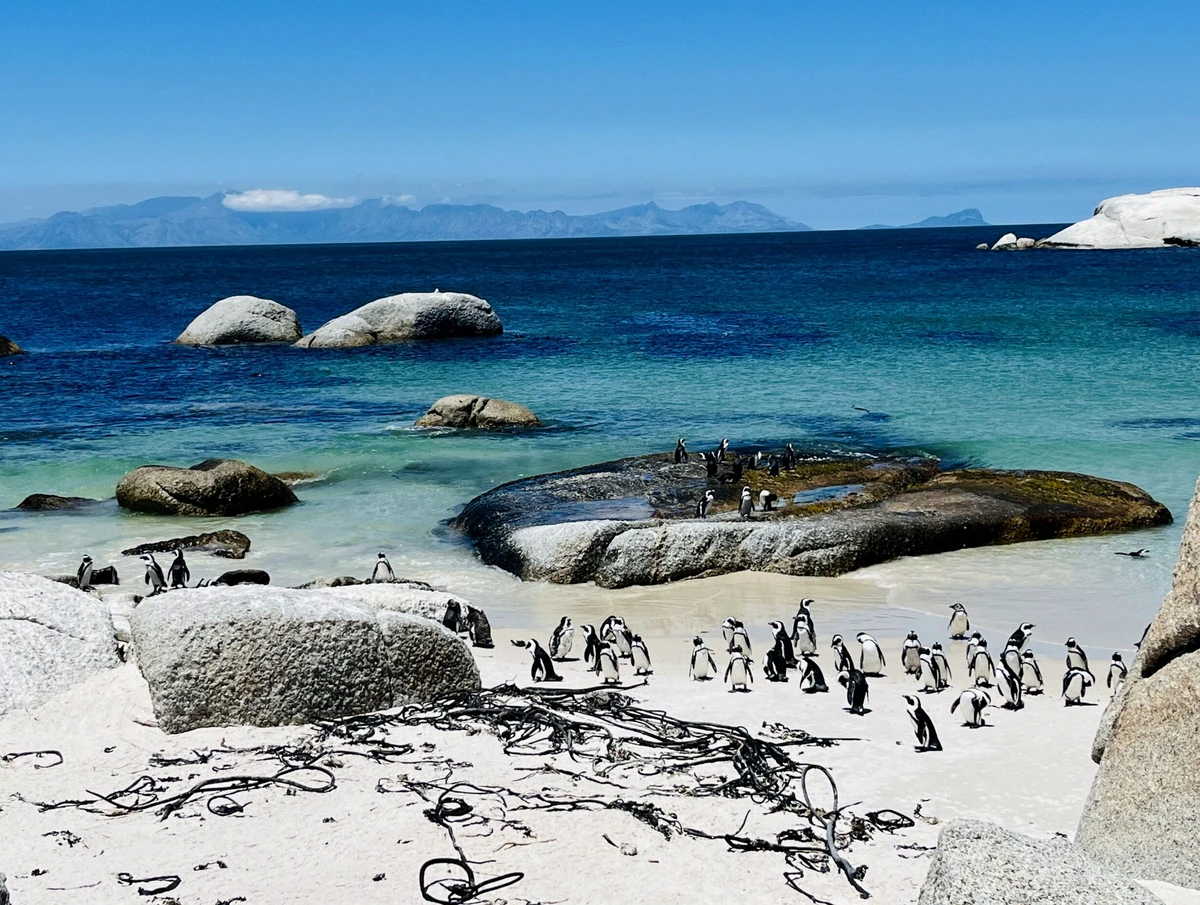
Yet the most extraordinary turn of events that shaped Boulders Beach into a one-of-a-kind natural kingdom began with an ecological shift between 1982 and 1983. As wild African penguin (Spheniscus demersus) colonies on offshore islands faced steep declines from guano harvesting and industrial fishing, a pioneering pair left distant Dyer Island, swam dozens of nautical miles to the mainland, and chose the sands of Foxy Beach—nestled beside the Boulders granite outcrop—to nest. In avian biology, a species accustomed to breeding in isolation on offshore islands moving onto a continental shoreline right beside a residential neighborhood is exceedingly rare and carries deep historical significance.
Sustained by the nutrient-rich Benguela current bringing abundant shoals of anchovies and sardines into False Bay, and shielded by sturdy granite formations, the founding pair saw their numbers grow quickly. From a single nest in the early 1980s, the colonies at Foxy Beach and Boulders Beach multiplied exponentially to reach thousands of birds in just over a decade, creating a bustling penguin colony right in the heart of quiet Simon’s Town.
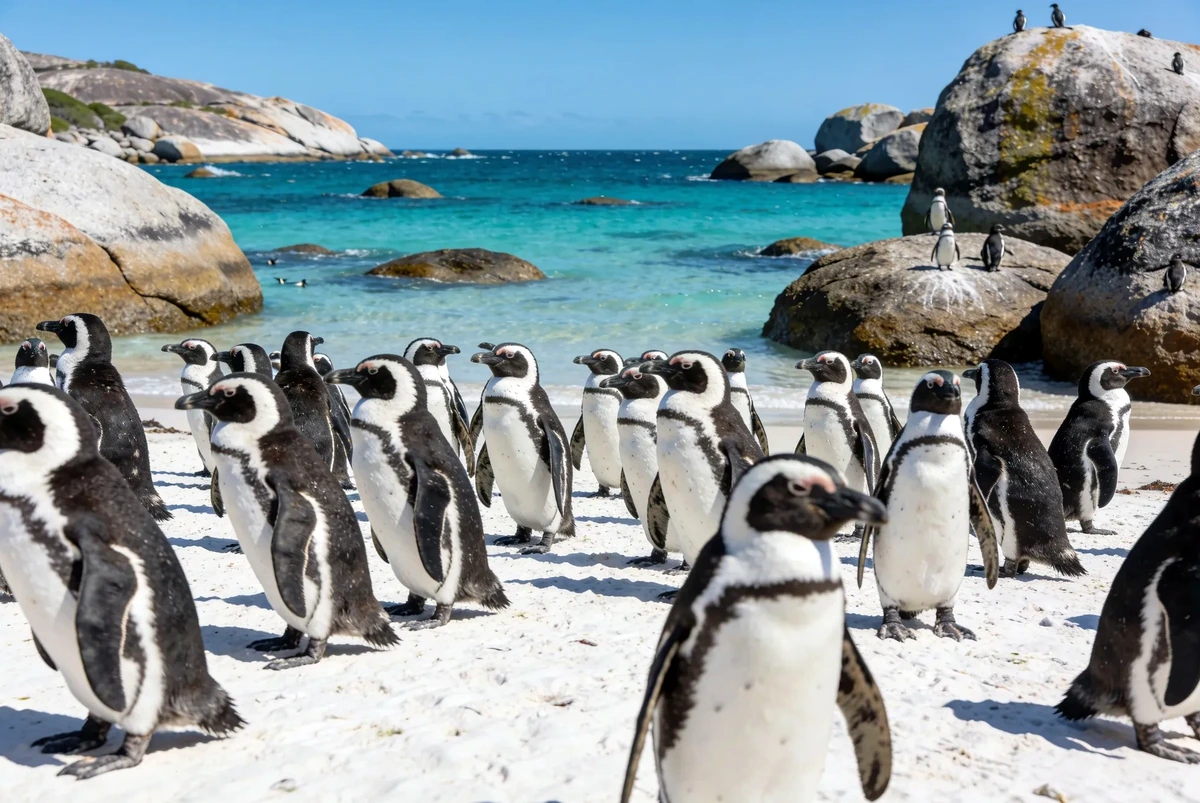
Faced with rapid colony growth alongside suburban development on the Cape Peninsula, South African authorities introduced major conservation measures. In 1998, the entire Boulders Beach shoreline and adjacent wetlands were formally incorporated into the Cape Peninsula National Park—now Table Mountain National Park—under the strict oversight and management of South African National Parks (SANParks). Going beyond coastal land protection, the Table Mountain National Park Marine Protected Area (MPA) was established in 2004, creating a marine ecological zone closed to commercial fishing to safeguard the penguins’ natural food web. Half a billion years of geology, 17th-century naval heritage, and modern conservation come together at Boulders Beach, where time feels suspended across ancient granite.
Located on the eastern coast of the Cape Peninsula roughly 42 kilometers south of central Cape Town, Boulders Beach opens onto the calmer waters of False Bay. Viewed through coastal geomorphology and natural geography, the shoreline enjoys a highly advantageous setting with hills behind and the bay ahead. Granite slopes of the Table Mountain range form a sturdy backdrop, while the front faces a broad basin that catches warm semi-diurnal coastal sunshine and stays sheltered from the roaring southwest gales of the open Atlantic. This protected cove creates a mild microclimate that has supported wildlife for millions of years.
The unmistakable character of Boulders Beach comes from Cape Granite formations dating back roughly 540 million years, formed deep in the Earth’s crust during the late Neoproterozoic/early Cambrian before tectonic uplift brought them to the surface. Steadily shaped by ocean waves, groundwater seepage, and salt-laden winds over countless ages, massive magma intrusions fractured and rounded into smooth, speckled grey boulders jumbled and interlocked along the shore. Acting as natural breakwaters, these boulders divide the coast into crescent-shaped pockets of fine sand. Inside these tiny coves, the water often turns crystal-clear turquoise and calm as glass, offering a quiet refuge that insulates young penguins from rougher open-ocean currents.
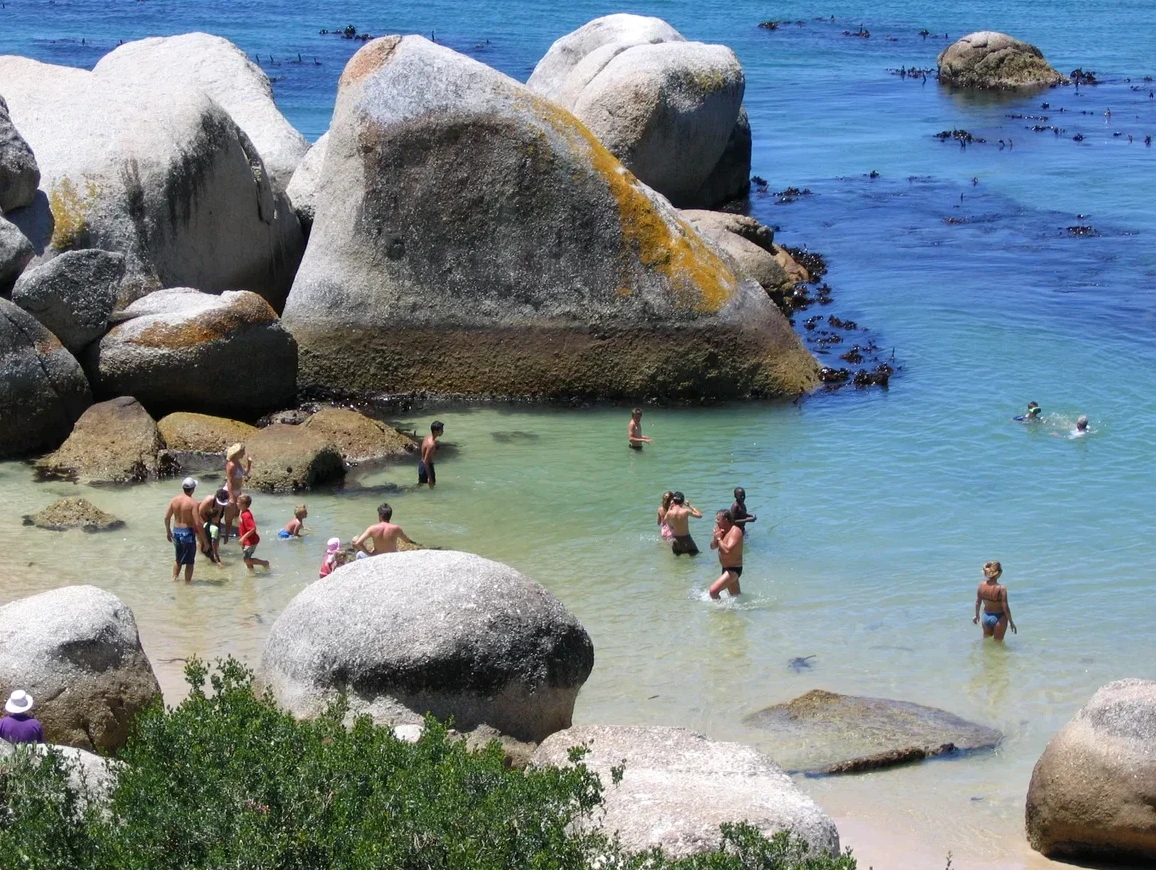
The surrounding marine ecosystem is shaped by the meeting of two contrasting currents: the cold, mineral-rich Benguela current upwelling from southern waters and the warm Agulhas current sweeping down from the Indian Ocean around the southern tip of Africa. Where cooler and warmer waters mix in shallow False Bay, vast underwater forests of sea bamboo kelp (Ecklonia maxima) thrive. Like submerged tropical forests, these kelp canopies—stretching tens of meters long—dampen wave energy reaching the shore and shelter dense schools of anchovy (Engraulis encrasicolus) and sardine (Sardinops sagax). Abundant, accessible prey close to land is a key reason African penguins stay year-round without making long offshore foraging trips fraught with larger predators.
Along the sand and gentle slopes bordering the rocks grows Cape Peninsula Granite Fynbos, a threatened native plant community within the Cape Floristic Kingdom. Resiliently rooted in thin weathered soils, this vegetation showcases the bold blooms of king protea (Protea cynaroides) alongside Erica heaths and salt-tolerant daisy shrubs. Low-growing fynbos binds coastal sand against strong winds while providing shade, leaf litter, and sturdy root burrows where African penguins nest during breeding season.
Human intervention here also reflects a high standard of nature-sensitive design. To protect fragile ground layers and minimize thermal and mechanical stress on penguin burrows tucked beneath sandy humus, visitor routes are lifted above the ground on gently winding timber boardwalks. Rather than bolting into bedrock, the wooden walkways follow the contours of the dunes, guiding visitors past fynbos thickets and rock arches without leaving intrusive footprints across sensitive habitat.
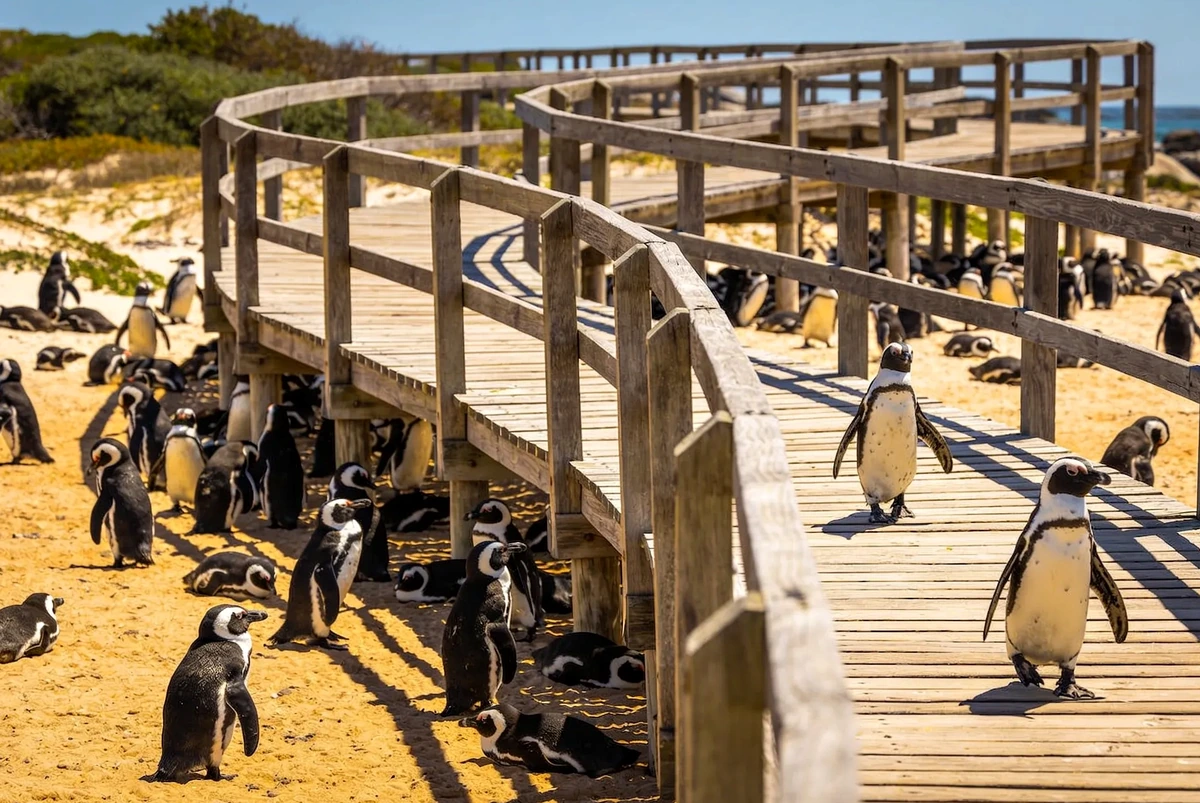
Set along the False Bay shoreline in historic Simon’s Town, the spatial layout of the Boulders Beach reserve serves as a benchmark in ecological landscape architecture, balancing strict conservation with accessible tourism. At the center of the circulation layout is the Visitor Centre on Kleintuin Road, acting as a hub that manages visitor flow before branching into two distinct zones: the Foxy Beach boardwalk trails dedicated to wildlife viewing, and the Boulders Beach swimming cove where people can wade and swim in calm water framed by large granite boulders. Soft perimeter fencing helps keep out local predators and pets while gently guiding visitors without feeling visually oppressive.
The centerpiece of the site’s engineering is the elevated wooden walkway winding smoothly across dunes and native fynbos at Foxy Beach. To build hundreds of meters of path without disturbing porous coastal sand or fragile underground penguin burrows, engineers avoided heavy machinery. Instead, footings were installed by hand drilling, anchoring galvanized steel piles directly into underlying bedrock. This method eliminates heavy mechanical vibration, prevents burrow collapse beneath the surface, and lets the boardwalk follow natural ground undulations without grading or leveling the terrain.
In terms of materials, the structure pairs ecological responsibility with durability against harsh coastal weather at the southern end of the peninsula. Decking and balustrades are built primarily from sustainably sourced Balau hardwood—a dense tropical timber naturally rich in oils with strong termite resistance and flexural strength—paired with high-grade composite members that resist salt-spray corrosion and intense ultraviolet exposure. Over time in salty sea air, the Balau weathers to a muted silver-grey that blends naturally with ancient granite boulders along the bay, turning built pathways into a seamless extension of the wild coast.
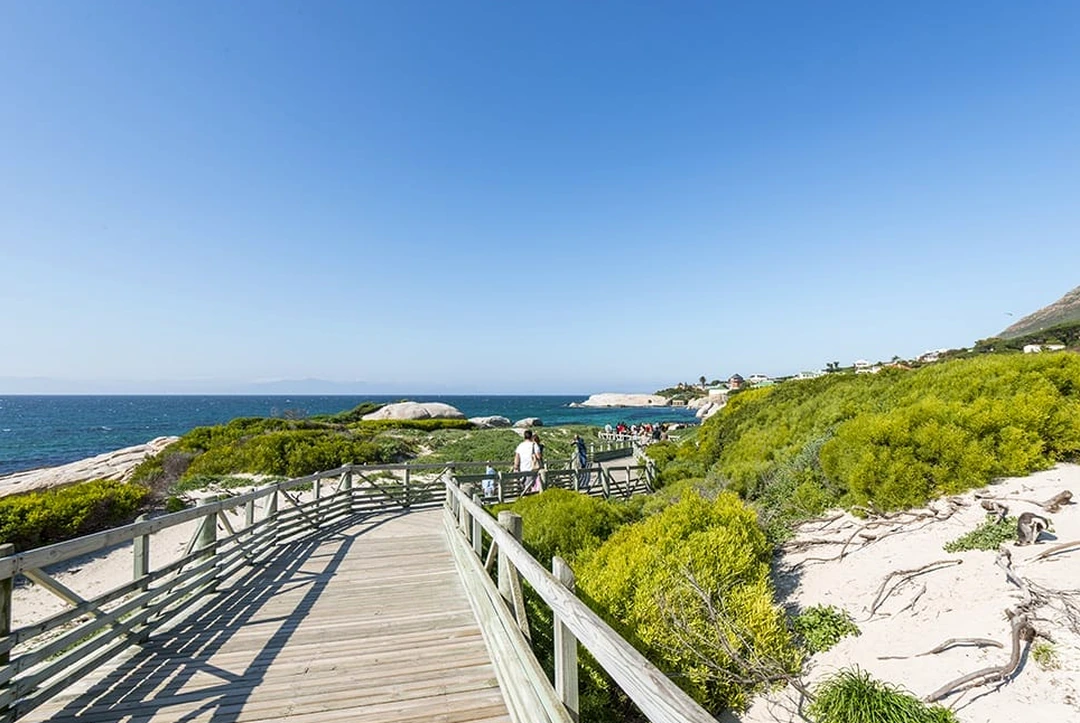
The art of craftsmanship here goes far beyond structural durability, reflecting a deep understanding of native animal behavior alongside visitor psychology. The clearance height beneath the wooden boardwalks is carefully calculated to leave just enough open space below, creating unobstructed corridors so penguins can move freely across the sand dunes between their nesting areas and the water’s edge without encountering artificial barriers. At key viewing points, designers also lowered traditional wooden railings and replaced them with low-profile tempered acrylic panels. This thoughtful ergonomic detail gives children and wheelchair users sweeping, unobstructed views—eliminating blind spots while maintaining strict biosecurity distance and preventing accidental hand contact or dropped items from reaching the birds’ sensitive habitat.
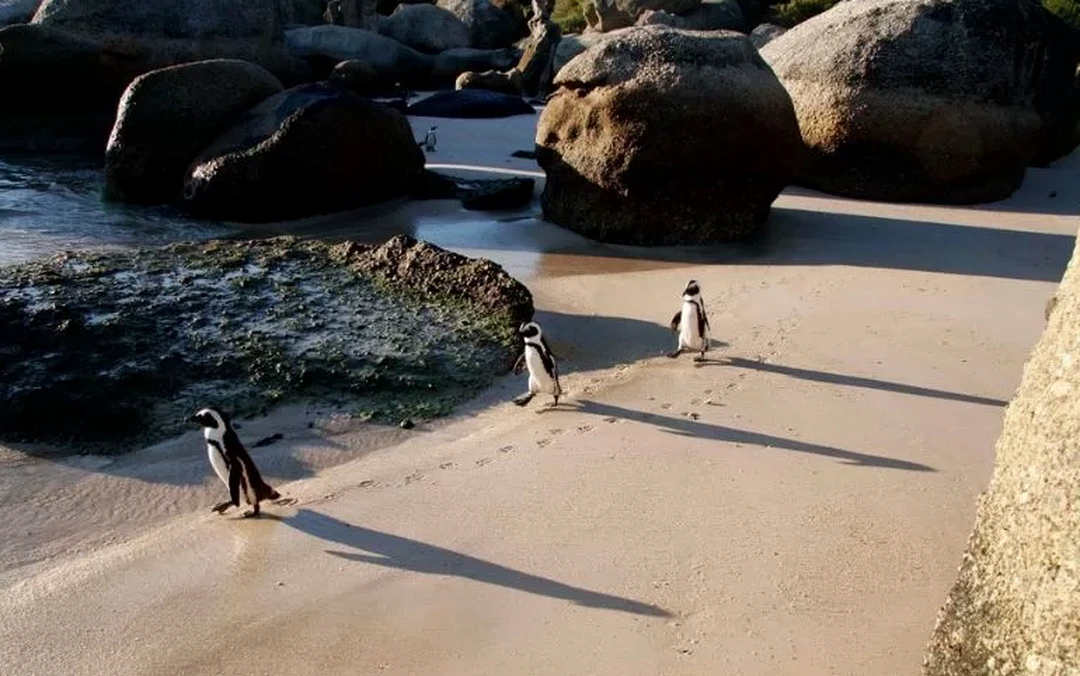
The spatial flow transitions smoothly from Foxy Beach into the cove of Boulders Beach itself, where man-made structures largely step aside for monumental geology. Massive, rounded granite boulders dating back to the Cambrian period rise like natural ramparts, blocking strong ocean winds and holding back frigid currents to create calm, shallow bays of turquoise water. Discreetly placed boardwalks leading from the Kleintuin entrance gate down to the white sand protect ancient moss mats clinging to the rock faces while keeping beachgoer numbers within sustainable carrying capacity—ensuring a wild penguin sanctuary and a relaxing coastal space coexist in balanced harmony.
As the sun dips behind the layered mountains of the Cape Peninsula, Boulders Beach turns down stage lights and scripted spectacles in favor of a pure, unscripted performance by nature. When sunset paints False Bay crimson, the daily homecoming of the native African penguin colony comes alive. Flocks ride the ocean swells through white surf crashing against smooth granite boulders more than five hundred million years old, then waddle up the fine sand toward their nests. Watching thousands of small birds make their way ashore in the fading twilight is a vivid scene of raw survival that no stage director could match.
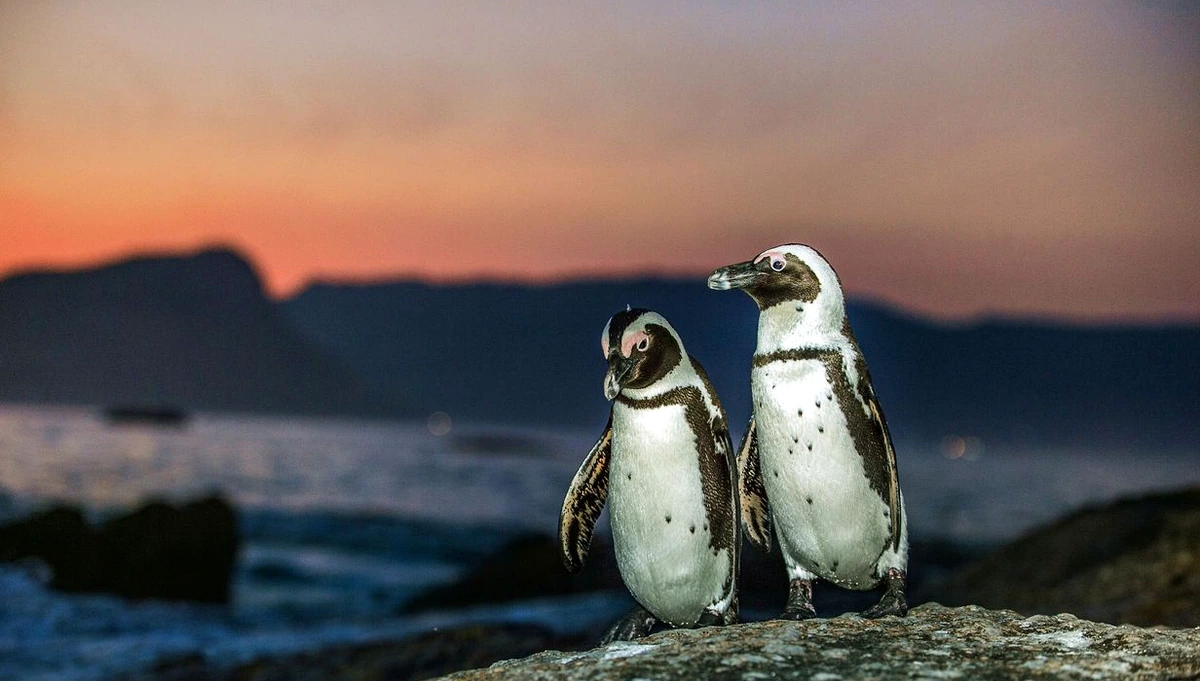
Unlike resort towns lit up at night, the nocturnal experience around Simon’s Town’s penguin colony is defined by the quiet character of natural darkness. Along Kleintuin and Seaview roads hugging the coast, local authorities enforce strict Dark Sky ordinances to minimize light pollution. For seabirds, this rule is vital: keeping artificial lighting out prevents glare and disorientation for young penguins leaving their burrows for the first time to head out into the open ocean. The boardwalks winding through native fynbos scrubland have no nighttime lighting at all, and gates close strictly on schedule—at 17:00 in chilly winter months or 18:30 on breezy summer days—leaving the beach to the stillness of night.
Once night falls, Boulders Beach enters a different kind of nocturnal rhythm shaped by wild sounds rolling in from the sea. Rather than dead silence, the cove becomes an open-air acoustic hall where the steady roar of False Bay mingles with the unmistakable calls of the penguins. In the dark, loud, resonant brays—reminiscent of a donkey, the biological trait that once earned them the name “jackass penguin” among early mariners—echo along the bay. Those calls carry across wind and surf as flock contact calls, territorial challenges from males guarding nest entrances, and acoustic cues that help mated pairs find each other among thousands of sandy burrows under coastal shrubs.
Standing at a quiet viewpoint on the slopes of Simon’s Town, sipping a glass of rich Pinotage shaped by Cape Town terroir as salty sea air blows past, visitors come to appreciate the value of thoughtful restraint. Nighttime here appeals less to bright sights than to sound and touch—the Southern Hemisphere sky speckled with the Milky Way, the damp breath of the South Atlantic, and the chorus of wild birds forming an unforgettable natural setting. A lightless night at Boulders Beach shows how closely conservation and quiet observation of Earth’s wilder rhythms can align.
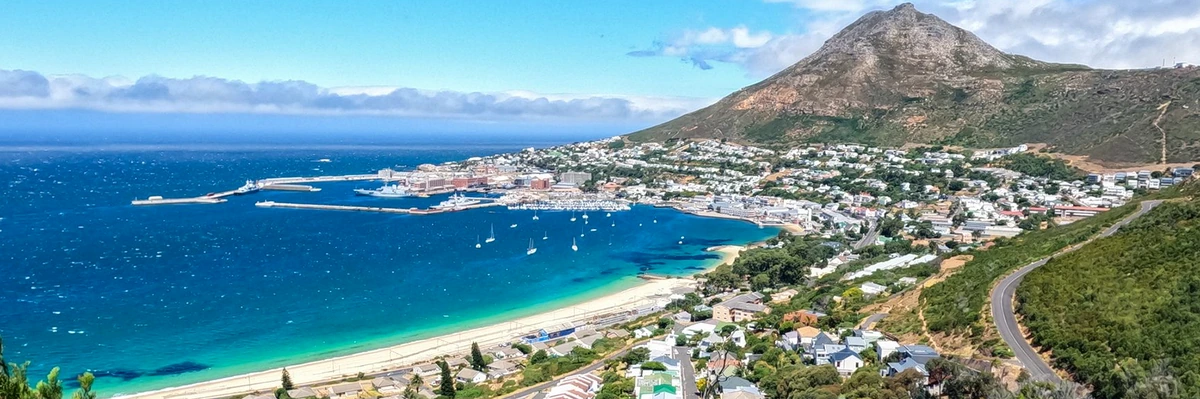
A visit to Simon’s Town’s penguin colony feels incomplete without exploring the distinct food culture along the Boulders Beach coast. The local table reads like a living history of flavors, where the disciplined naval heritage of the British Royal Navy meets the warm, vibrant traditions of the Cape Malay community. Classic European cooking and fragrant Eastern spices come together in a Cape Peninsula style that feels both grounded in the sea and shaped by centuries of colonial history.
A mainstay of cold-water False Bay cooking is snoek (Thyrsites atun), a deep-water predatory fish prized for its firm texture and clean, briny flavor. Local Simon’s Town fishermen still grill snoek over glowing rooikrans wood coals, brushing it generously with a sweet apricot glaze mixed with garlic and rich butter to balance the ocean’s natural tang. Smoked snoek is also flaked into traditional smoorsnoek—simmered with caramelized onions, fresh chili, and potatoes—and served alongside ash-baked sweet potatoes (patat) with a nutty, sweet finish. Once everyday fare for Simon’s Town fishing families since the days of sailing fleets, it has endured as a signature South African dish.
Wandering along Simon’s Town’s steep, historic stone lanes, the scent of old Cape Malay kitchens soon draws you in. This culinary tradition is celebrated for its balanced spice blends—golden turmeric, warm cumin, crushed coriander, dried chili, fresh ginger, and cardamom. Here, freshly landed rock lobster, black mussels, and cuttlefish from off Boulders Beach go into rich seafood curries fragrant with coconut milk and native wild garlic or bay leaves. In the rainy season, as Cape Floral vegetation perks up, cooks prepare bredies—traditional lamb stews made with waterblommetjies (Aponogeton distachyos), a water lily native to southwestern South Africa’s freshwater wetlands. Their tender, slightly crisp asparagus-like texture and gentle astringency soak up rich lamb fat for a distinctly local dish found nowhere else.

Eating around Boulders Beach naturally winds down with afternoon tea—a nod to British naval tradition woven with local Cape flair. Few can pass up Cape Malay koesisters: spiced diamond-shaped dough fried and spiced with cinnamon, ginger, aniseed, and dried orange peel, dunked in bubbling sugar syrup, and rolled in snowy grated coconut. Alongside them, classic Dutch-rooted melktert—crisp pastry filled with creamy, custard-like milk and dusted with fragrant cinnamon—makes a fitting sweet finish to the sound of gentle surf.
At historic spots like The Quarterdeck—once a gathering room for senior naval officers overlooking the Simon’s Town naval base—today’s dining is guided by sustainable seafood practices. Its seafood menu follows the Southern African Sustainable Seafood Initiative (SASSI) guidelines to help protect the marine ecosystem that sustains the penguins. False Bay seafood pairs best with a crisp, chilled Sauvignon Blanc or Chenin Blanc from historic estates in nearby Constantia Valley, where bright acidity and hints of citrus, lemongrass, and flint from ancient soils lift fresh fish and leave a lasting impression.
To plan a smooth, well-timed visit to Boulders Beach’s penguins, keep in mind both seasonal daylight shifts and rules set by South African National Parks (SANParks). False Bay sees clear seasonal changes in sunlight, so reserve hours adjust across the year. During sunny summer months with longer days, gates open from 08:00 to 18:30, giving visitors a chance to see the colony in warm amber late-afternoon light. During colder winter months with brisk ocean winds, closing time moves earlier to 17:00 to support wildlife safety and natural routines before darkness settles over the granite coves.
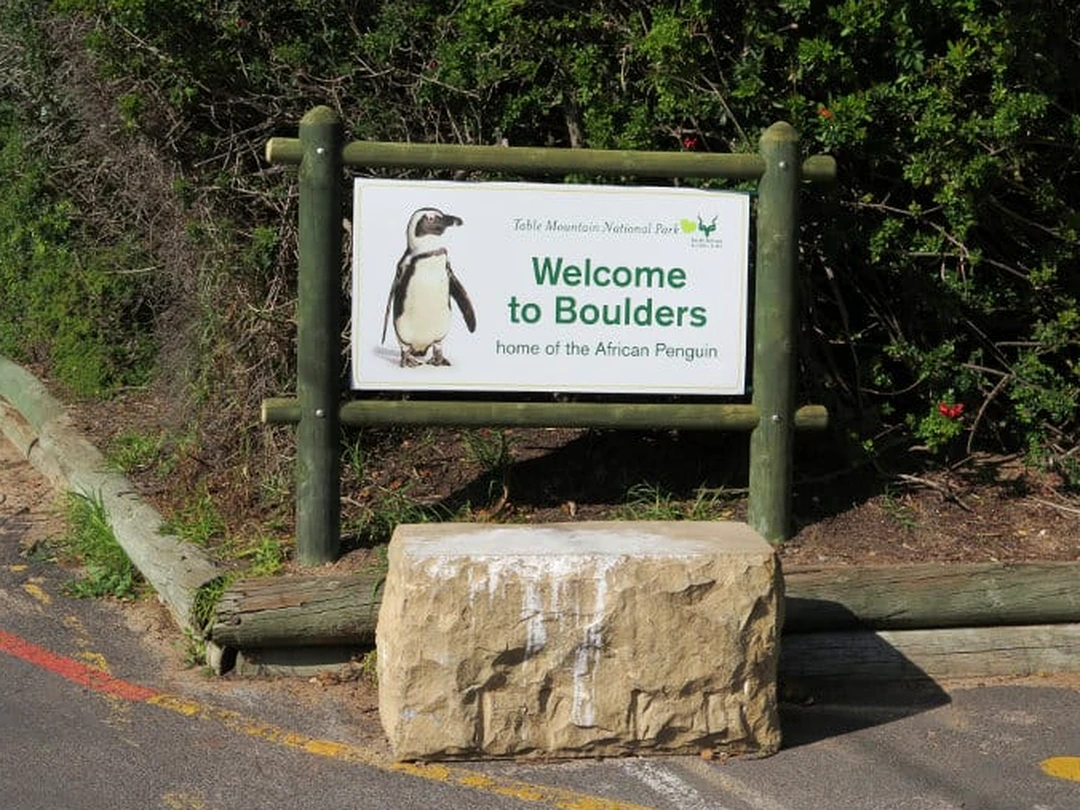
The reception system at Boulders Beach is cleverly organized through two main gates, serving specialized sightseeing purposes. The landward entrance stands impressively above Kleintuin Road, leading directly to the Visitor Reception Center, which marks the starting point of the elevated wooden boardwalks extending all the way to Foxy Beach—a core nesting area that allows for close-up observation of breeding and incubation behaviors without disrupting the fragile sandy terrain. Meanwhile, the Seaforth Gate to the north opens access down to the beach of the same name and shallow sandy coves interspersed with granite boulders, where visitors can dip their feet into the cool water and swim right alongside penguins diving freely. Admission fees follow a very clear three-tiered structure: a standard rate for international tourists to reinvest in the rare gene pool conservation fund, a discounted rate for South African citizens and permanent residents, and free access for holders of the SANParks Wild Card annual conservation pass.
The journey to Simon’s Town from downtown Cape Town is a breathtaking visual experience spanning roughly forty kilometers. The optimal route for self-drive travelers is heading south along the M3 highway before turning onto the spectacularly winding M4 coastal road, carrying travelers past the white-crested waves of Muizenberg and the traditional seafood eateries of the fishing village of Kalk Bay. When using personal transport, an absolute security rule to keep in mind is never to leave any valuable items or exposed luggage inside the vehicle cabin at public parking lots to prevent theft risks. For nostalgic souls desiring a leisurely cruise, the Southern Line railway connecting Cape Town central station to the Simon’s Town terminal offers a raw perspective of the Atlantic Ocean coastline, before visitors catch a short taxi or enjoy a relaxing stroll along the wooden coastal pathway to reach the penguin kingdom.
Because Boulders Beach is a vital ecological sanctuary within the Table Mountain National Park complex, behavioral standards here are strictly regulated by federal law. The first golden rule is to maintain a minimum distance of five meters from every individual bird; approaching too closely can trigger instinctive defensive mechanisms, and the steel-like beak and powerful pecking force of this seabird can easily cause deep wounds to human skin. Any form of petting, chasing, or feeding the birds with artificial food is strictly prohibited, as their digestive system is adapted exclusively to fresh ocean sardines and squid. Additionally, the use of camera flashes is strictly banned, as the harsh light can harm the delicate eyesight of chicks or cause parent birds to panic and abandon their nests. Single-use plastics, cigarettes, and alcoholic beverages have no place on this pristine strip of sand, ensuring that the natural habitat of the African penguin remains as pure as it was in the beginning.
Before setting off, preparing a pair of shoes with good traction on wet rocks, reef-friendly sunscreen, and a sea-windproof jacket will help make your field trip fulfilling and peaceful. To fully enjoy the wild beauty of Simon’s Town along with countless other geographical wonders across the Dark Continent without having to worry about itineraries or local regulations, travelers can choose to join specialized South Africa tours expertly designed for rich cultural experiences.