Tucked deep within the rugged eastern Truong Son mountain range, K50 Waterfall—affectionately known by locals and travelers alike as “Hang En Waterfall” (Swiftlet Cave Waterfall)—emerges as a hidden natural wonder inside the Kon Chu Rang Nature Reserve, straddling the border between Gia Lai and Binh Dinh provinces. Viewed through a geological lens, this monumental landmark is not a structure raised by feudal dynasties, but rather a masterpiece sculpted over millions of years of tectonic activity along the upper Dak Lo River—a vital tributary of the legendary Ba River system. Amid the majestic Kon Tum Plateau, the current relentlessly carved into ancient basalt formations before plunging over fifty meters down a sheer cliff, draping a veil of white silk across a deep gorge shrouded in year-round mist.
From a historical and cultural-anthropological perspective, the landscape surrounding K50 Waterfall bears the imprint of invisible yet deeply resonant epochs. In feudal official chronicles such as the Dai Nam Nhat Thong Chi (Unified Gazetteer of Dai Nam) and antique Nguyen Dynasty maps, the upper reaches of the Ba River were designated as rugged mountain-and-forest frontier terrain guarding the borders of Dang Trong (Cochinchina). While no royal mandarins or famed monks recorded journeys here, the region preserves the sacred collective memory of generations of Bahnar people, particularly the Kon K’dot and Kon Ha Nung subgroups. To them, K50 Waterfall is far more than a life-giving source of water; it is a hallowed sacred space inhabited by forest deities (Yang), demanding deep reverence and adherence to strict customary laws to preserve its primeval ecological balance.
Beyond the mists of indigenous myth and legend, K50 Waterfall also carries the legacy of a steadfast historical witness during Vietnam’s resistance war for national reunification (1945–1975). Its formidable topography of sheer cliffs, vast old-growth jungles, and the hidden cavern behind the curtain of falling water (Hang En) transformed the area into a top-secret strategic base for the Zone V Party Committee and the B3 Central Highlands Front. The cascade and subterranean cave sheltered liaison stations, field medical units, and vital supply depots, standing today as an enduring symbol of resilience and the unbreakable bond between soldiers, local communities, and the Central Highlands wilderness.
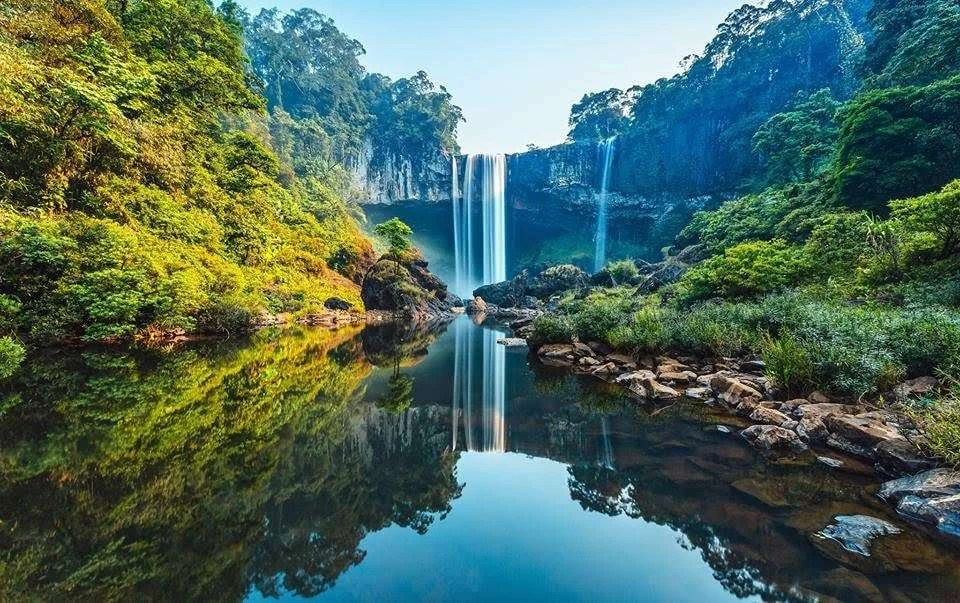
Today, through scientific surveys by the Vietnam Institute of Cultural Heritage & History and widespread recognition in travel media, K50 Waterfall has risen to prominence as an invaluable natural and indigenous cultural heritage site for both Gia Lai Province and the nation as a whole. The seamless union of million-year-old geology, rich primeval forest biodiversity, and the epic cultural depth of the Central Highlands makes it an iconic destination for sustainable heritage tourism. This singular landmark not only beckons adventurous travelers eager to conquer untouched beauty, but also inspires a deep commitment to preserving the sacred gifts nurtured by nature and ancestors for generations to come.
Often hailed as the “roof” of the Central Highlands’ waterfall network, K50 Waterfall—also known as Hang En Waterfall—stands as an architectural marvel sculpted by nature’s unseen hand over millions of years. Nestled deep within the heart of Kon Chu Rang Nature Reserve, the cascade drops an impressive height of over 50 meters straight down a vertical rock face carpeted in emerald moss and ferns. From afar, the surging torrent looks like a colossal silver-white silk ribbon draped across a deep green wilderness canvas, filling the valley day and night with the thunderous symphony of the forest. What makes K50 Waterfall truly extraordinary is the cavernous subterranean grotto concealed directly behind its rushing curtain of water. Thousands of wild swiftlets nest here, darting through the mist to create an ethereal, untamed spectacle that leaves every visitor in awe of nature’s artistry.
To capture both the grandeur and poetic charm of this natural masterpiece, seasoned photographers consistently recommend two prime vantage points. The first unmissable angle is from the foot of the gorge directly facing the waterfall. Here, a wide-angle lens takes in the full towering height of the cascade plunging into the turquoise pool below, framed by hexagonal basalt columns stacked like a deliberate work of sculptural architecture. The second standout photo spot lies deep inside the arched cavern of Hang En, where you can aim your camera outward through the roaring curtain of water. The dramatic contrast between the shadowy interior of the cave and the radiant daylight outside creates striking artistic depth infused with a true spirit of adventure.
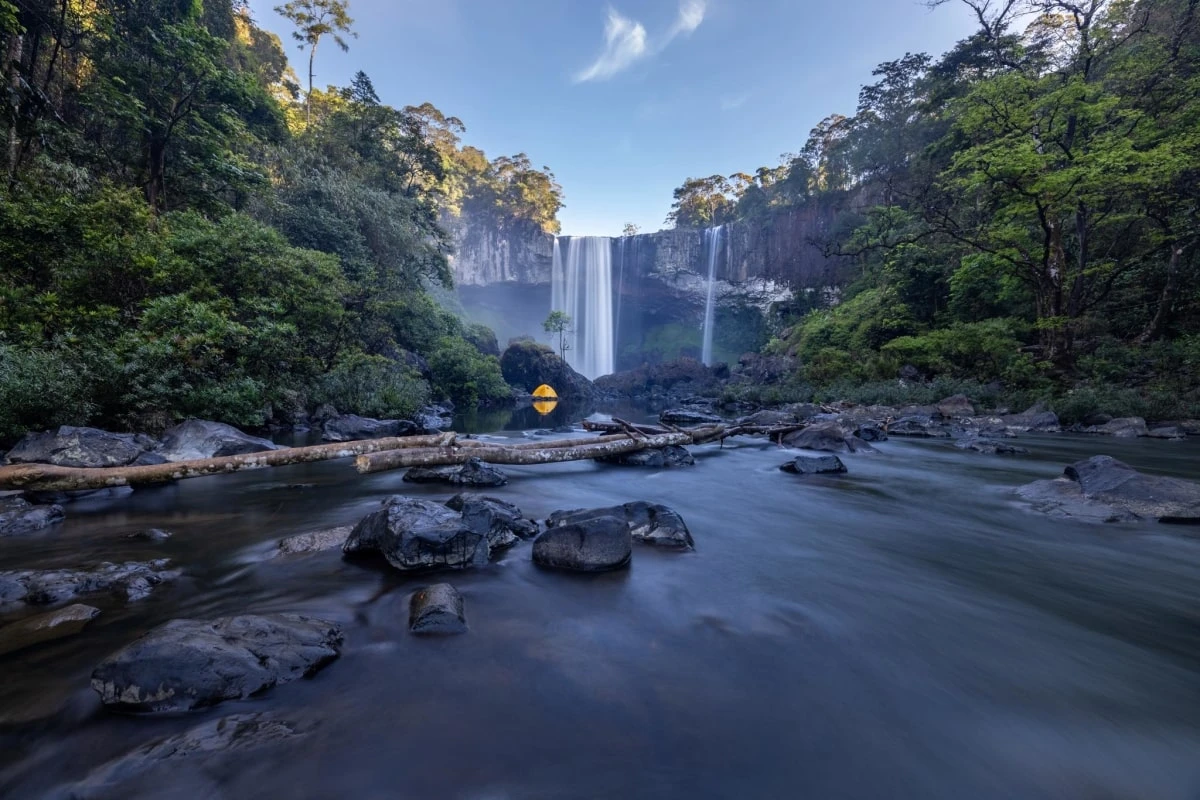
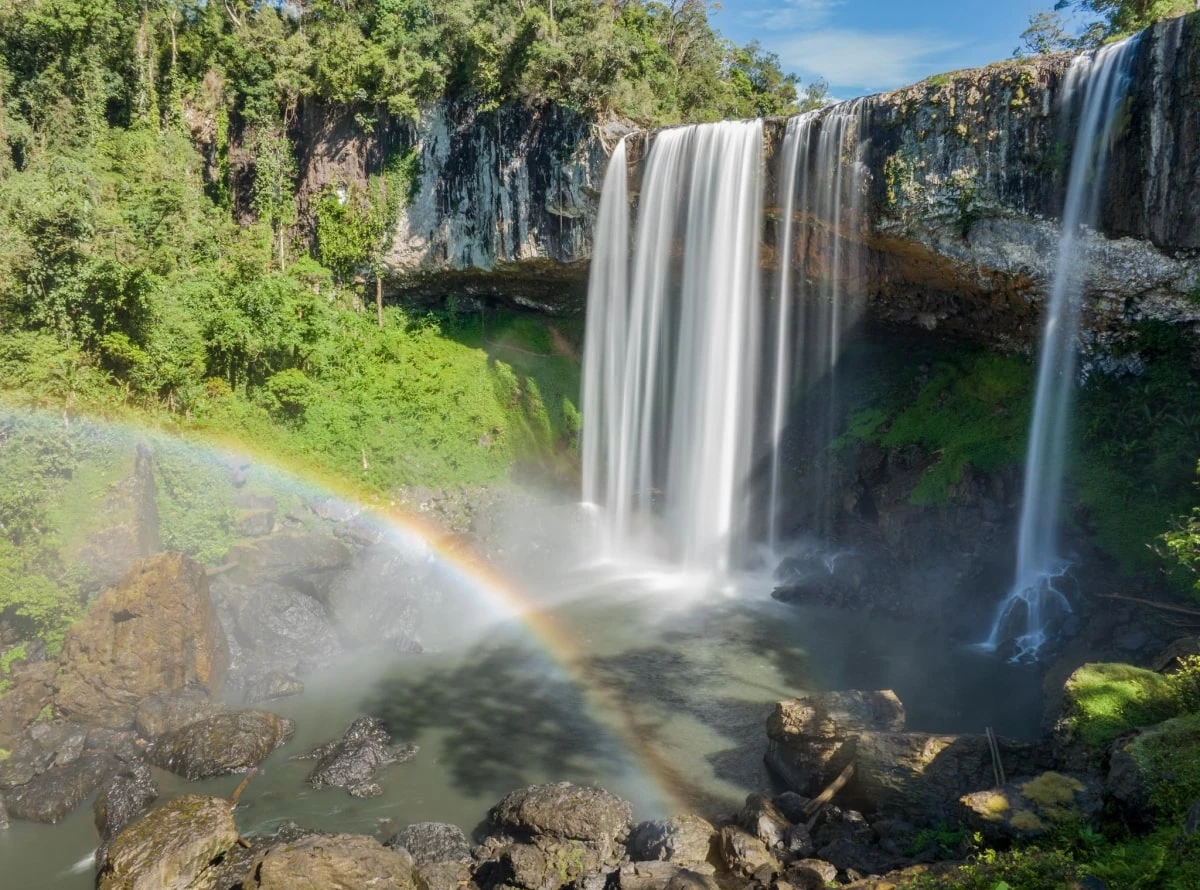
Veteran photographers agree that the ideal lighting window for shooting at K50 Waterfall is between 9:00 AM and 11:00 AM. During these hours, high-angle sunlight shines directly into the gorge, piercing the fine mist to conjure shimmering rainbows right at the base of the falls. However, if you wish to experience the quiet, mystical serenity of the primeval jungle at its purest, early morning—while wisps of fog still linger across layers of damp forest leaves—offers the best conditions for capturing atmospheric frames far removed from the modern world.
Arriving at K50 Waterfall, or Hang En Waterfall, immediately draws travelers into a demanding yet deeply rewarding expedition through the heart of Kon Chu Rang Nature Reserve. The trail leading to the falls tests your endurance as it winds beneath dense, ancient forest canopies, over steep inclines, and across damp carpets of fallen leaves rich with earthy woodland scents. Any fatigue from the long trek quickly vanishes, replaced by sheer awe as the roar of water plunging from more than 50 meters echoes through the valley. Suddenly, a breathtaking natural wonder unfolds before your eyes: foaming white water pouring over mossy rock ledges like a flowing silk banner against mysterious jet-black basalt cliffs.
Standing before this monumental panorama, words feel inadequate against nature’s raw, unaltered beauty. Cool mist carried on crisp mountain breezes washes over your face, refreshing both body and spirit. Venturing deeper toward the heart of the cascade offers a once-in-a-lifetime experience as you step into Hang En, hidden behind the falling veil of water. Tens of thousands of swiftlets wheel around the cavern walls, creating an enchanting, otherworldly sanctuary. Looking outward from inside the cave, the waterfall appears through a dreamy filter of spray and natural light, inviting quiet introspection—reminding you how small humanity is beside nature’s grandeur while healing the soul with pure stillness.
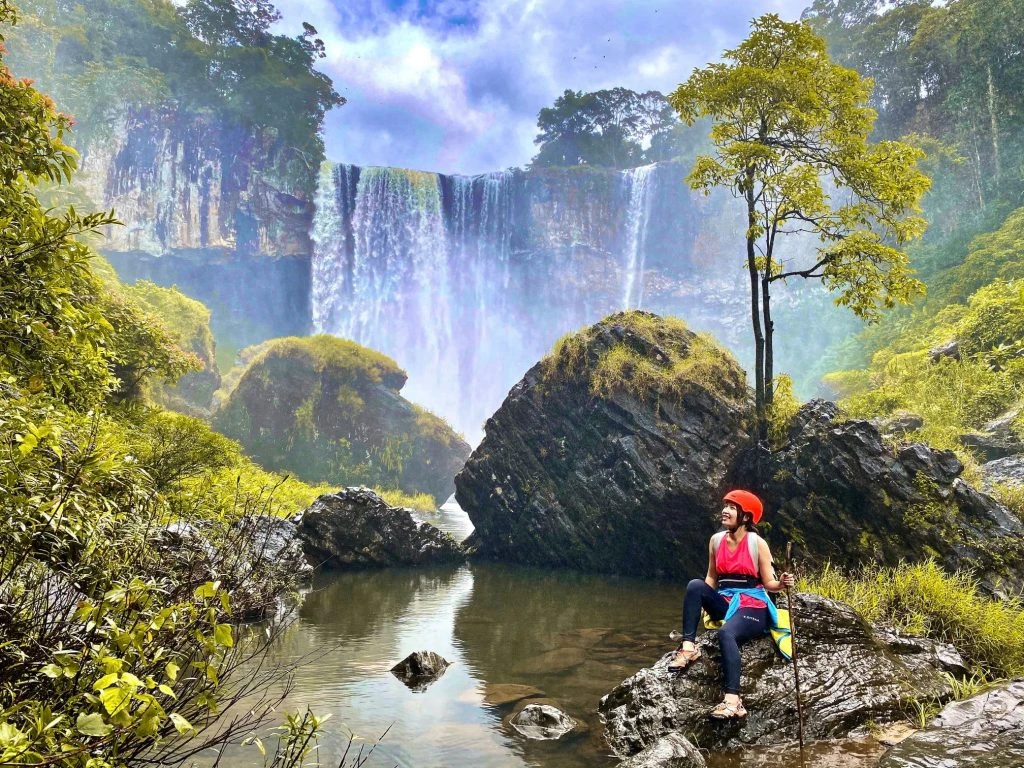
Beyond its awe-inspiring landscapes, an expedition to K50 Waterfall also invites travelers to immerse themselves in the vibrant indigenous culture of the Bahnar people. Around flickering campfires in hillside villages at the foot of the mountains, visitors can listen to village elders recite ancient forest epics, admire rhythmic traditional xoang dances, and savor celebrated Central Highlands specialties. Highlights include bamboo-tube grilled chicken fragrant with wild forest pepper, sweet sticky bamboo rice (com lam) cooked from upland rice, stir-fried cassava leaves with male papaya blossoms offering a gentle bitterness followed by a lingering sweetness, and aromatic jars of traditional ruou can (fermented rice wine sipped through bamboo straws) shared in warm fellowship. These authentic experiences delight both eye and palate while leaving every visitor with a heartfelt connection to the sunlit, windswept, yet endlessly hospitable land and people of Gia Lai.
K50 Waterfall—majestically known as Hang En Waterfall—ranks among Vietnam’s most unspoiled natural masterpieces, tucked deep inside the core zone of Kon Chu Rang Nature Reserve on the border of Gia Lai and Binh Dinh provinces. To ensure your journey to this “sleeping princess of the forest” goes smoothly, safely, and memorably, consult the essential pocket guide below.
For the best time of year to visit, the dry season (running annually from March to September) is considered ideal. Dry weather, minimal rainfall, and bright sunshine make trekking through the dense forest far easier, while sunbeams piercing the silver spray create dazzling rainbows at the foot of the falls. Conversely, during the rainy season from October to February, although the waterfall surges at peak volume, jungle trails become slick, treacherous, and carry significantly higher safety risks.
Because K50 Waterfall lies within a strictly protected nature reserve, access follows the forest management board’s operating hours—typically opening at 7:00 AM and requiring all visitors to exit the forest before 5:00 PM for safety. Regarding admission, the Kon Chu Rang Nature Reserve Management Board collects standard state-regulated forest entrance and environmental service fees, paired with the mandatory hiring of a local ranger or indigenous guide so trekkers do not lose their way in the vast old-growth wilderness.
The most efficient route begins in Pleiku City (Gia Lai) or An Khe Town, traveling by motorbike or high-clearance vehicle along the national highway to K’Bang District center, then continuing into Son Lang Commune to reach the Kon Chu Rang Ranger Station. From the ranger station, depending on fitness levels and weather conditions, visitors can ride specialized motorbikes across roughly ten kilometers of red-dirt track before trekking on foot beneath towering primeval trees down to the base of the waterfall.
Given the damp, slippery rocky terrain and the spiritual significance of the area to the indigenous Bahnar community, travelers should wear lightweight, flexible clothing, high-traction trekking shoes, and long-sleeved shirts for insect protection. Above all, treat the natural environment with utmost respect—never litter, avoid disturbing forest flora and fauna, and follow all instructions from forest rangers and local guides.
To enjoy a seamless getaway and experience the full beauty of K50 Waterfall without worrying about arranging transportation, admission permits, or itineraries, travelers can choose VDS Travel’s premium all-inclusive Gia Lai tour packages. Each itinerary is thoughtfully timed to bring you to top photo spots when the scenery is at its most radiant, accompanied by knowledgeable local guides well-versed in regional culture alongside top-tier hotel accommodations and dining standards.