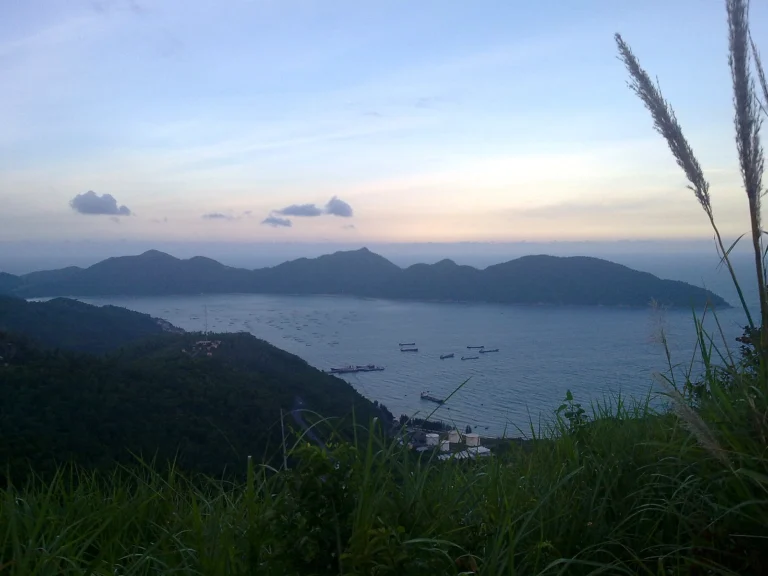
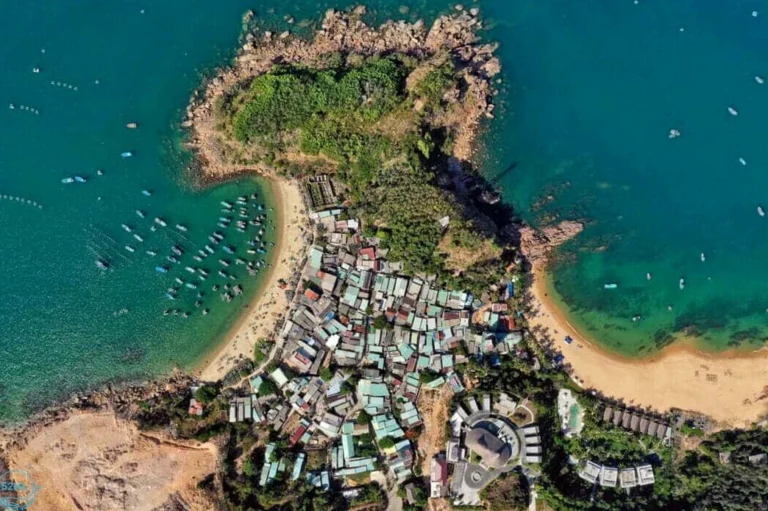
Standing tall at the easternmost mainland coordinates of the Indochinese Peninsula, Dai Lanh Lighthouse—also recorded in historical chronicles as Mui Dien—rises like a proud landmark of national sovereignty against the surging ocean waves. Located in Hoa Tam Commune, Dong Hoa Town, Phu Yen Province, this lighthouse commands a spur of the Ca Pass mountain range jutting straight into the sea, forming a magnificent feng shui setting “backed by mountains, facing the ocean.” Not only is it one of the first points on Vietnam’s S-shaped mainland to welcome the earliest rays of dawn, but it is also a breathtaking scenic wonder embracing the subtle harmony between deep emerald forests and the jade-green waters of legendary Vung Ro Bay. The name Dai Lanh is tied to the vast grandeur of heaven and earth, while the name Mui Dien commemorates the era when the French surveyed and established a large-scale maritime communications and signaling station here.
Looking back across the sweep of cultural history, this coastal headland has served since ancient times as a vital strategic bulwark for the nation. Geopolitically, from the Ho Dynasty and following its official incorporation into the map of Dai Viet in 1471 under Emperor Le Thanh Tong with the establishment of Quang Nam Province, Cape Dai Lanh stood as an enduring witness to our ancestors’ southward expansion and defense of maritime sovereignty. By the early modern era, recognizing the strategic importance of international shipping lanes through the East Sea, the Nguyen imperial court and French colonial authorities resolved to erect an enduring architectural beacon here. According to archival records from the French Directorate of Maritime Affairs and the Veritable Records of Dai Nam (Dai Nam Thuc Luc), construction on the current lighthouse tower began in 1890 during the reign of Emperor Thanh Thai, and its beam first shone out in 1897. Having weathered more than a century of vicissitudes, the structure still stands resolute against every tempest, fulfilling its sacred mission as an “all-seeing eye” guiding tens of thousands of vessels across distant seas.
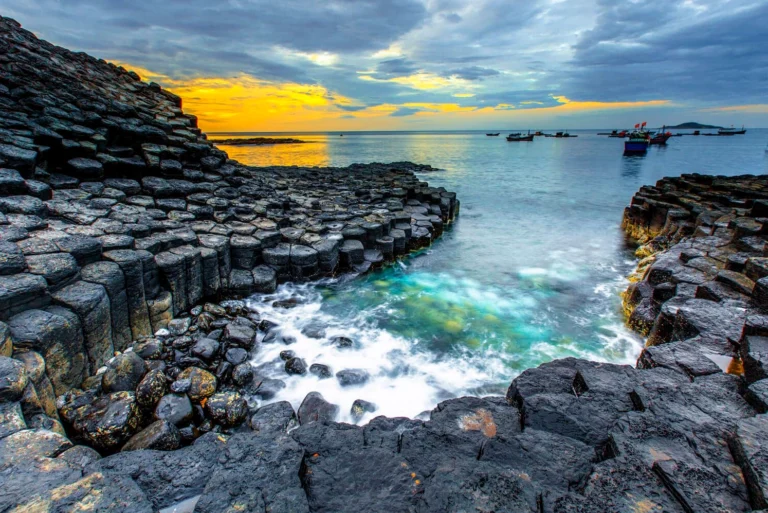
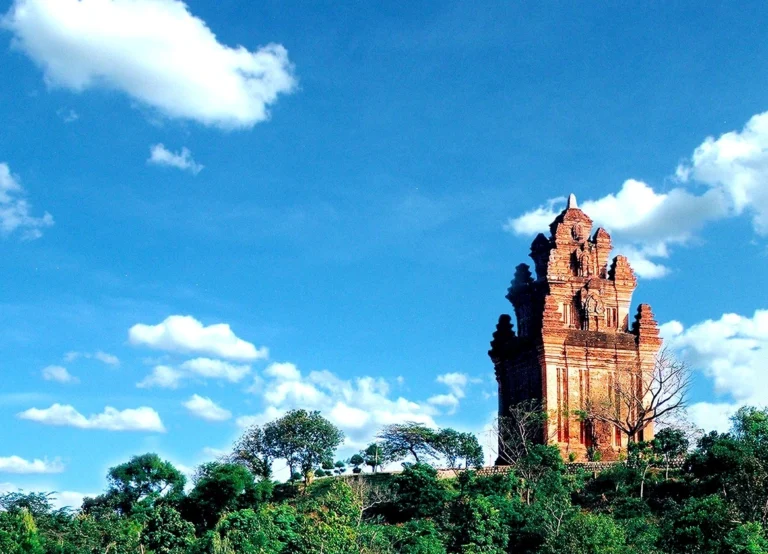
Beyond its maritime engineering significance, Dai Lanh is steeped in the sweat, blood, and indomitable spirit of generations of Vietnamese people. It honors the laborers at the foot of Mount Dai Lanh who exhausted their strength to build the tower across rugged terrain in the late 19th century, the silent lighthouse keepers who stood watch throughout protracted wars of resistance, and the heroic epic of the “Unnumbered Ships” along the Ho Chi Minh Trail at Sea in Vung Ro from 1964 to 1965. From a geological heritage perspective, the Dai Lanh massif boasts a pristine coastal ecosystem alongside dramatic sedimentary cliffs sculpted by millions of years of wind and waves. Today, in the eyes of cultural scholars and travel journalists, Dai Lanh Lighthouse is far more than a celebrated photo check-in spot; it has become a living museum of maritime history and a sacred symbol of patriotism and national pride where land meets the open sea.
Dai Lanh Lighthouse is not merely a navigational beacon, but an architectural masterpiece infused with late-19th-century French design, blending seamlessly into the rugged coastal terrain of central Vietnam. Rising 26.5 meters above ground atop Mui Dien Peak, the tower stands like a steadfast sentinel overlooking the vast ocean. Its overall structure follows classical European lines marked by refined, sturdy proportions. The visual centerpiece lies in the striking contrast between the pure white of its weather-kissed walls and the deep blue of sky and sea. Arched windows, decorative moldings running vertically along the shaft, and a rare ironwood spiral staircase inside remain remarkably preserved, creating an enchanting, nostalgic atmosphere.
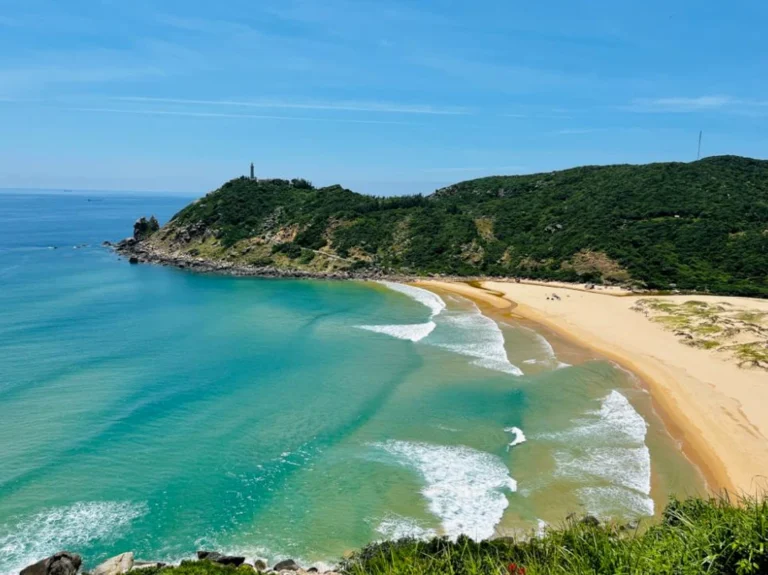
Geographers regard Dai Lanh Lighthouse’s setting as one of the most auspicious locations in Vietnam. Perched on a rocky promontory jutting into the sea where towering forested mountains meet endlessly breaking waves, the tower rewards visitors at its summit with sweeping panoramic views over Bai Mon—a crescent-shaped cove with crystal-clear jade waters nestled quietly at the foot of the mountain. The interplay between sturdy human architecture and untamed natural grandeur composes a visual symphony in which every angle forms a living work of art capable of challenging even the most discerning photographer’s lens.
To capture “million-view” moments here, professional photographers typically favor two classic camera angles. The first is taken from the base looking upward toward the summit of the tower, capturing the full majesty of the lighthouse soaring against a deep blue sky—a perspective that highlights human smallness beside monumental architecture and nature. The second is shot from the top balcony of the lighthouse, gazing out over Bai Mon Beach and the open horizon. This vantage point is ideal for catching sunrise, when brilliant golden rays begin tinting the sea rose-pink, marking the very first moments of a new day on mainland Vietnam.

The finest lighting window for experiencing and photographing Dai Lanh is at sunrise, between 5:00 AM and 6:00 AM. As the sun peeks above the ocean horizon, soft, crystal-clear light accentuates every architectural detail of the lighthouse while casting a shimmering glow across the surface of Bai Mon. If you miss sunrise, sunset is an equally captivating alternative, when late-afternoon light casts long shadows across the cliffs, creating a contemplative, mysterious, and deeply poetic ambiance. Together, classical French engineering, a “backed by mountains, facing water” setting, and natural light make Dai Lanh an unmissable destination where every step touches history and every frame becomes a timeless photograph.
Setting foot on Cape Dai Lanh, your journey of discovery begins with eager steps along a winding trail hugging the mountainside. Moving deeper into the untamed landscape, the rhythmic murmur of waves crashing against the deep blue sea far below blends with brisk breezes rustling through the canopy to compose a wild ocean symphony. Climbing the hundreds of winding stone steps to the top of the lighthouse is more than a physical challenge—it is an emotional progression, carrying travelers step by step away from urban clamor into complete communion with sea and sky. Any fatigue quickly melts away, replaced by quiet anticipation as the historic lighthouse—with its ivory-white facade and dignified European lines—emerges against the azure sky.
Standing on the balcony of this historic tower and gazing out in all directions, anyone would be left speechless by the magnificent tableau nature has bestowed upon Phu Yen. Before you stretches an endless expanse of sea and sky, where the boundary between jade-green waters and clear heavens seems to dissolve into one. Directly below lies tranquil Bai Mon, its powdery white sand curving like a soft silk ribbon along the surf, while historic Vung Ro Bay shimmers in the distance with bobbing fishing boats. Welcoming the first sunbeams of dawn at one of mainland Vietnam’s easternmost points brings an extraordinarily serene and sacred spiritual energy—a moment when the mind grows still, deeply aware of human humility before nature’s grandeur while cherishing every heartbeat of time and history in this soulful coastal land.

Leaving the lighthouse behind, hands-on exploration continues with boat excursions across crystal-clear waters to discover the rich marine ecosystem surrounding the dramatic rocky headlands. Gliding gently over the waves, visitors can easily spot shimmering coral reefs beneath the surface or visit natural sea caves carved by centuries of surf. Local coastal culture also captivates travelers through the genuine warmth of fishermen who have devoted their lives to the lighthouse and its heroic tales of the Unnumbered Ships of yesteryear. The experience grows even more memorable when savoring celebrated Vung Ro specialties such as rich, savory ocean tuna eyes, sweet grilled lobster fresh from the sea, and daily-caught seafood. Every flavor, sound, and moment of harmony with nature at Dai Lanh Lighthouse lingers in memory as a vivid, unforgettable impression of an easternmost cape that is both proud and deeply welcoming.
Dai Lanh Lighthouse is not only a historic maritime engineering landmark, but also an iconic destination for travelers drawn to the unspoiled beauty of central Vietnam. To ensure your journey to conquering the “Easternmost Point” is seamless and rewarding, keep the following essential details in mind.
Regarding visiting hours, the lighthouse sightseeing area is generally open to visitors from early morning until late afternoon, specifically from 7:30 AM to 5:30 PM daily. Knowing this schedule helps you plan ahead—especially if you wish to watch the sunrise at Bai Mon right at the base of the mountain before hiking up to the lighthouse tower. As for admission costs, management currently charges a standard entrance fee of 20,000 VND per adult, contributing directly to heritage preservation and landscape maintenance—a modest and worthwhile investment to experience this remarkable historical site.

To reach Dai Lanh Lighthouse, the best modes of transport are motorbike or private car. From central Tuy Hoa City, head south along National Highway 1A, then turn onto the Ca Pass coastal road—widely hailed as one of Vietnam’s most scenic coastal drives, flanked by towering cliffs on one side and the deep blue ocean on the other. If arriving from Khanh Hoa Province to the south, pass through the Ca Pass Tunnel and turn toward Vung Ro – Hoa Tam. The road is smooth and accessible, though you should check your brakes and drive carefully due to steep gradients and sharp hairpin turns typical of coastal mountain passes.
In terms of attire and etiquette, given its status as both a historical monument and a rocky coastal mountain site, opt for neat, active clothing and athletic shoes with good grip for climbing the stairs to the summit. While there is no strict dress code as at temples or pagodas, choosing modest, respectful clothing demonstrates consideration for the heritage site and its surroundings. Be sure to bring drinking water, a hat, and sunscreen to stay protected against the bright coastal sun and brisk sea winds.
The ideal time of year to visit Dai Lanh Lighthouse is during the dry season, which runs from January through August each year. During these months, skies are typically clear blue and the sea is calm, offering optimal conditions for photography and panoramic views over Vung Ro Bay from above. If you prefer quiet contemplation, avoid peak national holidays so you can fully enjoy the open expanse, listen to waves lapping against the cliffs below, and breathe in the living history of a lighthouse that has stood resolute across generations. Please refrain from littering and follow all staff guidelines to help preserve the pristine beauty of this landmark for future generations.
To enjoy a seamless getaway and take in the full beauty of Dai Lanh Lighthouse without worrying about arranging transportation, attraction tickets, or daily itineraries, travelers can choose VDS Travel’s premium all-inclusive Phu Yen tour packages. Every itinerary is thoughtfully timed for photo check-ins when the scenery is at its most radiant, accompanied by knowledgeable local guides well versed in regional culture alongside top-tier hotel and dining standards.