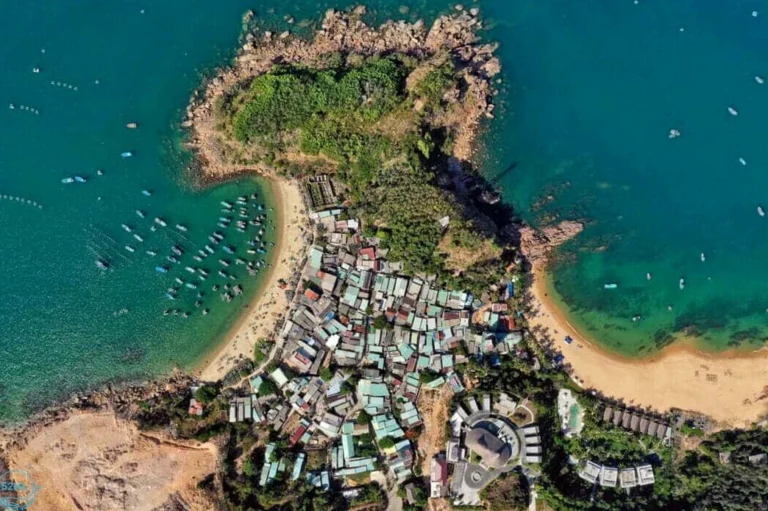
Nestled quietly yet majestically at coordinates 12°52′ North latitude and 109°24′ East longitude, Vung Ro Bay (Hoa Xuan Nam Commune, Dong Hoa Town, Phu Yen Province) emerges as a geological masterpiece of nature and a revered historic landmark imbued with the sacred spirit of Vietnam’s mountains and rivers. From a strategic geographical perspective, Vung Ro boasts an unrivaled position characterized by the classic feng shui formation of “leaning against the mountains, facing the sea.” The bay is completely embraced by three of the tallest, most imposing peaks along the South Central Coast: the treacherous Ca Pass towering to the north, the majestic Da Bia Peak rising to the east, and the massive Hon Ba Mountain standing guard to the west. The shelter provided by this triad of great mountain ranges forms an entirely wind-sheltered bay—acting like a colossal “energy pocket” that nurtures and converges the spiritual essence of both the mighty Truong Son range and the vast ocean, making it one of the safest natural harbors for vessels seeking refuge across the centuries.
Viewed through the lens of cultural history and the nation’s southward expansion, Vung Ro is tied to glorious milestones dating back to the dawn of Dai Viet. According to archival research by the Vietnam Institute of Heritage & Cultural History, the historical imprint of this land was officially recorded in 1471 during the Early Le Dynasty. Following King Le Thanh Tong’s historic southern campaign, this coastal strip was formally integrated into the map of Dai Viet, and Vung Ro immediately assumed the role of a vital maritime gateway—a strategic anchorage for fleets transporting provisions and military supplies on their southward journey. Later, during the Tay Son era, the bay continued its historic mission as a critical logistics base for the Tay Son insurgent army during their campaigns to capture Quy Nhon Citadel and advance northward.
Beyond its military and commercial port significance, Vung Ro is steeped in deep spiritual culture and folk legend through the tale of the “Da Bia Deity” (Thach Bi Son). In the collective consciousness of local residents for generations—reflecting the cultural convergence between the Viet people and the ancient Champa civilization—that soaring peak gazing out over the open sea stands as a guardian symbol of the frontier, a territorial marker planted by forebears in sacred stone. The harmony between pristine natural landscapes and ancient relics and inscriptions—most notably the stone stele commissioned by King Le Thanh Tong in 1471 atop Da Bia Peak, the oldest surviving epigraph in Phu Yen Province—has endowed Vung Ro with the tranquil, solemn beauty of a true heritage land.
Through the tides of time, Vung Ro’s significance was once again etched into modern history when it served as a legendary landing point for the “No-Number Ships” along the Ho Chi Minh Trail at Sea between 1964 and 1965. The heroic shipwrecks resting beneath the peaceful bay now stand as eternal “living relics,” bearing witness to the indomitable will and yearning for independence and freedom of the Vietnamese people. Owing to these comprehensive geographical, historical, and archaeological values, on June 18, 1997, the Ministry of Culture and Information classified Vung Ro as a National Historical Relic, and in 2020, the Prime Minister officially honored it as a Special National Relic. Today, Vung Ro is far more than a breathtaking travel destination in Phu Yen; it is a living museum embodying the sacred soul of Vietnam’s land and waters.
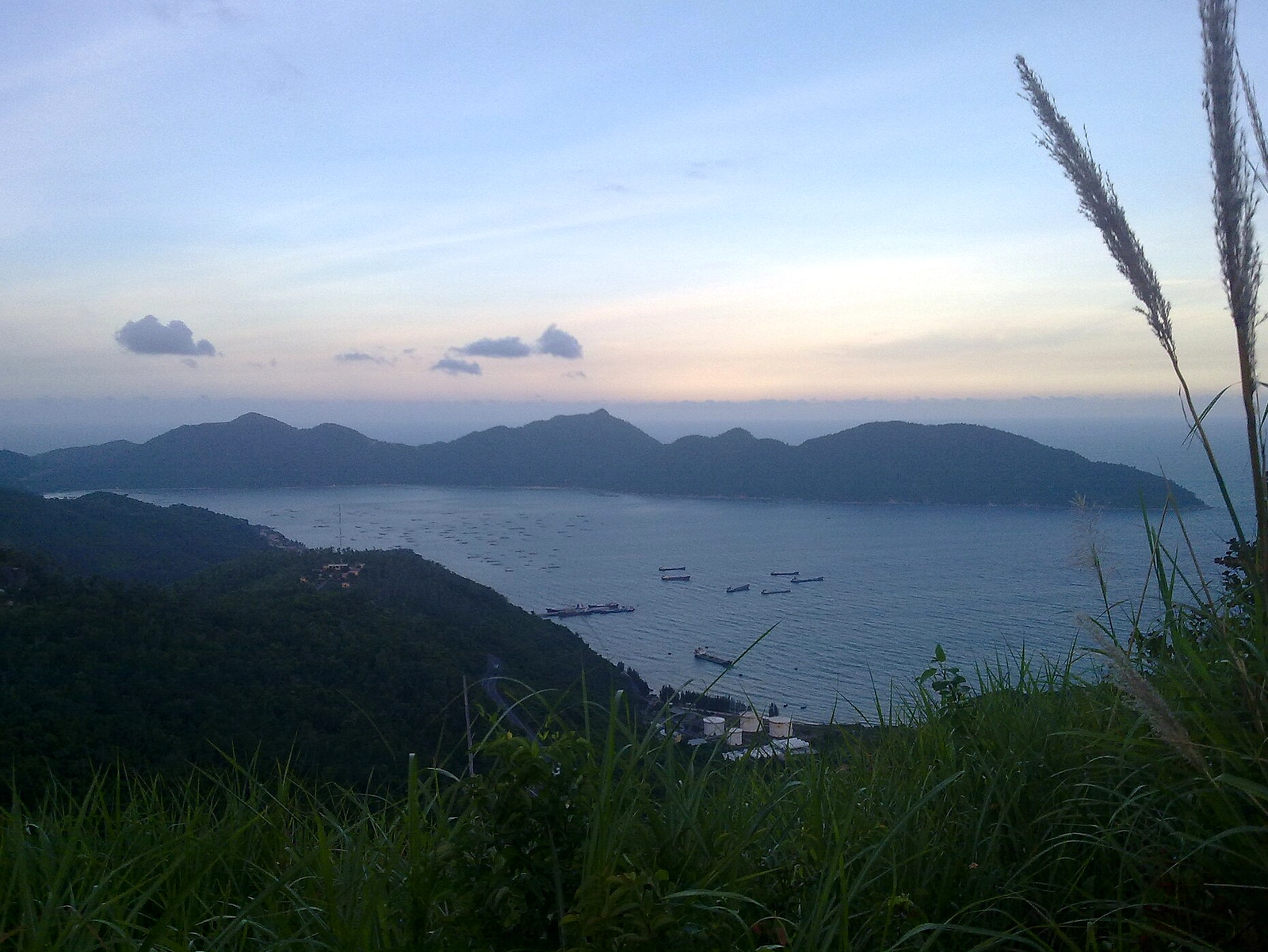
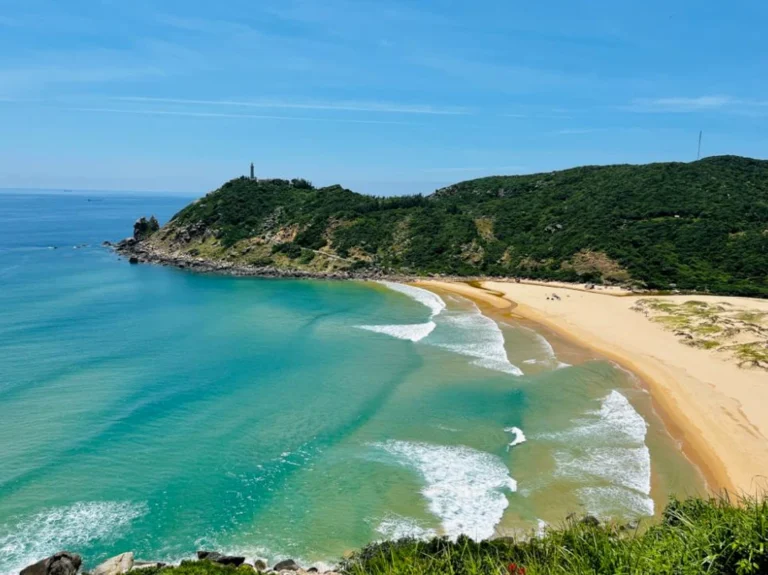
Vung Ro Bay is not merely a tranquil historical landmark, but also a sculptural marvel of creation where nature showcases its grandeur through sharp, dramatic geological contours. Seen from above, Vung Ro resembles a colossal basin ringed by towering granite massifs that form an impregnable natural rampart. The interplay between the deep emerald green of the Truong Son forests and the jade-turquoise hues of the sea creates a mesmerizing visual palette. Sheer cliffs, sculpted over millions of years by wind and waves, have taken on fantastical shapes like abstract natural monuments standing tall and casting their reflections onto the mirror-still water.
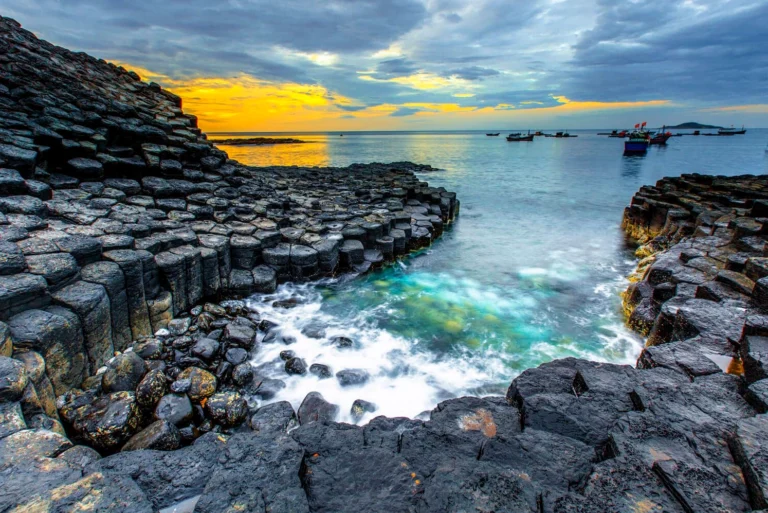
The most awe-inspiring natural monument here is Da Bia Peak (Thach Bi Son). More than just a mountain, it is a naturally formed sovereignty landmark rising over 700 meters above sea level. From afar, the massive monolith crowning the summit resembles a sword thrusting straight into the clouds, attesting to the majesty of this frontier land. At the foot of the mountain, ribbons of fine white sand curve gracefully along the shoreline, forming a striking contrast against glossy, razor-sharp black rock formations. This blend of soft sandy coves and rugged mountain wilderness creates a harmonious landscape where every angle breathes the essence of the ocean and the quiet dignity of history.
For photography enthusiasts and intrepid travelers, Vung Ro offers “million-dollar view” vantage points that no visitor should miss. The first angle, most highly acclaimed by professionals, looks down over the entire bay from the winding Ca Pass road. At dawn (between 5:30 AM and 6:30 AM), as the first rays of sunlight pierce through the mountain crevices, the surface of the bay glows as if gilded in gold. The soft morning light accentuates the contrast between the turquoise waters and the silvery-gray mountain ranges encircling them, creating a living ink-wash painting. It is the ideal spot to capture the sweeping expanse of this auspicious feng shui “energy pocket.”
The second vantage point lies at the old pier area, where remnants of the legendary No-Number Ships are preserved. The finest time to shoot here is at sunset (from 5:00 PM to 6:00 PM). As the sun dips behind the Hon Ba range, the sky transforms into dreamy shades of violet and rose, reflecting off the calm surface of the water. Framing anchored fishing boats alongside historic shipwrecks creates a poignant visual dialogue between past and present. Despite bearing the patina of time, the pier’s weathered structure retains a sturdy grace, lending depth and narrative power to every frame.
Finally, no visit is complete without capturing the view from Da Bia Peak looking out toward the East Sea. This vantage point rewards those who crave vastness and grandeur. On clear days, visibility stretches across the entire Phu Yen coastline, where the horizon between sky and ocean dissolves. Midday or early afternoon sunlight illuminates the crystal clarity of the water, revealing coral reefs shimmering beneath the surface like precious gemstones. With its seamless union of auspicious geography, natural architecture, and historical legacy, Vung Ro is truly an irreplaceable jewel on Vietnam’s heritage tourism map.
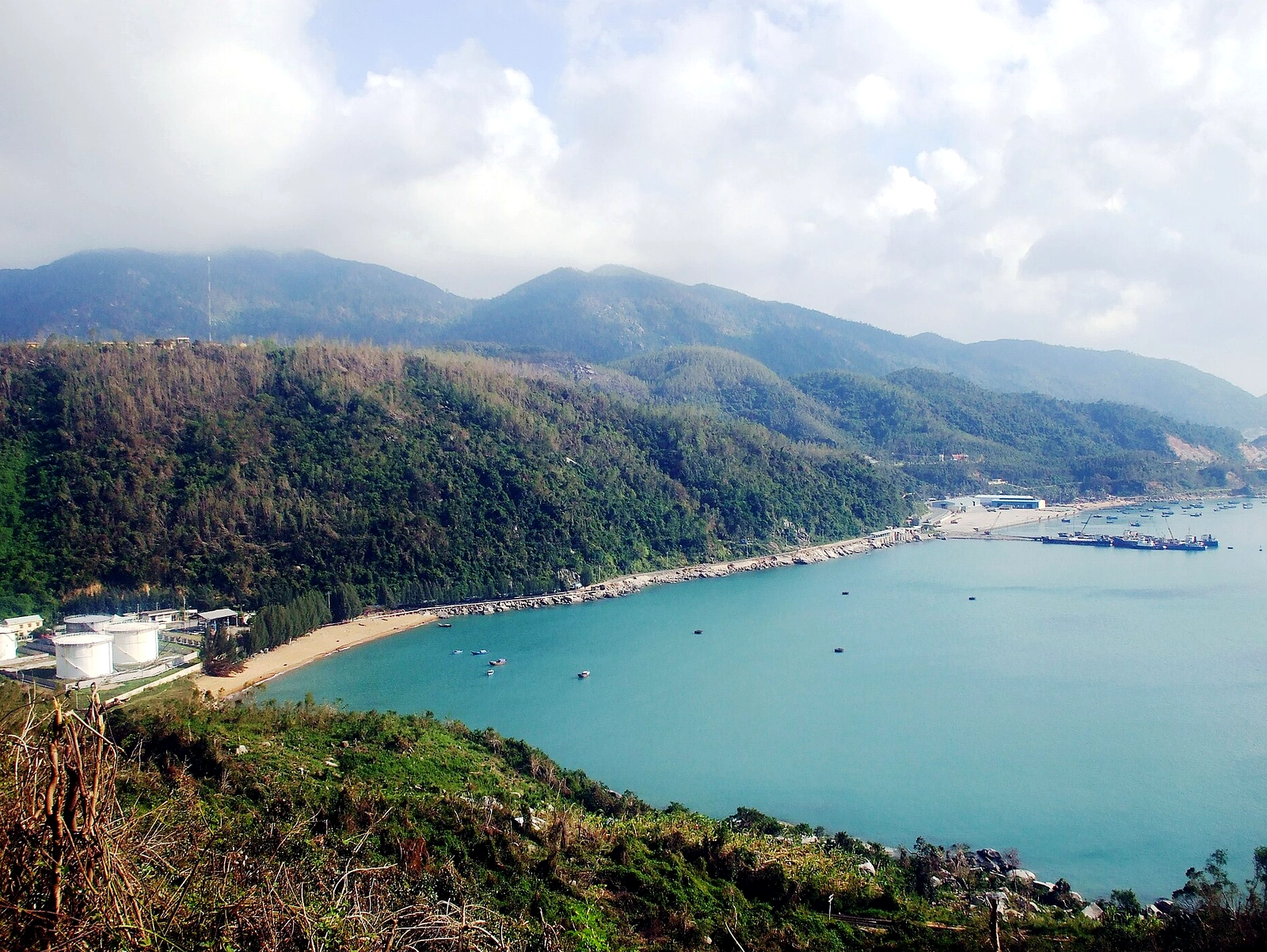
Stepping into Vung Ro Bay (Phu Yen), travelers are immediately drawn into a wondrous world where untamed nature merges with the currents of heroic history. The foremost and most rewarding experience is the trek to conquer majestic Da Bia Peak (Thach Bi Son). Walking beneath the cool canopy of ancient forests and breathing in crisp air scented with mountain woodland and sea breeze not only invigorates the body, but also awakens a palpable sense of reverence for heaven and earth. Standing before the ancient stele inscribed during King Le Thanh Tong’s reign in 1471 and touching the moss-covered stones that have witnessed centuries of history, a wave of awe and pride swells in the chest—a deeply moving moment at the sacred sovereignty landmark where waves have crashed against the frontier for a thousand years.
Descending from the mossy stone steps to the water’s edge, a boat excursion across Vung Ro Bay unveils a breathtaking natural canvas. Gliding smoothly across crystal-clear, jade-green waters, visitors can fully appreciate the bay’s prized “mountain-backed, sea-facing” setting. Surrounded on all sides by imposing Ca Pass, Da Bia Peak, and Hon Ba Mountain, Vung Ro feels like a vast, tranquil, wind-sheltered sanctuary. Gazing down into the deep water, the submerged silhouettes of the legendary No-Number Ships evoke an era of valiant resistance, stirring quiet respect and boundless gratitude for past generations.
The highlight of the journey is paying spiritual homage at local cultural sites while taking in panoramic views of the bay from above. Looking out across the horizon, the vista opens wide with dozens of fishing boats bobbing on the waves, thriving floating seafood farms, and ribbons of powdery white sand curving along the shoreline. The cultural fusion between the Viet community and ancient Champa heritage woven into local legends of the “Da Bia Deity” adds even greater spiritual depth to the region. Visitors feel transported to a realm of serenity where time seems to stand still, cleansing the soul and uniting it with the vital energy of ancient forests and the boundless ocean.
Concluding your Vung Ro adventure by savoring its renowned local cuisine is the ultimate finishing touch for an unforgettable trip. Seated right aboard floating raft restaurants gently swaying on the waves, you can indulge in the extraordinary freshness of local seafood—sweet chargrilled lobster, refreshing lime-cured raw oysters, rich cobia hotpot, and fragrant, meaty crabs and swimming crabs. The deep sweetness of the sea blends with a touch of local spice, best enjoyed alongside a warm glass of traditional “Xu Nau” rice liquor that melts away the fatigue of everyday life. Vung Ro leaves a lasting impression not only through its jaw-dropping scenery and proud history, but also through the rustic yet refined flavors of its vibrant coastal culture.
Vung Ro Bay is both a proud historical site and a dramatic natural destination, requiring thoughtful preparation to ensure a seamless and fulfilling visit. Regarding operating hours, the relic complex and beaches at Vung Ro welcome visitors every day of the week from early morning until late afternoon. For the No-Number Ships Historical Relic site, travelers are advised to visit during standard administrative hours to best explore the exhibited documents and artifacts. Admission to this Special National Historical Relic is currently completely free, making it accessible for both domestic visitors and international travelers eager to learn about Vietnam’s national heritage.
To reach Vung Ro from downtown Tuy Hoa City, the most convenient options are a motorbike or private car, allowing you the freedom to pull over and admire the coastal scenery along the way. The seaside route from the city crosses Hung Vuong Bridge and follows the coastline toward Ca Pass—a truly scenic drive. Upon reaching the foot of Ca Pass, turn onto the access road leading down to the bay. Though winding, the road is smoothly paved and rewards travelers with sweeping overhead views of the deep blue bay—an unforgettable visual treat for anyone who loves exploratory travel.
The ideal time to visit is between March and August each year, when Vung Ro shines at its finest. During these months, skies are clear, the sea is calm, and the water is transparent right down to the seabed—ideal for kayaking, snorkeling among coral reefs, or dining on live seafood at floating raft restaurants. Travelers should avoid rough-sea days or the stormy rainy season to ensure complete safety on the water.
Because Vung Ro carries profound spiritual and historical significance—especially around Da Bia Peak—visitors should dress mindfully. When visiting historical monuments, temples, or sovereignty markers, opt for modest, respectful attire and avoid overly revealing clothing. For mountain trekking or exploring rocky coastal terrain, wear sturdy athletic shoes with good grip, along with a hat and sunscreen to protect against the Central Coast sun. Additionally, keeping the environment clean and refraining from littering on beaches and historical grounds is essential etiquette every traveler should uphold to preserve the bay’s pristine beauty.
Above all, bring a spirit of historical respect and the curiosity of a true traveler. Vung Ro is not merely a backdrop for photos, but a place to listen to whispers of the past harmonizing with the rhythm of modern life. A truly fulfilling journey is one where you return home not only with stunning photographs, but also with heartfelt pride in this sacred land where mountains meet the sea.
To enjoy a seamless holiday and experience the full splendor of Vung Ro Bay without the hassle of arranging transportation, booking tickets, or planning itineraries, travelers can choose VDS Travel’s premium all-inclusive Phu Yen tour packages. Every itinerary is thoughtfully timed so you arrive at each scenic spot when the landscape is at its most radiant, accompanied by knowledgeable local guides and top-tier hotel and dining standards.