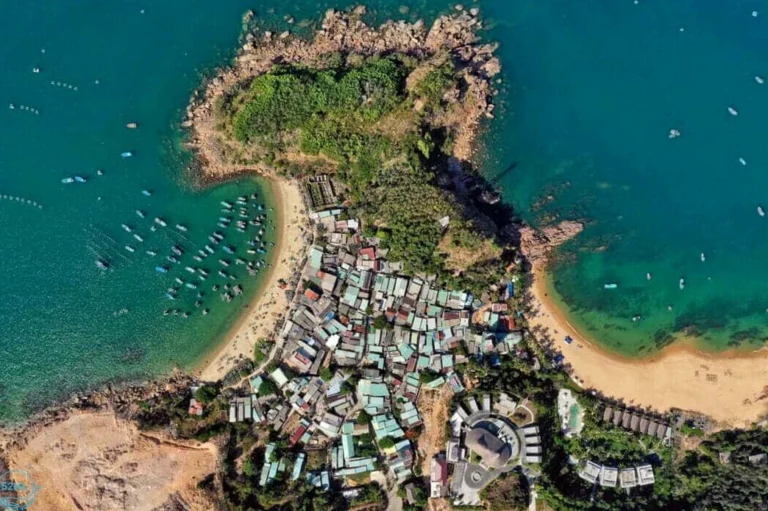
Proudly situated along the East Sea coast in An Ninh Dong commune, Tuy An district, Phu Yen province, Ghenh Da Dia is not only a unique geological coordinate but also a monumental testament to nature’s magnificent creation over millions of years. With its distinct geographical coordinates, this place is often likened to an “epic poem written in stone,” forged from fierce volcanic eruptions during the Quaternary period, approximately 30 to 50 million years ago. When the molten lava met the cold sea water, the sudden contraction created tens of thousands of hexagonal, pentagonal, and square basalt columns stacked tightly together like giant stacks of plates arranged by nature itself. This rare geological structure has turned Ghenh Da Dia into one of Vietnam’s most precious geological heritages, honored by scientists and international media as a singular natural wonder.
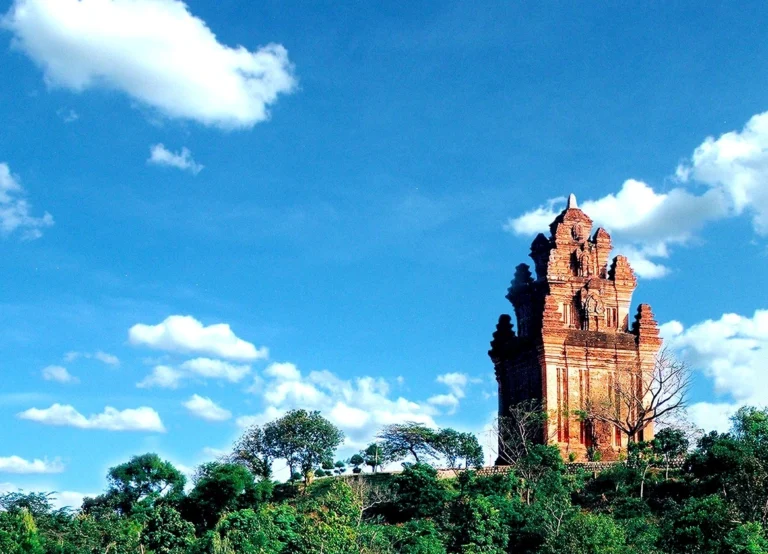
From a historical and cultural perspective, the land of Tuy An—which embraces Ghenh Da Dia—was once part of the Ayaru principality within the ancient Champa kingdom. Cham cultural imprints scattered around O Loan lagoon and surrounding areas indicate that since ancient times, our ancestors early recognized and revered this mystical beauty as a sacred sanctuary, where heaven, earth, and ocean converge. By the Dai Viet period, especially from 1611 when Lord Nguyen Hoang established Phu Yen prefecture, this land began to bear the pioneering footsteps of past generations. In official historical records such as Dai Nam thuc luc or Dai Nam nhat thong chi, the rugged terrain and magnificent beauty of Phu Yen’s coastal rocky cliffs were meticulously recorded by Nguyen dynasty scholars with profound admiration. Although the name “Ghenh Da Dia” (Plate Reef) is a folk designation, it fully reflects the aesthetic perspective of the Vietnamese people, transforming inanimate rock blocks into a cultural symbol closely tied to the coastal community’s daily life.
The land of Tuy An is also a convergence ground for the spiritual energy of many notable historical figures and patriotic scholars. Among them is Luong Van Chanh, the deified pioneer who opened up the land of Phu Yen, laying the foundation for its stability and development under the Nguyen lords. There is also the patriotic scholar Le Thanh Phuong, the soul of the Can Vuong movement in Phu Yen, who drew upon his homeland’s resilient spirit as a pillar for his fervent patriotism. These figures are not only tied to administrative history but are also woven into the cultural flow, making Ghenh Da Dia not merely a geological scenic spot but a “red address” of national pride. Literati and poets visiting the Tuy An – O Loan lagoon area in the past, standing before cliffs resembling stacked plates, could not help but marvel at nature’s grandeur, leaving behind romantic imperial poems that deepened the cultural dimensions of this heritage.
Today, Ghenh Da Dia has been recognized by heritage management authorities as a Special National Monument, becoming an irreplaceable destination on Vietnam’s heritage tourism map. The combination of pristine geological beauty, historical values spanning from the Champa to the Nguyen eras, and stories of past figures has created a unique coordinate for Phu Yen. Ghenh Da Dia is not only a scenic spot to behold, but also a living natural history museum where every visiting traveler can feel the heartbeat of time and the breath of local culture, where basalt columns proudly reach out day and night to meet the waves, recounting the story of a land blessed with extraordinary terrain and brilliant minds.
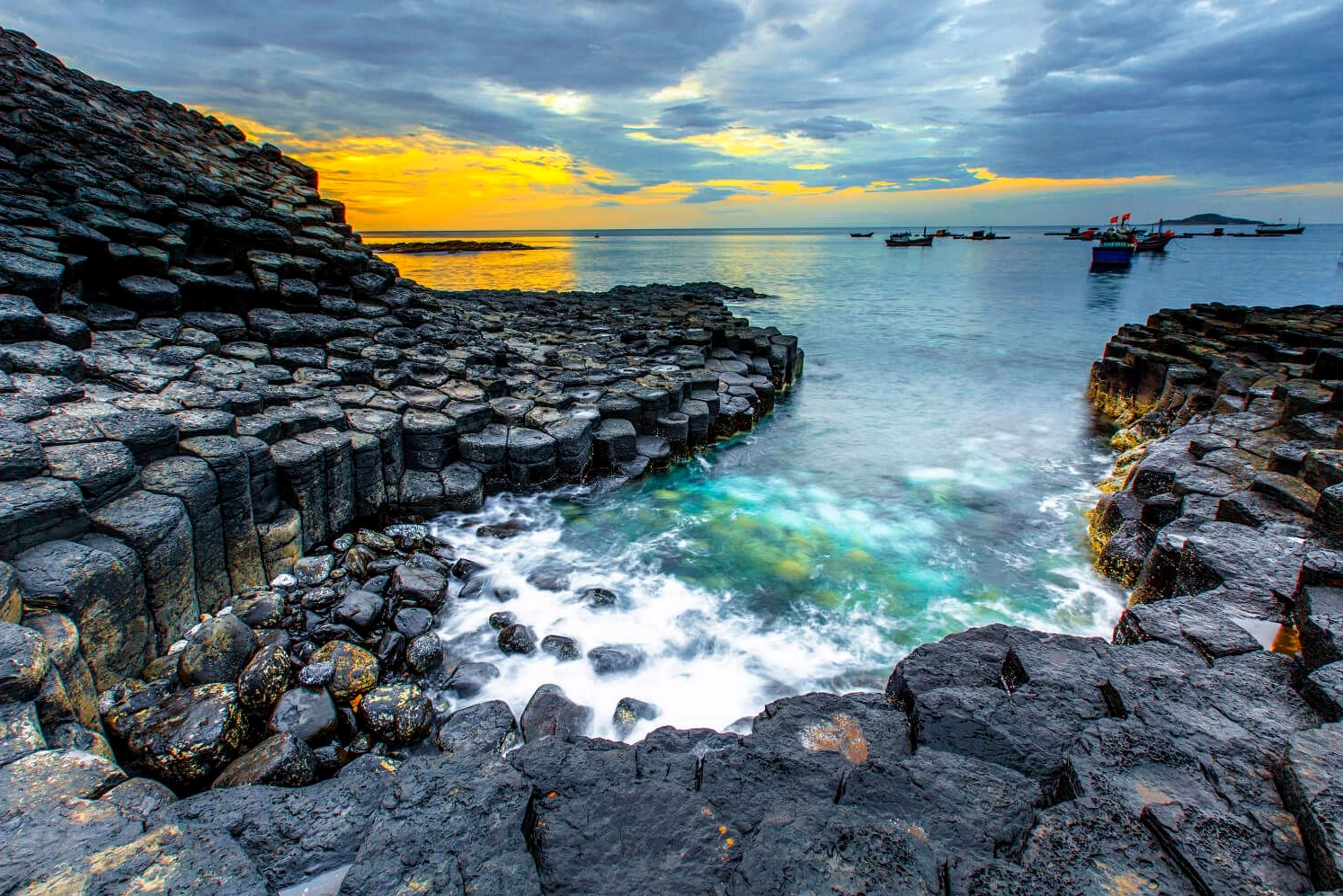
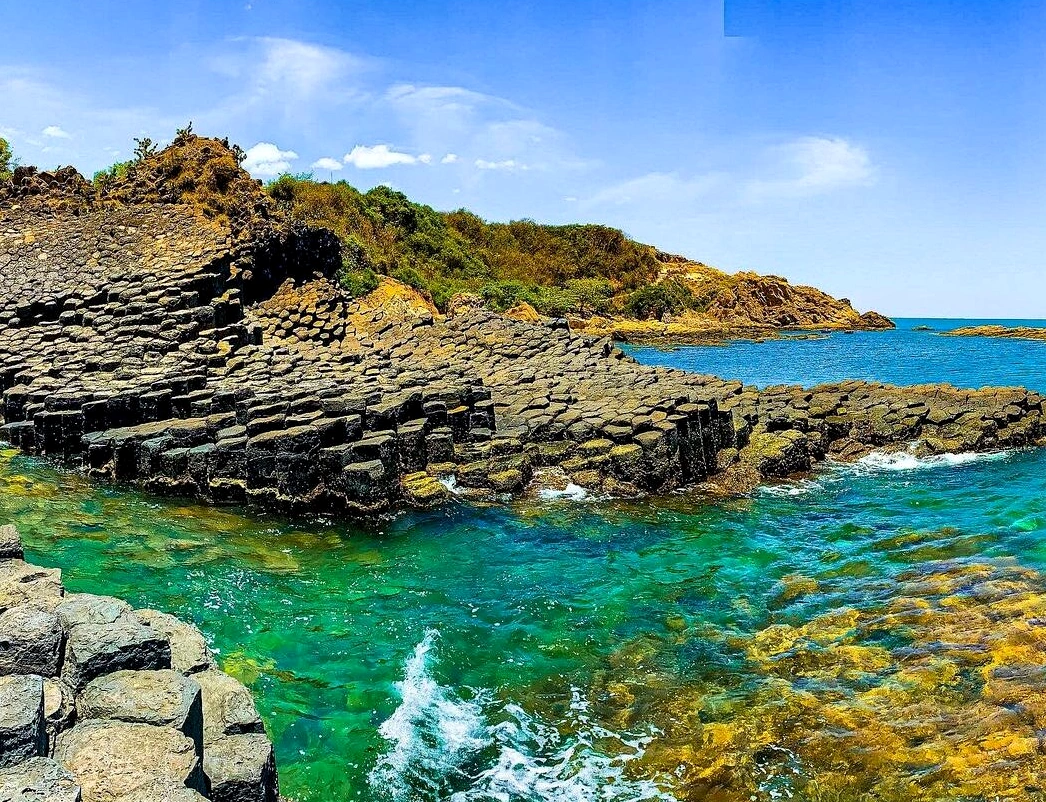
Viewed from above, Ghenh Da Dia emerges like a giant carpet woven by nature with tens of thousands of hexagonal and pentagonal basalt blocks fitted together in a wondrous fashion. Through millions of years of erosion by sea waves, ocean winds, and time, these stone columns have not been buried; on the contrary, their intricate sculptural beauty has become increasingly pronounced. Each rock slab stands upright like giant stacks of plates meticulously arranged by an invisible hand, rising high with dignity in some places, while gently sloping down close to the deep blue sea surface in others. The astonishing uniformity of these natural geometric blocks creates a magnificent architectural structure, turning this site into a one-of-a-kind geological sculpture museum in the heart of the sun-drenched and windy Central region.
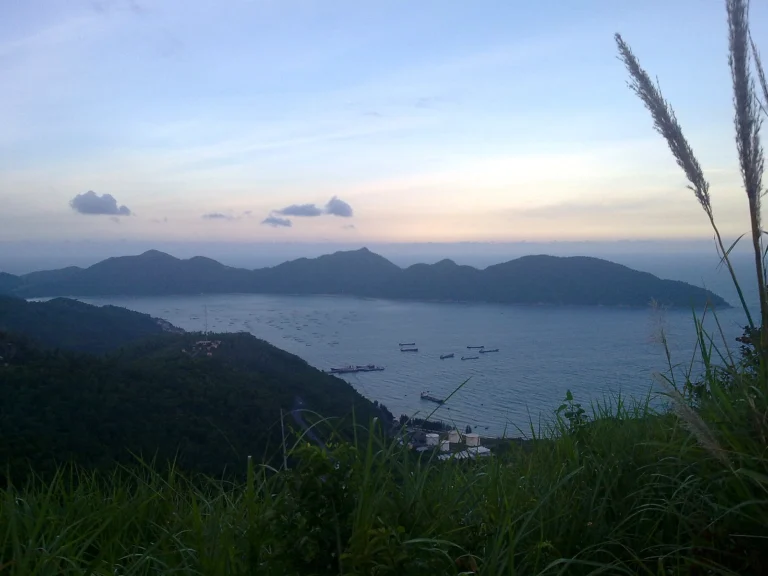
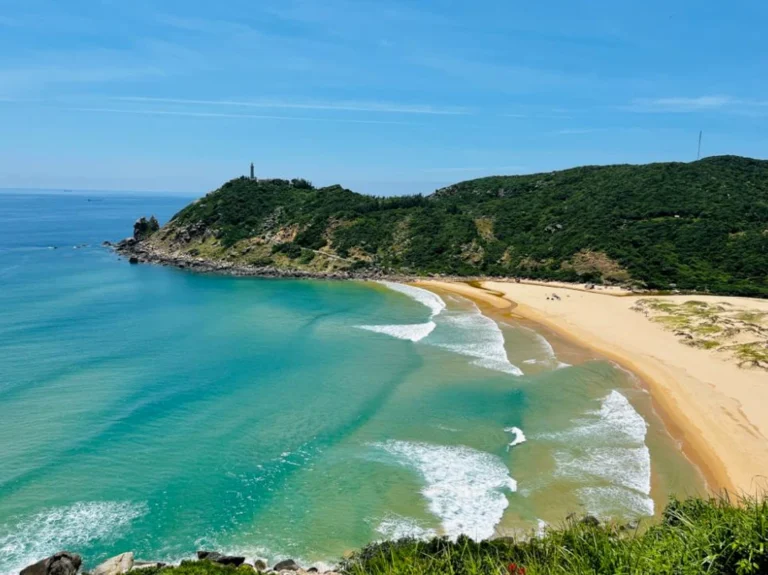
Enveloping this unique rock complex is the pristine and vibrant natural landscape of Phu Yen’s coastline. Sea waves crash against the shore year-round, casting white foam to embrace the bases of the dark stone columns, creating a harmonious symphony of sound and color. The sea water here is crystal clear, revealing the seabed below, reflecting dazzling golden sunlight into countless shimmering light rays. Standing before the boundless expanse of heaven, earth, and ocean, humans suddenly feel small before nature’s grandeur, while fully experiencing the peace and open expanse so difficult to find amidst urban hustle and bustle.
To capture the most precious moments at this wonder, professional photographers and travel magazines frequently share two “million-view” camera angles that should not be missed. The first angle is located right at the rocky outcrop stretching out into the sea, where lower stacked rocks form a natural pathway guiding visitors close to the clear blue water; from here, the frame captures the panoramic view of white-foaming waves surrounding the mysterious dark stone blocks. The second angle is located in the central area of the rocky reef, where multi-tiered plate stacks rise like natural towers; close-up shots from below highlight the depth and sharp geometric structure of the basalt stone.
Regarding ideal lighting times, sunrise (from 5:00 AM to 6:30 AM) and sunset (from 5:00 PM to 6:00 PM) are the two golden moments most sought after by photographers. When dawn breaks, the early morning rays dye the rock surface with brilliant gold, reflecting sparkling light on the pools of water trapped between the stone crevices, delivering a pristine, energy-filled beauty. Conversely, at sunset, the evening light gradually shifts from orange to deep purple, enveloping the entire space of Ghenh Da Dia in a meditative, mystical, and extremely poetic ambiance, leaving every visitor struck with wonder and admiration.
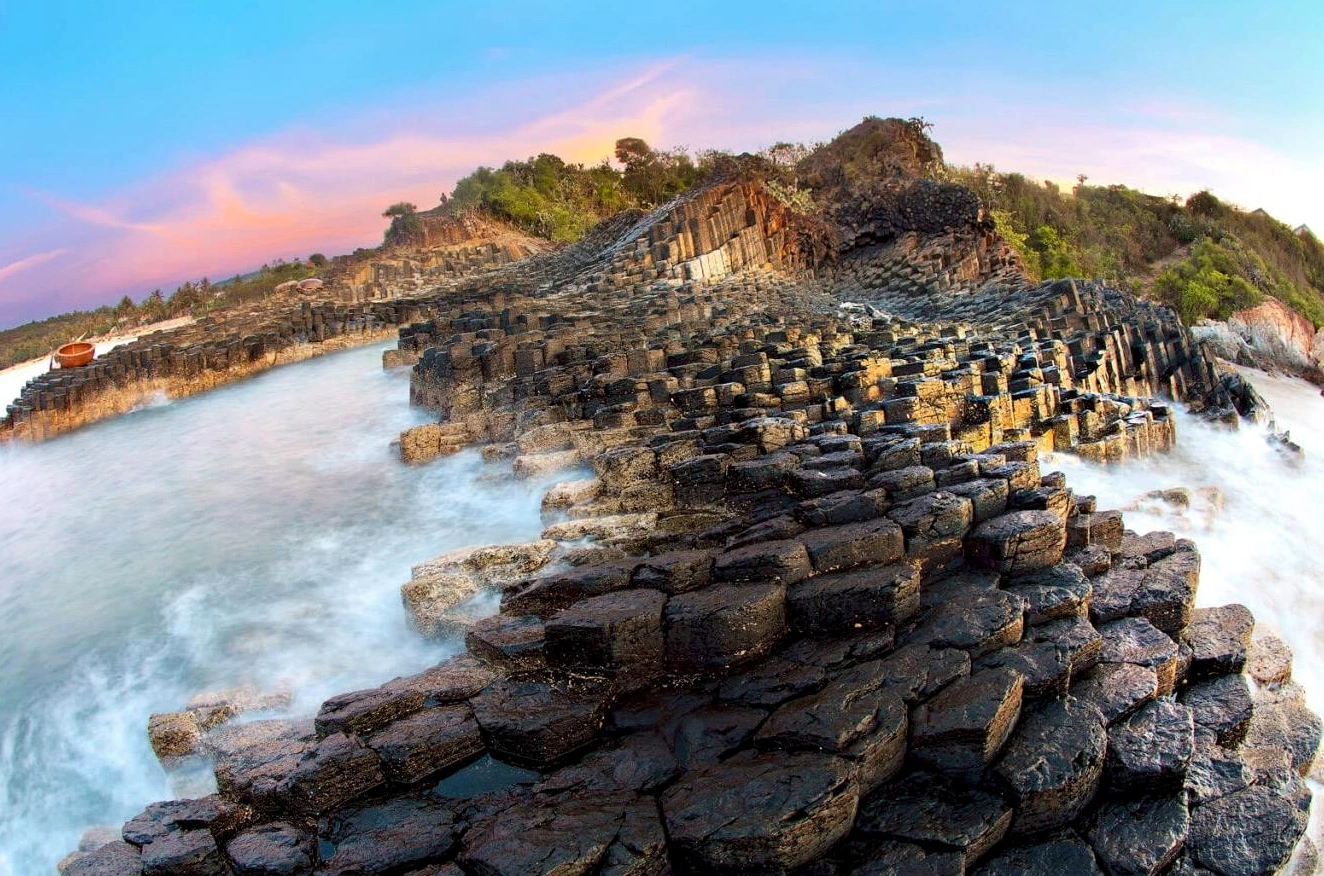
Upon stepping foot on Ghenh Da Dia, the first feeling overcoming a visitor’s mind is not only awe at nature’s massive scale, but also the solemn tranquility of the basalt blocks that have stood in meditation for millions of years. Looking down from above, tens of thousands of hexagonal and pentagonal stone columns are tightly packed like giant stacks of plates reaching out to the open sea, creating a surreal geological painting. White-capped waves from the ocean endlessly crash against the rocky reef, churning white foam and creating a symphony of earth and sky, making anyone standing before this scenery feel truly small before the eternity of time.
The hands-on experience here is an exciting multi-sensory journey. Visitors typically start by following small paths down to the water’s edge, where they can touch the cool, smooth surface of the stone. Climbing across blocks of strange shapes requires caution, but this ruggedness yields unique perspectives, where every rock crevice becomes a stunning frame for lifetime photographs. For those who love tranquility, hiring a small local fisherman’s boat to drift on the deep blue water and admire the panoramic view of Ghenh Da Dia from the sea is an unmissable experience. From this angle, the rock cluster appears like a fortified stronghold, an architectural masterpiece meticulously sculpted by nature in the heart of the ocean.
Beyond its landscape, Ghenh Da Dia is also a destination imbued with spiritual marks and local culture. Small shrines hidden near the rocky reef area, where locals frequently come to worship and pray for safety on fishing voyages, create an atmosphere of pious spirituality. The intermingling of coastal residents’ ocean-worship beliefs with the magnificent geological beauty forms an ambiance that is both mystical and intimate, allowing visitors to feel the enduring vitality of the people here across generations.
Following energetic hours of exploration, the experiential journey would not be complete without savoring Tuy An’s renowned culinary specialties. Right at roadside eateries or nearby fishing villages, visitors are treated to exquisite gifts from the ocean such as ocean tuna, jumping snails, or the famous O Loan lagoon blood cockles. The delicate sweetness of fresh seafood, harmonizing with the spicy kick of green chili salt and the rich flavor of traditional fish sauce, creates an unforgettable aftertaste. Savoring local delicacies amidst the rushing sea breeze while watching the sunset gradually descend over the shiny black stone columns will make your soul feel light and serene.
Ghenh Da Dia is not merely a tourist destination, but a living museum of geological history and human culture. Every step and every experience here leaves deep feelings in visitors’ hearts regarding nature’s wonder and the resilient vitality of Phu Yen land. It is a place where past and present blend, where humans find a sacred connection with Mother Earth, and where everyone can rediscover precious moments of quietude amidst a bustling modern life.
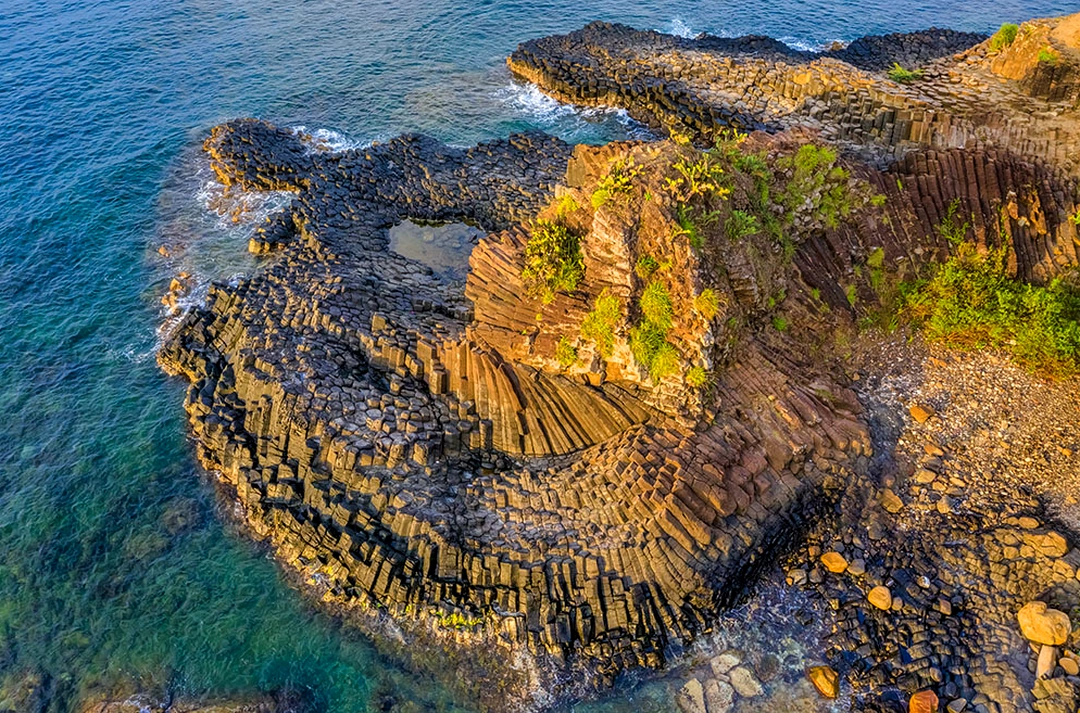
Ghenh Da Dia is one of the most unique natural wonders in the Central region, attracting domestic and international travelers to explore. To ensure a complete journey experiencing this geological and cultural heritage, equipping oneself with practical information on timing, costs, travel routes, and behavioral rules is essential for every traveler.
Regarding operating hours, the Ghenh Da Dia scenic spot welcomes visitors every day of the week, from early morning until late afternoon. However, the most ideal time to visit during the year is during the dry season, from the first to the eighth lunar month. During this period, the weather in the “Land of Nau” is typically sunny, with clear blue skies, calm seas, and brilliant golden sunlight casting down on the rock formations to create a magnificent optical effect, highly favorable for photography and sightseeing. Visitors should set out early in the morning from 7:00 AM to 9:00 AM or in the afternoon from 3:30 PM onwards to enjoy the cool breeze and admire the stunning sunset descending over the coastal region.
Currently, admission tickets for Ghenh Da Dia are priced very reasonably to serve the community and travelers near and far. Entrance tickets generally cost between 20,000 and 30,000 VND per adult, while children are usually free or eligible for discounted rates. This fee is used for landscape maintenance, heritage preservation, and environmental sanitation around this unique rocky shore area.
Regarding transportation and travel routes, starting from the center of Tuy Hoa city, visitors can choose to travel by motorbike, private car, or local bus over a distance of more than thirty kilometers heading north. The most optimal and scenic route is via National Highway 1A toward Chi Thanh town (Tuy An district), then turning right following signposts toward An Ninh Dong commune. Travelers can also choose the coastal route via the extended Hung Vuong bridge, passing the poetic O Loan lagoon before turning toward Ghenh Da Dia. The smooth asphalt road winding through peaceful villages and coastal sand dunes provides wonderful visual experiences throughout the journey.
Due to the unique terrain of stacked basalt columns, stone surfaces can become slippery when there are high waves or moss, so visitors should choose neat, active attire. Prioritize wearing sneakers or soft-soled shoes with good grip, avoiding high heels to ensure safety when walking across rugged hexagonal rock blocks. Additionally, because this area is tied to ecological values, natural landscapes, and longstanding local spiritual elements, visitors must dress politely, maintain general hygiene, strictly avoid littering, and be mindful of preserving the integrity of the geological heritage structure for future generations.
To enjoy a complete vacation and fully admire the beauty of Ghenh Da Dia without worrying about arranging transport, booking admission tickets, or travel itineraries, visitors can choose premium all-inclusive Phu Yen package tours by VDS Travel. Each tour is optimized for check-in timing when the scenery is at its most vibrant, accompanied by a team of guides well-versed in local culture and top-tier hotel and culinary service standards.