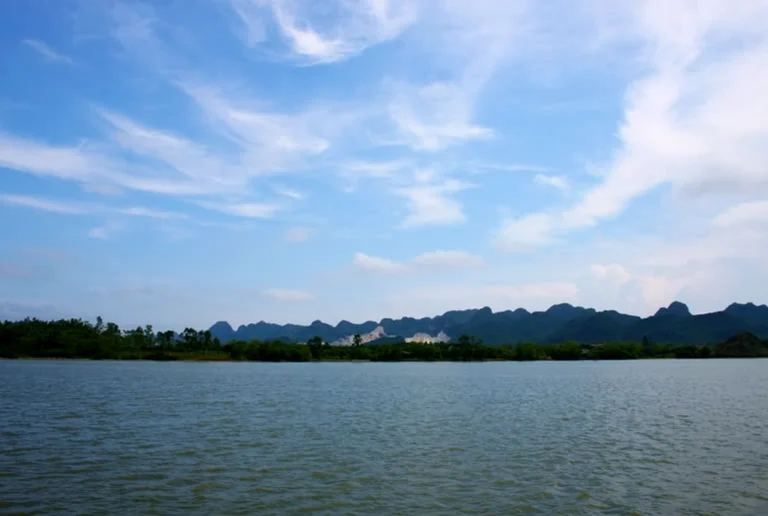
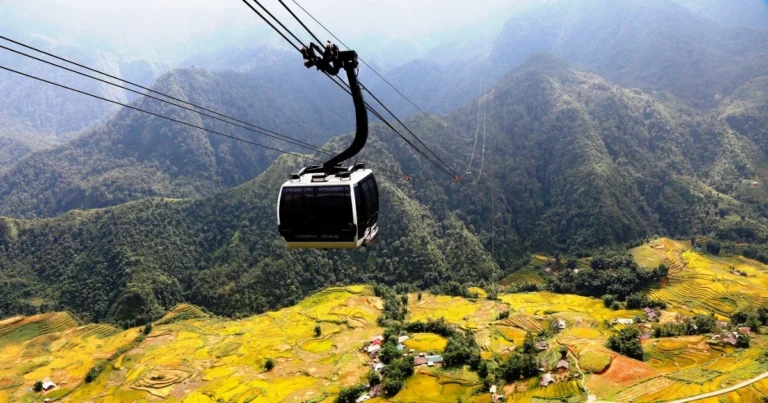
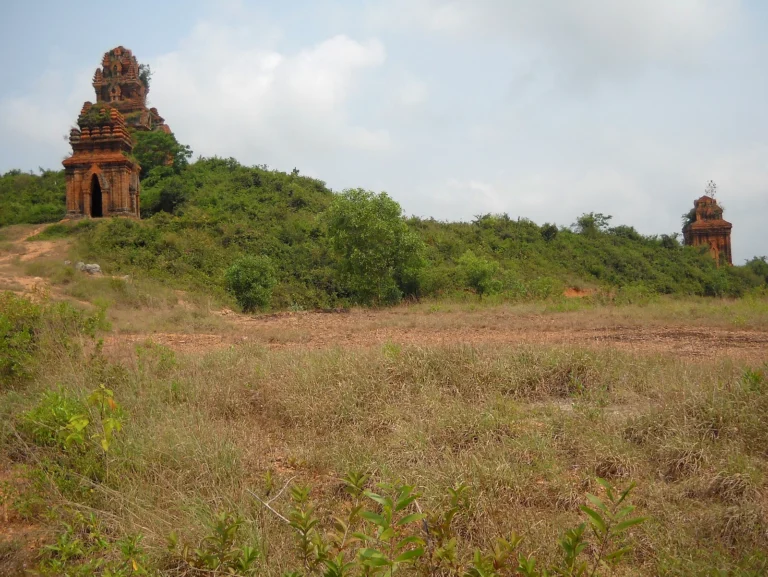
Quietly nestled within the historic Muong Thanh basin at approximate coordinates 21°23’N and 103°01’E, the command bunker of the Dien Bien Phu entrenched camp—famously known to generations of Vietnamese as the “De Castries Bunker”—stands as a witness of steel and earth, etching one of the most heroic chapters of the 20th century. Geographically, the structure is located right at the focal point of the central sector within Dien Bien Phu city, Dien Bien province—a convergence of the Northwest sky and earth, enveloped by majestic mountain ranges and the Nam Rom river winding like a soft silk ribbon embracing the fertile valley.
Viewed from its ethnocultural roots, long before bearing the imprint of modern warfare, this land originally bore the native name “Muong Thanh” (City of the Heavenly Realm) in the language of the Black Thai people, residents who have inhabited and cultivated this survival space for centuries. Through the feudal dynasties of Ly, Tran, Le, and Nguyen, from Ninh Bien prefecture to An Tay domain, this frontier region has consistently maintained its position as a vital shield of Dai Viet, marking feats of national defense and frontier pacification. Although those historical cultural strata did not leave behind the structure of the present bunker, the very “water-gathering, mountain-converging” topography of the Muong Thanh valley created a unique geological and military setting where nature and history jointly nurtured the great transformations of the era.
The turning point shaping this landmark was tied to the Indochina military campaign of 1953, when the French colonial war machine—under the planning of General Henri Navarre and the direct command of Colonel Christian de Castries at the stronghold designated Operation Castor—decided to transform this place into a “giant porcupine,” the strongest entrenched camp in Indochina comprising a system of 49 fortified strongpoints. The command bunker was constructed at that strategic central position, becoming the nerve center for the enemy’s entire artillery, armored, and infantry defense system.
Through the lens of journalism and heritage management agencies, the De Castries Bunker today is not merely a special national military historical site but also an emotionally rich travel cultural space. Coming to Dien Bien, standing before the iron arch and layers of sandbags still lingering with the breath of the past, visitors do not simply contemplate a typical wartime architectural work; simultaneously, they deeply feel the heroic echoes of the nation, where the ashes of wartime gunfire have given way to the peaceful beauty of a heritage region shining brightly amidst the great forests.
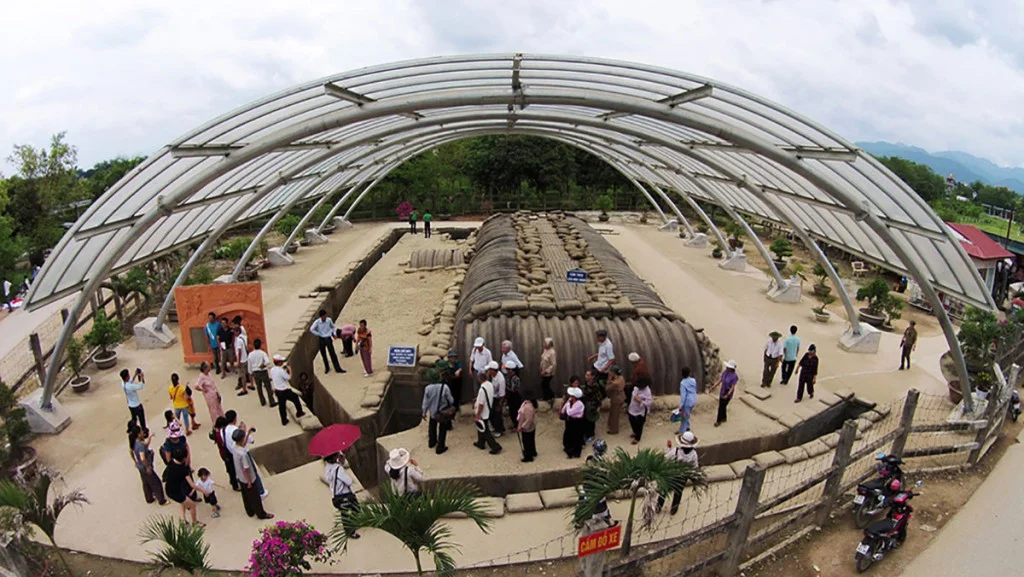
Nestled in the windy and poetic Muong Thanh basin, the De Castries Bunker relic emerges as a silent yet majestic historical witness, harmoniously blending the magnificent natural scenery of the Northwest mountains with the unique field military architectural imprint of the 20th century. The terrain here is shaped by a vast basin enclosed by towering mountain ranges, creating a closed strategic enclosure where the Nam Rom river gently winds like a soft silk ribbon across the ancient battlefield. The landscape space surrounding the bunker carries an expansive beauty, strongly harmonizing the boundless blue sky, vast rice fields changing colors by season, and historical marks settled on every grain of earth. This artistic contrast between the current tranquility of nature and the harshness of wartime memories has transformed this place into an emotionally rich destination, attracting numerous travelers and history enthusiasts to explore.
Regarding structure and design artistry, General de Castries’ command bunker is a prime example of the French army’s top-tier fortified engineering techniques on the battlefield at that time. The structure spans tens of meters in length and a scientifically calculated width, comprising multiple enclosed functional rooms serving the daily life, communications, and combat command of the enemy staff. The entire roof and bunker walls were constructed using extremely sturdy materials of that era, including stacked layers of heavy timber, thick steel plates, reinforced sandbags, and multi-layered earth fill designed to neutralize the destructive power of heavy artillery. Intricate trench systems, carefully camouflaged entryways, and skillfully positioned ventilation shafts ensured maximum security while maintaining necessary ventilation for dozens of officers working inside. These rustic, pragmatic yet immensely sturdy architectural lines reflect classical Western defensive military thinking while serving as a monumental testament to the indomitable willpower and victorious military art of the Vietnam People’s Army in the resounding, globally historic Dien Bien Phu campaign.
To fully preserve precious frames imbued with historical breath and the majestic beauty of the heritage space, professional photographers and travel journalists often prioritize two classic camera angles. The first angle is standing from the outside, taking the entire time-worn arched bunker structure as the foreground, combined with the backdrop of the expansive Muong Thanh sky and distant mountains to create a grand spatial depth. The second angle focuses on the close-up of historical trenches leading to the bunker entrance, where slanting sunlight filtering through embankments creates powerful visual effects, vividly portraying the intersection between present light and past darkness. Regarding ideal lighting timing, the 15:30 to 17:00 twilight hour is rated as the golden hour; at this time, late afternoon sunlight casts soft rays onto concrete blocks, iron arches, and lush green lawns around the bunker, helping photographs achieve absolute artistic depth and conveying complete emotional resonance to viewers.
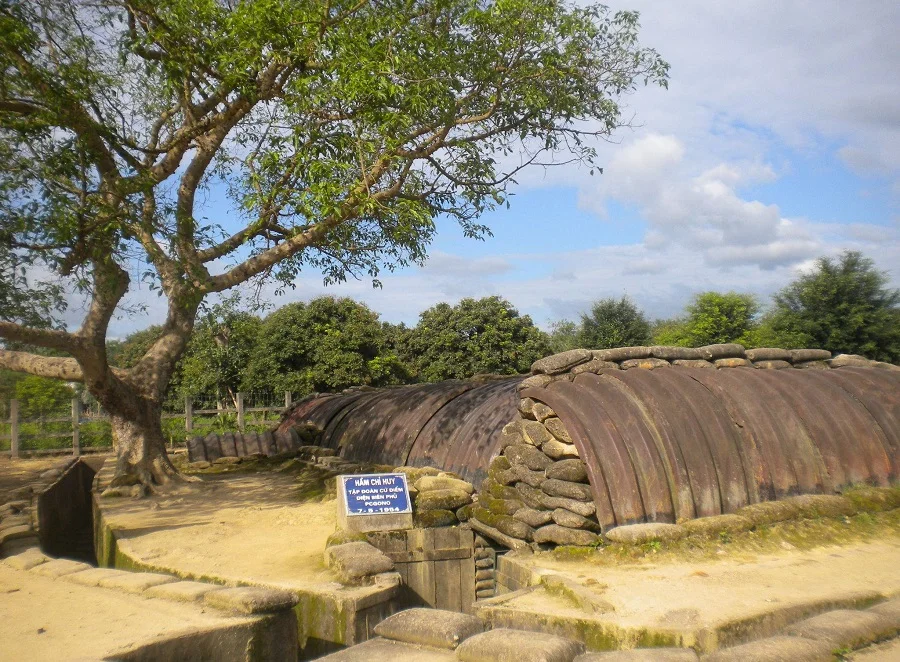
Upon stepping into the Muong Thanh central relic area, standing before the historic bunker dome that once witnessed the complete collapse of Indochina’s strongest entrenched camp, every visitor inevitably experiences overwhelming and deeply reflective emotions. The interior space of the small bunker, now mossy and silent, acts like a slow-motion film reviving the nation’s bygone heroic spirit. Leaving that haunting historical space behind, the journey exploring Dien Bien Phu immediately opens up invaluable practical experiences, immersing travelers into the daily life and magnificent nature of the Northwest.
Right beside the central relic area, the journey further challenges visitors’ willpower through mountain-climbing activities conquering heights surrounding the Muong Thanh basin such as Hill A1, D1, or C1. Steep steps along gentle mountain slopes caressed by highland breezes bring indescribable excitement when gazing from above at the panoramic expanse of the vast Muong Thanh fields, where the Nam Rom river winds smoothly like a silver silk ribbon embracing the historic city. Particularly, combining the trip with boat rides on the azure Pa Khoang lake nearby allows visitors to fully enjoy the peace and poetry of Dien Bien’s clouds, sky, and waters—a wonderful contrast to the harshness of past warfare.
Beyond natural landscapes, the vibrant local cultural depth here touches travelers’ emotions through solemn spiritual worship sites such as the martyrs’ temple at the Dien Bien Phu battlefield or the A1 Martyrs’ Cemetery. Standing before the souls of the heroes, lighting fragrant incense amidst temple bells echoing through misty haze, everyone clearly senses profound gratitude and surging national pride within their chests. The intersection between a heroic past and a peaceful present creates a deeply meditative spiritual space, elevating the trip beyond an ordinary vacation into a sacred journey back to the roots.
Concluding a long day of exploratory experiences, visitors cannot miss the opportunity to savor renowned highland specialty cuisine right within the cultural villages surrounding the basin. The rich flavor of kitchen-hung buffalo meat fragrant with mac khen seeds, succulent grilled fish (pa pinh top) capturing riverine essence, and sticky upland glutinous rice served with spicy cham cheo dipping salt will awaken every culinary sense. Gathering around jars of potent wine alongside graceful traditional xao xoe dances performed by Black Thai people under flickering fires, visitors will fully embrace the warmth of Dien Bien’s land and people, retaining indelible echoes throughout their journey.
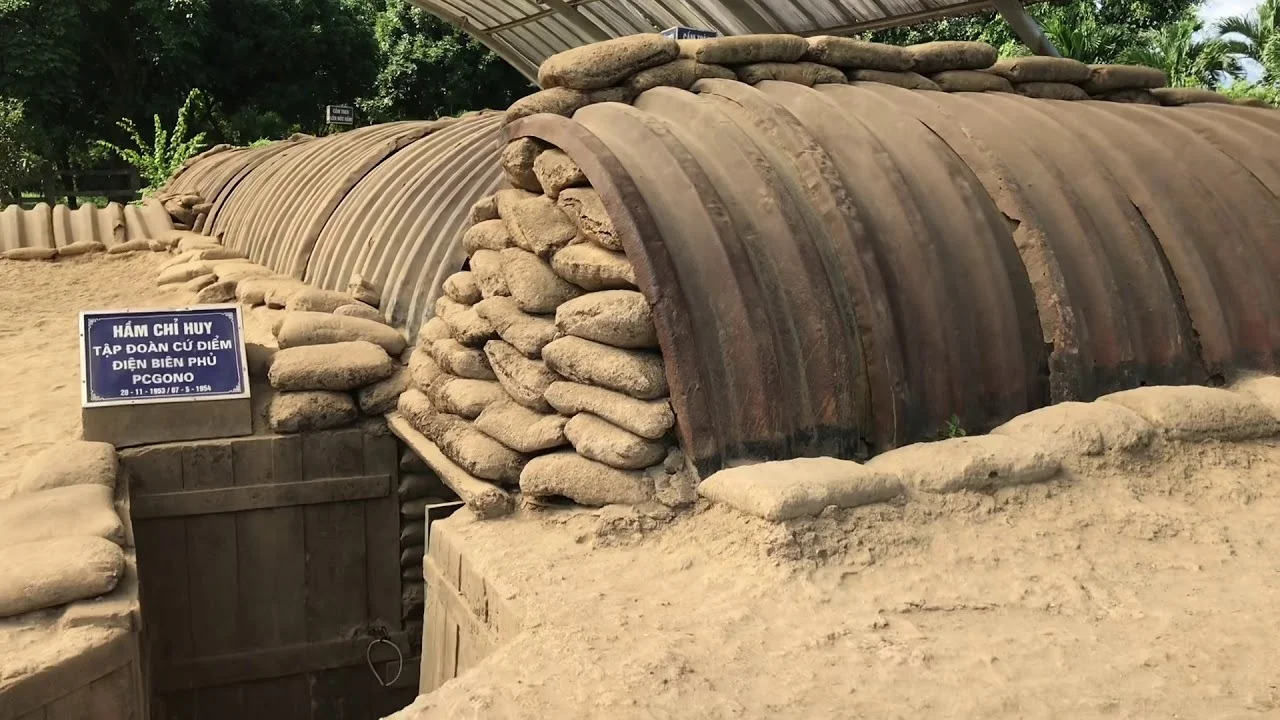
The command bunker of the Dien Bien Phu entrenched camp, familiarly known as the De Castries Bunker, is one of the key historical sites attracting numerous domestic and international visitors when visiting the majestic Northwest region. To ensure a smooth, complete journey of exploration and historical reflection, equipping oneself with practical information regarding schedules, ticket prices, and travel tips is essential.
The De Castries Bunker relic area opens to visitors every day of the week, including holidays and weekends. Opening hours generally run from morning between approximately 07:30 and 11:30 and afternoon from 13:30 to 17:00. Regarding admission fees, the management board currently applies standard ticket policies stipulated by Dien Bien province for Dien Bien Phu victory historical sites, featuring very reasonable pricing alongside special discounts for student groups or veterans.
Regarding transport and travel routes, because the bunker is located right at the center of the former Muong Thanh sector, now within the inner city of Dien Bien Phu, accessing the site is extremely convenient. Visitors departing from the central city square can choose motorbikes, bicycles, personal cars, or taxis. The travel route is short, smoothly paved, taking only about 5 to 10 minutes along the main axis road passing the historic Muong Thanh bridge to arrive.
The ideal time of year to visit the relic site is during the dry season months, from November of the previous year to April of the following year. In particular, visiting in March during the blooming ban flower season or May commemorating the Dien Bien Phu victory will grant visitors extraordinarily sacred and profound historical emotions. When touring the underground bunker military structure, visitors should prioritize neat, polite attire, wearing sneakers or flat shoes to facilitate movement, stepping up and down bunker stairs, and maintaining a solemn, respectful attitude when commemorating the nation’s heroic past.
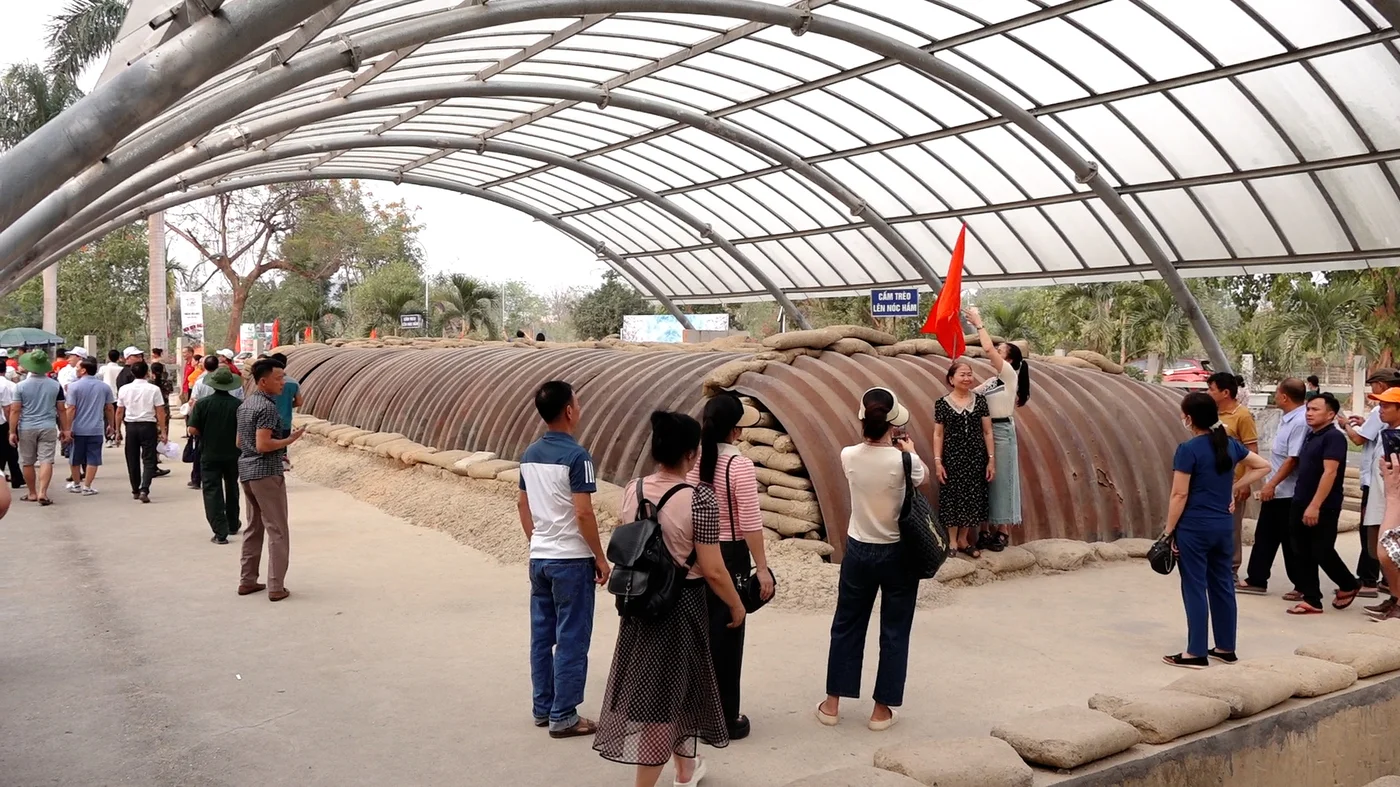
To enjoy a complete vacation and fully admire the beauty of the De Castries Bunker without worrying about arranging transport, booking admission tickets, or travel itineraries, visitors can choose premium all-inclusive Dien Bien Phu, Dien Bien package tours by VDS Travel. Each tour is optimally designed for check-in timings when scenery is at its most vibrant, accompanied by a team of guides thoroughly knowledgeable in local culture and top-tier hotel and culinary service standards.