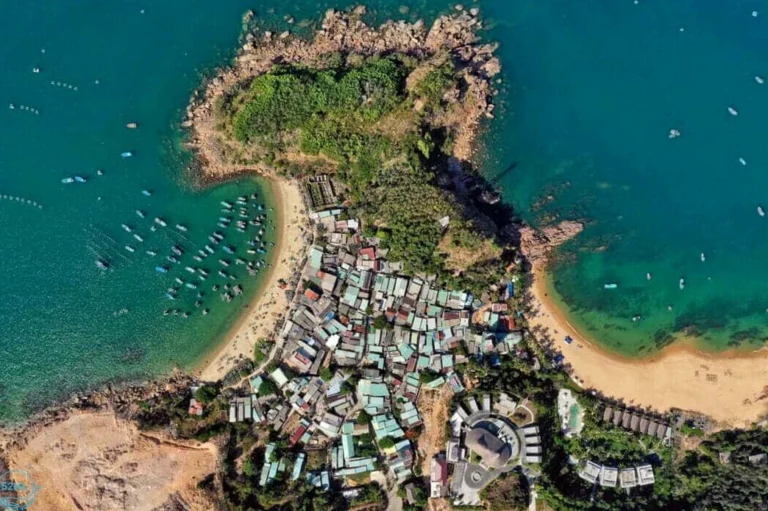
Rising proudly along the coast of South Central Vietnam, Mui Dien Cape—also recorded in Nguyen-dynasty chronicles as Mai Da Cape alongside the dramatic terrain of Dai Lanh Cape in Phu Yen Province—stands as a lasting link between Vietnam’s storied past and its vibrant island and coastal heritage. Positioned at the easternmost mainland point of Vietnam where early morning sunlight first touches the S-shaped coast, it offers more than distinctive geography: it is a natural coastal headland where rugged mountains meet the open sea. Mountain ridges of Deo Ca Pass sweep straight toward the ocean into steep cliffs framing golden-sand coves and clear water—creating a dramatic landscape where waves have echoed generations of coastal history.
Looking back through historical chronicles and Nguyen-dynasty records, the cape’s names carry layered cultural memory. In *Dai Nam Thuc Luc* (“Veritable Records of Dai Nam”) and *Dai Nam Nhat Thong Chi*, the area was recorded as Mai Da Cape in Hoa An Commune, Tuy Hoa District, Tuy An Prefecture. The name “Mui Dien” (“Cape of Electricity”) gained traction from the late 19th century as French authorities recognized the maritime importance of Indochina’s waters and built the *Phare de Cap Varella* lighthouse. Across centuries of history—from Cham coastal sites along central Vietnam to King Le Thanh Tong’s 1471 southern expansion bringing Phu Yen into Dai Viet and Lord Nguyen Hoang’s 1611 establishment of Phu Yen Prefecture—Dai Lanh Cape remained a steady maritime landmark along southern sea routes.
The cape’s historical and sovereign significance is further reflected in court records. In the 17th year of the Minh Mang reign (1836), the emperor ordered *Dai Lanh Son* (“Mount Dai Lanh”) depicted on the Cao Urn, one of the sacred Nine Dynastic Urns in Hue’s Imperial City—reflecting imperial territorial awareness and maritime focus. In 1890, late-19th-century European engineering added a lighthouse tower on the headland, serving as a vital beacon for vessels navigating these waters.
Today, Mui Dien – Mai Da is not only a celebrated coastal attraction, but also a meaningful symbol of coastal heritage and national pride. Standing near the lookout with wide ocean breezes blowing in, travelers experience millions of years of geology, historic maritime architecture, and enduring coastal culture against the East Sea.

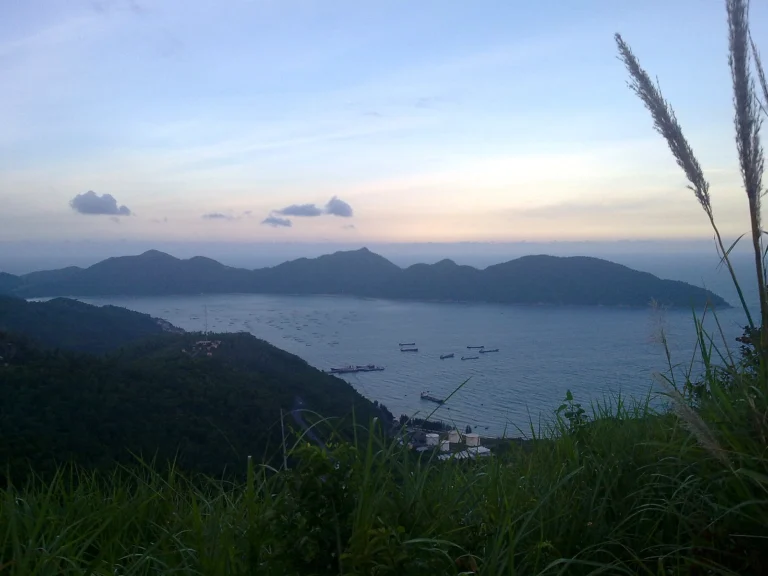
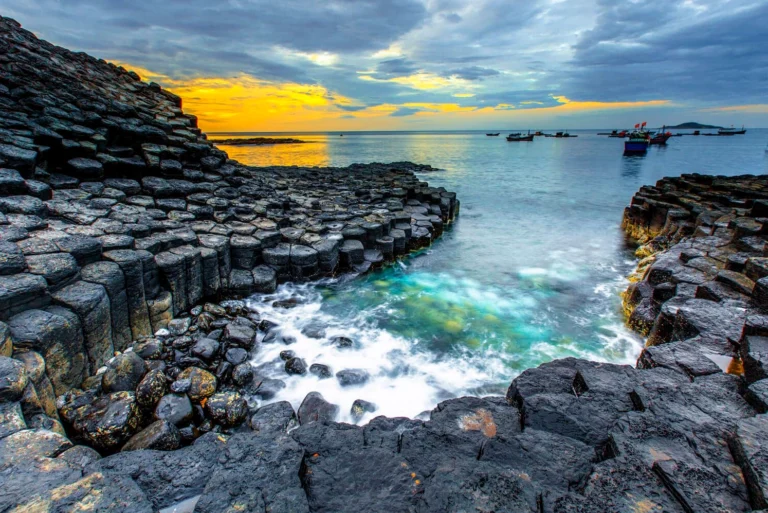
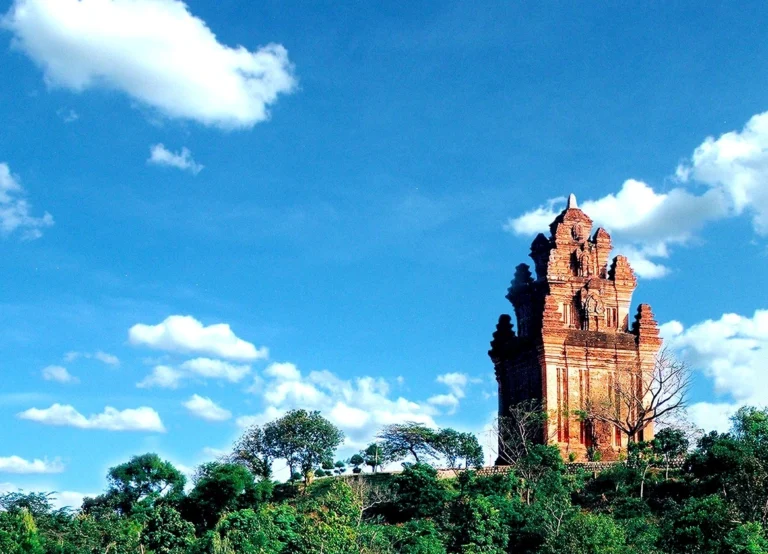
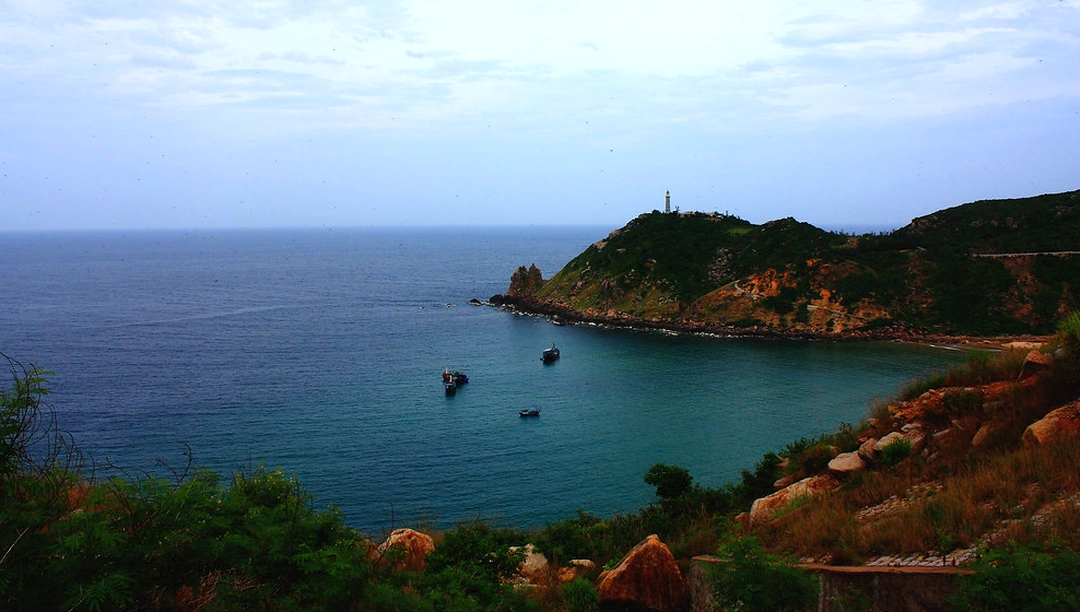
Viewed across the wide waters of South Central Vietnam, Mui Dien (Mai Da – Dai Lanh Lighthouse) is shaped by rugged granite cliffs where Dai Lanh mountain ridges meet the open sea. Millions of years of wind and wave erosion have sculpted steep rock faces and varied coastal formations where white-capped surf breaks against stone. Rising above the rocky headland, the Mai Da lighthouse—built in 1890 in late-19th-century European maritime style—features a sturdy cylindrical white tower standing out against sky and sea, with arched openings, a cast-iron spiral staircase inside, and a concentrating optical lens system projecting light for nautical miles along the Phu Yen coast.
Photographers and travel writers often highlight several rewarding viewpoints around the cape. A top vantage point is the lighthouse terrace looking down over the graceful curve of Bai Mon cove, where smooth golden sand meets turquoise water and a small inlet shelters local round coracle boats (*thung*) framed by coastal hills and sea. A second angle sits along the hillside trail climbing toward the lighthouse near large granite boulders jutting seaward, allowing upward shots of the white tower against open sky and horizon. A third vantage point is along the rocky shoreline by Bai Mon cove, using the sheer cliffs of Mui Dien as a dramatic backdrop for adventure-minded photos.
For lighting, dawn is the signature moment travelers come to Mui Dien to experience. As one of the earliest mainland spots to catch morning sunlight along Vietnam’s coast, the window around 5:00 AM to 5:30 AM brings shifting colors across the eastern horizon—from deep indigo to soft rose and warm amber-gold—as first light crosses thin sea mist onto the white lighthouse tower and wakes the bay.
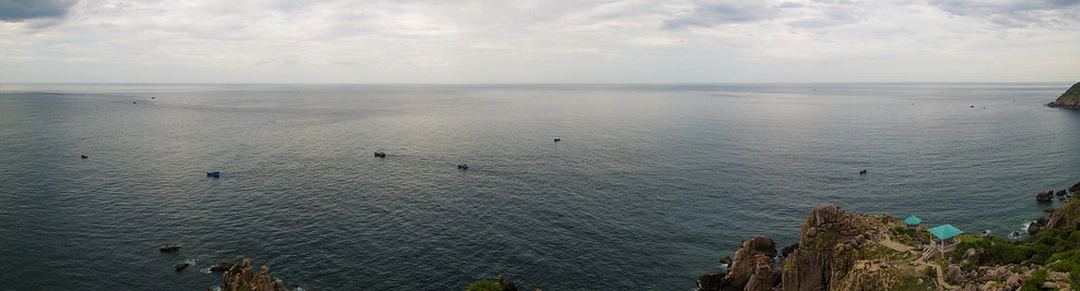
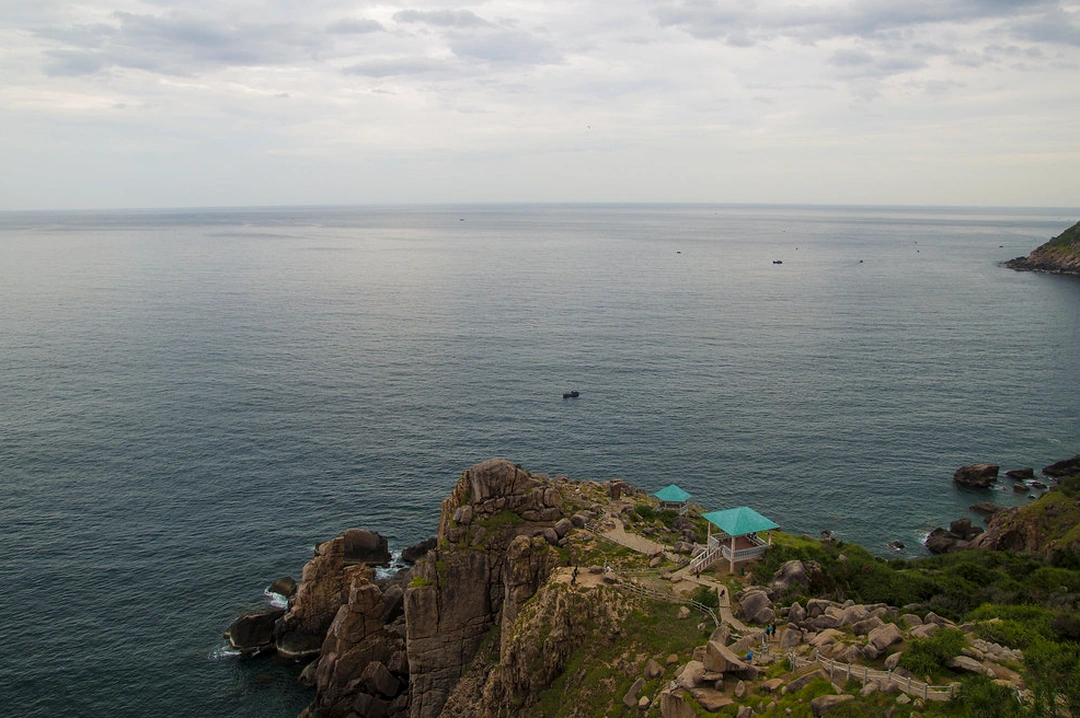
Arriving at Mui Dien – Mai Da begins with walking the hillside trail hugging the slope. Stepping along stone-lined paths with sea breeze rustling through coastal grass and salt air on the wind, visitors feel the raw energy of the coast—culminating beside the late-19th-century lighthouse with sweeping views of surf breaking against steep cliffs.
Approaching by boat around the rocky cliff bases and Bai Mon cove offers a fresh perspective from the water. Riding a small boat over clear waters reveals the full scale of Dai Lanh’s headland plunging into the sea amid central sunshine, gentle surf against sculpted rocks, and seabirds calling overhead—offering a calm, unhurried pause beside a historic coastal landmark.
Away from the cliffs, warm local hospitality and coastal specialties around Phu Yen round out the trip. Below the mountain slopes, quiet fishing hamlets welcome visitors with unpretentious central-coast warmth, and after a day outdoors, a seafood meal featuring rich braised ocean tuna eyes with herbal seasonings, chewy savory Phu Yen fish cake (*cha ca*), or freshly caught seafood with ginger fish sauce leaves a lasting taste of “yellow flowers on green grass” country.
Mui Dien (Mai Da / Dai Lanh Lighthouse) is one of the defining highlights when visiting Phu Yen. For a safe, smooth trip, the practical notes below cover hours, fees, routes, gear, and seasonal timing.
The site and lighthouse area generally welcome visitors daily, including weekends and holidays, with early morning popular for sunrise and late afternoon before dusk. Modest site/sanitation fees—typically tens of thousands of dong per visitor—help support local conservation and visitor facilities.
From central Tuy Hoa City, Mui Dien lies roughly 30+ km to the south along scenic coastal roads. Many travelers go by motorbike or private car, taking National Highway 1A toward the foot of Deo Ca Pass and turning left onto the Phuoc Tan – Bai Nga coastal route, which winds along the shore with mountain slopes on one side and sandy beaches and ocean on the other before reaching the lighthouse approach.
Because the visit involves climbing stone steps and walking in coastal sun, wear light, breathable clothing and sturdy, grippy sneakers or hiking shoes, and pack a wide-brimmed hat, sunglasses, sunscreen, and drinking water. Keep litter to yourself and follow lighthouse safety rules and respectful etiquette around small shrines and maritime facilities.
The dry season—roughly from the first to eighth lunar months (often early spring through summer)—typically brings lighter rain, calmer seas, and bright sun ideal for sunrise viewing, photos, and trails, whereas late-year rain and storm periods can make paths slick and seas rough.
To enjoy Phu Yen and Mui Dien without worrying about transport, tickets, or pacing, consider VDS Travel’s all-inclusive Phu Yen tour packages, thoughtfully timed for peak light with knowledgeable local guides and dependable hotel and dining standards.