What is a Kayak?
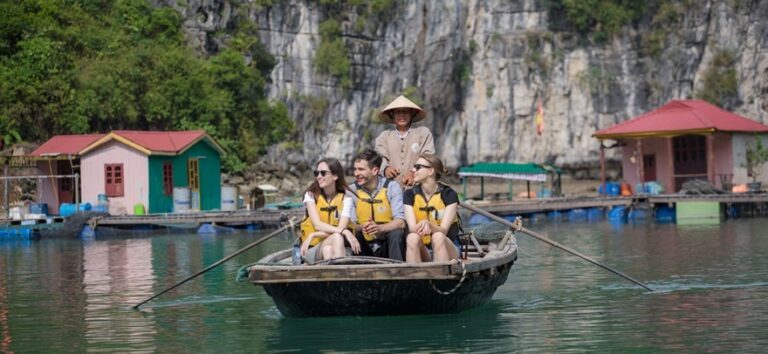
Before diving deeper into this exciting experience in Ha Long Bay, you might wonder: “What exactly is a kayak?”. A kayak is essentially a small, narrow boat that moves primarily by human power using a paddle (typically a double-bladed paddle). This type of boat has a very long history of over 4,000 years, originally developed by Inuit, Yup’ik, and Aleut communities in the cold Arctic regions for hunting at sea.
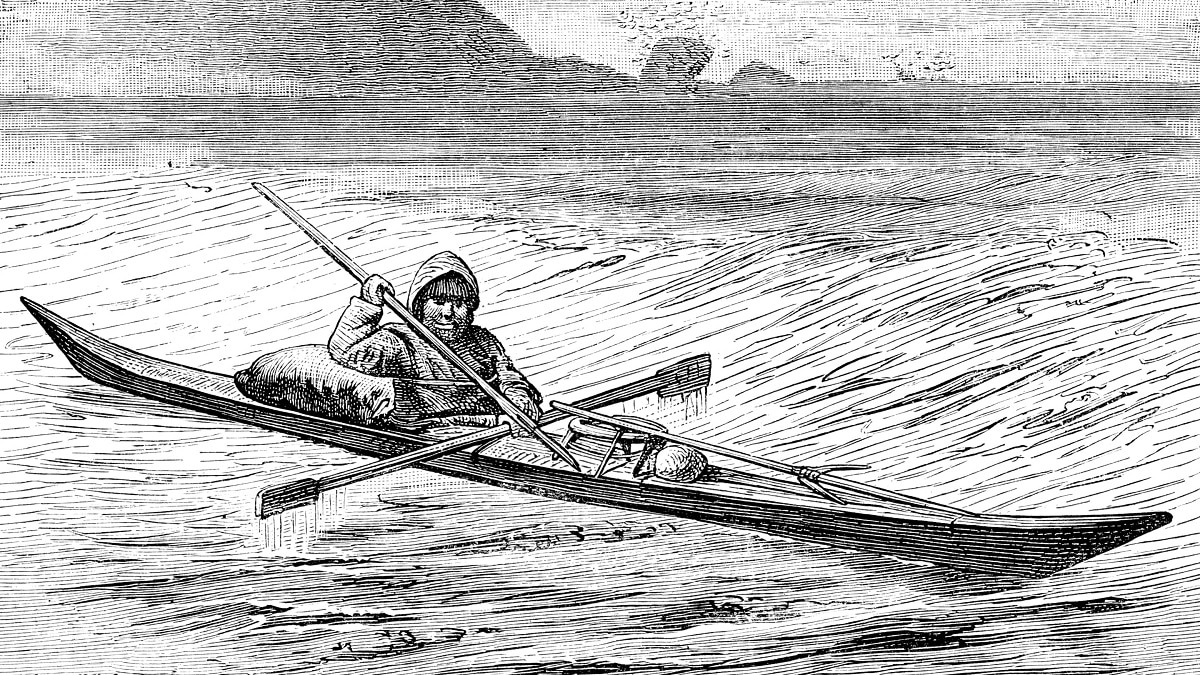
Original kayak
Today, inheriting that unique design, the kayaks you use in Ha Long Bay are typically made from modern, durable, and lightweight materials such as composite plastic, molded rubber, or convenient inflatable boats. They are usually designed for one or two people, equipped with suitable paddles, allowing visitors the flexibility to control their own movement and weave through the bay’s beauty.
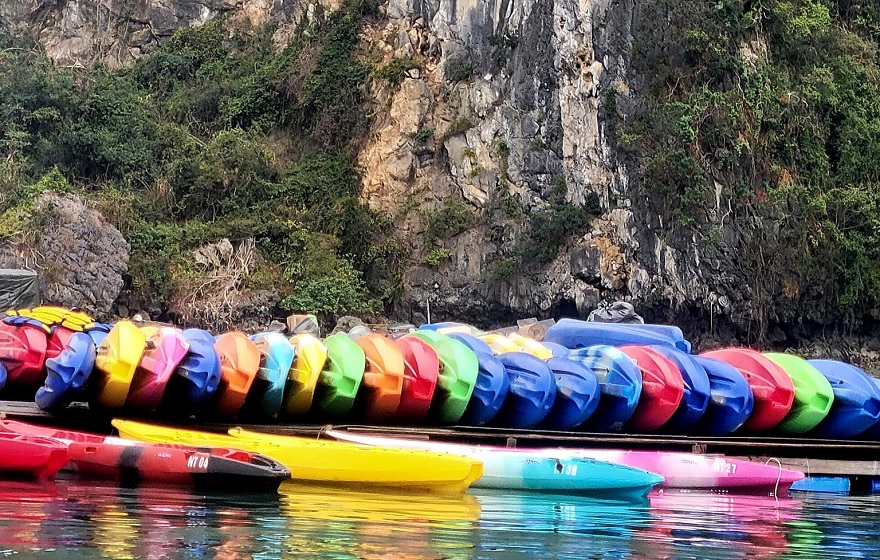
Kayaks for rent in Ha Long Bay
Why Choose Kayaking to Explore Ha Long Bay?
Among countless ways to admire Ha Long Bay, kayaking offers compelling reasons that make it the top choice for travelers seeking an authentic and memorable experience:
1. Closest Proximity to the Heritage Site
Nothing compares to the feeling of navigating your way through millions-of-years-old rock crevices, dipping your paddle gently into the clear blue water, and even reaching out to touch the cool sea surface. Kayaking brings you closest to the pristine beauty of the Heritage, allowing you to fully feel the majesty of towering limestone cliffs right beside you, listen to birdsong, and hear the soothing sound of lapping waves.
2. Discovering Hidden Beauty
The tiny kayak is your key to unlocking secrets that large cruises cannot reach. You can easily duck through low cave entrances to explore fascinating caves inside, glide smoothly into secluded, tranquil coves, or find pristine little sandy beaches hidden at the foot of mountain rocks – the true “gems” of Ha Long Bay.
3. Total Freedom and Independence
With a kayak, you are the captain of your exploration journey. You have complete control over your direction and traveling speed. Want to stop for a stunning photo? Want to linger a bit longer to watch schools of fish swimming underwater or simply drift in the vast space to enjoy the peace? Everything is at your fingertips.
4. Unique Cultural Experience
Kayaking also opens up a rare opportunity to approach and observe daily life in famous floating fishing villages like Vung Vieng or Cua Van. From your kayak, you can gently glide past floating houses, observe seafood farming rafts, feel the rustic rhythm of life, and catch friendly smiles from the local villagers – a deep and precious cultural experience.
5. Suitable for Everyone, Even Beginners
Ha Long Bay’s natural conditions, with its mostly calm waters and low wind and waves, create an ideal and very safe environment for kayaking. Even if you have never tried this sport before, with just a few minutes of basic technical instruction from guides or support staff, you can confidently take the helm and begin your own exploration journey.
Pricing and Popular Kayaking Experiences in Ha Long Bay
To enjoy the exciting kayaking activity in Ha Long Bay, you can choose from the following popular options, depending on your time, budget, and personal preferences:
1. Overnight Cruise Tour (Including Kayaking)
This is considered the most popular and complete way to explore Ha Long Bay combined with kayaking. When joining overnight cruises on the bay (usually 2 days 1 night or 3 days 2 nights), kayaking is typically included for free in the tour itinerary. This is especially true for high-end 4 to 5-star cruises such as Stellar of the Sea, Scarlet Pearl, Heritage Cruises, Rosy Cruise, La Casta Regal Cruise, Le Theatre Cruise, Capella Cruise, Indochine Cruise, and many others. They consider this an indispensable part of the upscale experience for travelers.
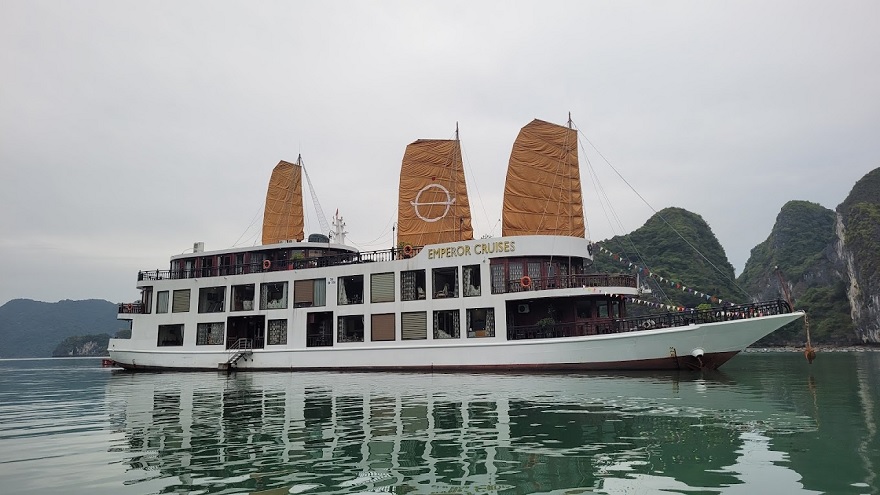
Emperor Cruises
However, please note that a small number of cruises, sometimes special luxury lines or short tour packages (e.g., Paradise Vietnam’s previous 2-day 1-night tours which may have charged fees), might consider kayaking an optional service and charge separately.
See more: Ha Long Bay overnight cruises
2. Joining a Day Cruise Tour
If you have a tighter schedule but still want to experience kayaking, Ha Long Bay day tours are a suitable choice. The itineraries of these tours typically include traveling by day boat, having lunch on board, visiting highlights such as caves and limestone islands, and spending about 30-60 minutes kayaking (usually at Luon Cave or Ba Hang area on Route 1 or Route 2).
Regarding costs, the total price for a day tour can range from about 510,000 – 1,700,000 VND/person depending on service quality and itinerary. Note that the fee for kayaking at the attraction may be included in the tour price or charged separately. If charged separately, this fee can range from 50,000 VND (if taking a small boat for direct access) to 150,000 VND or even 300,000 VND/person (if using small transfer boats from larger cruises).
see more: Ha Long Bay 1-day cruise tour
3. Self-Paddled Kayak Rental (Independent)
For travelers who independently charter a private boat/cruise and love ultimate freedom, want to explore at their own pace, or already have kayaking experience, renting a self-paddled kayak is an appealing option. This service provides the flexibility to freely explore permitted areas within your desired timeframe.
| Area / Location | Kayak rental price (VND/person/turn) | Note |
|---|---|---|
| Ba Hang Area | 50,000 | Bamboo boat available (50k) |
| Luon Cave Area | 50,000 | Bamboo boat (50k), motorboat (120k) available |
| Cua Van Area | 100,000 | Bamboo boat available (60k) |
| Vung Vieng Area | 50,000 | Bamboo boat (50k), Dragon boat (100k) available |
| Hon Ban Chan Beach Area | 50,000 | Kayaking only |
The choice of option depends on your needs and conditions, but whichever you choose, kayaking amidst the Heritage of Ha Long Bay will surely leave you with unforgettable memories.
See more: Private Cruise Charter to Explore Ha Long Bay
Top 8+ Best Kayaking Spots in Ha Long Bay
Ha Long Bay boasts countless stunning destinations for kayaking, each with its own unique charm. According to Decision No. 6195/QĐ-UBND by the People’s Committee of Quang Ninh Province, there are currently 8 main areas across 5 sightseeing routes in Ha Long Bay officially licensed for kayaking services. The choice of destination usually depends on your cruise itinerary or exploration plans. Below are the most prominent spots, detailed to help you truly feel the unique character of each location:
1. Ba Hang Area:
True to its name, the highlight of this area is a system of three connected caves hidden within majestic limestone mountains. When the tide permits, you can paddle through the mystical dark cave to discover fascinating stalactite formations. The end of the cave journey opens up into a round, secluded, and extremely peaceful lagoon, completely enclosed by sheer vertical cliffs.
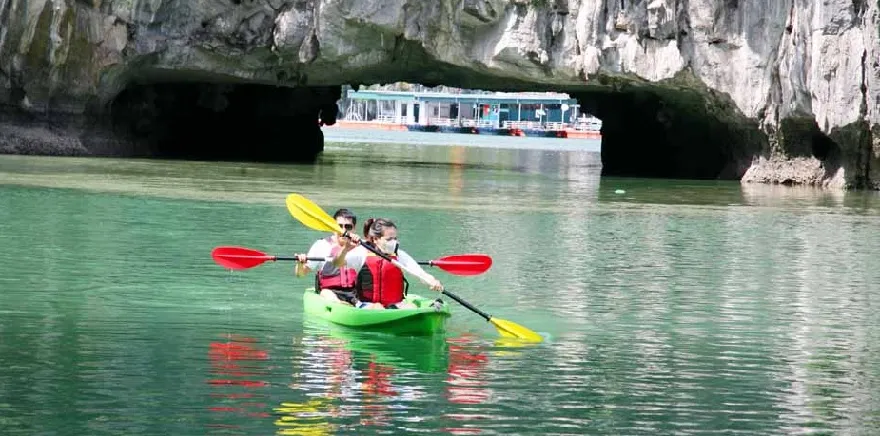
kayaking at Ba Hang
Experience the thrill of paddling through a dark cave and suddenly emerging into the isolated, fresh atmosphere of the hidden lagoon inside. This is an ideal destination for those who love exploration and conquest.
2. Luon Cave Area
As a “must-visit” kayaking spot, Luon Cave leaves a strong impression with its giant natural stone archway sitting closely above the water surface. You will skillfully maneuver your kayak through this low cave entrance to enter a completely different world inside—a mirror-flat round lake surrounded by lush green foliage and steep cliffs. This is where you might catch sight of playful golden monkeys leaping through the branches.
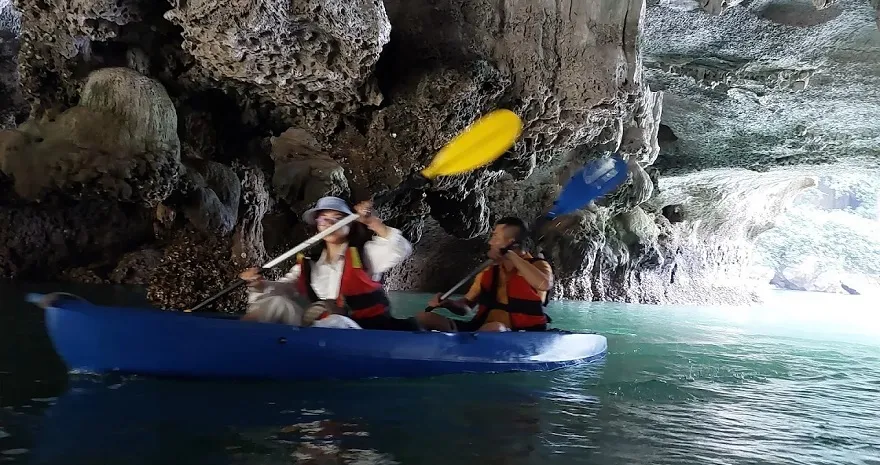
Kayaking at Luon Cave
The moment of passing through the unique stone archway into an isolated, pristine space feels like a “hidden paradise”. The picturesque landscape and the tranquility inside the lagoon are the main attractions. (Note: The number of kayaks entering the cave may be limited by hourly regulations).
3. Dong Tien Lake Area
Dubbed a kayaking “hotspot”, Dong Tien Lake attracts visitors with its beautiful, poetic natural scenery featuring interconnected lakes and surrounding small caves. The spacious environment, calm waters, and charming landscape create an ideal setting for leisurely paddling, exploring, and enjoying the peaceful beauty of the bay.
An ideal space for relaxing kayaking amidst beautiful scenery, where you can spend plenty of time exploring the various corners of the lagoon and nearby small caves in a fresh atmosphere.
4. Virgin Cave (Hang Trinh Nữ)
This place not only boasts a peaceful, poetic beauty with clear blue water and towering cliffs that create a cool ambiance, but it is also famous for its touching legend of young love. Sunlight streaming into the cave creates shimmering, magical rays of light, further enhancing the already romantic atmosphere.
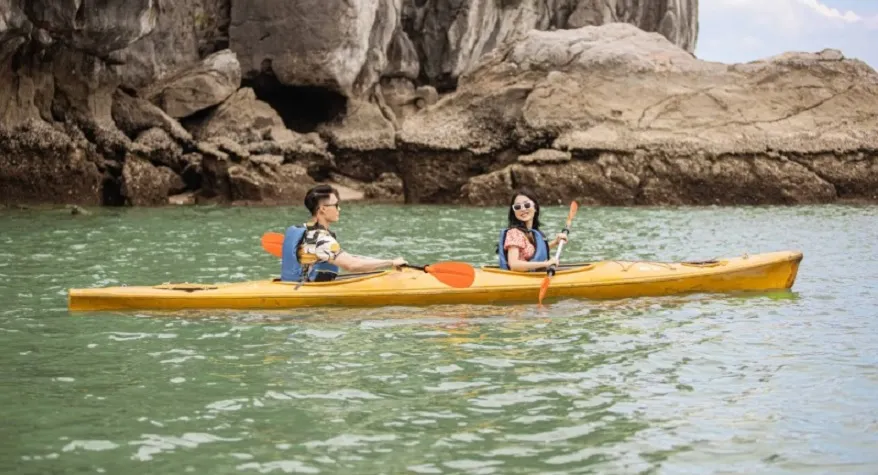
Kayaking at Virgin Cave
The combination of tranquil, poetic natural beauty and the romantic legend adds emotional depth and allure for visitors as they kayak to explore the cave.
5. Tung Sau Lagoon
Alongside the limestone karst landscapes and calm waters typical of Ha Long, Tung Sau Lagoon offers a uniquely different experience. This area features a large and professional pearl farming facility. Kayaking here, you will not only enjoy the scenery but also have the opportunity to observe pearl farming rafts and learn about the process of creating precious pearls.
A unique combination of scenic kayaking and learning about pearl cultivation – a distinctive and fascinating economic activity in the waters of Ha Long.
6. Cua Van Floating Village
Once one of the largest and most bustling ancient fishing villages on Ha Long Bay, Cua Van hides amidst rolling limestone mountains, retaining its pristine and ancient beauty. As you kayak and weave through the clustered floating houses, you can picture the vibrant fishing community that once lived here, observe the unique floating house architecture, and learn about a river culture that has existed for hundreds of years.
7. Vung Vieng Fishing Village
Located further away and more isolated than the main tourist spots, Vung Vieng offers an almost absolute sense of peace and tranquility. The pace of life here is slow and relaxed. Kayaking around the village, you will vividly feel this serenity and observe daily life.
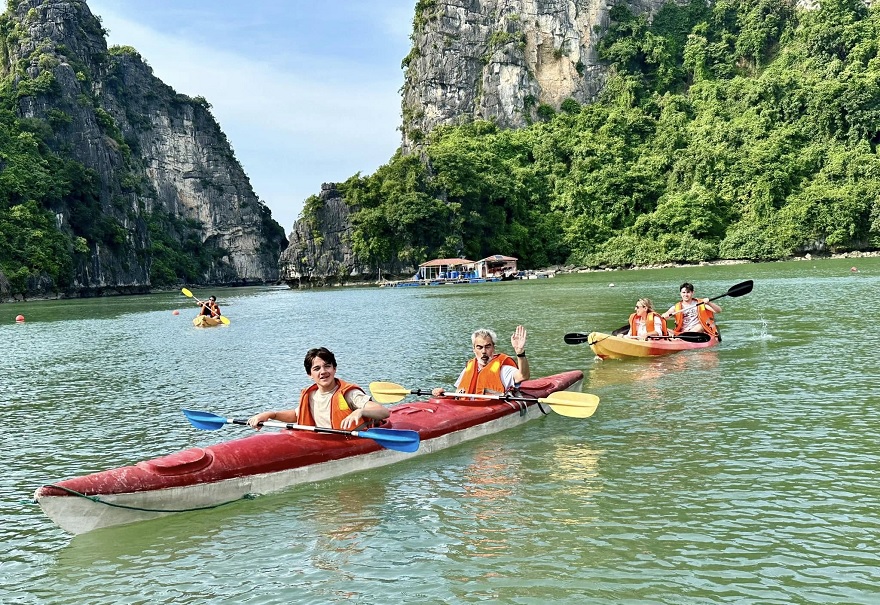
Kayaking experience at Vung Vieng
An atmosphere of absolute peace and quiet, and an opportunity to deeply experience the slow, authentic pace of life of the fishermen – an ideal destination for those seeking relaxation and wanting to “escape” the crowds.
8. Hang Co Area
If you are looking for a less crowded option, the Hang Co area with its pristine, natural beauty can be an ideal destination for your kayaking trip.
9. Cong Do Area
Located in the Bai Tu Long Bay area (adjacent to Ha Long Bay and typically included in multi-day itineraries), Cong Do is famous for its exceptionally clear blue water and diverse marine ecosystem, including colorful coral reefs. Particularly in the summer (around May to August), certain trees on the rocky islands here bloom with vibrant red flowers, creating a vivid and incredibly striking natural picture when viewed from a kayak. The water here is also usually very calm.
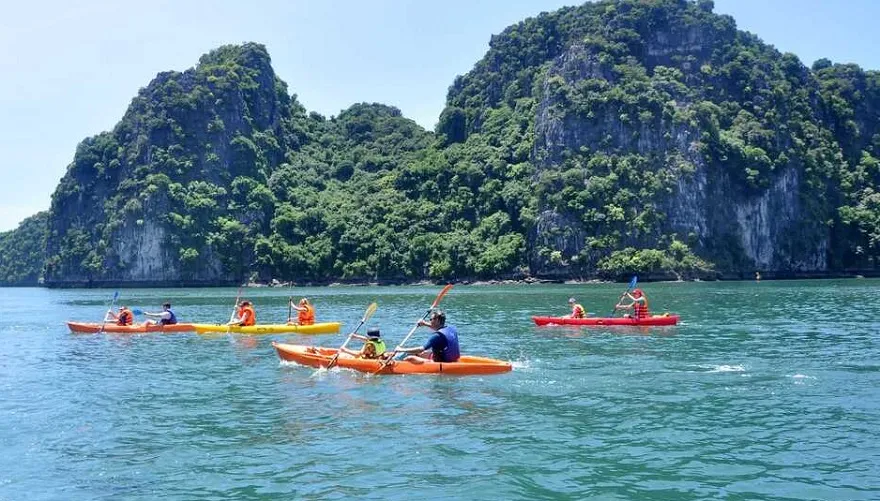
Kayaking at Cong Do
Important Notes Regarding Certain Areas:
- Quiet alternative choice: If you want to avoid the crowds, consider tours exploring Lan Ha Bay (adjacent, located in Cat Ba, Hai Phong) or Bai Tu Long Bay (in the northeast of Ha Long Bay). Both bays feature similar landscapes and highly developed kayaking activities.
- Restricted/Permit-required areas: Some areas with high conservation value or complex terrain, such as Luon & Bright Cave, Cap La area…, usually require special permits and can only be accessed through licensed tours with professional guides.
- PROHIBITED kayaking areas (from 2024): For landscape conservation and overtourism reduction reasons, kayaking has been completely banned at Thien Cung Cave and Sung Sot Cave.
- Areas closed for recovery: Dragon Eye Island with its unique blue lake in the middle has been temporarily closed for ecological recovery and is expected to reopen by the end of 2025. You should check for updates before planning a visit here.
- Some other Kayaking areas: Besides the 8 official areas above, several other spots also offer interesting kayaking experiences depending on the tour itinerary, which are pristine small beaches: Scattered across small islands, with crystal-clear bottom-visible water, making them ideal places to rest and swim after kayaking.
Guide to Kayaking in Ha Long Bay
Kayaking in Ha Long Bay is not simply an exploration activity but also a wonderful way to immerse yourself in the majestic nature of this heritage region. With calm seas, compact and flexible kayaks, you can easily weave through caves, admire limestone islands, or drift amid clear blue waters. To fully enjoy this experience, here is a detailed guide on how to kayak, tailored to the conditions in Ha Long Bay.
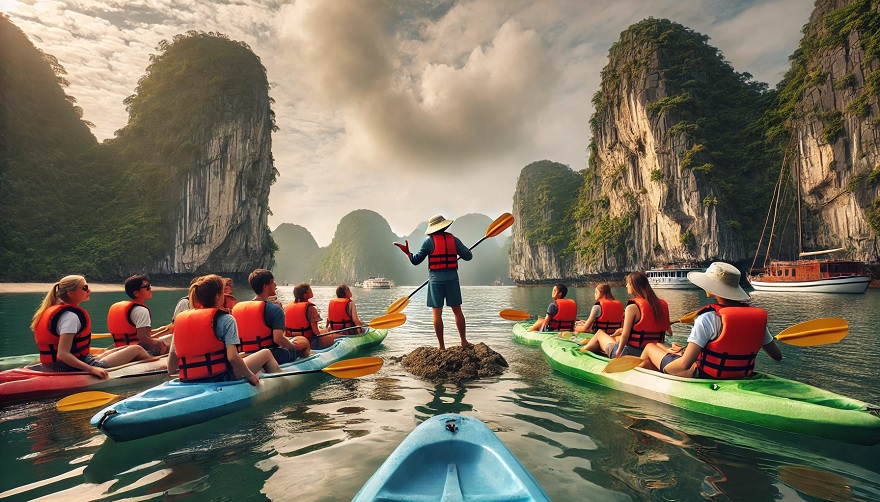
Guide to Kayaking in Ha Long Bay
1. Proper sitting posture on a kayak
When getting into a kayak – usually single or double types in Ha Long Bay – sit up straight on the seat. Spread your legs in a V-shape, knees slightly bent, with each foot resting firmly on the footpegs (if available). Your thighs should gently press against the sides of the boat deck to maintain balance, especially when paddling through narrow caves like Luon Cave or Ba Hang. Keep your back straight, imagining a straight line from your navel to the top of your head, and avoid leaning completely back against the seat like sitting on a sofa – this helps you remain more flexible when you need to turn the boat or adjust direction among limestone islands. If you are tired, instead of leaning backward, lean slightly forward and grip the edge of the cockpit to rest. A kayak with a comfortable seat, such as those provided on VDS Travel tours, will keep you comfortable throughout a long journey.
2. How to hold the paddle
The paddle is an essential “companion” when kayaking in the bay. In Ha Long Bay, paddles are typically asymmetrical double-bladed with concave faces, designed for easy straight paddling on flat water. To hold it correctly, place your hands about shoulder-width apart or slightly wider, holding the middle of the paddle so it is balanced. Your knuckles should point upward, and the concave side of the blade should face toward you – this helps you utilize pulling force in the water efficiently. Do not grip too tightly; keep your hands relaxed on the shaft to avoid fatigue when paddling through spots like Vung Vieng or Cong Do. Before starting, the guide team from the cruise tours will usually check and instruct you on the proper paddle grip, ensuring you are ready for the journey.
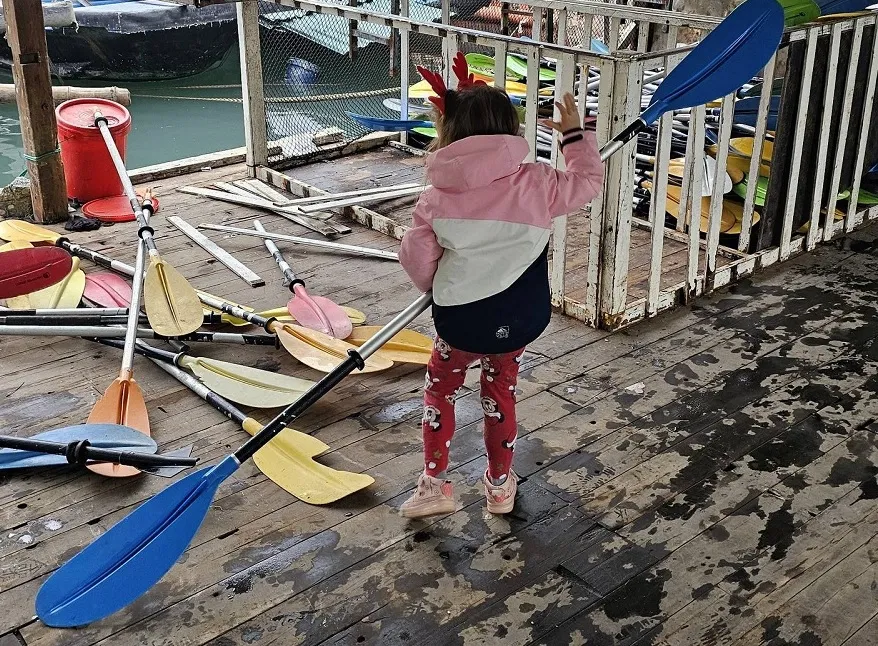
Paddles used when kayaking in Ha Long Bay
3. Basic kayaking techniques
Since Ha Long Bay has calm seas, you do not need to worry too much about strong currents like those in rivers. However, to move flexibly between caves and rocky islands, master the following techniques:
-
Forward Stroke: Place the paddle blade in the water near the bow (front), pull it back strongly alongside the boat to your hip, then lift it out of the water. Repeat on the other side, alternating rhythmically so the kayak glides forward. This technique is ideal when you want to cross the peaceful waters of Ba Hang or approach the emerald-green lagoons of Hang Thay.
-
Backward Stroke: Place the paddle in the water near your hip, push it forward toward the bow, then lift it out. Repeat on both sides to back up or slow down – useful when you want to pause for sightseeing or take photos amidst the limestone islands.
-
Sweep Stroke (for turning): Place the paddle in the water near the bow on the side you wish to turn away from, sweep it in a wide arc toward the stern, then lift it out. Repeat on the same side to rotate the kayak – this technique is essential when turning in tight spaces like the entrance of Luon Cave or adjusting your direction at Cua Van.
-
Draw Stroke (sideways movement): Place the paddle in the water on the side you want the kayak to shift toward, pull it firmly toward the hull, keeping the paddle close to your body to avoid spinning. This is an effective way to avoid cliffs or approach small sandy beaches at Virgin Cave (Hang Trinh Nu).
When paddling, coordinate power from your arms, shoulders, and legs – gently press against the footrests in sync with your strokes to generate power without expending too much energy. With initial guidance from the team at Ha Long Bay, you will quickly get the hang of it and confidently control your kayak.
4. Safely Getting In and Out of the Kayak
In Ha Long Bay, you usually get in and out of kayaks from a cruise ship or a small pier. To board, sit on the edge of the kayak first, place one hand on the edge to maintain balance, then slowly lower yourself onto the seat and bring your feet into position. When getting out, do the reverse: use your hands to brace the edge, lift yourself up, and step out. Wearing sports shoes, as recommended in the previous article, will help you move easily and prevent slipping.
5. Quick Tips for Your Ha Long Bay Experience
-
Best time to paddle: Choose ideal hours such as summer (9:00 AM – 3:00 PM) or autumn (11:00 AM – 2:00 PM) to enjoy pleasant weather and avoid fatigue.
-
Pace yourself: Paddle leisurely to feel the sea breeze and not miss the beauty of the stalactites or floating fishing villages.
-
Safety First: Always wear a life jacket (provided by the tour) and listen to instructions from the support team.
With these steps, you will quickly master kayaking and enjoy the ultimate freedom of gliding through magical caves, admiring the crystal-clear water and majestic limestone mountains. Although you might feel a bit clumsy at first, after just a few minutes of practice, you will find yourself fully immersed in the breathtaking nature of Ha Long Bay!