Before Western voyages of exploration etched boundary lines across world maps, the southern continent stood as a solitary landmass embraced by vast oceans, preserving original layers of culture stretching back tens of millennia. The historical turning point that ushered in the face of modern Australia officially began in January 1788, when the First Fleet of eleven ships under the command of Captain Arthur Phillip cut through the waves into the calm waters of Sydney Harbour (Port Jackson). This fateful landfall gave birth to the British Empire’s first penal colony in New South Wales, laying the cornerstones for its future urban fabric and political institutions. Captain Arthur Phillip respectfully named the settlement Sydney after Lord Sydney—Thomas Townshend, the powerful British Home Secretary of the era who had directly authorized the plan to establish this distant colonial outpost in the Southern Hemisphere.
Originating as a harsh place of exile populated by convicts serving hard labor alongside Royal Marine expeditionary forces, New South Wales gradually transformed over the early decades of the nineteenth century through the rise of wool-producing sheep farming and coastal maritime trade. However, the true spark that ignited the miraculous takeoff of the entire continent began in the mid-nineteenth century, when rich gold deposits were discovered in rapid succession. The world-shaking gold rushes not only drew hundreds of thousands of immigrants from across every continent in search of fortune, but also poured immense capital into colonial coffers—permanently reshaping demographics, the economy, and transport infrastructure, and transforming Sydney from a modest garrison post into one of the busiest commercial seaports along the Pacific Rim.
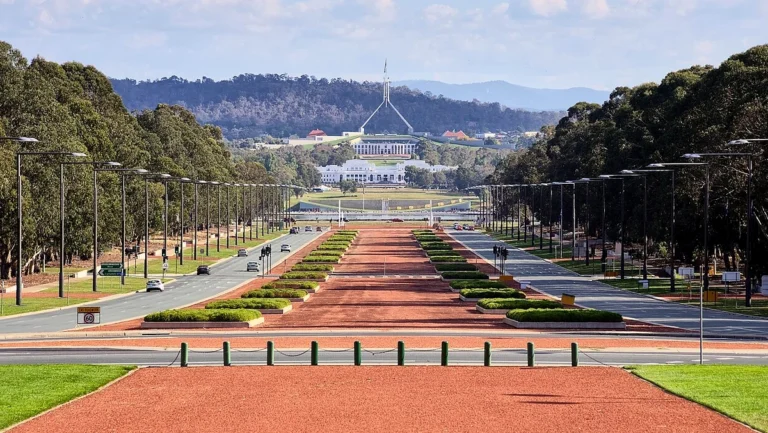
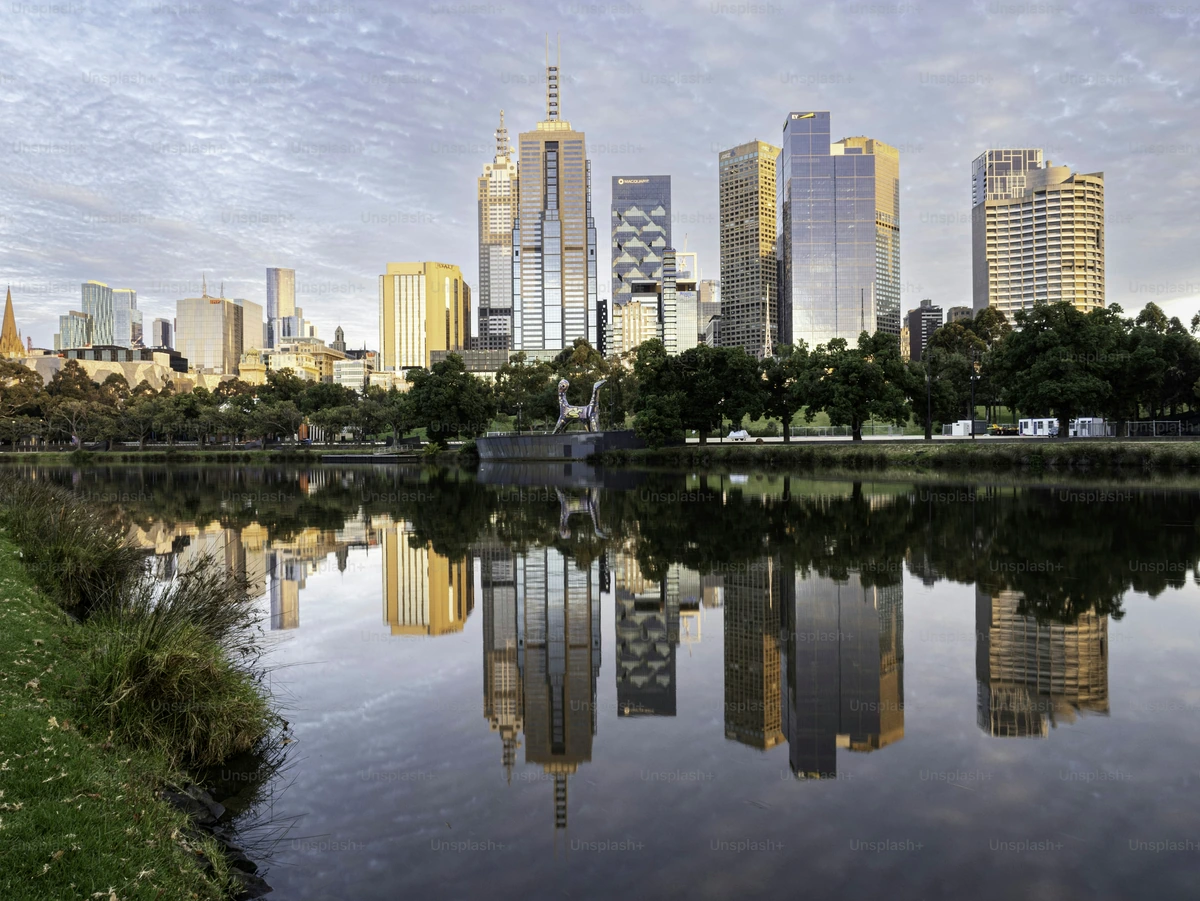
Alongside Sydney’s rise, the southern region in the state of Victoria charted an epic of development painted in entirely different hues. The city of Melbourne was founded in 1835 by two ambitious pioneers, John Batman and John Pascoe Fawkner. Unlike its northern neighbor, Melbourne was born as an entirely free settlement, unburdened by the legacy of a penal colony. Thanks to its prime location along the Yarra River and the extraordinary momentum of the Victorian gold rush, the metropolis rapidly amassed vast wealth to craft a magnificent cityscape dubbed “Marvellous Melbourne,” defined by sweeping boulevards and imposing Victorian and Edwardian architectural ensembles. When Federation officially united six colonies into the Commonwealth of Australia on the first day of 1901, Melbourne had the honor of serving as the nation’s interim capital for more than two decades, from 1901 until 1927, before the seat of administrative power was transferred permanently to Canberra.
After the first half of the twentieth century weathered the turbulent upheavals of human history, the most profound geopolitical shift reshaping the identity of the Land Down Under unfolded during the post-1945 reconstruction wave. Large-scale post-World War II immigration policies opened the doors to millions of newcomers from across Europe and the Mediterranean, followed by diverse waves of migration from Asia. This historic demographic transformation liberated Australia from the shadow of a distant English-speaking Commonwealth outpost, evolving the nation into a dynamic, open-minded multicultural powerhouse anchored by robust economic depth at the heart of the Asia-Pacific region. The sweeping arc of history—from Captain Arthur Phillip’s first landing to a prosperous era of global integration—forms the grand backdrop that infuses the twin jewels of Sydney and Melbourne with the layered soul and character every distant traveler longs to experience.
Viewed through the lens of geology and landscape feng shui across the far southern continent, the profiles of the two vital metropolises, Sydney and Melbourne, reflect two completely contrasting yet harmoniously complementary schools of landform creation. Sydney is embraced by a ria geomorphological structure—a colossal drowned ancient river valley formed as sea levels rose after the last ice age, creating the natural harbor of Port Jackson, one of the deepest and most sheltered on the planet. The entire spatial foundation of this celebrated harbor rests upon Triassic-era Hawkesbury sandstone strata hundreds of meters thick, rich in iron oxides that lend a characteristic warm golden hue. This resilient sandstone not only forms dramatic sheer cliffs standing guard against Pacific swells at The Gap and South Head, but also served as the primary building stone for early colonial heritage landmarks, defining an architectural identity for the harbor city that is at once enduring and weathered by the sea.
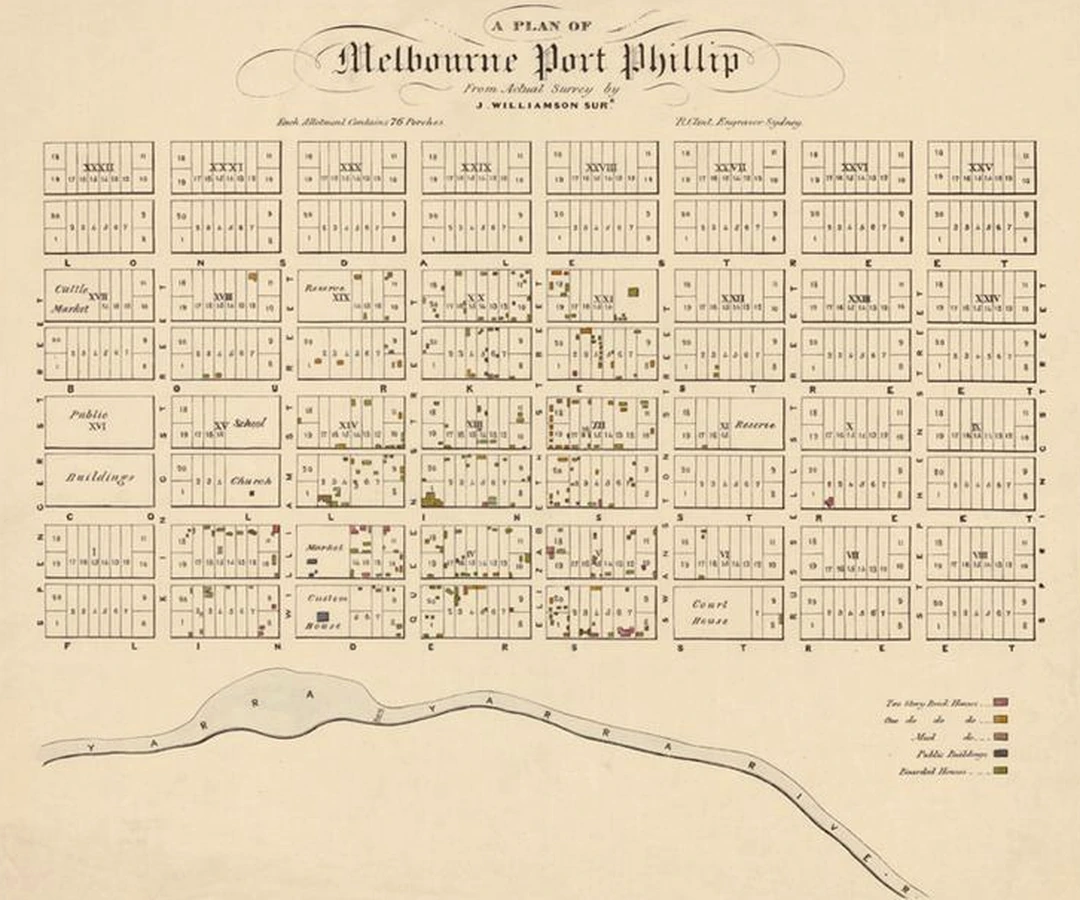
In contrast to Sydney’s rolling, undulating contours, Melbourne establishes its foothold across flat western volcanic lava plains and the alluvial sedimentary flats of the lower Yarra River, sloping gently to hug the horseshoe curve of Port Phillip Bay. This stable, expansive terrain provided an ideal canvas for surveyor Robert Hoddle to lay out his classic grid plan of wide avenues interlaced with an intricate web of laneways. The gently sloping topography enables Melbourne to absorb natural groundwater flows, seamlessly linking its river delta with lush green parklands such as the Royal Botanic Gardens to form a balanced ecological urban fabric where modern life nestles beneath ancient canopies and native temperate flora.
Heading roughly one hundred kilometers inland from the coast of New South Wales, the terrain shifts dramatically into the Blue Mountains range—a natural wonder inscribed as a UNESCO World Heritage Site. This landscape stands as living testimony to millions of years of tectonic uplift and stratigraphic erosion, carving deep gorges and boldly dissected sandstone plateaus, epitomized by the vast Jamison Valley. What gives this highland region its soul is its primeval temperate rainforests and boundless expanses of endemic eucalyptus woodland. Millions of eucalyptus trees simultaneously release microscopic droplets of essential oil into the atmosphere; under the effect of Rayleigh scattering, short blue wavelengths of sunlight are intensely refracted, weaving an ethereal blue haze around the iconic Three Sisters sandstone formations.
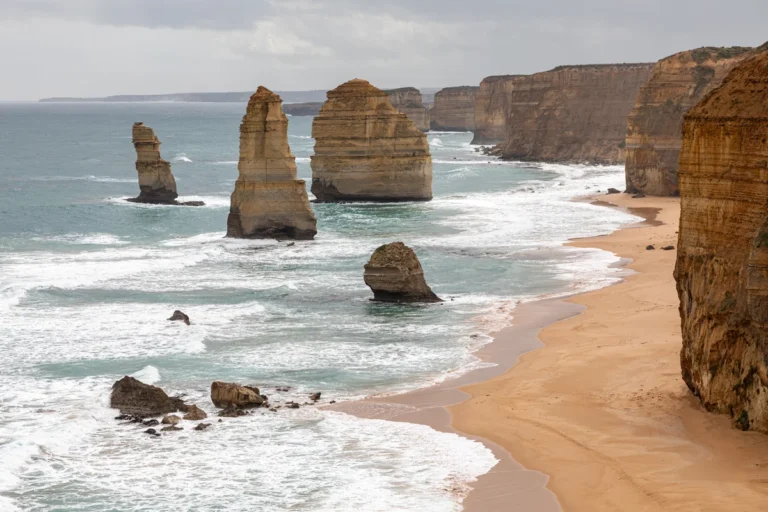
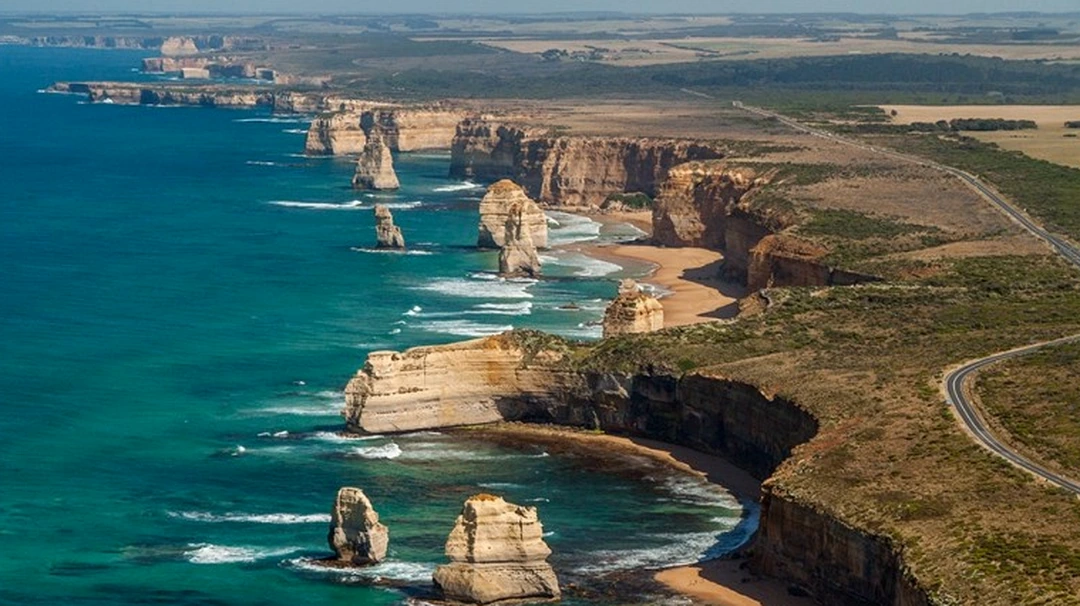
Stretching along the southwestern coast of Victoria, the heritage-listed Great Ocean Road is an epic poem celebrating the relentless yet sublime interplay between lithosphere and hydrosphere. Spanning 243 kilometers from Torquay to Allansford, this coastal highway was hewn through sheer, perilous cliffs by the extraordinary manual labor of tens of thousands of returned soldiers after World War I. Under the continuous mechanical abrasion of gale-force winds and towering swells rolling in from the Southern Ocean, soft Cenozoic limestone accumulated from ancient marine organisms was gradually hollowed into sea notches, evolving into caves and natural arches before collapsing to leave isolated sea stacks—the “Twelve Apostles“—standing sentinel amid deep turquoise waters. Ongoing sedimentation and erosion across millennia have sculpted a poignant open-air geological museum where travelers can witness firsthand the eternal shifting boundary between land and vast ocean.
To admire Australia’s architectural landscape is to enter a grand dialogue between peak human engineering and untamed natural scenery. The pinnacle of futuristic sculptural architecture in the Land Down Under is the Sydney Opera House, poised on historic Bennelong Point. Conceived by visionary Danish architect Jørn Utzon, the landmark is a masterwork of Expressionism whose gleaming white concrete sails billow out to catch the ocean breeze. The breakthrough that rescued the design from remaining an unbuildable dream on paper was Utzon’s revolutionary “spherical solution.” Rather than fabricating shells with complex parabolic curves that would have required prohibitively expensive bespoke formwork, every multifaceted roof vault was cut from uniform sections of a single imaginary sphere with a radius of roughly 75 meters. The surfaces of these sails are meticulously clad in more than 1,056,000 Höganäs glazed ceramic tiles imported from Sweden, alternating between glossy white and matte cream—allowing the structure to self-clean in the rain while fluidly reflecting every spectrum of harbor light from dawn through sunset.
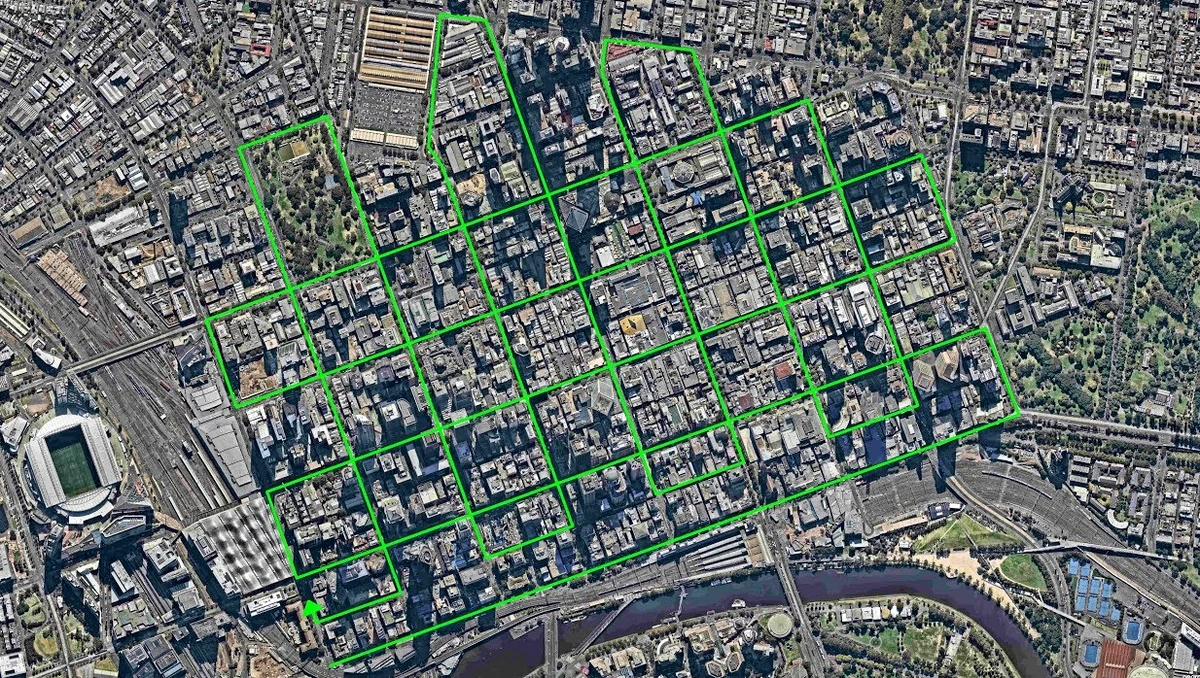
Turning south, the metropolis of Melbourne showcases a wholly different spatial planning philosophy, where classical geometric rationality merges with the pulse of civic life. Originating in 1837 from the drafting board of surveyor Robert Hoddle, the “Hoddle Grid” established an urban skeleton built to endure through the ages. Measuring one mile in length by half a mile in width, the grid was oriented 8 degrees east of true north so as to run perfectly parallel to the course of the Yarra River. Hoddle insisted on grand thoroughfares set at a generous standard width of 99 feet (approximately 30 meters), alternated with narrower “Little” streets such as Little Collins Street and Flinders Lane. From this original herringbone network—designed in the nineteenth century simply for freight carts and stables—a signature matrix of bluestone-paved laneways evolved into a one-of-a-kind cultural ecosystem. Urban density here achieves a deeply human scale, interweaving opulent Victorian glass-domed shopping arcades like the Block Arcade and Royal Arcade with intimate alleys blanketed in contemporary street art, creating a richly compressed spatial experience full of intrigue.
Beyond glamorous cityscapes, Australia’s architectural and engineering heritage has also been forged against rugged natural terrain, exemplified by the infrastructure marvel in the Jamison Valley of the Blue Mountains. Tucked amid sprawling eucalyptus forests and Triassic sandstone cliffs deposited over millions of years, the Scenic Railway at Katoomba stands as a monument to early modern engineering audacity. Originally built in the 1880s to haul coal and oil shale up from the precipitous valley floor to the cliff top, the line boasts an astonishing incline of 52 degrees (a 128% gradient), officially holding the record as the steepest passenger railway in the world. A heavy-duty cable winch system drives carriages along steel rails anchored directly to the sheer cliff face, plunging through a dark natural rock tunnel before opening onto sweeping vistas of the legendary Three Sisters. The synergy between nineteenth-century heavy mechanical engineering and today’s modern sightseeing cableways testifies to human ingenuity in conquering formidable terrain—transforming a dusty industrial worksite into a timeless heritage travel masterpiece.
As the fiery sun of the Southern Hemisphere sinks toward the ocean horizon, Australia transitions into the evening through a distinctive cultural ritual known as the Sundowner. Far more than simply sipping a glass of sparkling Shiraz or native botanical gin and tonic at dusk, it is a philosophical way of life woven deeply into the Australian psyche—marking the close of the harsh daytime heat to welcome the cool, temperate evening breeze. At rooftop bars overlooking Sydney’s Port Jackson, or along windswept clifftop lookouts in Melbourne’s St Kilda, the Sundowner opens the doorway into an enchanting nocturnal world where contemporary visual art, urban architecture, and an easygoing lifestyle seamlessly converge.
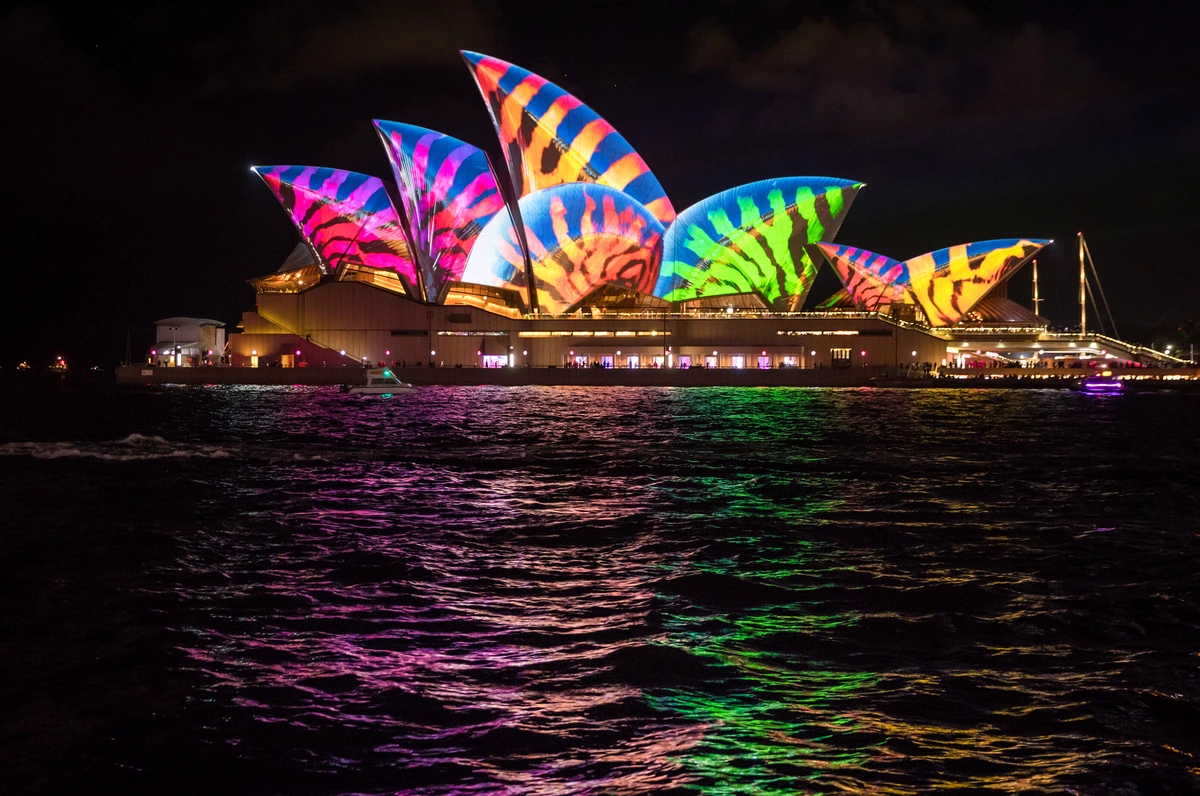
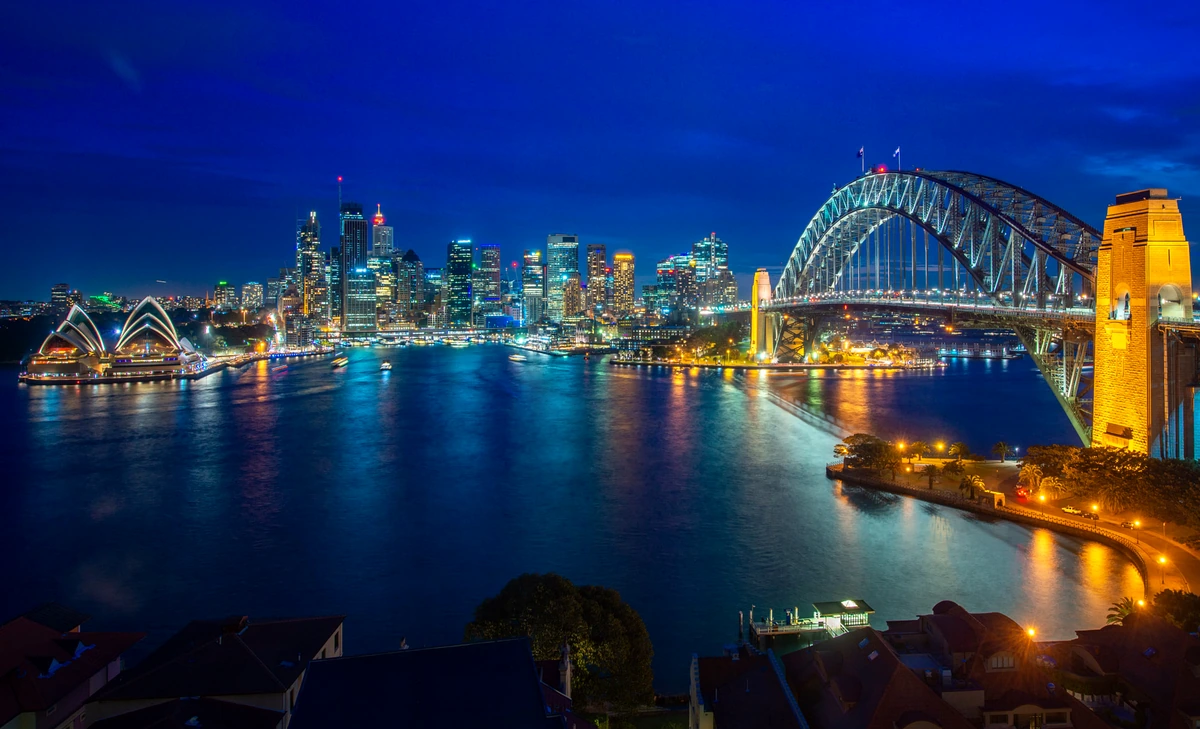
If Sydney dazzles by day with the deep azure ocean hugging its bays, by night—especially from late May to mid-June each year—the city transforms into a colossal open-air museum of light during Vivid Sydney. At the heart of this visual spectacle stands the architectural icon of the Sydney Opera House, the twentieth-century masterwork created by legendary Danish architect Jørn Utzon. Over a million shell-toned glazed ceramic tiles across its billowing sails suddenly become a living artistic canvas through ultra-high-resolution 3D projection mapping. First Nations Dreamtime stories, mysterious marine ecosystems, and digital forms morph in rhythm with symphonic soundscapes, shimmering across the harbor waters and amplified by the illuminated steel arch of the neighboring Sydney Harbour Bridge—delivering a world-class live light performance that captivates every sense.
In contrast to Sydney’s internationally renowned spectacle, nightlife in Australia’s cultural capital of Melbourne prefers to tuck itself discreetly inside narrow nineteenth-century bluestone alleys—famous worldwide as Laneway culture. Rather than flaunting dazzling floodlights, celebrated laneways such as Hosier Lane and AC/DC Lane preserve a moody nocturnal intimacy with low-key lighting that casts soft shadows across walls layered with graffiti and murals. A warm, subtle glow guides strollers past unmarked vintage wooden doors concealing bohemian speakeasy bars, where spontaneous jazz riffs mingle with the aroma of cocktails infused with native rainforest botanicals. Experiencing Melbourne after dark invites you to slow your pace, listen to the quiet murmur of heritage cobblestones, and immerse yourself in the free-spirited soul of the southern hemisphere’s premier independent arts hub.
Australian nightlife is therefore never confined to boisterous party strips or brightly lit shopping precincts; instead, it weaves together rich layers of atmosphere and emotion. From the quiet pleasure of raising a glass to the ocean breeze at twilight, to watching digital artistry dance across World Heritage landmarks, to getting delightfully lost in spontaneous underground art alleys, travelers truly touch the spirit of a modern nation that honors both nature and cultural depth.
Australia’s culinary map is a fascinating conversation between ancient Indigenous memory and vibrant waves of multicultural immigration. The roots of modern Australian cuisine spring from Bush Tucker—the treasure trove of wild native ingredients that First Nations peoples sustained over more than sixty thousand years of living in harmony with an unforgiving landscape. No longer confined to traditional foraging methods, the essence of Bush Tucker has been artfully reborn in contemporary fine-dining kitchens. Think of the crisp, zesty burst of finger lime—nicknamed “citrus caviar” for its plump, jewel-like pearls—the intense herbal fragrance of lemon myrtle, the roasted-coffee undertones of wattleseed, or creamy macadamia nuts native to Queensland’s coastal rainforests. Combined with fertile soils and clean waters, these unique ingredients have shaped a true farm-to-table philosophy that celebrates peak freshness and the natural rhythms of the seasons.
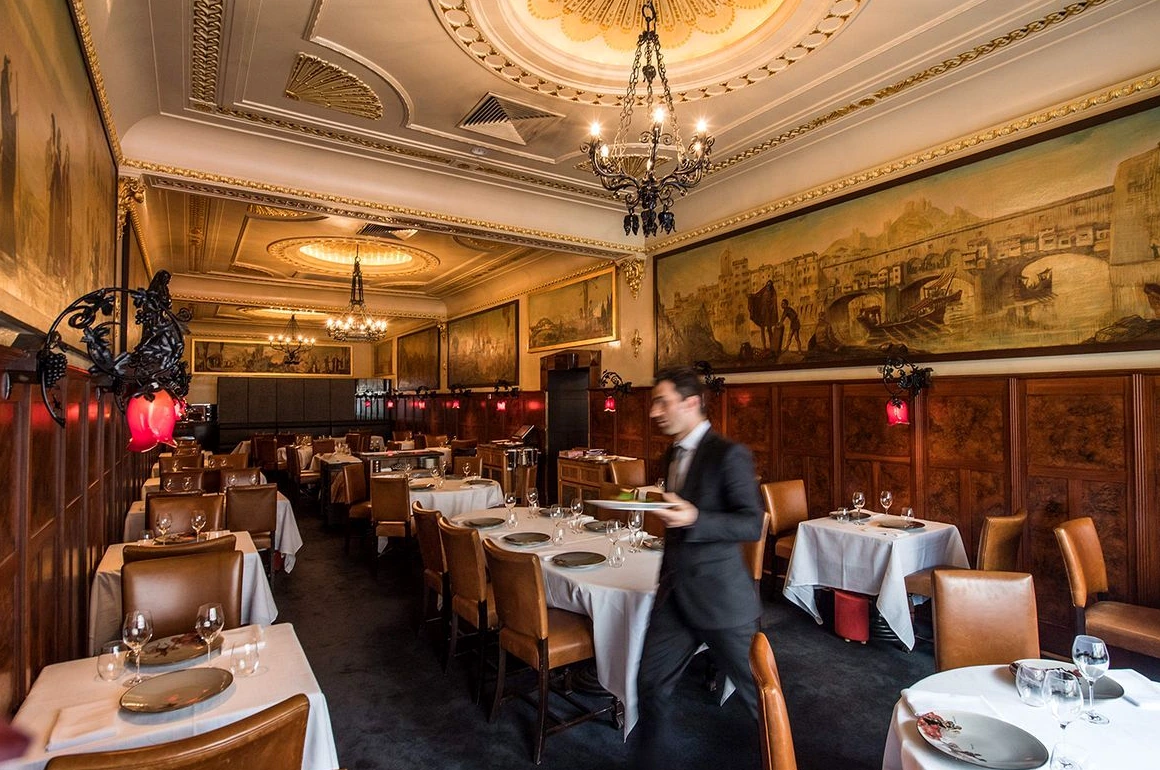
In Melbourne, the culinary heart of the south, European migration following mid-twentieth-century global upheavals forged an unmistakable heirloom dining identity. Strolling along bustling Bourke Street, the storied Grossi Florentino stands like a living museum celebrating the seamless marriage of Italian heritage and Australian soul. Operating since the late 1920s, this heritage institution captivates diners with opulent Renaissance-style murals beneath classic wood-paneled ceilings. Across multiple generations of the Grossi family, every plate of meticulously hand-rolled pasta, slow-braised game ragù, and aromatic truffle harvested from the foothills of the Dandenong Ranges tells a story of devotion to ancestral recipes—elevated to perfection by prime lamb and seasonal produce from Victoria’s lush plains.
Heading north to the harbor city of Sydney, the culinary ethos takes on the breezy generosity of the ocean paired with razor-sharp precision in handling premium red meats. Housed within the stately Art Deco City Mutual Building, Rockpool Bar & Grill commands the pinnacle of Sydney’s dining scene. At the core of its kitchen lies a commitment to sustainable sourcing, where full-blood Wagyu steaks from Blackmore River Valley farms are seared over wood-fired grills fueled by native Australian hardwoods. Rich woodsmoke melds with velvety marbling that melts effortlessly on the palate, paired harmoniously with plump Sydney Rock oysters harvested fresh from pristine estuaries or Southern Rock lobster caught along the continental shelf. Every dish served here affirms an ethical dedication to preserving the natural bounty of ocean and pasture alike.
Alongside fine-dining indulgences, no portrait of local food culture would be complete without BYO—short for “Bring Your Own,” the beloved custom of bringing your own wine or beer to a restaurant meal. Born out of restrictive liquor licensing laws in the twentieth century, BYO gradually evolved into a hallmark of Australia’s egalitarian spirit and unpretentious, convivial lifestyle. From humble family-run eateries tucked into immigrant neighborhoods to breezy coastal bistros, diners can casually bring along a celebrated Barossa Valley Shiraz or Margaret River Chardonnay to share with friends for just a modest corkage fee. This down-to-earth tradition strips away formality, returning dining to its purest essence: shared flavors, genuine camaraderie, and warm hospitality beneath the Southern Cross.
To ensure a smooth arrival in Australia, the first essential step for travelers is securing a Visitor Visa (Subclass 600 – Tourist stream), lodged and processed online through the Australian Department of Home Affairs’ ImmiAccount portal. Because assessment requires thorough transparency regarding financial capacity, stable employment, and a detailed itinerary, applications should be initiated and submitted at least eight weeks prior to your intended departure date to buffer against processing-time fluctuations. The visa application charge sits around AUD 190, excluding biometric collection fees at visa application centers. Furthermore, Australia enforces notoriously strict biosecurity laws under the Biosecurity Act at international gateways such as Sydney Kingsford Smith and Melbourne Tullamarine; all fresh food, seeds, meat products, or unprocessed herbal items must be truthfully declared on your Incoming Passenger Card, as even a minor oversight can trigger hefty on-the-spot fines running into thousands of Australian dollars or immediate visa cancellation.
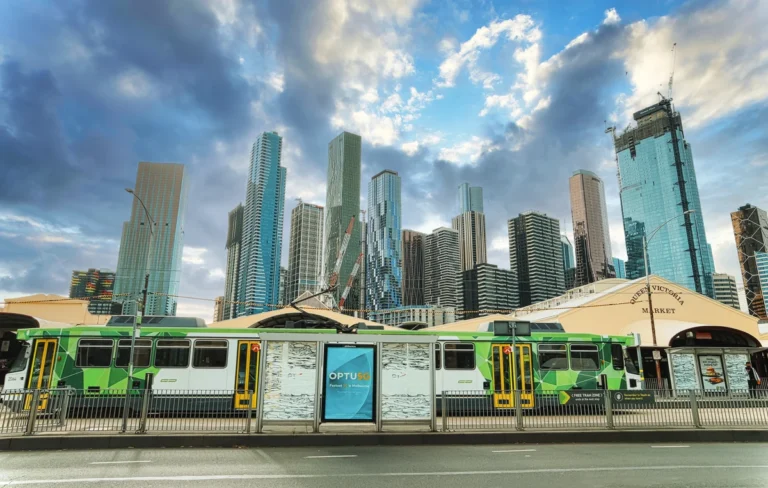
Across both major metropolises, public transit networks are modern, well-integrated, and clearly structured. Upon arriving in Sydney, visitors simply need an Opal smartcard—or a contactless bank card/digital wallet—to ride Sydney Trains, the citywide bus network, and iconic ferries departing Circular Quay across Port Jackson, all backed by daily and weekly fare caps that keep travel budgets predictable. Meanwhile, Melbourne welcomes travelers with the world’s largest operational tram network, accessed via the myki smartcard. Best of all, Melbourne’s central business district features a Free Tram Zone, allowing passengers to hop on and off trams within the city core completely free of charge without tapping on. Retail and cultural hours follow a reliable cadence: museums, galleries, and department stores generally open from 9:30 AM to 5:00 PM, extending late-night shopping until 9:00 PM on Thursdays in Sydney and Fridays in Melbourne.
Budgeting for an independent journey through Australia typically averages AUD 200 to 350 per person per day, covering mid-range hotel accommodations, multicultural dining, and admission to heritage attractions. In everyday life, Australians place high value on egalitarianism and strict queuing etiquette; cutting in line or speaking loudly in public spaces is frowned upon. Unlike North America, tipping in Australia is not obligatory because service-industry workers are protected by high statutory minimum wages; nevertheless, leaving around 10% on the bill for exceptional service at a fine-dining restaurant is always warmly appreciated as a genuine compliment.

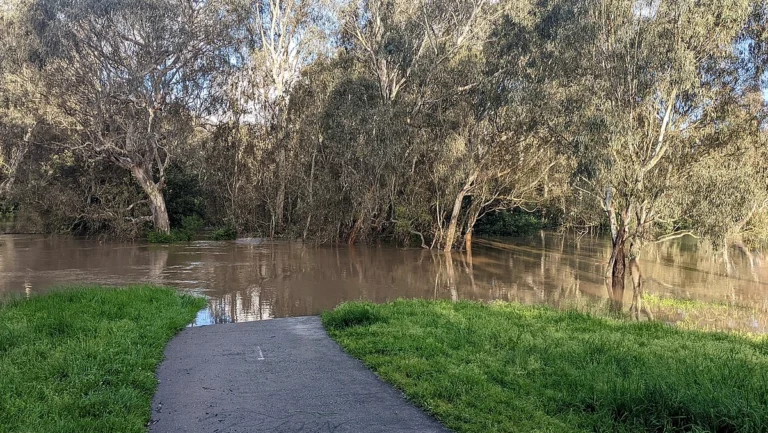
Located in the Southern Hemisphere, Australia experiences seasons completely opposite to those in the Northern Hemisphere, lending each time of year a distinct travel character. Summer (December to February) is ideal for swimming in the crystalline waters of coastal bays, whereas autumn (March to May) brings crisp, mild weather tailor-made for hiking through the Jamison Valley of the Blue Mountains ablaze with crimson and gold foliage. Conversely, winter (June to August) ushers in the season of high arts, cozy laneway cafés in Melbourne, and dazzling light festivals. Throughout your stay, be sure to download and monitor updates from the Australian Bureau of Meteorology (BOM) to stay informed of early warnings for bushfires during hot, dry spells or sudden flash flooding in low-lying areas. For a seamless exploration of the fifth continent without the stress of paperwork or complex logistics, opting for an all-inclusive Sydney – Melbourne Australia tour package is the ideal way to soak in the full cultural richness and awe-inspiring natural beauty of this remarkable land.