Before Western exploration routes carved boundaries onto the world map, the southern continent was a secluded realm embraced by vast oceans, preserving original cultural layers spanning tens of millennia. The historical turning point that shaped modern Australia officially began in January 1788, when the First Fleet of eleven warships under the command of Captain Arthur Phillip steered into the tranquil waters of Port Jackson (Sydney Harbour). This fateful stopping point gave birth to the British Empire’s first penal colony in New South Wales, laying the foundational stones for future urban structures and political institutions. The name Sydney was bestowed by Captain Arthur Phillip in honor of Thomas Townshend, 1st Viscount Sydney, the powerful British Home Secretary of the time who had directly approved the blueprint for establishing this remote colonial outpost in the Southern Hemisphere.
Originating from a harsh penal exile with convicts enduring hard labor alongside Royal military forces, New South Wales gradually transformed through the early decades of the nineteenth century thanks to the development of wool-producing sheep farming and coastal maritime trade. However, the true spark driving the continent’s miraculous breakthrough began in the mid-nineteenth century, when rich gold mines were successively discovered. The world-shaking gold rush not only lured hundreds of thousands of migrants from all continents in search of fortune but also poured massive capital into the colonial treasury, permanently altering the demographic structure, economy, and transport infrastructure, transforming Sydney from a modest garrison station into a bustling commercial port of the first rank on the Pacific coastline.
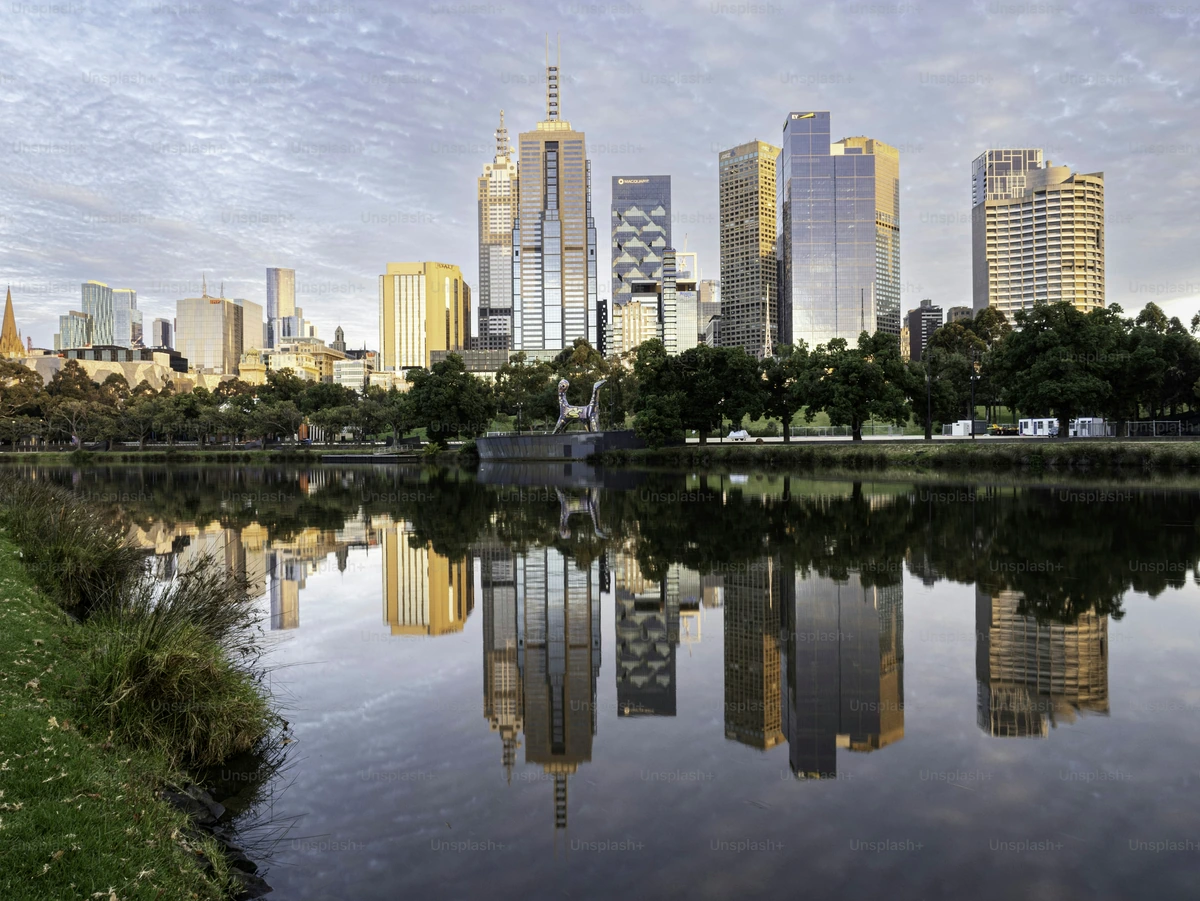
Alongside Sydney’s rise, the southern region within the state of Victoria painted an epic of development with an entirely different color palette. The city of Melbourne was pioneered in 1835 by two ambitious figures, John Batman and John Pascoe Fawkner. Unlike its northern neighbor, Melbourne was born as an entirely free settlement, unburdened by the stigma of a penal colony. Thanks to its prime location along the Yarra River and the extraordinary momentum from the Victorian gold rush, this metropolis quickly accumulated immense wealth to forge a magnificent appearance known as “Marvellous Melbourne,” featuring sweeping grand boulevards and imposing Victorian and Edwardian architectural ensembles. When federation officially united the six colonies into the Commonwealth of Australia on the first day of 1901, Melbourne was honored to serve as the temporary national capital for over two decades, from 1901 until 1927, before executive administrative power was fully transferred to Canberra.
After the first half of the twentieth century witnessed turbulent historical shifts, the most profound geopolitical turning point reshaping the identity of the land Down Under occurred during the post-1945 reconstruction wave. Large-scale immigration policies following World War II opened doors to welcome millions of migrants from across Europe, the Mediterranean region, and later diverse migration waves from Asia. This historically monumental demographic shift liberated Australia from the shadow of a remote outpost of the British Commonwealth, transforming the country into a dynamic, open multicultural powerhouse with robust economic depth at the center of the Asia-Pacific region. The sweeping length of contemporary change from Captain Arthur Phillip’s initial landing to the prosperous integration era forms a magnificent backdrop, creating a multi-layered soul and identity for the twin gems of Sydney and Melbourne that any distant traveler yearns to comprehend.
From the perspective of geology and landscape geomancy on the southern continent, the appearance of the two arterial metropolises of Sydney and Melbourne reflects two completely contrasting yet harmoniously complementing landform creation schools. Sydney is enclosed by a ria geographic structure—a colossal drowned ancient river valley formed during the post-glacial sea level rise, creating Port Jackson, one of the deepest and most sheltered natural harbors on the planet. The entire spatial foundation of this famed harbor is supported by Hawkesbury sandstone strata formed during the Triassic period, hundreds of meters thick with a characteristic iron oxide content yielding a warm golden hue. This sturdy sandstone layer not only creates breathtaking sheer cliffs shielding against Pacific waves at The Gap and South Head, but also became the pivotal building material for the earliest colonial heritage structures, shaping an architectural identity that is both rugged and weathered for the port city.
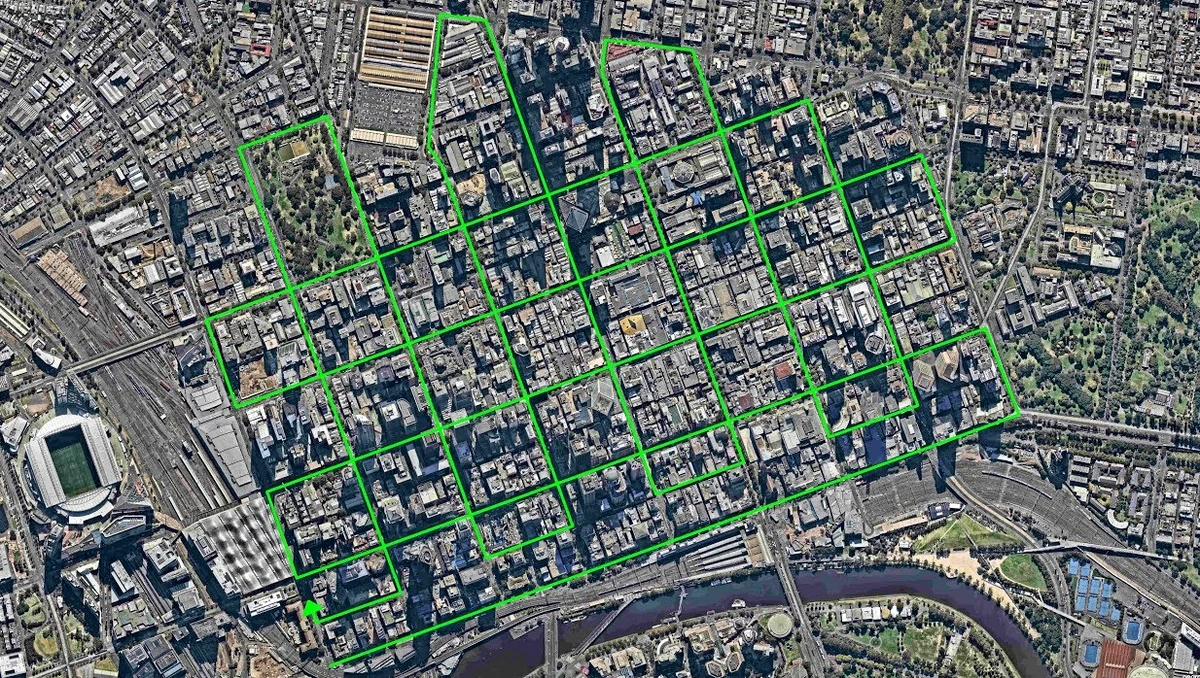
In contrast to Sydney’s undulating waves, Melbourne established its position on the flat volcanic lava plains of the west and the alluvial sediment strip of the lower Yarra River, sloping gently to embrace the horseshoe-shaped Port Phillip Bay. This stable, spacious terrain provided an ideal premise for surveyor Robert Hoddle to establish a classic grid urban planning network featuring wide grand boulevards interspersed with complex intersecting alley systems. The gently sloping terrain allows Melbourne to absorb natural groundwater currents, seamlessly connecting from river deltas to lush green park belts such as the Royal Botanic Gardens, forming a balanced ecological space where modern life hides beneath ancient canopy trees and native temperate vegetation.
Moving inland from the coast into New South Wales for about a hundred kilometers, the topography transitions abruptly into the Blue Mountains range—a wonder honored by UNESCO as a World Natural Heritage site. This place stands as living proof of tectonic uplift and stratum erosion processes spanning millions of years, creating deep ravines and boldly carved sandstone plateaus, typified by the boundless Jamison Valley. What constitutes the soul of this mountain region is its pristine temperate rainforests and sweeping endemic eucalyptus woodlands. Millions of eucalyptus trees simultaneously release ultra-fine essential oil particles into the atmosphere; under the influence of Rayleigh scattering, short blue light wavelengths are intensely refracted in sunlight, weaving a magical blue mist surrounding the iconic Three Sisters sandstone rock formations.
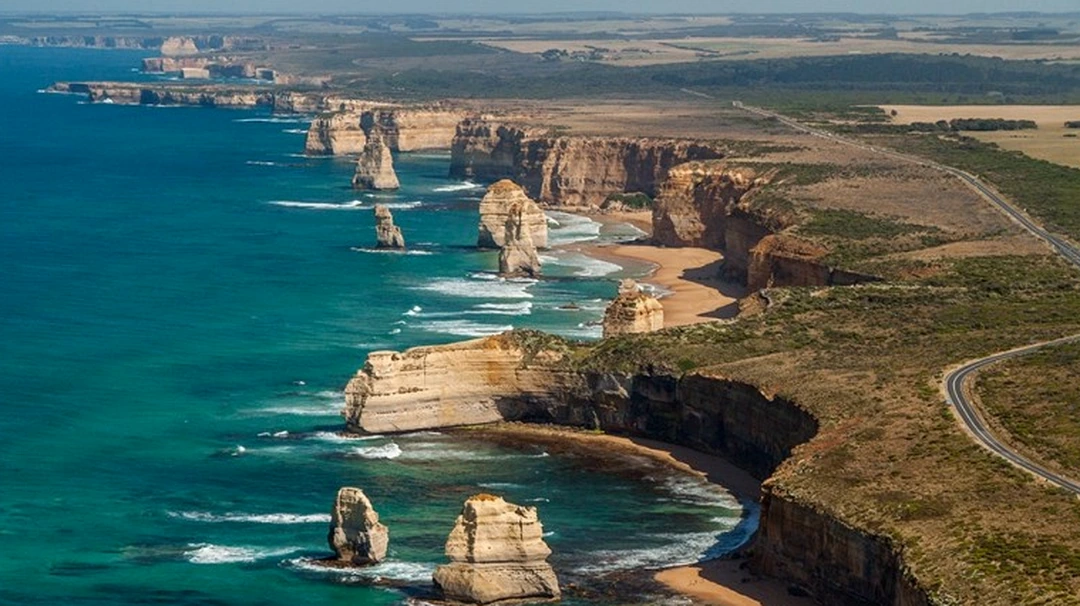
Stretching along the southwestern coast of Victoria, the Great Ocean Road heritage route is a grand hymn to the harsh yet dazzling interaction between the lithosphere and hydrosphere. Spanning 243 km from Torquay to Allansford, this coastal transport route was commenced through the extraordinary human endeavor of tens of thousands of World War I veterans, traversing treacherous, sheer cliffs. Under the relentless mechanical erosion of storms and roaring swells from the Southern Ocean, soft limestone layers accumulated from Cenozoic marine organism remains were gradually hollowed into arches, evolving into caves and natural stone bridges before collapsing, leaving behind the solitary stone pillars of the “Twelve Apostles” standing proudly amidst sparkling blue waters. Sedimentation and erosion processes unfold uninterruptedly across millennia, fashioning a breathtaking open-air geological museum where visitors can witness firsthand the eternal shift of the boundary between mainland and vast ocean.
Admiring Australia’s architectural canvas is stepping into a magnificent dialogue between peak human engineering thought and pristine natural landscapes. The pinnacle of futuristic plastic art in the land Down Under is the Sydney Opera House, situated on the historic Bennelong Point headland. Conceived by the genius Danish architect Jørn Utzon, the structure is a classic icon of expressionism featuring white concrete sails soaring to greet ocean breezes. The crucial point that liberated the design from structural collapse on paper was Utzon’s groundbreaking “spherical solution.” Instead of creating shells with complex parabolic curvatures requiring prohibitively expensive custom molds, the entire polyhedral dome roofing system was cut from uniform segments of a single hypothetical sphere with a radius of approximately 75 meters. The surfaces of these sails are meticulously clad with over 1,056,000 Höganäs ceramic glazed tiles shipped from Sweden, alternating between glossy white and matte cream tones, allowing the architecture to clean itself under rainfall and flexibly reflect every spectrum of the bay from dawn to dusk.
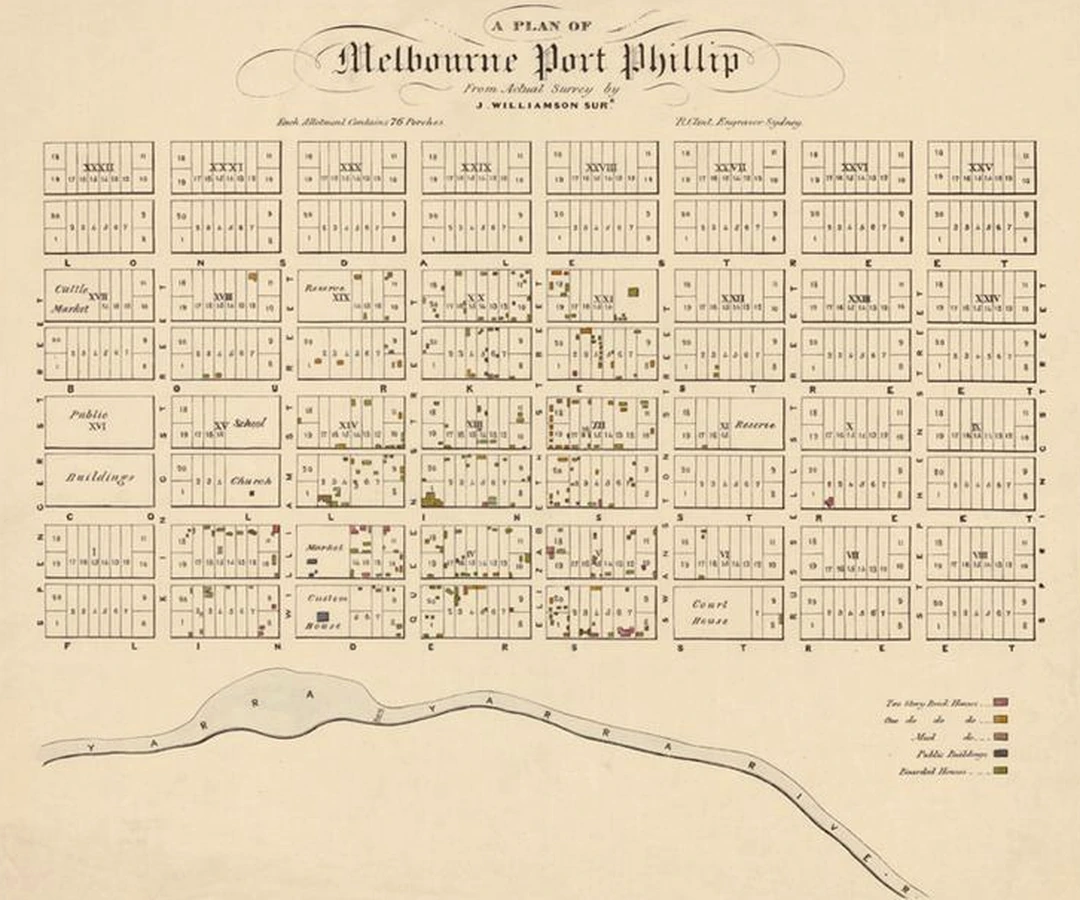
Heading south, the metropolis of Melbourne exhibits an entirely different spatial planning philosophy, where classic geometric rationality blends with the pulse of civic life. Originating in 1837 under the pen of surveyor Robert Hoddle, the “Hoddle Grid” master plan established an enduring urban skeletal framework. This spatial grid spans an area one mile long and half a mile wide, oriented 8 degrees east of true north to run in perfect parallel alignment with the Yarra River’s flow. Hoddle decisively established prestigious boulevards with standard widths reaching up to 99 feet (approximately 30 meters), interspersed with secondary networks named “Little” such as Little Collins or Flinders Lane. From this initial spine network originally serving 19th-century cargo transport and stables, the characteristic blue-bluestone-paved laneway system transformed into a unique cultural matrix. Urban density here reaches a humanistic benchmark by interweaving magnificent Victorian glass-arched corridors like the Block Arcade or Royal Arcade with intimate alleys draped in contemporary graffiti art, creating an enchanting deep-compressed spatial experience.
Leaving behind ornate urban structures, Australia’s architectural and engineering heritage has also been forged through harsh natural terrain challenges, exemplified by the infrastructure marvel in the Jamison Valley of the Blue Mountains. Hidden among boundless eucalyptus forests and Triassic sandstone blocks sedimented over millions of years, the Scenic World railway in Katoomba stands as a monument to the courage of modern-era construction engineering. Originating in the 1880s to serve coal mining from the sheer abyss up to the cliff top, this railway boasts a staggering gradient of up to 52 degrees (equivalent to a 128% incline), officially holding the record as the steepest passenger-carrying railway on the planet. Heavy-duty cable winch systems operating on steel tracks grip tightly to the vertical cliff face, piercing through a dark natural rock tunnel before unfolding expansive views toward the legendary Three Sisters rock formation. The resonance between 19th-century heavy mechanical engineering and modern scenic cable car systems today demonstrates the capability to master rugged terrain, transforming a dusty industrial job site into a timeless heritage travel masterpiece.
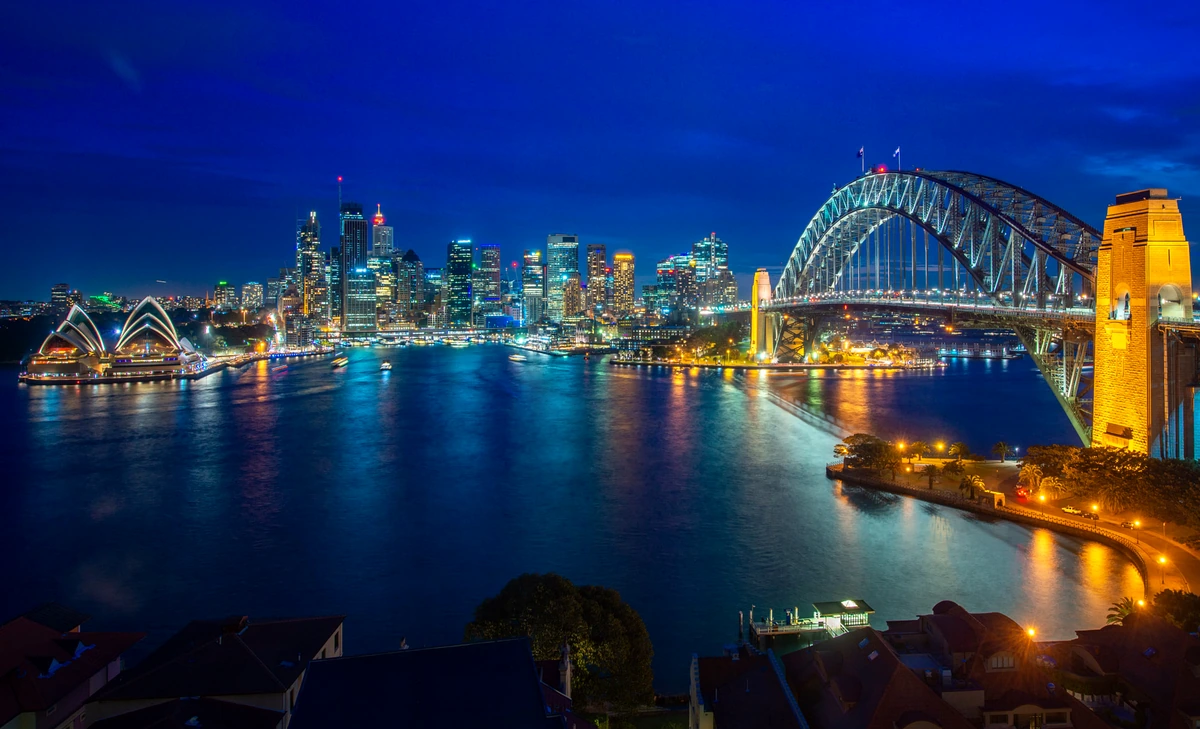
As the fiery sun of the Southern Hemisphere gradually sinks beneath the oceanic horizon, the land Down Under transitions through a unique cultural handoff ritual called the Sundowner. This is not merely the habit of sipping a glass of Shiraz sparkling wine or local botanical gin as dusk falls, but a philosophical lifestyle deeply embedded in the Australian character to close out the scorching daytime heat and welcome the mild, gentle evening breeze. At rooftop bars overlooking Port Jackson bay in Sydney, or along the windswept rocky promenades of St Kilda in Melbourne, the Sundowner ritual opens a door guiding travelers into a magical nocturnal world where the boundaries between contemporary visual art, urban architecture, and a free-spirited lifestyle merge into one.
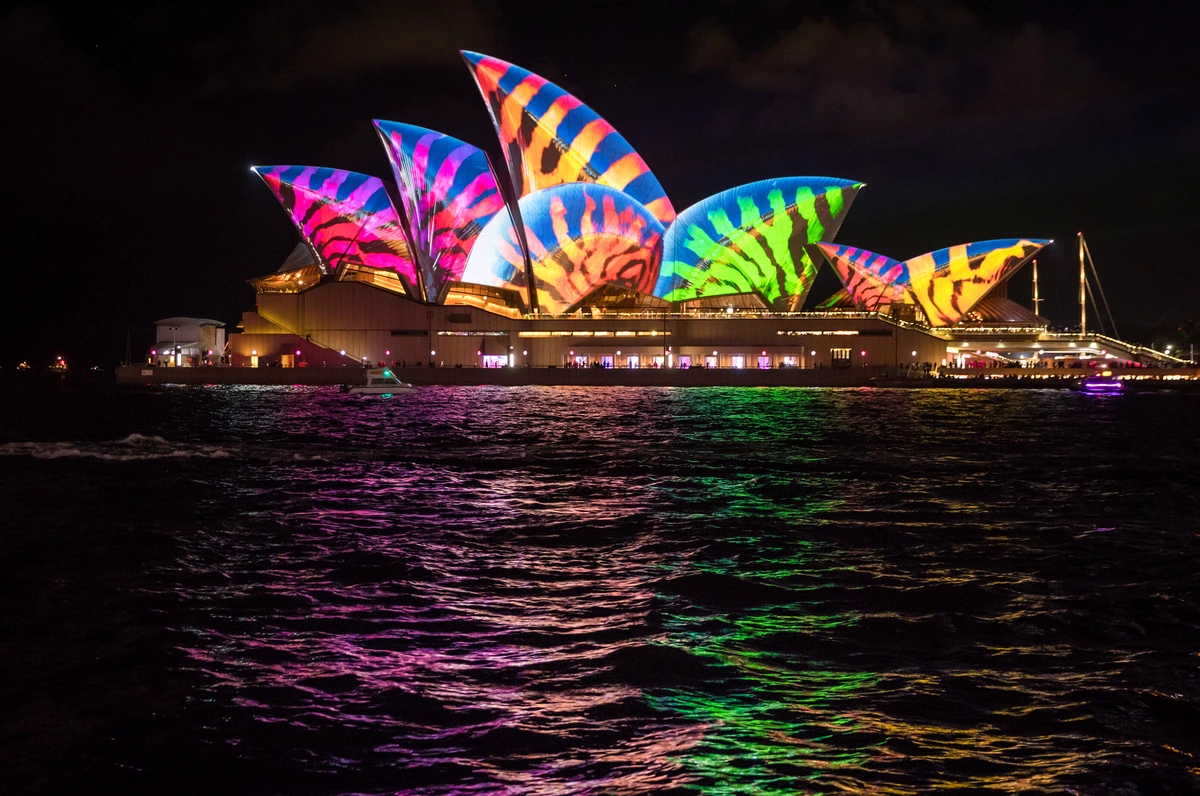
If Sydney is proudly radiant by day with ocean blues embracing harbor bays, by night—especially between late May and mid-June annually—the city transforms into a colossal outdoor light museum via the Vivid Sydney festival. The centerpiece of this visual spectacle is the masterpiece architecture of the Sydney Opera House, the century-spanning structure created by legendary Danish architect Jørn Utzon. Over one million shell-glazed ceramic tiles of the sail-vault roof structure suddenly become a living art canvas thanks to ultra-high-definition 3D mapping projection technology. Indigenous First Nations myths, mysterious marine ecosystems, and digital creations shift harmoniously with symphonic melodies, shimmering across bay waters and enhanced by the glowing iron frame of the adjacent Sydney Harbour Bridge, creating a premier live light show that stirs every sense.
In contrast to Sydney’s world-class dazzling scale, Melbourne’s nightlife in its cultural capital chooses to hide subtly inside 19th-century bluestone-paved narrow alleys, commonly known as Laneway culture. Instead of flaunting brilliant lights, famed alleys like Hosier Lane or AC/DC Lane retain a quiet night through low-intensity lighting, casting dim shadows on walls covered in multilayered graffiti and murals. Soft warm yellow light guides strolling visitors past old signless wooden doors, behind which lie secret speakeasy bars imbued with a mystical bohemian spirit, where improvised jazz blends with the aroma of cocktails crafted from rainforest ingredients. Melbourne’s nighttime appreciation space invites people to slow down, listen to the whispers of ancient masonry, and immerse themselves in the free-spirited self of a premier southern independent art center.
Australia’s nightlife is therefore not limited to noisy festivities or brightly lit shopping centers, but is a profound interweaving of emotional layers. From the quiet moment of raising a glass to catch the sea breeze at dusk, gazing at digital colors shifting across world heritage icons, to losing oneself in spontaneous alleys and underground art, travelers truly touch the soul of a modern nation that always knows how to honor nature and deep cultural heritage.
The culinary map of the land Down Under is a fascinating dialogue between ancient indigenous memory and a free-spirited multicultural migration wave. The roots of modern Australian cuisine stem from the concept of Bush Tucker—the treasure trove of wild produce that indigenous Aboriginal tribes have preserved for over sixty thousand years of survival amidst harsh nature. No longer confined to ancient hunting methods, the soul of Bush Tucker is reborn dazzlingly in upscale kitchens. That is the sharp, crisp acidity of finger limes—a native produce likened to plant-based caviar with plump, round juice vesicles, the intense herbal aroma of lemon myrtle, wattleseed with notes of roasted coffee, or buttery macadamia nuts originating from the coastal rainforests of Queensland. These unique ingredients combined with fertile soils have forged a farm-to-table culinary philosophy, honoring absolute freshness and the natural cycles of all things.
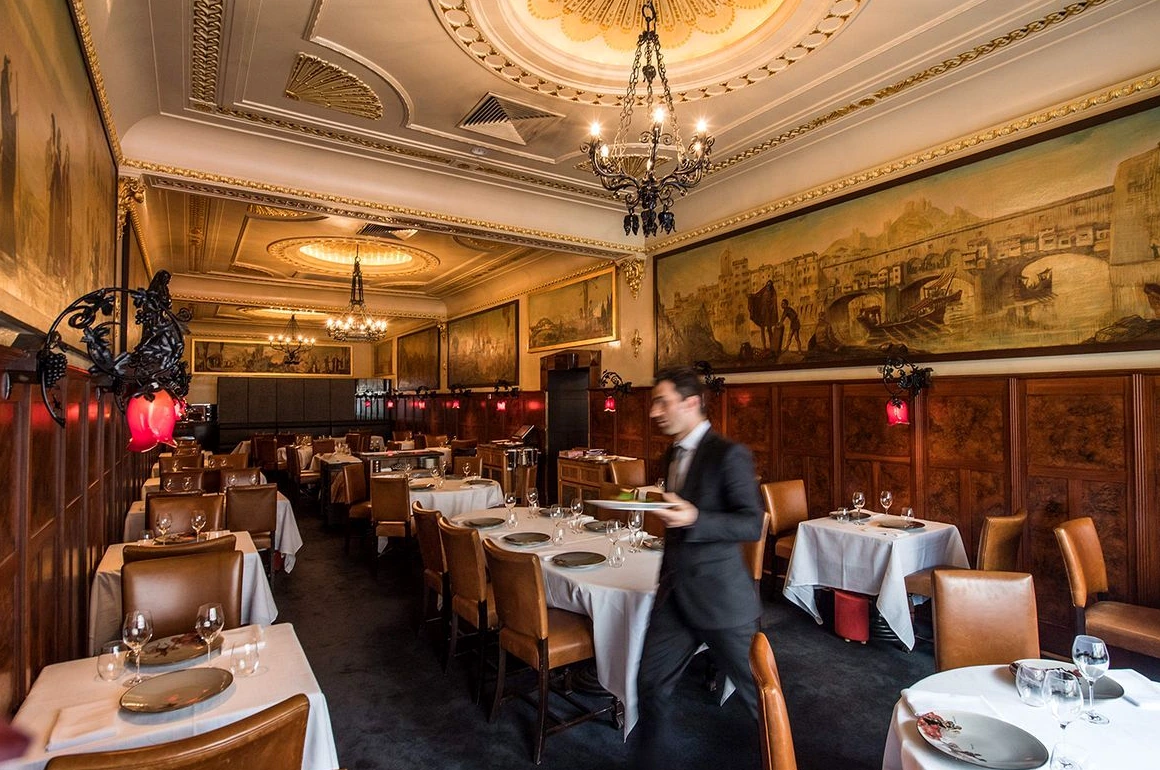
In Melbourne, the culinary heart of the south, European immigrant cultural imprints from mid-century shifts created an unmistakable heirloom identity. Strolling along bustling Bourke Street, the famed Grossi Florentino restaurant stands like a living museum reflecting the wonderful blend of Italian flavor and Australian soul. Open to guests since the late 1920s, this heritage space captivates refined patrons with vibrant Renaissance frescoes under timber-paneled ceilings. Through generations of the Grossi family, each plate of meticulously kneaded handmade pasta, game ragù, or truffles harvested from the foot of the Dandenong Ranges carries a story of loyalty to hometown traditional recipes, elevated thoroughly by premium lamb and produce from the Victoria plains.
Heading north to the port city of Sydney, culinary flavors carry the breezy breath of the ocean and precision in handling premium red meats. Inside the stately Art Deco City Mutual Building, Rockpool Bar & Grill asserts its pinnacle status in port culinary art. The focus of this space is a sustainable harvesting philosophy, where purebred Wagyu beef sirloins from Blackmore river valley farms are grilled directly over hardwood charcoal flames. Smoky aromas blend with marbled fat melting smoothly on the tongue, pairing harmoniously with plump Sydney Rock oysters harvested fresh from pristine brackish bays or rock lobsters caught along the Antarctic continental shelf. Every culinary slice here affirms a moral commitment to preserving natural resources of ocean and grassland.
Alongside lavish feasts, the local culinary picture would not be complete without the BYO culture—short for Bring Your Own. Born from strict legal alcohol licensing barriers in the past, BYO gradually evolved into a symbol of democracy and the egalitarian, unpretentious lifestyle of Australians. From rustic family eateries tucked in immigrant alleys to breezy coastal bistros, diners can leisurely bring along a famed bottle of Shiraz red from the Barossa Valley or Chardonnay white from Margaret River to enjoy with friends, for just a nominal corkage fee. This unpretentious lifestyle erodes all formal barriers, returning dining to its true original meaning: a place to share rich flavors, sincere friendship, and warm compassion under the Southern sky.
To set foot in the land Down Under smoothly, the initial link visitors must complete is the Tourist stream Subclass 600 visa, received and processed online via the ImmiAccount portal of the Australian Department of Home Affairs. The review process demands absolute transparency regarding financial capacity, stable employment, and a detailed itinerary; hence applications should be created and submitted at least eight weeks prior to the intended departure date to avoid fluctuations in processing time. Application fees hover around one hundred and ninety Australian dollars, excluding biometrics collection costs at visa application centers. Additionally, Australia enforces a rigorous Biosecurity Act at international gateways like Sydney Kingsford Smith or Melbourne Tullamarine; all fresh foods, seeds, meat products, or industrially unprocessed herbal remedies must be declared honestly on the Incoming Passenger Card, as a minor carelessness can result in on-the-spot fines of up to thousands of Australian dollars or immediate visa cancellation.
In the two major urban centers, public transport networks are organized modernly, synchronously, and stratified clearly. Arriving in Sydney, visitors only need an Opal smart card or to use contactless bank cards directly to experience the Sydney Trains urban rail network, bus networks blanketing districts, and iconic ferries departing from Circular Quay across Port Jackson, featuring daily and weekly spending cap mechanisms to save budgets significantly. Meanwhile, Melbourne welcomes travelers with one of the planet’s longest streetcar tram networks using myki smart cards. Notably, Melbourne’s CBD commercial zone applies a Free Tram Zone policy, allowing passengers to board and alight trams completely free without tapping cards. Commercial life here also follows standard schedules: museums, art galleries, and department stores generally open from 9:30 AM to 5:00 PM, with Thursday in Sydney and Friday in Melbourne extending until 9:00 PM to serve weekend shopping demands.
Budgeting for a self-guided trip to Australia averages between two hundred and three hundred and fifty Australian dollars per day per individual, covering mid-range hotel accommodation, multicultural dining, and heritage attraction entry tickets. In daily life, Australians value equality and strict queue culture; cutting in line or speaking loudly in public is considered impolite. Unlike North America, tipping in Australia is not mandatory since minimum wages for service industry workers are heavily guaranteed by law; nonetheless, leaving a tip of around ten percent on bills for fine-dining meals is always warmly welcomed as a sincere compliment for excellent service style.
Southern Hemisphere climate possesses characteristics completely inverted from the Northern Hemisphere, creating unique travel nuances across four seasons. Summer from December to February is the ideal time to plunge into azure coastal bays, while autumn from March to May brings mild weather perfect for trekking through Jamison Valley in the Blue Mountains draped in red and yellow hues. Conversely, winter from June to August is the season of academic art, cozy laneway cafes in Melbourne, and vibrant light festivals. Throughout their stay, travelers should proactively install and monitor deep weather forecasts from the Bureau of Meteorology (BOM) to catch early warnings regarding natural bushfire phenomena in dry heat seasons or sudden rainstorms in low-lying terrains. To ensure a complete discovery journey of the fifth continent without procedural worries or transit logistics, choosing a comprehensive Sydney – Melbourne Australian tour package will be the optimal solution helping visitors fully appreciate the cultural depth and majestic natural scenery here.
Heading northwest to Oxford, the architectural rhythm shifts to a more subdued, solemn academic tone. The city of dreaming spires is enveloped in the warm honey-yellow tones of renowned Bath Stone combined with Headington limestone, a material capable of magical color shifts depending on the angle of daylight. The core spatial signature of Oxford’s collegiate system is the enclosed quadrangle structure, known simply as the “quad”. Evolving from medieval monastery cloisters, these quadrangles establish an absolute physical boundary between the bustling secular city and the tranquil realm of scholarship. Four ranges of buildings surround a perfectly manicured green lawn, linked by vaulted pointed arcades to create an isolated microcosm where research, prayer, and academic life proceed uninterrupted by the turbulence of the times.
Moving north to Scotland’s capital, Edinburgh, the architectural landscape abruptly shifts to dark, dramatic tones against a rugged volcanic topography. Edinburgh’s unique identity is carved from Craigleith sandstone, a fine-grained sedimentary rock quarried from the ancient pits of the Lothian region. With an exceptionally high quartz content, Craigleith sandstone boasts extraordinary compressive strength and resistance to the harsh erosion of northern sea winds. Over centuries of absorbing industrial coal smoke and salt spray, the surfaces of the structures have gradually weathered to a dark, ash-grey tone, lending the Old Town a tragic, heroic classic beauty. Contrasting with the steep, narrow alleys and towering sandstone tenements of the Old Town is the immaculate geometric order of the New Town. Planned under the inspiration of the Scottish Enlightenment, the New Town thoroughly implements Neoclassical Doric and Ionic orders alongside a vast, symmetrical grid system, symbolizing the rise of rational thought and supreme economic power.
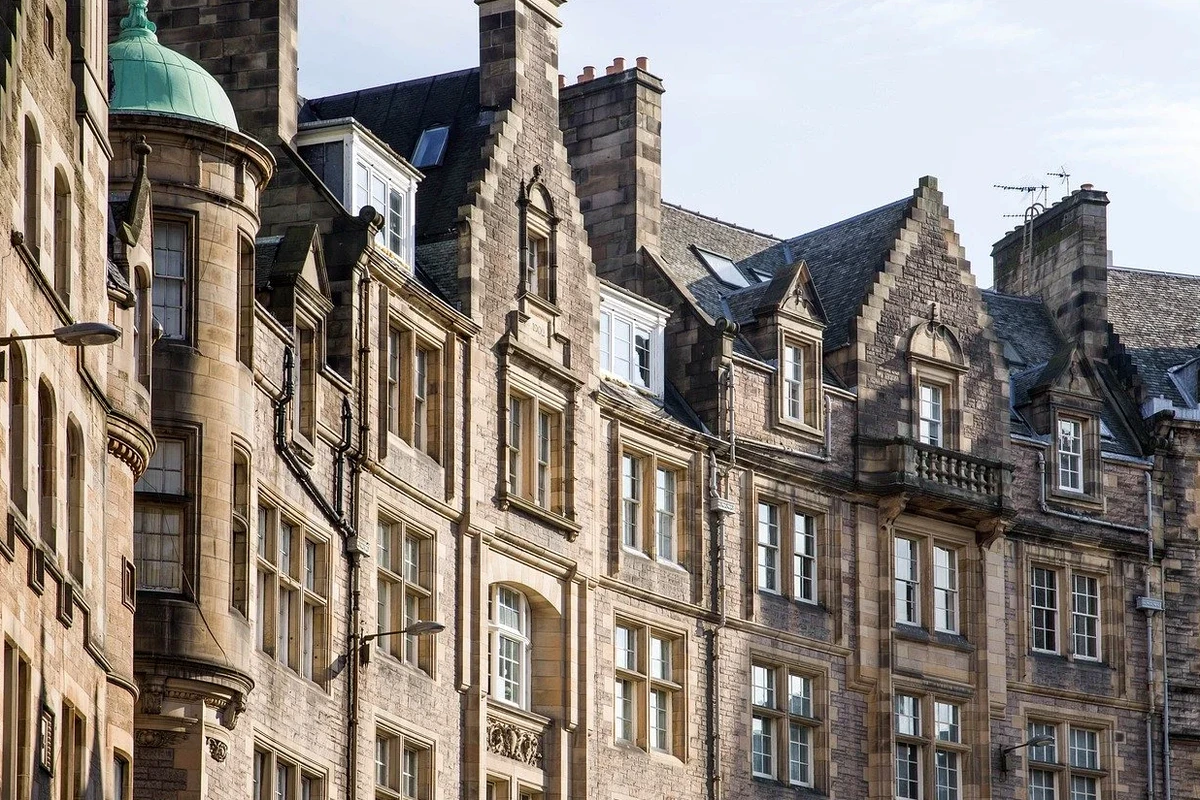
The interplay between the warm Bath Stone in the south, the resilient Craigleith sandstone in the north, combined with Sussex oak craftsmanship and cathedral stained-glass studio artistry, transforms the urban landscapes of England and Scotland into a living architectural museum. Every room dimension, window proportion designed to catch northern light, or corridor layout reflects precise optical and indigenous climatic calculations, safeguarding the enduring legacy of these masterpieces through the trials of history.
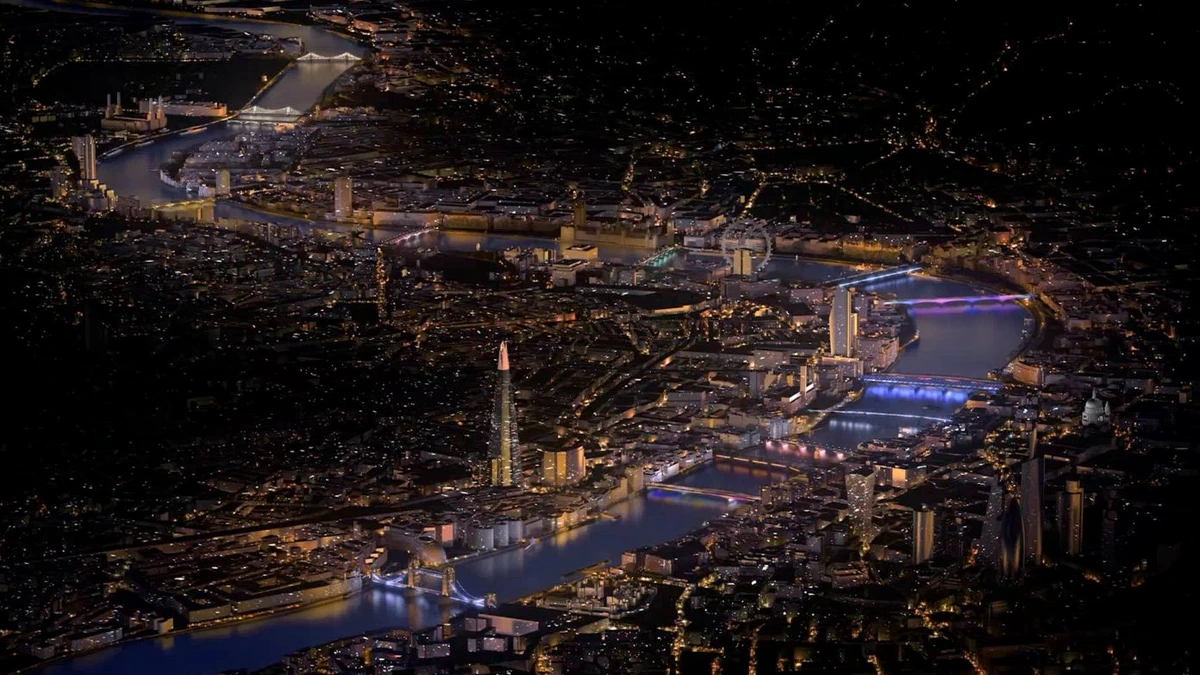
As dusk falls over the River Thames, London does not sink into darkness but instead enters an enchanting choreography of light and shadow driven by an urban artistic lighting strategy called the Lighting Masterplan. Unlike the glaring neon of modern mega-cities, nighttime illumination in the capital of the fog is precisely calculated across warm, soft LED spectrums that protect the river ecosystem while skillfully outlining the proud silhouettes of heritage sites. Along the Illuminated River project spanning nine iconic bridges from London Bridge and Cannon Street to the Millennium Bridge, each Victorian wrought iron and granite arch seems imbued with a new soul. Interspersed within this tranquil luminous canvas is the vibrant, energetic pulse of the West End theatre district. At prestigious venues like His Majesty’s Theatre or the Sondheim Theatre, timeless classic musicals open doors to humanity’s supreme performing arts world, where symphonic music blends with mesmerizing stage lighting.
Traveling back in time to the intellectual hub of Oxford, the nocturnal experience takes on a unique spiritual and auditory dimension through the Choral Evensong service at Christ Church Cathedral. Originating from the Tudor-era English Reformation in the 16th century, this musical liturgy unfolds beneath the intricately ribbed stone vaulting of an architectural masterpiece blending Norman and Late Gothic styles. As flickering candlelight casts shadows across stained-glass windows depicting biblical scenes, the choir lifts traditional a cappella hymns into the air. The cathedral’s pristine acoustics amplify every resonant note, lifting the listener’s mind above earthly noise and settling it into the solemn antiquity preserved for nearly five centuries by generations of Oxford students and scholars.
Leaving England to head north, Scotland’s capital of Edinburgh greets travelers with a completely contrasting philosophy of light. The city strictly preserves its nighttime environment under Dark Sky standards, minimizing optical pollution to restore the pristine beauty of the highland night sky. Along the Royal Mile spine connecting Edinburgh Castle and the Palace of Holyroodhouse, 19th-century gas-style lanterns cast a dim, amber glow over basalt stones worn smooth by the footsteps of history. This subdued darkness weaves an enchanting allure into the steep alleyways known as wynds and closes. Wandering into Mary King’s Close or Advocate’s Close feels like touching the gloomy strata of medieval plagues and countless chilling folklore tales through ghost-hunting night tours.
Closing out the evening in Edinburgh is the warmth radiating from traditional, long-standing pubs tucked beside ancient fortress cliffs. Amid the lively fiddle tunes and the tapping feet of Celtic folk songs, a glass of single malt Scotch whisky ripples in amber hues, cutting through the North Sea chill. The hearty communal atmosphere, tales of Scottish bards like Robert Burns or Sir Walter Scott, and the rich peat smoke blend to create a vibrant artistic space where history does not rest idly in a museum, but beats with a steady, profound pulse in the Scottish night.
The cuisine of the foggy island nation is not merely a showcase of spice mastery, but a profound mirror reflecting socio-economic milestones and terroir conditions stretching from the fertile plains of England to the windswept mountains of Scotland. If foreign travelers once mistakenly thought local food was monotonous, it is only by venturing into ancient village lanes or stepping through the heavy oak doors of centuries-old pubs that the symphony of rustic flavors, deeply rooted in local identity and historical adaptation, truly blossoms.
Starting a new day in the British Isles always carries the enduring spirit of the Industrial Revolution with the classic Full English Breakfast. Originating from the grand estate feasts of the Georgian gentry before rapidly expanding as essential sustenance for the working class in 19th-century Midlands textile mills and coal mines, a complete serving is a generous mix of Cumberland sausage rich in black pepper, crispy pan-fried bacon, the renowned savory Stornoway black pudding, steaming baked beans in tomato sauce, alongside grilled tomatoes and fragrant mushrooms. This extraordinary nutritional density not only awakens the palate but also serves as a historical testament to an era when Britain successfully transformed into the world’s great workshop.
In the daily life of British families, the Sunday Roast ritual every Sunday afternoon is considered an inviolable symbol of familial bonding. Rooted in Victorian customs when devout families prepared meals before church services, a large cut of beef—typically prime rib or sirloin—is seasoned with sea salt, rosemary, and slow-roasted in the oven. The inseparable soul of this meal is Yorkshire pudding, a golden, fluffy, puffed pastry that rises dramatically thanks to boiling beef drippings at the bottom of the cast-iron pan, creating the ultimate vessel to catch rich gravy simmered from bones and red wine. Savoring a slice of thinly cut beef that remains pink and juicy, accompanied by honey-roasted parsnips and a dab of pungent horseradish sauce, lets travelers experience the composed, meticulous character of Anglo-Saxon culinary culture.

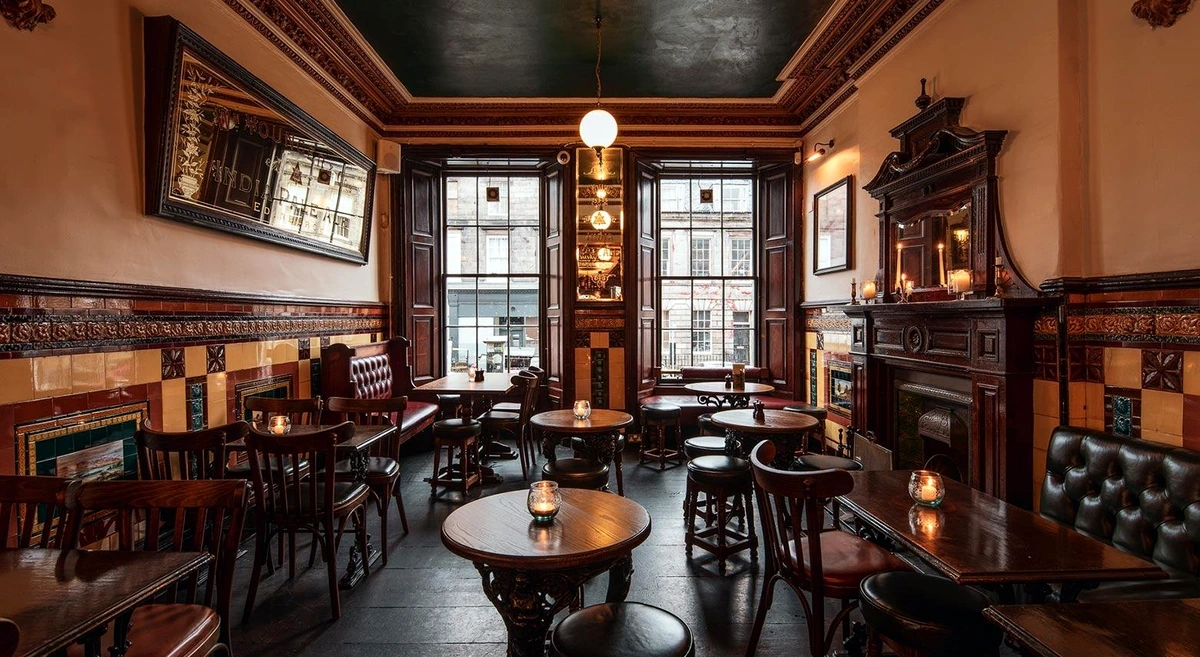
The center connecting all intellectual life and local community culture from the Middle Ages to the present day is the public house, affectionately known as the pub. With deep roots in Anglo-Saxon alehouses and ancient Roman posting stations, pubs are not merely places for refreshments but an institution of absolute social equality. Beneath dark, time-stained oak beams and the flickering glow of open stone fireplaces, all boundaries melt away over pints of smoothly foaming cask Bitter or rich roasted-malt stouts. The unspoken etiquette of buying rounds of drinks among friends, the cheerful clinking of glasses, and genuine warmth turn every pub corner into a living museum preserving the soul of village life across generations.
Crossing the historical threshold of Hadrian’s Wall deep into the desolate Scottish Highlands, diners encounter a dish that holds the full weight of Celtic pride: Haggis. This highland specialty was celebrated by the great poet Robert Burns as the chieftain of the pudding race in his immortal 1786 poem. The essence of Haggis lies in the skillful combination of finely minced sheep’s heart, liver, and lungs with suet, toasted Highland oatmeal, onions, and warming nutmeg and black pepper, all tightly encased in a sheep’s stomach and simmered slowly for hours. When a steaming plate of Haggis is served alongside neeps and tatties—swedes and buttery whipped potatoes—drizzled with a creamy sauce soaked in the peaty smoke of single malt whisky, the rich, aromatic flavors burst forth, fully capturing the resilience and free spirit of the highland clans surrounded by blooming heather.
Entering the misty island nation requires thorough preparation starting right from completing legal formalities. Foreign visitors must fill out the online VAF1A application form for a Standard Visitor Visa and provide strong proof of financial capability with bank statements showing steady, continuous cash flow for at least six months. After submitting the form and paying the fee, booking an appointment for biometric data collection—including digitized fingerprints and an ICAO-compliant portrait photo—at a visa application center is a decisive step. To ensure a smooth review process without delays, the application should include certified translations of all personal documents, employment verification letters, and details regarding accommodation plans.

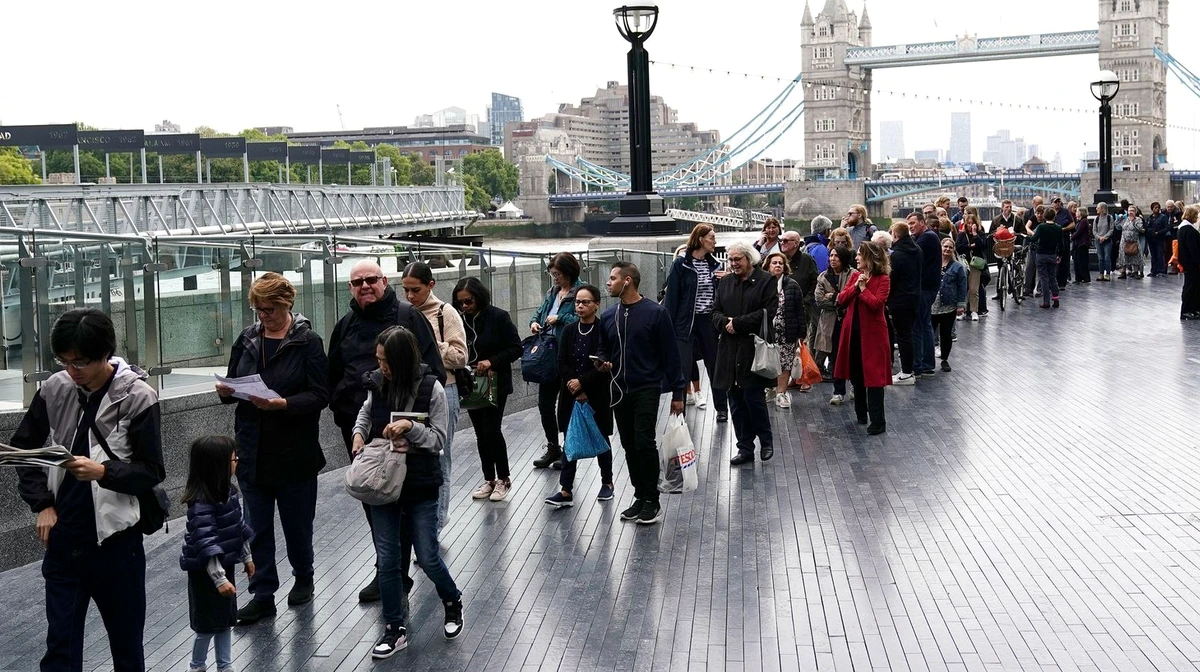
For connecting the magnificent capital of London with historic Scotland, the East Coast rail route operated by London North Eastern Railway departing from historic King’s Cross station to Edinburgh Waverley station is the most superior and evocative choice. The high-speed train glides across nearly six hundred kilometers in just four hours and twenty minutes, carrying travelers past rugged white chalk cliffs and the expansive North Sea coast. To optimize personal travel budgets, travelers should book tickets eight to twelve weeks in advance, when Advance saver fares go on sale at roughly one-third the price of walk-up tickets bought at the counter on the day of travel. Regarding sightseeing hours, most renowned public museums such as the British Museum or the National Gallery open for free from ten in the morning until half past five in the afternoon daily, though royal landmarks like Windsor Castle or the Tower of London typically close their ticket gates an hour earlier in winter.
Balancing accommodation budgets requires a deep understanding of each destination’s seasonal travel cycle, especially in the Scottish Highlands and lowlands. Every August, the Scottish capital of Edinburgh becomes the focal point of the Edinburgh Festival Fringe—one of the largest performing arts and outdoor street performance events on the planet, drawing millions of artists and global audiences. During this period, hotel room rates and short-term rentals in both Old Town and New Town often surge up to three hundred percent above normal levels, while central restaurants are routinely booked out. Travelers wanting to experience the vibrant festival atmosphere should book accommodation at least six months ahead, or choose neighboring towns connected via the local ScotRail network to ease cost pressures.
Upon setting foot in this land, respecting unwritten social conventions will help your trip run smoothly and pleasantly. Queuing culture is an absolute moral standard for British people; cutting in line, whether unintentionally or deliberately, is considered a serious breach of etiquette. On the London Underground, the golden rule strictly observed is to stand on the right side of escalators so the entire left lane remains open for passengers in a hurry. In addition, in university cities like Oxford, travelers should stay alert to tourist traps along bustling High Street, where souvenir stalls sell university-crested sweatshirts at steep prices with mismatched quality, or individuals posing as student guides pitch campus tours with opaque pricing.
To fully savor the quiet grandeur of medieval castles and immerse yourself in millennia of cultural heritage without worrying about complex visa procedures or inter-regional transport bookings, choosing a carefully curated all-inclusive UK – Scotland tour itinerary offers a reassuring, relaxed, and enriching experience for every traveler.