Nestled between the warm Kuroshio Current and the shimmering turquoise waters of the Taiwan Strait, this leaf-shaped island once moved 16th-century Portuguese mariners to exclaim “Ilha Formosa”—the Beautiful Island. Before stepping onto the stage of world history amid diplomatic treaties and the cannon smoke of the Age of Discovery, it had been the ancestral sanctuary for millennia of Austronesian tribes, who cultivated a rich culture of hunting, weaving, and animist reverence. That pristine tranquility came to an end in the early 17th century, when Taiwan’s vital geostrategic position caught the eye of Western maritime empires seeking a springboard to expand their Far Eastern trade routes.
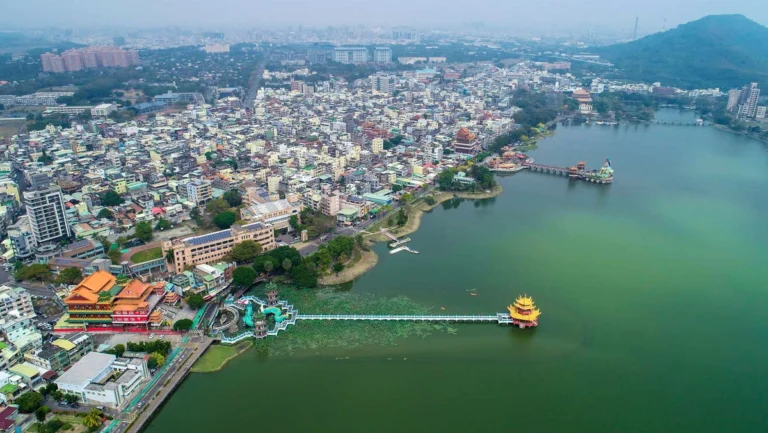
In 1624, galleons of the Dutch East India Company (VOC) dropped anchor along the southern coast, erecting the formidable Fort Zeelandia out of red bricks and seashell-lime mortar, and establishing a trade network stretching from fertile Tainan down to the coastal settlement of Takao—the precursor to today’s bustling port metropolis of Kaohsiung. Almost concurrently with the Dutch, Spanish expeditionary forces occupied the northern tip at Keelung and Tamsui, building Fort San Salvador before eventually being driven out by the Dutch. This Western power play lasted nearly four decades until the renowned general Zheng Chenggong (Koxinga), raising the banner of “Oppose the Qing and Restore the Ming,” led a massive fleet across the waves to expel the Dutch colonizers in 1662—founding the Kingdom of Tungning and ushering in waves of Han Chinese migrants braving the treacherous “Black Ditch” (Taiwan Strait) to cultivate virgin lands.
Under the Qing Dynasty, after Admiral Shi Lang captured the island during the Kangxi reign in 1683, Taiwan was incorporated into the imperial map as a prefecture of Fujian Province. Enduring two centuries of upheaval marked by settler conflicts and diplomatic pressure from foreign powers, it was not until the Guangxu era—recognizing the vital strategic importance of this coastal outpost—that the imperial court officially elevated Taiwan to an independent province in 1885 under the governance of the capable Governor Liu Mingchuan. Shortly beforehand, in 1884, the walled Taipei Prefectural City had been completed with a sturdy perimeter of andesite stone quarried from the Qixing Mountains, pierced by five grand gates. Among them, Cheng’en Gate—the North Gate—featuring a resilient timber-framed crimson tower and imposing defensive embrasures, still stands tall through the vicissitudes of time as the best-preserved relic of Qing-era fortification architecture remaining in the heart of the capital.
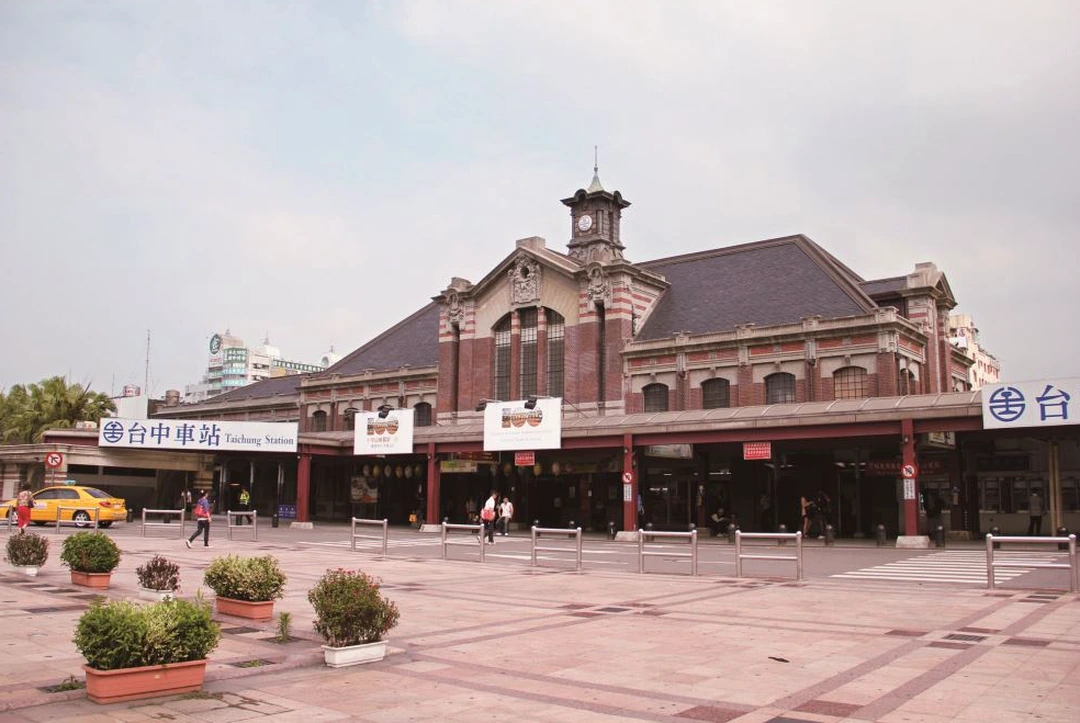
A harsh historical turning point arrived following the Qing court’s defeat in the First Sino-Japanese War, leading to the Treaty of Shimonoseki in 1895, which ceded sovereignty over the island to Japan for half a century. The Japanese colonial period (1895–1945) injected a powerful yet turbulent surge of modernization across the territory. In 1900, the Taichung urban development plan was officially unveiled, transforming a marshy frontier into a model city featuring a scientific grid road network, advanced drainage systems, and tree-lined parks flanking the tranquil Luchuan Canal—evoking the grace of a “Little Kyoto” in the subtropics.
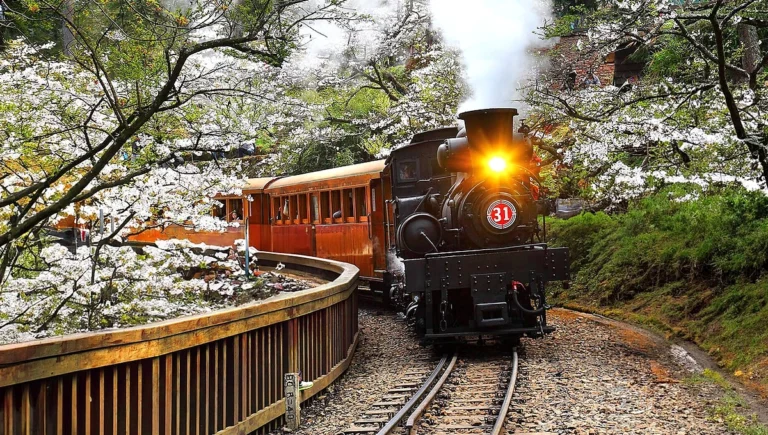
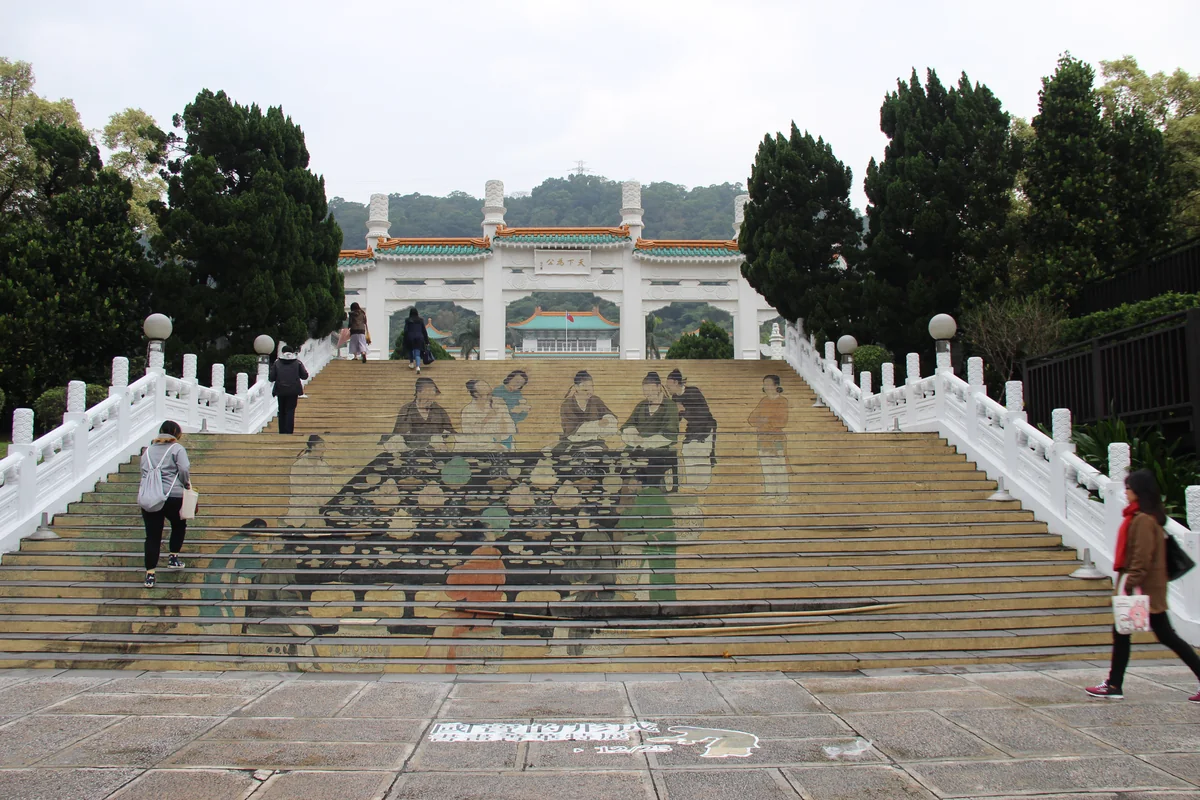
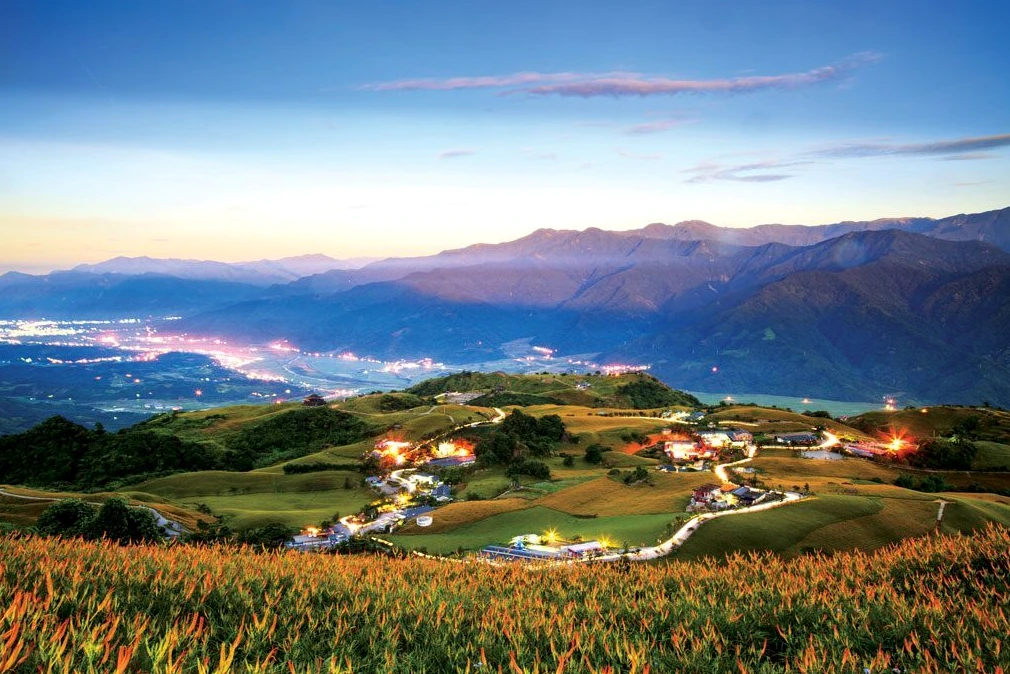
Venturing deep into the mountainous interior, abundant natural resources were likewise awakened by mechanization. Begun in 1912—the first year of the Taisho era—the narrow-gauge Alishan Forest Railway was carved along sheer cliffs to haul thousand-year-old red cypress (hinoki) logs down to the plains, inadvertently laying the foundation for an ecotourism legend in a realm of mist and drifting seas of clouds. After 1945 and the political upheaval of 1949, a massive wave of people from across mainland provinces migrated to the island, bringing with them the essence of diverse culinary schools alongside tens of thousands of crates of imperial treasures from the Forbidden City, now housed at the foot of Yangmingshan. Having weathered countless dynastic shifts and cultural syntheses, modern Taiwan has crystallized into a vibrant mosaic where colonial imprints, traditional Chinese heritage, and contemporary urban rhythms pulse together in enduring harmony along the journey from North to Central to South.
Viewed from orbital remote-sensing imagery, the island of Formosa resembles a giant fern leaf adrift along the collision boundary between the Eurasian Plate and the Philippine Sea Plate. The island’s geological backbone is defined by five parallel mountain ranges running north to south, led by the towering Central Mountain Range, which cleaves the territory into two starkly contrasting geomorphic realms: the precipitous eastern flank plunges straight down into the abyssal depths of the Ryukyu Trench in the Pacific Ocean, while the western slope descends gradually to form the expansive, fertile Chianan Plain. This dramatic elevation drop—from the nearly 4,000-meter summit of Yushan (Jade Mountain’s Main Peak at 3,952 meters) down to sea level within less than fifty kilometers—makes Taiwan one of the most geologically dynamic and hydrologically steep territories on Earth.
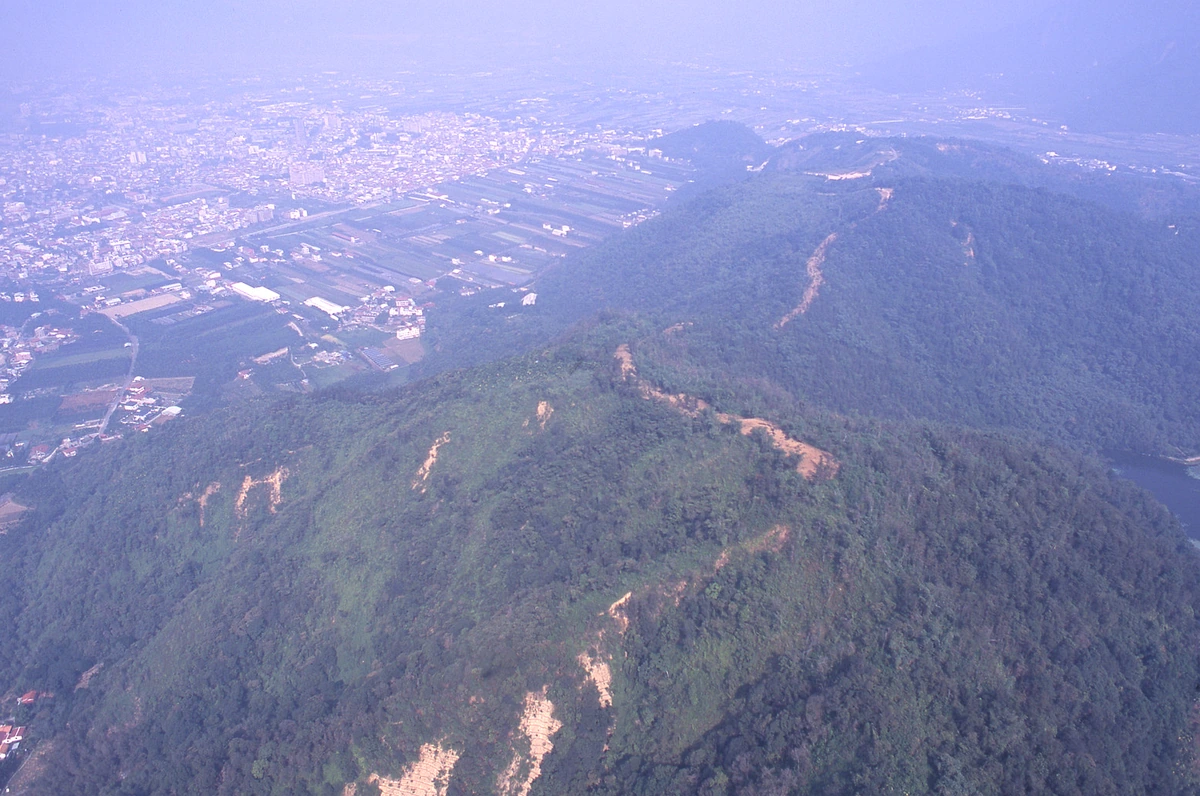
At the northern tip of this rugged topography, the Taipei Basin emerges like a natural amphitheater enclosed on all sides by ancient volcanic massifs and folded mountain ridges. To the north, the Yangmingshan range and Qixing Mountain act as a stalwart screen shielding the basin from harsh northeast monsoons, while the south and southeast rest against the tail end of the Xueshan Range—creating a classic geomantic configuration in Feng Shui: “backed by the north, facing the south, sheltering wind and gathering vital energy.” This sunken basin was originally the bed of an ancient lake formed by Quaternary tectonic subsidence before the Tamsui River and its two tributaries, the Keelung and Xindian rivers, eroded through the rock barrier to carve an outlet into the Taiwan Strait. This water-gathering geography turned the basin into a prosperous dragon vein where fertile silt accumulated and the natural harbor of Bangka (modern-day Wanhua) flourished from the time the Qing established Taipei Prefecture during the Guangxu reign, paving the way for the rise of one of East Asia’s most vibrant metropolises.
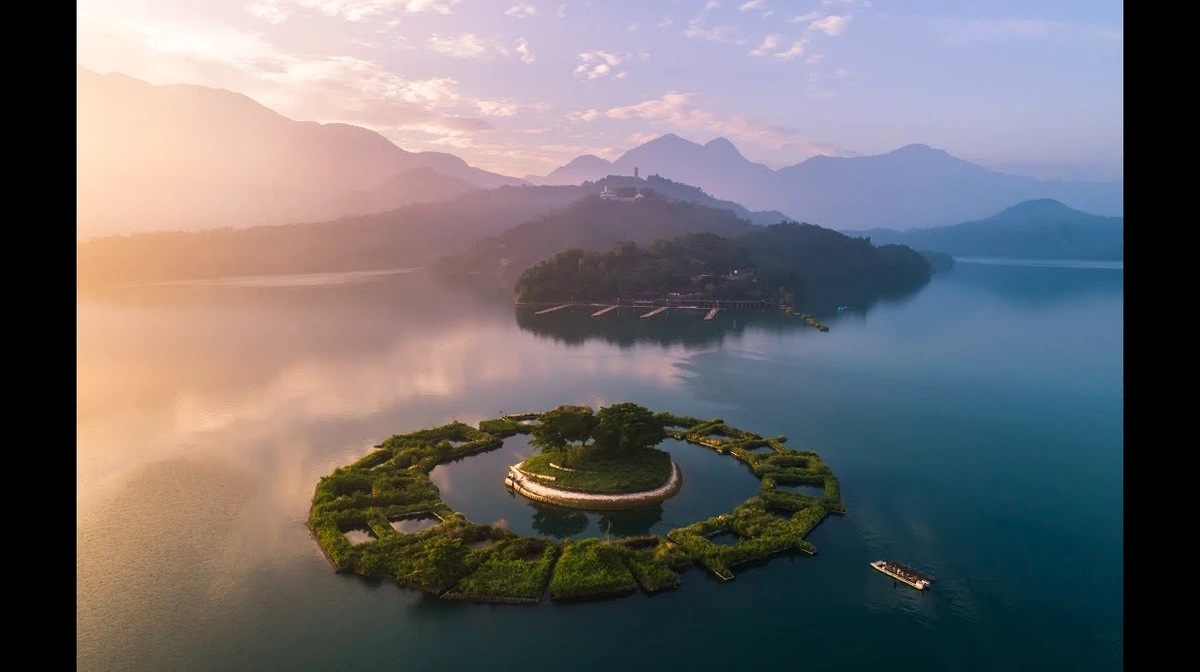
Moving deep into the heart of the island within Nantou County, the scenery shifts dramatically into the Shuisalian tectonic fault depression, home to the breathtaking Sun Moon Lake at an elevation of 748 meters above sea level. Spanning roughly eight square kilometers, Taiwan’s largest natural freshwater lake owes its name to its poetic contours: its rounded eastern half resembles a radiant sun, while its slender, curving western side mirrors a crescent moon. Rising from the jade-green waters perpetually veiled in mist is Lalu Island (formerly known as Guanghua Island), a sacred sanctuary revered by the indigenous Thao people as a spiritual nexus where the vital energies of heaven and earth converge. According to Thao oral legend, their ancestors pursued a mythical white deer through dense mountain forests to discover these abundant waters, enshrining the island as the eternal resting place of their clan’s guardian spirits—strictly off-limits to worldly intrusion.
The uniqueness of Taiwan’s landscape lies not merely in nature’s grandeur, but also in the precision of human engineering interventions across centuries to tame a formidable environment. During the Japanese administration in the early 20th century, military engineers undertook a monumental project to dredge and dam the Zhuoshui River, channeling high-altitude waters into Sun Moon Lake via tens of kilometers of mountain tunnels—transforming a primordial marsh into one of Asia’s largest pumped-storage hydroelectric reservoirs of its era without disrupting the hydrological balance of Shuisalian. Similarly, in contemporary infrastructure planning, the high-speed rail line gliding down the flat western corridor and the cog-and-switchback Alishan forest railway climbing in Z-shaped zigzags across four climatic vegetation zones stand as brilliant testaments to masterly geotechnical thinking: respecting mountain veins, following natural waterways, and harmonizing modern functionality with enduring local ecology.
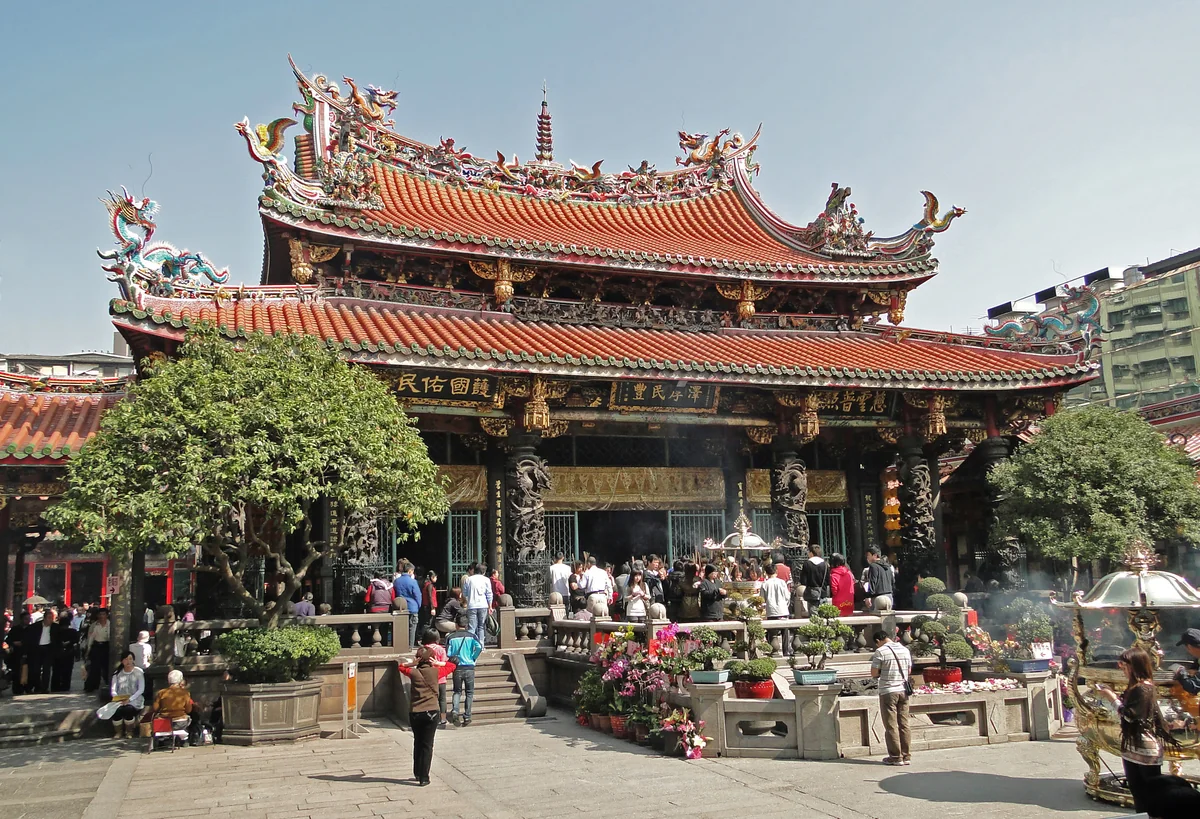
Taiwan’s built environment is a living chronicle etched in brick, tile, and steel, where every structure carries distinct strata of civilization. Beginning with moss-draped temple roofs from the late Ming and early Qing dynasties, traditional Fujianese architecture took deep root in local spiritual life—epitomized above all by Bangka Lungshan Temple, first constructed during the Qianlong reign. The temple unites two masterly ancient carpentry traditions: the “chuandou” (column-and-tie) structural frame, in which through-columns are locked together by sturdy horizontal tie beams, seamlessly interwoven with the “tailiang” (post-and-beam) system supporting the massive tiered roof without a single metal nail. Yet the aesthetic soul of this sacred sanctuary soars highest along its proudly sweeping swallowtail roof ridges. Here, the art of “jiannian” (cut-and-paste porcelain mosaic)—hand-cutting shards of colorful glazed ceramics, glass, and stoneware and meticulously embedding them in lime-and-brown-sugar mortar—brings to life twin dragons contesting a flaming pearl, spread-winged phoenixes, and classical operatic tales. Every ceramic-inlaid dragon scale glinting under the southern sun showcases not only the virtuosity of old Lukang artisans, but also serves as a geomantic talisman warding off evil and anchoring the sanctuary through centuries of typhoons.
Crossing the historical threshold into the early 20th-century colonial era, Taiwan’s urban skyline witnessed a striking cultural collision as Western Eclecticism arrived through Japanese-era architectural commissions. The Presidential Office Building in Zhongzheng District stands as an immortal exemplar of the celebrated “Tatsuno Style,” designed by disciples of architect Tatsuno Kingo. Anchored along a perfectly symmetrical axial vista, the edifice commands visual awe through its interplay of select crimson fired bricks and horizontal bands of white granite trim. Its central tower rises sixty meters high like a beacon of authority, bolstered by classical Greek columns, Roman arches, and airy wrap-around verandas engineered to promote natural cross-ventilation in the humid subtropical climate. Its monumental scale and modified Neo-Renaissance-meets-Baroque vocabulary represent far more than an administrative seat; they symbolize a bold leap from East Asian timber craftsmanship into an era of reinforced concrete, steel, and masonry.
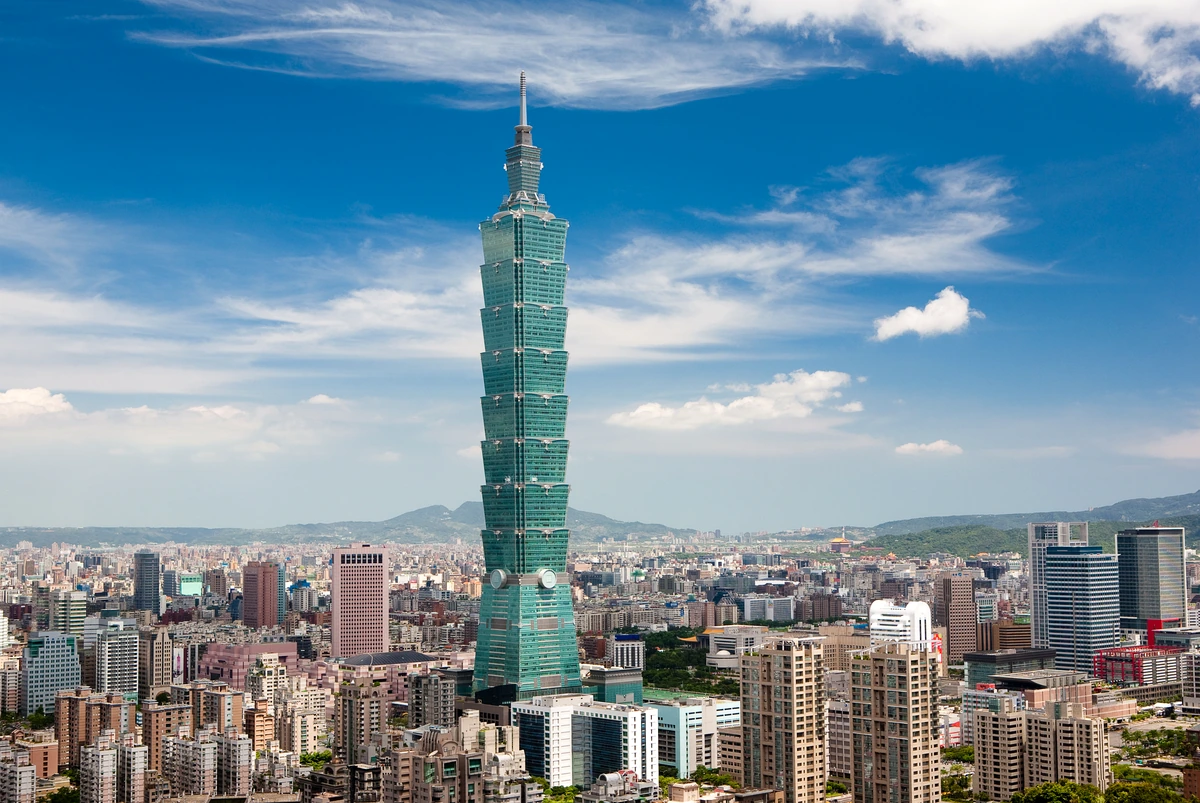
Entering the contemporary age, Taiwan’s architectural identity continues to claim its place on the world stage through a refined synthesis of Eastern Feng Shui philosophy and pinnacle mechanical engineering, most vividly embodied by Taipei 101. Rising 508 meters straight into the Taipei sky, the tower’s design borrows the motif of a green bamboo stalk—an eternal symbol of resilience and upward growth—sculpted into eight stepped segments, each comprising exactly eight skyward-reaching floors. The auspicious number eight signifies prosperity and continuous renewal, while the exterior facade is adorned with giant Ruyi cloud motifs and sculpted ancient coin medallions expressing wishes for peace and abundance. Behind its thermally insulated, emerald-tinted curtain wall lies an engineering marvel that captivated the world: the Tuned Mass Damper. Suspended between the 87th and 92nd floors by four sets of high-tensile steel cables hangs a colossal golden steel sphere weighing 660 metric tons and measuring 5.5 meters in diameter. Acting as the valiant heart keeping the skyscraper balanced, this damper swings automatically in opposition to the building’s sway, effectively dissipating kinetic energy from violent earthquakes and fierce Pacific typhoons.
Viewed in its entirety, Taiwan’s architectural landscape is an endless dialogue across eras and civilizations. From the intricate openwork carvings on the timber purlins of Lungshan Temple to the stately red-brick banding of the Japanese era, culminating in a multi-hundred-ton steel pendulum poised among the clouds, every element coalesces into an urban fabric that preserves millennia-old spiritual character while mastering the forefront of human engineering.
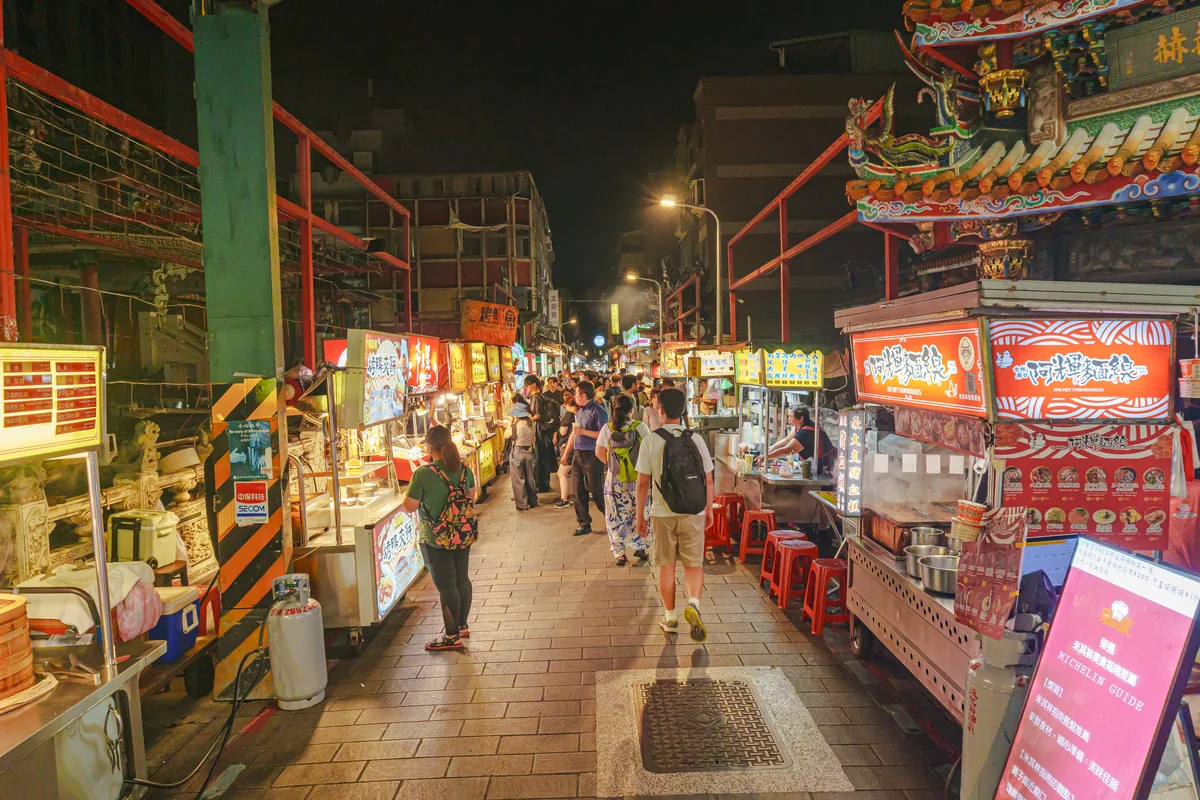
As twilight settles over the straits and valleys, Taiwan does not slip into quietude; instead, it enters an enchanting nocturnal awakening. The essence of Taiwanese night market culture is far more than culinary commerce—it is a unique sociological space deeply rooted in “Miaokou” (temple-mouth) culture, the vibrant community hubs that organically sprang up in the forecourts of ancient temples. Since the waves of Hokkien and Cantonese migrants braved the perilous Black Ditch during the Kangxi and Qianlong reigns of the Qing Dynasty, temples dedicated to Mazu (Empress of Heaven) or Kaizhang Shengwang served as steadfast spiritual anchors. Billowing incense inside the main halls mingled with makeshift food stalls set up outside to nourish worshippers after prayer, gradually giving birth to Taiwan’s famed night markets, where the boundary between folk devotion and earthly delight dissolves seamlessly.
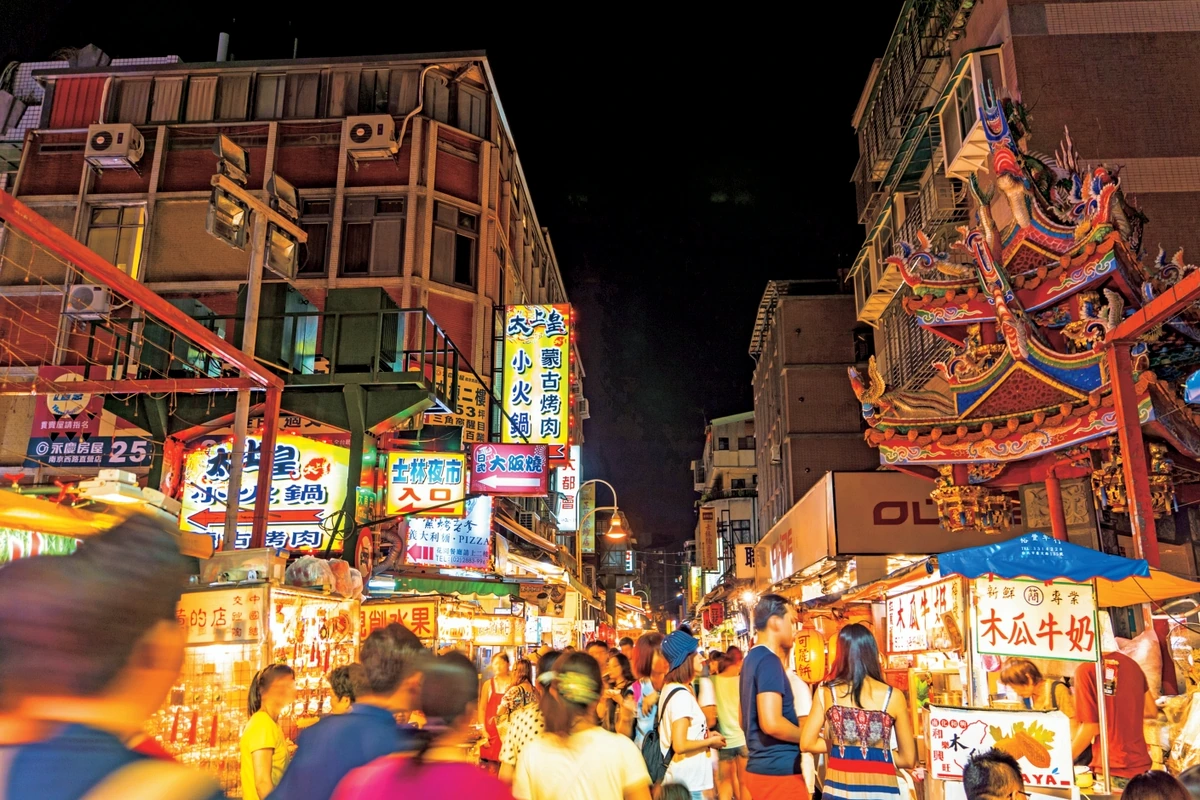
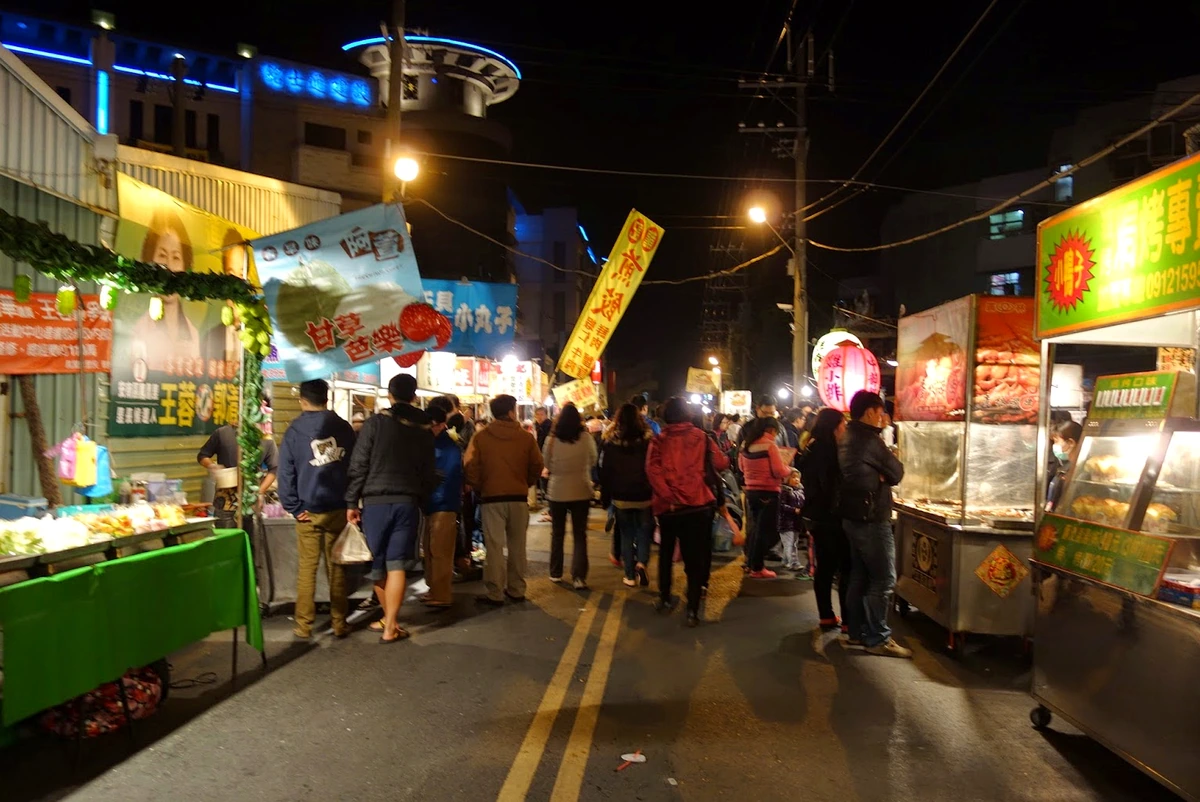
Exemplifying this spatial structure is Keelung Miaokou Night Market, which wraps tightly around Dianji Temple, founded during the Guangxu reign to enshrine Kaizhang Shengwang (Chen Yuanguang). Over two hundred culinary stalls are neatly organized along narrow lanes, illuminated by uniform rows of glowing yellow silk lanterns and equipped with cleverly engineered industrial exhaust hoods that keep air circulating amid shoulder-to-shoulder crowds. Under the bright glow of fluorescent tubes and warm incandescent bulbs, centuries-old oral recipes come vividly to life: “Dingbiancuo” soup, featuring rice-batter sheets scraped off the rim of a steaming iron wok and simmered with dried shrimp and shiitake mushrooms; glossy bowls of braised pork rice rich with melt-in-your-mouth pork skin; or heirloom shark-meat balls brimming with the essence of the sea. As night deepens, the sizzle of hot oil and the rhythmic clatter of cleavers on ironwood chopping blocks blend with vendors’ calls in Hokkien dialect to compose an electrifying urban symphony.
Back in Taipei, Raohe Street Night Market anchors memories of time around Songshan Ciyou Temple, a magnificent sanctuary standing beside the Keelung River since the 18th year of the Qianlong reign (1753). Directly beneath its gilded, vermilion triple-arched gate carved with soaring dragons and dancing phoenixes, crowds line up patiently for batches of black-pepper buns baked inside blazing tandoor-style clay ovens, bursting with the aroma of pepper-marinated pork and fresh scallions. In contrast to the nostalgic charm of the north, Fengjia Night Market in Taichung—alongside Liuhe and Ruifeng in Kaohsiung—showcases the kinetic energy of a high-velocity night economy, where thousands of stalls weave together street fashion and contemporary culinary inventions. Dense rows of booths paired with dazzling neon signage turn entire avenues into visual runways, serving as the ultimate pressure valve for office workers after long hours and a core economic engine keeping commerce circulating tirelessly.
Beyond street-food gastronomy, Taiwan’s night sky also becomes a vast canvas for performing arts and modern visual spectacles. Budaixi (glove puppetry)—a folk theatrical art that once accompanied all-night temple rituals performed by traveling troupes from Zhangzhou and Quanzhou—has today evolved into grand live productions integrating surround-sound technology and cutting-edge laser effects. Down at Kaohsiung Harbor, the architectural complex of Asia New Bay Area and the Kaohsiung Music Center stage dazzling light shows mirrored across the deep bay waters, pulsing in time with laid-back live sets by indie musicians. Further into the mountains of New Taipei, the historic valley of Pingxi illuminates the night with its iconic tradition of releasing sky lanterns, said to date back to the Three Kingdoms period when Zhuge Liang used paper lanterns for military signaling. Tens of thousands of warm, glowing lights inscribed with wishes for peace and prosperity drift slowly upward into the tranquil night sky above rolling pine forests, bringing Taiwan’s nocturnal tapestry to a poignant and awe-inspiring close.
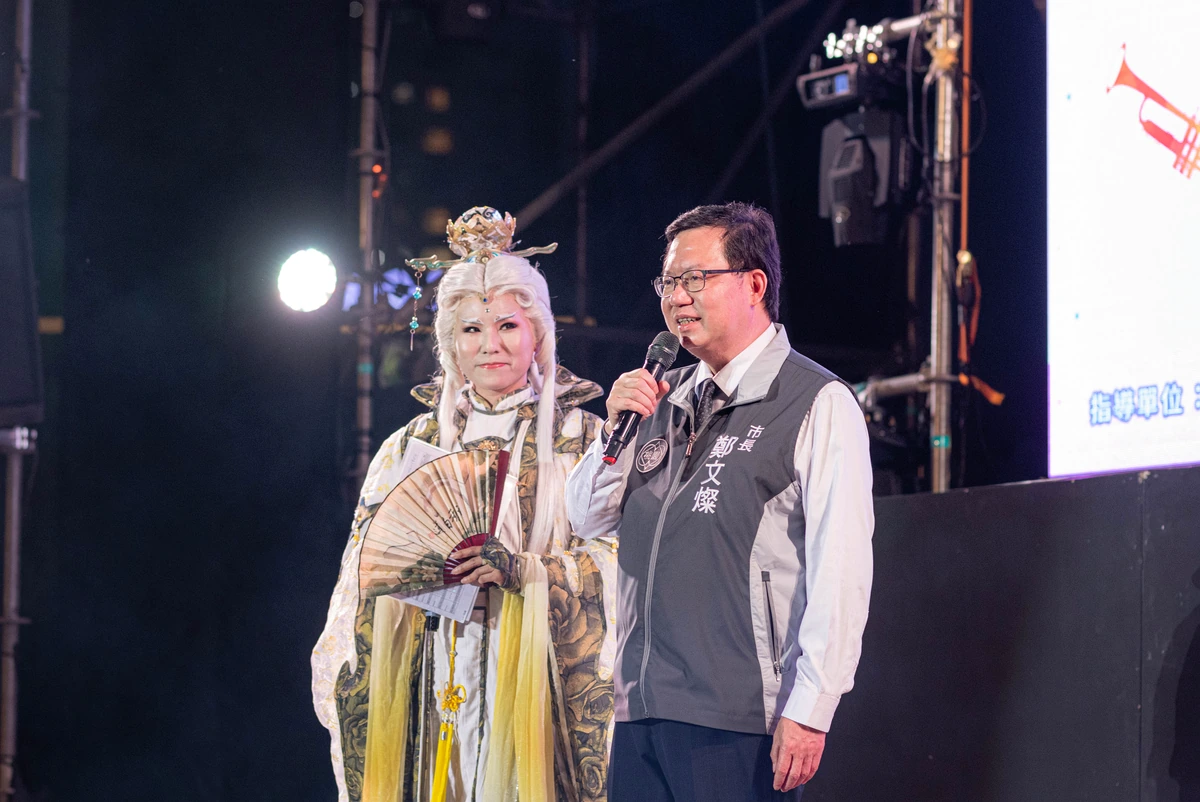
Formosa’s culinary map is a living chronicle of the fusion between successive waves of migrants who crossed the treacherous Black Ditch. Shaped over hundreds of years, local gastronomy has transcended mere cooking techniques to blossom into a complex flavor ecosystem, where the rustic simplicity of indigenous Austronesian peoples blends seamlessly with bold Hokkien flavors, the refined salting and fermentation crafts of the Hakka community, and the essence of China’s Eight Great Culinary Traditions brought over by mainland migrants. Behind the billowing steam of family-run kitchens passed down through four or five generations lie strict standards for ingredient freshness and a culinary philosophy aligned with nature—forging an identity that is at once refined and deeply rooted in everyday street life.
In the historic former capital of Tainan—widely hailed as the culinary cradle of the island—Danzai noodles preserve the pure soul of their origins in the late Qing Dynasty. Legend has it that a fisherman named Hong Yutou, seeking to sustain his livelihood during the stormy “slack-season” months when rough seas prevented fishing, shouldered a bamboo carrying pole through narrow alleys to sell steaming bowls of noodle soup. An authentic bowl of Danzai noodles distills intricate stock-simmering mastery: fresh sea-prawn heads are sautéed in lard until fragrant, then simmered gently with pork marrow bones for hours to extract a clean, natural sweetness without artificial additives. Golden wheat noodles are blanched for mere seconds, nestled in the center of the bowl, and ladled over with rich “rouzao” minced pork ragù slow-braised with crispy fried shallots—finished with a touch of crushed garlic, Wuji black vinegar, and a single boiled fresh shrimp arched proudly on top.
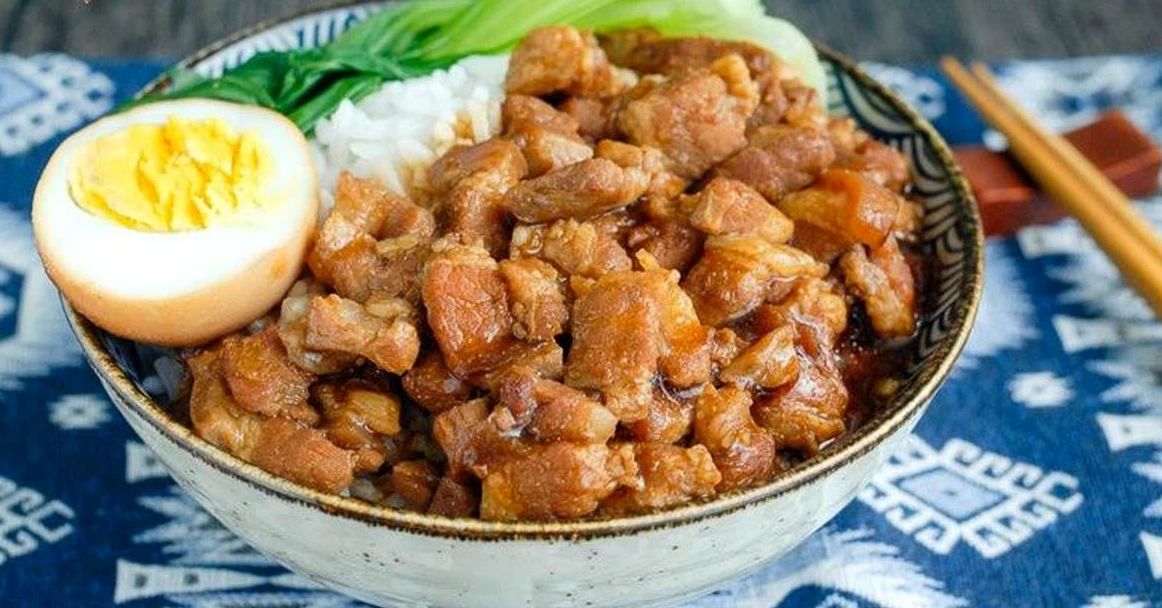
Delving deeper into the pulse of daily street life, braised pork rice (luroufan) and oyster omelets stand as two folk icons elevated to intangible cultural heritage in the hearts of locals. A legendary serving of braised pork rice requires the chef to hand-dice pork belly into uniform cubes with an ideal lean-to-fat ratio—never using a meat grinder, so the natural grain remains intact. Seared in a cast-iron wok, the pork is slow-braised with traditional soy sauce, rock sugar, Huadiao wine, and black cardamom until the skin melts into a velvety, gelatinous glaze coating every glossy grain of short-grain rice—leaving a rich, savory finish that never feels heavy on the palate. Side by side stands the famous coastal oyster omelet, crafted from plump, freshly harvested milk oysters pried from rocky shores, enveloped in a silky sweet-potato starch batter and free-range eggs, pan-seared over high heat until the edges crisp, and generously drizzled with a ruby-hued sweet-and-sour sauce simmered from fermented soybean paste and heirloom tomatoes.
Experiencing the art of tea ceremony with prized Alishan high-mountain oolong is an indispensable ritual when exploring Taiwan’s culinary culture. Nurtured on limestone mountain slopes over 1,000 meters above sea level—where year-round mist and sharp day-night temperature swings prevail—each “one bud, two leaves” shoot concentrates the pure essence of mineral-rich soil and morning dew. Through artisanal partial oxidation and tightly rolled roasting into emerald-green pearls, Alishan tea pours into a porcelain gaiwan cup with a luminous honey-gold hue, releasing a pure orchid bouquet layered with subtle creamy notes. The first sip glides smoothly across the palate with a gentle, velvety astringency, immediately giving way to a lingering, honeyed sweetness that captures a thousand years of serene mountain mist.
Entry formalities and electronic visa mechanisms form the decisive opening chapter of any journey to discover Taiwan. The Kuan-Hung Special Project (Project Kuan-Hung) is specifically tailored for tour groups from Southeast Asian countries, offering streamlined e-visa applications through designated travel agencies while waiving multiple layers of complex financial documentation. Concurrently, travelers holding valid visas or permanent resident cards from developed nations such as Japan, South Korea, the United States, or the Schengen Area can apply online directly through the National Immigration Agency portal to receive instant travel authorization. This thoughtful administrative efficiency ensures smooth immigration clearance at international gateways like Taoyuan and Kaohsiung, opening the door to the island’s multi-layered cultural tapestry free from drawn-out bureaucratic hurdles.
Once on Taiwanese soil, intercity travel is effortlessly solved by the Taiwan High Speed Rail (THSR) network. Stretching roughly 345 kilometers along the flat western coastal plain from Nangang Station in Taipei to Zuoying Station in Kaohsiung, sleek bullet trains glide at top speeds of up to 300 km/h, shrinking cross-island transit times to under two hours. For multi-day itineraries spanning the North – Central – South corridor, investing in a 3-Day Consecutive THSR Tourist Pass offers the smartest value, granting unlimited rides between vital hubs such as Taoyuan, Hsinchu, Taichung, and Chiayi. Pair the THSR with the conventional Taiwan Railways Administration (TRA) network and a contactless EasyCard for urban MRT metro lines, and the entire public transit system—operating from 06:00 AM until midnight—becomes a seamless bridge carrying you to the island’s farthest corners.
Stepping into the spiritual life of local residents, understanding temple etiquette is an essential mark of cultural respect. When visiting historic sanctuaries such as Lungshan Temple or Wenwu Temple, traditional protocol strictly observes the principle of “entering through the Dragon Gate, exiting through the Tiger Mouth”—meaning visitors enter via the left-hand doorway when facing the temple (the Azure Dragon position, symbolizing auspiciousness and blessings) and exit via the right-hand doorway (the White Tiger position, dispelling misfortune and ill luck), while strictly avoiding stepping directly on the sacred wooden threshold. Additionally, when packing for high-altitude mountain ranges like Alishan or Hehuanshan—soaring above 2,200 meters—travelers should dress in onion-style layers. The stark temperature contrast between tropical lowlands and chilly alpine mist calls for a moisture-wicking base layer, an insulating fleece mid-layer, and a windproof, waterproof outer shell to maintain thermal comfort through rapidly shifting mountain microclimates.
When it comes to daily expenses, Taiwan offers remarkably accessible and flexible budgeting for travelers of every style. To savor authentic local flavors at neighborhood prices, the golden rule is to step away from stalls lining the main thoroughfares of overcrowded tourist night markets and wander deeper into side alleys where elderly locals faithfully preserve decades-old family recipes. Here, on just 150 to 300 New Taiwan Dollars (NTD) a day, you can feast to your heart’s content on spicy braised beef tendon noodle soup, bamboo-tube sticky rice, or sizzling oyster omelets. Furthermore, Taiwanese commercial culture does not practice tipping, and every printed receipt carries an official lottery number for the government’s bi-monthly Uniform Invoice draw—turning every everyday purchase into a delightful, community-connected cultural surprise.
Mastering these nuanced travel insights—from high-speed rail transfers and sacred temple etiquette to hidden-alley culinary gems—will ensure your journey unfolds effortlessly, deeply, and rich with authentic cultural rewards. For first-time visitors to the island seeking a well-structured itinerary that seamlessly integrates Kuan-Hung e-visa assistance with premium transportation and accommodations, exploring all-inclusive Taiwan tour packages is the ideal way to embark on a truly fulfilling and unforgettable voyage.