Nestled below the snow-dusted peaks of the Greater Caucasus, Kakheti has long stood as an early center of agriculture and viticulture across the Caucasus. Archaeological finds in this fertile basin—tied to Neolithic traditions such as the Shulaveri-Shomu culture—point to ancient grape cultivation and subterranean clay-vessel winemaking dating back millennia. Over the centuries, Kakheti’s winemaking heritage has remained closely woven into local life, Orthodox faith, and the shifting history of eastern Georgia.
Kakheti emerged as a distinct political principality in the late eighth century (around 787 CE) and later formed part of the unified medieval Kingdom of Georgia under the Bagrationi dynasty, serving as a fertile agricultural and religious region. Because of its eastern frontier location, Kakheti also faced repeated raids and invasions—from Mongol and Timurid campaigns to Safavid Persian and Ottoman pressures—bringing displacement and destruction even as local farmers and monasteries tended vineyards and preserved Orthodox traditions.
A major era of revival in Kakheti is closely tied to King Erekle II, who united the kingdoms of Kartli and Kakheti in the second half of the eighteenth century. Facing ongoing cross-border raids from Dagestan and pressures from Persia, Erekle II strengthened regional defenses—most notably fortifying the hilltop town of Sighnaghi overlooking the Alazani Valley.
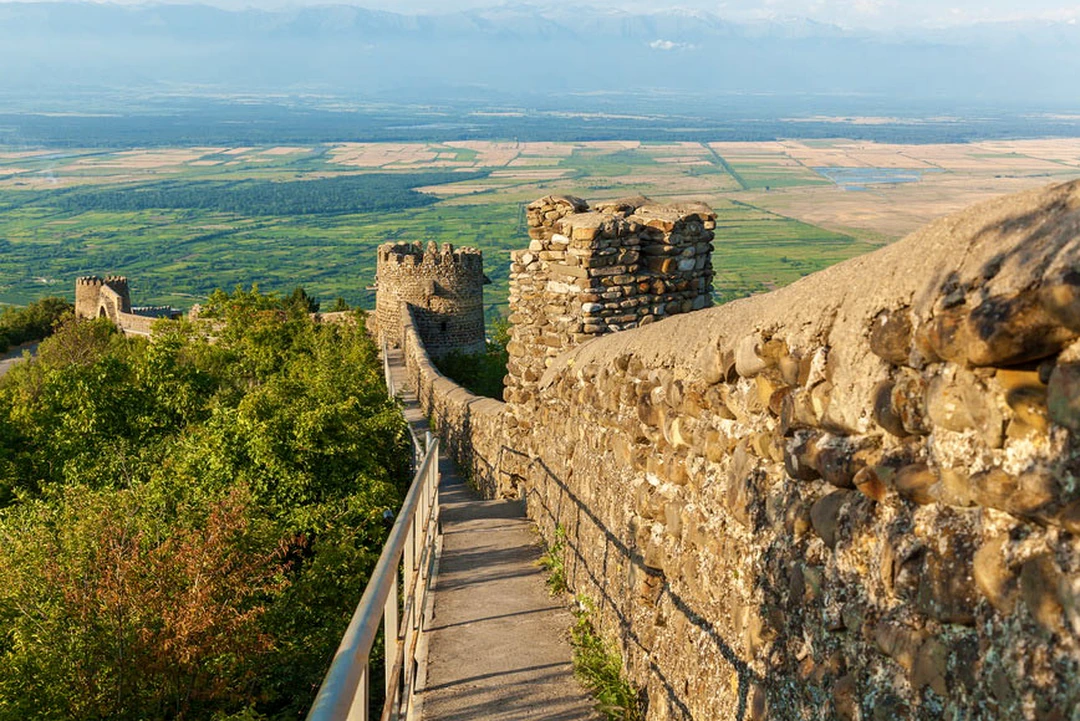
Built and reinforced largely in the 1760s and 1770s, Sighnaghi’s defensive walls stretch over 4 kilometers around a hilltop area of roughly 40 hectares, punctuated by around two dozen towers and gates—many named after nearby villages that helped man defenses. Erekle II also encouraged artisans, merchants, and craftspeople—including Armenian artisans—to settle in town, giving Sighnaghi a lively craft and trade role alongside its strategic views toward the Alazani Valley and Tbilisi.
Following the 1783 Treaty of Georgievsk and later incorporation into the Russian Empire, Sighnaghi’s role shifted from frontier fortress toward wine production, market trade, and regional town life. Today, cobbled lanes, terracotta-roofed houses, and family wine cellars give Kakheti and Sighnaghi an enduring blend of history and viticultural craft.
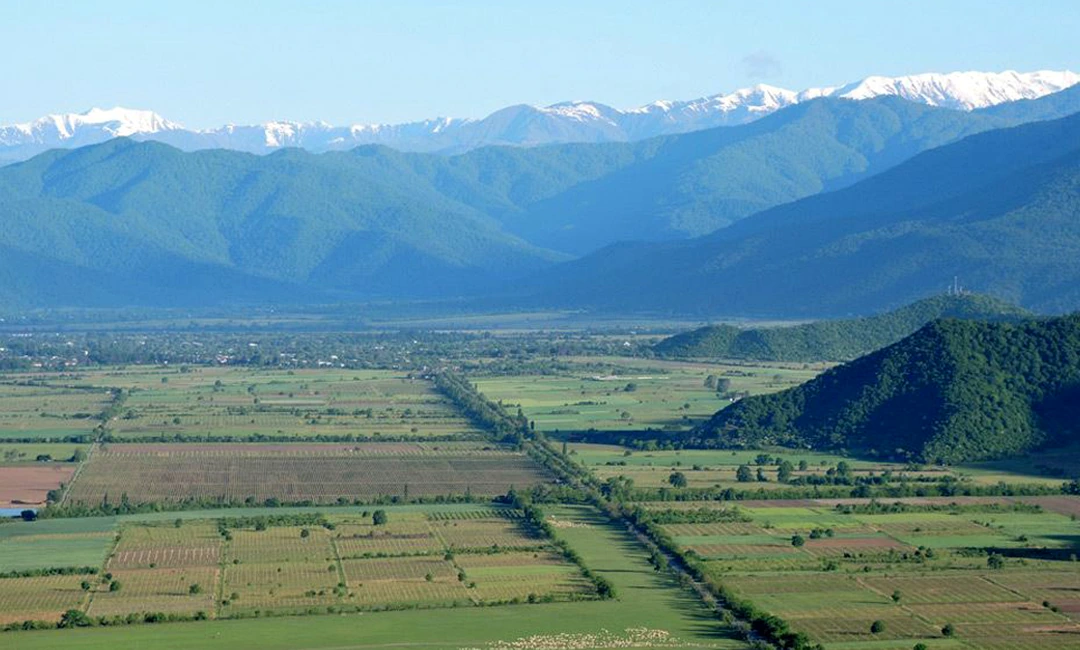
Geographically and in landscape terms, Kakheti forms a broad valley basin framed to the north and northeast by high peaks of the Greater Caucasus and to the southwest by the Gombori Range. At its center runs the Alazani River valley, where alluvial and gravelly/clay soils and mountain runoff support productive vineyards and orchards across eastern Georgia.
Perched along a steep ridge of the Gombori Range around 800 meters above sea level, Sighnaghi reflects eighteenth-century hilltop fortification planning under King Erekle II across the Caucasus. Stone and brick walls tracing the ridge line with watchtowers offered lookout posts and shelter for residents and provisions during regional unrest.
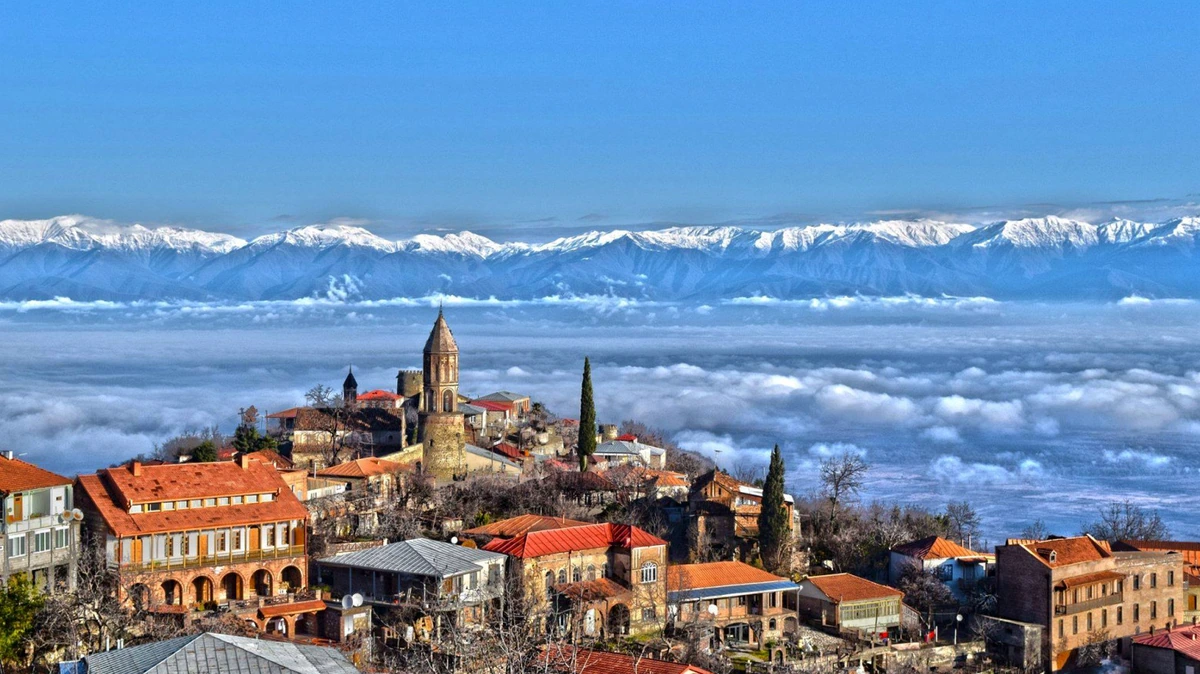
Microclimates in the Alazani Valley help shape indigenous Georgian grape varieties. Warm days and cooler nights descending from mountain slopes encourage balanced ripening, structure, and aromatics—helping white *Rkatsiteli* show crisp acidity and herbal/floral notes, and red *Saperavi* (a *teinturier* variety with pigmented flesh as well as dark skin) produce deep-colored wines capable of aging.
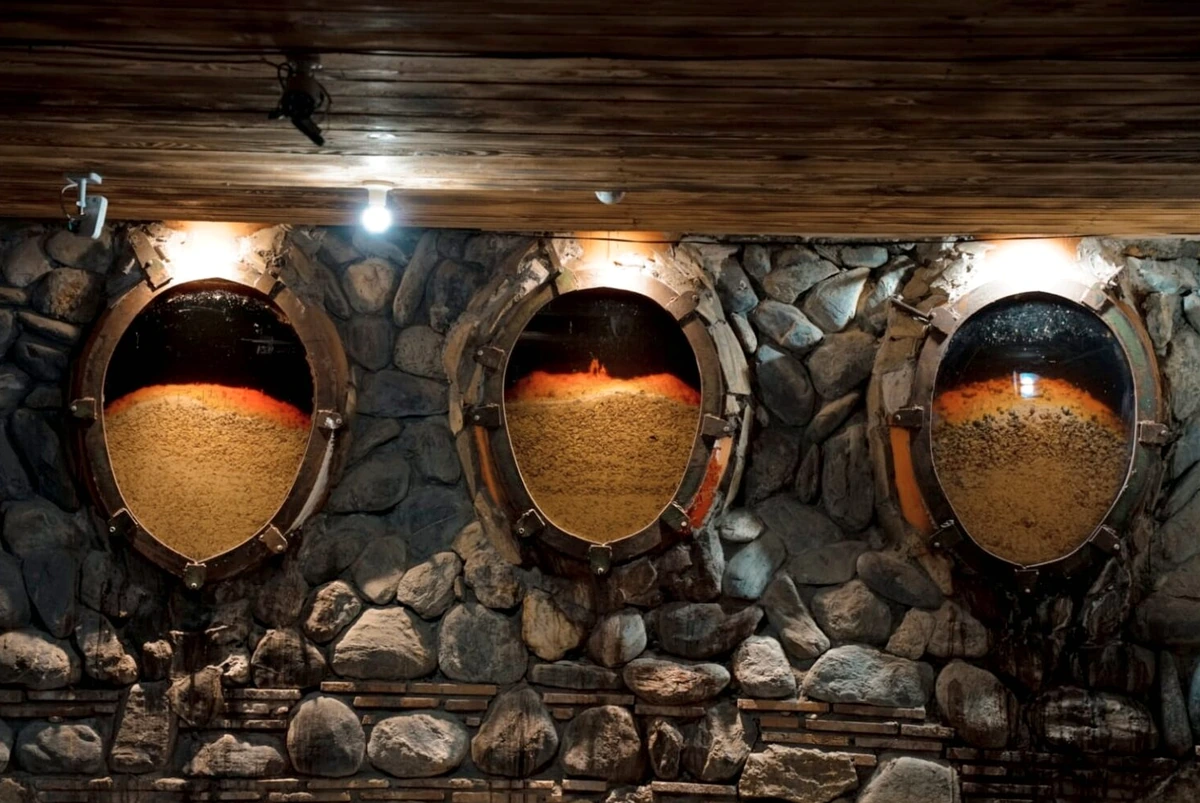
Traditional Kakhetian winemaking centers on a cellar or winery space (*marani*) using large egg- or cone-shaped beeswax-lined clay vessels called *qvevri* buried below ground. After grapes are crushed—often in a traditional wooden trough (*satsnakheli*)—juice, skins, seeds, and sometimes stems (*chacha*) enter the *qvevri*, where cool, steady underground temperatures help guide fermentation.
As fermentation settles, the tapered base of the *qvevri* helps sediment gather toward the bottom while vessels are sealed with stone lids, clay, and earth for months of cool cellar rest before opening—yielding amber skin-contact whites and structured reds characteristic of traditional Georgian winemaking.
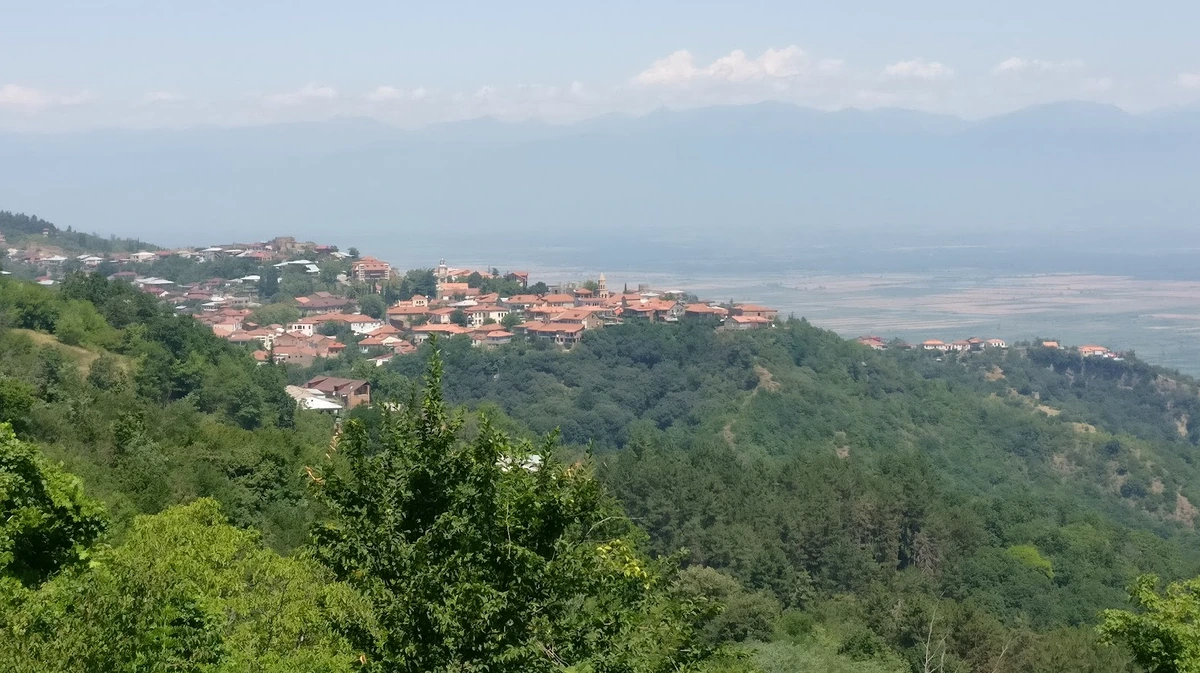
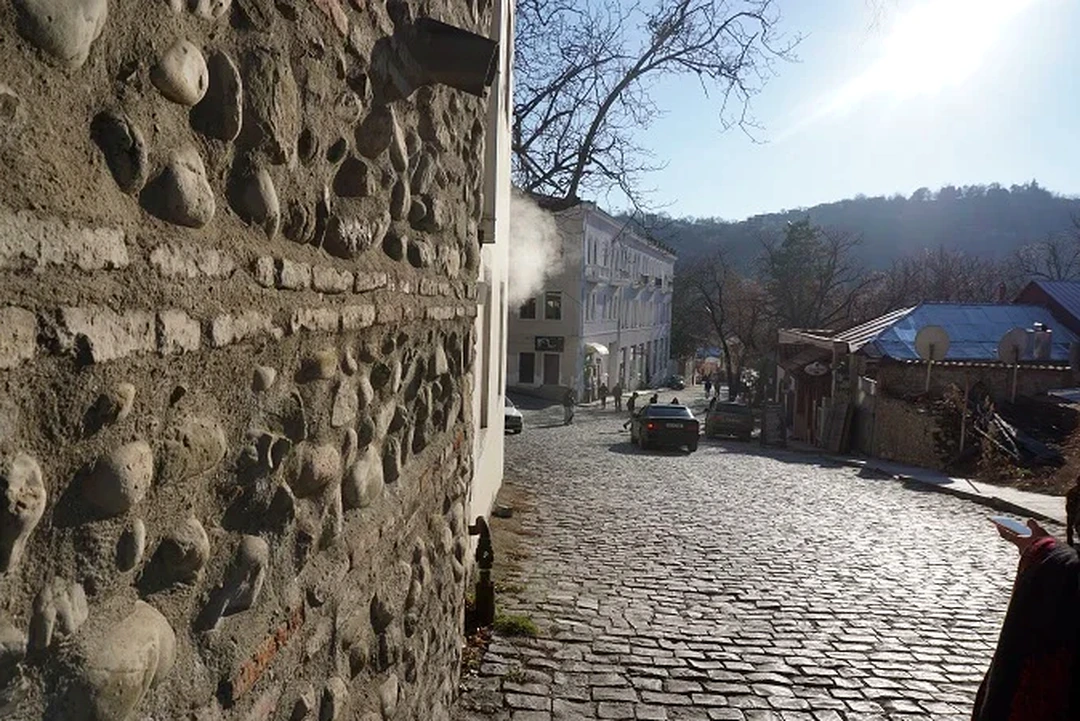
Sitting high on a Gombori ridge around 800 meters above sea level, Sighnaghi pairs wide views over the Alazani Valley and Caucasus peaks with winding cobbled streets and two-story brick-and-stone houses blending regional and European-influenced town details.
A hallmark of Sighnaghi’s streetscape is its carved nineteenth-century wooden balconies. Decorated posts, railings, and eaves create airy vantage points overlooking lanes and valleys while serving as a welcoming spot for neighbors and guests to gather, share wine, and enjoy the breeze.
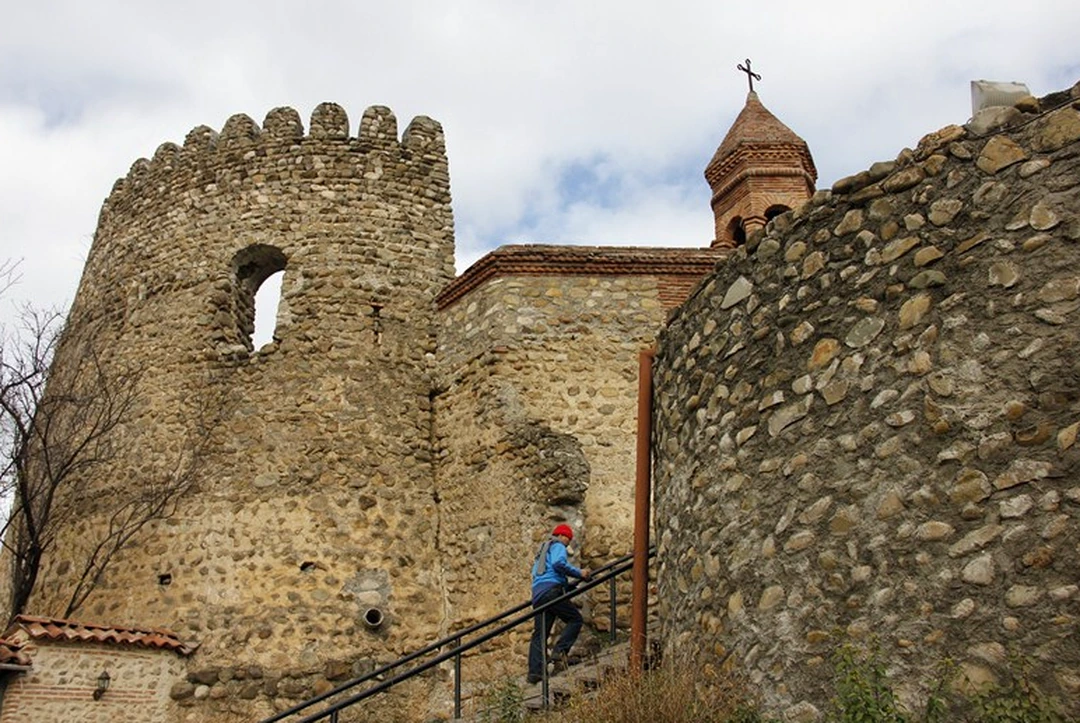
Enclosing the historic town core is a defensive fortification wall stretching over four kilometers, one of the most substantial and well-preserved medieval town walls remaining in Georgia. Built from river cobbles and fired/mud brick following the rugged contours of the hillside, the wall surrounds roughly forty hectares with twenty-eight watchtowers. Named after surrounding villages in Kakheti, these towers served both as frontier lookouts along key routes and as local refuges during periods of unrest, equipped with staggered embrasures, exposed stone stairs, and upper firing platforms reflecting medieval fortification craft.
About two kilometers outside central Sighnaghi through quiet pine woodland stands Bodbe Monastery, a serene spiritual complex overlooking the valley. Centered on the cathedral dedicated to Saint George—with stone foundations dating back to the 9th century and later rebuilds—the church holds the tomb of Saint Nino, who brought Christianity to Georgia in the 4th century, alongside aged frescoes, a three-tier brick bell tower from the 19th century, and cypress-shaded gardens with sweeping valley views.
Alongside aboveground landmarks, half of Kakheti’s winemaking heritage lies beneath the ground inside traditional *marani* cellars. Crafting large clay *qvevri* vessels—ranging from hundreds to thousands of liters—continues an 8,000-year Georgian ceramic tradition: coiled by hand from mineral-rich clay, wood-fired, lined with beeswax, and buried underground so steady earth temperatures nurture skin-contact fermentation of amber and red wines.
As sunset fades behind the Caucasus Mountains and casts warm bronze light across the Alazani Valley, Sighnaghi takes on a quiet evening glow. Rather than neon glare, subtle lighting traces King Erekle II’s 18th-century fortification wall and cobblestone gateways along the ridge, making terracotta roofs and carved wooden balconies stand out against the darkening valley below.
Evening life in Kakheti leans ceremonial and reflective rather than hurried. At its heart is Georgian polyphonic singing—recognized on UNESCO’s Intangible Cultural Heritage list—as three-part harmonies rise from stone *marani* cellars and neighborhood taverns, echoing classic songs like *Chakrulo* and traditional table chants rooted in centuries of winemaking.
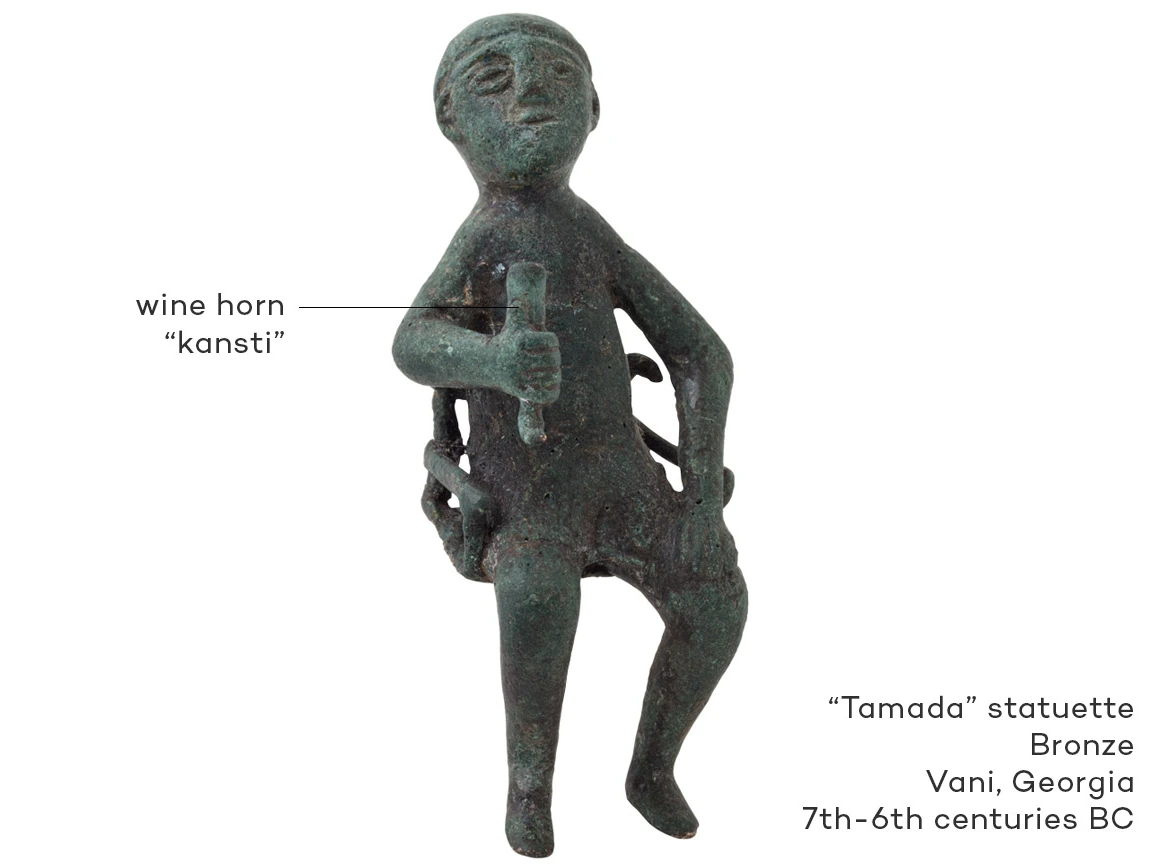
Inside stone-lined tasting rooms lit by beeswax candles and lanterns, evening hospitality centers on a *tamada* guiding heartfelt toasts over *kantsi* horns or glasses of amber Rkatsiteli and deep red Saperavi—paired with vine-wood grilled *mtsvadi* skewers, *shoti* bread pulled from a clay *tone* oven, walnut-stuffed eggplant rolls (*badrijani nigvzit*), and rich Sulguni cheese.
Later at night, Sighnaghi settles into a calm, unhurried pace along basalt-paved lanes past 19th-century houses with climbing vines and carved wooden balconies—where evening breezes, friendly backgammon games in courtyards, and vineyard scents create a lasting impression of timelessness.
Kakheti foodways draw closely on Alazani Valley produce and *qvevri* winemaking traditions—where cellar-aged amber wine accompanies generous family tables and warm hospitality shaped by centuries of mountain and valley life.
A signature dish is *mtsvadi*—skewered pork or lamb cooked over glowing embers from dried winter grapevine prunings (*tsalami*) that impart subtle smokiness, often seasoned lightly with sliced onions and pomegranate seeds and served hot alongside flatbread fresh from a clay oven.
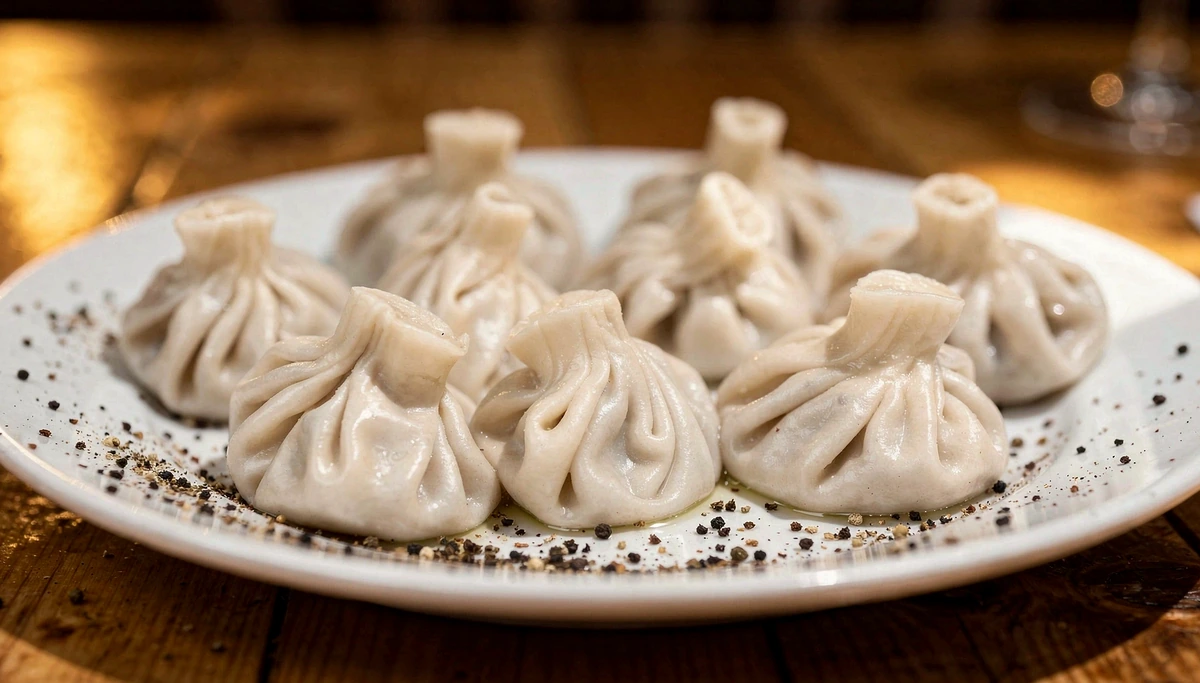
Another favorite is *khinkali*—hand-pleated dumplings (often with roughly nineteen to twenty-eight pleats) filled with seasoned meat and savory broth, eaten carefully by holding the top dough knot and taking a small bite to sip the broth first—alongside braided or smoked Sulguni cheese and cellar-aged cheeses.
Along Sighnaghi’s streets, hanging strings of *churchkhela* draw curious glances: walnuts, hazelnuts, or almonds threaded onto string, dipped repeatedly in thickened Rkatsiteli grape juice (*tatara*) cooked with flour, and sun-dried into a chewy, sweet, nutty snack.
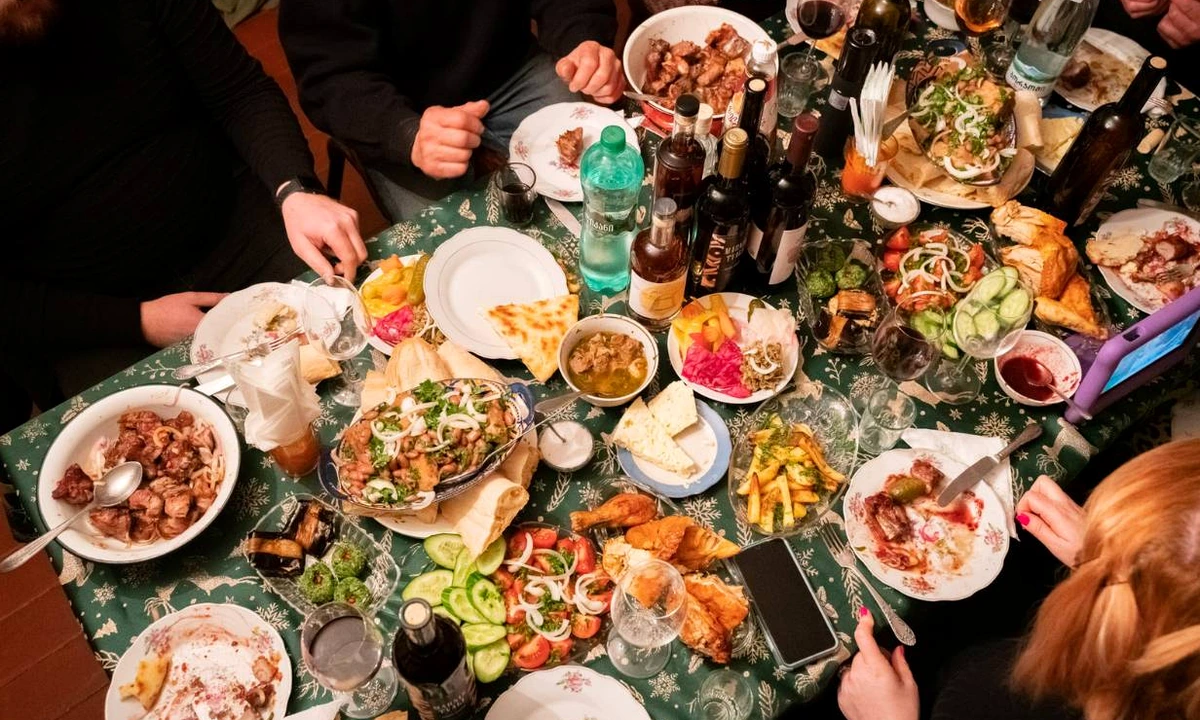
Bringing these traditions together is the *supra* feast, led by a chosen *tamada* who weaves thoughtful toasts (*sadghegrdzelo*) honoring faith, ancestors, peace, hospitality, and friendship as glasses and horns are raised around the table.
Around a long *supra* table accompanied by polyphonic singing, Kakheti dining feels less about display than about shared bread, cellar wine, and connection between past and present.
The ideal time to visit Kakheti and Sighnaghi is late spring from May to June, when the Alazani Valley wakes from winter with bright wildflowers and fresh green hillsides. Still, the *Rtveli* grape harvest in September and October brings a lively celebration of conversation and traditional polyphonic singing across rows of deep purple Saperavi and amber Rkatsiteli vines. From central Tbilisi, Kakheti lies roughly 110 km to the east—about a two-hour drive winding through oak-forested slopes of the Gombori Pass or along smoother highway routes via Sagarejo, accessible by regular *marshrutka* minibuses from Samgori station or by private car/rental for flexible stops along historic walls overlooking the snow-dusted Caucasus.
Key heritage stops in Sighnaghi—such as the History and Ethnography Museum, home to original works by naive painter Niko Pirosmani, and peaceful Bodbe Monastery—typically open daily from around 10:00 AM to 6:00 PM. While large commercial wineries in Kvareli or Tsinandali feature multi-kilometer tunnels carved into rock, the heart of Georgian wine culture often beats inside smaller family cellars called *marani*, where tasting sessions with Sulguni cheese vary modestly by how many underground *qvevri* vintages are poured, and rustic lunches of oven-baked *puri* bread, vine-wood grilled *mtsvadi* skewers, and walnut-herb *pkhali* are best booked ahead at private estates.
At the center of Georgian conviviality is the *supra* feast, a time-honored table tradition guided by a *tamada*—a toastmaster chosen for eloquence, wit, and warmth. When a *kantsi* drinking horn or wine cup is raised, the *tamada* offers thoughtful toasts (*sadghegrdzelo*) honoring friendship, homeland, parents, and ancestors; guests customarily wait until the toast concludes and join in calling “*Gaumarjos!*” (“To victory/health!”) before sipping—taking a modest sip with a warm smile if preferred rather than feeling pressured to drain every glass of earthen-vessel wine.
When visiting sacred sites such as Bodbe Monastery—resting place of Saint Nino, who brought Christianity to ancient Iberia in the 4th century—dress modestly with skirts below the knee and a headscarf for women and long trousers for men. Before leaving Sighnaghi, cliffside stalls offer chewy *churchkhela* candies of thickened grape juice coating walnuts or small clay *qvevri* keepsakes. To enjoy vineyard scenery, local history, and Georgian hospitality without worrying about language or mountain roads, explore our Caucasus (Georgia – Azerbaijan) tour packages.