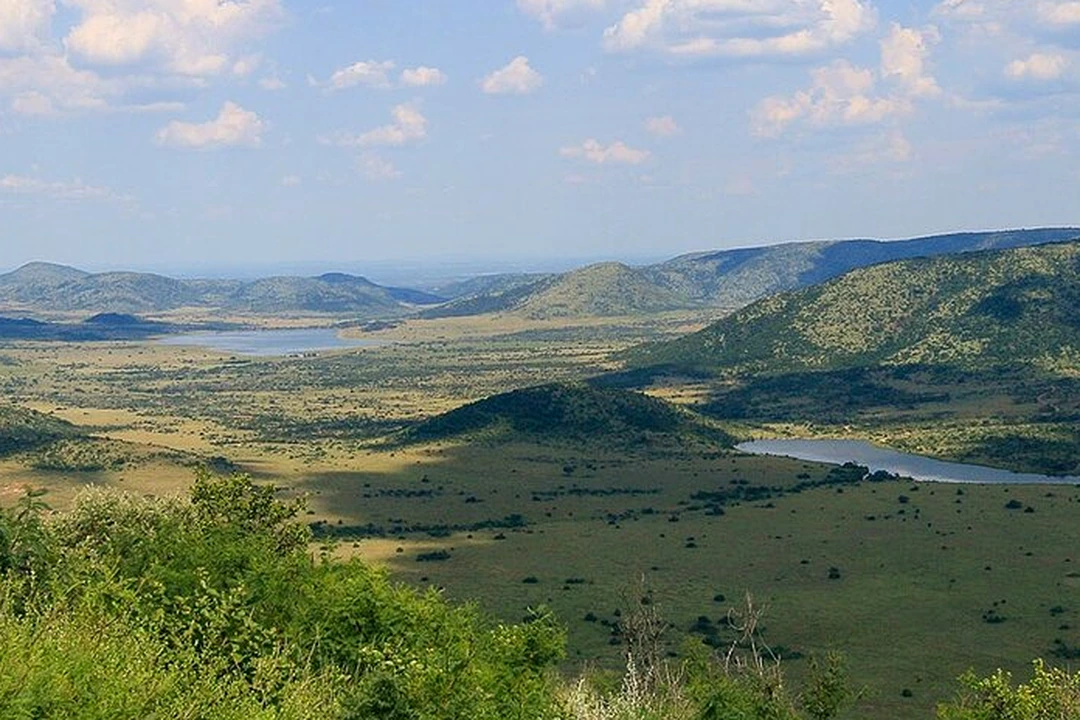
Tucked deep within South Africa’s North West Province, the bowl-shaped Pilanesberg valley opens a grand geological and human chronicle born from tectonic upheavals exactly 1.2 billion years ago. This site was once the intense focal point of an ancient supervolcano that forged the Pilanesberg Alkaline Ring Complex—an exceedingly rare concentric ring landform on Earth’s crust, ranking behind only two comparable formations in Russia and Greenland. Across hundreds of millions of years of weathering and erosion, the giant crater wore down into sweeping concentric rings of hills cradling the lush Bushveld plains, creating an isolated ecological sub-region where climate and soil blend seamlessly between the arid Kalahari and subtropical herbal plains.
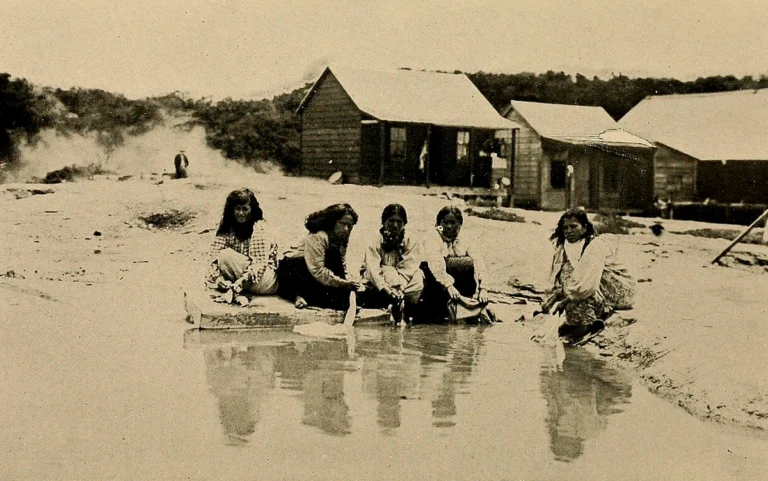
Before modern political shifts cast their shadow, the sacred land around the ancient volcanic range was long inhabited by the Bakgatla-ba-Kgafela clan, a proud branch of the Tswana people. The name Pilanesberg comes from the title of renowned chief Kgosi Pilane, who led the people in building stone strongholds, herding cattle, and keeping totem rituals in the mid-nineteenth century. In Bakgatla consciousness, the Pilanesberg basin is not merely a place of shelter, but a realm of ancestral spirits where every syenite outcrop and underground spring holds legends of courage and deep harmony with African wildlife.
The historic turning point that permanently transformed the landscape arrived in the late 1970s under the Bophuthatswana Bantustan administration led by President Lucas Mangope. To restore an ecosystem heavily degraded by cattle ranches of white settlers, an unprecedented environmental recovery plan codenamed Operation Genesis was officially launched in 1979. It was recorded as the largest wildlife translocation and rewilding project in human history up to that time. Behind a bio-electric fence stretching over 100 kilometers around 55,000 hectares, more than 6,000 animals of rare species—including the famed Big Five of bush elephants, white rhinos, lions, leopards, and buffaloes—were safely airlifted and transported overland from across Africa back to the sacred valley.
Alongside natural restoration came a burst of human imagination right on the reserve’s edge. Seeing the extraordinary potential of a territory not bound by the strict gambling bans of the Apartheid regime at the time, magnate Sol Kerzner poured his energy into building the Sun City resort complex, crowned by the legendary Palace of the Lost City opened in 1992. Costing over US$300 million, the grand project brought to life the myth of an ancient African dynasty that once ruled there before being buried by a cataclysmic earthquake.
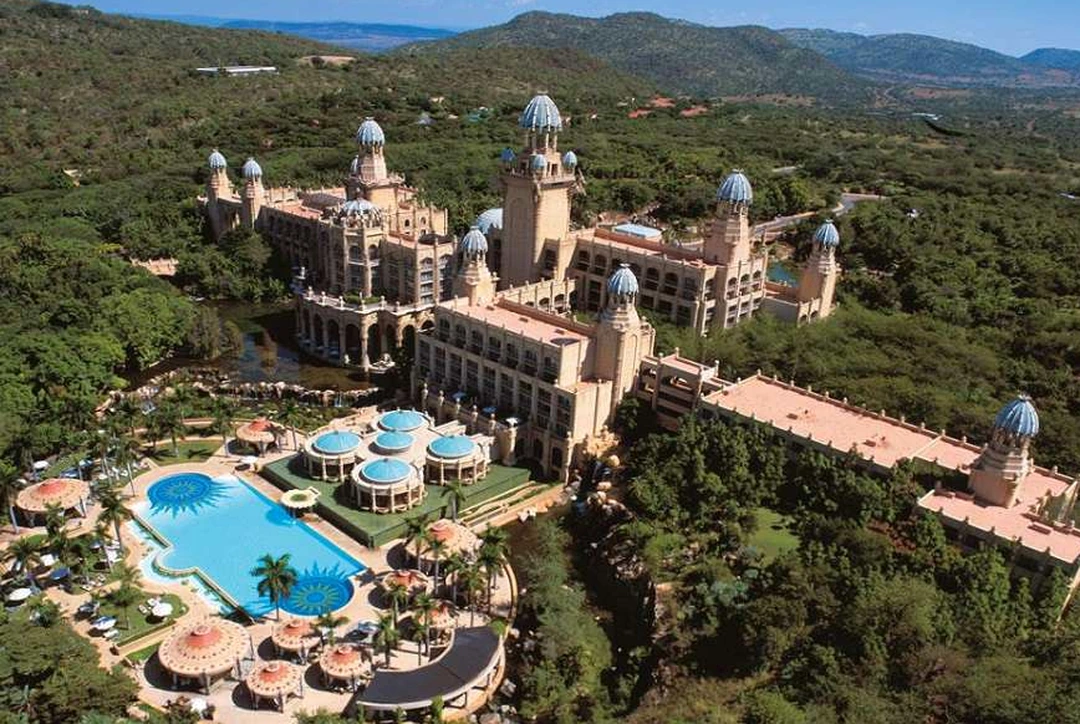
The presence of this grand palace—with leopard-patterned domes, plaster faux-ivory pillars evoking ancient temples, and a 25-hectare man-made jungle—not only opened a golden era for South Africa travel, but also marked an epochal shift right on the eve of the historic 1994 democratic elections. Between ancient alkaline hills thousands of years old and top-tier resort living, Pilanesberg and The Lost City stand as a living monument to nature’s capacity for renewal and humanity’s boundless creative drive.
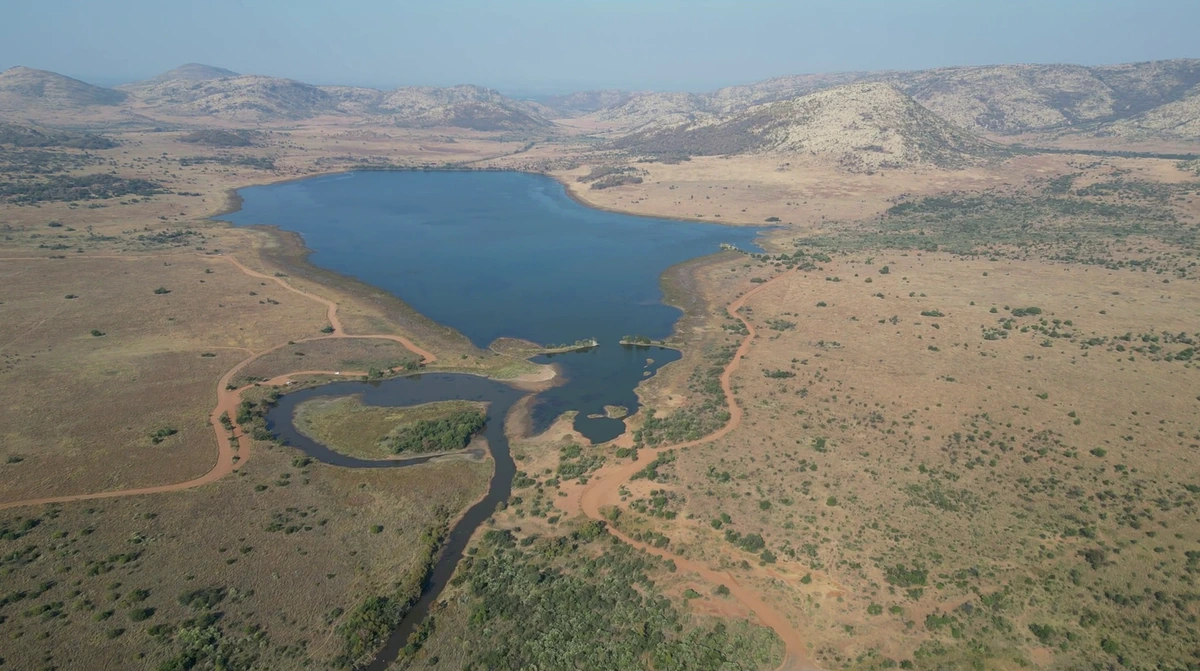
Set apart across the wide plains of North West Province, Pilanesberg’s topography represents one of the rarest geological and scenic phenomena on Earth’s surface. Spanning 572 km², the entire reserve sits squarely inside an ancient alkaline volcanic crater extinct for more than a billion years. Prehistoric tectonic forces left behind a dramatic concentric ring structure, with circular ridges of layered hills enclosing a central bowl valley. Seen from above, the terrain looks like a giant stone flower blooming across the savanna, where cool syenite and foyaite ridges act as sturdy natural ramparts keeping out external harshness while gathering vital energy and fertile air across the inner plain.
In terms of natural geomancy and landscape ecology, the bowl-shaped basin cradling central Mankwe Lake forms a “gathering waters, nurturing life” dynamic that turns the area into a protective cradle for living things. This geographic position naturally creates a unique ecotone—an ecological transition zone—between two contrasting biomes: the arid edge of the Kalahari from the northwest mingling with lush bushveld vegetation of the tropical Lowveld from the east. The interplay of soils and climates sustains high biodiversity, offering ideal habitat for the savanna’s mightiest predators and herbivores—lions, leopards, African elephants, white rhinos, and Cape buffaloes—alongside habitat-selective rarities such as brown hyenas and proud, curved-horned sable antelopes.
Making full use of the primeval crater’s sheltering arc, human planning laid the foundations for Sun City and The Palace of the Lost City right along the transitional rim of the hills. Rather than flattening natural contours, landscape engineers turned rugged magma outcrops into firm structural footings, crafting an architectural legend that looks as though it were unearthed from a civilization lost millennia ago. Complex hydraulic engineering channels groundwater and hillside runoff to create the Valley of Waves, complete with a man-made beach capable of generating huge mechanical waves hundreds of kilometers inland from the coast.
Alongside these monumental structures is a masterwork of ecological greening. Millions of tons of topsoil and more than one million mature trees representing hundreds of indigenous and exotic species were transported and carefully planted along bare syenite slopes. Artificial tree-care systems mirror an African rainforest canopy, using automated underground irrigation to keep moisture steady year-round without eroding ancient rock. Fountains sculpted with wildlife, seismic suspension bridges, and gilded palace domes rising beside Pilanesberg’s wild core strike a striking balance between human boldness and the solemn mystery of African nature.
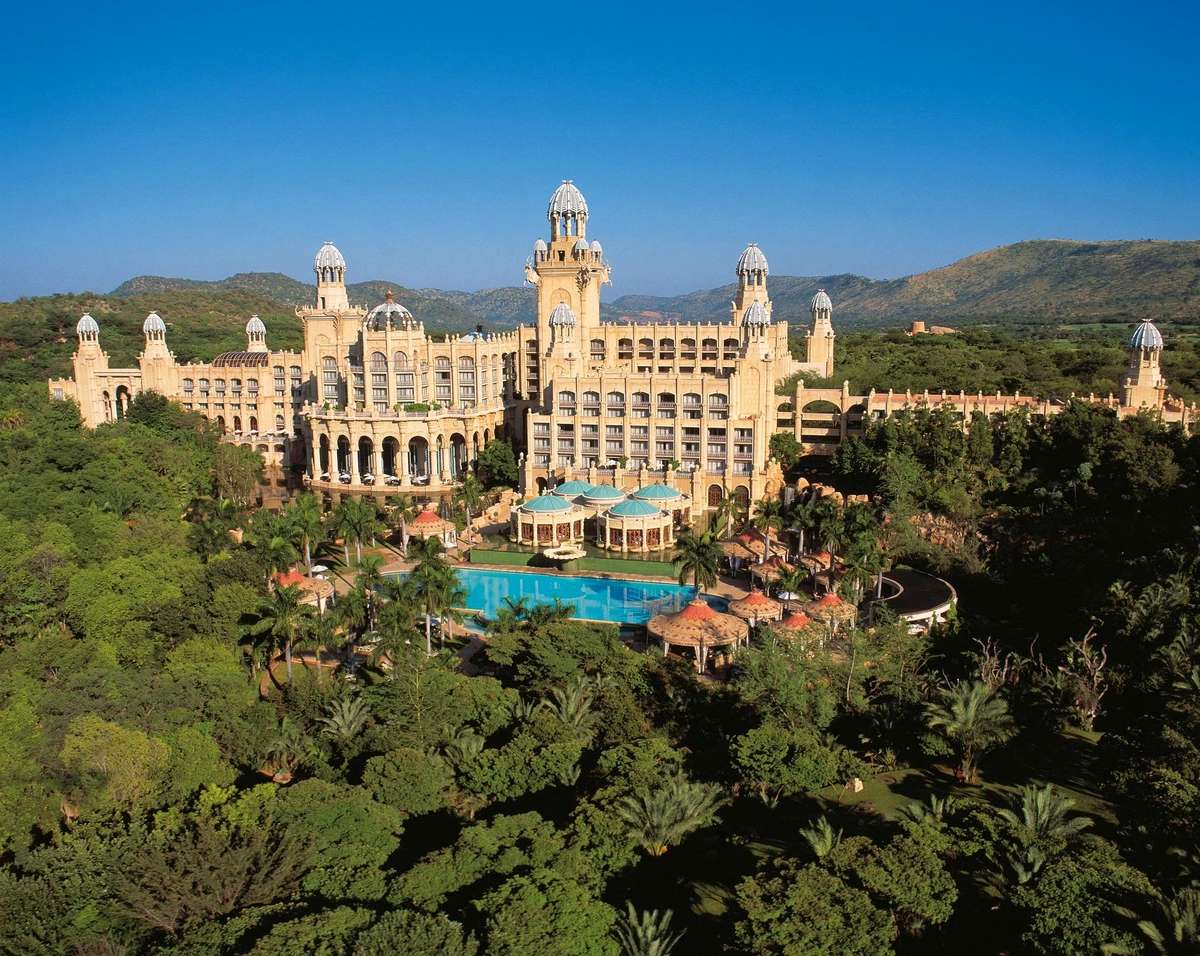
Rising above ordinary luxury resort standards, The Palace of the Lost City embodies a one-of-a-kind architectural epic in the African Fantasy style. Under renowned architect Gerald Allison and interior designer David Hicks, the building was conceived from the myth of an ancient kingdom swallowed by a geological catastrophe thousands of years ago. Allison created an ensemble resembling an archaeological site newly awakened inside an extinct volcanic crater, where stately Western baroque lines blend fluently with the untamed spirit of Africa. Soaring towers reach toward the clouds, and sweeping ceilings are held up by columns modeled on fossilized palm trunks and giant ivory tusks—shaping a space that is grand and solemn yet brimming with mythical emotion. Every angle of the palace sets aside purely functional routine to honor nature’s boundless romance and indigenous lore.
The peak of the Palace’s aesthetic value lies in remarkably refined craftsmanship. Every exterior sandstone block was hand-carved by master artisans to bring African savanna flora and fauna vividly to life. Stepping into the lofty domed lobby, visitors are immediately struck by massive bronze doors weighing tons, cast in high relief with powerful animals and sacred motifs from ancient Tswana belief. Lobby floors are woven from millions of precision-cut natural mosaic tiles, artfully assembled into lively ecological scenes of gazelles bounding across the wind or leopards on the hunt. Every detail—from hand-cast bronze lynx-head taps and chandeliers of carved shells and horn to fossilized vine reliefs winding along walls—reflects David Hicks’s exacting eye, turning every square meter into a living art museum.
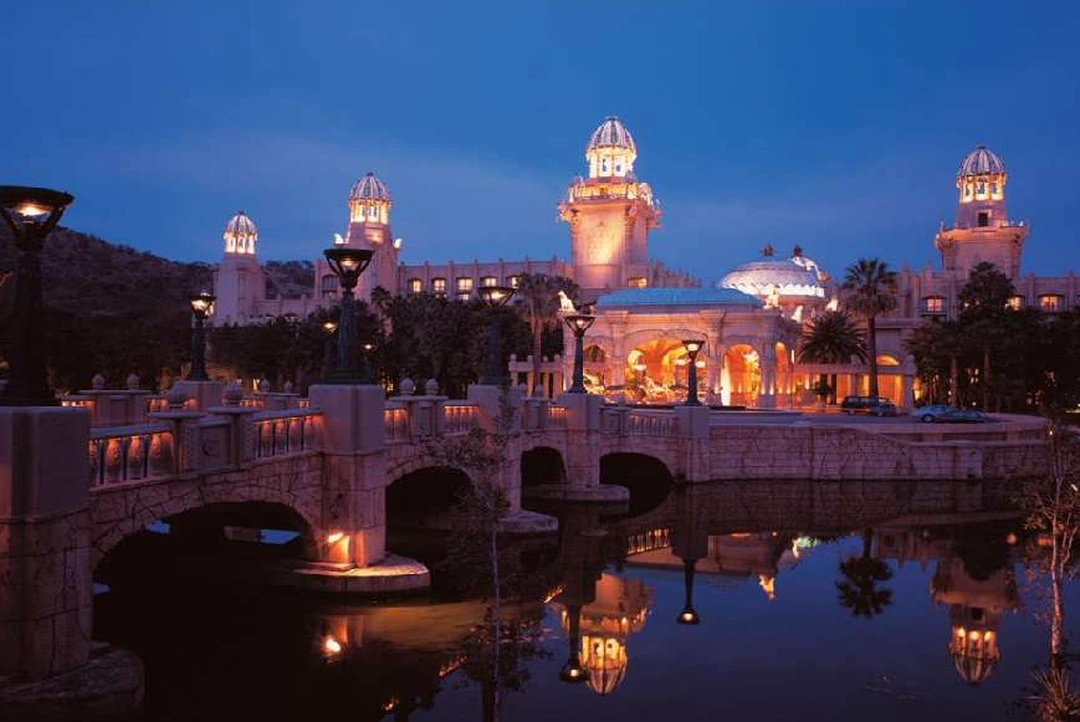
The extraordinary engineering highlight linking reality with myth is the Bridge of Time. This broad, imposing span leading toward the palace plaza is guarded by two rows of life-sized, solid-stone African bush elephants commanding authority. Hidden beneath the heavy structure is a complex hydraulic jacking system paired with mechanical smoke emitters that periodically simulate intense ground tremors like ancient volcanic wrath. At set intervals, a deep rumble rises from below, the bridge deck trembles gently beneath pedestrians’ feet, and wisps of smoke curl from artificial fault lines—delivering a dramatic visual and tactile experience that recreates the earthquake that once sank the lost city into time.
Expanding across a full landscape of 25 hectares, the complex builds a lush oasis set apart from the dry flora of North West Province. At the center of this large-scale entertainment precinct is the Valley of the Waves, a man-made hydrological wonder surrounded by a regenerated tropical forest bringing together millions of indigenous and exotic plants. At the valley’s heart is Roaring Lagoon, using advanced hydraulic mechanics to generate rolling artificial waves up to 1.8 meters high hundreds of kilometers inland from the ocean. Every 90 seconds, waves swell and break steadily onto crisp white sand transported carefully from the coast, creating a dramatic contrast with the surrounding semi-arid landscape. Smooth coordination between modern fluid mechanics and skilled landscaping turns all 25 hectares into a construction and resort engineering landmark unseen before in Africa.
As bronze twilight fades across the lava folds of the ancient crater, Pilanesberg and Sun City enter an enchanting shift of mood. Right along the delicate border between wild nature and upscale resort life, lighting at The Palace of the Lost City is kept to a restrained minimum as a respectful tribute to Mother Nature. Rather than blasting harsh spotlights that slice through primeval darkness, architects installed recessed fixtures with soft wavelengths that gently graze animal reliefs and towering ivory-style pillars. This low-intensity lighting philosophy preserves a deep night sky sparkling with the Southern Cross while preventing light pollution from spilling into the fragile biosphere of the adjacent reserve.
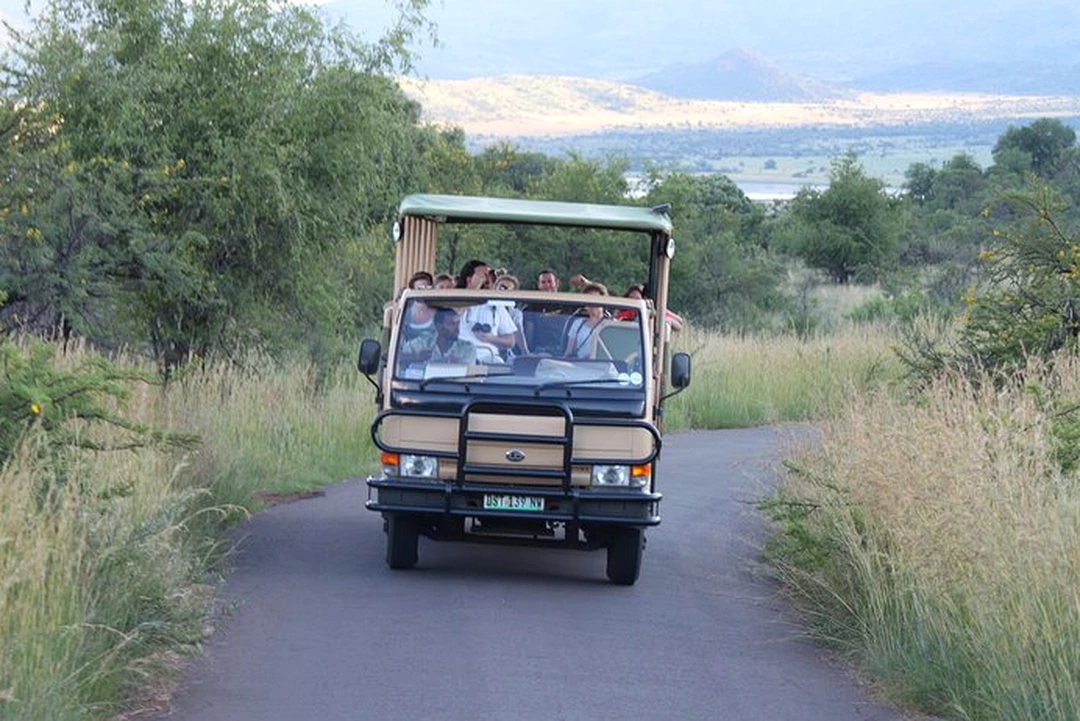
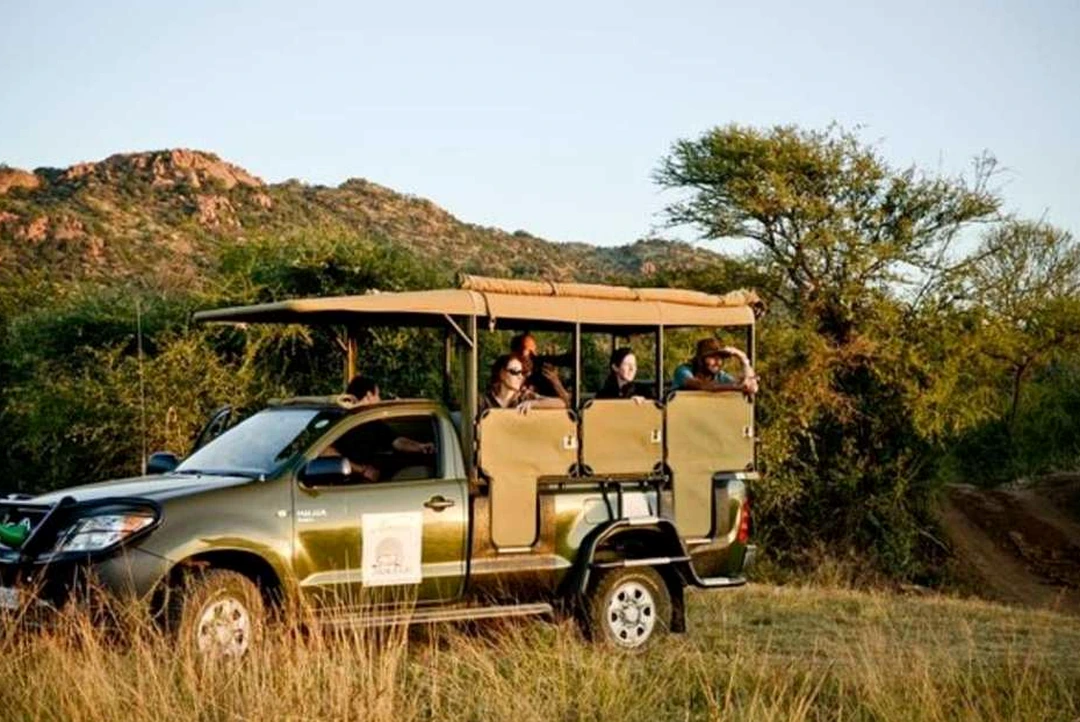
Just beyond those ornate gates, nightfall also raises the curtain on Africa’s greatest live drama through dedicated night drives. Riding in open-top 4×4 vehicles with local trackers, visitors enter thorn-acacia groves and boulder-strewn valleys wrapped in vast darkness. Instead of standard white light that can dazzle and panic animals, veteran rangers use spotlights fitted with specialized infrared filters. Under light invisible to wildlife, apex predators’ real survival unfolds clearly: a leopard slipping like mist beside reeds, lions’ eyes gleaming as they stalk a herd, or a brown hyena’s low growl drifting on dry desert wind. It is a quiet yet breathless visual encounter where the line between humans and wild nature seems to dissolve completely under cover of night.
Back in Sun City’s lively pulse, evening warms up with the glow of local heritage inside a distinctive shebeen cultural space. Growing out of underground taverns that once served as symbols of resistance during racial segregation in townships, the shebeen here is recreated as a multi-sensory arts haven. A rustic setting of timber walls, rough tables, and flickering oil lamps draws together vibrant South African jazz—from magnetic marabi to upbeat kwela that moved generations. Free-spirited brass notes weave with soulful guitar, recalling proud memories of African musical icons in a welcoming, openhearted atmosphere of fellow travelers.
The high point of evening gatherings comes with traditional Tswana dances around a glowing outdoor boma firepit. Male dancers wearing dried seed-pod anklets and young women wrapped in vibrant patterned wraps move to strong heel stomps on packed earth, echoing zebra hooves or rainy-season thunder. Amid call-and-response singing, guests sip tangy, sweet traditional maize beer (umqombothi) while enjoying antelope grilled over coals with wild herbal aroma. Blending lively performance, expressive music, and communal dining paints a captivating picture of Pilanesberg by night, leaving a lasting impression of an Africa that is resilient, wild, and richly expressive.
Set between the rugged geological arc of Pilanesberg’s million-year-old crater and the fabled glamour of The Lost City, local cuisine is a vivid crossroads of indigenous Batswana survival wisdom and refined Western colonial cooking. Bushveld food roots run deep in dry soil where every plant gathers hardy nutrients against desert sun and wind. In traditional homesteads around the reserve edge, hearth fires are closely tied to pap—a signature porridge made from finely ground white maize stirred in a three-legged cast-iron pot until thick and glossy, carrying the simple aroma of open fields. Alongside warm porridge comes morogo, wild greens gathered carefully by Tswana women from scrub along streams and simmered tender with onions, peanut butter, and fresh chili to draw out a light tang and sweet mineral finish from the plains.
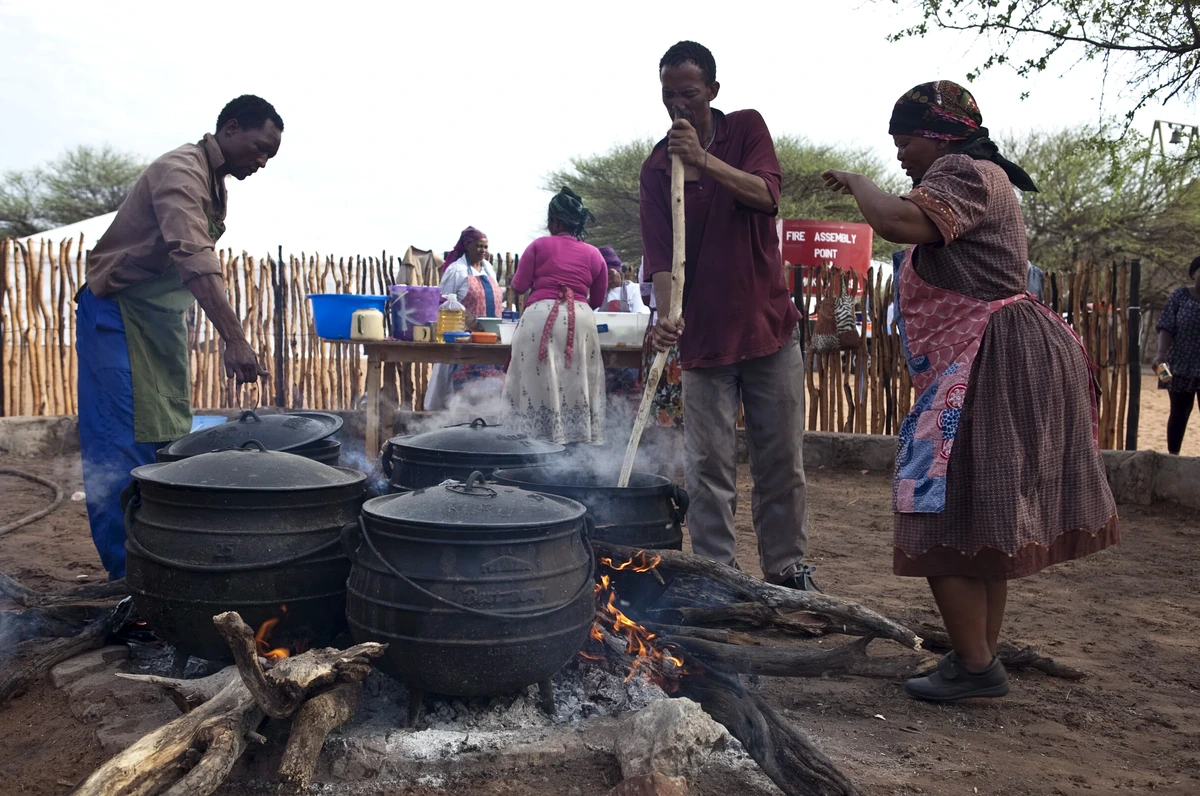
For travelers eager to explore indigenous culture more deeply, Pilanesberg’s flavor map would be incomplete without tasting mopane worms. As caterpillars of the emperor moth that feed on golden-lit mopane canopies, these protein-rich delicacies are sun-dried under African skies or smoked over local wood, then fried crisp with coarse salt or simmered in spicy tomato sauce. A nutty richness like hazelnut paired with a crisp shell reflects both ancient food-preservation know-how and a pure symbiotic bond between people and nature. At the same time, game-meat cookery elevates wild fare—such as tender, deep-red kudu cuts or herb-scented springbok—into prized dishes passed down across generations of skilled hunters.
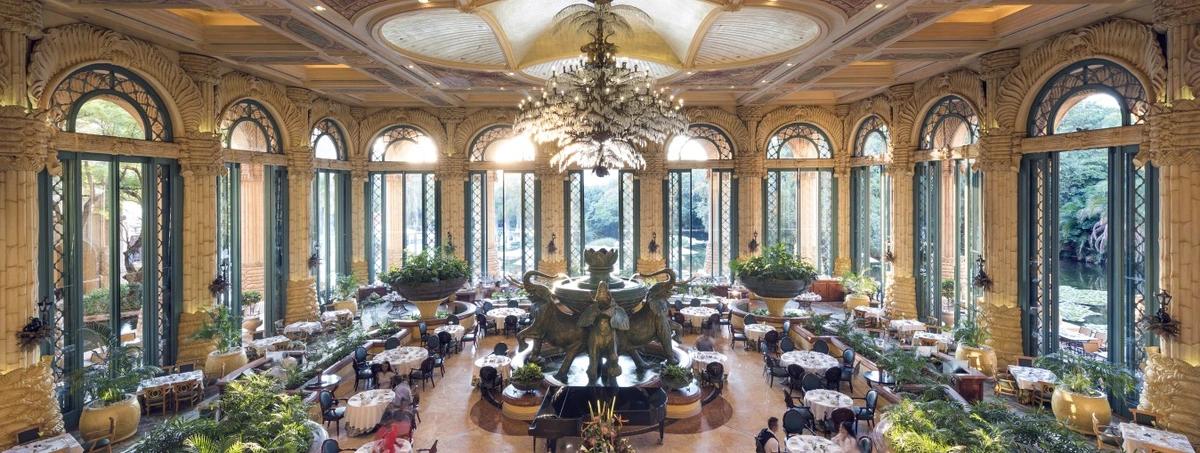
Heading back to the resort sanctuary of The Palace of the Lost City, those wild flavors put on regal, refined attire at the renowned Crystal Court restaurant. Beneath a soaring ceiling finished with intricate reliefs, beside huge glass panes looking onto trickling waterfalls and lush tropical gardens, French haute cuisine finds a natural harmony with distinctive local ingredients. Accomplished chefs use precise sous-vide cooking to keep springbok loin juicy before spooning over a reduced red-wine sauce with wild South African berries. Pan-seared kudu served medium-rare pairs with creamy polenta-style pap and brown-butter wild mushrooms—creating a balanced flavor experience where wild nature and fine culinary craft seem to blur.
Even if guests indulge in grand dining, to truly touch this region’s culinary soul one must sit down to a traditional braai as dusk falls over the plains. A braai is far more than grilling over coals; it is a sacred community-bonding tradition across South Africa where divisions of background melt away beside dancing flames. Firewood should be dry camelthorn (kameeldoring), prized for steady heat and fragrant wild resin smoke. Over sizzling grates, coiled boerewors sausage seasoned with coriander seed and clove browns and splits alongside rosemary-rubbed Karoo lamb chops and game steaks. Amid crackling wood, distant animal calls across the Pilanesberg night, and glasses of rich Pinotage red wine, the meal closes a hearty, unpretentious, and deeply memorable culinary journey.
This dramatic contrast between unspoiled Pilanesberg nature and the fabled Sun City palace lies roughly 150 kilometers northwest of central Johannesburg and O.R. Tambo International Airport. Getting there typically takes about two and a half to three hours along the N4 highway before turning onto the smooth paved R556 provincial road across dry hills characteristic of North West Province. Domestic flights directly into Pilanesberg Airport (NTV) are another option, sitting just about ten minutes by transfer vehicle from the reserve gate and The Lost City complex.
Daily rhythms across the two spaces reflect a captivating contrast between natural cycles and human-built convenience. Pilanesberg Game Reserve sets strict gate times tied to the sun—welcoming safari wheels from first dawn light until dusk to protect natural hunting patterns and ecological safety. Just across a reserve fence boundary, Sun City and The Palace of the Lost City run around the clock twenty-four hours a day, with glowing lights from casinos, international dining venues, and water shows ready for guests day or night.
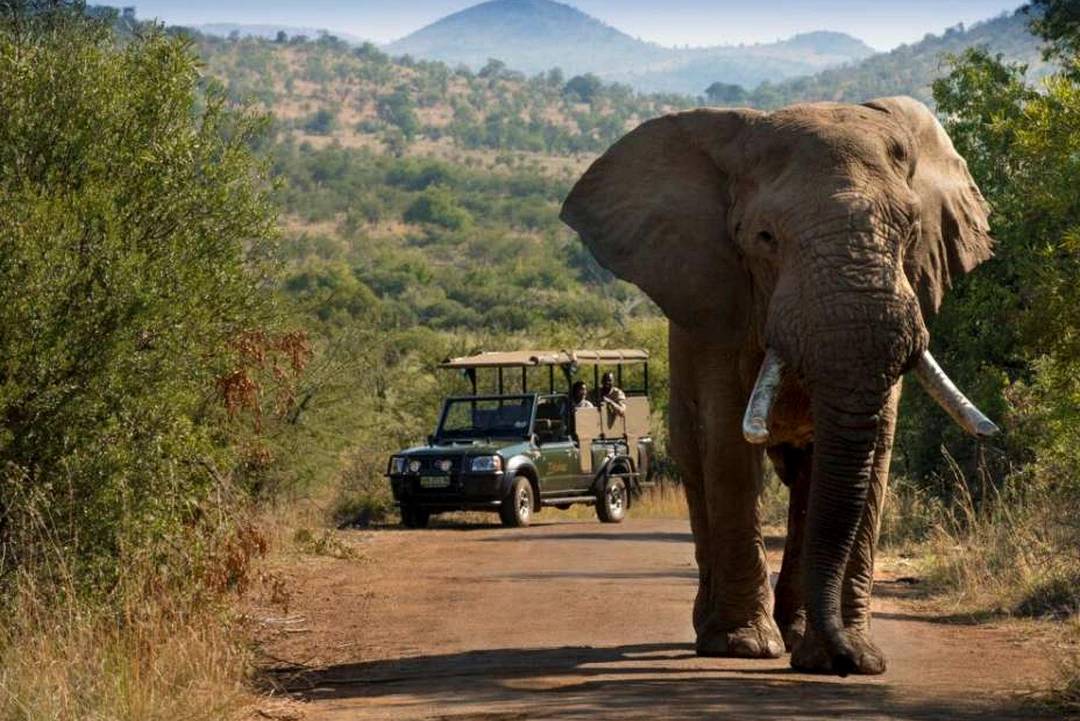
To enjoy wildlife at its most dramatic, the best time of year is the dry season from May to September. As Bushveld foliage thins and drops leaves and smaller water sources dry up, wildlife gathers toward the Mankwe Dam basin—the central lake nestled inside a 1.3-billion-year-old alkaline volcanic crater formation. From timber hides right beside the water’s edge, visitors can easily spot bush elephants wallowing in mud, lions patiently stalking, or wildebeest herds drinking peacefully in crisp morning light.
For budgeting, visitors should note that Pilanesberg entry tickets and environmental conservation levies are typically charged per person and per vehicle daily at modest rates that go directly toward rhino anti-poaching patrols. Guided 4×4 game drives with local rangers are usually priced separately by early-morning or late-afternoon session. Meanwhile, upscale Sun City experiences—such as the Valley of the Waves water park, the Gary Player championship golf course, or royal spa treatments—carry separate rates by facility.
Core etiquette when entering wild territory is wholehearted respect for nature and local communities. At Pilanesberg, conservation rules require visitors to keep a safe minimum distance of twenty meters from large animals like bush elephants and rhinos, and never step out of a vehicle on their own inside remote parts of the crater basin. When visiting traditional villages or meeting Bakgatla-ba-Kgafela residents near the foothills, courtesy and asking permission before taking portraits show good manners while earning warm, genuine smiles.
This striking blend of ancient savanna wilderness and high-glamour entertainment makes the area an irresistible stop for adventure seekers. To prepare thoroughly for a dream getaway with clear insight into local culture and nature, travelers can explore a South Africa wildlife tour itinerary for a smooth, well-supported journey.