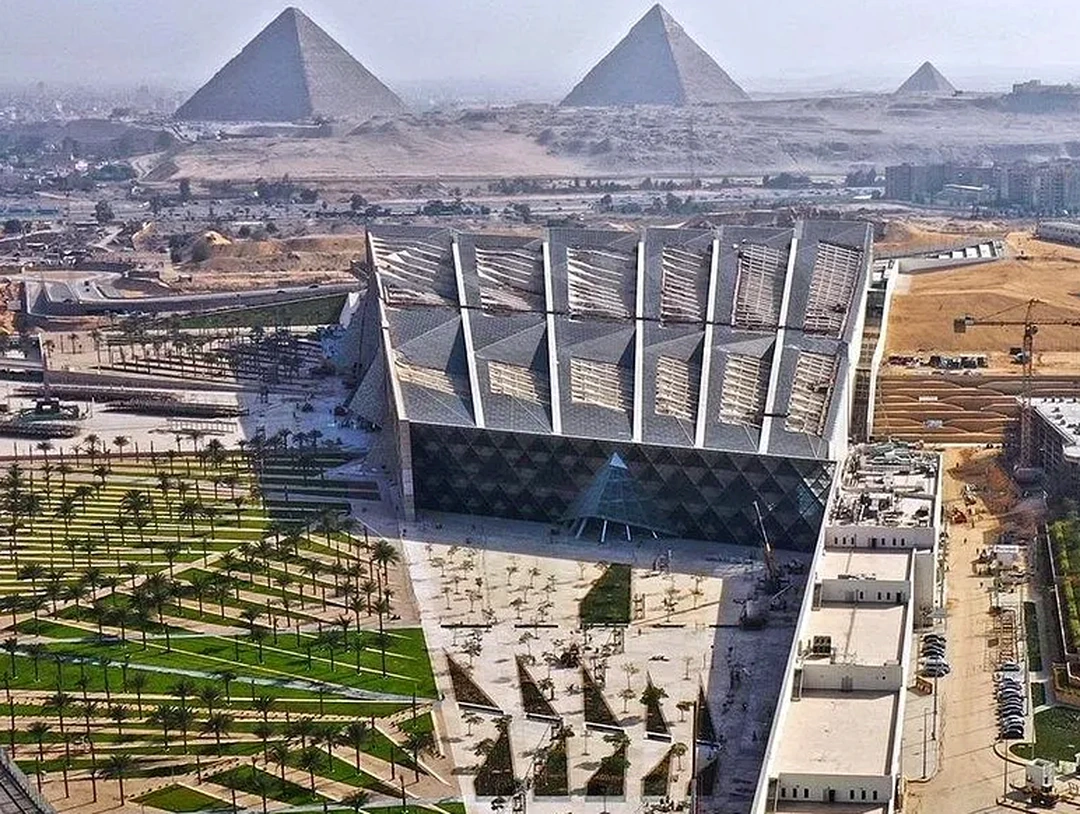
Along the banks of the legendary Nile River, Cairo reads like a thousand-year-old woven tapestry where layers of civilization do not erase one another, but rather interlace and settle through every dramatic upheaval of history. On the west bank, rising proudly across the Giza plateau beside the great pyramids, stands the Grand Egyptian Museum (GEM)—a monumental landmark symbolizing the enduring continuity of ancient Pharaonic civilization. Meanwhile, to the historic east in Islamic Cairo, the ancient Khan el-Khalili bazaar resonates with the endless pulse of medieval prosperity. Together, these two icons—one safeguarding the quiet treasures of divine dynasties from millennia past, the other pulsing with the living energy of transcontinental trade—forge the unmistakable identity of an immortal capital.
The origins of the thousand-year-old Khan el-Khalili market are closely tied to turbulent shifts in royal power and medieval urban reconstruction. In the tenth century, during the splendor of the Fatimid Caliphate, this area was a solemn sanctuary known as Turbat az-Za’faran—the Saffron Tomb—where powerful Fatimid caliphs were laid to rest. As that dynasty declined and the Burji Mamluk sultanate rose to command Egypt’s lifelines, the spatial character of the site was completely transformed. In the closing years of the fourteenth century, under the reign of Sultan Barquq, a towering court figure—Emir Jarkas al-Khalili, who held the post of Master of the Royal Stables (Amir Akhur) and hailed from Hebron (al-Khalil in present-day Palestine)—made a bold, watershed decision. He ordered the old Fatimid royal mausoleum complex dismantled and the remains reinterred on mounds outside the city so he could claim this prime ground for a vast commercial complex.
Emir Jarkas al-Khalili built a large-scale trading station—a khan or caravanserai—providing fortified shelter for long-distance camel caravans and secure storage for foreign merchants. Thanks to its strategic position straddling vital maritime and overland trade routes, Khan el-Khalili quickly emerged as one of the busiest commercial hubs along the Silk Road and spice routes. Persian silks, East Asian ceramics, frankincense from the Arabian Peninsula, and countless rare spices from the Indian subcontinent converged here before sailing across the Mediterranean to Europe. Under Sultan Qansuh al-Ghuri in the early sixteenth century, the market underwent major renovations featuring monumental stone archways in signature Mamluk style, cementing its status as an imperial economic center before Cairo passed into Ottoman hands.
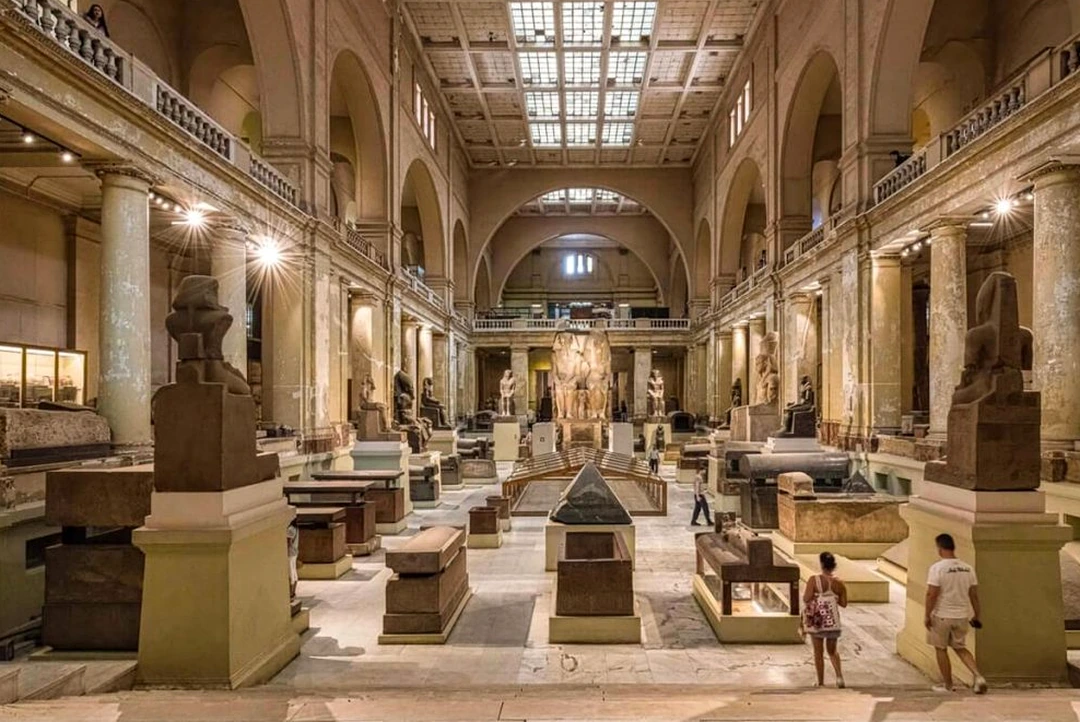
Alongside that medieval commercial pulse, the drive to preserve and celebrate Pharaonic antiquities unfolded through a history of shifting fortunes just as captivating, leading directly to the creation of the Grand Egyptian Museum. Throughout the nineteenth and twentieth centuries, as waves of exploration and archaeology surged, tens of thousands of treasures from the Old, Middle, and New Kingdoms emerged from the desert sands. Crowding at the famous Egyptian Museum in Tahrir Square—founded by renowned Egyptologist Auguste Mariette and inaugurated in the early twentieth century—prompted the Egyptian government to build a space worthy of a new era. Launched through an unprecedented international architectural competition in 2002, the GEM design prevailed over more than two thousand global entries to bring to life a masterpiece bridging past and future.
The architectural ensemble of the Grand Egyptian Museum is geometrically aligned to open a direct sightline toward the towering peaks of the Pyramids of Khufu and Khafre. More than a mere conservation facility, it brings together the priceless heritage of the Pharaonic dynasties, including the complete funerary collection of King Tutankhamun after thousands of years sealed away. From ancient hieroglyph-carved stone slabs to the grand Mamluk stone vaults of Khan el-Khalili, Cairo appears as a mirror of rising and falling empires—where time gathers within every trace of heritage and continues flowing through contemporary life.
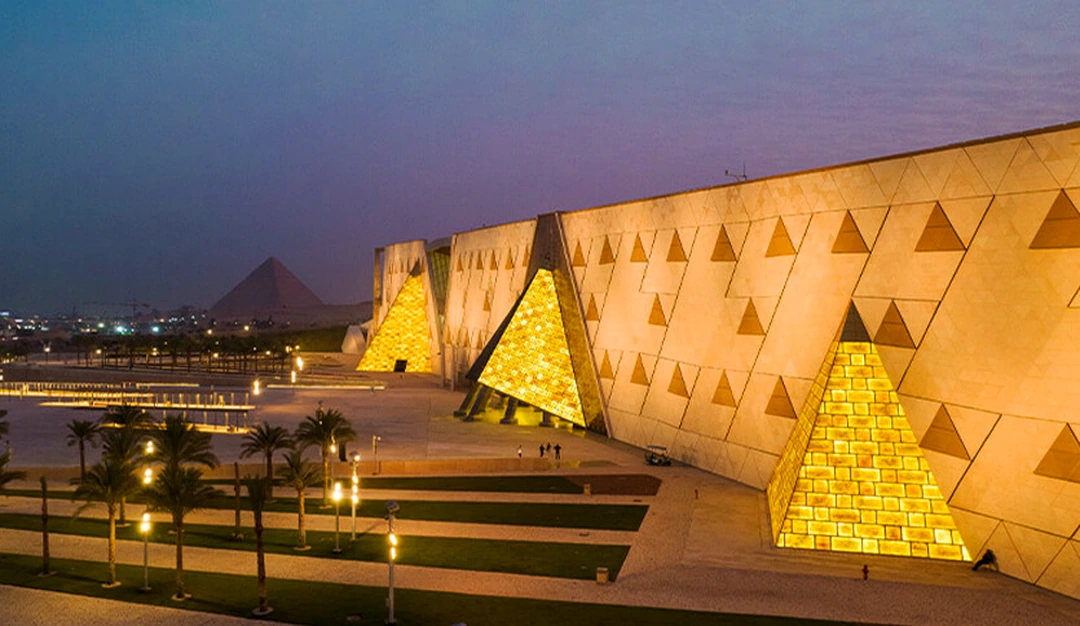
Positioned along the mystical threshold where the Nile’s fertile alluvial plain meets the desert plateau edge of West Cairo, the Grand Egyptian Museum (GEM) commands a site rich in symbolic meaning within ancient Egyptian cosmology: the west bank, land of sunset, where souls enter eternity. Spreading across a massive footprint of more than 500,000 square meters, the complex is engineered with subtle topographic precision to resolve a natural elevation drop of nearly fifty meters between the lower valley floor and the desert limestone ledge. At the heart of the museum’s master plan is a cross-landscape sightline stretching for kilometers, framed directly and in alignment with the three great pyramids of Khufu, Khafre, and Menkaure. This geometric choreography stages a dramatic visual dialogue between primeval stone wonders and a contemporary “pyramid” of steel, glass, and concrete, turning the entire Giza landscape into an open stage enacting millennia of history.
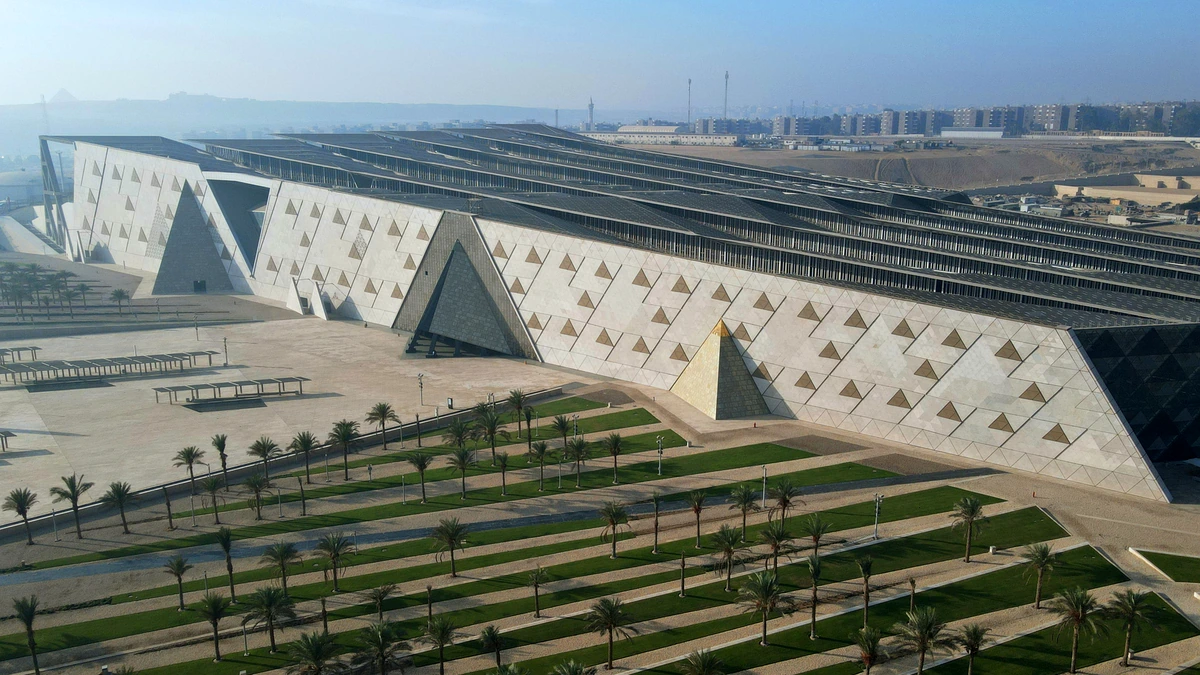
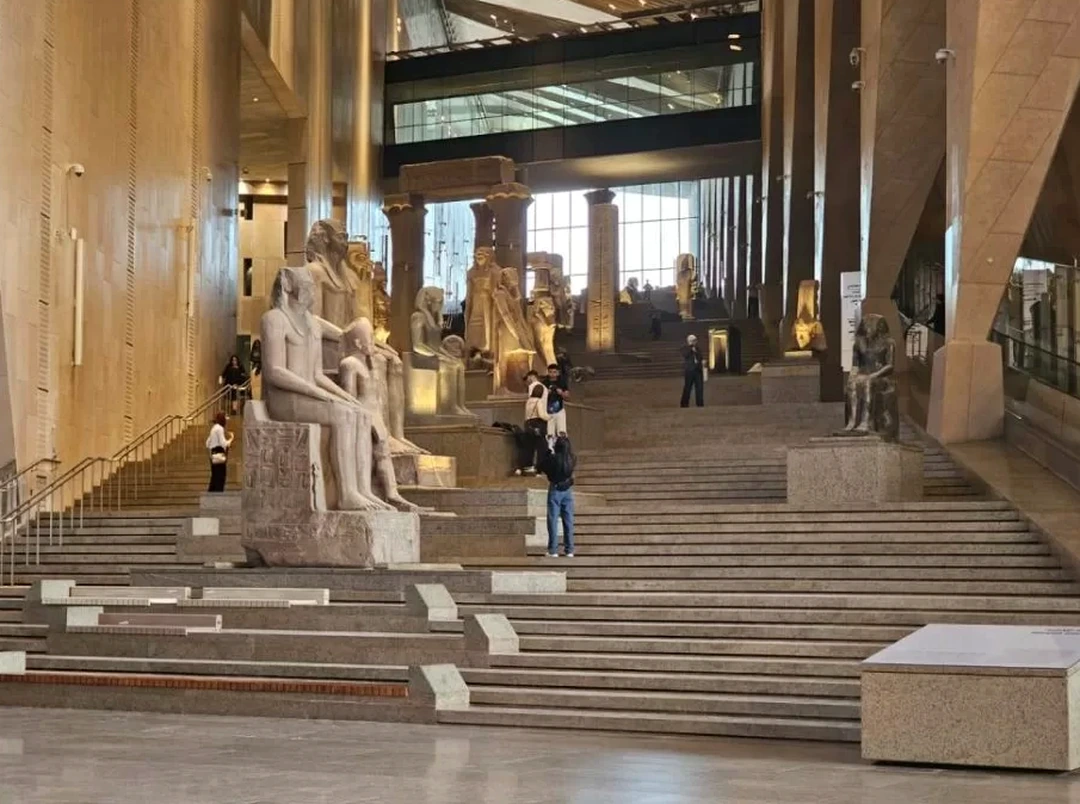
The museum’s construction reflects a deep understanding of Egypt’s harsh desert climate. Its front facade is clad in translucent alabaster panels patterned with a shifting Sierpinski triangle motif, filtering intense sunlight into a soft glow across the soaring atrium. A centerpiece of its internal spatial design is the Grand Staircase, rising across sixty-four steps along the desert slope to guide visitors from ancient galleries up to the highest level, where a vast glass wall frames a sweeping panorama of the pyramid complex. Underground microclimatic ventilation systems paired with tranquil reflecting pools around the museum create a radiant thermal buffer, helping ease natural heat loads on the exhibition spaces against the searing gusts of the Khamaseen desert wind.
Leaving the open expanses of Giza for the east bank of the Nile, the ancient Khan el-Khalili bazaar embodies a starkly contrasting philosophy of urban planning within Historic Cairo—a UNESCO-designated heritage district. Originating as a tenth-century Fatimid royal cemetery before being transformed by Emir Djaharks el-Khalili into a fourteenth-century Mamluk commercial complex, it displays the classic high-density fabric of medieval Islamic cities. Rather than opening along straight avenues, the layout coils tightly like an organic labyrinth, where tall, sun-warmed limestone walls crowd winding alleys barely wide enough for two passersby to step aside. Far from unplanned chaos, this arrangement serves as an active solar-shading strategy that shields pedestrians from harsh arid sunlight.
A hallmark of traditional building craft in Khan el-Khalili is the malqaf windcatcher rising above the vaults of historic merchant inns (wikala or caravanserai). Acting as a natural cooling machine, the windcatcher’s northern opening captures cool breezes from the Mediterranean, channels chilled air down into shaded courtyards, and vents trapped warm air upward through upper exhaust openings. Working in tandem with these windcatchers are intricately carved wooden mashrabiya lattice windows projecting from upper facades, which preserve domestic privacy from street view while dispersing cool, humid air from shadirvan fountains in the courtyard below. Here, architectural scenery weaves together sandstone grays, the warm gleam of handcrafted brass lanterns, and lingering frankincense—forming a thousand-year-old urban organism still breathing in harmony with nature.
Standing imposingly across the breezy Giza plateau, the Grand Egyptian Museum sparks a remarkable dialogue between cutting-edge engineering and primordial stone geometry. Conceived as a century-defining project with investment surpassing one billion US dollars, it is planned as one of the largest standalone architectural marvels on Earth. Its structure blends limestone quarried from local Nile sedimentary beds, precision-cut marble slabs, and advanced multi-layered thermally treated glass walls. This specialized glazing acts like a giant optical filter, blocking destructive Sahara solar heat while bringing gentle natural daylight into spacious galleries without harming the delicate pigments of millennia-old artifacts.
At the core of the museum’s spatial architecture is the monumental Grand Staircase, a dramatic ascending axis evoking the spiritual ascent of rulers into eternity. Stretching up cool marble tiers, the Grand Staircase carries visitors across historical time past dozens of colossal stone statues weighing tens of tons, portraying renowned pharaohs such as Ramesses the Great alongside protective deities including Amun, Ptah, and Hathor. Reaching the top of this axis, the space suddenly opens out through a vast transparent glass wall onto the grand horizon of the three peaks of the Giza Pyramids, forging an inseparable organic bond between modern museum and timeless heritage.
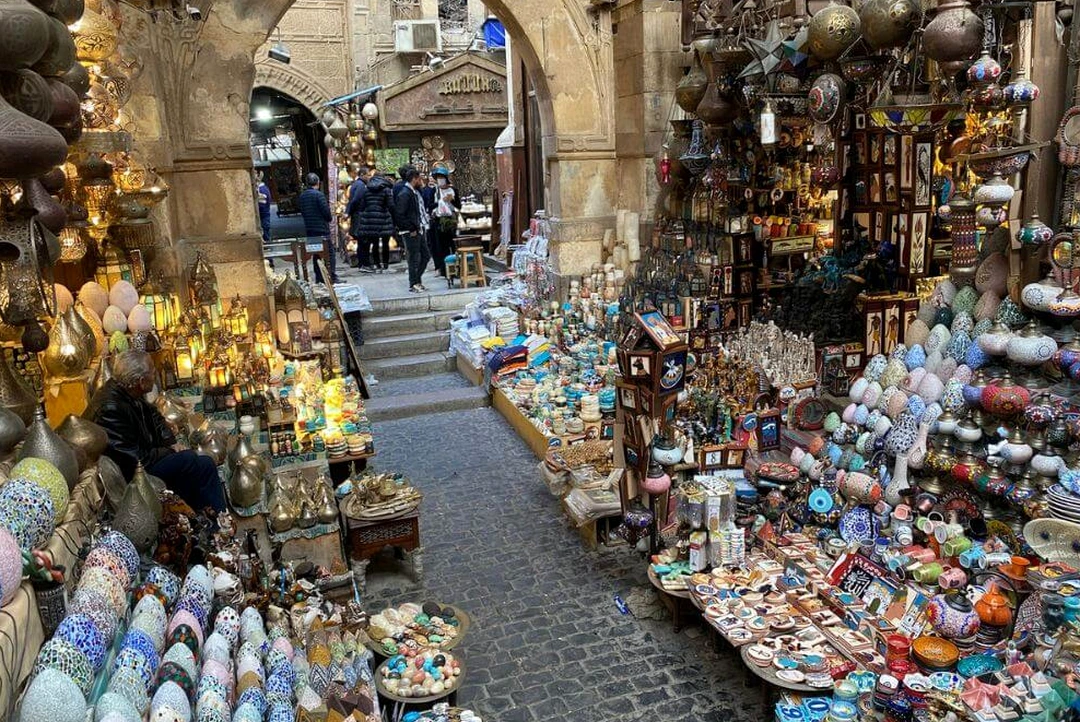
Stepping away from the museum’s expansive linear order into Cairo’s historic core, travelers encounter a contrasting yet equally captivating architectural world in the thousand-year-old Khan el-Khalili bazaar. Founded in the Mamluk era under Sultan Barquq and Emir Djaharks el-Khalili, the market is far more than a marketplace—it is a quintessential complex of historic Islamic architecture with a dense maze of alleys paved in basalt smoothed by generations of footsteps. Framing the lanes are multi-story yellow limestone caravanserais with horseshoe arches carved in flowing Arabic calligraphy, which once sheltered desert caravans laden with silk, ivory, and gold.
A defining architectural accent and soul of Khan el-Khalili lives in traditional Mashrabiya woodwork. Projecting from upper-story facades, these lattice windows are assembled from thousands of finely turned wooden spindles without a single iron nail, showcasing the consummate skill of medieval Coptic and Islamic woodworkers. Beyond offering a subtle visual screen for family life indoors, the mashrabiya is a clever aerodynamic invention: natural wood slats temper glare, buffer intense heat, and diffuse breezes into refreshing currents through the market. Beneath dappled shadows cast across the walkways, brass workshops, silver jewelers, and stalls piled high with fragrant saffron and cinnamon create a vivid sensory portrait of Arab craftsmanship enduring across centuries.
As twilight settles over the west bank of the Nile and deepens the sandstone peaks of the Giza plateau, the Grand Egyptian Museum takes on a different visual life beneath sophisticated architectural lighting. Dedicated optics transform its massive triangular alabaster facade into a softly glowing veil that echoes the faceted geometry of ancient pyramids. Anchoring the open entrance plaza is the monolithic hanging obelisk bearing the royal name of Pharaoh Ramesses II of the Nineteenth Dynasty. Through carefully layered light from floor level and concealed angles, the multi-ton red granite shaft appears suspended in the night air, highlighting the crisp engraving of the royal cartouche on the underside of its base and offering a dramatic perspective unprecedented in archaeological display.
Leaving the solemn stillness of Giza for the historic heart of Islamic Cairo, nighttime energy surges in a contrasting folk aesthetic inside the thousand-year-old Khan el-Khalili market. As darkness blankets the monumental stone portals built by Emir Djaharks el-Khalili in the fourteenth-century Mamluk era, the worn stone lanes transform into a dazzling tapestry of shimmer and light. Tens of thousands of handcrafted pierced brass lanterns cast intricate arabesque patterns across weathered walls. Warm golden light filtering through colorful glass panels blends with the orange hues of spices and herbs, the glint of engraved silver trays, and metallic-threaded silks to paint an enchanting Eastern tableau.
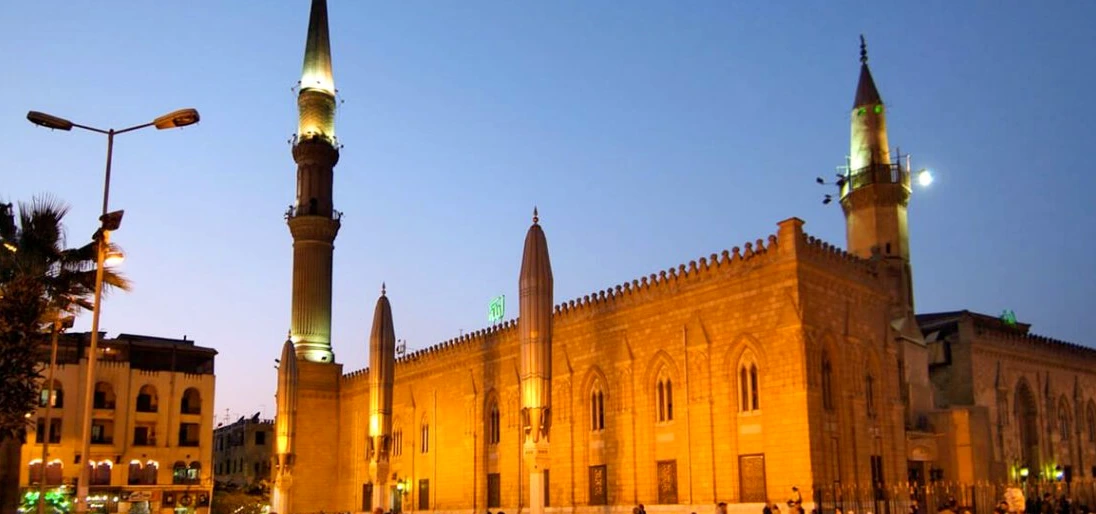
Nighttime in the old bazaar goes beyond sight to weave a spellbinding spiritual harmony of sound and incense. Echoing through narrow lanes are resonant Sufi chants mingling with the call of the Adhan from Al-Hussein Mosque—a sacred landmark dating back to the Fatimid era, housing the shrine associated with the head of Imam Hussein ibn Ali. Wafting bukhur incense mingles with rich notes of cedarwood, cardamom, and Damask rose oil from traditional perfumers. In the shadow of soaring Mamluk structures, folk musicians often strike brisk darbuka drum rhythms accompanied by plaintive oud melodies, framing the hypnotic whirling of traditional Tanoura dancers right before ancient stone steps.
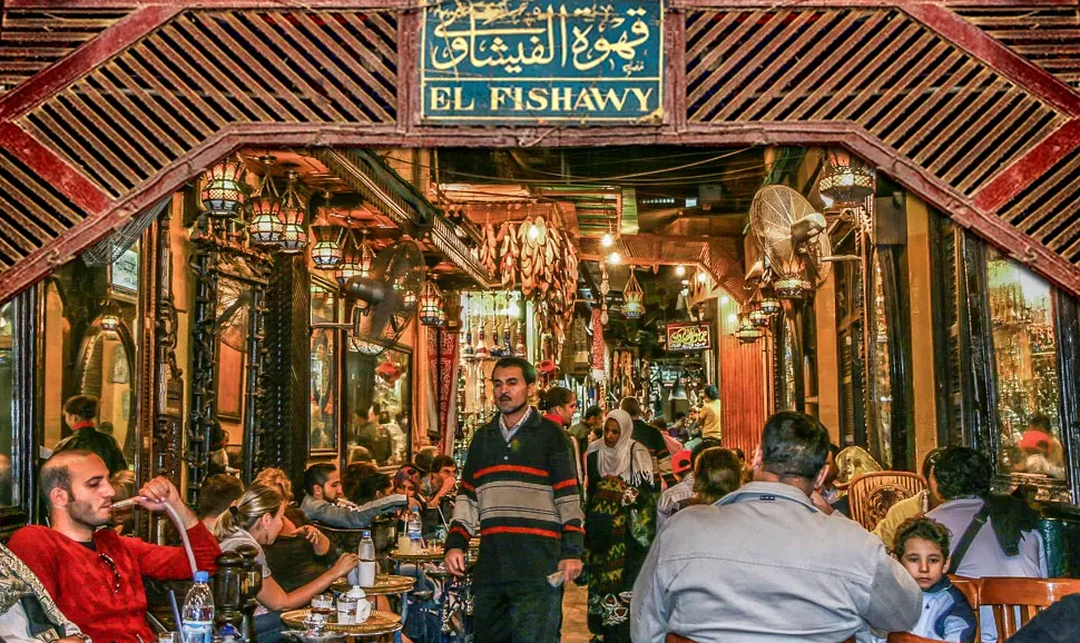
Preserving the nostalgic flavor and spirit of Cairo after midnight is El-Fishawy, the celebrated coffeehouse tucked deep inside the bazaar with more than two centuries of history. Founded in 1797 during Ottoman rule, it was a favorite gathering spot of Nobel laureate Naguib Mahfouz, who drew endless inspiration from Khan el-Khalili’s alleys for his classic novels. Inside, time seems to stand still amid large time-worn gilt-framed mirrors, intricate mashrabiya wood screens, and round brass tables polished to a warm sheen. Settling into this cinematic setting to the gentle hiss of apple-scented shisha and the clack of board-game pieces, visitors can sip freshly brewed mint tea poured from a brass pot or a tart crimson hibiscus infusion while watching Cairo’s millennia-old night life drift past.
As dusk falls and coats the minarets and domes of Islamic Cairo in warm amber, the labyrinth of lanes in Khan el-Khalili truly awakens in an endless symphony of flavors and open flame. Food here is more than daily sustenance—it is a living archaeological record carrying memories from ancient pharaohs to the height of the Fatimid and Mamluk dynasties. Strolling down smooth sandstone alleys, travelers are immediately drawn in by lamb fat sizzling over glowing coals, mingling with rich aromas of cumin, coriander, cardamom, and saffron rising from sacks piled high like hills.
Claiming a place of honor in traditional Egyptian cuisine is Hamam Mahshi—stuffed pigeon, a dish already depicted in ancient reliefs and refined over centuries by Mamluk court chefs. Plump young squabs are carefully prepared and deboned to keep their delicate skin intact, then packed with smoked green wheat (freekeh) or fragrant Egyptian rice sautéed with giblets, caramelized onions, buffalo ghee, and warm nutmeg. After a gentle poach in aromatic broth, the birds are grilled over charcoal or fried until crisp and deep mahogany. Carved open, they release fragrant steam as tender meat meets nutty, rich filling—a royal dish celebrating abundance and Nile hospitality.
Alongside stuffed pigeon, skewers of herb-marinated lamb kebab and seasoned kofta grilled over glowing charcoal at family-run eateries hold an irresistible draw for every visitor. To cap off a rich savory meal, nothing compares to Om Ali—literally “Mother of Ali,” a royal dessert linked to dramatic thirteenth-century court history under Queen Shajar al-Durr. Made from torn layers of crisp flaky pastry soaked in hot milk sweetened with sugar and vanilla, it is folded with crushed Aswan pistachios, sliced almonds, raisins, and grated coconut. A thick layer of rich clotted cream (eshta) crowns the dish before baking until golden and bubbling. Eaten piping hot by the spoonful, Om Ali melts on the palate with silky sweetness balanced by the crunch of toasted nuts.
Culinary life in Khan el-Khalili feels incomplete without lingering in a traditional coffeehouse (ahwa), above all El Fishawy, whose hearth has stayed lit for over two centuries. There, time slows around engraved brass tables over fragrant mint tea (Shai bil Na’na) poured from a long-spouted brass pot into colorful small glasses, fine bubbles catching the lantern glow. On sweltering summer days, ruby-red Karkadeh hibiscus tea from Upper Egypt’s Aswan, served chilled over ice, brings refreshing tartness that quenches desert thirst. When crisp northerly winds sweep into the capital, locals turn to steaming cups of velvety Sahlab thickened with wild orchid root starch, generously dusted with warming cinnamon, toasted sesame, and crushed walnuts—warming travelers with pure Eastern charm.
Exploring Egypt’s cultural treasures calls for thoughtful planning of your itinerary and transport so you can make the most of two contrasting worlds: a grand academic museum on one side and a vibrant, centuries-old bazaar on the other. For the Grand Egyptian Museum (GEM) overlooking the Giza plateau, book tickets in advance via the official portal gem.gov.eg to lock in your entry slot and minimize bottlenecks at security and ticketing. The museum generally welcomes visitors from nine in the morning until late afternoon, unfolding from the vast Grand Hall—home to the more than eighty-ton colossal statue of Pharaoh Ramesses II—up to the dramatic levels of the Grand Staircase. To reach GEM as well as the classic Egyptian Museum in Tahrir Square, using Uber or riding the Cairo Metro is among the most convenient and reliable options. If taking the metro to observe everyday life in the capital, Lines 1 and 2 connect at Sadat Station directly beneath Tahrir Square right by the classic museum, while Line 2 heading toward Giza provides an easy springboard for a short taxi ride straight to GEM.
As sunset paints the Mamluk minarets gold, Cairo’s rhythm shifts dramatically toward the Khan el-Khalili bazaar tucked beside Al-Hussein Mosque and revered Al-Azhar. This historic market is liveliest from around four in the afternoon until midnight, when thousands of brass fanoos lanterns shine bright across stalls of spices, incense, and gemstones. Because of its medieval layout of winding, worn stone lanes, motorized vehicles are barred inside the bazaar core. Ride-hailing cars can drop you near Al-Hussein Square or you can take the metro to Bab El Shaariya Station and stroll into the historic maze on foot. Walking is the only way to truly take in the rich scent of star anise, cinnamon, and saffron blending with apple-scented shisha smoke from the centuries-old El Fishawy cafe.
Strolling through Khan el-Khalili’s craft stalls, travelers soon discover that haggling—known in Arabic as faisal—is far more than haggling over pennies; it is a culturally expressive art of conversation. A successful exchange often opens with a warm “Salam Alaykum,” accompanied by a welcoming smile and a steaming glass of mint tea (shay bil na’na’) offered by the shopkeeper. A common rule of thumb is to open around forty to fifty percent of the asking price and step up gradually in friendly, polite back-and-forth. Always carry cash in Egyptian pounds (EGP) in small denominations such as ten, twenty, and fifty pounds, as traditional vendors rarely accept credit cards and breaking large bills or making change on the spot can take time.
Alongside money matters, modest dress and respectful conduct are essential when stepping into the historic core of Islamic Cairo. Even though Egypt’s climate is dry and warm much of the year, wearing modest clothing that covers the shoulders and extends past the knees is important for both men and women. Breathable linen or cotton fabrics and a light scarf help protect your skin from desert sun and dust while showing deep respect around mosques surrounding the market, where the adhan echoes at dusk. A poised, courteous manner paired with solid background knowledge turns your visit into a moving cultural encounter—something travelers can easily experience on a complete ancient Egypt tour package to connect with the millennia-deep soul of the legendary land along the Nile.