Following the millennia-old flow of the Nile down into ancient Lower Nubia, where the arid desert edge meets the vast waters of modern-day Lake Nasser, the Abu Simbel temple complex stands tall as an immortal epic of divine power and royal majesty from ancient Egypt. This architectural masterpiece carved deep into sandstone cliffs began construction in the thirteenth century BCE, spanning a golden two-decade period from roughly 1264 to 1244 BCE during the Nineteenth Dynasty of the New Kingdom. The ruler who ordered the creation of this geological and artistic wonder was none other than the most celebrated Pharaoh in the history of the Nile Valley: Ramesses II, the illustrious monarch honored by posterity as Ramesses the Great and immortalized in classical Western poetry as Ozymandias. Within the geopolitics of the era, Nubia was a vital source of pure gold, precious stones, ebony, and skilled mercenaries, yet it was also a strategic frontier prone to recurring uprisings against the court at Thebes.
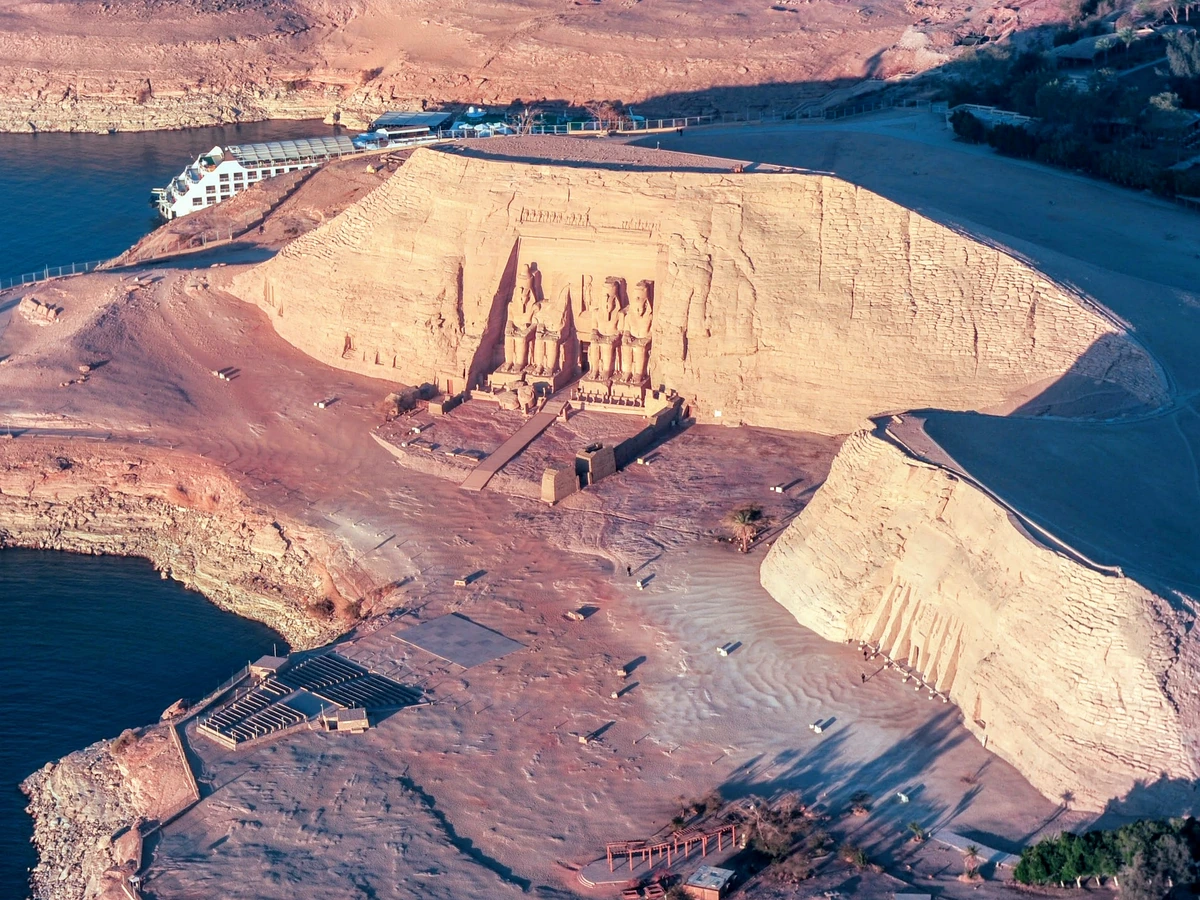
To establish lasting dominance and affirm Egypt’s supreme authority in Nubia, Ramesses II resolved to create an unprecedented monument: hollowing out the sacred mountain of Meha on the west bank to raise a sanctuary of profound deterrence and cultural assimilation. In ancient hieroglyphic inscriptions carved into the rock, the complex bore the official name “Temple of Ramesses Mery-Amun,” meaning “Temple of Ramesses, Beloved of Amun.” More than a shrine dedicated to the three great protective deities of the empire—Amun-Ra of Thebes, Ra-Horakhty of Heliopolis, and Ptah of Memphis—it was also a place where Ramesses II deified himself, setting his own cult statue alongside the supreme creator gods. Four colossal statues depicting the Pharaoh enthroned on the towering facade gazed majestically southward, serving as a powerful deterrent to every Nubian embassy, merchant, or captive of war traveling down the river.
Through the turbulent turns of history, as the Ramesside dynasty faded and foreign empires swept into the Nile Valley in succession, the temple gradually sank into a thousand-year slumber amid the wilderness. Winds and sand from the vast Sahara steadily buried one terrace after another, concealing the entire Osiride pillared hall and leaving only the heads and shoulders of the colossal statues protruding above crimson sand dunes. For many centuries through the Middle Ages, the monument’s existence nearly vanished from human memory, lingering faintly as an elusive legend passed down orally among local nomadic tribes.
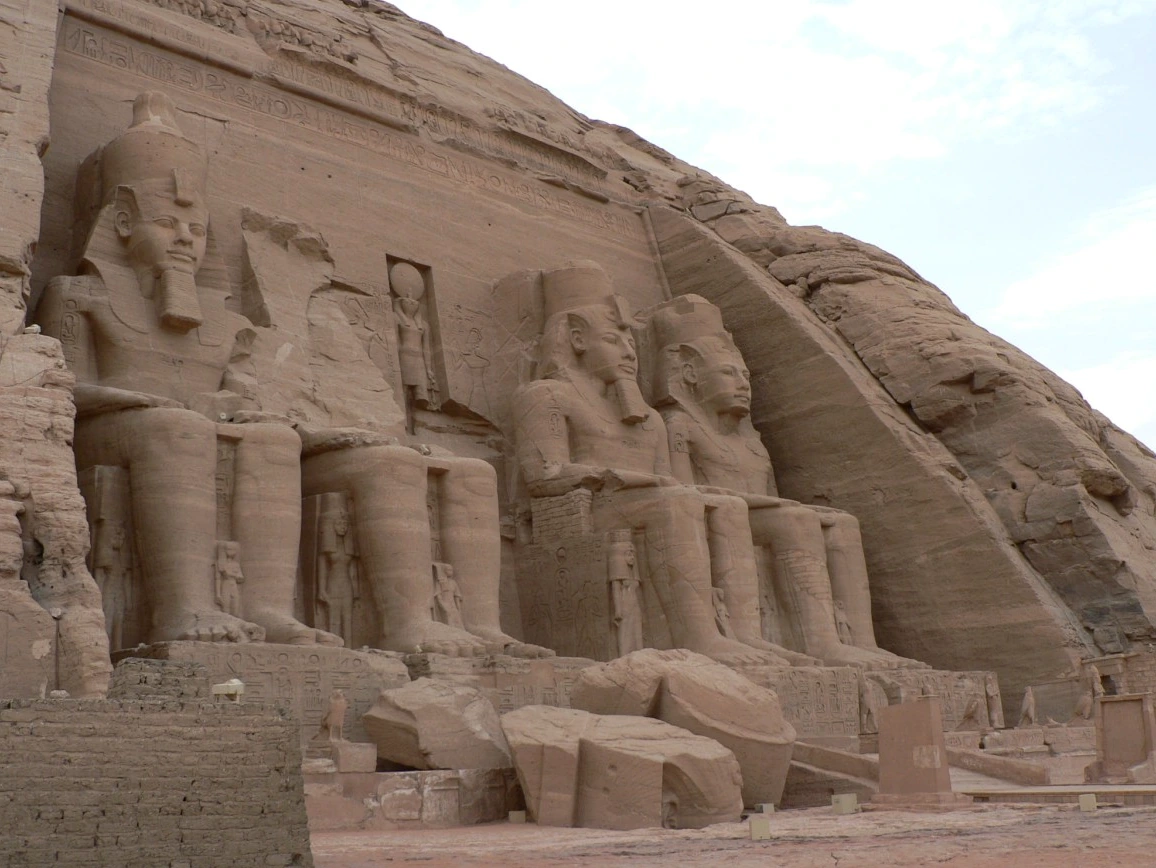
It was not until the spring of 1813 that the veil concealing the temple was officially lifted when Swiss explorer and orientalist scholar Johann Ludwig Burckhardt set foot in this remote corner of the world. In one of the most charming anecdotes in the history of archaeology, the modern name “Abu Simbel” actually came from a local boy. This young Nubian guide, intimately familiar with the desert terrain, led Burckhardt across rolling dunes to reach the crown of the statues buried deep beneath the sand. Four years later, in 1817, Italian archaeologist Giovanni Battista Belzoni completed the excavation of dozens of meters of sand to throw open the entrance into the sacred mountain. From that historic moment onward, the name of the unnamed boy Abu Simbel became forever linked to the grand creation of Ramesses the Great, connecting the glorious past of an ancient empire with humanity’s enduring heritage.
Situated in ancient Nubia within modern-day Aswan Governorate, the monumental rock-cut temples of Abu Simbel command the left bank of the mighty Nile—now the broad, glassy expanse of the man-made Lake Nasser. The site’s topography was chosen by royal astronomers and architects under Pharaoh Ramesses II of Egypt’s Nineteenth Dynasty during the New Kingdom with careful attention to geographic orientation. Set amid a harsh desert of red sand and scorching winds, the complex was carved directly into a towering sandstone cliff beside the water, creating a mountain-backed, water-facing stance that served as a supreme military stronghold on the empire’s southern frontier while expressing the great king’s aspiration to endure alongside the sun and moon.
From a geological and engineering standpoint, the monument represents the pinnacle of rock-cut cave architecture—known as a speos—in the ancient world. Rather than gathering and stacking separate stone blocks in the manner of typical temples around Thebes or Memphis, the entire structure of Abu Simbel was sculpted progressively from the outside inward, cutting directly into the uniform Cretaceous sandstone mass of the sacred mountain of Meha. The facade of the Great Temple rises 33 meters high and spans 38 meters wide, functioning like a gigantic relief wall featuring four colossal statues of Pharaoh Ramesses II seated majestically on his throne, each standing over 20 meters tall. From this vertical face, ancient Egyptian craftsmen used copper tools, dolerite pounders, and hard chisels to cut away stone layer by layer, driving more than 60 meters deep into the mountain to create a grand Hypostyle Hall with eight pillars depicting the king in the guise of Osiris, alongside side chambers for ritual offerings arranged symmetrically along the central axis.
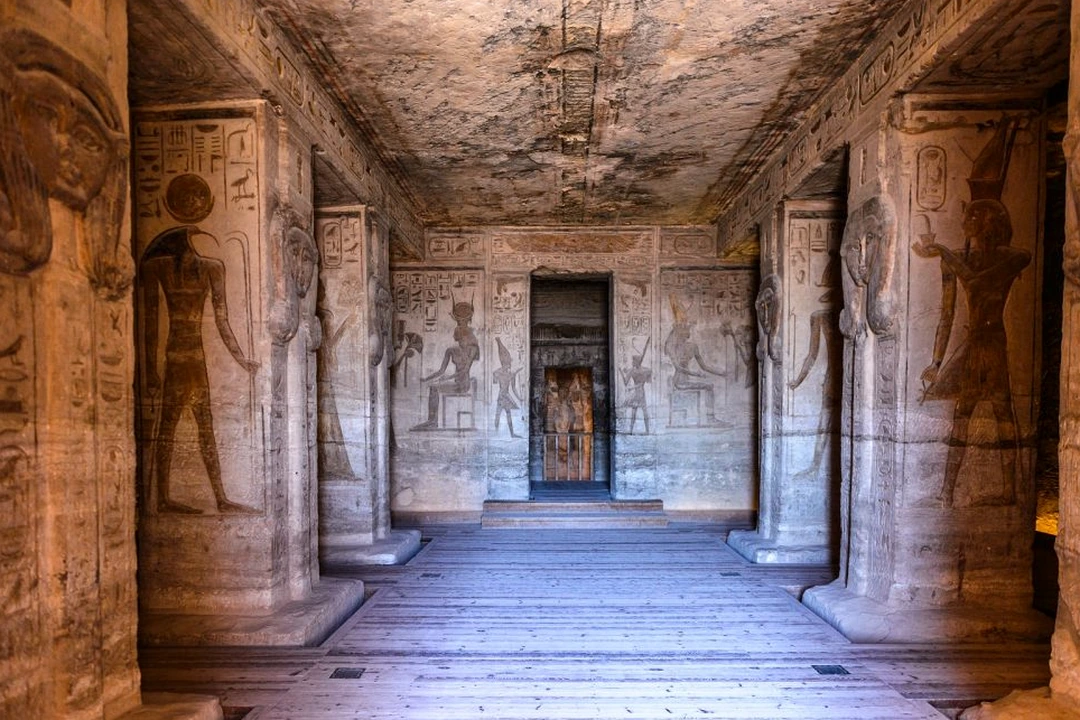
The most remarkable wonder at Abu Simbel is the extraordinary union between subterranean architecture and cosmic celestial mechanics. The central axis of the Great Temple was aligned precisely with the rising sun’s azimuth, producing a breathtaking optical phenomenon that occurs just twice a year, on February 22 and October 22. On these two miraculous occasions, as the sun rises over the eastern desert horizon, beams of pure morning light shine straight through the narrow entrance and down the full length of the outer and inner halls to illuminate the dim inner Sanctum deep beneath the rock. This celestial light bathes three statues seated on the stone dais—the solar deity Ra-Horakhty, the deified Pharaoh Ramesses II himself, and the supreme god Amun-Ra of Thebes—while the fourth statue, Ptah, lord of the underworld and eternal darkness, remains seated in the quiet shadow of the sanctuary.
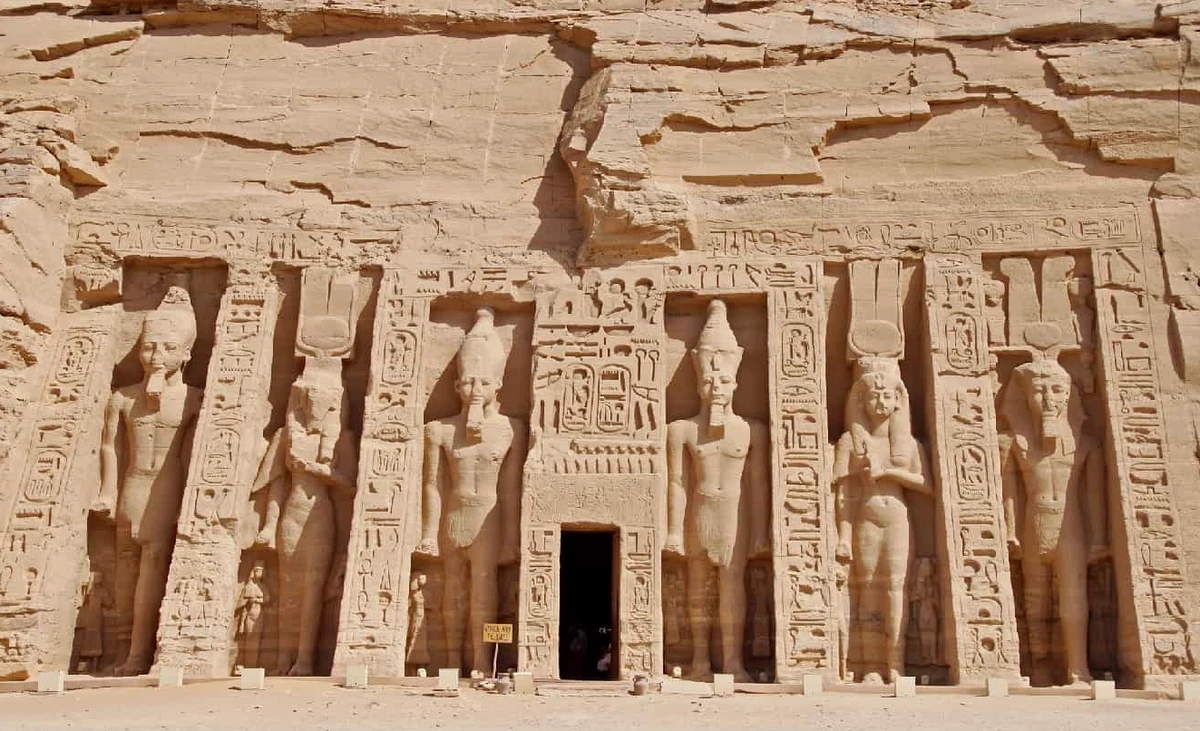
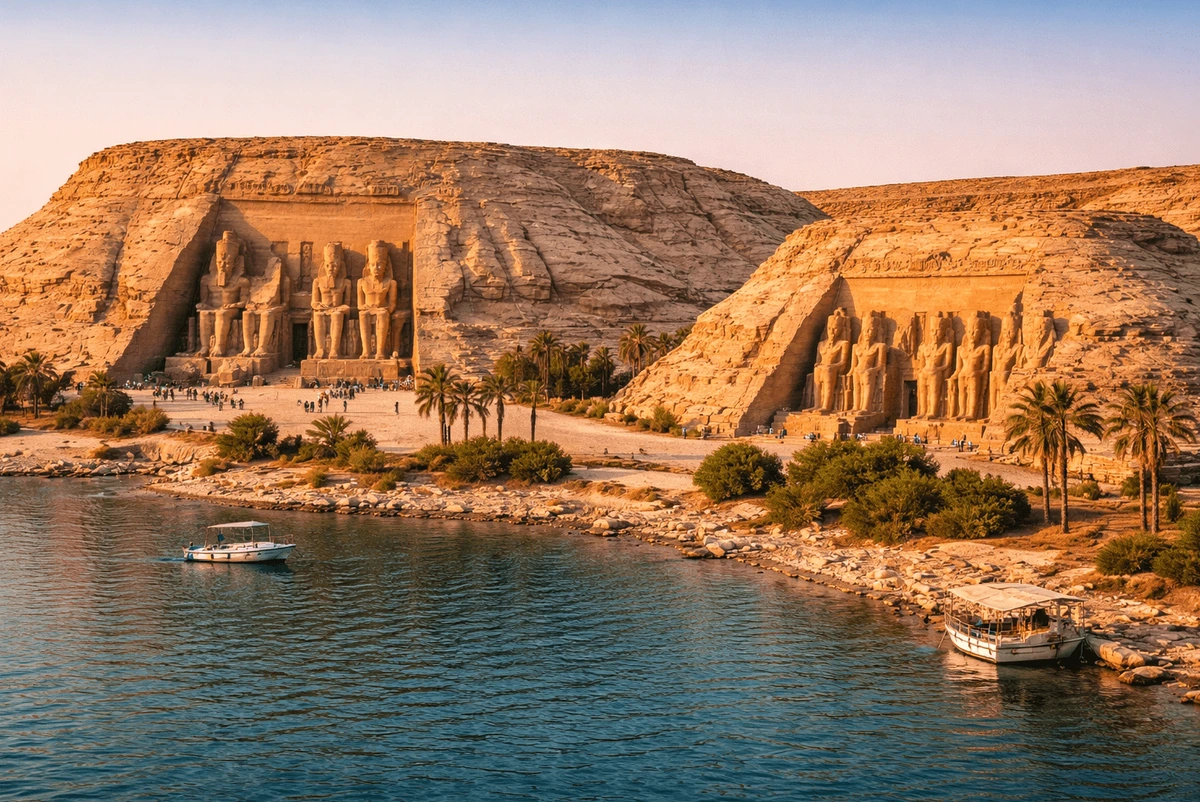
The natural landscape framing Abu Simbel is a magnificent blend of golden Nubian sandstone and the deep blue waters of Lake Nasser bordering the Sahara Desert. About one hundred meters north of the king’s Great Temple rises the small hill of Ibchek, home to a second, smaller temple dedicated to his most beloved wife, Queen Nefertari, alongside Hathor, goddess of love and beauty. Together, the layout of the two temples establishes an exact balance between sovereign majesty and the graceful, tender spirit of divinity, leaving an indelible mark of a brilliant civilization along the ancient waters that sustain the dry African land.
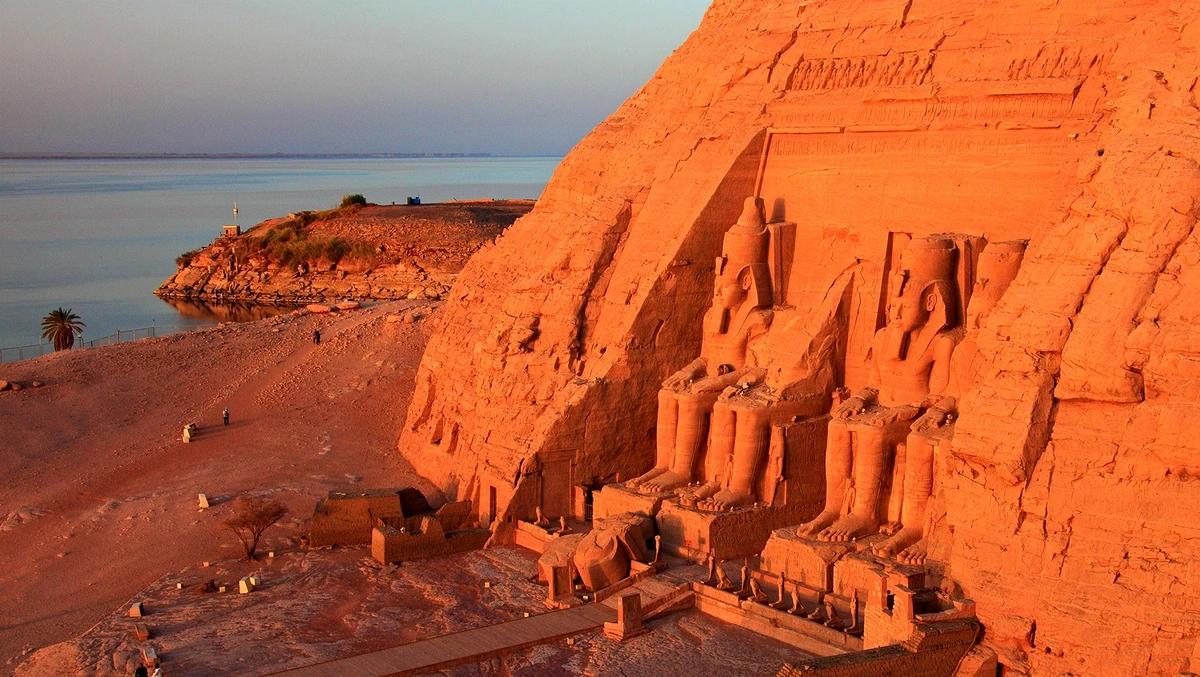
Visiting Abu Simbel is to witness the highest achievement of “speos” architecture—an archaeological term derived from Greek for temples hewn and hollowed completely out of solid sandstone cliffs. Under master engineers and sculptors of the New Kingdom, the reddish-brown rock face beside the legendary Nile became a transcendent monument to Nineteenth Dynasty power. The facade of the Great Temple of King Ramesses II rises up to 33 meters high and stretches 38 meters across, guarded by four giant seated statues of the Pharaoh standing roughly 20 meters tall. Each figure portrays the great king wearing the Nemes headdress and royal regalia symbolizing the unity of Upper and Lower Egypt, his composed expression and timeless gaze fixed toward the eastern horizon to greet each morning’s rebirth.
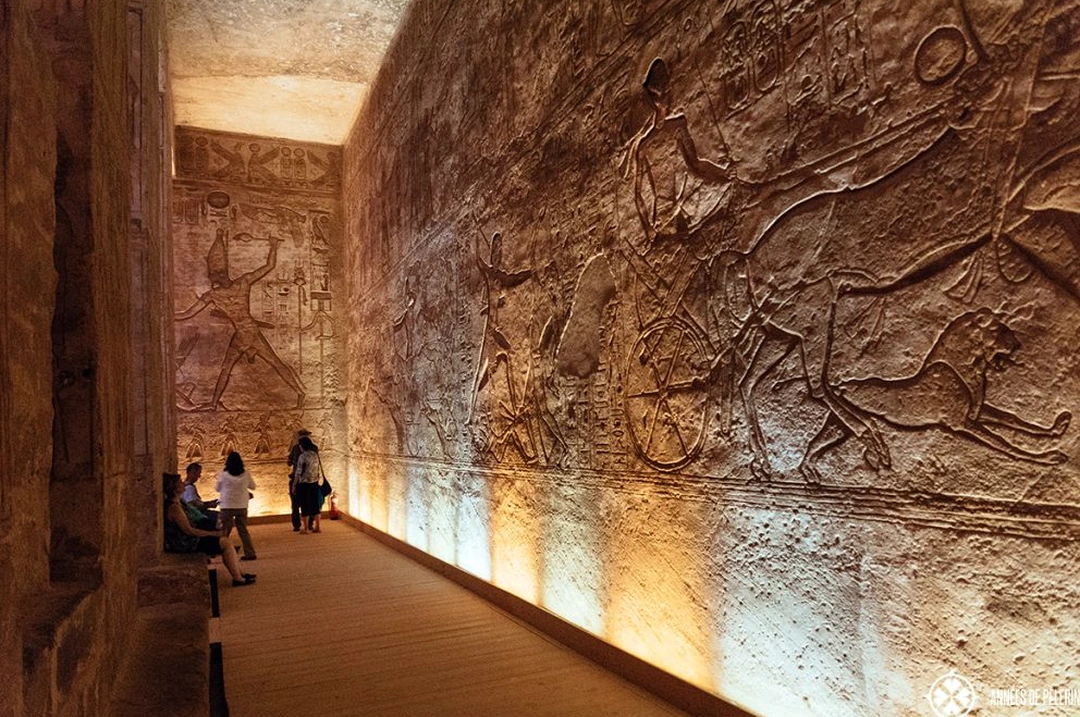
Passing through the monumental doorway, the interior opens along a solemn linear axis extending more than 60 meters into the mountain. The first chamber is the Great Hypostyle Hall, supported by eight massive pillars sculpted as Pharaoh Ramesses II in the form of Osiris, lord of eternity. Surrounding sandstone walls are richly covered with some of the finest sunken reliefs in ancient Egyptian history, notably the sweeping epic scene of the Battle of Kadesh along the Orontes River, where the king charges his chariot single-handedly against the formidable Hittite forces. Beyond the inner halls and sacred offering rooms, the axis culminates in the innermost Sanctuary. There, four divine figures sit side by side on the ancient stone bench: Amun-Ra of Thebes, the solar protector Ra-Horakhty, the deified Ramesses II, and Ptah of the underworld—the one figure that remains in perpetual shadow even when the solar beam reaches deep into the shrine.
Roughly one hundred meters to the northeast stands the Small Temple, a more graceful and lyrical work commissioned by King Ramesses II for his beloved consort Queen Nefertari and the love goddess Hathor. Its facade marks a striking departure from traditional pharaonic artistic convention: six standing statues over 10 meters tall flank the entrance, and Nefertari’s statues are carved at the exact same height as those of Ramesses II. That was a singular honor in royal Egyptian sculpture, as custom usually depicted queens or princesses as small figures beside the ruler’s legs or never taller than his knee. Inside, the central hall features columns topped with Hathor heads and her signature cow ears, reflecting the queen’s grace and sacred religious stature.
The grandeur of the Abu Simbel complex did not end in antiquity; it was reaffirmed by an extraordinary engineering feat of the twentieth century. When Egypt moved forward with building the Aswan High Dam, the rising waters of Lake Nasser threatened to submerge both ancient temples permanently beneath the lake. Between 1964 and 1968, an unprecedented multinational archaeological rescue campaign under UNESCO patronage was launched with vast funding equivalent to hundreds of millions of US dollars in modern terms. Specialists carefully sawed the cliff faces and temple interiors into more than a thousand solid sandstone blocks, each weighing between 20 and 30 tons. Those blocks were hoisted, moved 200 meters back from the water, and raised 65 meters higher than their original site before being reassembled inside a massive artificial reinforced-concrete dome—recreating the natural hill profile while preserving the exact astronomical alignment planned by the ancients.
As deep twilight settles across the broad mirror of Lake Nasser and the last rays of sunlight cast a warm crimson glow over the four colossal seated figures of Pharaoh Ramesses II, the untouched Nubian desert enters another enchanting dimension. Amid the near-total stillness of Egypt’s southern borderland, as night drapes a dark velvet curtain over the sedimentary rock of Meha, Abu Simbel sets aside its daytime solemnity to transform into a luminous visual sanctuary. The quiet air comes alive with modern lighting artistry, opening a live narrative performance that revisits the golden age of the Nineteenth Dynasty.
The sound-and-light show carries visitors backward through thousands of years of history via elaborate digital projections cast across the 30-meter-high sandstone facade. Cool and fiery light spectra sweep across the carved features of the great monarch, bringing to life the epic tale of the legendary Battle of Kadesh between the Egyptian empire and the Hittites, along with the earliest recorded peace treaty in human history. Resonant audio echoes through the rocky setting while shifting light beams highlight delicate carved reliefs on the walls and honor the deep devotion Pharaoh held for his Great Royal Wife Nefertari, making the neighboring temple of Hathor shine with fresh beauty beneath the desert breeze.
Nightlife at Abu Simbel reaches its brightest emotional peak around the Sun Festival alignments, when the sacred moment of sunlight piercing deep into the sanctuary is about to unfold. On the eve of the event, the settlement around the temples fills with the captivating spirit of indigenous Nubian culture. Beneath a star-studded African sky, campfires are lit, illuminating the warm smiles of proud Nile residents. The hypnotic beat of the traditional tar frame drum blends with the expressive melody of the classical oud, drawing travelers into the rhythmic circle of the famous Aragid dance. Flowing white galabeya robes and feet stepping in time to ancient rhythms foster a strong sense of community, dissolving boundaries between locals and visiting travelers.
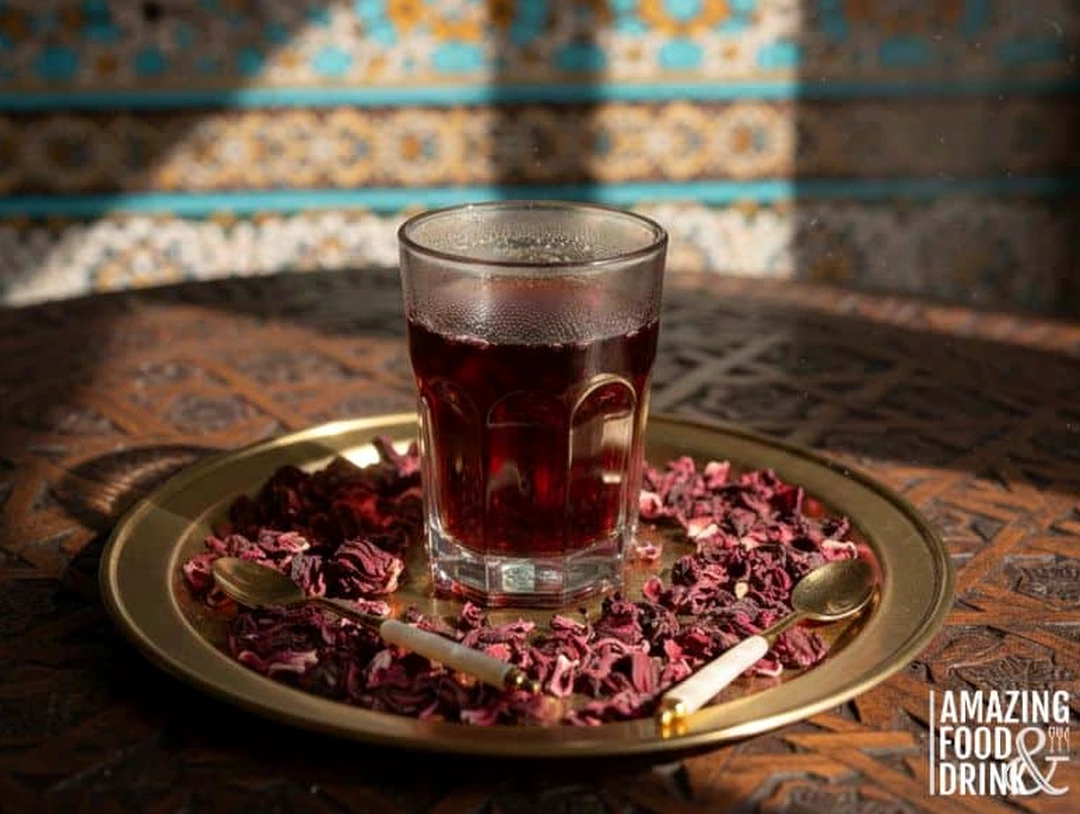
Evening relaxation along Lake Nasser also lingers in flavors shaped by the sun and winds of the continent. Inside shelters built of reeds and mudbrick in traditional Nubian dome style, people pass around glasses of deep ruby karkadeh hibiscus tea with a refreshing tartness, or steaming black tea infused with wild mint and cardamom. The aroma of herb-marinated lamb grilled over desert acacia charcoal mingles with the rich scent of freshly baked round eish shamsi bread, offering an unforgettable taste of local tradition. Late at night, when the music quiets and show lights fade, sitting by the water beneath the Milky Way arching above four giant stone rulers brings a rare stillness where modern travelers can feel the enduring pulse of one of humanity’s great civilizations.
Stepping away from the imposing shadow of the four rock-cut figures of Pharaoh Ramesses II and Queen Nefertari’s Temple of Hathor, travelers enter a quiet cultural buffer zone where desert meets the blue waters of Lake Nasser. This far-southern region safeguards not only the architectural legacy of the Nineteenth Dynasty, but also an ancient Nubian culinary heritage steeped in survival wisdom and warm Nile hospitality. Inside bright blue-washed mudbrick homes tucked beside the sand, family hearths keep burning, preserving recipes passed down through dozens of generations despite shifts in geography and the construction of the Aswan dams.
The heart of the traditional home table begins with the signature flatbread called Doka, an enduring symbol of Nubian women’s skill. On a large, flat round iron griddle set directly over glowing firewood, fermented liquid sorghum or wheat batter is spread evenly in a single swift motion with a brush-like scoop. The thin bread—crisp around the edges yet soft and pliable at the center—carries a subtle smoky aroma and serves as an ideal vehicle for Wika, a mashed dried-okra soup characteristic of Upper Egypt. Dried bamia pods sun-cured in the intense desert heat are ground fine and simmered slowly in lamb broth with garlic fried in fat, coriander, and cumin, yielding a deep green, velvety stew with a clean richness and lingering herbal fragrance.

For sacred festivals or when welcoming honored guests visiting the monuments of Abu Simbel, Nubian hosts set out Nubian Fatta. Unlike versions of Fatta in Lower Egypt and Cairo that lean toward a sharp tomato sauce, Nubian Fatta highlights a rich bone broth paired with crisp toasted pieces of Doka bread layered at the bottom of an earthenware dish. A layer of glossy long-grain white rice tops the bread, drizzled with fragrant garlic-vinegar sauce before tender, slow-braised lamb or beef is placed generously on top. Each spoonful combines crisp textures soaked in savory richness, evoking feasts that once welcomed ancient river pilgrimages.
Rounding out the lakeside meal is a hospitality ritual that begins with glasses of deep red Karkadeh brewed from desert hibiscus calyces. Sweetened with cane sugar from the Kom Ombo region, this cooling drink offers a bright tang that quickly relieves the midday desert heat. After eating, locals often gather in the shade of woven palm-frond awnings for a Gabana coffee ceremony. Green coffee beans are roasted over hot coals in a small pan, crushed in a stone mortar with green cardamom pods and fresh ginger, and boiled in a long-necked traditional ceramic jebena pot. Poured steaming, thick, and lightly spiced into handleless clay cups, the coffee awakens the senses and serves as a gesture of peace and friendship between distant guests and the free spirits of the rock-cut land.
A visit to the rock-cut wonders of Abu Simbel in Egypt’s far south starts when the archaeological site gates open to the first desert breeze at 06:00 AM and closes as dusk settles over Lake Nasser at 5:00 PM daily. To enter the sacred spaces bearing the glory of the Nineteenth Dynasty, visitors should book admission in advance through the official electronic portal of Egypt’s Ministry of Tourism and Antiquities or purchase tickets directly at the ticket office outside the complex entrance. An essential detail to note is that ticketing here has shifted fully to cashless payment, so travelers need a valid credit or international payment card ready to avoid delays out in the desert.
Reaching the sacred realm of Pharaoh Ramesses II and Queen Nefertari offers two transport options with very different atmospheres. The fastest and smoothest route is a domestic flight from Cairo, connecting through Aswan to Abu Simbel Airport just five kilometers from the temples. Meanwhile, the nearly three-hundred-kilometer overland drive along the edge of the Western Desert from central Aswan is an unforgettable adventure for road-trip enthusiasts. Tour vehicles commonly depart between 3:00 AM and 4:00 AM, traveling through the quiet Nubian night to reach the cliffs right around sunrise. The roughly three-hour drive crosses smooth desert highway where travelers can spot heat mirages on the sand and watch the red sun rise over the wide horizon.
Stepping through the doorway carved into thousand-year-old sandstone makes preserving ancient heritage a point of honor for every visitor. The reliefs depicting the Battle of Kadesh along with natural mineral pigments—ochre, sulfur, and Egyptian blue—crafted under Ramesses II are highly sensitive to artificial light. Consequently, a strict ban on camera flashes and phone lights is closely enforced by local antiquities inspectors. While the deep rock chambers stay naturally insulated, outdoor areas feel the full dry desert climate. Travelers are best served by light, breathable cotton or linen clothing that is modest and comfortable for walking, paired with a wide-brimmed hat and UV sunglasses.
This land holds more than memories of royal rulers; it also nurtures a warm, proud Nubian culture. After touring the temples, pausing at a small lakeside or oasis spot to sip cool ruby Karkadeh hibiscus tea or taste fresh fish baked in an earthenware tajine makes for a lasting sensory memory. When photographing locals with bright eyes and warm smiles, a polite nod and a courteous request in Arabic always goes a long way toward genuine connection. To experience the full cultural depth and enjoy smooth logistics across Egypt’s southern frontier, traveling with an all-inclusive ancient Egypt tour package is an ideal choice, letting visitors immerse themselves in the timeless legend of the pharaohs with peace of mind.