Tucked away on the remote southwestern edge of New Zealand’s South Island, Piopiotahi—the original Māori name for Milford Sound—begins its epic story not with Western maritime expeditions, but with the sacred breath of creation mythology. In the consciousness of the indigenous people, every sheer granite cliff rising starkly between the sea and sky of Fiordland is a sculptural masterpiece carved by the sea god Tu-te-raki-whanoa, who wielded his divine adze, Te Hamo, to cleave the rugged coastline into deep channels that welcome the lifeblood of the ocean. Legend tells that when the demigod hero Māui fell in his quest to win immortality for humankind from the goddess of night, Hine-nui-te-pō, a single piopio—an ancient, now-extinct native bird—flew to this wild southern frontier, perching alone upon a crag to sing a mournful farewell to his spirit. The name “Piopiotahi,” carrying the sacred meaning “the place of a single piopio,” was born from that profound sorrow, defining a solitary sanctuary where nature communes with eternity.
For the Māori of the Ngāi Tahu iwi (tribe), this untamed fiord was never a forgotten, impenetrable wilderness; for centuries, it served as a vital artery along an overland route crossing the Southern Alps. Bold bands of hunters and warriors tracked through treacherous gorges in search of pounamu—the prized greenstone jade revered as a sacred treasure imbued with supreme spiritual mana and ancestral prestige. Beyond yielding precious jade for crafting ceremonial weapons and heirloom pendants, these calm waters generously provided abundant sustenance from sea fish, fur seals, and native forest birds, nourishing ancient tribes before the bitter winter blanketed the southwest in snow.
The Western world’s encounter with Milford Sound came late and cautiously in the face of such overwhelming natural grandeur. Although the famed explorer James Cook sailed past the Fiordland coast twice—aboard the Endeavour in 1770 and the Resolution in 1773—he chose not to enter, as the fiord’s narrow entrance was concealed behind towering cliffs and he feared unpredictable gusts would trap his wooden sailing ships inside. It was not until 1812 that Captain John Grono, a Welsh-born sealing captain commanding the vessel Governor Bligh, bravely navigated the swirling winds to venture deep into the sound. Awed by the mirror-still waters encircled by sky-piercing peaks, he named the inlet Milford Haven after his home port town in Pembrokeshire, southwestern Wales. Later, Captain John Lort Stokes of the British Royal Navy officially renamed it Milford Sound on detailed hydrographic charts.
The historic turning point that transformed this completely isolated realm into a gathering place for global travelers began with a monumental feat of twentieth-century engineering. After explorer William H. Homer discovered a natural saddle crossing the rugged Darran Mountains in 1889, the vision of a mountain road took root. Amid the depths of the Great Depression in the 1930s, the arduous project of boring through solid granite beneath Mount Talbot began. Resilient tunnelers braved constant rockfalls, terrifying avalanches, and freezing groundwater pouring through perpetual darkness. After more than two decades of grueling labor, the 1.2-kilometer Homer Tunnel officially opened to traffic in 1954, breaking the millennia-old isolation of this glacial kingdom and throwing open the doors for millions of travelers from around the world to behold its majesty.
The fiord’s legendary stature was further cemented when author Rudyard Kipling unhesitatingly hailed it as the “Eighth Wonder of the World” following a memorable visit. This seamless harmony of primeval geological value and deep indigenous heritage reached its pinnacle in 1990, when UNESCO officially inscribed Piopiotahi as a World Heritage Site within the vast Te Wāhipounamu conservation area. Across shifting eras and historical milestones, Milford Sound retains its untamed splendor today, standing as an eternal cathedral of nature in the heart of New Zealand’s South Island.
Situated at 44.67° South and 167.87° East on the southwestern coast of New Zealand’s South Island, Piopiotahi stands as a colossal tectonic masterpiece where mountains and sea converge in a geomorphological formation rarely seen anywhere else on Earth. Through the lens of modern geology, this inlet is a true fiord forged over millions of years of stratigraphic upheaval, born from intense glaciation and erosion throughout the Pleistocene Ice Age. As massive glaciers kilometers thick crept slowly toward the Tasman Sea, they carved and scoured the monolithic granite valley floor into deep, sheer-walled U-shaped chasms. When the Ice Age retreated, rising sea levels flooded the trough, transforming it into a solemn seaway sheltered by towering natural ramparts—a landscape embodying an extraordinary convergence of mountain and water energy.
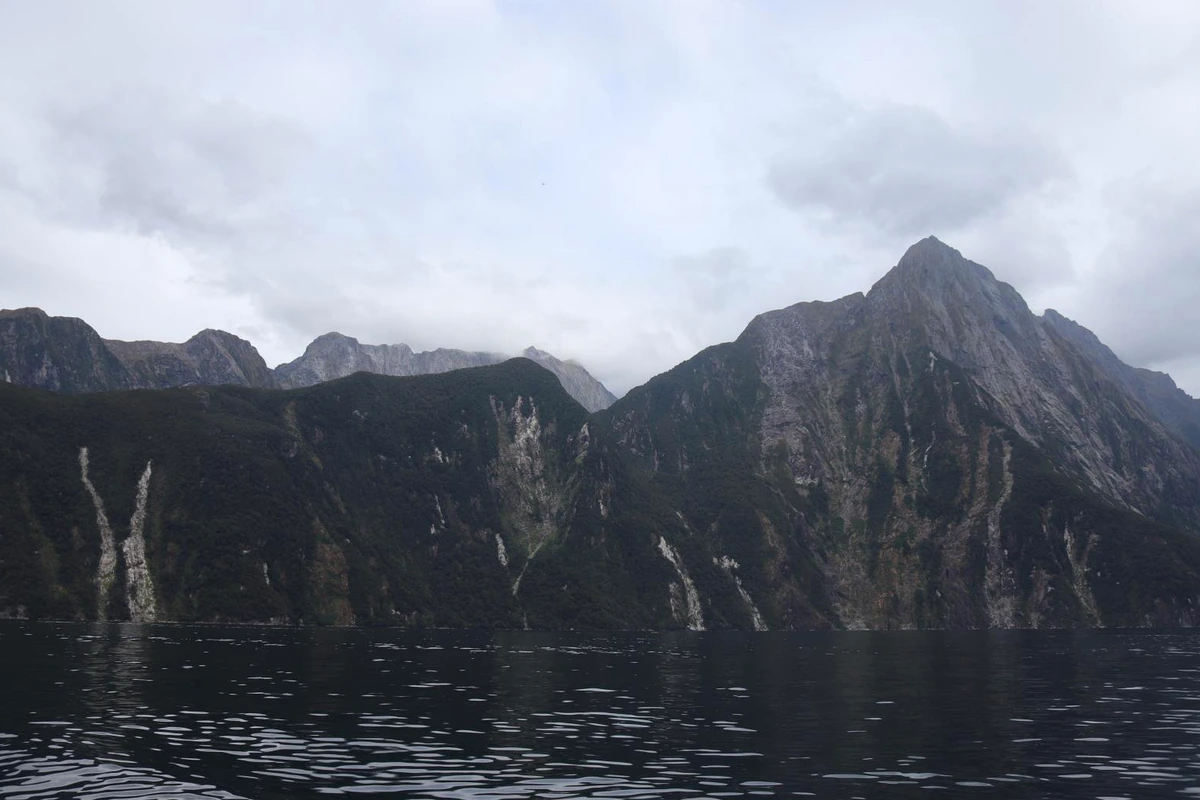
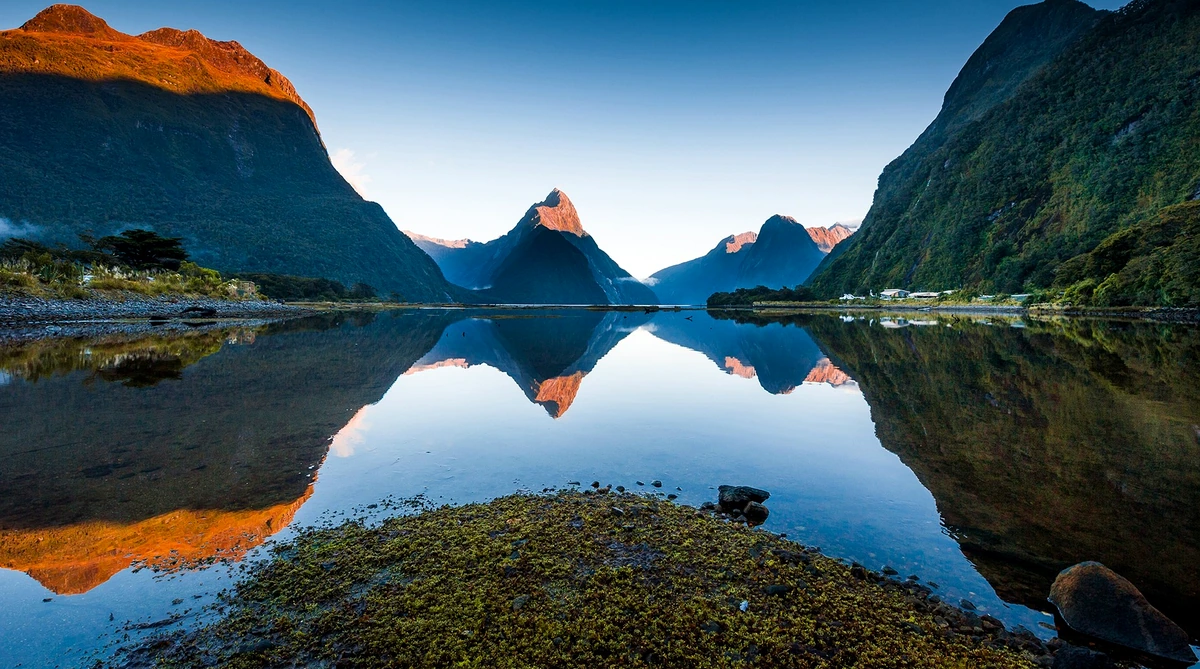
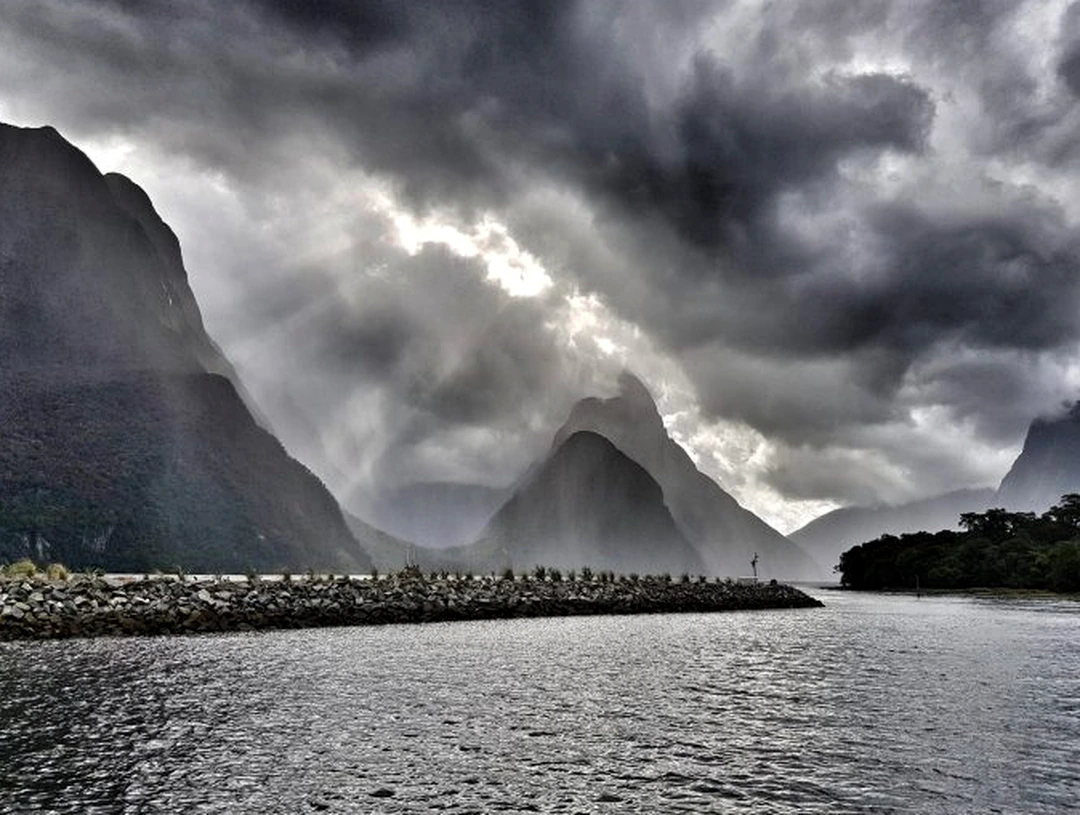
The defining centerpiece of the fiord’s dramatic expanse is Mitre Peak—revered by local Māori as Rahotu—rising proudly to 1,692 meters straight out of the tranquil water. Unlike ordinary mountain ranges that rise along gradual slopes, Rahotu plunges directly into the deep seabed at a nearly vertical 90-degree angle, creating a breathtaking visual scale for anyone standing beneath its walls. Its Western name, “Mitre,” comes from its resemblance to the pointed ceremonial headdress of a bishop, yet in indigenous belief, the mountain is an inviolable spiritual entity symbolizing the supreme authority of Tangaroa, god of the sea, and Tāne, god of forests and mountains. Surrounding Rahotu are magnificent granite walls compressed by hundreds of millions of years of geological pressure, exposing sharp fracture lines and ancient glacial benches that testify to the unrivaled destructive and creative power of primeval ice.
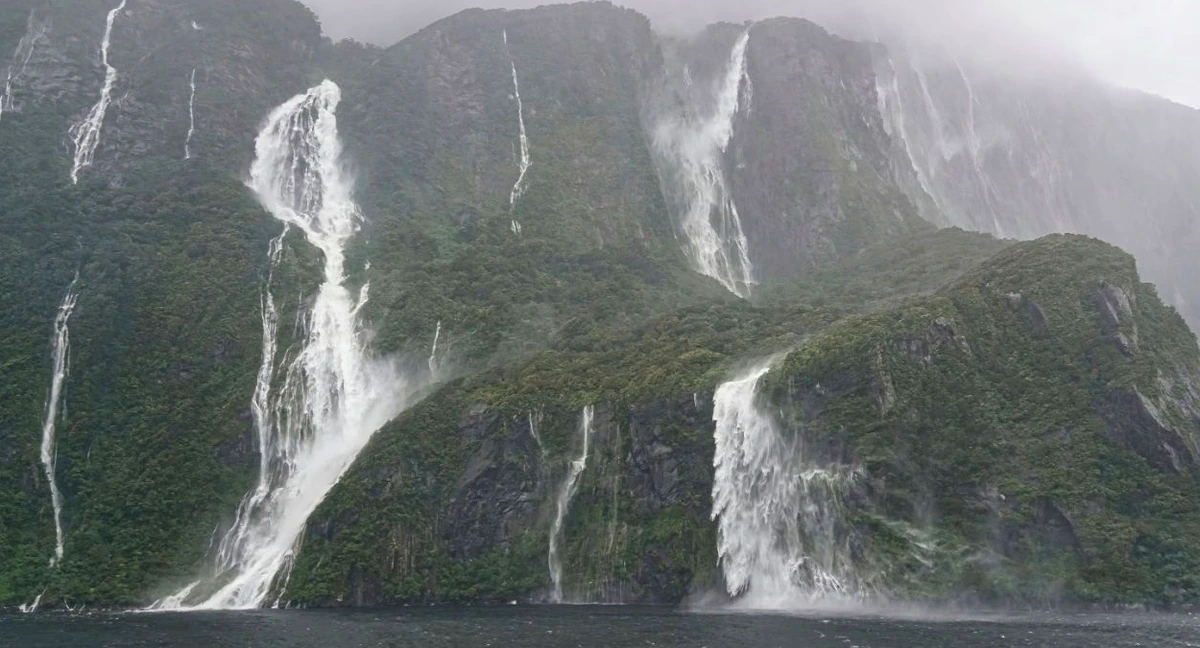
Alongside its sheer rock architecture, the soul of Piopiotahi’s landscape is woven by one of the most extreme hydrological regimes on the planet, receiving an average annual rainfall of 6,813 millimeters spread across nearly two hundred rainy days each year. This immense precipitation transforms the fiord into a living theater of waterfalls. Most prominent among them is Stirling Falls, known in Māori as Waimano, plunging 151 meters in a white torrent through layers of mist straight into the emerald waters below. At the base of Waimano, the sheer impact of the falling water generates billowing clouds of spray and powerful gusts of air, bathing the cliffside flora in perpetual moisture. Even more remarkably, after torrential downpours, hundreds of temporary waterfalls awaken simultaneously, cascading down the cliff faces like endless silver ribbons draped across lush green moss and ancient ferns.
The physical and ecological interactions within Piopiotahi harbor an extraordinary hydrological anomaly rarely found in any open marine environment on Earth. Abundant freshwater from rainstorms drenching the vast temperate rainforest percolates through decaying carpets of southern beech leaves before emptying into the fiord, absorbing a high concentration of organic tannins. These tannins stain the freshwater a dark, tea-like brown. Because it is less dense than the salty ocean water below, this tannin-rich freshwater does not immediately mix; instead, it floats atop the sea as a distinct surface layer two to ten meters thick. This dark tannin layer acts as a massive natural light filter, absorbing nearly all solar radiation and completely blocking blue light from penetrating deeper into the marine depths.
This natural light stratification produces an astonishing biological phenomenon, allowing a deep-sea ecosystem to thrive in shallow waters just beneath the surface. Most remarkable is the black coral Antipathella fiordensis—an endemic species that typically survives only in dark ocean trenches two hundred to a thousand meters deep to escape solar radiation. Inside Piopiotahi, sheltered beneath the protective shadow of the dark tannin layer, rare white-branched colonies of black coral thrive at an astonishingly shallow depth of just eight to ten meters. The sight of snowy coral branches fanning out ethereally in the dusky water alongside bioluminescent anemones and tranquil deep-water fish turns the fiord into an open-air evolutionary laboratory unmatched anywhere else on the globe.
Venturing into the heart of Piopiotahi posed a formidable challenge for New Zealand’s planners and architects: how to build modern infrastructure capable of welcoming hundreds of thousands of visitors without compromising the integrity of a World Heritage Site. Under the strict oversight of New Zealand’s Department of Conservation (DOC), every man-made structure here must adhere rigorously to the principles of low-impact design. This goes far beyond simply minimizing an ecological footprint; it is an art of architectural concealment, where modern engineering bows humbly before the sanctity and grandeur of nature.
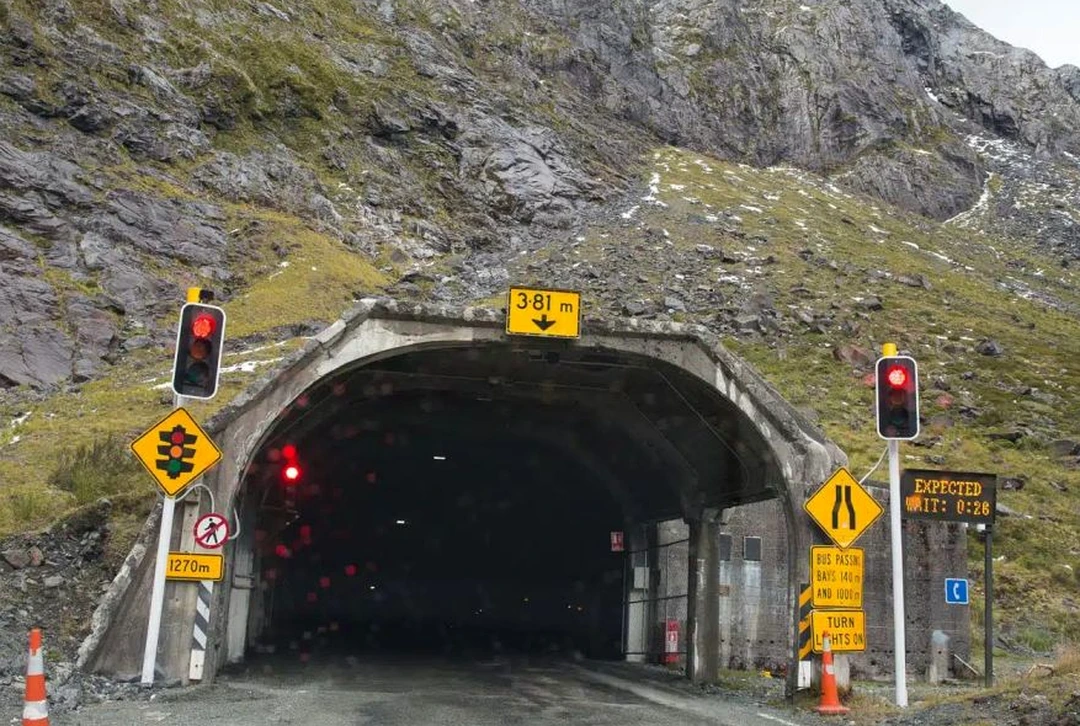
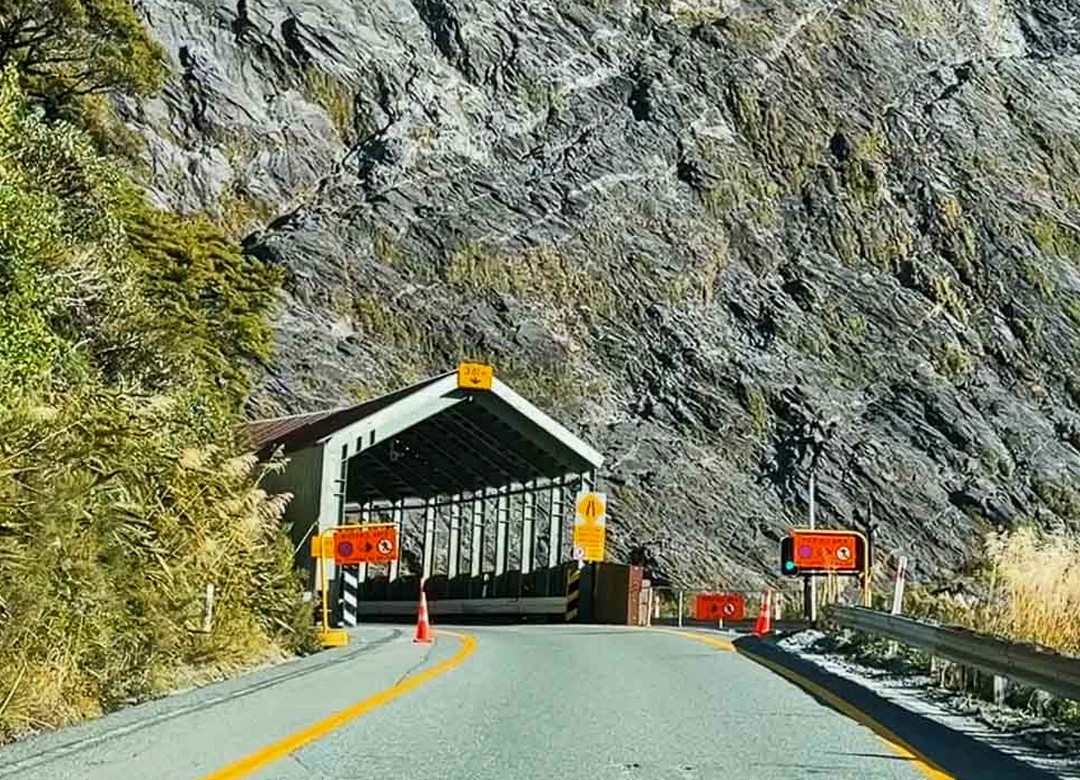
The most striking symbol of human determination to overcome natural barriers in this region is the Homer Tunnel, a geological engineering marvel linking the Hollyford Valley with Milford Sound. Stretching exactly 1.2 kilometers, the tunnel bores straight through the towering granite flank of the Darran Mountains. To carve out this sole overland artery, engineers of the era confronted some of the hardest and most complex rock strata imaginable, composed primarily of coarse-grained crystalline diorite interwoven with ancient bands of gneiss. With a steep 1:10 gradient, construction demanded absolute precision in surveying and structural load engineering. The tunnel interior retains its raw, unlined rock walls, leaving millennia-old stone strata exposed and weeping groundwater like tears from the heart of the mountain. Emerging from this dark, dramatic portal, travelers are suddenly met with the sweeping expanse of the fiord valley, creating a breathtaking spatial transition rivaled by few places on Earth.
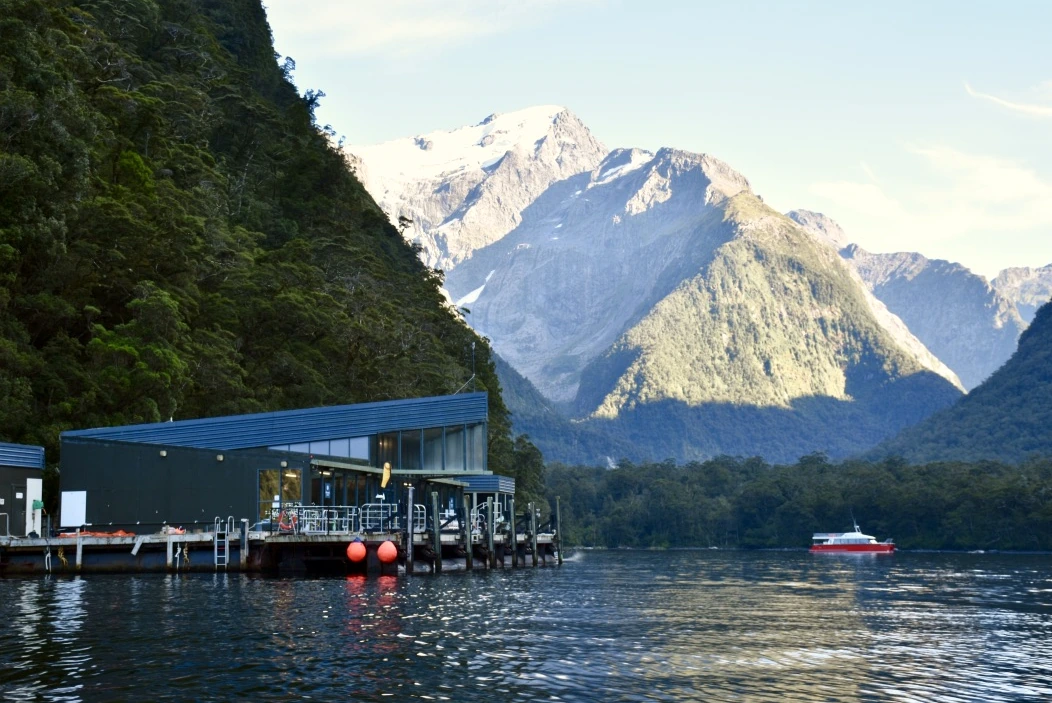
Moving deeper into the fiord’s central hub, the Milford Sound Wharf and Visitor Terminal emerge as an organic extension of the surrounding temperate rainforest. The facility’s scale was carefully calibrated to streamline the flow of thousands of daily visitors between cruises while preserving a tranquil atmosphere free from congestion or disruption. The lead architects drew heavily on biomimetic design language, pairing sturdy, locally sourced timber frames with expansive, ultra-clear tempered glass walls. These glass panels mirror the deep greens of moss, silver fern canopies, and drifting mist, virtually dissolving the boundary between built interior and natural exterior. Gently pitched rooflines echo the angles of surrounding mountain slopes, engineered both to shed record-breaking annual rainfall and to tuck the entire terminal complex beneath the shade of ancient trees.
Another singular architectural landmark showcasing refined craftsmanship in Milford Sound is the Milford Discovery Centre and Underwater Observatory, moored quietly in Harrison Cove. This floating pontoon structure houses a specialized cylindrical viewing chamber engineered to rise and fall automatically with the fiord’s dramatic tidal swings. A sealed spiral staircase guides visitors ten meters beneath the surface into an observation chamber encased in thick, specialized acrylic panels built to withstand immense hydrostatic pressure, opening up a 360-degree panorama of the underwater fiord ecosystem. Its foundation-free mooring system eliminates wave vibration while leaving the delicate tannin-stained freshwater layer above the deep saltwater completely undisturbed, enabling rare black coral trees to flourish right before visitors’ eyes in their untouched natural habitat.
When the final glow of sunset slips behind the 1,692-meter silhouette of Mitre Peak, Piopiotahi sheds the daytime bustle of thousands of sightseers and steps into an awe-inspiring live performance directed solely by Mother Nature. In stark contrast to glittering resort towns ablaze with artificial neon, night in Milford Sound is an experience of absolute, primeval stillness. With no permanent human settlement, no urban streetlamp grid, and no high-rise buildings, this entire glacial valley becomes one of the purest natural astronomical observation sites in the Southern Hemisphere within the Te Wāhipounamu World Heritage Area.
Here, the art of illumination comes not from high-powered floodlights or mechanical lasers, but from the pitch-black canopy of the night sky. Once darkness settles over the fiord floor, zero light pollution reveals a dazzling ocean of stars. With the naked eye, guests aboard overnight vessels can clearly trace the Milky Way arching overhead like a silver ribbon, alongside the sacred Southern Cross—known to ancient Māori as Te Punga, the anchor of the celestial canoe Tama-rereti—and the twin dwarf galaxies of the Large and Small Magellanic Clouds drifting like luminous mist across eternity. The calm fiord surface acts as a colossal obsidian mirror, reflecting the glittering galaxy framed between sheer granite walls rising over a thousand meters high, creating a surreal, three-dimensional vision of the primordial world.
Nighttime operations on the water are governed by strict ecological regulations enforced by New Zealand’s Department of Conservation. Only a handful of overnight cruise vessels are permitted to anchor within Fiordland’s waters, and all must adhere strictly to light-spill controls. Exterior deck lights must be switched to ultra-low warm settings or turned off completely to preserve natural darkness. This vigilance protects populations of tītī—endemic sooty shearwaters (muttonbirds)—which navigate by starlight to return to their burrows on steep cliff ledges after foraging out in the Tasman Sea; any bright artificial light can disorient them and cause fatal collisions with the sheer rock walls.
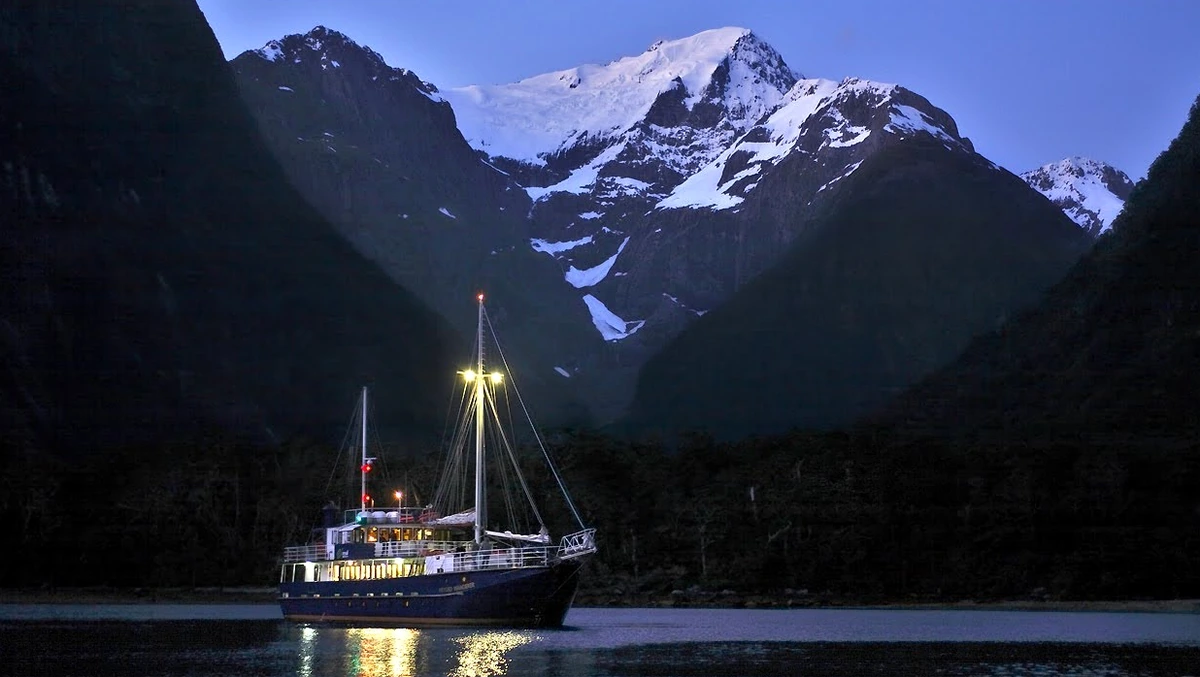
Consequently, experiencing Milford Sound at night awakens every sense through profound contrasts of light and sound. Guests often gather along warm timber decks, sipping full-bodied Pinot Noir grown in the glacial soils of neighboring Central Otago while listening to the symphony of the night: the ceaseless, thunderous roar of 155-meter Stirling Falls plunging from its hanging valley, the soft whisper of wind threading through tectonic chasms, and the low, guttural breathing of New Zealand fur seals (kekeno) curled asleep upon Seal Rock. In a stillness completely free of artificial noise, every drop of night dew landing on the deck and every shooting star streaking across the deep sky becomes an unforgettable highlight, defining a quiet yet extraordinary luxury rooted in pure connection between humanity and the cosmos.
Amid the silvery mists and millennia-old granite cliffs of Piopiotahi, local culinary culture was born not from ornate royal courts, but from the ancestral Mahinga Kai philosophy of the Ngāi Tahu people. Within the Māori worldview, Mahinga Kai extends far beyond mere food gathering; it is an unwritten spiritual covenant of sustainable reciprocity, in which humans revere nature and accept only the gifts bestowed by Tangaroa, god of the sea, and Tāne Mahuta, god of the forest. Beneath the fiord’s deep waters, where dark, tannin-rich rainforest freshwater meets the frigid, salty currents of the Southern Ocean, one of the world’s richest marine ecosystems nurtures flavors of breathtaking purity and wild authenticity.
At the heart of this traditional culinary map lie three celebrated treasures of the sea: kōura, pāua, and īnanga. Slowly maturing in cold, deep waters, kōura (rock lobster) yields snow-white flesh with an extraordinarily crisp, firm texture and a lingering sweetness rarely matched in tropical seas. Meanwhile, pāua (black-foot abalone)—a mollusk prized for its iridescent shell shimmering with the aurora-like hues of mother-of-pearl—is treasured by locals as a jewel of the rocky shore. Thinly sliced and flash-seared over high heat or slow-braised in rich butter, pāua releases the clean, briny minerality of Southern Hemisphere kelp forests. During seasonal runs, īnanga—delicate, translucent whitebait migrating upstream from the sea into rushing rivers beneath the Southern Alps—give rise to the iconic whitebait fritter. Bound together in a whisper-light egg batter and pan-fried golden in a cast-iron skillet to preserve the sweet, delicate flavor of the tiny fish, it captivates even the most discerning palates venturing to the far south.
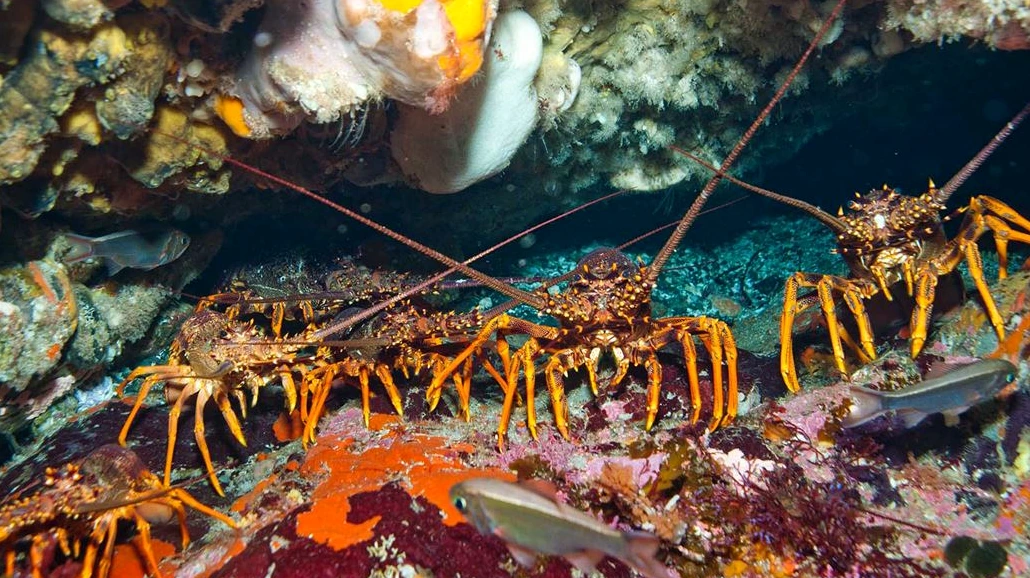
In the contemporary era, the ancient current of Mahinga Kai flourishes through Pacific Rim gastronomy, where ocean bounty harmonizes effortlessly with wild highland produce—most notably Fiordland venison. Red deer grazing freely across glacial valleys yield tender, deeply flavorful lean meat carrying subtle notes of woodland oak and moss. Seared medium-rare to a rosy blush, venison tenderloin is often accented by local chefs with warming, peppery horopito berries, cooling kawakawa leaves, and wild berry reductions foraged along mountain slopes. This bold pairing crafts a layered flavor profile combining classic Western culinary finesse, the untamed vitality of the temperate rainforest, and a crisp herbal finish unique to the South Island.
The pinnacle of Milford Sound’s culinary journey arrives when dining aboard a cruise vessel gliding slowly between sheer rock walls towering over a thousand meters overhead. Amid the thunderous roar of Stirling Falls and fine mist drifting through the air, taking a sip of robust Pinot Noir from the schist soils of nearby Central Otago alongside freshly harvested seafood lets travelers taste the very soul of the wilderness. Dining within this natural wonder becomes far more than simple nourishment; it transforms into an intimate communion between the human palate and primeval land and sky—an unforgettable experience found nowhere else on the planet.

Planning an expedition to Piopiotahi requires careful preparation in timing and logistics to capture the wild landscape at its most dramatic. During the peak Southern Hemisphere summer season from December to February, long daylight hours draw surging crowds to Fiordland, frequently filling sailings operated by long-standing cruise lines such as RealNZ and Southern Discoveries. Travelers are strongly advised to book cruise tickets weeks in advance and target ideal departure windows between 9:00 AM and 3:00 PM to catch angled sunlight slicing dramatically through the steep mountain clefts. Depending on your schedule and travel style, per-person options range from standard 90- to 120-minute scenic cruises gliding right up to the base of Stirling Falls, to guided sea-kayaking tours paddling into secluded coves, or breathtaking scenic flights aboard fixed-wing aircraft departing directly from Queenstown.
Reaching this natural wonder is an iconic visual journey in its own right via State Highway 94—a winding, 119-kilometer ribbon of asphalt linking the quiet lakeside town of Te Anau directly to the fiord’s wharf. Renowned as one of the world’s most dramatic yet demanding alpine highways, the route requires confident driving and constant attention to local weather updates. Along the way, travelers pass through the historic Homer Tunnel—a single-lane, 1.2-kilometer passage bored through solid Darran Mountain granite at over 945 meters above sea level, an engineering feat begun during the Great Depression that took nearly two decades to complete. During heavy hailstorms or deep winter snowfalls along the steep passes of the Cleddau Valley, the Homer Tunnel may close temporarily due to avalanche and rockfall risks; carrying tire chains and checking road condition reports before departing Te Anau are essential precautions.
A common misconception among travelers is dreading rainy days when visiting this remote corner of New Zealand. In reality, with annual rainfall exceeding 6,800 millimeters, Milford Sound ranks among the wettest places on Earth—and that abundant rain is the very force that breathes life into the landscape. During and immediately after heavy downpours, thousands of ephemeral waterfalls roar to life simultaneously, cascading like shimmering silver ribbons from mist-shrouded peaks into the glassy emerald waters below to create an incomparable natural spectacle. To enjoy this dramatic display while staying warm and dry, pack high-performance waterproof gear, including a breathable technical shell jacket, rain pants, and protective covers for camera equipment. A bottle of insect repellent to ward off the West Coast’s notorious native sandflies is also an indispensable travel companion.
Overarching every experience in this enchanted realm is the principle of Kaitiakitanga—a foundational value in indigenous Māori culture embodying guardianship, conservation, and caring for nature as kin. In keeping with ancient custom and strict Fiordland National Park regulations, visitors are strictly prohibited from removing any natural specimens, whether a marble-veined shoreline pebble, a sprig of ancient fern moss, or a seashell resting on the sand. Honoring the untouched purity of land and sea ensures Piopiotahi preserves its primeval grace for generations to come. To experience this natural wonder seamlessly, safely, and thoughtfully—from overland transfers to premier fiord cruises—exploring an all-inclusive New Zealand tour package offers an effortless way to take in every marvel of the South Island.