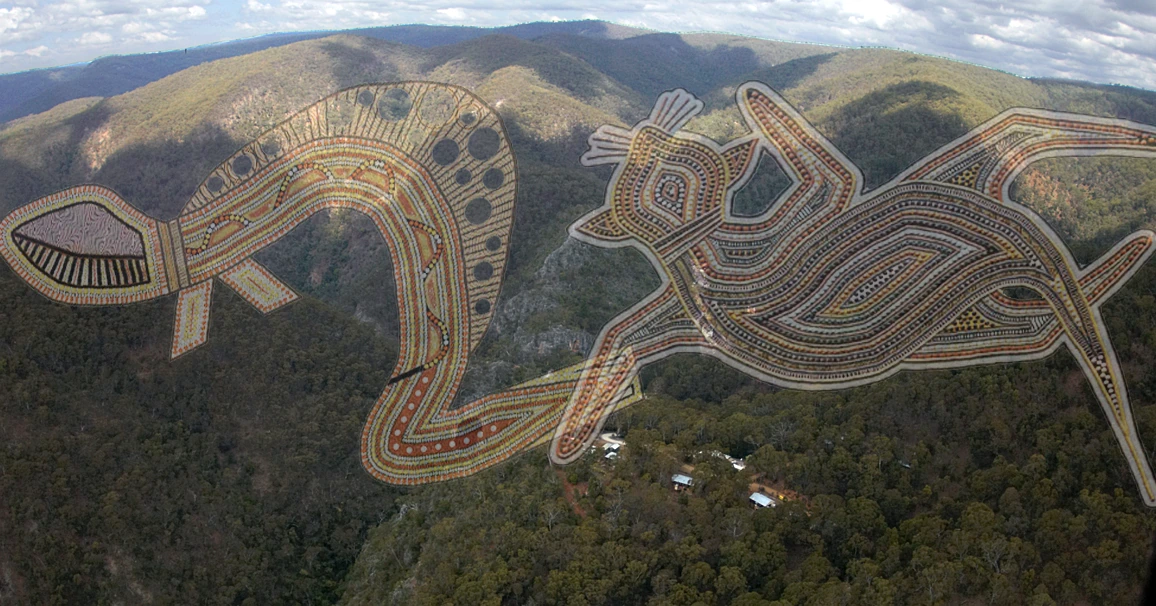
The layered history of the Blue Mountains did not begin with the wagon tracks of Western explorers, but rather originates deep within sacred earth steeped in ancient lore, where the Gundungurra and Darug Aboriginal peoples have lived in intimate connection with the land for over 22,000 years. Within the Dreaming worldview—the philosophical foundation and enduring spiritual belief system of Australia’s First Nations peoples—every towering red sandstone cliff, mist-shrouded eucalyptus forest, and deep gorge embodies the spirit of ancestral creators. This landscape has borne witness to age-old ceremonies, secret hunting trails, and creation stories passed down orally across thousands of generations beside glowing clan campfires.
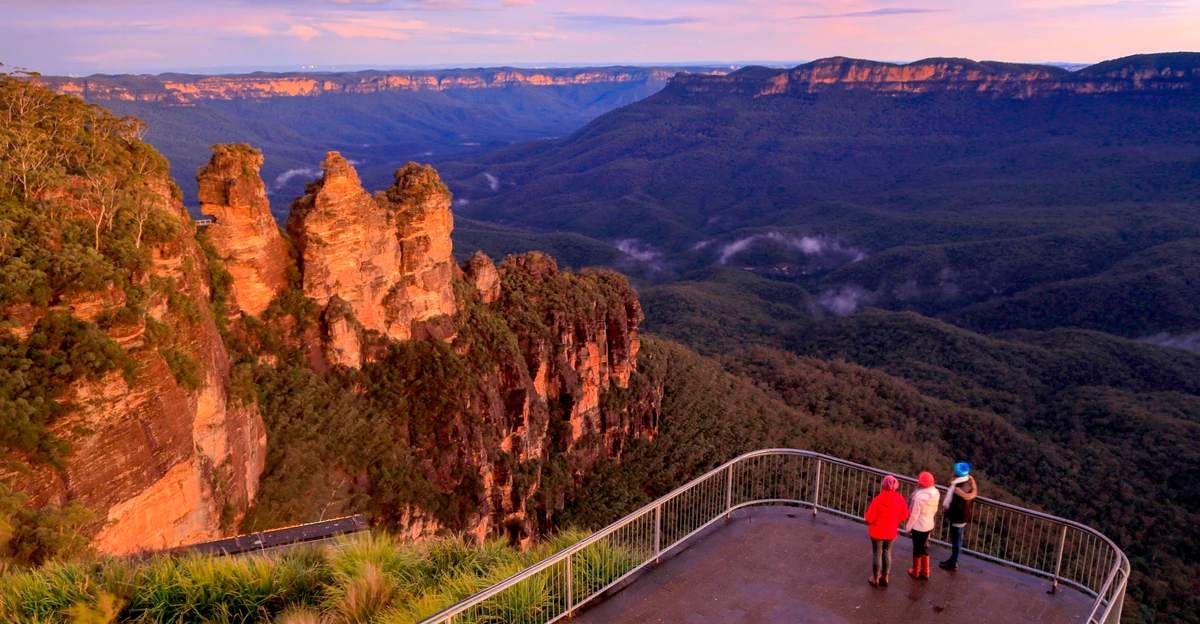
The most magnificent and poignant icon in the region’s treasury of Indigenous legends is the trio of sandstone spires rising proudly above the Jamison Valley, known to the world as the Three Sisters. According to Katoomba tribal lore, three extraordinarily beautiful sisters named Meehni, Wimlah, and Gunnedoo once lived in the valley. Fatefully, they fell in love with three courageous young men from the neighboring Nepean clan. Strict tribal law forbade marriage between the two clans, sparking a fierce, bloody conflict between the rival groups. To shield the three sisters from the clash of spears and capture on the battlefield, a powerful tribal elder cast a spell turning them into three towering stone pillars along the cliff edge, intending to restore their human forms once the dust of war had settled. Tragedy struck, however, when the elder was killed in the heat of battle. Unable to break the spell, the three maidens remained frozen in stone forever, standing resolute against wind and time as an eternal monument to forbidden love and primeval tribal tragedy.
For a quarter of a century after the British First Fleet landed to establish the colony of New South Wales, the massive Great Dividing Range—anchored by the rugged Blue Mountains—formed an impenetrable natural barrier confining settlers to the narrow coastal strip of Sydney. A historic breakthrough finally arrived in 1813 with a landmark expedition led by the pioneering trio of Gregory Blaxland, Lieutenant William Lawson, and young statesman William Charles Wentworth. Unlike earlier, ill-fated expeditions that attempted to navigate the boggy, dead-end valley floors, the trio ingeniously followed the winding upper ridgelines, hacking through dense scrub to forge a viable route across the range. Their triumph not only broke the colony’s geographic isolation but also unlocked the fertile western plains of Bathurst, laying the groundwork for inland migration and British colonial expansion across the southern continent.
By the 1870s, Katoomba—the beating heart of the Blue Mountains—underwent a dramatic transformation from a rugged coal and oil-shale mining outpost into a celebrated mountain resort. Investments by entrepreneur John Britty North to extract rich mineral seams deep within the canyon led to the construction of the world’s steepest incline railway to haul coal out of the gorge. As mineral deposits gradually depleted, this industrial infrastructure was ingeniously repurposed into the thrilling Scenic Railway tourist attraction. The expansion of the trans-mountain rail line, paired with the Victorian and Edwardian aristocracy’s quest for crisp, invigorating mountain air, turned Katoomba into a fashionable retreat where grand heritage hotels and classic tearooms flourished amid dramatic alpine scenery.
The region’s global stature was cemented in the year 2000, when the Greater Blue Mountains Area was officially inscribed on the UNESCO World Heritage List. This prestigious designation not only celebrates an extraordinary primeval ecosystem boasting more than 90 distinct eucalypt species—whose dispersed droplets of essential oil create the mountains’ signature ethereal blue haze—but also serves as an enduring tribute to millions of years of evolutionary history and the living cultural heritage of the region’s Indigenous custodians high above Sydney.
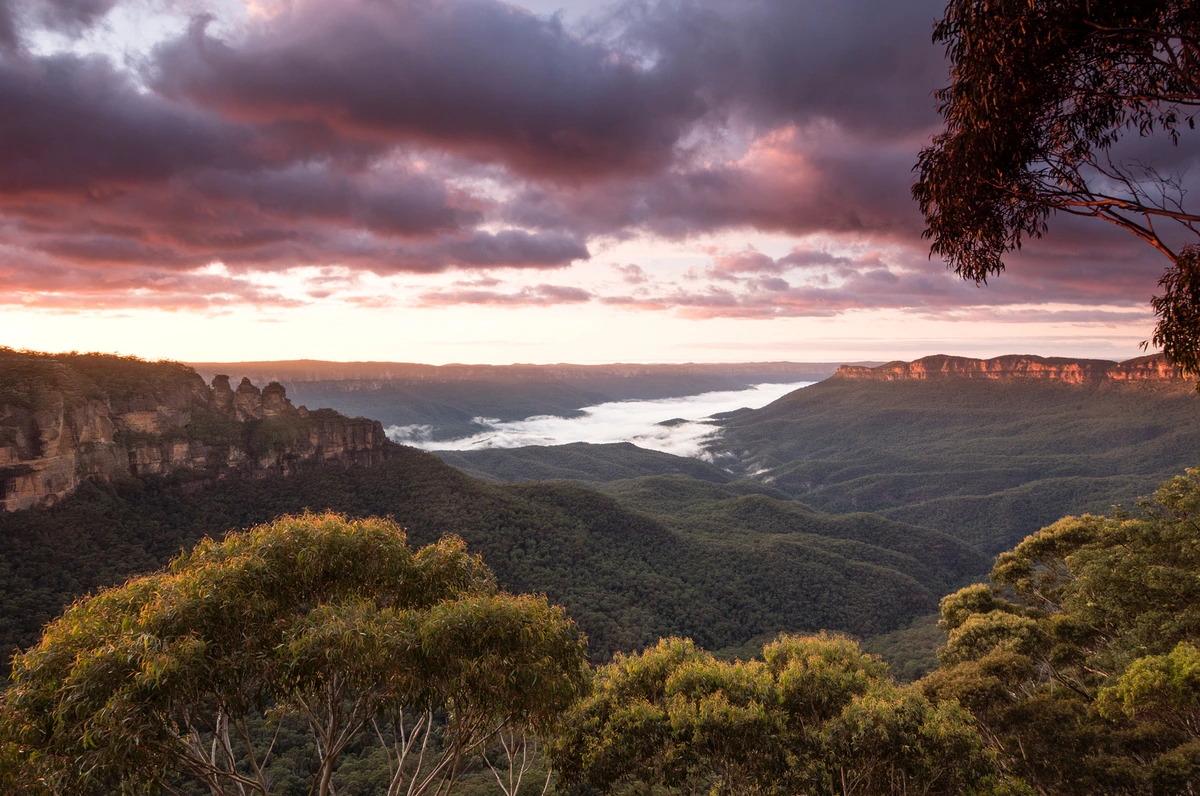
Viewed through the lens of natural geomancy and ancient geological formation, the Blue Mountains plateau rises like a colossal protective screen guarding the western flank of the Sydney coastal plain, concentrating elemental energy sculpted over hundreds of millions of years. The entire landscape is carved from ancient Hawkesbury and Narrabeen sedimentary sandstone strata dating back to the Triassic period, originally deposited across prehistoric lake beds and river basins before tectonic uplift thrust the plateau over a thousand meters into the sky. Through the patient, relentless forces of flowing water, torrential rains, and mechanical weathering across millions of seasonal cycles, the Jamison Valley opened into a breathtaking masterpiece of natural erosion—exposing sheer, vertical stratigraphic cliffs that cleave deep into the bedrock to form a vast, energy-gathering basin ringed by towering escarpments.
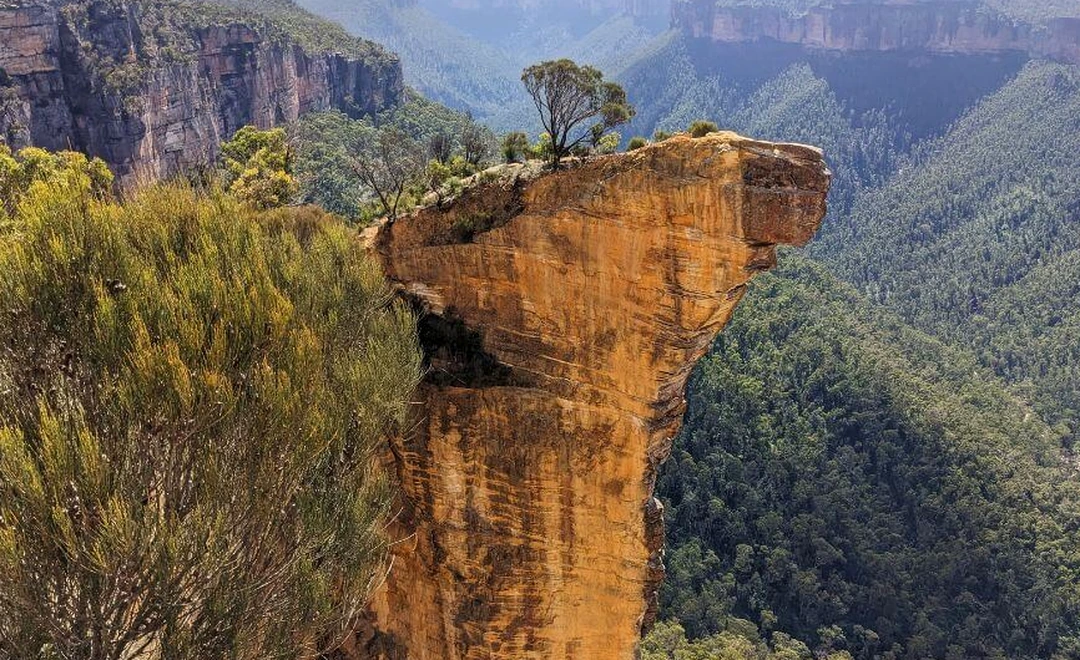
Interpreted through Eastern principles of natural feng shui alongside the dramatic geomorphology of the ancient southern continent, the terrain embodies the classic “backed by mountains, facing the sea” configuration, with dragon-vein ridgelines originating from the Great Dividing Range along Australia’s eastern flank and converging at these dramatic gorges. The sheer walls of Hawkesbury sandstone act as monumental pillars supporting the sky, shielding the basin from biting inland winds while welcoming warm, vital currents rising from the fertile valley floor below. The interplay between the timeless, stoic permanence of ancient sandstone and the drifting movement of mountain clouds and lush forest canopy creates a flawless balance of yin and yang. Moreover, the enclosed topography of the Jamison Valley preserves an ideal microclimate of gentle humidity, nurturing ancient temperate rainforests that survive as living relics from the supercontinent Gondwana.
What truly defines the soul and legendary name of this mountain range is the translucent sapphire-blue mist that blankets the expanse whenever sunlight bathes the peaks. From the perspective of optical physics and biosphere science, this signature azure veil is a direct result of Rayleigh scattering triggered by millions of eucalyptus trees blanketing the slopes. As daytime temperatures rise, eucalyptus leaves release vast quantities of volatile essential oils into the atmosphere, forming a fine aerosol suspended in the air. These microscopic oil droplets scatter short-wavelength blue light from the solar spectrum far more effectively than longer red wavelengths, weaving an ethereal, shimmering haze that drapes the gorges in a majestic robe of celestial blue—at once dreamlike and sacred.
Commanding the premier vantage point from which to behold this geological marvel is Echo Point Lookout, perched at 922 meters above sea level and revered as an observation deck capturing nature’s grand design at its finest. From this jutting rocky promontory, visitors are treated to an unobstructed 270-degree panorama encompassing the undulating expanse of the Jamison Valley, the solitary peak of Mount Solitary rising proudly from the basin floor, and primeval forests stretching endlessly to the horizon. Most notably, Echo Point frames the Three Sisters at an ideal viewing distance, revealing every weathered grain and fissure of the three solitary sandstone pillars standing shoulder to shoulder mid-sky. Standing before this boundless expanse nearly a thousand meters up—where mountain winds echo valley sounds off sheer rock faces—travelers feel the full majesty of the natural world and the humble grace of human life against the infinite sweep of geological time.
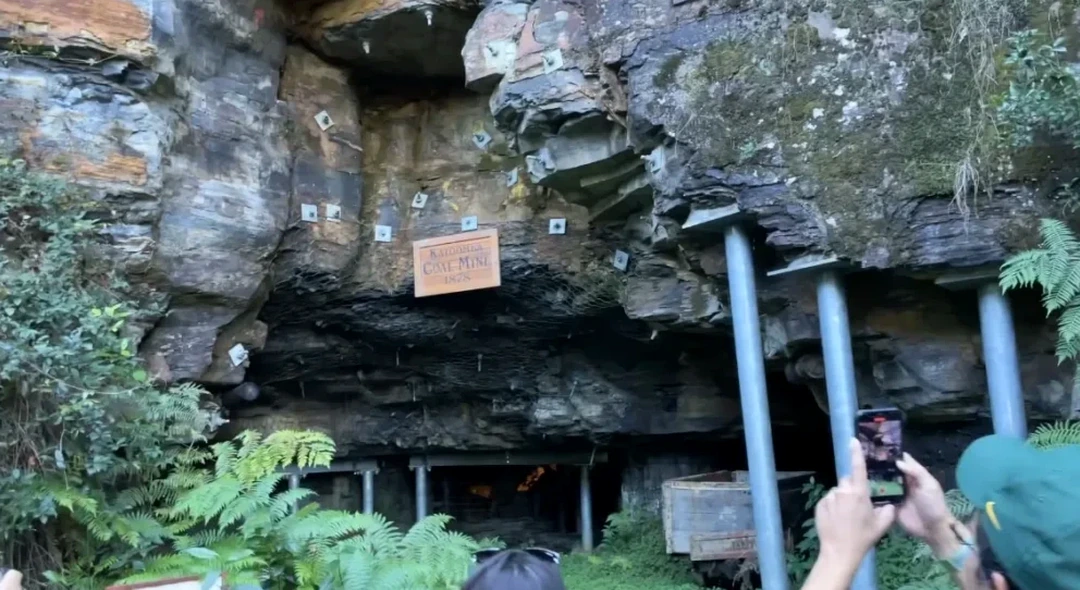
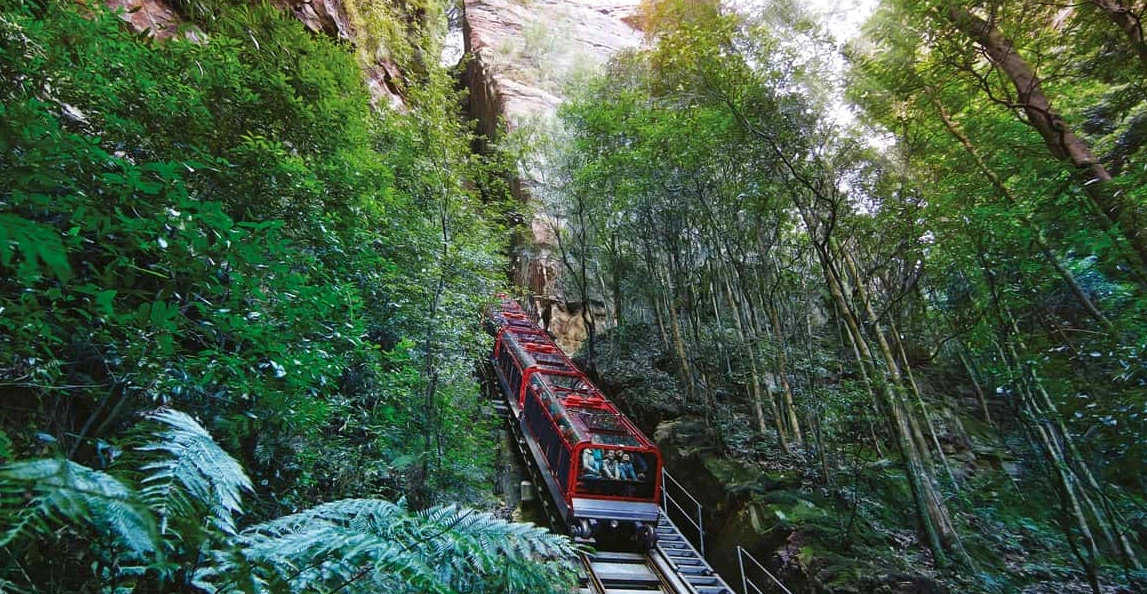
Nestled along the rim of the Katoomba abyss, the Scenic World complex stages a remarkable dialogue between 19th-century industrial heritage and contemporary sustainable landscape architecture. Originating from the network of tunnels and haulage winches of the Katoomba Coal Mine established in 1878, the site has undergone an extraordinary spatial metamorphosis. Rather than erasing the rugged industrial relics of the steam-and-iron era, engineers and landscape architects ingeniously transformed perilous mineral transport corridors into a multi-tiered sightseeing network, carrying visitors deep into the heart of the Jamison Valley without compromising the integrity of its million-year-old sandstone geology.
The most astonishing engineering centerpiece of this spatial ensemble is the Scenic Railway, which holds the world record as the steepest passenger railway on Earth, plunging at an incline of 52 degrees (a 128% gradient). Evolved from the rudimentary cable-drawn coal skips that hauled ore up the sandstone cliff face in 1878, today’s track is rebuilt with high-tensile tempered alloy steel anchored securely to the sheer rock wall via heavy-duty mechanical brackets. Each aerodynamically profiled carriage features panoramic tempered-glass roofs and ergonomic seating that allows passengers to adjust their seat incline—from 40 degrees to 52 degrees, or an adrenaline-pumping 64 degrees—via a mechanical lever before hurtling through a dark natural rock tunnel and emerging into the lush Jurassic rainforest canopy on the valley floor.
Suspended 270 meters above the chasm floor is the Scenic Skyway, a single-span engineering marvel stretching 720 meters between opposing cliff tops across the Katoomba Gorge. The cabin’s signature design innovation lies in its electro-scenic smart-glass floor panel running down the center of the car. Moments after departing the station, an electrical pulse activates liquid-crystal molecules within the glass, switching the floor from frosted opaque to crystal clear in a millisecond and creating the dizzying sensation of walking on air. From this suspended vantage point, passengers enjoy uninterrupted 360-degree views of Katoomba Falls plunging in white spray and the Three Sisters standing sentinel amid the blue eucalyptus mist.
Completing this three-dimensional transport network is the 545-meter Scenic Cableway, featuring a fully enclosed twin-track aerial cabin accommodating 84 passengers per journey as it glides smoothly down into the Jamison Valley. Precision-engineered with support towers anchored onto natural load-bearing rock ledges, the system minimizes its ground footprint and eliminates seismic disruption to the ancient rainforest ecosystem below. Beneath the cables, the 2.4-kilometer elevated Scenic Walkway winds gently through the forest understory, guiding visitors lightly over ancient tree ferns and primeval southern beech trees—embodying the highest ideal of ecological architecture: honoring nature unconditionally while breathing respectful new life into industrial history.
As amber sunset hues fade behind endless ridges of eucalyptus, the Jamison Valley draws a close to the bustle of day and enters an entirely different emotional register. Unlike glitzy resort cities that rely on dazzling fireworks or amplified spectacles, the premier “live show” at Blue Mountains National Park is orchestrated entirely by Mother Nature, where encroaching darkness sets the stage for a contemplative, sensory nocturne. As a violet-blue twilight mist settles over the gorge, the atmosphere around Echo Point quiets into pure stillness, giving voice to mountain breezes whispering softly across million-year-old sandstone cliffs.
The most captivating visual highlight after nightfall is the subtle architectural illumination of the Three Sisters. Rather than using harsh floodlights that distort natural stone tones, park authorities installed a low-intensity LED lighting system calibrated to precise color temperatures that accentuate every rugged grain and ancient fissure of the sandstone. Bathed in a soft golden glow reminiscent of full moonlight, the three pillars—Meehni, Wimlah, and Gunnedoo—rise like monumental sculptures emerging from the Aboriginal Dreamtime. This lighting installation goes beyond visual artistry to fulfill a deep ecological commitment: beam angles and light spectra are meticulously engineered to minimize light scatter and skyglow, safeguarding the nocturnal habitats of rare wildlife, including the greater glider soaring silently between treetops, the calling southern boobook owl, and native nectar-feeding bats.
Perched nearly 1,000 meters above sea level and shielded from the artificial light dome of metropolitan Sydney nearly 100 kilometers away, Echo Point transforms into a superlative natural observatory. When the floodlights automatically dim late in the evening, the southern night sky seems to descend within arm’s reach. It is a sanctuary for astrophotographers and stargazers alike, where the Milky Way arches across the heavens like a dense river of diamonds. Shining clearest and proudest overhead is the Southern Cross—the timeless celestial compass of early maritime navigators—blazing directly above the cliff edge. Standing on the threshold between the dark abyss and a star-drenched cosmos, travelers feel everyday distractions wash away, immersed in a surreal sense of awe before the infinity of space and time.
The nocturnal charm of the Blue Mountains extends gracefully into neighboring towns such as Katoomba and Leura. Free from the clamor of rowdy nightlife districts, evening hospitality here unfolds inside historic early-20th-century Art Deco pubs and heritage lounges, where crackling wood-burning fireplaces radiate comforting warmth against the crisp mountain air. Guests can savor a glass of bold Shiraz from the nearby Hunter Valley, dine on herb-roasted local lamb, and listen to captivating Gundungurra legends shared by local storytellers. It is a unhurried, refined, and nostalgic rhythm that turns an evening in the Blue Mountains into a deeply restorative sensory experience.
The majestic sandstone plateau of the Blue Mountains boasts an enticing culinary map centered in Katoomba, preserving a nuanced dialogue between classic British colonial dining traditions and millennia-old Indigenous gastronomic wisdom known as “Bush Tucker.” Tucked amidst silvery blue mist and boundless eucalyptus forests, the region’s food culture reads like a tapestry woven from early settler heritage and the untamed flavors of the Australian bush. More than mere sustenance, dining in these highlands offers a meaningful cultural conversation, where every plate tells the story of human adaptation to a wild, ancient landscape.
The defining soul of Blue Mountains cuisine lies in its celebrated Bush Tucker wild ingredients, gathered sustainably by the Darug and Gundungurra peoples for thousands of years. In the hands of inventive contemporary chefs, these native forest treasures are elevated into prized accents across fine-dining menus. Standouts include Davidson’s plum, a deep-purple rainforest fruit prized for its sharp tartness and high antioxidant content, often reduced into rich glazes for pan-seared duck breast or delicate dessert tarts. Alongside it, native mountain pepper—delivering an aromatic herbal lift followed by lingering peppery warmth—and wild kunzea blossom, imparting subtle botanical notes, create exquisite rubs for charcoal-grilled lamb and fresh mountain stream trout, infusing every bite with the earthy allure of the valley.

Katoomba’s nostalgic charm is crystallized most vividly at the Paragon Café, an invaluable architectural and culinary landmark founded in 1916 by Greek immigrant Zacharias Simos. Occupying a prominent spot along the bustling main street, the venue showcases opulent early-20th-century Art Deco craftsmanship, complete with intricately carved timber paneling, gilded relief mirrors, and solid marble counters. Across more than a century of history, the Paragon Café has maintained its renown for artisanal chocolates handcrafted from closely guarded family recipes. In the crisp highland air, settling into this gracious heritage room to sip fine black tea alongside rich macadamia-filled chocolates or golden-baked scones topped with wild berry jam and thick clotted cream remains a cherished ritual for discerning travelers exploring the Blue Mountains.
Complementing the elegance of afternoon high tea is the hearty local tradition of the “Mountain Breakfast.” Born out of the need to fuel coal miners, timber cutters, and early geological explorers for grueling days in the ranges, a traditional Katoomba breakfast is an abundant ritual before embarking on demanding treks across the Jamison Valley. A classic plate arrives generously laden with poached free-range eggs from organic farms in the neighboring Megalong Valley, garlic-butter sautéed pine mushrooms, smoked herb sausages, crispy pan-fried bacon, and thick slices of toasted sourdough slathered in creamy butter. Enjoying this steaming feast beside a crackling hearth with a freshly pulled, velvety Flat White is the ultimate way to awaken the senses and gather energy for conquering the rugged trails around the Three Sisters.

The journey to the misty wonderland of the Blue Mountains begins effortlessly from the bustling platforms of Sydney Central Station. Travelers simply board a comfortable double-decker train on the Blue Mountains Line for a scenic two-hour rail journey, watching the coastal cityscape gradually give way to winding mountain grades blanketed in ancient tree ferns and endless eucalyptus forest. Once the train pulls into Katoomba Station—the historic mountain hub nestled over a thousand meters above sea level—local public bus Route 686 and dedicated hop-on-hop-off shuttles whisk visitors straight to Echo Point Lookout in under fifteen minutes.
For travelers eager to experience the full grandeur of the Jamison Valley from every conceivable angle, the Scenic World Unlimited Discovery Pass is an indispensable way to maximize the visit. This all-access pass unlocks unlimited rides across all four flagship attractions: gliding silently across the sky 270 meters up in the glass-floored Scenic Skyway, braving the world’s steepest 52-degree incline down the sandstone cliff on the Scenic Railway, soaking in sweeping forest panoramas aboard the Scenic Cableway, and strolling beneath ancient Jurassic flora along the 2.4-kilometer Scenic Walkway. Securing this bundled pass not only saves considerably compared to purchasing individual tickets, but also gives visitors complete freedom to pace their exploration.
The undisputed golden hour for beholding the Three Sisters is at the break of dawn, when the sapphire mist condensed from eucalyptus oils begins to dissolve beneath the first rays of morning sunlight. In the quiet stillness of early day, the massive sandstone monoliths undergo a mesmerizing shift in hue, transforming from deep, solemn umber to blazing burnt orange—like three sacred torches igniting above the dark chasm. Visiting Echo Point at sunrise not only lets you beat the midday tour-bus crowds, but also rewards you with precious solitude to listen to the flute-like calls of native lyrebirds and breathe deeply of the crisp, pristine mountain air.
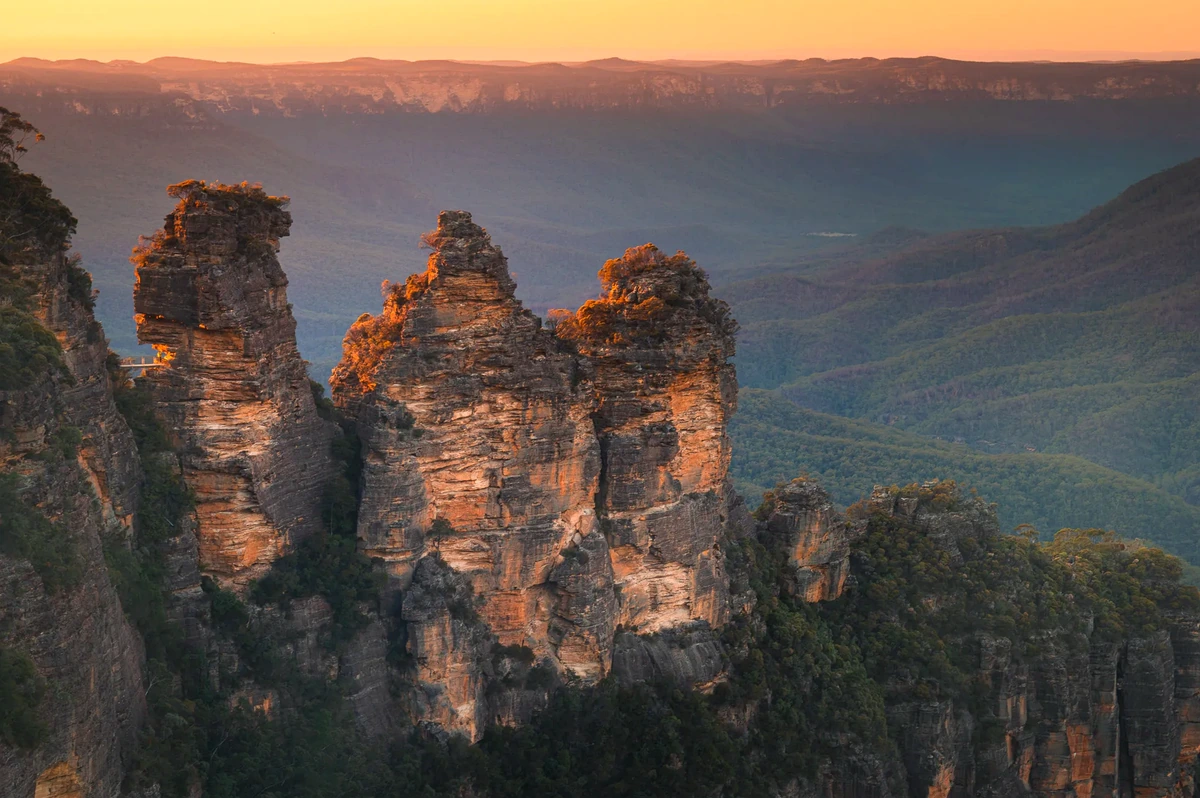
Throughout your visit, understanding and respecting conservation guidelines is a vital responsibility for every traveler. The New South Wales National Parks and Wildlife Service strictly prohibits climbing on or scaling the Three Sisters rock formations. This strict rule protects the spiritual sanctity of a sacred Dreamtime site cherished by the Gundungurra and Darug peoples, while safeguarding the fragile remaining habitat of the Blue Mountains water skink—a rare, endangered endemic reptile found exclusively in damp upland peat swamps on the sandstone plateau. Visitors should also remember to pack warm layers, as highland temperatures consistently run five to seven degrees Celsius cooler than central Sydney, along with sturdy, high-traction walking shoes for secure footing on damp trails. To explore this legendary World Heritage region alongside Australia’s most iconic landmarks seamlessly and stress-free, consider booking an all-inclusive Sydney – Melbourne Australia tour package featuring thoughtfully curated itineraries and professional service.