In the heart of glamorous London, where the pulse of British history still quietly courses through every stone, Buckingham Palace is not merely a grand architectural monument, but a living embodiment of the enduring continuity of sovereignty. To fully grasp the stature of this icon, we need to travel back in time to the early 18th century, when this land did not yet bear the guise of a noble royal palace. Originating as Buckingham House, a private mansion built by the Duke of Buckingham in 1703, it was initially just a luxurious private residence for the aristocracy. However, the building’s destiny changed forever in 1761, when King George III decided to purchase the residence to serve as a home for Queen Charlotte. From a private estate, Buckingham House gradually transformed into “The Queen’s House,” a private space brimming with personal royal imprints.
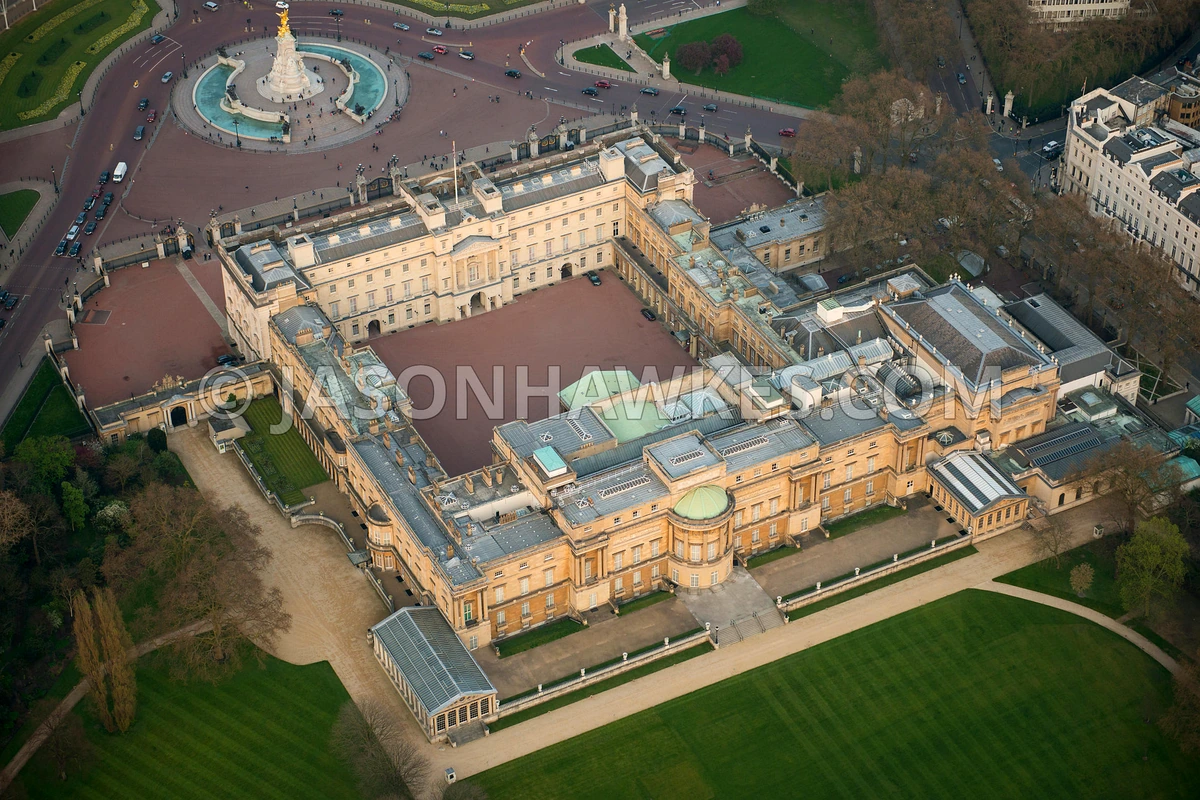
The true architectural turning point only arrived during the reign of King George IV, a monarch with refined aesthetic taste and an ambition to build a new symbol of power. He commissioned the talented architect John Nash to carry out a major renovation, transforming the old residence into a grand U-shaped palace. Under Nash’s hand, neoclassical lines began to take shape, creating a sturdy framework for a structure that would become the heart of the empire. Yet it was not until 1837, when Queen Victoria ascended the throne and chose Buckingham as the monarch’s official residence, that the palace truly entered its golden age, becoming the administrative center and supreme symbol of authority in the United Kingdom.
Shifting times and the need to expand space to host state ceremonies drove continuous changes. The East Front, facing the magnificent ceremonial avenue The Mall, is the final piece that completed the imposing appearance we admire today. This work was finished by Sir Aston Webb in 1913, bringing a balanced, grand, and proud exterior. It is not only the administrative headquarters of the British Sovereign, but also the stage for momentous historical events, where national policies are shaped and traditional values are preserved across generations.
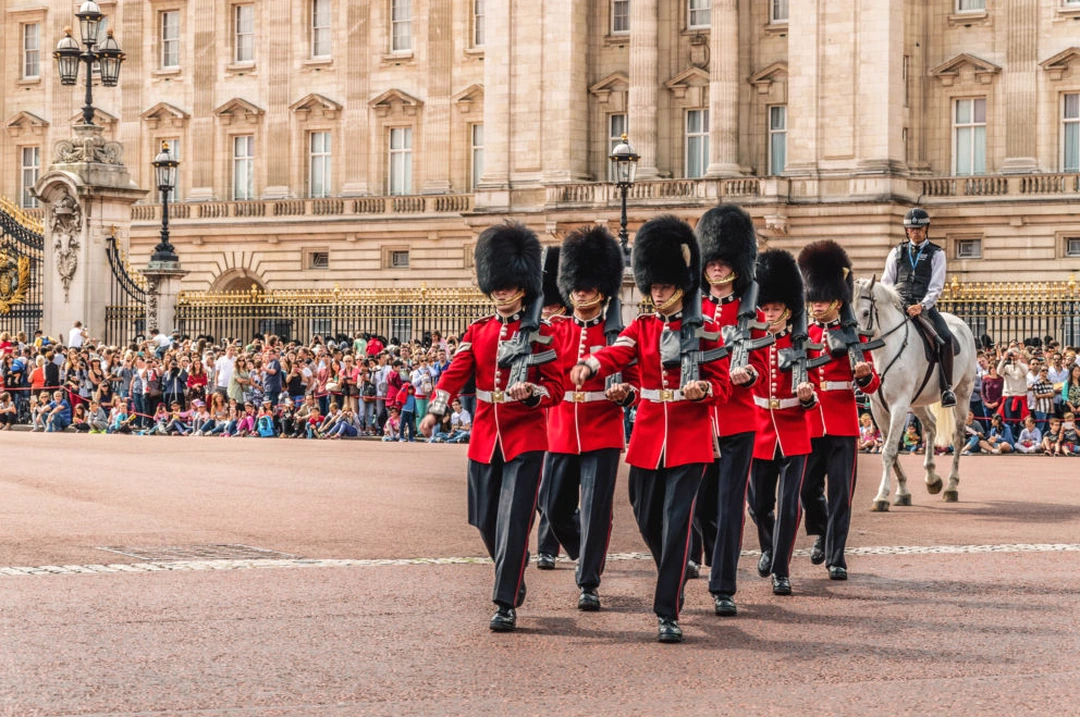
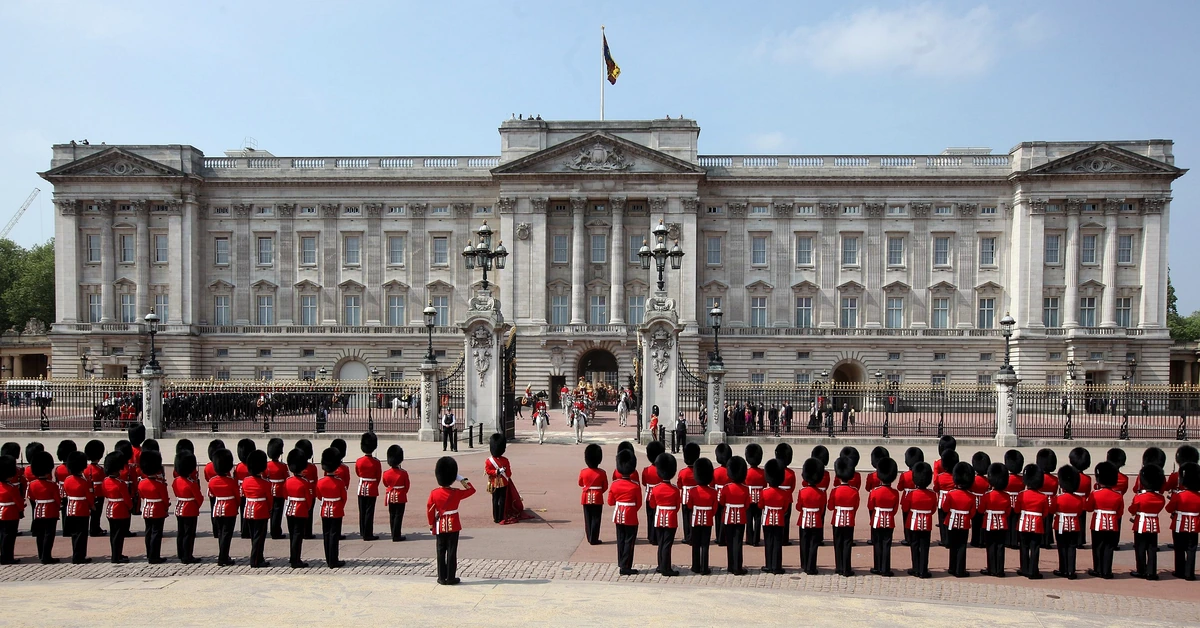
Alongside the majesty of its stone walls is the disciplined presence of the Royal Guard, also known as the King’s Guard. The Changing of the Guard is not merely a cultural performance for visitors, but a sacred symbol of loyalty and the responsibility to defend national sovereignty. Soldiers in vibrant red tunics and towering bearskin caps have become an unchanging image amid the flow of time. Every rhythmic step and every solemn movement in the Changing of the Guard reflects the steel-like discipline of the British military, while reminding the world of a monarchy that goes hand in hand with stability and order.
Looking back over more than three centuries, Buckingham Palace has witnessed countless ups and downs of history, from lavish Victorian balls to the grueling moments of the world wars. Every brick and every corridor corner holds stories of dynasties and of monarchs who helped shape modern Britain. Exploring the origins of the palace is an opportunity to admire distinctive architecture while connecting with the soul of a nation, where past and present blend to form a cultural heritage enduring alongside humanity.
Situated at the heart of the City of Westminster, Buckingham Palace is not only a symbol of the British monarchy’s power, but also a masterpiece of urban planning, where feng shui geography and infrastructure engineering harmonize subtly. Viewed from a historical-geographic perspective, the palace stands at the majestic terminus of the ceremonial route The Mall—a vital artery designed like a red ribbon leading from Trafalgar Square, creating a deliberately calculated sightline of visual impact and authority. This site originally lay along the basin of the River Tyburn, an ancient watercourse long culverted beneath the streets of London. That low-lying topography posed immense engineering challenges for royal architects over the centuries. To ensure stability for a monumental structure like Buckingham, drainage systems and foundations were treated with pioneering techniques of their era, turning a naturally damp area into a solid foundation for a national icon.
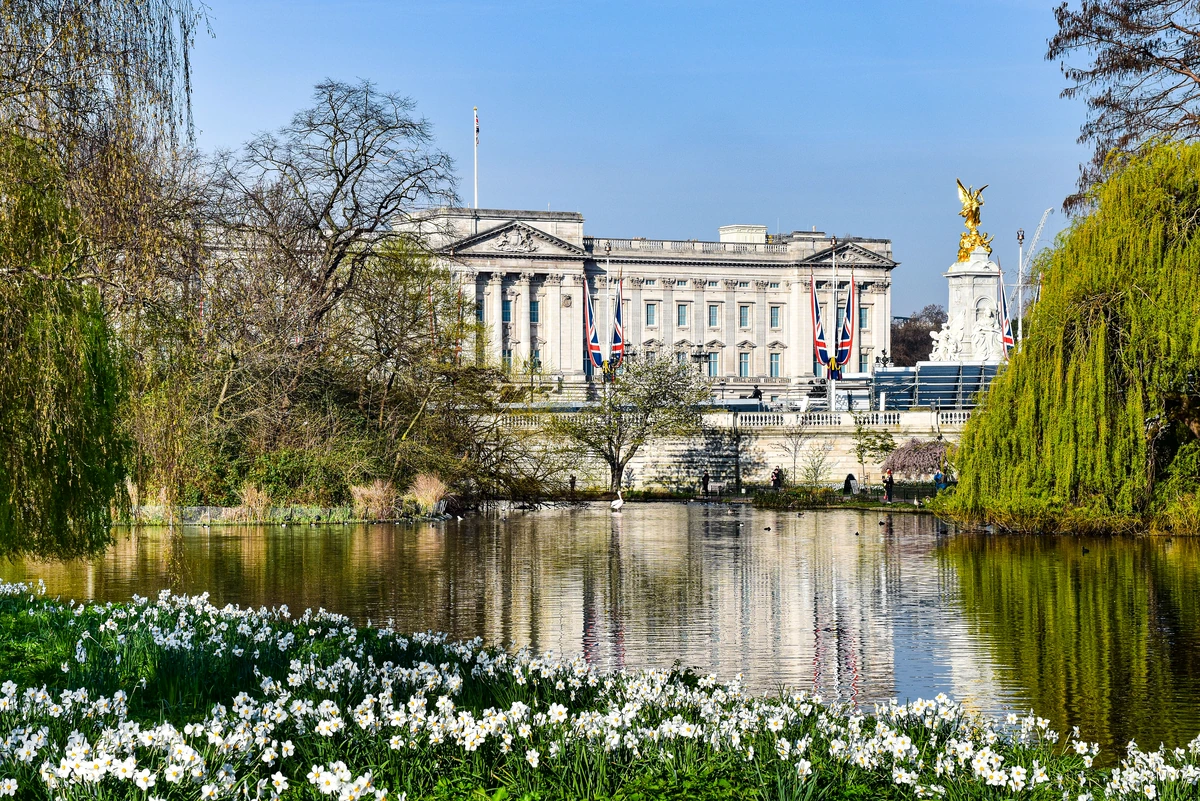
The refinement of Buckingham Palace’s planning also lies in how it is encircled by a lush green ecosystem, forming a giant “lung” in the middle of a bustling metropolis. To the east of the palace is St. James’s Park, the oldest royal park, where tranquil lakes reflect the silhouette of the palace, creating a “water-gathering” formation in Eastern feng shui that brings prosperity and longevity. To the north is Green Park, a sweeping open expanse, while to the west lies the palace’s private garden—an isolated oasis spanning up to 16 hectares, preserving rare tree species and hosting prestigious outdoor royal garden parties. The combination of these green spaces is not mere landscaping, but a planning strategy designed to create a buffer shielding against urban noise, keeping the royal precinct peaceful and dignified.
A signature highlight of the area’s landscape is the rows of ancient London Plane trees, living “witnesses” that have stood firm through the vicissitudes of London’s history. With broad canopies and remarkable adaptability to urban environments, they form lush leafy arches overhead along walkways, softening the solidity of limestone and fired brick. From the perspective of cultural researchers, arranging these trees serves not only aesthetic purposes, but is also an intentional layout to guide visitors’ sightlines, focusing attention on the central balcony—where members of the royal family appear on major occasions. The blend of the palace’s neoclassical architecture with the softness of surrounding nature creates a harmonious whole, where every angle exudes elegance and refinement while remaining carefully calculated technically.
The infrastructure system around the palace is also testament to meticulous spatial management. Maintaining The Mall’s roadway with specialized asphalt, alongside classic-style lighting, not only supports Changing of the Guard ceremonies but also ensures smooth operation for ceremonial processions. Every detail—from road camber for rainwater runoff to spacing between lampposts—is calculated so as not to affect the already complex geological structure of the Tyburn river basin. This seamless combination of modern construction engineering and respect for natural topography has enabled Buckingham Palace to stand strong as a cultural stronghold, where past and present coexist in an artistic and scientific planning space.
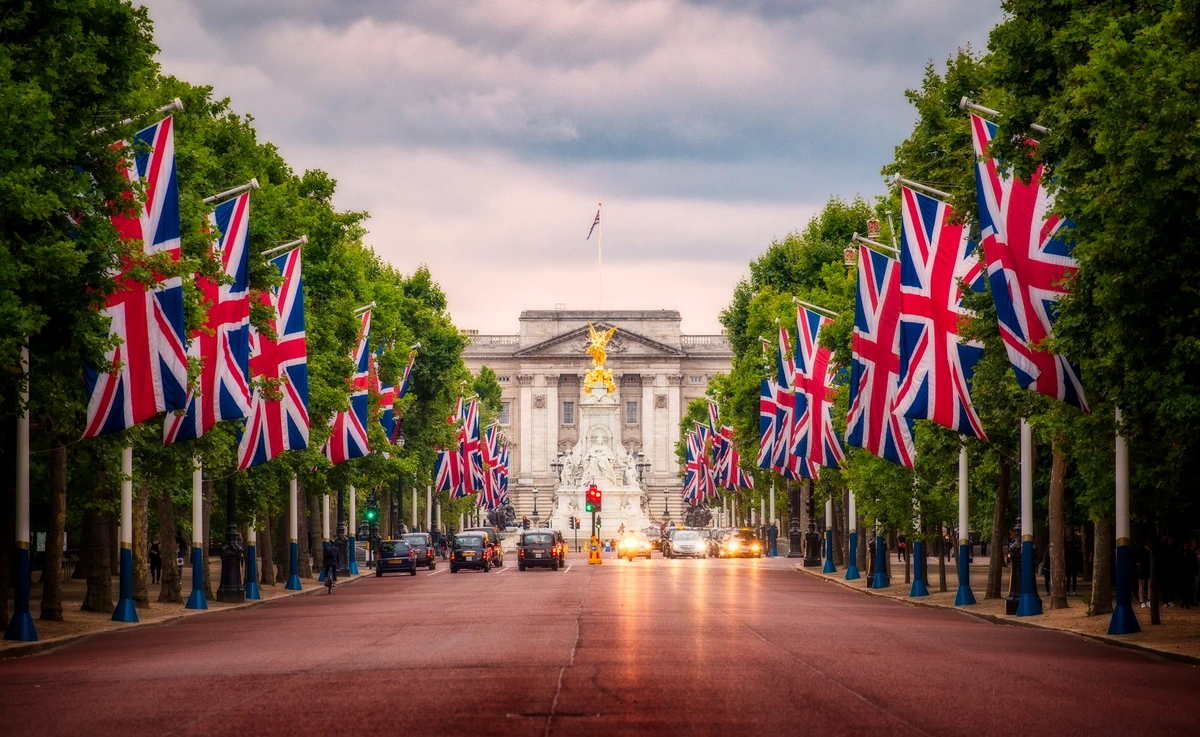
Upon setting foot in London, anyone is overwhelmed by the grandeur of Buckingham Palace, a symbol not only of British sovereignty but also a peak of Western architectural art. The building is a refined interplay between graceful Neoclassical style and powerful Edwardian Baroque lines. Seen from The Mall, the palace facade appears like a rampart of crisp white Portland limestone, enduring against time. This is the result of the 1913 major refacing during the reign of King George V, when gifted architect Aston Webb was entrusted with giving the palace a new, more luxurious and sturdy appearance suited to the standing of the British Empire at the time.
In terms of actual scale, the figure of 77,000 square meters of floor space is not just dry technical data, but proof of a “miniature city” right in the center of London. With a total of 775 rooms, the palace is divided into distinct functional zones, including 19 grand State Rooms, 52 royal and guest bedrooms, 188 staff bedrooms, 92 offices, and 78 bathrooms. Every room is a mini-museum housing priceless art collections, from oil paintings by Renaissance masters to handcrafted furniture from the Regency period. This spatial allocation serves not only daily living needs, but also hosts high-level diplomatic engagements, where decisions altering national destiny are often made in the quiet setting of red-velvet-draped meeting rooms.
An unmissable artistic highlight is the Aston Webb Screen, a masterpiece of wrought ironwork with intricate curves, gilded in pure gold on decorative details, creating a captivating contrast against the white tones of Portland stone. The load-bearing structure of the entire palace was an engineering feat of its time, combining dense masonry with reinforced steel framing to ensure resilience against weather and historical shifts. Yet Buckingham’s grandeur is not limited to what is visible above ground. Beneath the marble and polished timber floors lies an intricate subterranean network acting as the palace’s technical lifeline. This system not only supports logistics areas such as the Royal Mews—where magnificent royal carriages are kept—but also includes utility tunnels running in every direction, linking functional zones to ensure smooth operation of a vast royal machinery without disturbing the solemnity of the spaces above.
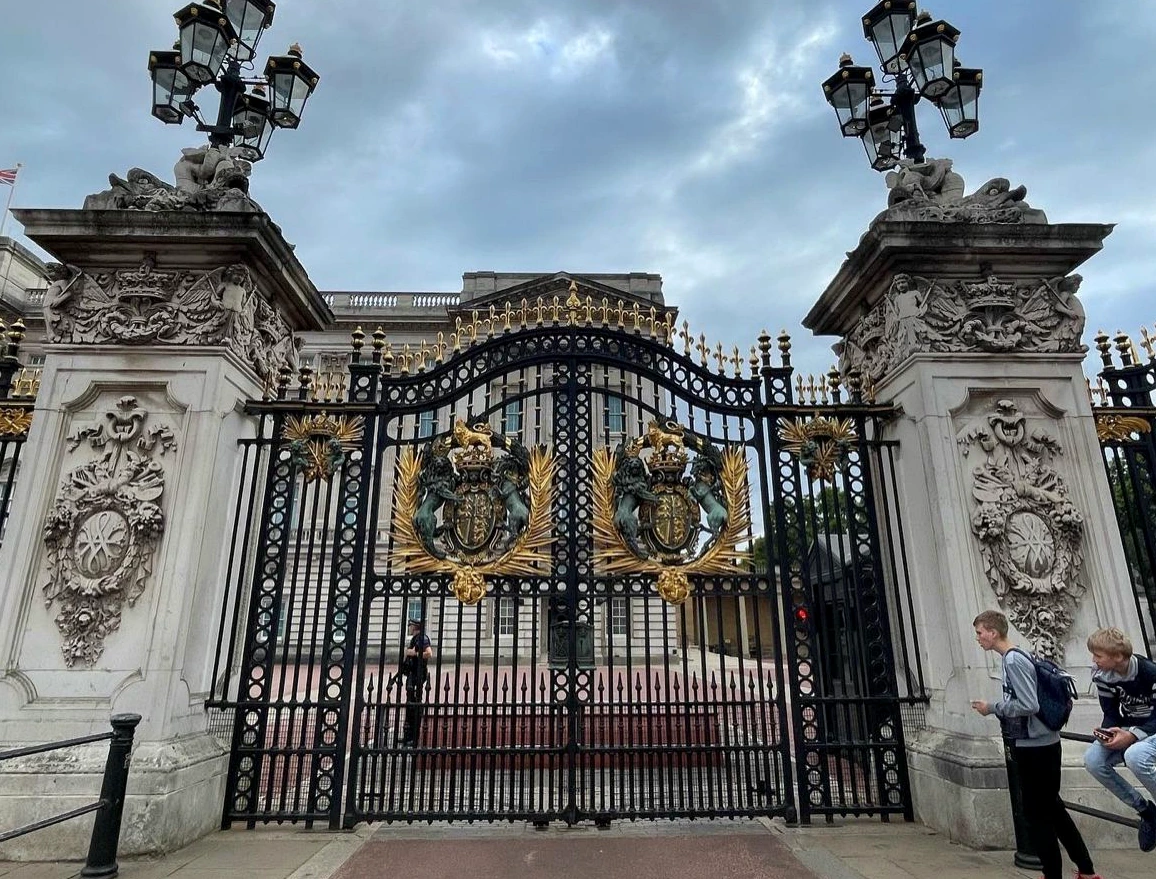
Craftsmanship within the palace is also clearly expressed through material selection. Portland stone, the renowned limestone from Dorset, was carefully chosen to withstand London’s harsh climate, keeping the palace exterior pristine white for over a century. Carvings on columns, reliefs inspired by Greek and Roman mythology, and soaring arched windows all create a harmonious architectural rhythm that is at once majestic and deeply symbolic. When late afternoon sunlight casts shadows across the stone walls, one truly feels the depth of Edwardian Baroque architectural art, where every angle and ornamental detail is calculated to honor the permanence of the crown. It is not simply a building, but a living entity where history, art, and engineering converge to form an irreplaceable cultural heritage of humanity.
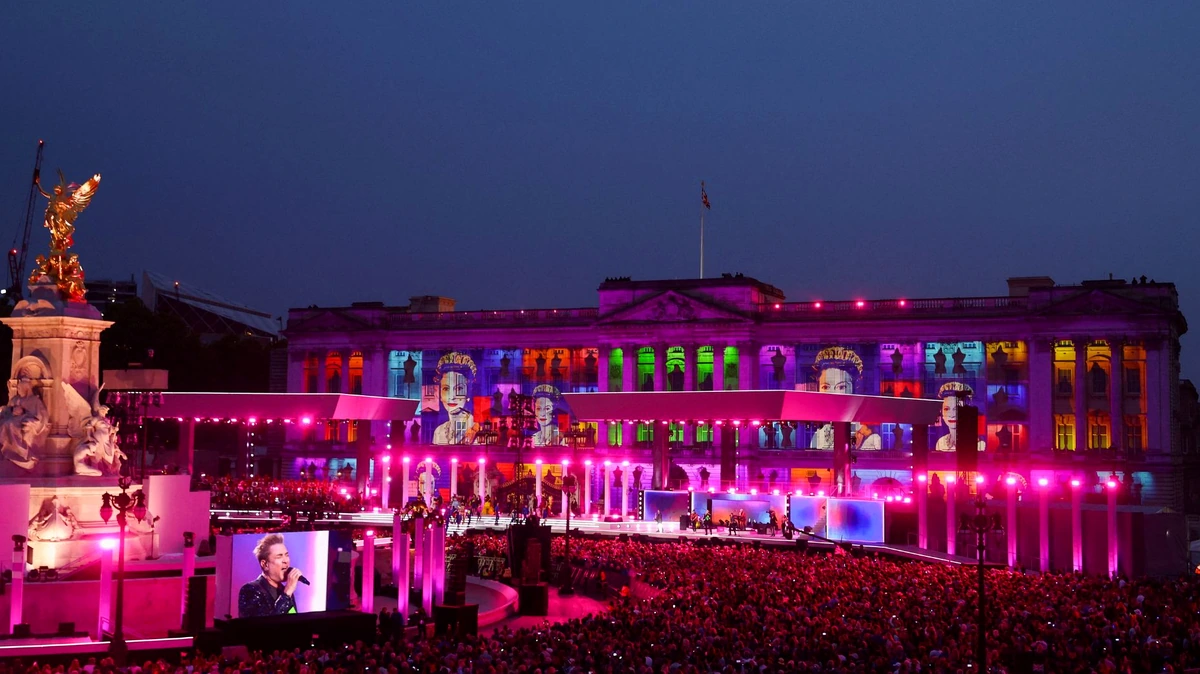
As dusk fades across London’s sky, giving way to a tranquil night settling over St. James’s Park, Buckingham Palace does not simply fall asleep. On the contrary, this is when the iconic landmark transforms, donning a completely different guise full of authority and mystery. High-intensity LED lighting systems, intricately designed, switch on and sweep brilliant golden beams across every fine carving on the Portland stone facade. Under that light, the statue of Queen Victoria on the monument before the palace seems to awaken, creating a grand tableau where history and modernity intersect in a captivating light-art display.
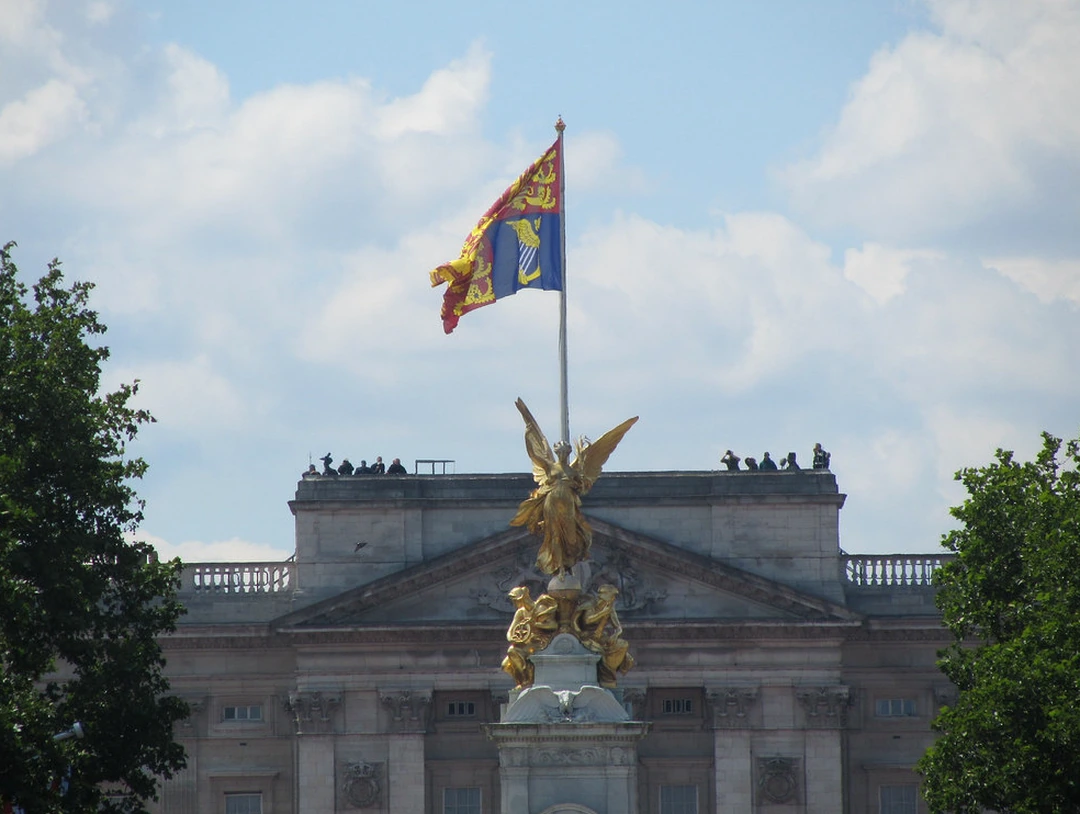
The most important visual focal point at night is the Royal Standard flying atop the central flagpole. If this flag remains illuminated, it is the clearest proof that the Sovereign is currently in residence inside the palace. The blend of artistic lighting and neoclassical architecture turns Buckingham into a massive “live show,” where every wall and window tells a story of the British monarchy’s endurance. Travelers strolling around The Mall at this hour sense the heartbeat of an empire, where authority resides not only in legal charters but also tangibly in the dignity of physical space.
While visitors usually focus only on daytime guard-changing ceremonies, the “Night Watch”—overnight sentry duty—offers a deeper, more contemplative experience. Sentries wearing signature bearskin caps, emblems of the Foot Guards regiments, continue their rhythmic, crisp strides across the stone courtyard. The sound of boot heels striking the pavement echoes through the quiet London night, creating a haunting resonance of dedication. This is not mere routine security duty, but a ritual affirming uninterrupted protection for the Sovereign. Under night lamps, tall, motionless guards like living statues become an inseparable part of British cultural heritage.
To savor this atmosphere fully, enthusiasts often seek out upscale bars and restaurants along Belgravia or St. James’s. There, while sipping a classic cocktail such as “The Queen’s Dubonnet”—a favorite drink of the late Queen Elizabeth II—guests can gaze toward the palace. The pairing of rich gin notes, the crisp sweetness of fortified wine, and the brightly lit palace creates a vibrant sensory experience. These venues often preserve precious collections of paintings and photographs across eras, from King George III’s reign to the present day, giving patrons a broad view of London’s transformation over centuries.
Lighting art at Buckingham goes beyond celebrating architecture; it is a language of communication between the Royal Family and the public. Whenever a major event takes place, lighting schemes are adjusted to symbolic hues, turning the palace into a giant live stage where history is written in light. For those who appreciate stillness, standing from afar watching the palace at night, listening to the guards’ footsteps, and feeling the breath of history is a privilege. It is a moment when time seems to pause, so one understands that no matter how the outside world turns, the rhythm at Buckingham upholds its solemnity, affirming its place as a cultural icon that never fades with time.
Buckingham Palace captivates not only through strict military ceremonies or magnificent neoclassical architecture, but also as a destination to experience the depth of British culinary culture, where every flavor carries the breath of royal heritage. Enjoying food in the neighborhoods around the palace is not simply satisfying the palate, but connecting with ancestral traditions nurtured over centuries, reflecting the farm-to-table philosophy that became a guiding principle in British aristocratic life.
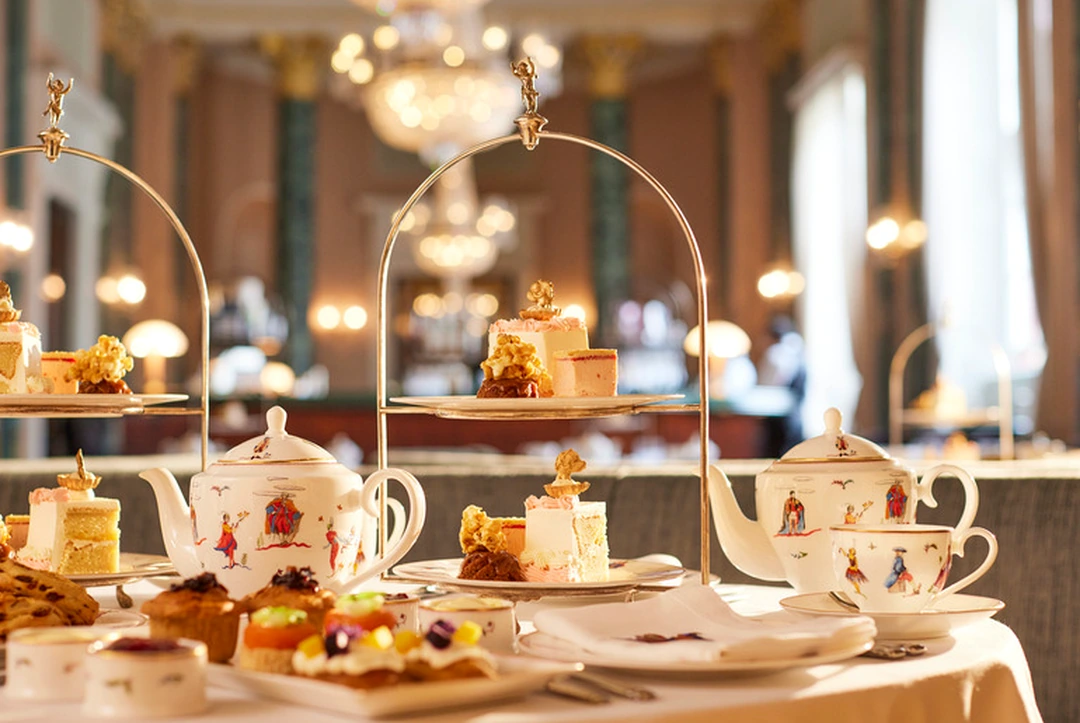
At the pinnacle of culinary culture here is the Royal Afternoon Tea ritual. It is not merely a light snack, but a cultural symbol shaped since Queen Victoria’s era. A quintessential afternoon tea set in refined venues around the palace always begins with paper-thin cucumber sandwiches and smoked salmon sandwiches with smooth cream cheese, awakening the palate with grace and delicacy. An essential highlight is warm scones, served with rich clotted cream from Cornwall and artisan strawberry jam, creating a fine balance between creamy richness and bright tartness. In particular, Victoria sponge cake—light sponge layers filled with whipped cream and fruit preserve—is the sweetest legacy, recalling Queen Victoria’s golden era when she made afternoon tea an indispensable ritual of high society.
The distinctiveness of royal cuisine also lies in ingredient provenance. Foods served at important occasions or high-end restaurants around the palace are often prioritized from the Duchy of Cornwall—the estate of the Prince of Wales—and the Sandringham estate. These are long-standing organic farming lands where vegetables, livestock, and agricultural produce are raised using traditional methods, ensuring peak freshness and purity. Sourcing ingredients from these estates not only guarantees quality, but is also how the British honor the bond between the monarchy and local agriculture.
If visitors want a dining setting steeped in history and aristocratic elegance, The Goring is an address not to be missed. Located just a few steps from Buckingham Palace, The Goring has long been a close companion of the British Royal Family, having hosted generations of monarchs and distinguished statesmen. Here, guests savor authentic British dishes, especially game meats prepared according to family recipes, retaining wild yet refined flavors. Artisan cheeses at The Goring also form a chapter of their own in the culinary handbook, featuring cheeses matured in traditional stone cellars with the deep, aromatic flavors of the English countryside.
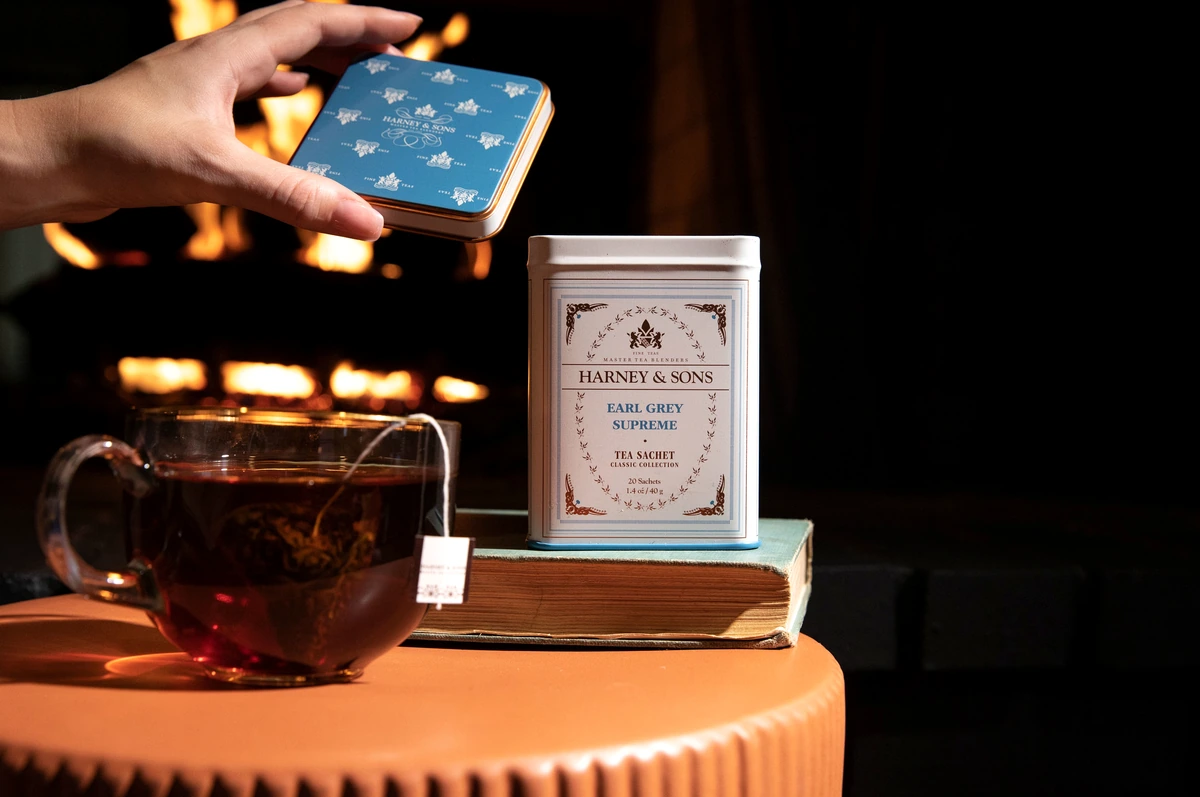
The dining experience around Buckingham Palace is a meeting point of past and present, where every dish tells a story of care, hospitality, and national pride. From enjoying a fragrant cup of Earl Grey tea in a quiet setting to lavish dinners crafted from prime ingredients, guests can feel attention to detail in every small element. That is hereditary culinary culture, an inseparable part of royal heritage, creating distinctive, lasting impressions for anyone setting foot in London.
To make your journey admiring the symbol of United Kingdom sovereignty at Buckingham Palace complete without missing historic moments, visitors need a well-structured transport and sightseeing plan. The Changing of the Guard—a living heritage of the British Army—usually begins at 11:00 AM. However, this schedule is not fixed year-round and depends on coordination by the Household Division. Therefore, checking the official army schedule online before your departure date is a prerequisite to avoid wasted trips. For those wishing to step inside the State Rooms, which house priceless royal art collections, keep in mind that these spaces open to the public only from July to September each year. Booking tickets in advance through the Royal Collection Trust is mandatory, as tickets sell out very early due to global demand.
Regarding transportation, London has one of the world’s most sophisticated and convenient public transit systems. To reach Buckingham Palace, travelers can take the London Underground and alight at Victoria, Green Park, or St. James’s Park stations. From those stations, just a short walk through leafy parks brings you within earshot of echoing brass music and synchronized footsteps of the guards. If you like getting the best vantage point, plan to arrive at the Victoria Memorial area at least 60 minutes before the ceremony begins. It is the prime spot to observe the full majesty of the guards in bright red coats and signature black bearskin caps, an iconic sight since Queen Victoria’s reign.
Buckingham Palace is not merely a tourist attraction, but also a workplace, an administrative hub, and a venue for major diplomatic events of the British Royal Family. For this reason, security here is always maintained at the highest level. Visitors must strictly obey security rules, never cross protective barriers, and take special care not to obstruct sentries’ paths while they are on duty. Respecting the working environment of royal family members is part of the etiquette every visitor should show when arriving here. In addition, pack clothing suited to London’s unpredictable weather and a pair of comfortable walking shoes, as moving between areas across the expansive palace grounds calls for flexibility.
Visiting costs depend on the ticket type you choose, from simply viewing the exterior architecture and guard-changing ceremony completely free of charge to buying tickets for the State Rooms, gardens, or special exhibitions. Budgeting carefully for these expenses will help you stay proactive during your trip. Alongside that, make the most of your time exploring nearby areas such as St. James’s Park, once a hunting ground of King Henry VIII, or strolling down tree-lined The Mall. To experience the full classic charm of London as well as the fabled lands of the north, you can explore an all-inclusive UK – Scotland tour itinerary, where every detail from transport and accommodation to standout sights is organized systematically, letting you enjoy the essence of the land of mist without worrying about complex logistics.