Before becoming the proud emblem piercing the skies of Taipei, the land where Taipei 101 stands underwent profound shifts in human geography over several centuries. Tracing back to the Qing dynasty and extending into the early years of the Japanese colonial era, what is now the Xinyi District was originally an untamed wetland plain known as Sanzhuangli Village. Back then, the landscape was blanketed by fertile paddy fields and low-lying marshes, nourished by alluvial silt and pure irrigation waters branching from the ancient Liugong Canal system—the agricultural lifeline that sustained the entire Taipei Basin from the mid-eighteenth century. Through the tides of history, peaceful farmland gradually gave way to fortified military compounds, most notably the 4th Maintenance Plant under the Combined Logistics Command alongside a closed network of arsenals, transforming the area into a quiet military zone for decades in the mid-twentieth century.
A historic turning point arrived in the late 1980s, when the Taipei City Government recognized the urgent need to redevelop its urban space to keep pace with the island’s miraculous economic growth. A strategic metropolitan master plan named the “Xinyi Sub-Center” was officially launched to free up the land occupied by former ordnance factories and transform the entire sub-district into a premier international financial and commercial hub. At that pivotal moment, renowned financier Jeffrey Koo Sr. rallied the strength of fourteen leading Taiwanese conglomerates to establish the Taipei Financial Center Corporation. This alliance pioneered the first Build–Operate–Transfer (BOT) model in the history of private infrastructure development here, laying a solid foundation for constructing an architectural marvel of the century worthy of representing the territory’s economic might and self-reliant spirit.
A project of global stature demanded a seamless fusion of Eastern philosophical aesthetics and the pinnacle of Western structural engineering. The design responsibility was entrusted to master architect C.Y. Lee, who drew inspiration from the image of green bamboo stalks rising segment upon segment—a symbol of endless upward growth and steadfast integrity in local culture. To solve the daunting engineering challenges posed by typhoons and seismic activity along the Pacific Ring of Fire, the world-leading structural engineering consultancy Arup was brought on board. In July 1997, a solemn groundbreaking ceremony officially launched the journey to construct a supertall skyscraper that would push every boundary of contemporary architectural engineering.
The tower’s path to completion was far from smooth, forged instead through nature’s fiercest trials. On March 31, 2002, while the structure was rising into the clouds, a massive 6.8-magnitude earthquake dubbed the “331 Earthquake” shook all of Taipei, causing a tower crane perched atop the construction site to collapse. Rather than deterring the builders, this historic event spurred the entire engineering team to conduct a comprehensive review and upgrade of seismic safety standards, perfecting the world’s most advanced mass-damping mechanism. Overcoming every grueling test, the tower officially held its ribbon-cutting ceremony on December 31, 2004, illuminating the night sky with its first spectacular countdown fireworks display and etching its name onto the map of humanity’s greatest structures. Building upon that legacy, the tower was awarded LEED Platinum green building certification in 2010, completing its epic transformation from the old Sanzhuangli rice paddies into a sustainable beacon of a new era.
Viewed from an aerial geomorphological perspective, the Taipei Basin opens up like a colossal natural “treasure bowl” ringed by layers of rolling hills and mountains. To the east rises Shitoushan (Lion Head Mountain), to the south lie the rugged contours of Xiangshan (Elephant Mountain) and Hushan (Tiger Mountain), the western flank is supported by the gentle Linkou Plateau, while the northern border is majestically shielded by the Qixingshan (Seven Star Mountain) and Datunshan ranges. Across this fertile basin floor, three vital waterways—the Tamsui River, the Keelung River, and Xindian Creek—meander and converge, carrying abundant vitality to enrich the alluvial plain. Situated in the bustling Xinyi planning district, Taipei 101 occupies the exact southeastern “Xun” position of the entire basin. In Eastern Five Elements philosophy, the Xun direction belongs to Wood, governing the Wenchang (literary/intellectual) and Caibai (wealth) sectors, symbolizing supreme achievement in wisdom, prestige, and financial prosperity. The structure establishes a commanding presence oriented north-to-south with a slight eastward tilt, nestled against the Four Beasts Mountains with neighboring Elephant Mountain standing guard like a sturdy throne—creating the classic feng shui configuration of “backed by mountains, facing water, sheltering wind, and gathering qi” to capture the enduring energy of Taiwan.
Yet the most awe-inspiring touch of Taipei 101 lies in its harmonious blend of ancient I Ching principles and contemporary architectural language. Unlike monotonous Western concrete-and-steel boxes, the tower’s silhouette vividly recreates a towering bamboo stalk reaching into the blue sky. The entire main shaft above the podium is distinctly divided into eight stepped modules, each comprising exactly eight stories stacked in rhythmic succession. In local culture, the number eight is a homophone for “prosperity,” signifying continuous growth, while also embodying the concept of “rising segment by segment”—ascending step by step through storms toward the boundless cosmos. This tiered bamboo structure cleverly breaks up the building’s massive volume, softening the inherent heaviness of modern curtain walls and neutralizing sharp visual “sha qi” according to feng shui principles. Every corner of the tower’s massing is further adorned with the graceful curves of auspicious Ruyi scepter motifs and ancient coin emblems featuring a “round exterior and square interior”—reflecting a philosophy of outward tolerance paired with inner resolve, while serving as a benevolent spiritual anchor safeguarding thriving commercial fortune.
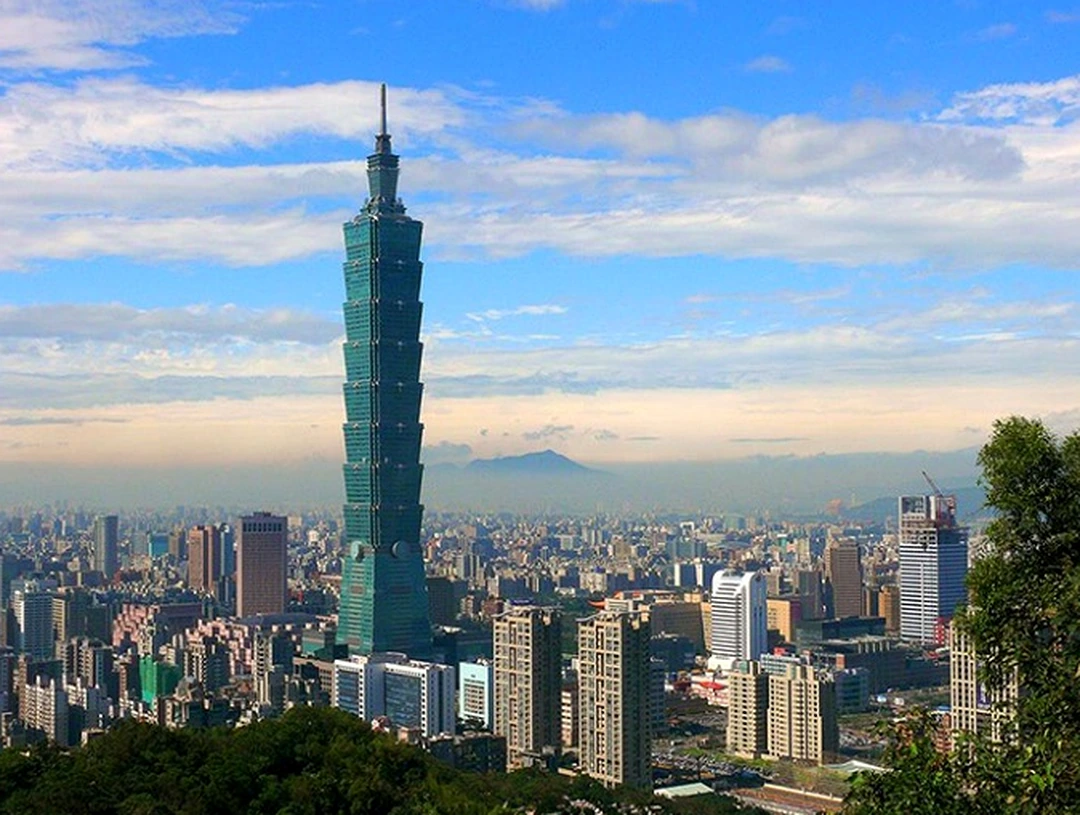
Behind an exterior steeped in Eastern spiritual aesthetics lies a marvel of precision mechanics calibrated through thousands of hours of testing in specialized aerodynamic wind tunnels. To counter severe urban canyon effects and the fierce annual tropical typhoons sweeping across the strait, the beveled, stepped-back design of the shaft’s eight modules acts like invisible air deflectors. Instead of taking the full brunt of crosswinds like an ordinary flat vertical wall, the recessed ledges and notched corners at each bamboo joint peel away high-altitude air currents, guiding wind masses smoothly along the glass facade without abrupt resistance. This aerodynamic process dramatically reduces wind drag on the core structural frame while effectively suppressing vortex shedding—the alternating low-pressure eddies that are the primary cause of dangerous resonant swaying in supertall skyscrapers. Thus, its slender bamboo-like grace is not merely a statement of local culture, but an optimal engineering solution enabling this sky-piercing masterpiece to stand unyielding against nature’s fury.
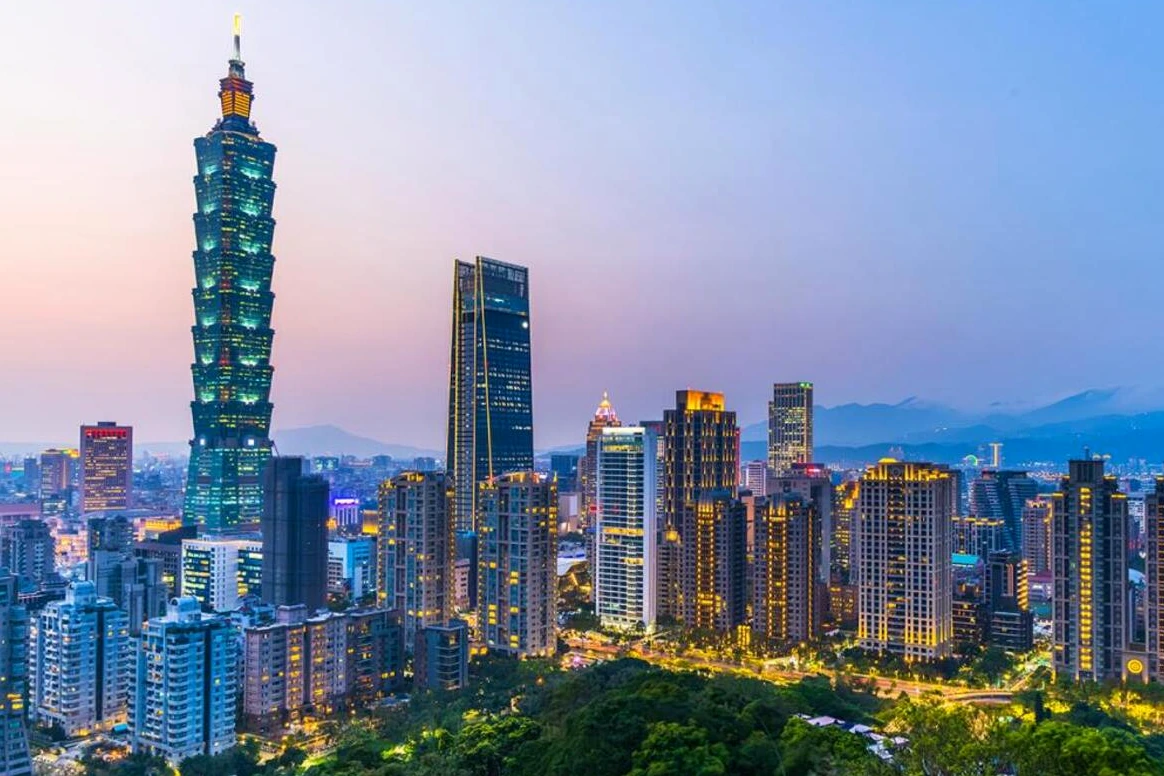
Rising proudly from the heart of the Taipei valley to a pinnacle height of 508 meters, the tower stands like a gigantic jade bamboo stalk linking earth and sky. Behind its slender form—evoking bamboo joints climbing upward to brave wind and rain—lies one of the largest construction scales in the contemporary world, spanning a footprint of approximately 30,277 square meters (equivalent to around 9,159 ping in Taiwan’s traditional real estate measurement) and boasting a colossal gross floor area of 374,175 square meters. Far more than a mere race for height using lifeless metal blocks, the building is a sublime synthesis of multi-tiered East Asian pagoda resonance and the strictest mechanical engineering standards on the planet.
To stand rock-solid right along the volatile edge of the Pacific Ring of Fire—a region regularly battered by violent earthquakes and ferocious tropical typhoons every storm season—the structure possesses an unprecedented composite structural system. The tower’s core is firmly anchored by eight mega-columns, working in concert with sixteen perimeter steel columns to form an unshakeable skeletal frame. The secret behind this extraordinary load-bearing capacity lies inside the hollow mega-columns, which are pumped full of self-consolidating concrete boasting an exceptional compressive strength of 10,000 psi, delivering unmatched resistance to bending and shear forces. At every eight-story interval—a number symbolizing prosperity and eternal cycles in Eastern cosmology—engineers installed ultra-rigid outrigger trusses linking the central core tightly to the perimeter columns, locking the entire mass into a resilient, unified whole.
Tucked inside the dramatic atrium spanning from the 87th to the 92nd floor is the tower’s legendary stabilizing treasure: a massive tuned mass damper (TMD) sphere regarded as the mechanical heart maintaining equilibrium throughout the entire structure. This gleaming golden metallic sphere measures 5.5 meters in diameter and weighs an astonishing 660 metric tons, meticulously assembled from 41 solid high-strength steel plates stacked in layers with absolute mechanical precision. Suspended by eight high-tensile braided steel cables anchored to the upper roof truss system and paired with hydraulic viscous dampers beneath its base, this monumental orb operates as a counter-balancing pendulum. When typhoon gusts or seismic tremors cause the tower to sway, the sphere swings in the opposite direction, absorbing and dissipating up to 40% of the structure’s total kinetic vibrational energy to preserve remarkable stillness inside.
Encasing this engineering wonder is an armor of double-glazed, ultra-clear Low-E (low-emissivity) curtain wall glass capable of reflecting and blocking intense solar heat radiation and harsh ultraviolet rays while withstanding wind pressures equivalent to the most destructive super typhoons. To whisk travelers to the ideal viewing space hundreds of meters above ground, Hitachi’s ultra-high-speed elevator system operates like a time-defying capsule. Traveling at an astonishing speed of 1,010 meters per minute—over 60 km/h—the smoothly pressurized cabin takes a mere 37 seconds to rocket from the 5th-floor reception lobby straight to the 89th-floor indoor observatory, unveiling a magnificent panorama capturing Taiwan’s mountains, waterways, and vibrant urban pulse.
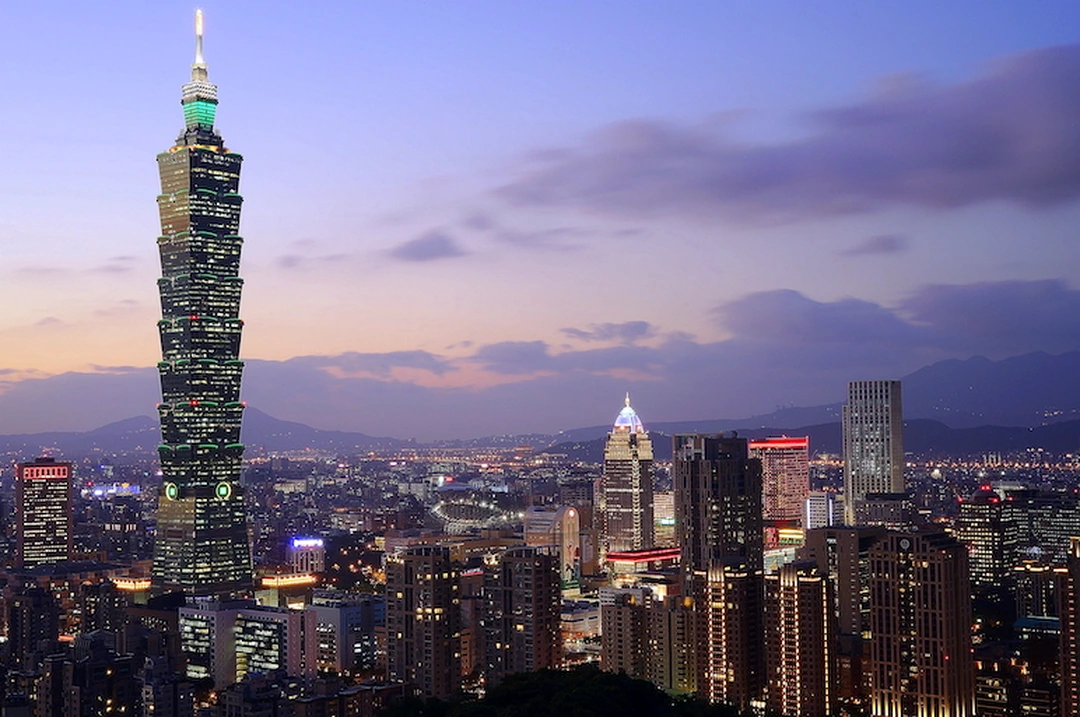
As twilight settles over the Taipei Basin and gives way to the quiet of night, Taipei 101 sheds the stillness of its solid steel frame to transform into a dazzling spectacle of light suspended in midair. The tower’s exterior architectural lighting was masterfully conceived by internationally acclaimed lighting designer Chou Lien, who shattered the stereotype of cold, monochromatic skyscrapers with a signature philosophy based on the seven-color rainbow cycle of the week. This optical system shifts hues rhythmically to match each of the seven days: kicking off the week with passionate Red on Monday, followed by warm Orange on Tuesday, prosperous golden Yellow on Wednesday, serene Green on Thursday, expansive Blue to welcome the weekend on Friday, deep Indigo on Saturday, and closing the cycle with regal Violet on Sunday. This daily chromatic rotation not only breathes vibrant life into the colossal steel-and-glass frame, but also harmonizes with the daily consciousness of city residents, turning the skyscraper into a giant optical clock marking the rhythm of urban life.
Alongside this cyclical color spectrum, a large-scale LED light matrix integrated into the tower’s uppermost tiers acts as a monumental skyward message board. During historic anniversaries, traditional East Asian festivals, or international public-awareness campaigns, the tower’s glass facade lights up in unison with distinctive decorative motifs, humanitarian symbols, or towering Chinese characters conveying auspicious wishes. From every bustling avenue of the Xinyi District to the gentle slopes of Elephant Mountain across the valley, locals and travelers alike can gaze up to read this luminous visual language, experiencing the seamless interplay between cutting-edge visual technology and deep-rooted cultural spirit.
The pinnacle of nightlife and visual spectacle at Taipei 101 culminates in its New Year’s Eve fireworks extravaganza—an iconic global event broadcast live since the close of 2004 by major international networks such as CNN and BBC to hundreds of millions of viewers worldwide. Unlike conventional ground-launched displays, the pyrotechnics here are mounted directly onto the eight upward-reaching bamboo segments of the tower itself. As the final countdown chimes ring out, tens of thousands of fireworks erupt simultaneously from the stepped ledges, spiraling upward around the shaft before cascading down like shimmering waterfalls of light that envelop the majestic octagonal structure.
This live skyward show has continually evolved into a multi-sensory symphony blending high-altitude pyrotechnics with 360-degree laser mapping projections and richly orchestrated symphonic music. Taipei’s night sky comes alive in a mesmerizing choreography of sound, optics, and kinetic motion. Notably, in commitment to ecological preservation and urban sustainability, all pyrotechnics used in modern shows are low-smoke formulations engineered to drastically minimize soot residue and noise pollution. Along the breezy boulevards at the tower’s base, amidst the cheers of crowds gathered from around the globe, Taipei 101 proves itself not merely an architectural engineering triumph, but one of Asia’s most dazzling open-air contemporary performance stages.
Tucked beneath the towering shadow of this skyward monument, the B1 basement level of the Taipei 101 Mall opens into a sumptuous culinary universe where the boundary between haute master craftsmanship and humble street-food soul dissolves entirely. Far more than a simple dining court for travelers, this gastronomic concourse serves as a living museum of taste, encapsulating the migration, adaptation, and elevation of Chinese culinary heritage alongside the distinct terroir of Taiwan. Here, every open kitchen becomes a stage for intangible cultural heritage, where glowing flames and the nimble hands of master artisans continually recreate culinary secrets refined across generations.
Commanding the proud centerpiece of this space is the global flagship restaurant of the world-renowned Din Tai Fung, the institution that elevated traditional Jiangnan xiaolongbao (soup dumplings) to the pinnacle of international culinary art. The essence of this kitchen’s reputation is distilled into a strict benchmark known as the “Golden 18 Folds”—eighteen uniform pleats crowning each dumpling like a closing lotus blossom. Beneath the bright lights of the glass-walled show kitchen, artisans weigh every component down to the milligram: each hand-rolled dough wrapper must weigh an exact 5 grams with edges as delicate as a cicada’s wing, filled with precisely 16 grams of meat to form an unvarying 21-gram parcel before entering the bamboo steamer. The filling harmoniously marries freshly ground pork—still retaining its natural warmth—with richly simmered, gelatinized old-hen aspic in a closely guarded golden ratio. Steamed over intense heat for exactly three minutes, the chicken aspic melts completely, mingling with savory pork juices to create a piping-hot, clean yet velvety broth poised to burst across the palate the moment diners pierce the gossamer skin.
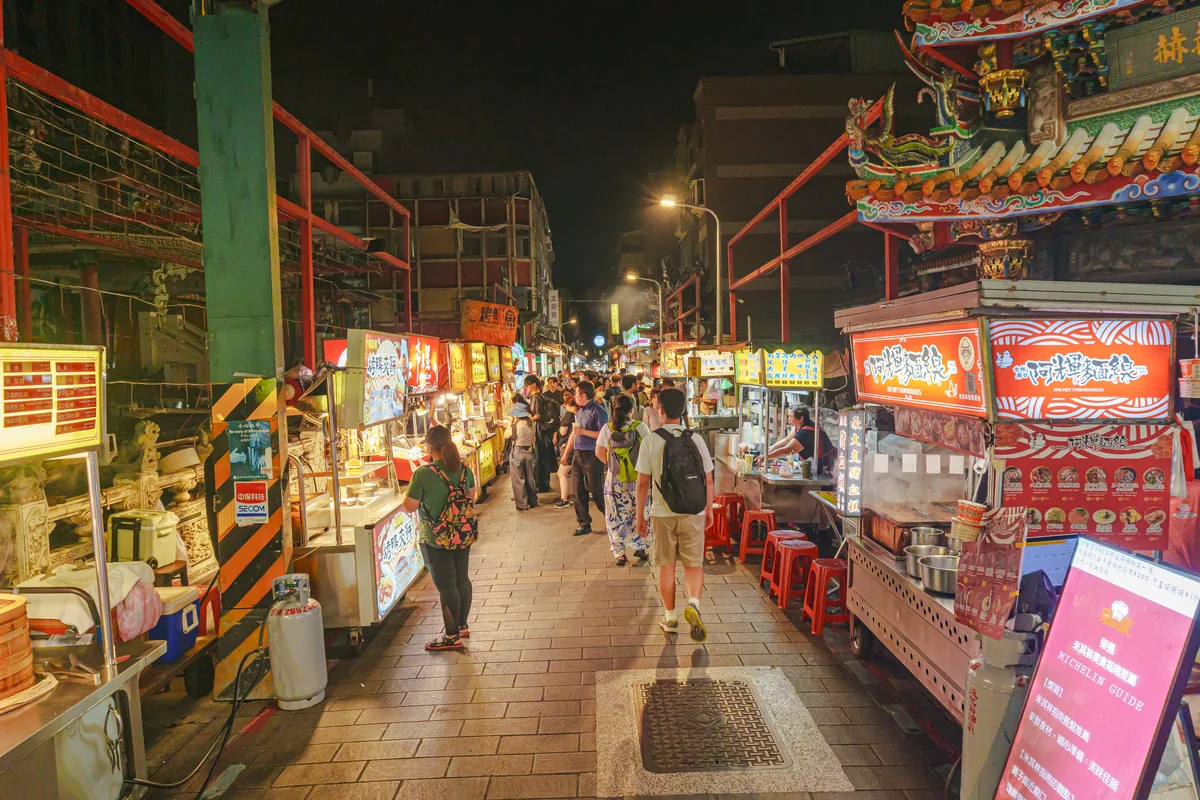
After taking in the full splendor of sunset from the tower’s 89th-floor observatory, the ideal next stop on your Taipei evening itinerary is experiencing the street-food paradise of the famous Shilin Night Market.
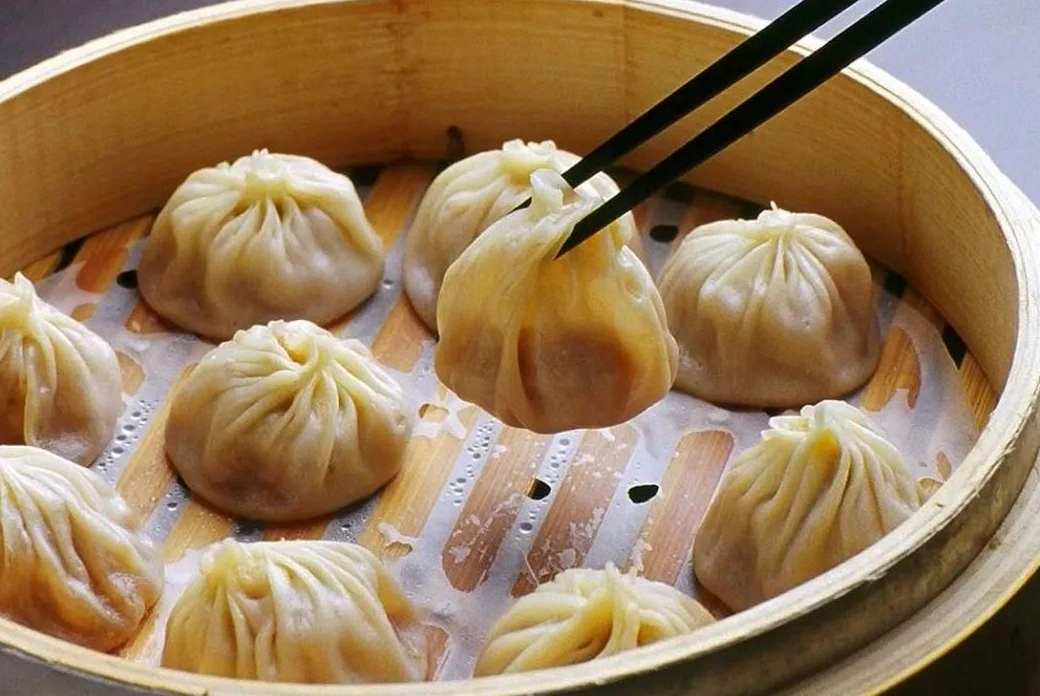
Stepping away from the steaming bamboo baskets of Din Tai Fung, the B1 food hall leads diners on a flavorful expedition through nostalgic Taiwanese comfort classics, elevated to uncompromising standards of hygiene and culinary finesse. Bowls of iconic Taiwanese beef noodle soup waft aromas of black cardamom, cassia bark, and star anise layered over a spicy broth simmered with beef bones for dozens of hours, studded with melt-in-the-mouth beef shank marbled with translucent tendon. Nearby lingers the vintage aroma of Tainan Danzai noodles—a 19th-century peddler’s dish featuring springy yellow noodles bathed in a delicate shrimp broth, topped with glossy braised minced pork sauce and a bright red boiled fresh shrimp. Beloved alleyway staples such as crispy oyster omelets paired with crown daisy greens in sweet-savory sauce, or gua bao—steamed lotus-leaf buns stuffed with braised pork belly, pickled mustard greens, and fragrant roasted peanut powder—are all presented with the polish and poise of heritage masterpieces.
The tasting journey at the foot of Taipei 101 lingers in the refined sweetness of icons deeply rooted in local cultural identity. Cups of bubble milk tea brewed from premium high-mountain Oolong leaves harvested from the mist-shrouded slopes of Alishan, paired with chewy tapioca pearls slow-cooked in cane sugar, elevate a beloved street refreshment into an artisanal delight. Alongside it sits the elegant local delicacy known as pineapple cake, whose crumbly, melt-in-your-mouth buttery crust encases tangy, fibrous pineapple jam—carrying timeless feng shui wishes of prosperity and good fortune. Together, they compose a complete symphony of flavors, proving that Taipei 101 endures not only as a monumental architectural landmark, but also in the hearts of visitors through the cultural depth preserved in every heirloom recipe.
Familiarizing yourself with operating hours and practical visiting details is essential for enjoying a seamless, unhurried visit to this sky-piercing marvel in central Taipei. The Taipei 101 Observatory typically welcomes guests daily from 10:00 AM to 9:00 PM, with last admission at 8:15 PM to ensure ample time to explore every observation level. The most coveted window for taking in panoramic views across the Taipei Basin is the golden hour—roughly one hour prior to sunset—when radiant amber sunlight bathes the surrounding mountain ridges before streets and avenues ignite into a glittering urban nocturne. During peak travel seasons or public holidays, opting for an Express Pass is an ideal way to bypass queues at security checkpoints and elevator lobbies.
Taipei’s public transit network offers effortless access to this celebrated skyscraper. The most convenient route is via the Taipei Metro Tamsui–Xinyi Line (Red Line) to Taipei 101/World Trade Center Station (台北101/世貿站). From Exit 4 of the underground station, a modern covered walkway leads directly into the B1 basement level of the luxury shopping mall beneath the tower. From there, multilingual signage guides visitors up to the main Observatory reception lobby on the 5th floor. Beyond ticketing and boarding control for the high-speed elevators, this floor houses interactive multimedia exhibitions vividly chronicling the urban planning history of the Xinyi District, the building’s feng shui philosophy, and its sustainable structural engineering.
The standard visitor circuit inside the tower follows a thoughtfully curated, emotionally resonant flow. After a breathtaking 37-second ascent inside a sealed, pressure-controlled elevator cabin, guests step out onto the 89th-floor indoor observatory at an elevation of 382 meters. Here, floor-to-ceiling tempered glass windows frame uninterrupted 360-degree vistas encompassing historic landmarks such as Elephant Mountain (Xiangshan), the winding Keelung River, and the Sun Yat-sen Memorial Hall. After taking in the skyline, visitors descend an interior staircase to the 88th floor to stand face-to-face with the tower’s steel “heart”—the gleaming 660-ton golden Tuned Mass Damper (TMD), showcasing the pinnacle of earthquake- and typhoon-resistant mechanics. Weather and upper-altitude wind conditions permitting, a special excursion up to the 101st-floor outdoor rooftop deck can also be unlocked, bringing travelers to the edge of the clouds at 449.2 meters above the city.
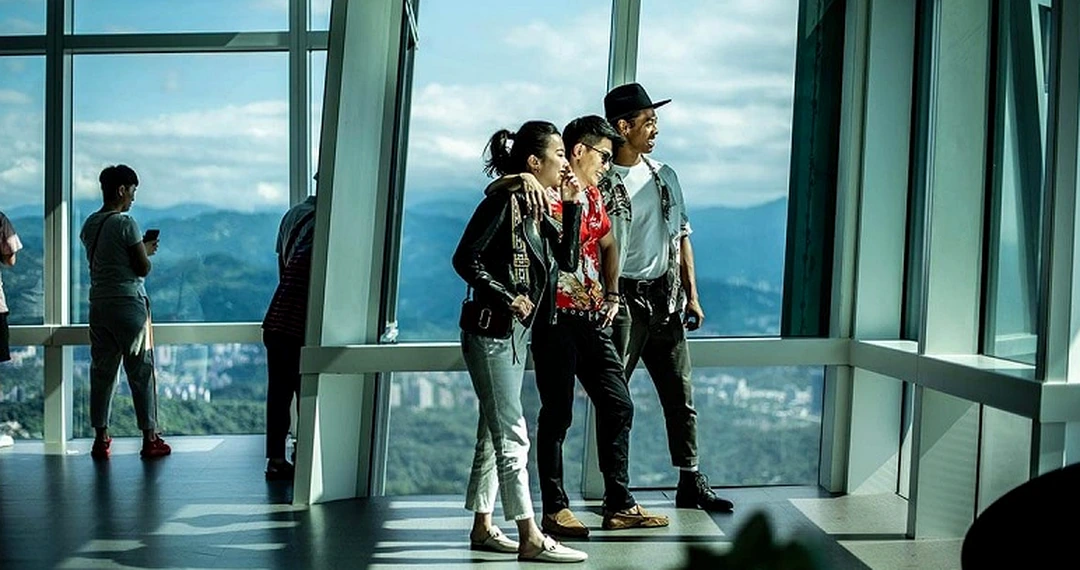
Experiencing heights hundreds of meters above street level calls for thoughtful preparation in comfort and attire. Due to shifts in altitude and atmospheric pressure, the outdoor observation deck regularly encounters brisk swirling winds and noticeably cooler temperatures than at ground level, so packing a lightweight windbreaker and sunglasses ensures maximum comfort. If you plan to indulge in fine dining at the acclaimed restaurants tucked serenely between the 85th and 86th floors, adhering to a smart-casual dress code—avoiding athletic wear or flip-flops—is required to match the refined ambiance. To weave a visit to this architectural wonder into a broader exploration of Taiwan’s rich culture, history, and cuisine, exploring all-inclusive Taiwan tour packages will make your journey seamless, convenient, and filled with unforgettable memories.