Tucked away within the tranquil folds of northeastern Taiwan’s mountain ranges, where the headwaters of the Keelung River wind through layered shale valleys, the history of Pingxi and its ancient heart, Shifen, began with the arduous pioneering efforts of Han Chinese settlers. During the golden age of the Qing Dynasty, under the Qianlong Emperor in the mid-eighteenth century, this land was still an untamed wilderness known by archaic names such as Pingxizi or Shidi. At that time, only ten courageous migrant households from Fujian crossed the sea, swearing a collective oath to clear the dense forests and overgrown brush to build homesteads, kilns, and camphor refineries. Because the local custom of that era divided property and pioneering labor into ten equal shares, the modest settlement of these ten original clans became known as Shifenliao (“Ten-Portion Huts”). The name Shifen originated from this egalitarian symbiosis and resilient spirit, enduring across centuries to become a symbol of completeness and abundance amidst rugged mountain terrain.
Entering the Japanese colonial era, the political landscape and living environment of the region underwent pivotal historical transformations. In the ninth year of the Taisho era, 1920, the colonial administration enacted sweeping administrative reforms, formally abolishing old village units to establish Pingxi Village under Wenshan District, Taihoku Prefecture. Weathering the upheavals of World War II and the transfer of power after 1945, the area was reorganized into Pingxi Township under Taipei County before officially being upgraded to Pingxi District of New Taipei City in late 2010. Yet the historical profile of Shifen and Pingxi only truly awakened from its deep mountain isolation when the precious geological resources beneath the earth were unlocked by the wave of modern industrialization.
At the core of this dramatic transformation was the rise of the coal mining industry and the far-reaching influence of the Yan family of Keelung—one of the most illustrious industrial clans in Taiwan’s modern history. Through the commercial empire Taiyang Mining Co., Ltd., founded by Yan Yun-nian, the conglomerate poured its full strength into expanding large-scale mine shafts to penetrate the Shidi geological formation. This mineral seam held vast reserves of smokeless anthracite coal boasting the highest purity and calorific value in all of Taiwan at the time. Tens of thousands of miners flocked here from across the island, tunneling deep into the heart of Mount Shidi and the Shifen basin, transforming a desolate agricultural valley into a bustling energy powerhouse, generating immense wealth, and shaping the hillside mining-town rhythm of life.
To solve the logistical challenge of transporting millions of tons of coal from the rugged valleys to the port of Keelung, in the tenth year of the Taisho era (1921), Taiyang Mining invested immense private capital to survey, cut through mountains, build bridges, and lay the first sleepers of a dedicated railway named the Shifenliao Line. Recognizing the vital strategic importance of this transport artery to the colonial economy, by the fourth year of the Showa era (1929), the Governor-General of Taiwan purchased the entire private railway from the Yan family, reinforced the track gauge, and officially designated it the Pingxi Line. The chugging whistles of steam locomotives traversing sheer gorges alongside the Keelung River put a complete end to the isolation of the mining hamlets, ushering Shifen into a dazzling golden era.
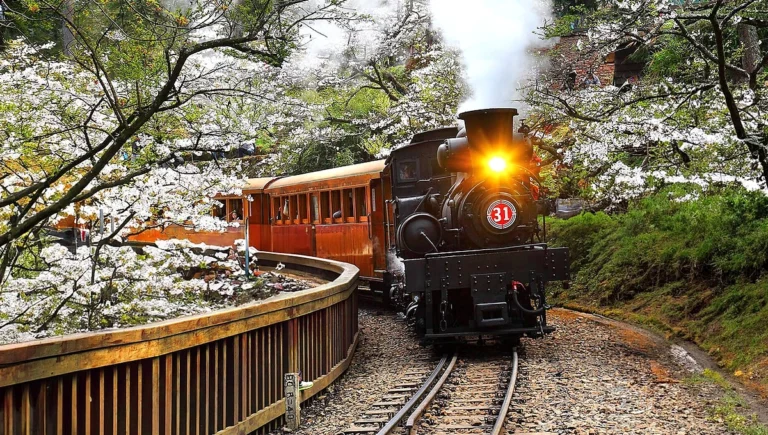
The cycle of rise and decline spares no land when natural resources gradually deplete over time. By the final decades of the twentieth century, the coal mines of the Shidi formation closed one after another due to rising extraction costs and the emergence of new imported energy sources, pushing settlements along the railway to the brink of decline and abandonment. Facing the threat of complete dismantling, in 1992, the Pingxi Line experienced a miraculous rebirth when cultural administrators and transport authorities repurposed it into Taiwan’s very first tourist branch railway. Today, the weathered steel tracks curving inches from the eaves of Shifen Old Street no longer groan under the weight of black coal; instead, they serve as a living stage carrying nostalgic memories, preserving a century of historical essence, and opening a corridor for wish-bearing sky lanterns to soar into the mountain heavens.
From the perspective of geomorphology and natural feng shui, the entire core of Shifen sits at a complex tectonic junction between the Xindian and Shidi geological formations, where the continental crust endured violent tectonic compression over tens of thousands of years of mountain-building. The Keelung River, surging from its headwaters in the Pinglin range, has relentlessly carved through alternating layers of sandstone and shale, sculpting a deeply incised river valley with dramatic erosional and meandering landforms. It is precisely this heterogeneous interplay in density and hardness among coal-rich rock strata that laid the foundation for a hydrological landscape both majestic and rugged, framing a secluded natural backdrop that completely envelops the lives of the mountain residents.
The quintessential hydrological marvel bearing witness to this tectonic faulting process is Shifen Waterfall, widely celebrated as Taiwan’s miniature counterpart to Niagara Falls. The cataract plunges vertically over a magnificent reverse-fault cliff spanning forty meters in width with a drop of roughly twenty meters, kicking up a veil of white mist that hangs year-round in the heart of the lush gorge. Immediately downstream and along the bedrock riverbed of the Keelung River, the erosive force of swirling currents carrying pebbles and gravel over eons has ground and hollowed into the bedrock, forming a cluster of colossal whirlpool potholes. These cylindrical, deeply scoured geological formations—known locally as “kettle holes”—resemble jade sandstone teapots shimmering beneath the turquoise water, showcasing the relentless erosive power of nature.
Viewed from the high surrounding slopes, the topography of Shifen Old Street exemplifies an ideal harmony between floodplain terrain and traditional East Asian feng shui philosophy. Rather than spreading outward in a fan shape, the settlement nestles along the strip of a point bar—the inner depositional bend along the Keelung River—where the current, after a long descent over turbulent rapids, slows down, grows tranquil, and deposits rich alluvium. In classical form-school feng shui, this gentle river bend embracing the strip of land creates an auspicious configuration famously known as “Jade Belt Encircling the Waist.” Slow-moving water allows cosmic vital energy (qi) to settle and gather rather than being swept away by the harsh, direct rush of a steep mountain gorge, dispersing highland miasma and bringing prosperity and protection to the village across generations of change.
The tight squeeze between the meandering riverbank and steep cliffside forced the spatial layout of the old town to take shape as a one-of-a-kind linear strip. Rather than skirting the outer perimeter, the Pingxi railway tracks slice straight through the central spine of the floodplain, sandwiched between two rows of historic shophouses built of red brick and local China fir. The distance from each household’s wooden threshold to the edge of the steel rails is a mere hand’s breadth, virtually erasing the boundary between industrial railway infrastructure and everyday civic life. This narrow geographical structure forged a distinctive survival philosophy: rather than forcibly reshaping the rugged terrain, people humbly nestled into the river and the iron artery, turning a spatial bottleneck into a unique, timeless human-ecological stage.
The architectural landscape of Shifen Old Street and along the Pingxi railway reflects a fascinating symbiosis between colonial-era heavy industrial transport infrastructure and the vernacular dwelling traditions of mining communities. Most of the continuous rows of shophouses lining the tracks were constructed from the Japanese Taisho era (1912–1926) into the early post-World War II period. Instead of erecting isolation barriers, civilian residences were laid out inches from the railway sleepers, creating an unmatched open-air commercial corridor. The floor plan of each building strictly adheres to the elongated “tube house” typology, featuring a modest street frontage of 3 to 5 meters paired with a deep interior stretching 15 to 30 meters. This spatial layout is clearly zoned according to the “shop in front, residence in back” philosophy, where the front bay opens wide as a retail storefront or artisan workshop, while subsequent bays house family living quarters, coal storage, and ventilation lightwells.
The building envelope techniques of these shophouses showcase a blend of indigenous materials and period-specific imported craftsmanship. Lower wall bases and load-bearing partitions often utilize rammed-earth walls kneaded with sun-dried straw for natural thermal insulation, or incorporate “douqi” hollow-brick masonry—a traditional Minnan bricklaying technique that alternates flat and upright bricks to create internal cavities filled with crushed limestone, reducing material costs while neutralizing the pervasive dampness of the rainy valley. On upper facades, pebble-dash washed-stone plaster—crafted from a carefully ground mixture of cement and fine gravel exposing the aggregate—imparts a subdued, raw aesthetic characteristic of early modernism. Inside, the structural timber frame seamlessly combines “chuandou” through-jointed framing (using tie beams piercing directly through columns to stabilize narrow spaces) with “tailiang” post-and-beam framing (supporting purlins to minimize interior columns and maximize commercial floor space). Overhead, symmetrical gable roofs (“yinshan” double-slope style) are clad in alternating handmade red clay pan tiles and Japanese-style black glazed tiles, creating an undulating, time-honored roofline along the Keelung River valley.
Running alongside this residential architecture is the engineering feat of the Pingxi Railway—originally constructed as a private coal-hauling line before transitioning into a state-owned railway. Operating on the standard 1,067 mm narrow gauge of the era, the railway winds along sheer cliffs and narrow stream beds. Its engineering heritage shines through in hot-riveted steel truss bridges spanning deep ravines and hand-excavated railway tunnels boring through sandstone mountains, most notably the Wufenliao Tunnel. To reinforce tunnel walls within complex faulted geology, engineers of the day paired natural timber shoring sets for temporary collapse prevention with multi-layered fired red-brick arches bound in hard lime mortar, standing as a testament to the finest early twentieth-century synthesis of mechanized construction and master manual masonry.
The living crystallization of this space is the craft of making Shifen sky lanterns (tiandeng), which inherits an aerodynamic structure modeled after ancient Zhuge Kongming hats. The lantern’s skeleton is whittled from fresh, highly flexible Pingxi bamboo strips, bent into interconnected elliptical hoops to form a bell-shaped or open-bottomed four-sided frame standing 1 to 1.2 meters tall. The outer shell is wrapped in four sheets of thin yet resilient handmade xuan paper or mulberry paper, sealed tightly enough to retain hot air pressure while resisting ignition. At the bottom center, a crossed metal wire frame secures a wad of kerosene-soaked spirit paper acting as the wick. Once ignited, the air inside the chamber rapidly expands, dropping its specific density below that of the surrounding ambient air and generating Archimedean buoyancy that gently lifts travelers’ wishes skyward above the valley, hovering directly over the rust-patinated tracks.
As twilight fades behind the layered mountain ridges of the Keelung Valley, the pace of life at historic Shifen Station never slows; instead, it transforms into a magical open-air live theater. Daylight gives way to brilliant reds and warm golden glows from paper sky lanterns, turning the corridor flanking the railway tracks into an enchanting folk stage. Amid drifting wisps of smoke and the rich scent of pine oil, Pingxi’s old town emerges as a living, moving masterpiece of scenery, where the line between daily routine and ancient spiritual rituals seems to dissolve completely into the quiet mountain night.
The sky lantern releasing ritual carries a poignant historical legacy spanning centuries. According to local lore, during the Daoguang reign of the Qing Dynasty, the remote Pingxi valley was frequently plunged into turmoil by bloody armed clashes between rival settler groups and brutal raids by mountain bandits. Whenever danger struck, women, children, and the elderly were forced to evacuate deep into treacherous mountain caves for shelter. Once the threat had passed, village scouts would light and release paper lanterns into the night sky as military signal beacons, informing the hiding villagers that the settlement was safe for their return. That wartime survival signal, mellowed by the passage of time, permeated the collective consciousness and gradually evolved into the custom of lighting sky lanterns to give thanks to heaven and earth and pray for peace during the traditional Lantern Festival.
The illuminating artistry of Pingxi sky lanterns has transcended local village custom to become a visual masterpiece moving hearts around the globe. The pinnacle of this craft occurred on New Year’s Eve welcoming the new millennium in 1999, when master artisan Hu Min-shu painstakingly constructed a colossal sky lantern reaching a record height of 18.98 meters, which soared radiantly right in the heart of Times Square in New York City, earning official recognition from Guinness World Records. That extraordinary lantern carried the warm glow of the Pingxi gorge onto the international stage, affirming the singular light-and-shadow aesthetic value of Taiwanese heritage.
Stepping into Shifen after dark, travelers are immediately swept up in the vibrant pulse of a living folk theater. Beneath strings of lanterns hung along weather-worn wooden eaves, visitors dip calligraphy brushes into rich India ink, carefully inscribing wishes for peace, prosperity, or romance across the four colorful paper panels. The moment the kerosene-soaked fuel pad attached to the bamboo base catches fire, a rush of hot air inflates the delicate paper shell until the entire lantern trembles and lifts off the ground. As hundreds of hands release in unison, floating orbs of fire ascend one after another into the sky, piercing the dark gorge to form a drifting sea of light rising toward the stars, carrying pure hope and eliciting gasps of awe echoing throughout the valley.
To resolve the tension between the dazzling beauty of the lantern festival and ecological preservation, the New Taipei City Government and local artisans pioneered the development of biodegradable eco-sky lanterns. This redesigned lantern eliminates traditional metal wire altogether, replacing it with thinly shaved bamboo frames bound with natural starch paste and recycled bagasse paper. Once its fuel burns out in the upper air, the lantern either consumes itself mid-flight or rapidly decomposes into organic humus upon landing on the tropical forest floor. This innovative effort both eliminates wildfire hazards and preserves the sacred splendor of a thousand-lantern night, safeguarding generational heritage along the path of sustainable progress.
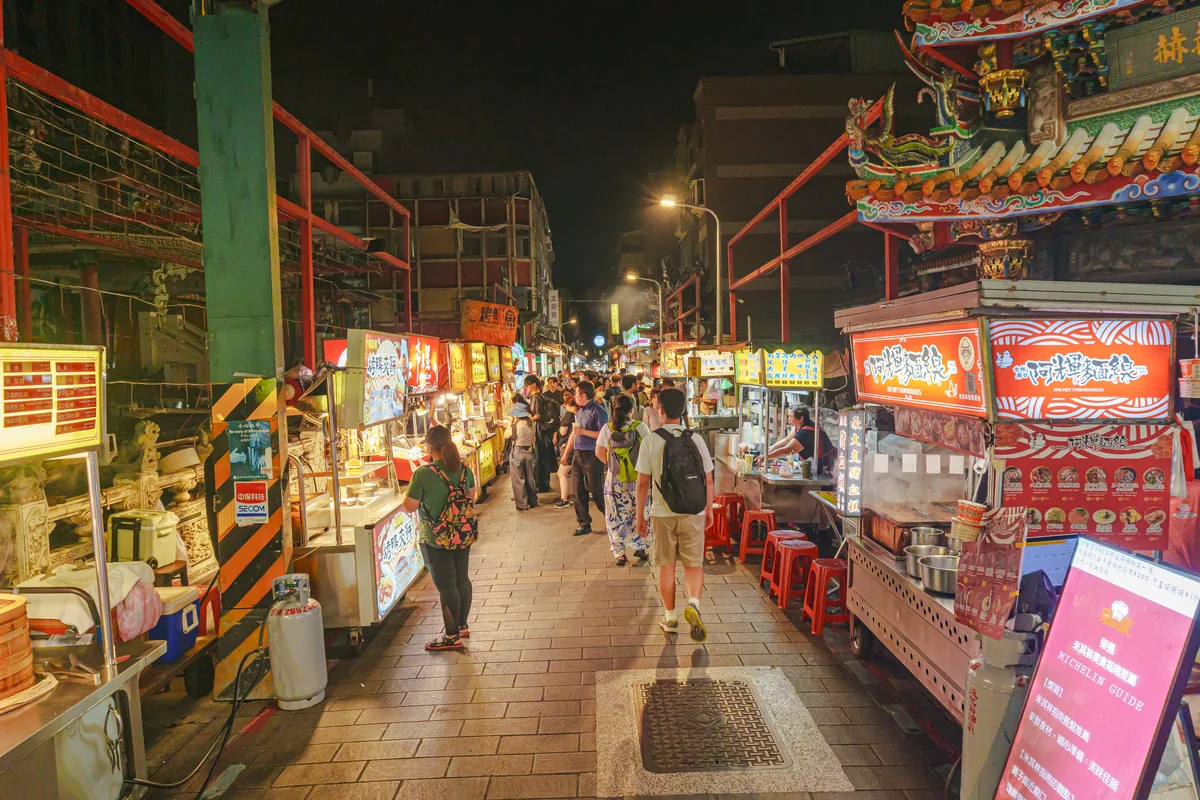
Cuisine in the Pingxi valley and along Shifen Old Street is far more than simple roadside snacks; it is a living chronicle reflecting the grueling, resilient labor of generations of coal miners over the past century. When the coal mines operated at full capacity, miners emerging after ten-hour shifts exhausting their strength deep underground craved a piping-hot, energy-dense meal to replenish lost salts and minerals. Out of that demanding survival need, Miner’s Noodles—also known as traditional heritage oil noodles—were born and preserved in their authentic flavor to this day. Each rustic bowl features golden-yellow oil noodles hand-kneaded and sun-dried according to time-honored methods, retaining a natural springy chew without turning mushy. The soul of the dish lies in aromatic shallot-infused lard tossed with crisp bean sprouts and vibrant green garlic chives, drenched in a pork-marrow broth simmered for hours to deliver a rich, savory sweetness that warms the spirit amidst the misty mountain chill.
Strolling deeper into the historic stone-paved alleys, visitors encounter the inviting aroma of traditional Minnan pastries such as caozaiguo (mugwort rice cakes) and hongguiguo (red turtle cakes). Each jade-green caozaiguo is kneaded from glutinous rice flour pounded with cudweed, a wild herb growing along shaded streams around Shifen. Its chewy, subtly herbaceous wrapper encases either a rich savory filling of shredded preserved radish stir-fried with pork, dried shrimp, and shiitake mushrooms, or a delicate sweet paste made from slow-simmered red beans sourced from the renowned Wandan region. Beside them sit crimson hongguiguo stamped in the rounded shape of a tortoise shell—symbolizing longevity and well-being—which once appeared exclusively during ancestral and deity offerings in mining households and now linger as nostalgic treats captivating travelers.
The primeval rainforest ecosystem enveloping Pingxi also bestows upon locals pure mountain delicacies, most notably bamboo-tube sticky rice and crisp wild forest greens. Soaked upland glutinous rice is packed tightly into fresh bamboo joints alongside shiitake mushrooms and black-pepper-marinated pork, then roasted over glowing embers until the outer husk chars, revealing sticky, chewy grains infused with the inner bamboo membrane and a faint, earthy sap aroma. Locals traditionally pair this dish with piping-hot plates of garlic-sautéed forest greens—from tender vegetable ferns gathered near Shifen Waterfall and crisp bird’s-nest fern shoots stir-fried with dried anchovies and chili peppers, to sweet makino bamboo shoots dug from hillsides at dawn—striking a harmonious balance between rich savoriness and mountain freshness.
The trackside culinary tapestry would be incomplete without two iconic street-food staples: Taiwanese sausage with sticky rice (“big sausage wraps small sausage”) and the one-of-a-kind peanut ice cream roll. “Big sausage wraps small sausage” tempts passersby with blistered, charcoal-grilled glutinous rice sausages sliced open to cradle a five-spice-marinated black pork sausage, topped with minced raw garlic and tangy pickled mustard greens to cut the richness. To cap off the tasting journey, the peanut malt ice cream roll delivers an enchanting dance of contrasts. Vendors deftly shave crisp ribbons of peanut-malt brittle from a massive block onto a paper-thin wheat crepe, top it with two scoops of creamy taro ice cream, and garnish it with sprigs of fresh cilantro before rolling it tight. The icy chill of the cream, the nutty crunch of crushed peanuts, the chewy wrapper, and the unexpectedly refreshing herbal lift of cilantro blend into an unforgettable culinary memory beside the century-old tracks.
The Keelung River valley and Pingxi mountain range experience the distinctive humid subtropical maritime microclimate of northern Taiwan, steeped year-round in drifting mist and fine drizzle clinging to the hillsides. Spring, spanning roughly from February through April, is widely considered the ideal window for travelers to visit. As the seasons turn, the evergreen forest canopy bursts with vibrant natural hues, while crisp, cool air provides the perfect backdrop for glowing sky lanterns ascending into the heavens. Nevertheless, because the basin catches moisture-laden northeast monsoons, sudden showers can fall at any moment; visitors should always pack a water-resistant windbreaker or compact umbrella and wear high-traction walking shoes to navigate the moss-covered stone steps throughout the valley safely.
Reaching Shifen offers a variety of public transit journeys steeped in the island’s historical charm. The famous Pingxi Branch Line remains the primary tourist artery: travelers board a train from Taipei Main Station to the Ruifang transfer hub, then switch to a classic diesel railcar winding deep into Shifen Station. Curving through dense forest canopies and weathered coal-mining relics evokes a palpable sense of nostalgia. For those departing from central Taipei who prefer a direct route without rail transfers, public bus route 795 picks up passengers at Muzha MRT Station, passing through the tofu-famed town of Shenkeng before dropping travelers right near Shifen Bridge.
Commercial life along Shifen Old Street begins welcoming visitors around 09:00 AM and continues until roughly 07:00 PM, when souvenir shops and handmade paper-lantern workshops draw shut their wooden doors. Shifen Waterfall Park (十分瀑布園區), by contrast, maintains strict daily operating hours from 09:00 AM to 05:30 PM to ensure visitor safety along slick suspension walkways near the rapids. A well-paced itinerary typically begins in the cool morning air with a stroll across the Jing’an Suspension Bridge spanning the rushing Keelung River, followed by wandering among the historic timber-and-brick shophouses. When the midday train whistle blows, a steaming bowl of heritage miner’s noodles beside the tracks—brimming with rich bone broth and tender braised ribs—fuels an afternoon walk out to the cascading white veil of the waterfall.
Dusk descending over the valley marks the most sacred hour to step onto the gravel trackbed and perform the sky lantern releasing ritual. Today, to protect biodiversity across the primeval forests surrounding Pingxi, eco-friendly sky lanterns crafted from bamboo strips and biodegradable rice paper are widely encouraged, harmonizing millennia-old spiritual aspirations with environmental stewardship. Visitors must also observe a vital safety rule in the old town: the railway runs directly past shop doorsteps with zero protective barriers, so whenever warning bells ring and an approaching train whistle sounds in the distance, lingering on the tracks for photos is strictly prohibited.
Pairing thoughtful preparation with a clear understanding of the heritage train schedule turns a trip into this former coal-mining valley into an unforgettable cultural memory. To immerse yourself fully in the local rhythm without worrying about navigating complex rail and bus transfers, travelers can explore and join all-inclusive Taiwan tour packages expertly designed to make the most of every moment of discovery.