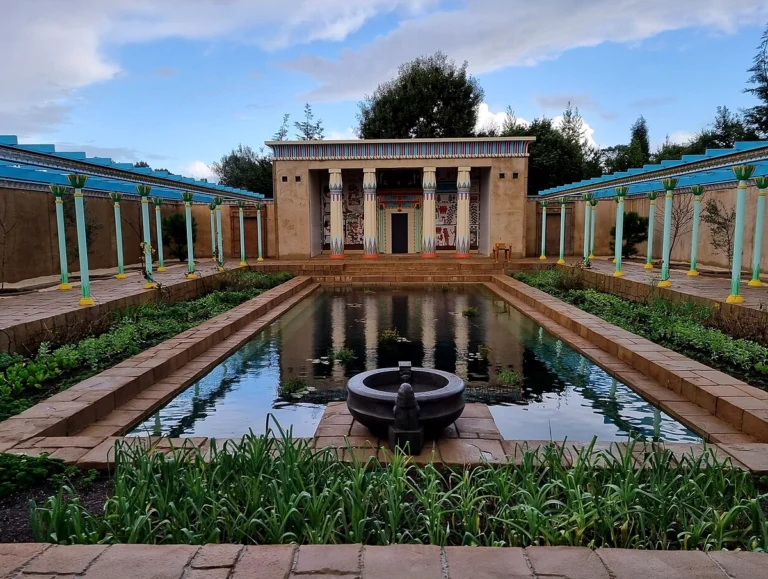
Nestled deep beneath the rolling karst hills of the King Country—a region revered for generations by indigenous Māori as Te Rohe Pōtae on New Zealand’s North Island—the Waitomo Glowworm Cave system preserves layers of ancient cultural and spiritual heritage as profound as the million-year-old limestone strata enclosing it. In the worldview of the Ngāti Maniapoto iwi and their kin hapū, this subterranean realm was never merely a natural spectacle for sightseeing in pre-colonial times. In classical Māori, the name “Waitomo” merges two deeply symbolic elements: “wai,” representing pure spring water, and “tomo,” referring to treacherous sinkholes or natural shafts plunging straight into the earth; united, Waitomo translates literally to “water passing through a deep rock cavity.” Throughout the pre-European era, the dry upper caverns were consecrated by Māori as wāhi tapu—sacred burial grounds serving as the eternal resting places of illustrious chiefs and natural fortresses sheltering the tribe during times of conflict.
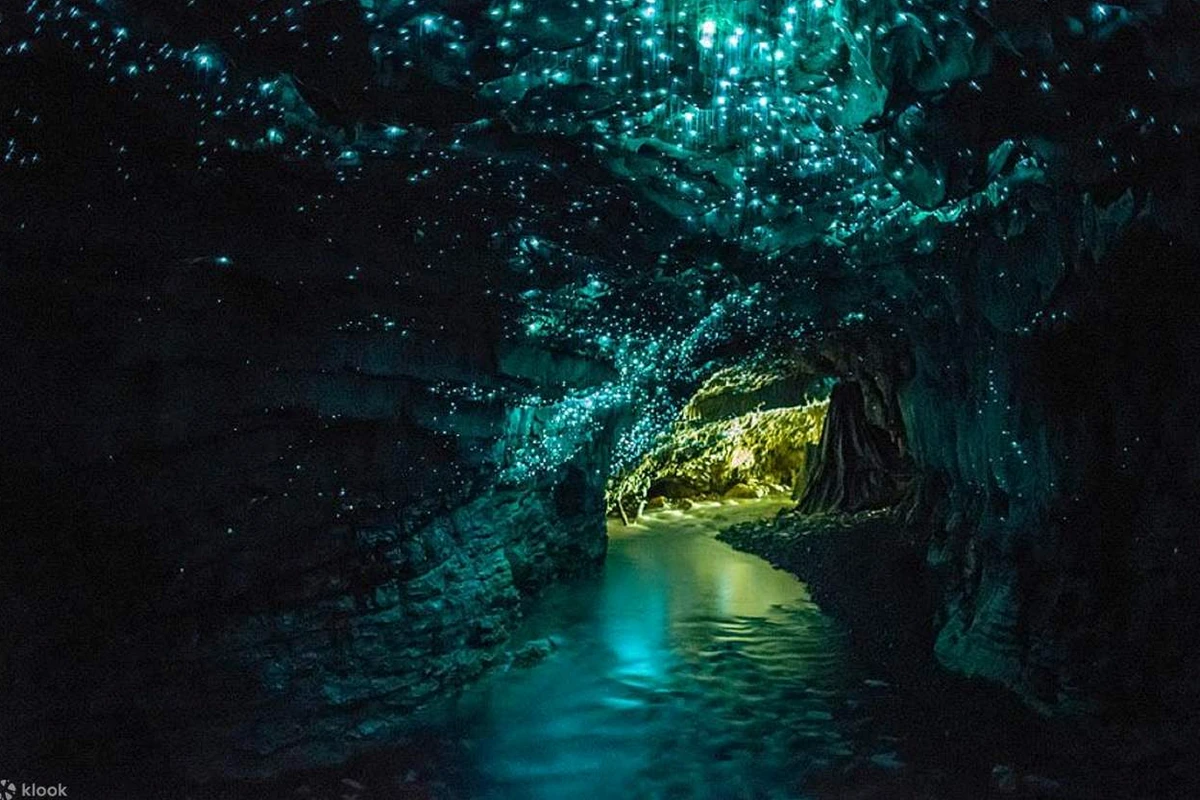
The milestone that formally brought this subterranean galaxy onto the world’s geographic map occurred in December 1887. Determined to chart the treacherous geological formations, Tāne Tinorau, an eminent chief of the Ngāti Maniapoto tribe, joined forces with English surveyor Fred Mace to undertake a historic expedition using the most primal means. They lashed stems of native Harakeke flax into a lightweight mōkihi raft, lit flickering tallow candles, and drifted silently into the pitch-black recess of the underground stream. As their artificial flames dimmed, the two explorers looked up in awe at the cavern ceiling: millions of bioluminescent Arachnocampa luminosa wove a resplendent canopy of stars, capturing the breath of the cosmos deep underground. This astonishing discovery spurred Chief Tāne Tinorau to conduct further independent surveys, eventually locating the cave’s upper entrance—laying the groundwork for today’s magnificent walking route.
Recognizing the unparalleled beauty of their ancestral wonder, Chief Tāne Tinorau and his wife, Hoki, pioneered an early form of ecotourism by 1889. They built rafts and rowed curious travelers through the caverns, charging a modest fee to fund guiding and maintenance, thereby transforming the sacred chambers into one of New Zealand’s earliest organized eco-attractions. Yet the tides shifted alongside the expansion of the colonial empire. Recognizing Waitomo’s immense economic value and international allure, the British colonial government unilaterally invoked the Scenery Preservation Act in 1904 to confiscate ownership, stripping the Tinorau family and the Ngāti Maniapoto tribe of all administrative rights and turning indigenous ancestral heritage into a state-monopolized asset.
This separation between the sacred land and its rightful custodians endured for nearly a century, marked by tireless legal battles. In 1990, a historic turning point of reconciliation arrived when the Waitangi Settlement Act came into force, formally returning full ownership of the Waitomo Glowworm Caves to the descendants of Chief Tāne Tinorau and the Ngāti Maniapoto confederation. This triumph established a benchmark co-management framework between New Zealand’s Department of Conservation (Te Papa Atawhai) and the local Māori Management Committee. Today, travelers gliding quietly on boats beneath the glowworm canopy not only witness an enchanting natural phenomenon, but also experience a living testament to cultural resilience, where the injustices of colonial history were redeemed through the resurgence of indigenous self-determination.
Located roughly twelve kilometers northwest of Te Kuiti township, the Waitomo cave complex sits right in the heart of the King Country within the Waikato administrative region, where the North Island’s signature undulating hills were sculpted by intense tectonic activity. Geologically, the entire bedrock of this area is an immense sedimentary limestone formation dating back to the Oligocene epoch, roughly thirty million years ago. During that primeval era, much of the New Zealand landmass lay submerged beneath a warm, shallow sea shelf, accumulating dense deposits of ancient marine organisms such as brachiopods, foraminifera, echinoderms, and bryozoan colonies. Over tens of millions of years under the immense pressure of overlying strata, layers of shell mud and coral skeletons fossilized into calcium-carbonate-rich limestone beds distinguished by remarkable hardness and stratification.
When the Pacific and Indo-Australian tectonic plates collided violently, the landmass was gradually uplifted above sea level, exposing the limestone massifs to external erosion. Slightly acidic rainwater—formed as atmospheric carbon dioxide and decaying surface vegetation dissolved into carbonic acid—seeped silently through tectonic fissures, continuously dissolving and leaching calcium carbonate underground across geological eras. This prolonged karstification hollowed out the bedrock into a multi-tiered subterranean labyrinth complete with caverns, karst sinkholes, and winding limestone corridors, turning the Waitomo region into one of Earth’s rarest living geological museums.
Waitomo’s underground architecture is stratified vertically into three distinct hydrological levels, chronicling the gradual lowering of water tables across successive ice ages. The upper level occupies the highest elevation—a dry, tranquil, and largely fossilized realm crowded with stalactites and stalagmites formed drop by mineral-laden drop over tens of millennia into silken, intricate draperies. The middle level serves as a transitional zone, functioning as an intermittent drainage system that surges only during heavy surface rainstorms. Deepest at the bottom of the abyss lies the lower level, where the subterranean Waitomo Stream flows steadily year-round, opening out into the legendary Glowworm Grotto—the ideal sanctuary for New Zealand’s singular native luminescent larvae.
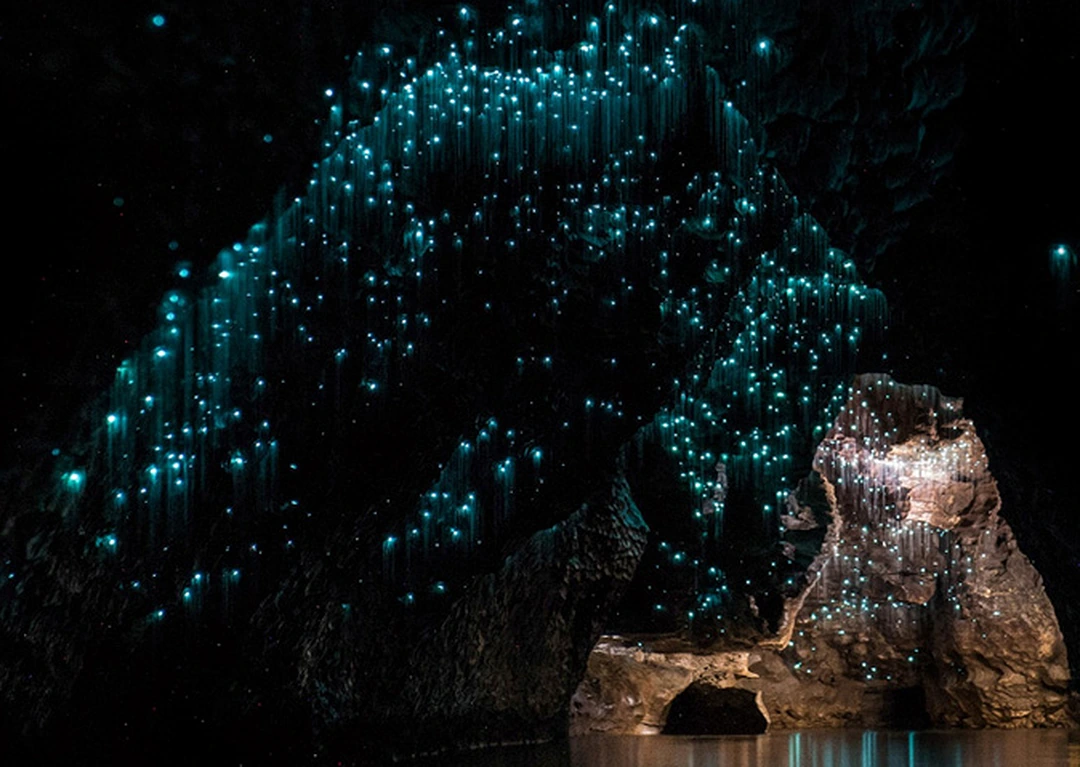
The subterranean environment on the lower tier is naturally insulated within an extraordinarily isolated and stable microclimate, virtually untouched by volatile weather outside. Interior temperatures fluctuate gently between twelve and sixteen degrees Celsius year-round, paired with relative humidity consistently saturated at ninety-eight to one hundred percent. This damp, still air devoid of drafts is vital for preventing the glowworms’ delicate, mucus-beaded silk fishing lines from drying out or snapping, while maintaining optimal oxygen concentrations to sustain continuous bioluminescent reactions.
Surrounding this subterranean marvel is an unspoiled surface landscape offering a striking visual contrast. The cave’s outer perimeter transitions softly from lush green pastoral grasslands and expansive Pinus radiata forests into strictly protected valleys of native temperate rainforest. Beneath mossy gray limestone bluffs, ancient flora thrives in dense profusion: towering tawa trees, rewarewa adorned with proud crimson blossoms, and countless giant tree ferns spreading emerald fronds like parasols to shield underground water veins before they plunge deep into Mother Earth.
Transforming a raw Oligocene karst cavern into an internationally acclaimed ecotourism landmark represents an exemplary harmony between modern geotechnical engineering and absolute reverence for nature. Upon arriving at the Waitomo complex, the first striking architectural statement is the Visitor Centre—an eco-conscious structure crowned by a sweeping curved canopy mimicking the undulating limestone ridges. Built from sustainable, high-load-bearing timber framing, the concourse applies microclimatic principles for natural daylighting and passive ventilation, dissolving the boundary between human design and the verdant native landscape of the Waikato region.
Right at the threshold leading underground, visitors encounter the vertical sinkhole shaft known to Māori as a “Tomo.” To link the surface with the intricate cavern network without distorting ancient geomorphology, subterranean engineers installed a custom-engineered reinforced concrete staircase anchored flush against the natural rock face. This solution distributes gravitational loads evenly, minimizing any risk of rockfall or erosion in the delicate, water-saturated limestone. Throughout the deeper passages, walkways utilize freestanding cantilevered structures secured to the bedrock with seismic-grade marine stainless steel anchor bolts. This specialized alloy resists the hundred-percent-saturated humidity and mild carbonic acid mist without corroding over time or leaching toxins into subterranean waterways.
Venturing deeper along the main axis, the cavern suddenly expands into a colossal stone chamber named The Cathedral. Rising to a natural ceiling height of nearly sixteen meters, this cavernous void boasts extraordinary acoustic properties rarely found in nature. Rough-hewn limestone walls and the parabolic vaulted ceiling diffuse sound flawlessly, producing a reverberation time exceeding three seconds and transforming the hall into a pristine natural concert venue. The hushed, resonant acoustics of The Cathedral have drawn world-renowned opera and chamber vocalists to perform completely unplugged, showcasing the spatial perfection sculpted by nature over millions of years.
From The Cathedral, the terrain descends toward the Glowworm Grotto Pier, an isolated underground dock set right beside the melancholic Waitomo subterranean river. To safeguard the hypersensitive sensory ecosystem of tens of thousands of Arachnocampa luminosa clinging to the ceiling, watercraft here strictly avoid internal combustion engines or conventional mechanical propellers. Engineers instead installed a static underwater cable-guidance system powered by a closed-loop ultra-low-voltage circuit. Guides navigate the boats silently through the darkness by gently pulling along discreetly positioned guide wires, completely eliminating mechanical vibration, engine noise, and exhaust fumes.
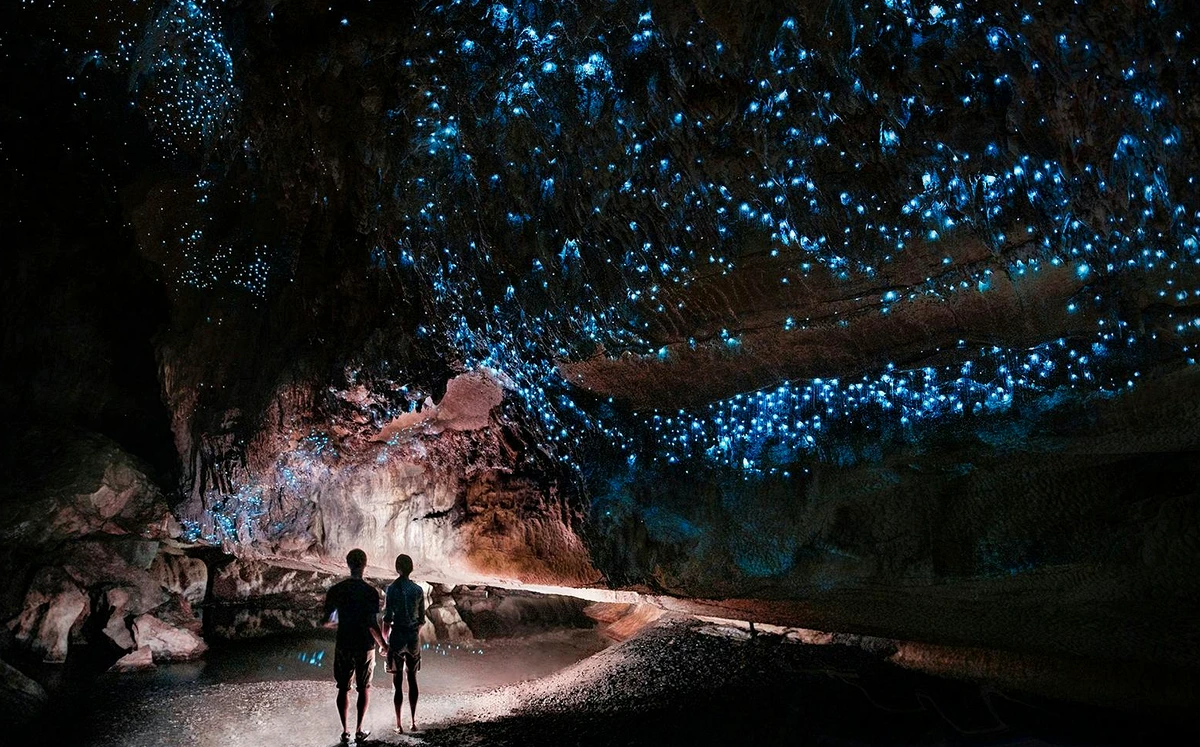
Further architectural subtlety lies in the artificial lighting concealed along the visitor walkways. Rather than conventional full-spectrum bulbs, geotechnical and biological specialists custom-designed narrow-band, cool-light LED fixtures calibrated strictly to eliminate thermal radiation. This optical solution provides just enough safe visibility for footsteps while remaining virtually invisible to the luminescent insects, preventing any disruption to their natural photobiological cycles. Consequently, the living galaxy overhead retains its legendary brilliance, emitting the same ethereal blue-green glow as in primeval times.
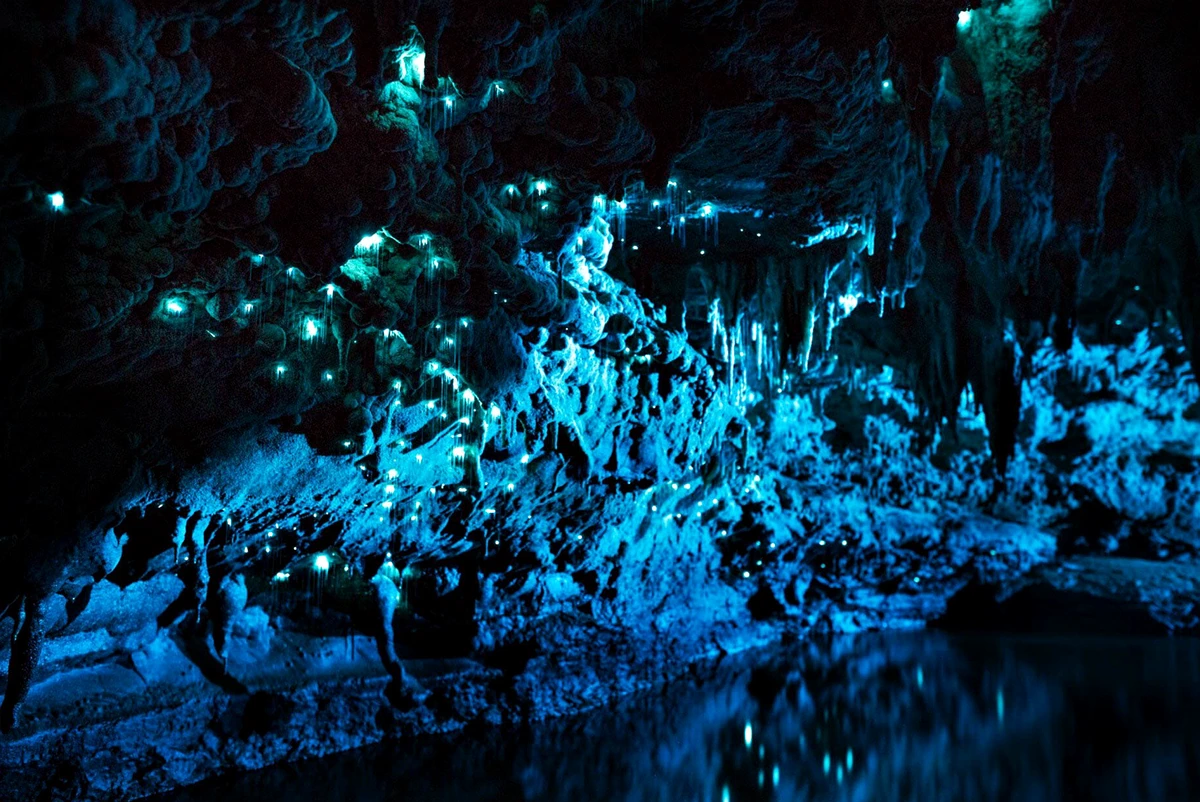
Unlike artificial theatrical productions where mechanical lights and amplified sound dominate the senses, Waitomo’s perpetual night is a natural amphitheater sculpted across millions of years of geological evolution. Here, the grandest light show requires zero digital intervention; instead, it is powered by the biological pulse of millions of fungus gnat larvae scientifically named Arachnocampa luminosa—a bioluminescent species endemic to New Zealand. The damp limestone vault acts as a colossal celestial dome where countless tiny pinpoints of light merge into an enchanting Milky Way deep underground, immersing visitors in a captivating and reverent experience.
The remarkable luminescence of these creatures stems from an intricate biochemical mechanism inside the Malpighian tubules at the posterior end of the larva’s body. Catalyzed precisely by the enzyme luciferase, the substrate luciferin reacts with molecular oxygen to produce a cold bioluminescent reaction—generating virtually no heat—that emits a blue-green light at an optical wavelength of roughly 470 nanometers. In the absolute darkness of the humid cavern, this 470-nanometer wavelength achieves peak visual efficiency for luring positively phototactic flying insects, such as midges and small beetles hatching from the stream below. To complete its survival trap, each larva weaves a silk hammock on the rock ceiling and suspends between 30 and 70 gossamer fishing threads beaded with mildly acidic mucus droplets resembling translucent pearls. The entire cavern roof transforms into a shimmering curtain of light—a natural installation embodying both otherworldly beauty and fierce evolutionary instinct.
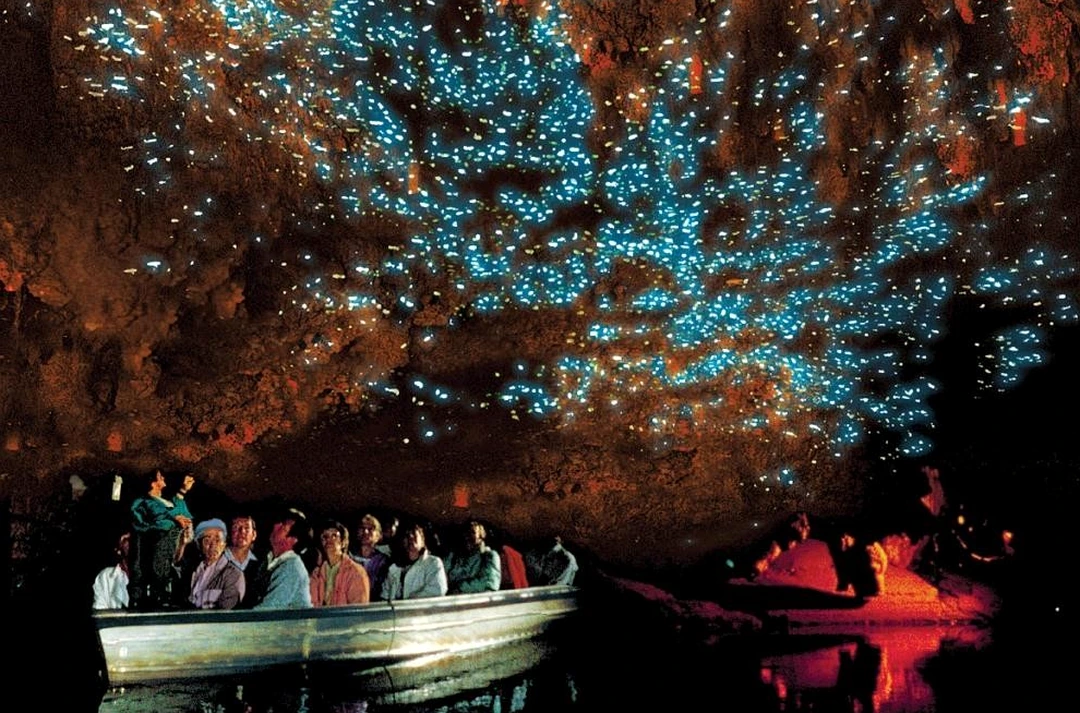
Waitomo’s nocturnal rhythm reaches its purest crescendo aboard traditional flat-bottomed wooden boats. The vessel parts the water silently, gliding smoothly into the heart of the spectacle without engine noise as the guide draws the boat along a static wire affixed discreetly to the cavern wall. One of the strictest, inviolable rules here is absolute silence. Every sound—from whispered conversation to camera clicks and flash photography—is strictly prohibited to preserve the stillness Arachnocampa luminosa need to glow continuously without alarm or disruption to their natural rhythm.
As the boat drifts slowly through the hushed cavern, the boundary between physical space and spiritual dimension seems to dissolve. The black subterranean river mirrors the blue-green galaxy overhead like liquid obsidian, creating an optical illusion of infinity that makes passengers feel suspended in outer space. The only sound is the melancholic drip of water falling from millennia-old stalagmites into the dark pool, punctuating a symphony of silence. This living light display in the depths of Waitomo is more than a singular visual masterpiece; it is a soul-cleansing moment reminding humanity of the boundless wonder of unspoiled nature when preserved with absolute respect.
Emerging from the shadowy stalactite caverns and the bioluminescent currents of Arachnocampa luminosa, travelers step back into the sunlit air of Waitomo to encounter another vibrant cultural layer: traditional Kai Māori heritage blended seamlessly with refined contemporary Kiwiana cuisine. The culinary landscape here mirrors the soul of the surrounding limestone valleys, where fertile Waikato plains and rolling King Country hills have nurtured elemental cooking traditions for centuries. Foremost among ancestral culinary rituals is the hāngī, an ancient subterranean geothermal earth-oven technique. Māori dig a deep pit in porous soil and burn firewood to heat volcanic basalt stones until they glow red-hot. Fresh ingredients are carefully wrapped in native leaves or flax cloth, layered atop the scorching stones, and sealed beneath packed earth to trap natural steam and radiant heat. Slow-cooked for four to six hours by mineral steam and the essence of Mother Earth, Papatūānuku, every cut of meat turns fall-off-the-bone tender, infused with a deep, earthy smokiness and unmistakable natural sweetness.
Accompanying the hāngī feast is kūmara, the traditional sweet potato brought across the ocean by early Polynesian voyagers settling the islands of Aotearoa. Roasted in the earth oven, kūmara develops a velvety texture and rich, nutty sweetness, traditionally paired with pūhā—a wild sow thistle growing along stream banks and limestone foothills. The gentle, rustic bitterness of pūhā simmered slowly alongside succulent pork ribs creates a balanced harmony of flavors that cuts cleanly through any richness. This meal becomes even more memorable when paired with thick slices of handmade rēwena bread. Leavened for days with a naturally fermented native potato starter, rēwena boasts a crisp, golden-brown crust and a dense, chewy crumb with a subtle tang, embodying the warm manaakitanga (hospitality) that Māori iwi extend to travelers from afar.
Notably, Waitomo’s winding subterranean waterways are also home to giant freshwater eels, revered by indigenous people as Tuna. In Māori tradition, these eels are far more than a source of protein; they are bound to strict rāhui conservation customs. When a rāhui ban is placed over a waterway, locals abstain entirely from fishing to allow populations to regenerate. Only on the tribe’s most significant ceremonial occasions is a measured harvest permitted using traditional traps, after which the tuna is smoked over fragrant mānuka wood for honored guests—celebrating the sacred bond between humanity and the wild.
Complementing ancestral culinary traditions is the emergence of refined Kiwiana gastronomy at renowned nearby estates, most notably Waitomo Homestead. Here, menus showcase prime local produce from the rolling King Country: grass-fed Waikato lamb prized for its tender, sweet flavor and subtle herbal notes; lean red deer venison paired with wild juniper berry jus; and pan-seared Marlborough Sounds salmon fillets with crisp skin. The dining experience reaches new heights alongside a platter of artisanal Waikato cheeses, savored slowly with a crisp, herbaceous Marlborough Sauvignon Blanc or a velvety Central Otago Pinot Noir bursting with ripe dark cherry notes—a fitting finale to New Zealand’s subterranean wonderland.
Planning an expedition to Waitomo’s sanctuary of light requires a thoughtful appreciation for the rhythms and conservation rules governing its underground ecosystem. The caves welcome visitors 365 days a year from 9:00 AM to 5:00 PM, with extended operating hours during the bright summer months from December through February. However, booking tickets online well in advance is virtually mandatory for every traveler. Cave management and indigenous conservationists enforce strict visitor capacity limits to keep carbon dioxide levels within safe thresholds and maintain the stability of the subterranean microclimate. This delicate equilibrium of temperature, humidity, and airflow is essential for tens of thousands of glowworm larvae to sustain bioluminescence without suffering thermal stress or suffocation from human respiration.
To make your geological journey even richer and more multidimensional, visits are often paired seamlessly with two neighboring limestone masterpieces within the same Waitomo complex. The first is Ruakuri Cave, steeped in ancient Māori legend and accessed via a dramatic spiral concrete ramp descending deep underground—an engineering feat thoughtfully designed for full wheelchair accessibility. Nearby, Aranui Cave reveals a hushed cathedral of speleothems adorned with blush-pink limestone draperies and dramatic stratified formations. Though Aranui Cave is completely dry and houses no glowworms, its pristine stalagmites represent the pinnacle of natural sculpture carved over millions of years of crustal evolution.
Getting there is straightforward: from central Auckland, travelers can drive south along State Highway 1 before connecting to State Highway 3, winding through the emerald rolling hills of the Waikato plains in a relaxed two-and-a-half-hour journey. Before descending into the subterranean depths, pack thoughtfully to match the cave’s unique conditions. Interior temperatures hover steadily between 12 and 16 degrees Celsius amid near-total humidity, calling for a warm insulating jacket and sturdy walking shoes with reliable grip on damp stone steps. Visitors prone to claustrophobia should also prepare mentally to relax and breathe steadily as the boat glides into the pitch-black grotto.
Stepping into this realm of darkness means honoring an unwritten code of conduct vital to the species’ survival. Photography and video recording are strictly forbidden; even a brief camera flash or glowing phone screen can overwhelm the larvae’s sensitive photoreceptors, halting their enzymatic reaction and extinguishing the blue-green galaxy for hours on end. Silence is equally sacred: as the boat glides across the underground stream, guests must suppress every noise and remain completely quiet so as not to disturb the tranquil habitat. Above all, never touch the cave walls, growing stalactites, or suspended silk threads—natural oils from human skin permanently halt mineral crystallization and tear apart the fragile hunting webs these remarkable creatures work tirelessly to spin.
Beholding the wonder of Waitomo is far more than a simple sightseeing excursion—it is an intimate encounter between humanity and the deepest secrets of nature beneath the Southern Hemisphere. To experience this luminous blue galaxy and immerse yourself seamlessly in Kiwi culture down to the finest detail, explore our curated, all-inclusive New Zealand tour packages crafted for comfort and discovery.