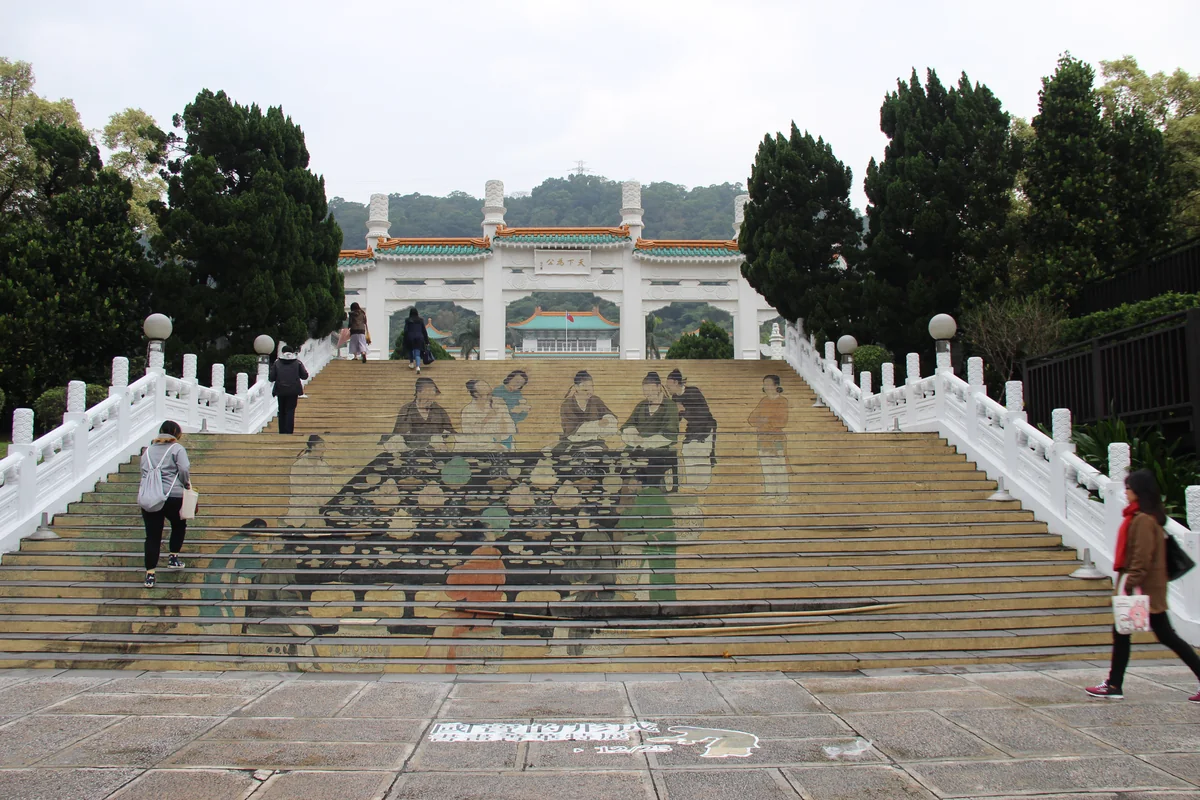
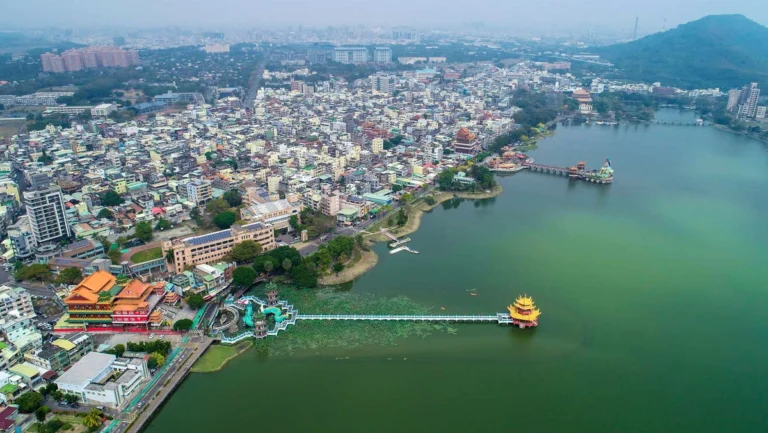
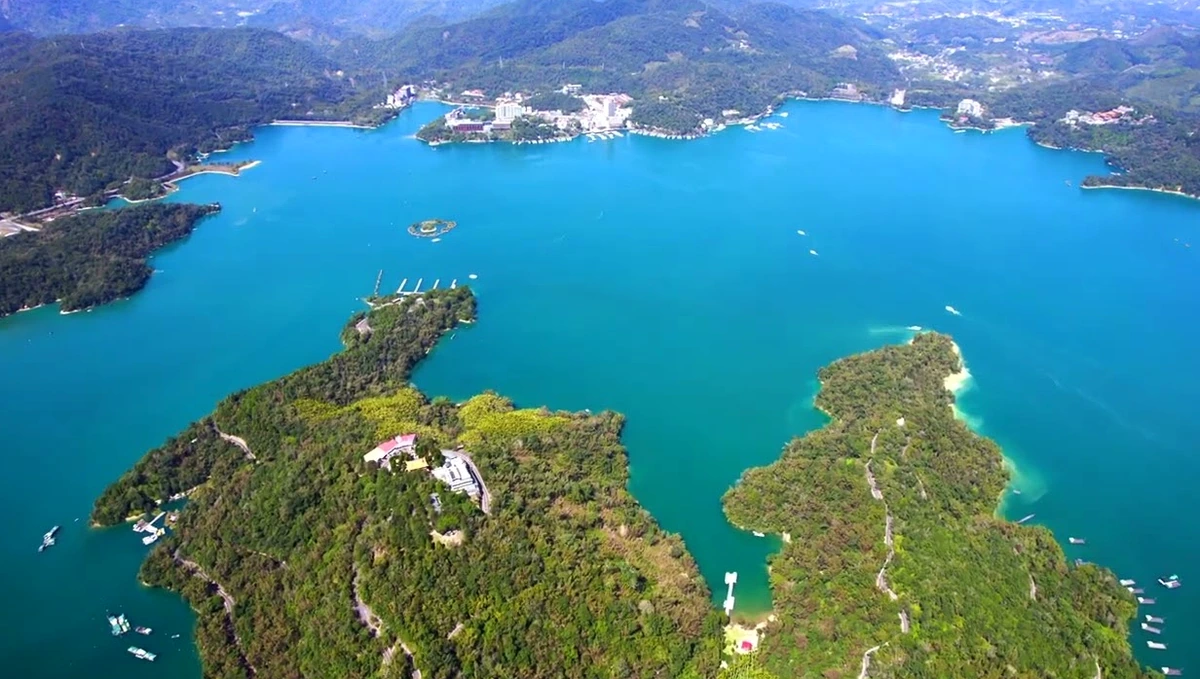
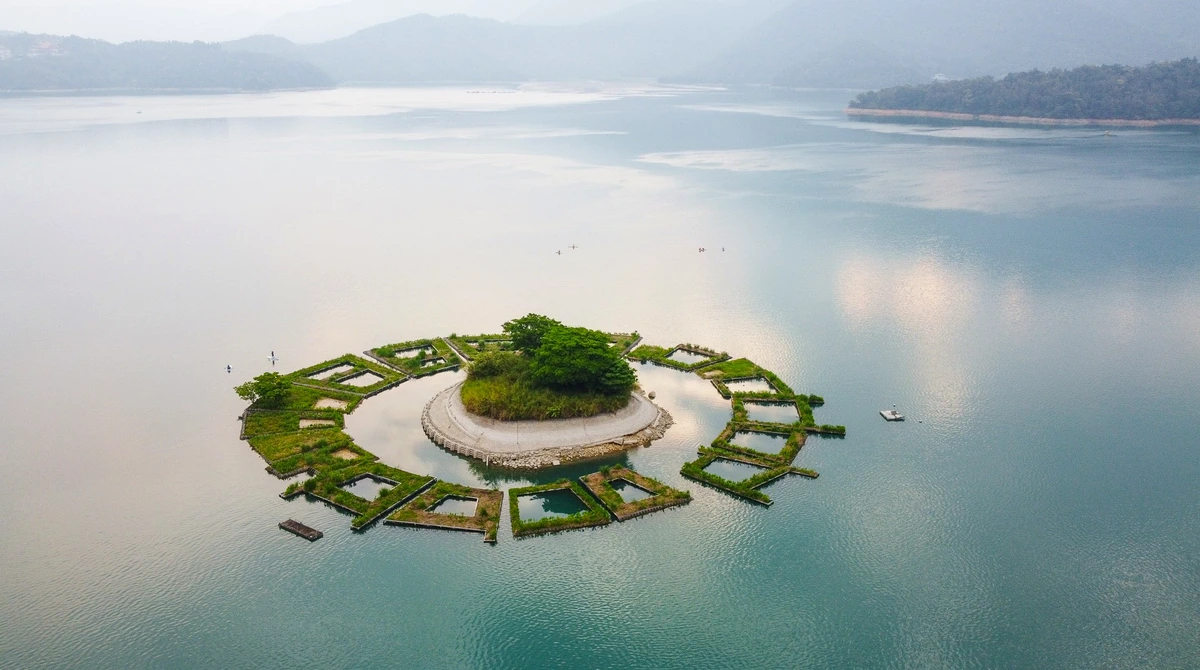
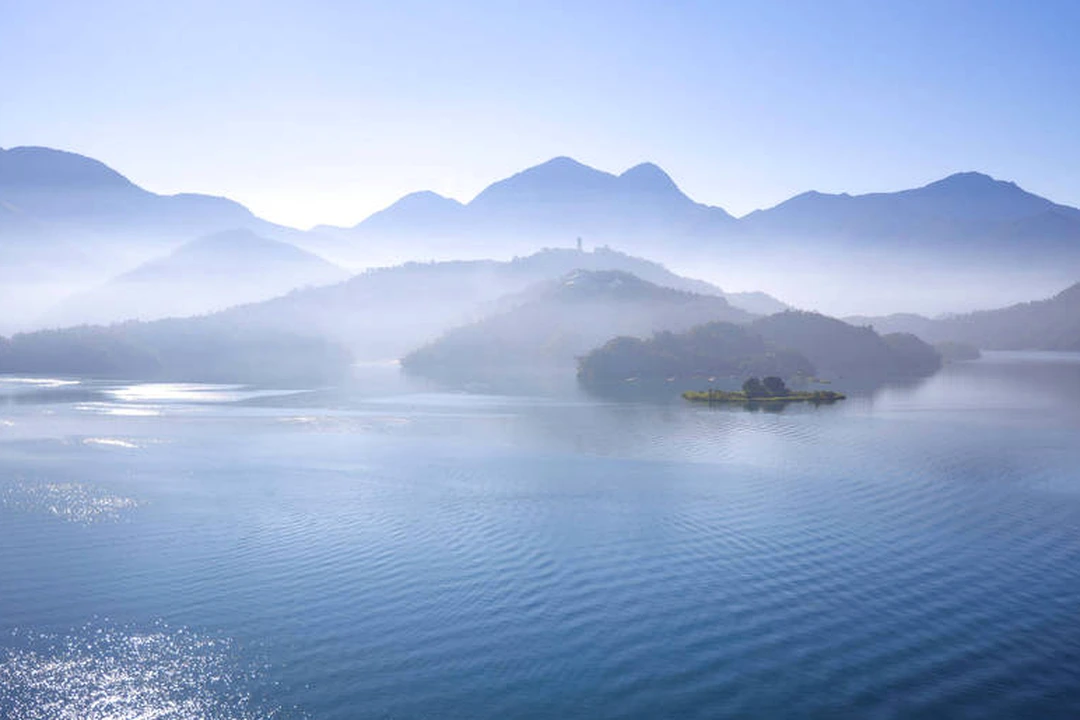
Nestled amid the rolling folds of the central mountain range in Nantou County at an elevation of roughly 748 meters above sea level, Sun Moon Lake is a vast ink-wash mirror reflecting the full arc of Taiwan’s history. In early historical chronicles, this serene basin bore quiet names such as Shuishalian, Shuisha, and Riyuetan She. More than simply the largest natural high-mountain freshwater lake on the island, since prehistoric times it has been the sacred cradle of survival for the Thao indigenous people. Amid the expansive turquoise waters, Lalu Island rises as a spiritual bridge connecting the mortal realm with eternity, revered by the Thao as the inviolable resting place of the ancestral spirits who cleared the wilderness.
The earliest written records naming this untamed territory emerged clearly during the Qing dynasty. In the third year of the Daoguang reign, scholar Deng Chuan’an, following expeditions deep into remote mountain gorges, carefully documented the mysterious local landscape in his renowned travel essay Shuishalian Ji Shi (“Account of Shuishalian”), part of the anthology Lizhe Hui Chao. Those sharp observations not only captured a remarkably pure and refined mountain-and-water scene, but also revealed the isolated, nature-bound way of life of the indigenous community before waves of settlers from the mainland arrived to cultivate the land.
The turning point that completely transformed the lake’s natural appearance began during the Japanese colonial era. In the eighth year of the Taishō era, to advance industrialization and harness abundant highland power, the Office of the Governor-General of Taiwan decided to launch the Sun Moon Lake hydroelectric project—one of the largest of its kind in Asia at the time. Under the steadfast direction of engineer Matsuki Kan’ichirō, an ambitious water-diversion system was bored through the mountains, damming the fierce Zhuoshui River at Wujie to channel massive volumes of water into the basin. By the ninth year of the Shōwa era, when this monumental project was officially completed, water levels had risen by more than twenty meters, submerging nearly all of the lakeside plains and significantly shrinking the area of sacred Lalu Island.
This dramatic human intervention inadvertently perfected a rare natural feng shui masterpiece. The widened basin formed two contrasting water expanses: the eastern section spreads out full and round, bright like a shining sun, while the strip along the western shore curves and meanders, slender like the arc of a crescent moon. The sacred island at the center also experienced numerous shifts with the tides of history; the Japanese once renamed it Jade Island and then Shōwa Island, and during the post-World War II handover it was named Guanghua Island before its ancestral name was restored in deep tribute to Thao heritage.
Entering the postwar era, the detached, tranquil scenery of the Nantou basin turned the area into a familiar retreat for President Chiang Kai-shek, with an official residence built imposingly beside the waters. Despite enduring severe geological events—most notably the devastating 1999 earthquake that shook central Taiwan’s strata—the Sun Moon Lake scenic area resiliently revived in full splendor. The national scenic area administration was established right after that upheaval, continuing to safeguard a landscape steeped in both poetry and layered historical memory.
Viewed through both form-school and compass-school traditional Eastern feng shui, the Sun Moon Lake basin appears as a massive treasure bowl sculpted by nature amid Nantou’s highlands. Its topography creates a rare grand formation in the art of dragon-vein and lair-spot divination, often praised by scholars as a “giant python swallowing a pearl” interwoven with the motif of a “divine turtle playing in the water.” This formidable yet harmonious terrain is encircled by an interlocking arc of supporting peaks: to the north stands Mount Shuisha towering like a screen blocking cold winds; to the northeast slopes Mount Maolan veiled in drifting mist; and to the south it is sheltered by the sturdy Toushe Mountain range. Tier upon tier of dragon ridges coil and wind toward the lake, turning the broad water surface into an ideal qi-gathering vessel that achieves the pinnacle of sheltering wind and gathering vital energy.
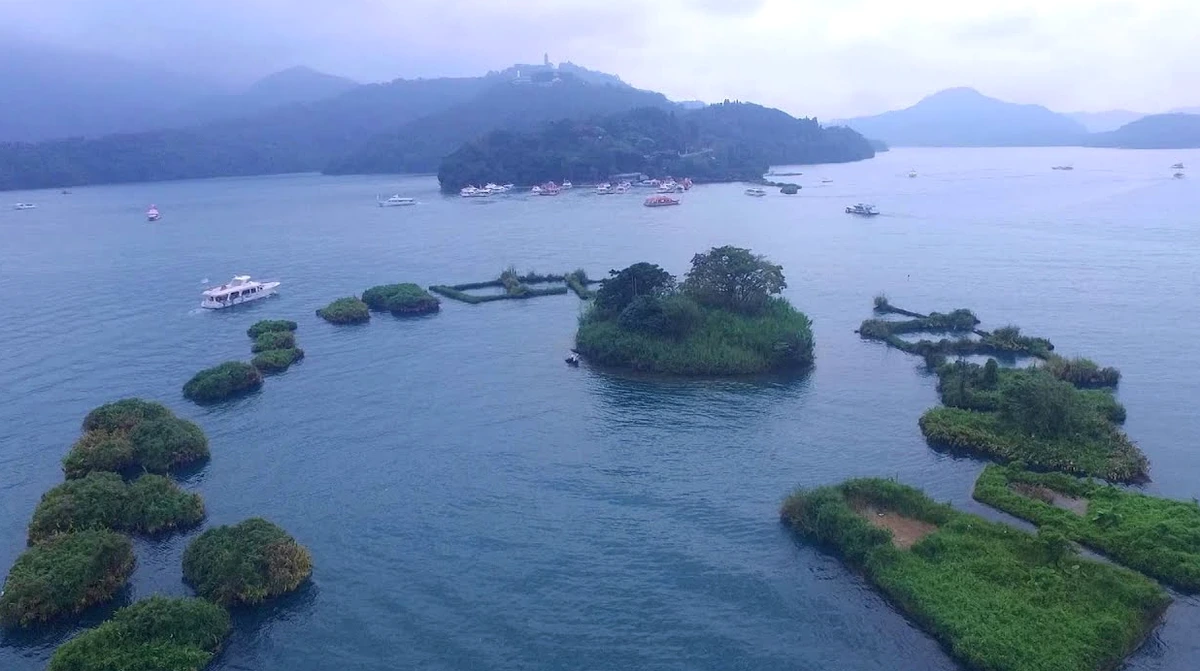
Presiding right at the convergence point of this water-ink vital flow is Lalu Island, the inviolable sacred sanctuary in the consciousness of the indigenous Thao people since time immemorial. In terms of natural scenery, this small island serves to mark the natural boundary between the sun-like round eastern lake and the crescent-shaped western shoreline. Through a geographic feng shui lens, Lalu Island holds the position of a pure luminous pearl within a wave-coiling dragon’s mouth, while also acting like a stabilizing anchor needle that calms the fury of the water deity and secures lasting peace and prosperity across the entire basin.
Matching that grand dragon vein, siting the Wenwu Temple complex along the northern shore is a planning masterpiece rooted in classic feng shui thought. Built with its back firmly anchored against the slope of Qinglong Mountain, it looks out across the entire lake expanse from a commanding elevated vantage point. This placement strictly follows the principle of “embracing yin and cradling yang, with mountains behind and water in front,” a prime site standard reserved for royalty and major historic temples. Its rear faces high mountains as a solid anchor drawing enduring cosmic energy, while its front opens wide to receive pure, moist breezes rising from the shimmering lake, generating an endless circulation of vital energy that lends solemnity, stillness, and unmatched grandeur to the hall honoring the three sages.
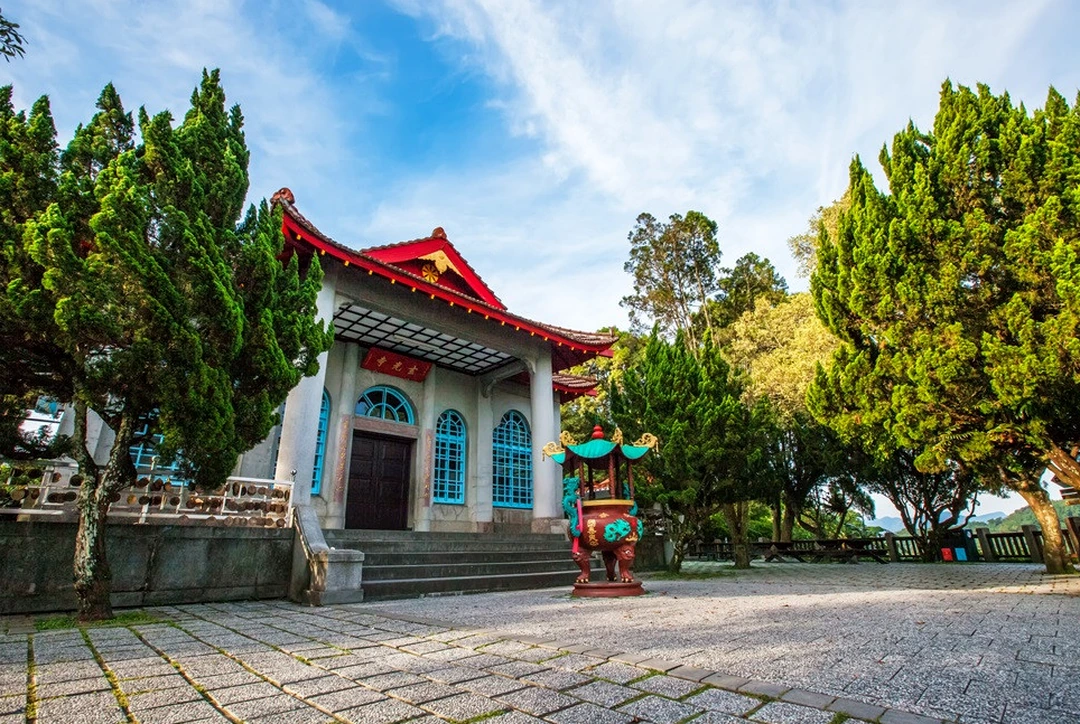
The lake’s spiritual current continues along a finely balanced axis toward the southwest. On a promontory jutting out like the tail of Qinglong Mountain’s dragon ridge, the ancient Xuan Guang Temple stands guard like a serene outpost, gazing day and night directly across toward sacred Lalu Island to form a feng shui axis stretching across the quiet water. Contrasting with yet remarkably complementing that antique depth is the Xiangshan Visitor Center on the western shore. Following the gentle contour lines of the natural terrain, this architectural complex makes full use of modern landscape architecture to minimize building height, artfully turning bare gray concrete masses into a striking earth sculpture. Two sweeping arches stretch out like open wings embracing the lake, blurring the boundary between human craftsmanship and untamed waterscape to complete a top-tier topographic master plan bridging antiquity and modernity.
Anchored firmly on the northern hillside of the basin, the Wenwu Temple complex rises with the stately bearing of a miniature imperial palace amid the Nantou mountains. Its origins trace back to the relocation and merger of two older lakeside shrines in 1938, when the Japanese colonial administration built a hydroelectric dam that raised the lake’s water level. Through the vicissitudes of history, in 1969—under the direct supervision of master architect Hsieh Tzu-nan—the temple underwent a grand-scale reconstruction to shape an enduring architectural masterpiece. The overall design follows Northern palace conventions modeled on Ming and Qing palaces, arranged along a stepped three-courtyard axial layout (san jin jie di shi) hugging the natural mountain slope to create a solemn ascending pilgrimage from lower to higher tiers.
Craftsmanship at Wenwu Temple reflects top-tier construction skill by pairing reinforced concrete frames cast to replicate traditional timber bracket sets (dougong) and columns with exact proportions. All crossbeams and trusses are painted with plaques and murals that subtly blend northern court palettes with Southern Fujian (Minnan) folk painting techniques. Running along the corridors and plinths are relief carvings sculpted from single blocks of smooth Qingtou blue stone, crisp as scroll paintings. The temple’s three-courtyard structure opens sequentially into three distinct sacred spaces: the Front Hall, featuring intricate shuichedu relief work and dedicated to Confucius; past the breeze-catching courtyard stands the grand Middle Hall, Wusheng Hall, housing the loyal generals Guan Yu and Yue Fei; and commanding the most honored position at the Rear Hall is the towering Dacheng Hall, where the spirit tablet of Confucius, the Supreme Sage and First Teacher, rests beneath a gilded ceiling carved with soaring dragons and dancing phoenixes.
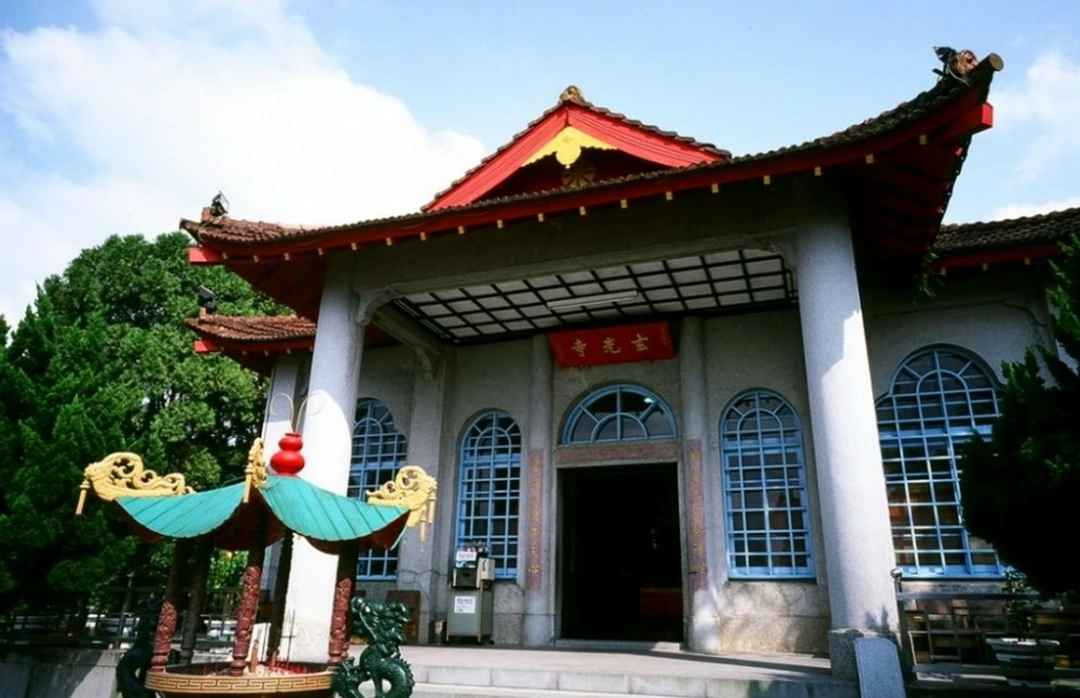
In contrast to Wenwu Temple’s resplendent grandeur, hugging the southern shore is Xuan Guang Temple—a quiet interlude built in 1955. This compact monastery tucked beside the water’s edge features Tang-inspired architecture with crisp whitewashed walls and unpretentious gray tile roofs, exuding a detached, effortless Zen spirit. Xuan Guang Temple’s charm lies not in massive scale or elaborate carvings, but in its breeze-catching feng shui setting overlooking the turquoise water and its special historical symbolism. It once served as the solemn sanctuary that received and enshrined a cranial bone relic of Master Xuanzang—the monk who a millennium earlier braved immense hardships to seek Buddhist scriptures in the Western Regions—before the relic was transferred to the larger Xuanzang Temple on a nearby hill.
The architectural symphony around the lake concludes impressively with a landmark contemporary structure: the Xiangshan Visitor Center, peacefully nestled on the southwestern peninsula. Designed by renowned Japanese architect Norihiko Dan and inaugurated in 2011, the complex exemplifies peak earth-integrated architecture. Its entire form is cast in unpainted architectural concrete, displaying its raw, unvarnished gray tone with quiet stillness. Two gently curving volumes extend like open arms embracing the expansive lake, overturning preconceptions of industrial materials as rigid or cold. The building’s roof is shaped into a gentle green lawn sloping from top to ground, leading straight toward a calm infinity pool that mirrors sky and clouds. The boundary between human design and mountain-and-water scenery seems to dissolve entirely, giving way to a tranquil merging with nature.
As crimson dusk settles over Mount Shuisha, the wide expanse of the Nantou basin is not lit up by garish neon strips smelling of industrial city life; instead, it eases into a restrained, dignified dance of light. Nighttime landscape planning around the lake is built on the strict philosophy of international dark-sky conservation models, aiming to minimize light pollution and keep the primeval rhythm of native flora and fauna intact. In the deep darkness of the highlands, artificial lighting serves only as modest accents, honoring the quiet, otherworldly beauty of the waterscape without breaking nature’s velvet veil.
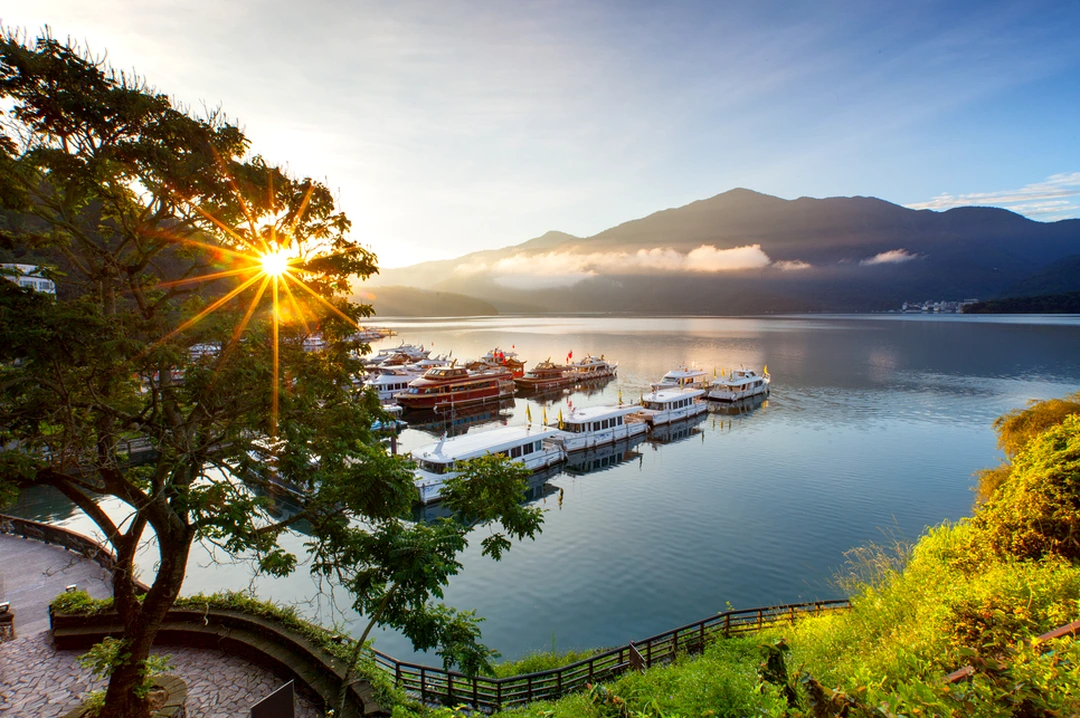
Along the gentle curve connecting the historic Hanbi Peninsula to the bustling Shuishe pier, waterside wooden boardwalks are fitted with recessed LED fixtures emitting warm light at low, localized angles. This refined design conceals light sources within timber grooves and natural stone retaining walls, offering just enough illumination to guide strolling visitors in serene calm without casting harsh glare across the water mirror. Walking along the Hanbi Trail on a quiet night, travelers feel as though they are wandering between reality and fairy tale, where the lake ripples softly in silver moonlight carrying scents of green pine and cool mountain breezes from the Central Mountain Range.
The standout visual highlight of nighttime architecture around the lake belongs to the Xiangshan Visitor Center, the exposed-concrete masterpiece designed by Japanese master architect Norihiko Dan. When night falls, the structure resembles a giant gray silk ribbon curving to embrace the space, where raw concrete arches converse directly with untamed nature. At night, interior illumination from the exhibition halls filters gently through transparent glass walls, pairing with the artificial infinity pool in front to capture the full moon and starry sky. The mirror-still water acts as a double reflection, drawing the night sky closer to earth while softening the line between solid man-made structure and the quiet natural lake beyond.
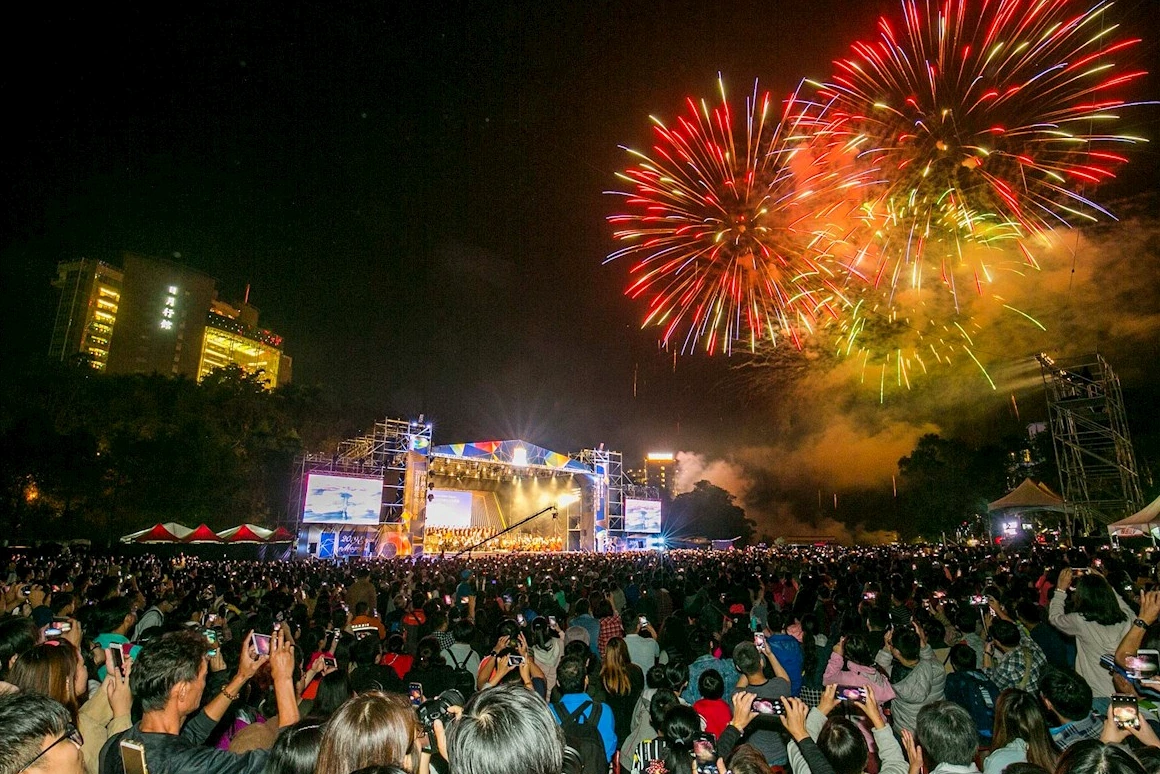
That Eastern philosophical stillness awakens dramatically during festival season, when the waterscape becomes the stage for the Sun Moon Lake Come!Biked Music Festival, one of the grandest live sound-and-light productions in Taiwan. Set within the natural basin acting like a giant amphitheater with superb acoustics, renowned symphony orchestras take turns performing classic Western fusions intertwined with Thao folk ballads and traditional Taiwanese songs. The night reaches its climax when thousands of high-altitude fireworks are launched straight from barges anchored in the center of the lake. The night sky blazes with multicolored bursts while the still waters of Sun Moon Lake immediately mirror every sparkling streak, creating a breathtaking double symmetry that transforms the entire ink-wash setting into a grand spectacle of sound and vibrant color.
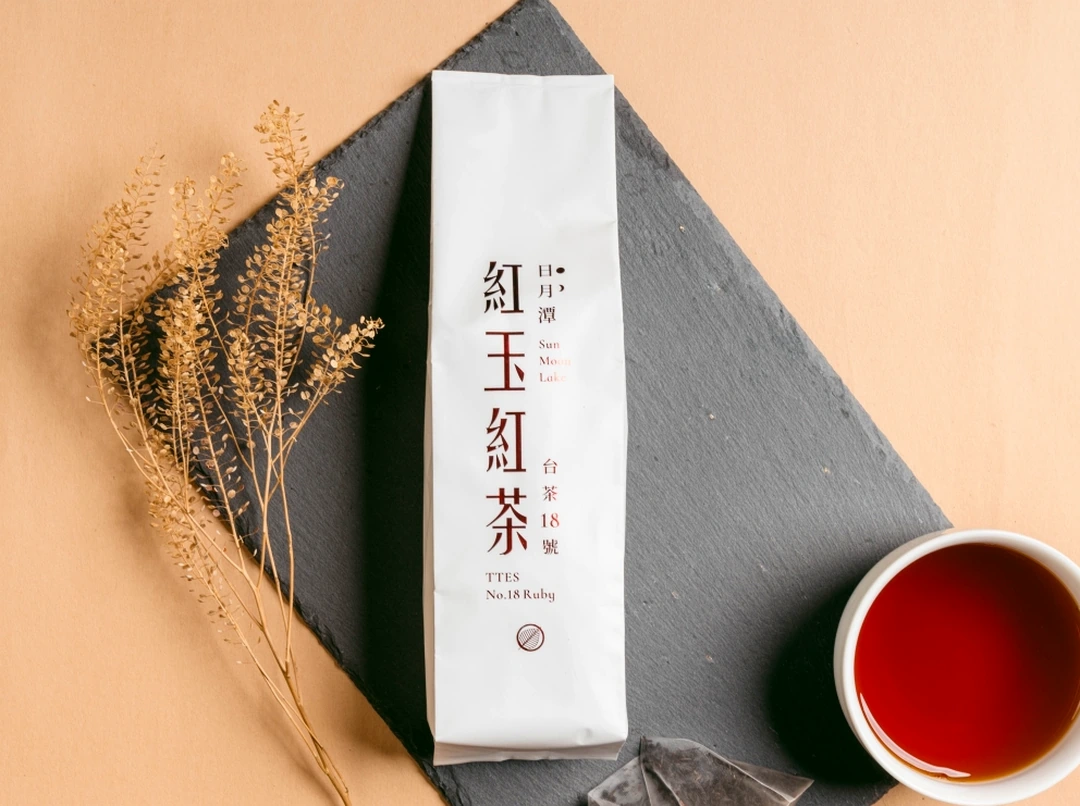
As the resonant strains of the symphony orchestra fade away, the lake’s evening pace returns to its natural ease inside quiet teahouses in Shuishe or Ita Thao. Visitors can pick a lakeside balcony spot, sip renowned Shuishe black tea or Taiwan Tea No. 18 (Ruby) fragrant with cinnamon and mint, and listen to the distant temple bell of Wenwu Temple tolling slowly across misty water.
The waterscape of Sun Moon Lake not only captures raw natural grandeur, but also nurtures a deeply layered culinary tradition where refined court associations meet rustic highland living. The first signature dish tied to modern local history is President Fish, known locally as quyao (scientific name: Hemiculter leucisculus). This freshwater fish thrives naturally in the deep, cool waters of the lake, featuring a distinctively curved body and snowy white flesh so tender it seems to melt on the tongue. Old lore records that during his stays at the lakeside lodge to reflect quietly on affairs of state, former leader Chiang Kai-shek became so fond of the fish’s pure flavor that locals respectfully renamed it President Fish. To preserve its clean natural sweetness, local cooks typically prepare it in a minimalist traditional steam with fresh ginger, scallions, and a splash of rice wine, or braise it richly with traditional bean paste for a savory, umami finish that captivates travelers.
Leaving behind the nostalgic flavors of the former retreat, visitors encounter the primal food culture of the Thao—the oldest indigenous community tied to the lake’s shores. Most memorable in diners’ minds is wild mountain boar grilled on natural stone slabs. Carefully selected firm cuts are placed directly onto slabs heated red-hot over charcoal, letting steady heat slowly render excess fat so the skin turns crisp while the meat inside stays juicy and sweet. Highlighting this rustic grill is a soul-stirring highland spice called makauy—wild mountain pepper of Taiwan’s high peaks, carrying an enchanting aroma that blends warm lemongrass with refreshing wild lemon peel. The grilled feast rises even higher with a cup of golden millet wine, hand-fermented by family methods from abundant millet harvests, offering a gentle initial sweetness before warming into a cozy glow amid drifting mountain mist.
Whenever renowned lakeside delicacies come up, no trip feels complete without stopping at the Xuan Guang Temple pier to enjoy famous Grandma Tea Eggs. Originating from a modest stall beside the landing more than half a century ago, this family-recipe tea egg has become an enduring culinary icon across Nantou. The secret behind Grandma Jinpen’s fame lies in a pot simmered painstakingly for hours, blending celebrated Yuchi Assam black tea—Taiwan Tea No. 8—with fresh highland shiitake mushrooms and carefully selected free-range eggs. Fine porcelain-like cracks spread evenly across the shell over hours of gentle simmering, allowing tea liquor and mushroom sweetness to seep all the way into the yolk. Peeling back the deep brown shell, diners taste a rich, creamy melt infused with clean natural herbal notes and zero egginess.
Sun Moon Lake’s culinary portrait would feel incomplete without a sip of pure Ruby tea at dusk as mist blankets the water. Through historical shifts since the colonial era—when original Assam tea cultivars were brought from India’s highlands for trial cultivation in Yuchi’s misty soil—Taiwanese artisans patiently nurtured and crossbred the premium cultivar numbered Taiwan Tea No. 18, gracefully known as Ruby. Poured into a porcelain cup, the liquor gleams a ruby-red hue like a signature heritage set in turquoise waters. Just a gentle sip brightens the palate with a vibrant burst of cinnamon aroma, followed by a subtle, cooling hint of mint lingering at the back of the throat. Sipping a cup of Ruby tea beside the lake while hearing the bell of Wenwu Temple echo from a distant slope is a moment that reaches the height of savoring earthly pleasures.
To take in the misty beauty and solemn spiritual depth around Nantou’s waters, knowing the operating rhythm of key stops helps keep the journey smooth and unhurried. The Wenwu Temple complex welcomes visitors from 6:00 AM to 9:00 PM daily with no admission fee. These generous hours let travelers unhurriedly take in crisp morning air at dawn, or admire the front halls glowing beneath antique lanterns as night settles over the lake. Meanwhile, the peaceful outdoor grounds of Xuan Guang Temple remain open around the clock for quiet sightseeing, while the Xiangshan Visitor Center—the sculptural concrete building blending into the natural terrain—is open from 9:00 AM to 5:00 PM with free admission.
Public transit connecting to Sun Moon Lake is well organized, making travel straightforward even for first-time visitors to the island. Starting from Taichung High Speed Rail (THSR) station, travelers simply board the dedicated Taiwan Tourist Shuttle Sun Moon Lake route to head straight to the Shuishe transfer station right beside the lake. Once at the water’s edge, scenic lake ferries operate continuously from 9:00 AM to 5:00 PM, gliding guests across the turquoise surface. Boats run on a fixed clockwise loop linking three main piers: departing from central Shuishe Pier, gliding past lively Ita Thao Pier with its Thao community spirit, docking at historic Xuan Guang Pier, and looping back. Alongside boats, a graceful option not to miss is renting an electric-assist bicycle to ride along the lakeside bike path once ranked among the top ten scenic lakeside cycling routes in the world, where wooden boardwalks curving over the water give the sensation of floating between sky, clouds, and mountain reflections.
Sitting at nearly 750 meters above sea level, the Sun Moon Lake basin has a high-mountain lake climate with notable swings between day and night temperatures. Travelers should pack a light windbreaker, compact rain gear, and sunscreen to adapt easily to sudden mountain weather shifts. Upon entering sacred halls at Wenwu Temple and Xuan Guang Temple, dressing neatly and modestly while speaking softly and respectfully is an unwritten etiquette showing reverence for the sages. Above all, to keep the native ecosystem intact, a strict “Leave No Trace” mindset should be followed: never toss food into the lake for aquatic life or feed wild Formosan macaques along cliffside paths, protecting natural wildlife behavior.
A well-paced trip combining fairyland scenery with thousand-year-old cultural layers is sure to leave lasting memories for every traveler. If you are planning a complete itinerary across classic highlights along Taiwan’s length, you can check the detailed schedule of our 5D4N Kaohsiung – Chiayi – Taichung – Taipei tour to take in this majestic scenery at a relaxed pace.