Beneath the vibrant clamor and dazzling neon glow of Taipei’s entertainment capital today lies more than a century of turbulent historical layers. The name Ximending—literally “West Gate District”—originated during the Japanese colonial period (1895–1945), when colonial authorities redesigned the urban landscape in the Japanese style. Reaching further back to the early Qing dynasty, this area was far from a bustling metropolis; rather, it was a desolate, waterlogged marshland sitting isolated outside Baocheng Gate—the West Gate of the old walled city of Taipei. Back then, this low-lying tract beside the Tamsui River was dotted only with bleak burial grounds and overgrown reeds, serving as a resting place for itinerant souls and largely untouched by the city’s middle-class residents.
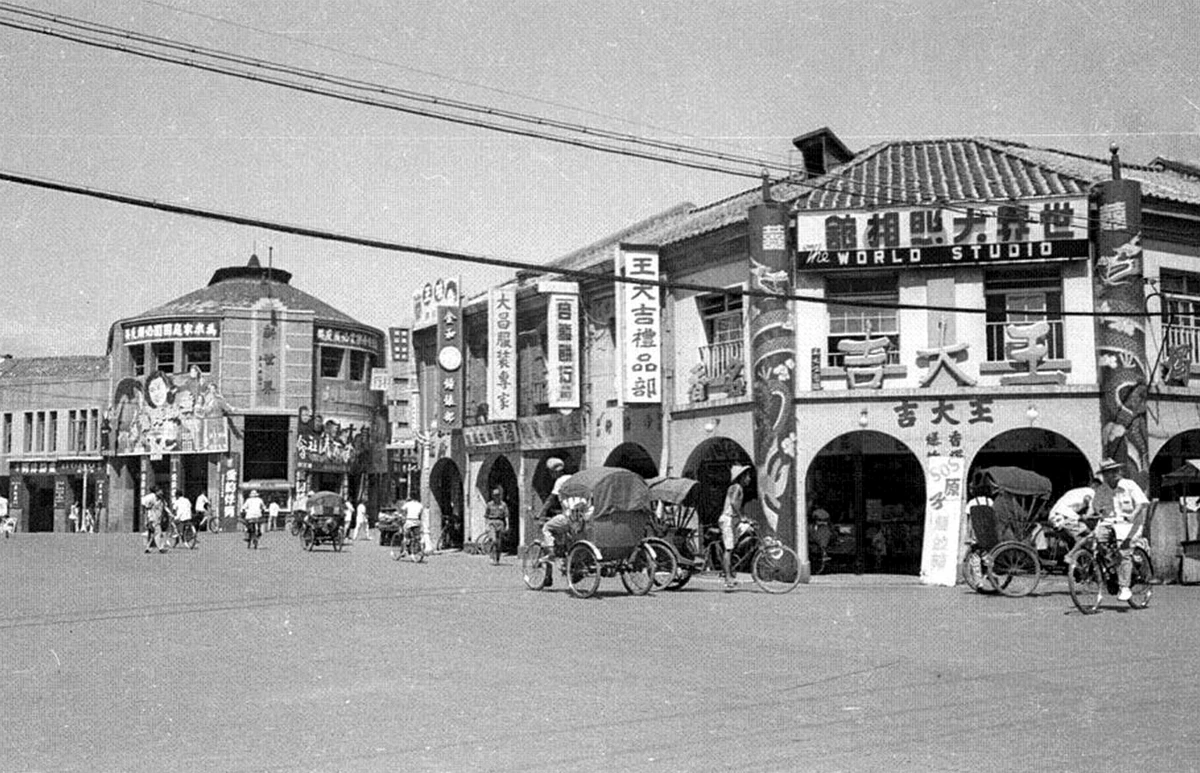
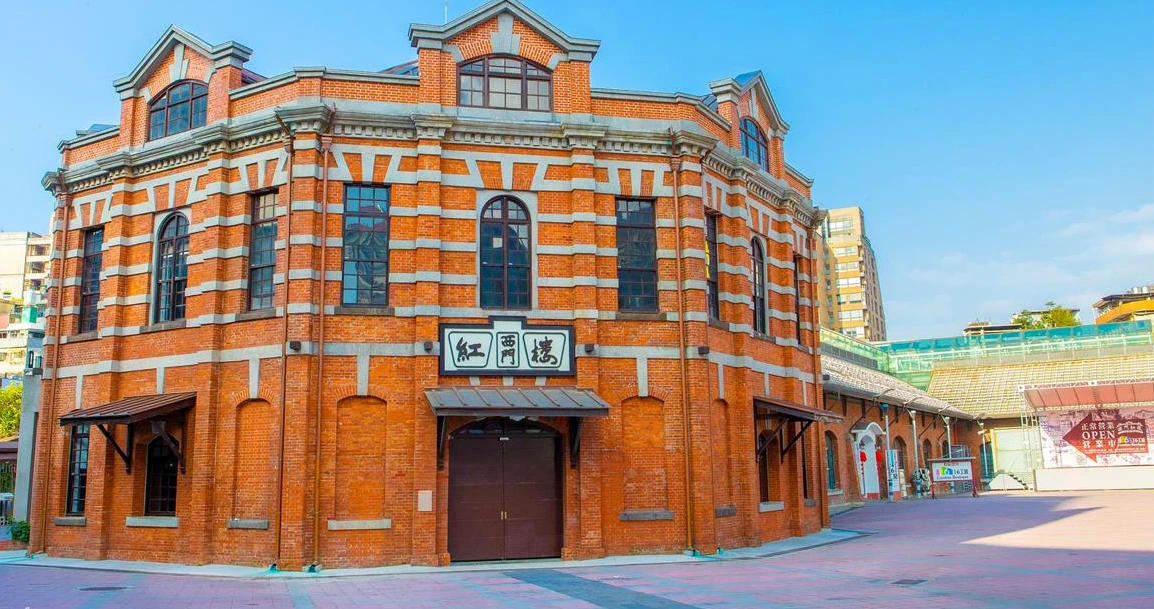
The tide began to turn following the watershed events of 1895, when the Qing court suffered defeat and signed the Treaty of Shimonoseki, ceding the entire island of Taiwan to the Empire of Japan. Recognizing its strategic gateway position linking the inner walled city with the bustling port of Monga (Wanhua), the Japanese launched a campaign to demolish the ancient city walls and pave the way for modernization. In 1896, pioneering Japanese merchants laid the commercial groundwork by establishing Taipei’s first modern market here. An iconic architectural turning point arrived in 1908 during the Meiji era, when architect Kondo Juro designed the Ximen Market—today celebrated as the historic Red House (Ximen Red House). This distinctive octagonal red-brick building was purposefully conceived according to Bagua feng shui principles to ward off the lingering miasma of the old cemetery, joined at the rear by a cruciform wing symbolizing convergence from all four directions, transforming the former marshland into an entertainment hub modeled directly after Tokyo’s lively Asakusa district.
After 1945, a massive influx of military personnel and civilians migrating from mainland China to Taiwan in the wake of the civil war sparked an unprecedented cultural fusion. Ximending rapidly underwent a wave of Sinicization, gradually shedding its colonial veneer to take on the vibrant energy of transplants hailing from Shanghai, Jiangsu, Sichuan, and Fujian. To provide housing and livelihoods for waves of displaced residents living in makeshift shanties, the Taipei city government broke ground in 1961 on the Chunghwa Market (Zhonghua Market) along the railway line on Zhonghua Road. This monumental complex comprised eight interconnected three-story buildings named after the eight traditional Confucian virtues—Loyalty, Filial Piety, Benevolence, Love, Trust, Righteousness, Harmony, and Peace—stretching for over a kilometer. Boasting the grandest scale in the Far East at the time, Chunghwa Market was not only a thriving emporium for department stores, electronics, and tailoring, but also a culinary cradle nurturing countless nostalgic regional dishes brought over by mainland chefs.
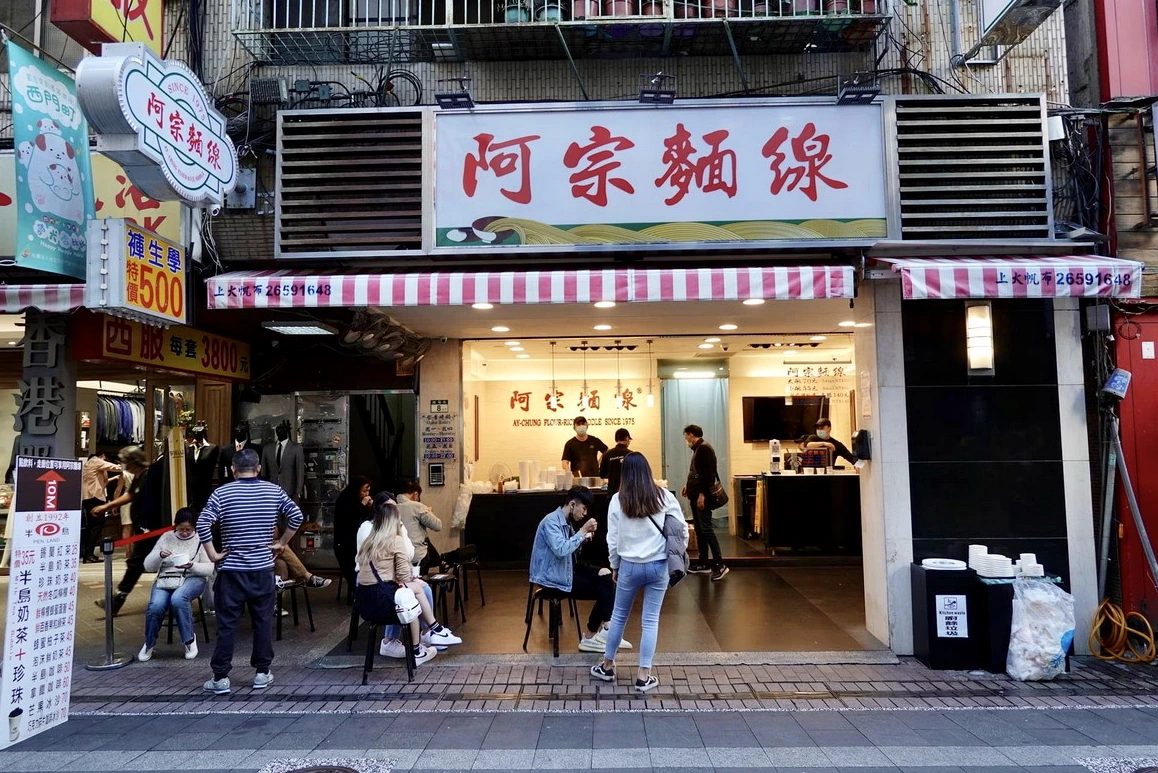
Amid this ever-shifting historical backdrop, grassroots entrepreneurial stories also etched themselves deeply into the city’s collective memory. In 1975 (Year 64 of the Republic), at the height of the district’s cinema golden age, a struggling film director known by the stage name Ay-Chung decided to chart a new path in life. He set up a humble pushcart on Emei Street to sell heirloom pork intestine rice vermicelli simmered in a velvety bonito-flake broth thickened with sweet potato starch. That leap from the silver screen to street food gave birth to Ay-Chung Flour-Rice Noodle, an unmistakable culinary institution where all social boundaries dissolved as everyday locals and movie stars alike stood happily along the curb slurping down piping-hot bowls of noodles.
By 1992, to make way for the underground railway project and the construction of the Taipei Metro system, Chunghwa Market fulfilled its historic mission and was formally demolished, bringing a nostalgic chapter for the immigrant generation to a close. Determined not to let the neighborhood fade into obscurity, the city government made a bold move in 1999 by designating the district’s main arteries as Taiwan’s first pedestrian-only shopping zone. That landmark decision reinvented an aging urban quarter into a mecca of youth culture—a dynamic crossroads of cosplay artistry, streetwear fashion, and endless late-night dining that affirms the enduring vitality of a neighborhood shaped by centuries of change.
Nestled squarely in the low-lying heart of the Taipei Basin, Ximending occupies a remarkably distinctive micro-topography formed entirely by fertile alluvial deposits from the lower reaches of the Tamsui River system. In terms of natural geography, this premier commercial corridor hugs the eastern bank of the Tamsui River, positioned right at the bend near the historic confluence of two vital tributaries: the Xindian Creek and the Dahan Creek. Back when merchant junks plied these waterways to load and unload loose-leaf tea, camphor, and agricultural goods along the river wharves, this intricate network of waterways not only guaranteed Ximending’s status as a golden river port, but—through the lens of classical geomancy—also served as an inexhaustible wellspring of vital energy nourishing the entire western side of the old city. The meeting of these two major rivers was likened to a coiling dragon gathering the abundant primal energy of the entire plain before flowing out to sea, laying an unshakable foundation for a prosperous urban center that has endured across eras.
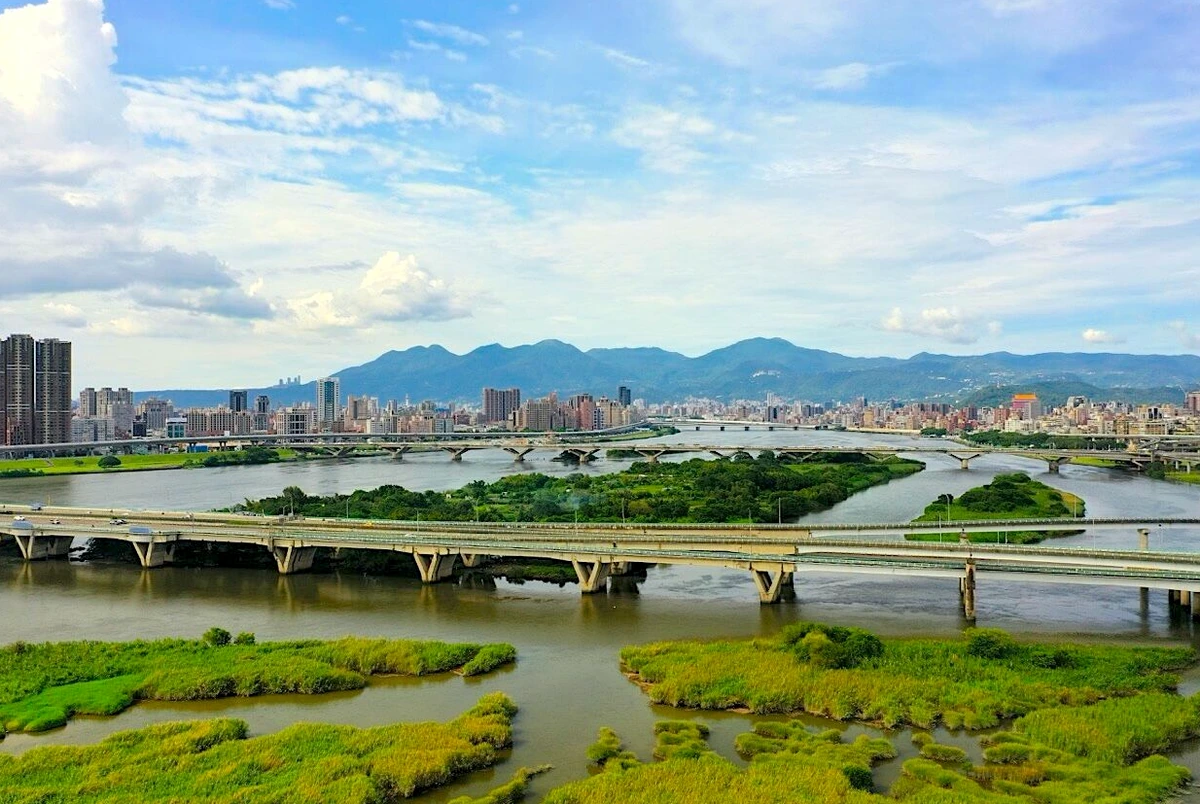
From a classical feng shui perspective, Ximending’s flourishing prosperity stems directly from an infrastructure grid laid out in strict accordance with the “cruciform embrace” formation and the “four waters converging on the hall” principle. The disciplined intersection of backbone thoroughfares—including Zhonghua Road, Chengdu Road, and the pedestrianized Hanzhong Street—forms a sturdy cross-shaped cradle that acts both as a protective screen and as a funnel drawing wealth energy from every direction into the central basin. In feng shui, water symbolizes wealth, and as the natural flow of nearby rivers translates into bustling streams of pedestrians and traffic across the streets, this “four waters converging” layout keeps prosperity circulating in a closed loop without dispersing outward. This compact yet highly permeable spatial structure explains the relentless economic vitality of thousands of food stalls, tea shops, and cinemas glowing around the clock.
The bond between historic city-wall heritage and modern engineering further cements Ximending’s singular stature. Today’s Ximen MRT Station sits directly atop the historic coordinates of Baocheng Gate—the grand West Gate of old Taipei City—which once served as a vital “breath gate” regulating commerce between the fortified inner city and the riverside markets. When the modern underground transit network was completed as a strategic multi-level interchange between the east-west Bannan Line and the north-south Songshan-Xindian Line, this geological stratum was activated like a colossal artificial meridian network. Underground trains generate continuous momentum and an endless human current, turning the station into a massive hub that draws in and releases hundreds of thousands of visitors daily through its exits, sustaining a vibrant pulse across the entire commercial district above ground.
Stepping up to street level, visitors immediately feel the seamless harmony between orderly transit planning and the sensory explosion of a true street food paradise. Stone-paved pedestrian lanes are framed by vertical cascades of glowing neon signs reflecting off rain-slicked pavement after a tropical island shower. Food stalls are densely arranged along herringbone alleyways, where the rich fragrance of bubbling brown sugar tapioca pearls mingles with the savory steam rising from woks frying five-spice XXL chicken cutlets. Crowds pack the lanes yet flow smoothly around winding corners, passing beneath the red-brick octagonal silhouette of the Red House standing beside sleek modern glass facades—capturing a quintessential portrait of a neighborhood that honors its geomantic roots while thriving in the rhythm of contemporary urban life.
Standing strikingly at the crossroads of Taipei’s past and present, Ximending’s architectural landscape unfolds as a multi-layered urban tapestry where early twentieth-century landmarks stand shoulder to shoulder with sleek commercial complexes. At the heart of this heritage zone sits the Ximen Red House, a masterpiece designed by Japanese architect Kondō Jūrō during the colonial era. The landmark comprises two closely integrated structures: the Octagonal Building in front, symbolizing the Bagua to attract auspicious energy from all eight directions, and the Cruciform Building behind it, embodying the disciplined cross-shaped layout of early permanent market halls. This symbolic geometric interplay defines the unmistakable identity of the entire complex, turning it into a living architectural museum amid the vibrant streetscape.
Examining its craftsmanship in detail, the Octagonal Building represents a pinnacle of transitional East-meets-West construction engineering. The edifice pairs load-bearing brick-and-stone masonry walls with an overhead steel roof truss system, freeing the interior span from obstructive support columns. Its exterior walls are laid in meticulous English bond—alternating courses of headers and stretchers—accented with Dutch-style transitions to ensure enduring structural cohesion. Notably, the foundation plinths and critical wall corners were built using premium red bricks stamped with the raised “TR” insignia of the Taiwan Renga Brick Company, a testament to superior firing quality and remarkable moisture resistance against the island’s humid subtropical monsoon climate.
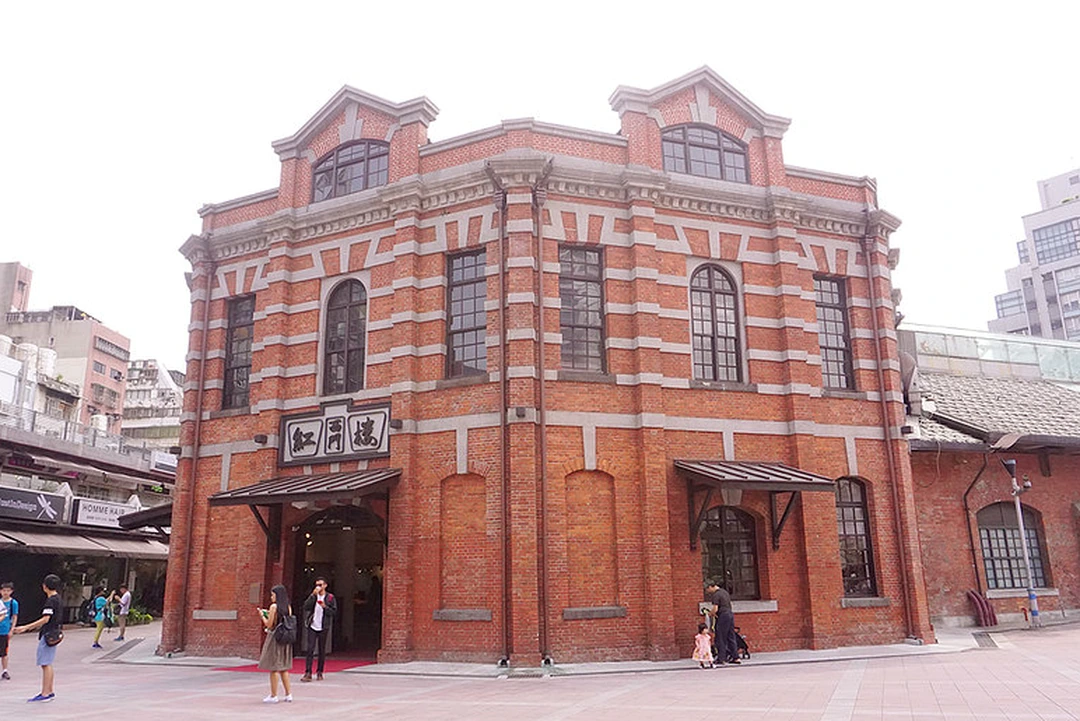
Traditional timber joinery is equally showcased in the roof framing supporting the Octagonal Building. Period engineers sourced solid Hinoki cypress harvested from Taiwan’s high mountain ranges—prized for its resilient grain, natural termite-repelling essential oils, and extraordinary flexural strength. Precision mortise-and-tenon joinery was reinforced with iron straps and metal tie bolts, creating a resilient space-frame structure that has withstood seismic tremors for more than a century. Connected immediately to the rear, the Cruciform Building reflects the dawn of modern functionalism, pairing reinforced concrete with a prefabricated iron frame topped by traditional Japanese black Kawara roof tiles—creating an enchanting visual rhythm between the warm crimson of the brickwork and the somber slate-gray sweep of the tiled roof.
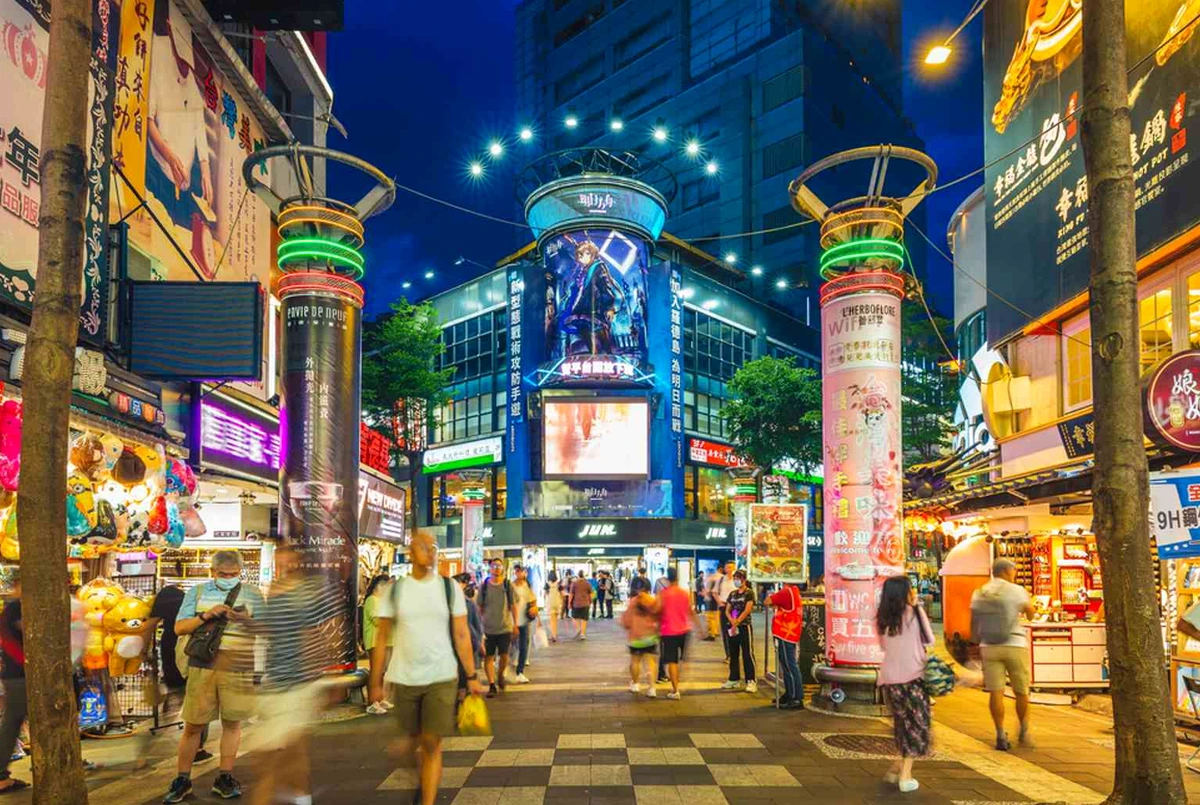
Surrounding this historic core is a sprawling modern commercial grid spanning dozens of hectares, crisscrossed by radiating pedestrian streets. Most of the residential and commercial buildings framing the district rise four to ten stories high, built on sturdy reinforced concrete frames paired with long-span structural steel. Along the primary avenues, commercial storefronts make full use of transparent glass curtain walls that open up sightlines and reflect ambient light dramatically. Once dusk falls, the entire neighborhood transforms into a colossal visual stage illuminated by dense tiers of ultra-bright LED lightboxes and high-definition digital billboards wrapping major intersections—turning Ximending’s street food and fashion hub into a dazzling urban spectacle that never sleeps.
As twilight settles over the Taipei Basin, Ximending sheds its understated daytime demeanor to slip into the radiant guise of a futuristic metropolis where visual density reaches peak saturation. At the vital intersection of Zhonghua Road and Emei Street, multi-tiered giant LED screens broadcast vibrant animated advertisements alongside cascading lightbox signs jutting out from high-rise facades. This technicolor neon expanse conjures a distinctly cyberpunk aesthetic strongly reminiscent of Shinjuku’s electric Kabukicho or the canal-side bustle of Osaka’s Dotonbori. Sweeping beams of crimson, cobalt, and violet wash across the sleek asphalt of the pedestrian zone, reflecting throngs of passersby in a kaleidoscope that shifts with every step.
Providing a serene, soulful foil to the flashing digital displays of the modern commercial streets is the contemplative architectural lighting at the Ximen Red House. After dark, the early twentieth-century octagonal red-brick landmark is bathed in warm-toned wall-washing illumination. Carefully calibrated beams graze each mortar joint, accentuating the tactile patina of time-worn red bricks and crisply outlining its one-of-a-kind cruciform roofline. As night deepens, the open plaza behind the Red House blossoms into a laid-back social oasis dotted with outdoor tables glowing beneath string lanterns, where visitors sip fragrant cocktails while savoring the seamless blend of modern heritage and the open, free-spirited pulse of one of Asia’s most dynamic cities.
Ximending’s nightlife is equally defined by unscripted street performances unfolding across subculture-infused alleyways. Along Cinema Street on Section 2 of Wuchang Street and Tattoo Street tucked along Section 2 of Kunming Street, youthful energy erupts beneath warm streetlights. Monumental, spray-painted graffiti murals form a dramatic backdrop for technical skateboarding runs, high-energy street dance battles, and young enthusiasts dressed in intricate anime cosplay. This fusion of street art, booming hip-hop beats, and rebellious fashion turns these winding lanes into a living gallery of contemporary urban culture where anyone can carve out their own space of creative freedom.
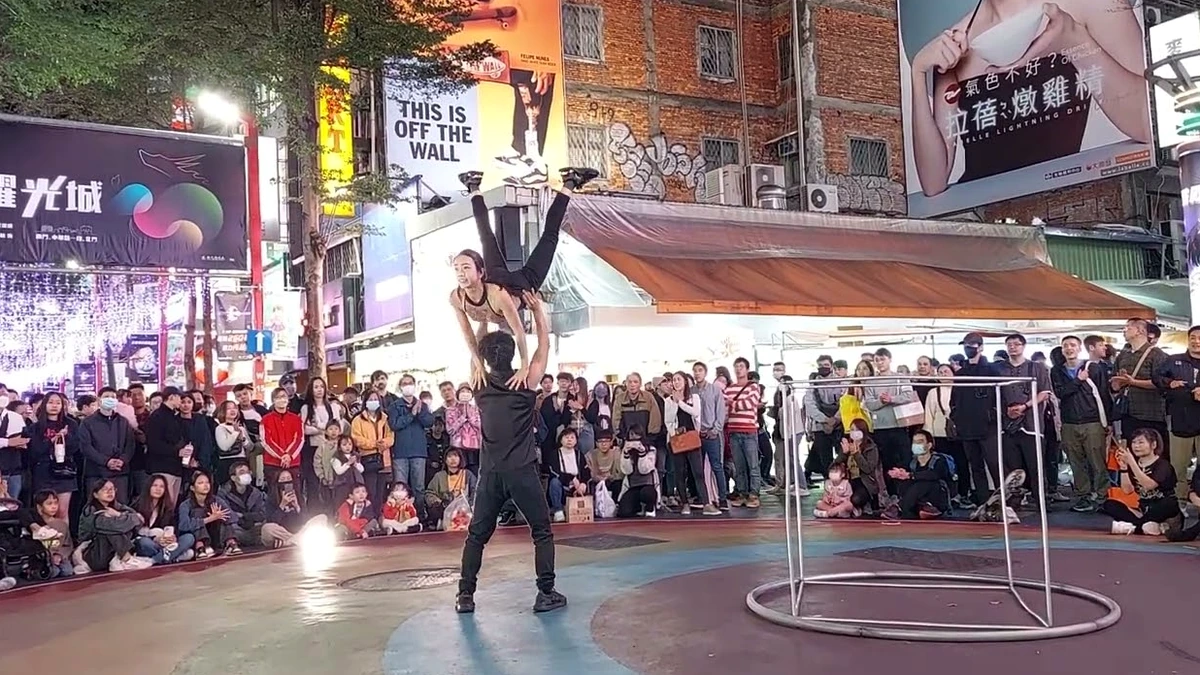
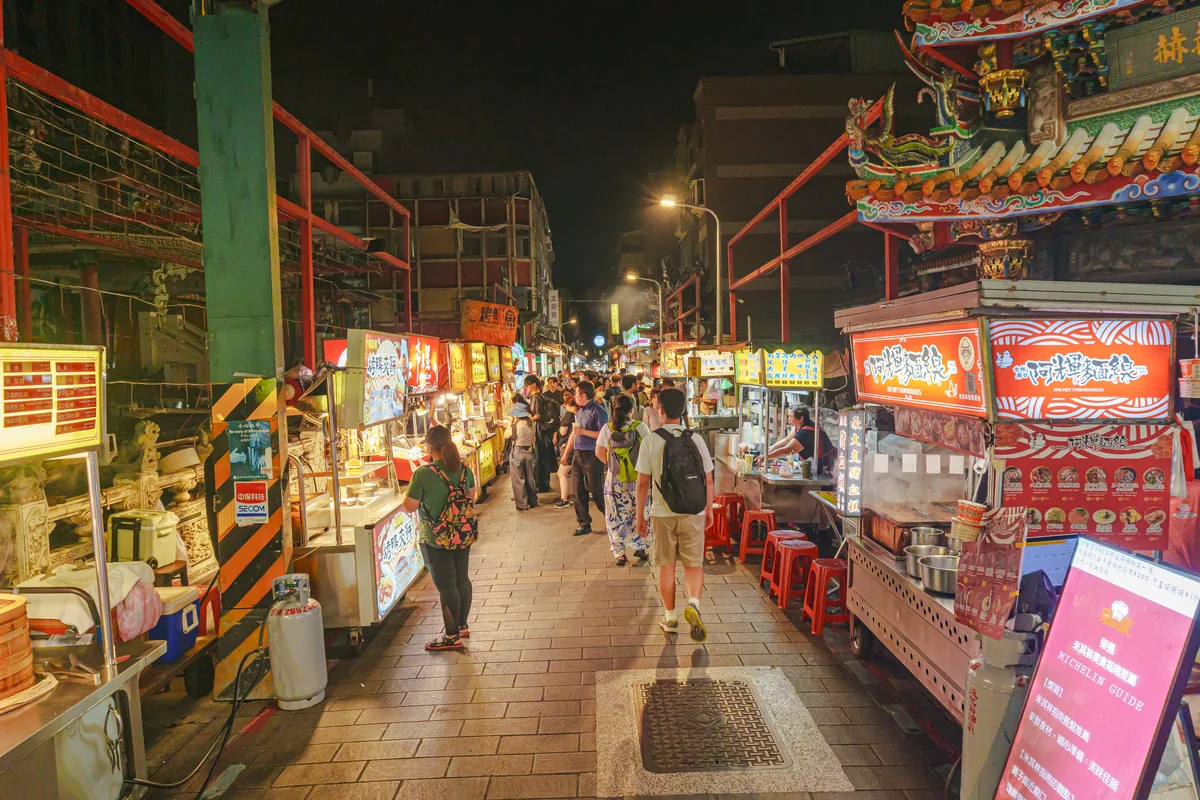
The magic of Ximending after dark only reaches full bloom when light and sound merge with the ritual of late-night street dining. Beneath the glow of heritage neon signs, the clink of ice cubes shaking inside cups of bubble tea mingles with the lively sizzle of bubbling oil vats at giant fried chicken stalls. The savory aroma of crispy batter, pungent white pepper, and fragrant steam rising from bowls of braised intestine vermicelli weaves a heady tapestry of scent and color through every alley. Standing amid endless crowds—clutching a piping-hot chicken cutlet in one hand and sipping rich milk tea beneath a canopy of electric light—visitors dissolve effortlessly into Taiwan’s ultimate nocturnal feast for the senses.
Beneath the radiant glow of Ximending’s myriad neon signs, a traveler’s culinary pilgrimage begins where time seems to stand still at Ay-Chung Flour-Rice Noodle (阿宗麵線). Born in 1975 from a humble pushcart, this institution has carved an unmistakable street-food ritual into Taipei’s collective memory. The soul of its celebrated vermicelli lies in a glossy, amber-hued broth slow-simmered for hours with pork bones, dried flatfish, and steaming wisps of shaved skipjack bonito (katsuobushi). Handcrafted red rice vermicelli—prized for holding its silky chew even at a rolling boil—is ladled out with meticulously cleaned pork intestines that have been parboiled and braised tender in a secret master sauce infused with over a dozen prized Chinese medicinal herbs. With no tables and no chairs, the stripped-back setup gave rise to the iconic “standing-room-only” dining custom: long queues of locals and travelers cradling steaming paper bowls, slurping spoonfuls laced with tangy black vinegar, pungent minced garlic, and fiery chili paste right on the bustling street corner.
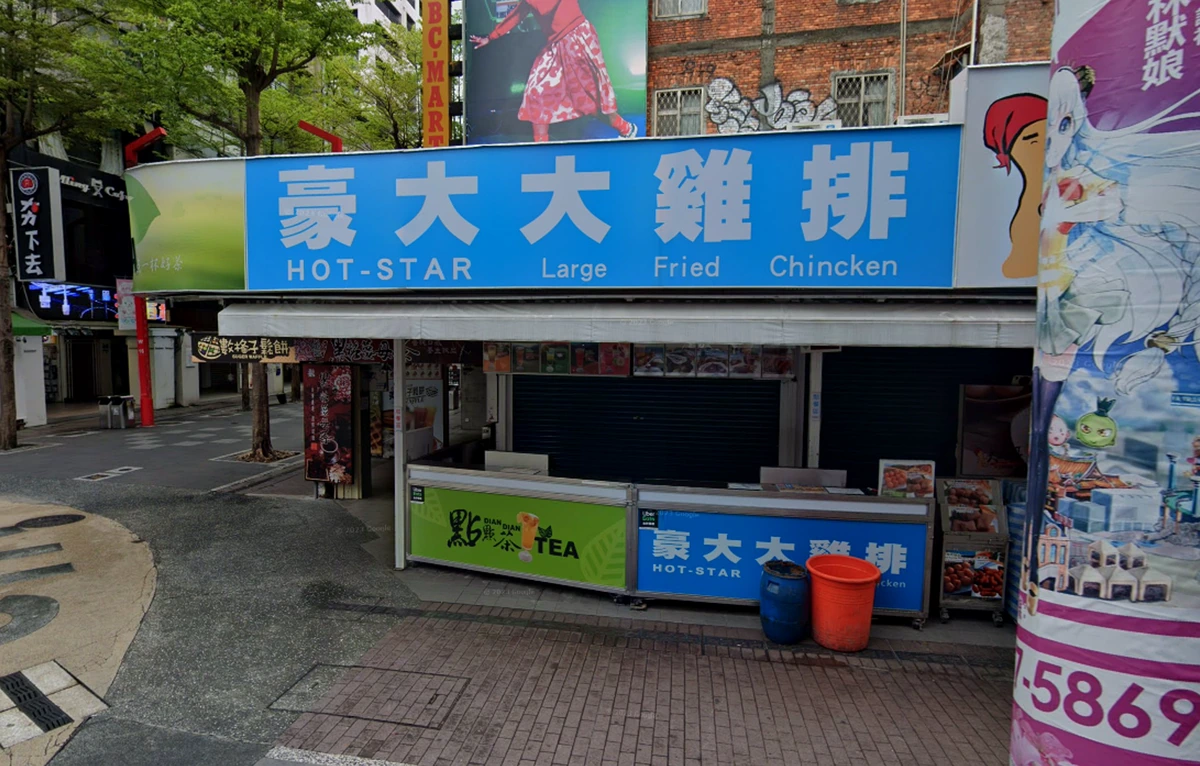
Right beside the comforting depth of traditional rice vermicelli lies the irresistible draw of Hot-Star Large Fried Chicken (豪大大雞排). Founded in 1992 before putting down deep roots on the corners of Ximending, this iconic street snack elevates a humble cut of poultry into pure culinary theater. Chefs select fresh, bouncy chicken breasts, employing a deft butterfly cut to slice the meat thin horizontally before tenderizing the fibers with a meat mallet. Marinated overnight in a fragrant blend of five-spice powder, rice wine, and soy sauce, each cutlet is dredged in coarse-grained sweet potato starch. Plunged into hot oil at precise temperatures, the coating puffs into a craggy, golden crunch that seals in juicy, sweet meat within. Larger than an adult’s face and dusted generously with aromatic spiced pepper salt, every sizzling cutlet exerts an undeniable pull on night-market strollers.
No culinary tour of Ximending would be complete without authentic Taiwanese bubble tea, the beloved drink that began its global cultural conquest in the 1980s. Here, tea-brewing craftsmanship achieves exquisite balance between the brisk astringency and sweet finish of high-mountain oolong, Ceylon black tea, or jasmine-scented green tea, swirled seamlessly with creamy milk. What defines the signature texture, however, are handcrafted cassava-starch tapioca pearls boiled to perfection and steeped in glossy brown sugar syrup—gliding smoothly across the palate while delivering the springy, delightfully chewy bite locals affectionately call “QQ.”
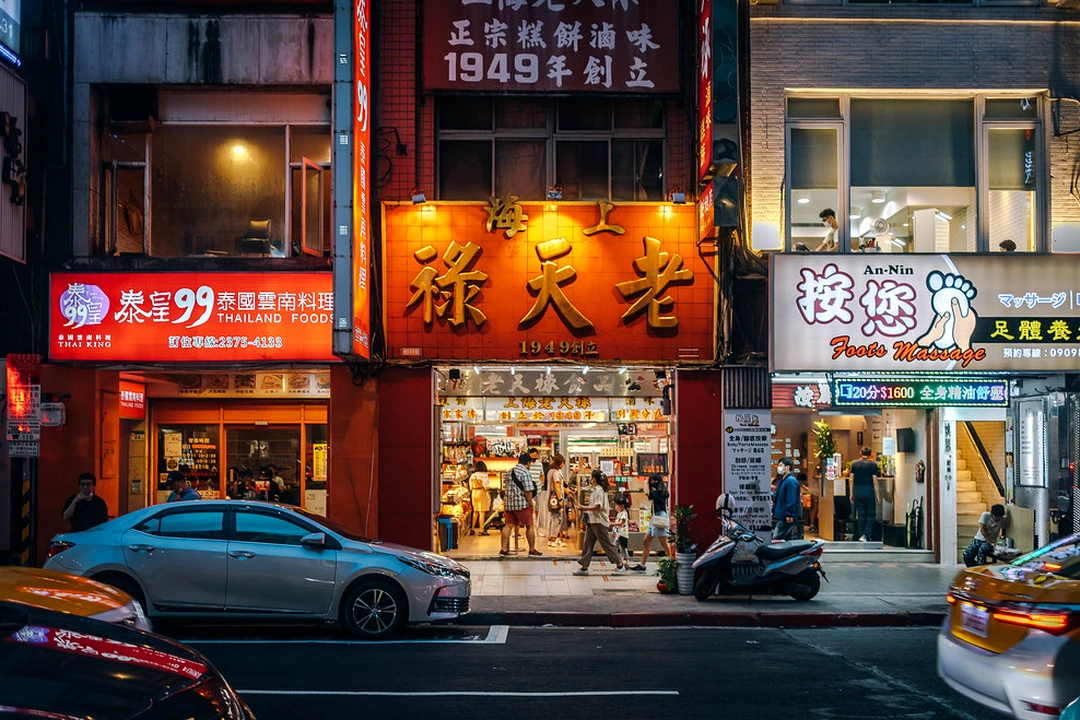
The neighborhood’s heritage culinary map is further enriched by Shanghai Lao Tian Lu Braised Delicacies (上海老天祿滷味), a venerable shop preserving over half a century of herbal braising tradition through glossy, mahogany-glazed duck feet and duck tongues brimming with savory spice. To cap off a rich tasting tour, towering bowls of Ximending Mango Shaved Ice (西門町芒菓冰)—heaped with juicy fresh mango chunks, drizzled with sweetened condensed milk, and crowned with creamy ice cream—offer the ultimate refreshing finale to an evening stroll through the vibrant city.
To experience Ximending at its most vibrant, timing your visit across its different daily rhythms makes all the difference. While the pedestrian street network itself remains open around the clock, trendy fashion boutiques and department stores typically open their doors at 11:00 AM and wind down around 10:00 PM. Iconic food stalls—most notably Ay-Chung Flour-Rice Noodle (阿宗麵線)—hit their busiest peak between 12:00 PM and 9:00 PM. On-the-ground experience shows that the sweet spot to begin exploring is between 3:00 PM and 5:00 PM, when soft afternoon sunlight illuminates the nostalgic early-modern architectural details; from 6:00 PM to 9:00 PM, prime time arrives to immerse yourself in neon-drenched streets, lively busking performances, and a technicolor street-food wonderland.
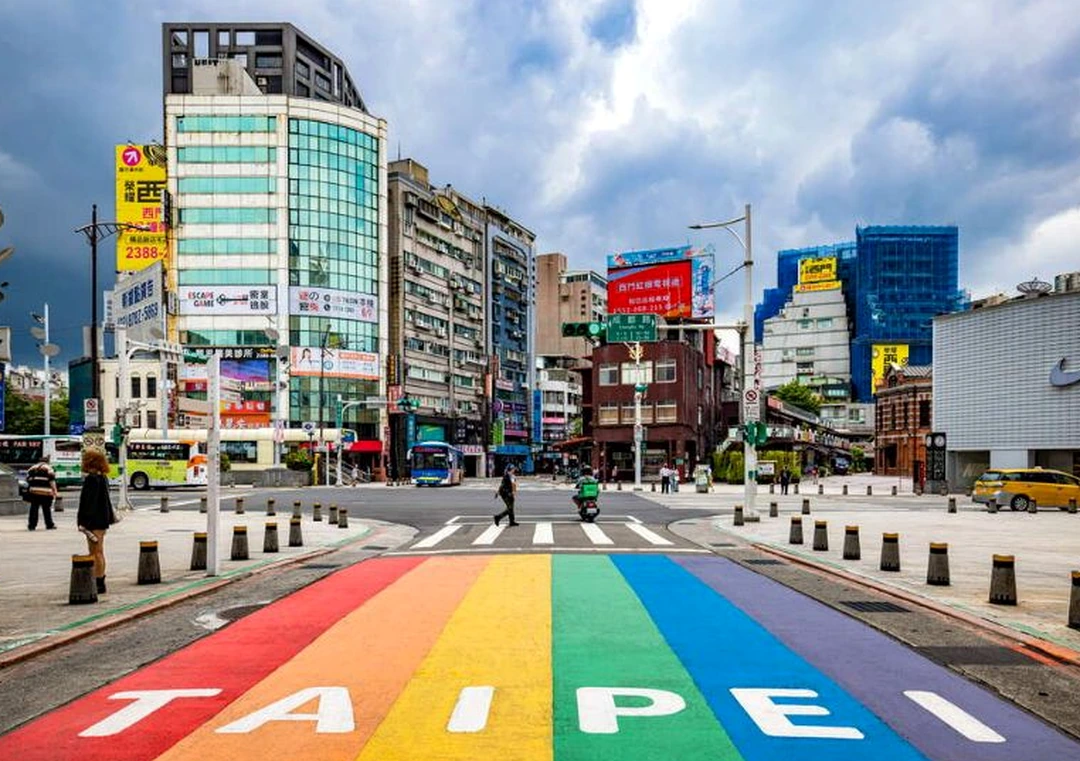
Taipei’s modern metro system offers effortless, pinpoint access to Ximending. Travelers can hop on either the blue Bannan Line or the green Songshan-Xindian Line directly to Ximen Station. Choosing the right station exit saves plenty of walking: Exit 1 leads south directly toward the peaceful courtyard of the octagonal Ximen Red House and its indie craft-art markets, whereas the legendary Exit 6 opens straight onto the bustling rainbow crosswalk plaza at the heart of the main pedestrian artery and core dining hubs.
At the Ximen Red House architectural complex, visitors enjoy free admission from 11:00 AM to 9:30 PM Tuesday through Sunday (the landmark closes every Monday for routine maintenance and preservation). When it comes to budgeting and payments, Ximending showcases a charming contrast between modern convenience and old-school tradition: while major department stores, cinemas, and chain restaurants readily accept contactless payments such as EasyCard (悠遊卡), Apple Pay, and Line Pay, most heritage pushcarts, giant fried chicken stalls, and craft bubble tea stands still operate strictly in New Taiwan Dollar (TWD) cash. Carrying a stash of 100-TWD and 50-TWD bills and coins will keep your transactions breezy amid fast-moving crowds.
On weekend evenings and major holidays, foot traffic in this commercial district routinely tops 100,000 visitors, creating a tightly packed sea of people. To keep your belongings secure, wear backpacks across your chest and tuck valuables, passports, and phones into zippered inner pockets. Wrapping up an evening wandering amid the smoky aroma of grilled squid and infectious laughter, you will feel the unstoppable pulse of a metropolis that never sleeps. For travelers eager to experience this dazzling atmosphere alongside a seamless journey through the island’s rich history and culture, start planning your adventure with a 5D4N Taipei – Taichung – Kaohsiung tour to savor Taiwan’s most authentic and unforgettable flavors.