The history of golden wheels of Gouda and Edam cheese did not begin with a random culinary recipe, but is deeply rooted in the resilient water management and taming of nature across the low-lying alluvial plains of Northwestern Europe. Turning back the clock to the twelfth century, under the rule of the Counts of Holland, lush pastures reclaimed by rudimentary dike systems began producing an abundance of cow’s milk far exceeding daily fresh consumption needs. To prevent this rich, creamy milk from spoiling in the damp coastal climate, local agricultural communities early on invented specialized milk-curdling and pressing techniques, laying the very first foundations for the world-renowned Gouda cheese. At that time, the town of Gouda was not merely a hub of artisanal production, but swiftly transformed into a vital waterway gateway—gathering produce from surrounding farms to organize strict quality inspection, weighing, and certification before distributing it throughout the lower Rhine region.
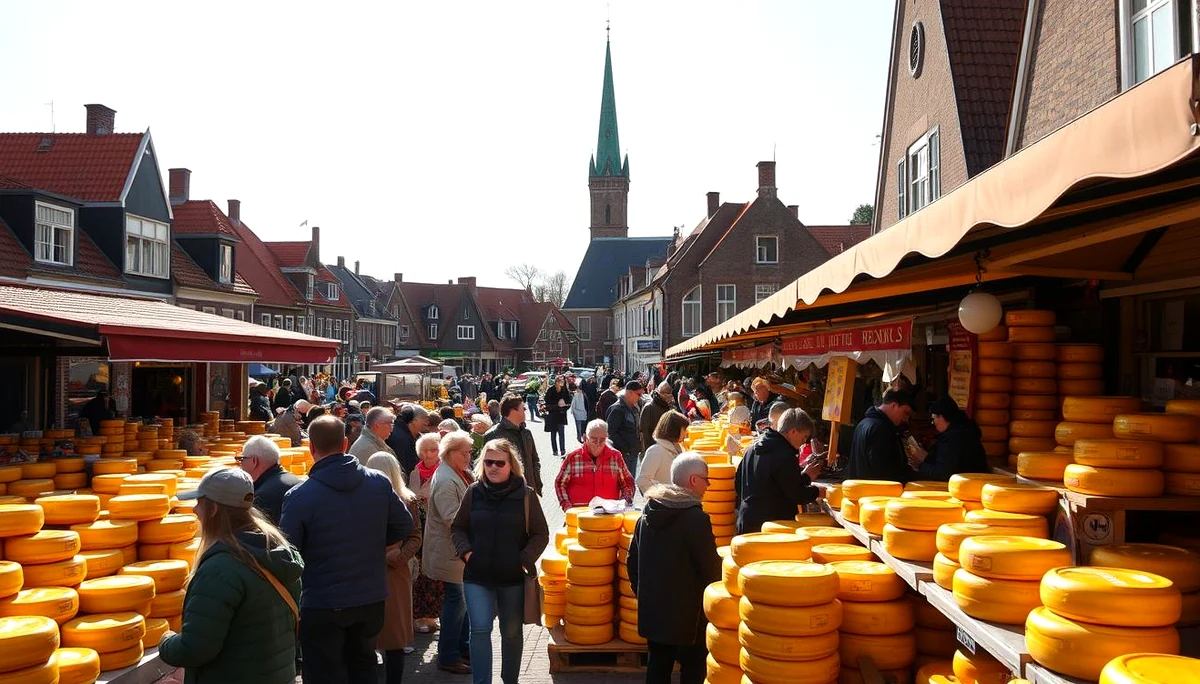
The turning point that cemented Gouda’s dominance in the Northern European market was marked on April 20, 1395, when Albert, Duke of Bavaria and Count of Holland, issued a supreme charter granting the town of Gouda the right to host regular weekly cheese markets. This institutional decree freed the dairy trade from fragmented feudal barriers, turning Gouda’s central square into the largest cheese trading and distribution center in Medieval Northern Europe. Seasoned merchants of the Hanseatic League quickly seized this commercial opportunity, turning Gouda’s flat, wheel-shaped cheeses into a premier export commodity along maritime routes across the North and Baltic Seas. It was also during this era that long-standing family cheesemaking lineages, most notably the van der Lee family, began establishing generational starter-culture secrets and humidity-control techniques inside ancient brick cellars, maintaining extraordinary consistency for the local specialty.
Alongside Gouda’s acclaim, Edam cheese carried a historical mission intimately tied to ocean-going sails and the dazzling Dutch Golden Age spanning from the fourteenth to the seventeenth centuries. Originating from lands resting along the breezy shores of the Zuiderzee bay, Edam early on asserted its role as a prosperous shipbuilding and fishing port. By 1520, another major royal milestone was set when Holy Roman Emperor Charles V officially ratified a charter granting Edam the right to own a public weigh house alongside the perpetual privilege of holding a cheese market. Under imperial patronage, this small coastal town rapidly rose to become one of the busiest agricultural transit hubs, welcoming tens of thousands of perfectly spherical cheese wheels each week for quality inspection.
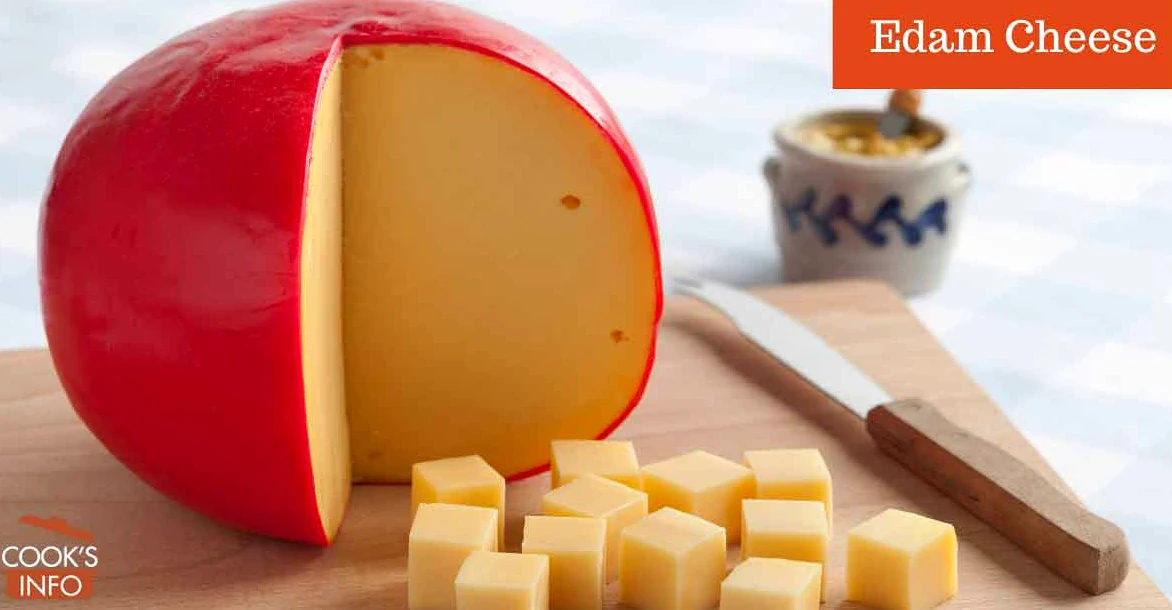
Changing times and the demanding requirements of the Age of Discovery directly shaped the distinct appearance and physical properties of Edam cheese. Acutely aware that mold and spoilage were the number-one enemies of provisions on long sea voyages, master Edam cheesemakers developed a firm spherical structure with exceptionally low moisture content, sealing the surface in a signature red coating made of natural beeswax and paraffin. This sturdy protective rind acted like biological armor, completely isolating the cheese paste from salty sea air and bacterial intrusion. Thanks to its ability to keep for years without deteriorating, Edam cheese quickly became an irreplaceable strategic ration aboard vessels of the Dutch East India Company, while also serving as a powerful form of “hard currency” traded for silk, pepper, and rare spices at distant Asian and African ports.
Through hundreds of years of turbulent European history—from the jurisdiction of the Medieval Dukes of Bavaria and the rule of the Habsburg dynasty to the heyday of maritime merchant capitalism—Gouda and Edam cheeses have transcended everyday sustenance to become living witnesses of history. The enduring legacy of the Kaasmarkt markets and the generational craftsmanship of families like the van der Lees stand as vivid testimony to the discipline, commercial acumen, and profound culinary knowledge of a nation that transformed every drop of milk from its marshy meadows into a globally celebrated cultural icon.
Nestled right at the heart of the prosperous Randstad metropolitan region, the birthplace of the two renowned cheeses, Gouda and Edam, stretches across two of the most emblematic landscape sub-regions in the land of windmills: the low-lying wetlands of Krimpenerwaard in South Holland and the watery expanse of Waterland in North Holland. The terrain here is a man-made geographical masterpiece sculpted over centuries of water control, defined by the classic polder structure—tracts of low-lying alluvial land below sea level securely enclosed by embankments. An intricate network of canals serves both as vital transport arteries and as an ideal drainage funnel, tightly integrated with sturdy flood dikes built solidly since the sixteenth century. Under the moderating influence of a cool, year-round humid temperate maritime climate, alluvial peat soil steeped in morning dew and sea breezes nourishes lush natural pastures rich in minerals and a one-of-a-kind native microflora.
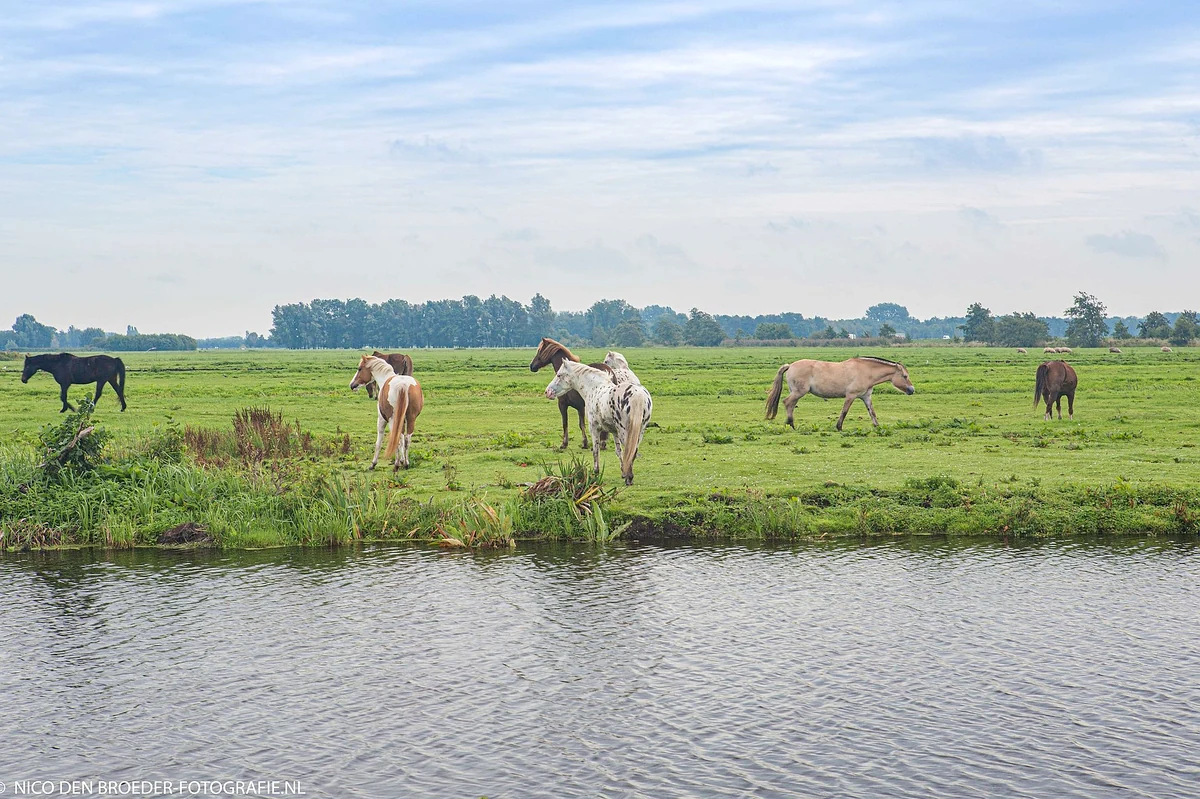
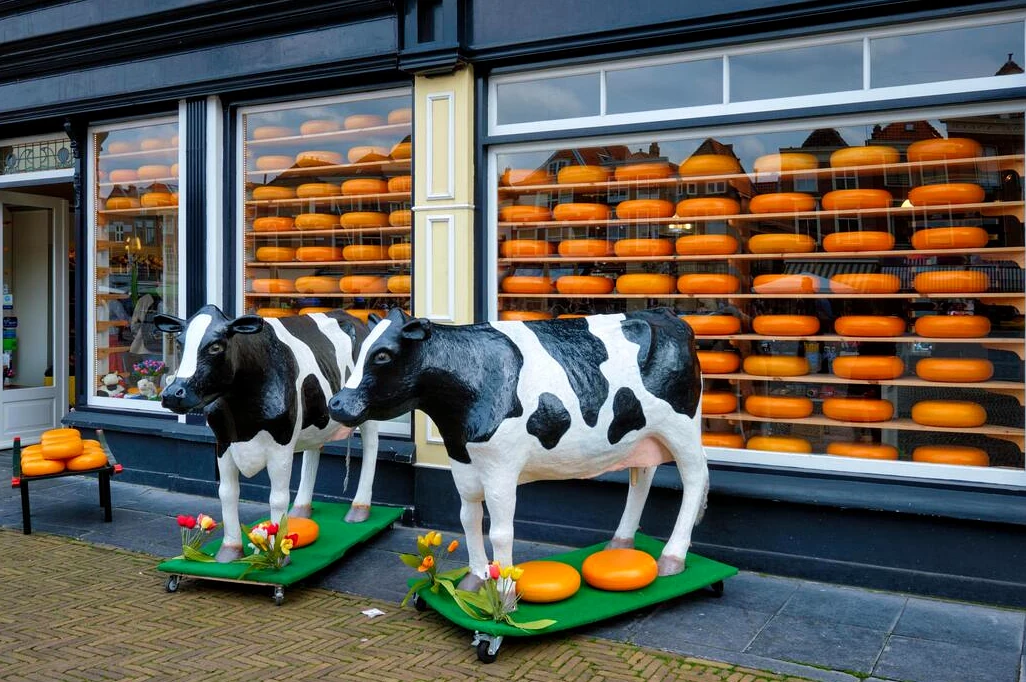
This fertile terroir is the ancestral homeland nurturing Holstein-Friesian dairy cattle with their distinctive black-and-white coats, an eternal emblem of Dutch livestock farming. Grazing freely across gentle dike slopes and endless floodplains, the herds distill the essence of coastal herbs to yield sweet whole milk boasting an ideal balance of butterfat and protein. The scenery here embodies a harmonious balance of land and water, where agricultural expanses stretch toward the horizon, gently divided only by reed-lined drainage ditches. Standing out against skies drifted with silver-gray clouds are historic drainage windmills—hydraulic mechanical marvels whose wind-driven sails once turned day and night to pump out excess water, keeping the pastures dry and supplying pristine raw milk for artisanal farmhouse cheese cellars passed down through generations.
The technical craft of cheesemaking in Krimpenerwaard and Waterland is an intangible heritage seamlessly uniting biochemical precision with traditional artisanal intuition. Fresh cow’s milk, still retaining its natural warmth right after milking, is immediately transferred into stirring vats, gently heated, and inoculated with starter cultures and natural rennet to coagulate into soft curds. Cheesemakers use specialized curd knives to cut the curds finely and drain away the whey thoroughly, then wash the curds with warm water to reduce acidity, creating a signature delicate, creamy sweetness before packing them into sturdy molds for pressing. While Edam is pressed into flawless spheres reminiscent of a full moon—convenient for rolling across the decks of ocean-going ships—Gouda is shaped into wide, flat wheels with gently curved edges. Afterward, the cheese wheels are submerged for several days in concentrated brine baths to encourage the formation of a natural biological rind, enhance firmness, and preserve authentic flavor.
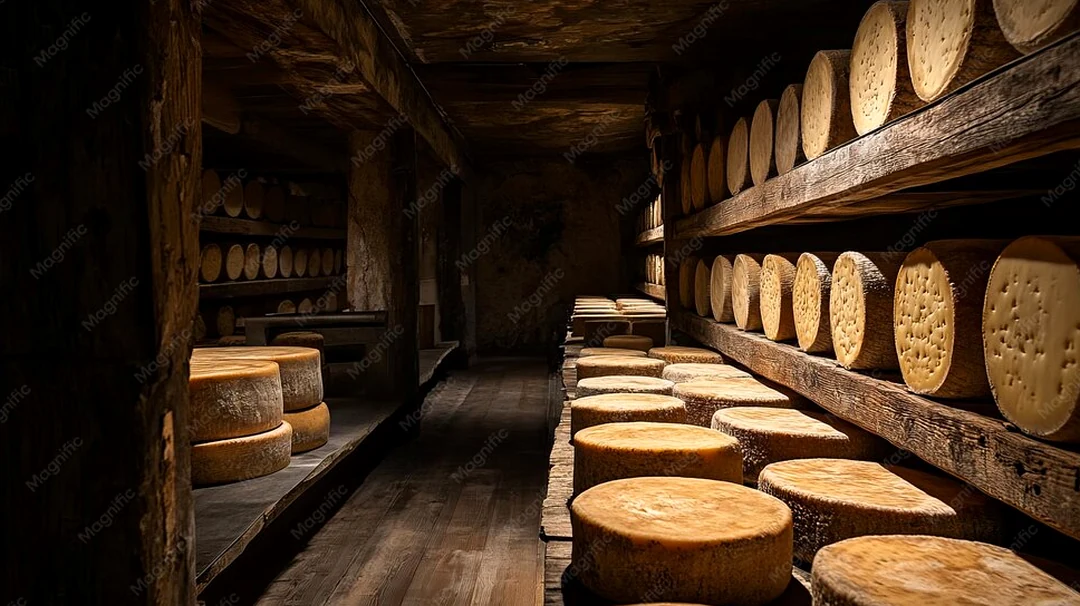
The finishing stage takes place in well-ventilated aging rooms, where the cheese wheels are arranged neatly on wide, untreated planks of raw pine wood. Damp, salty air drifting in steadily from nearby waterways stimulates enzymes to develop slowly, breaking down fat molecules over time. By ancient custom, finished Edam wheels intended for export are coated in crimson paraffin wax to prevent bacterial growth and lock in moisture on long sea voyages, whereas traditional farmhouse Gouda retains its natural golden rind, brushed periodically with a thin layer of vegetable oil. Depending on aging periods ranging from a few weeks for young, soft wheels hinting at fresh butter to several years for aged wheels crunchy with mineral salt crystals, each radiant golden wheel encapsulates the entire terroir of these resilient lowlands.
The cultural landscape bound to traditional Gouda and Edam cheeses extends far beyond the sweeping farms of the low-lying plains, standing as an architectural epic spanning from the Middle Ages to the early modern era of the land of tulips. At the center of this spatial tapestry lies one of the largest cheese market squares in the Netherlands in Gouda, proudly presided over by the Gouda City Hall (Stadhuis van Gouda). Begun in 1450 and completed in 1459 after a great fire devastated much of the town, this masterpiece represents the pinnacle of late Gothic architecture built in sturdy sandstone. Every slender soaring spire, intricately carved balustrade, and chiming carillon defines a sweeping civic stage where carpets of round, golden-yellow cheeses are laid out neatly like giant gold coins basking under the northern European sun.
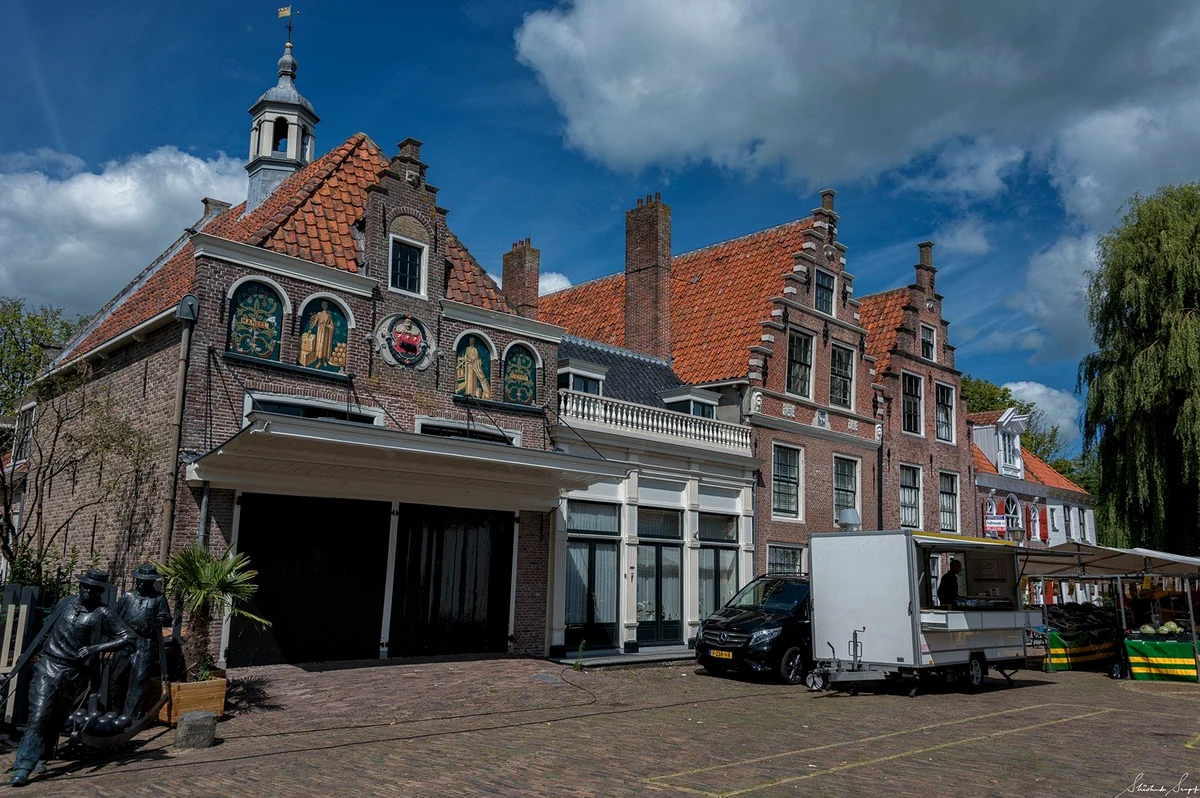
Leaving Gouda and heading north, the legacy of medieval trade inspection is crystallized in the town of Edam through the Edam Weigh House (Kaaswaag). Rebuilt in 1778 directly atop the solid foundations of an earlier fourteenth-century inspection post, the building exudes the refined elegance of Renaissance style blended with late Baroque, featuring a deep red brick facade and sturdy arched doorways. It once served a vital role as an official royal-chartered weighing and certification authority, ensuring every wheel of cheese exported by sea met strict standards for size and weight. Inside the weigh house, time-darkened oak balance scales and hand-forged iron hanging cradles still stand tall, evoking the famed “handjeklap” bargaining ritual—in which farmers and merchants clapped hands rhythmically to seal prices without a single written contract.
The flourishing of Dutch cheesemaking technology cannot be separated from the pre-industrial craftsmanship ecosystem preserved intact at the Zaanse Schans windmill village. This seventeenth- and eighteenth-century heritage complex reflects the extraordinary ingenuity of locals in mastering nature to drain marshlands and create fertile pastures for prized Friesian dairy herds. Monumental windmills such as De Kat, which grinds natural mineral pigments into vibrant paints, and De Heusder, which presses vegetable oils, paint a vivid panorama of an early mechanized society. North Sea winds not only powered grinding stones but also supported ancillary supply chains—from sawing timber planks for aging shelves to milling oak bark for tanning leather covers on milk containers—forming a closed, self-sustaining loop between dairy farming and artisanal craft infrastructure.
The true mastery of traditional Gouda and Edam cheesemaking lies in the exacting precision of family craftsmanship passed down through centuries. Starting with unpasteurized whole fresh milk from self-reliant farms, artisans coagulate milk proteins using natural rennet, cut the curds with wire knives into uniform grains, and drain off the liquid whey before gently warming the mixture. The curds are then tightly pressed into traditional round wooden molds under mechanical pressure to expel the last drops of moisture, giving the cheese wheel its dense, cohesive body. Following several days of soaking in saturated brine tanks to form a natural rind and deepen savory flavor, each wheel is transferred into darkened aging cellars and placed reverently on untreated, seasoned pine planks. There, through daily turning by skilled cellar masters and a thin protective coating—radiant red for Edam or amber-gold for aged Gouda—the cheese matures to perfection, developing layers of rich, nutty flavor infused with the essence of northern pastures.
As twilight fades over the tranquil canals of the lowlands, the rhythm of life in Gouda and Edam shifts into an entirely different cadence—serene, dignified, and steeped in medieval European atmosphere. Far removed from rowdy nightlife districts or thumping modern clubs like metropolitan Amsterdam, the evening landscape here is illuminated by warm architectural lighting that artfully highlights centuries-old brickwork. In Gouda’s expansive central Markt square, the fifteenth-century late-Gothic City Hall glows beneath soft amber-gold lights, throwing its slender spires and stately reliefs of Burgundian counts into reflection across dew-dampened cobblestones. Right alongside it, the Cheese Weigh House (Goudse Waag), bearing the unmistakable Dutch Renaissance stamp of master architect Pieter Post, stands proudly as a reminder of the golden age of maritime trade and Europe’s busiest cheese exchanges.
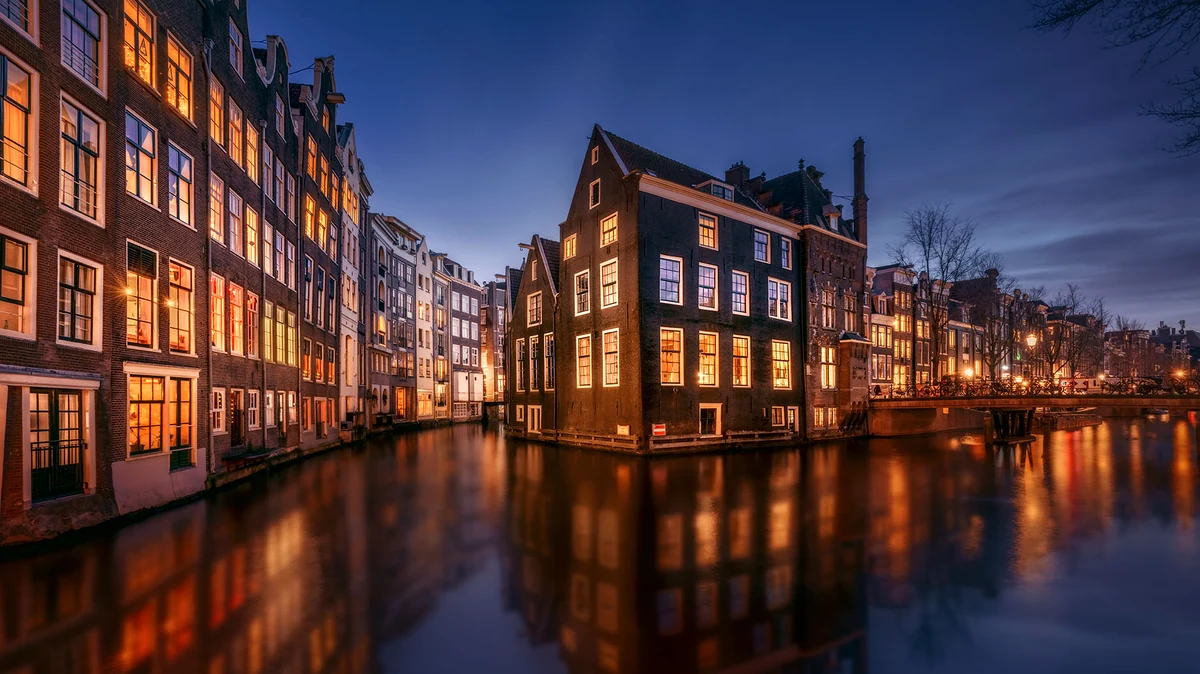
Heading north from Gouda to the town of Edam, nightfall sketches a hushed tableau straight out of an immortal painting by Johannes Vermeer or Rembrandt. White-painted wooden drawbridges spanning the Damplein canal are lit by vintage-style lanterns that cast shimmering reflections across water as still as a mirror. Edam’s historic Kaaswaag weigh house, housing dark oak scales dating back to the late sixteenth century, nestles beneath leafy shade trees, radiating the unspoiled charm of a port town once famed worldwide for red-waxed cheese spheres that accompanied ships across every ocean. Edam’s nocturnal pulse never rushes, beating instead to the resonant bronze chimes of the ancient Speeltoren bell tower, whose mellow notes echo down cobblestone lanes lined with graceful stepped-gable houses.
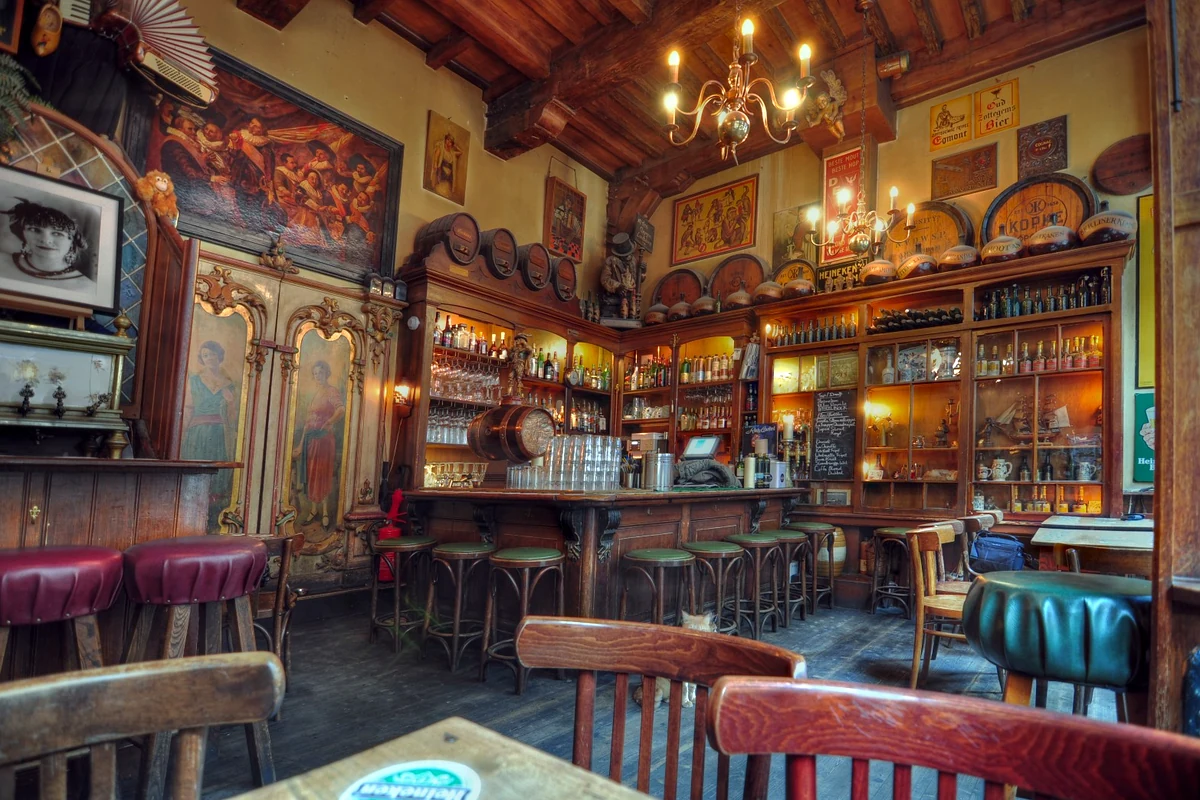
The soul of nightlife in traditional cheese country is distilled within time-honored family taverns affectionately known by locals as “bruin café” (brown cafés). Beneath age-darkened oak ceilings and nostalgic stained-glass windows, the uniquely Dutch concept of “gezelligheid”—cozy, warm conviviality—comes vividly to life over candlelit conversations. In rustic canal-side eateries, the centerpiece of every table is inevitably a platter of premium Oude Kaas aged patiently for one to three years. Over prolonged natural fermentation, the cheese develops tiny, crunchy calcium lactate crystals, yielding a dense texture and rich aroma laced with savory notes of toasted caramel—which, when dipped into coarse-grained honey mustard, awakens the full spectrum of pasture-fed milk flavors.
To complete the late-night tasting ritual, connoisseurs invariably pair aged cheese platters with traditional Trappist abbey beers, such as a Dubbel brimming with roasted malt notes or a golden Tripel boasting deep, warming strength. Brewed according to strict centuries-old monastic standards, the lively yeast character marries seamlessly with the opulent richness of Oude Kaas, creating an unforgettable palate harmony in the heart of historic Europe. As midnight strikes across antique clock faces, life here seems suspended in peaceful stillness, transforming Gouda and Edam into an enchanting open-air stage where lighting artistry, heritage architecture, and artisanal culinary craft blend into a lingering nocturnal serenade.
Exploring the twin cradles of Gouda and Edam unveils a nuanced culinary map where gastronomy is inextricably bound to the terroir of fertile reclaimed plains. Standing at the very top of local gourmets’ tasting hierarchy is artisanal farmhouse cheese, Boerenkaas, crafted exclusively from unpasteurized raw milk from cows grazing lazily across dew-kissed polders. That protein- and butterfat-rich milk captures the pure essence of meadow wildflowers, reflecting both the simplicity and meticulous care of traditional batches that have laid the foundation for cheeses celebrated across the Old Continent for centuries.
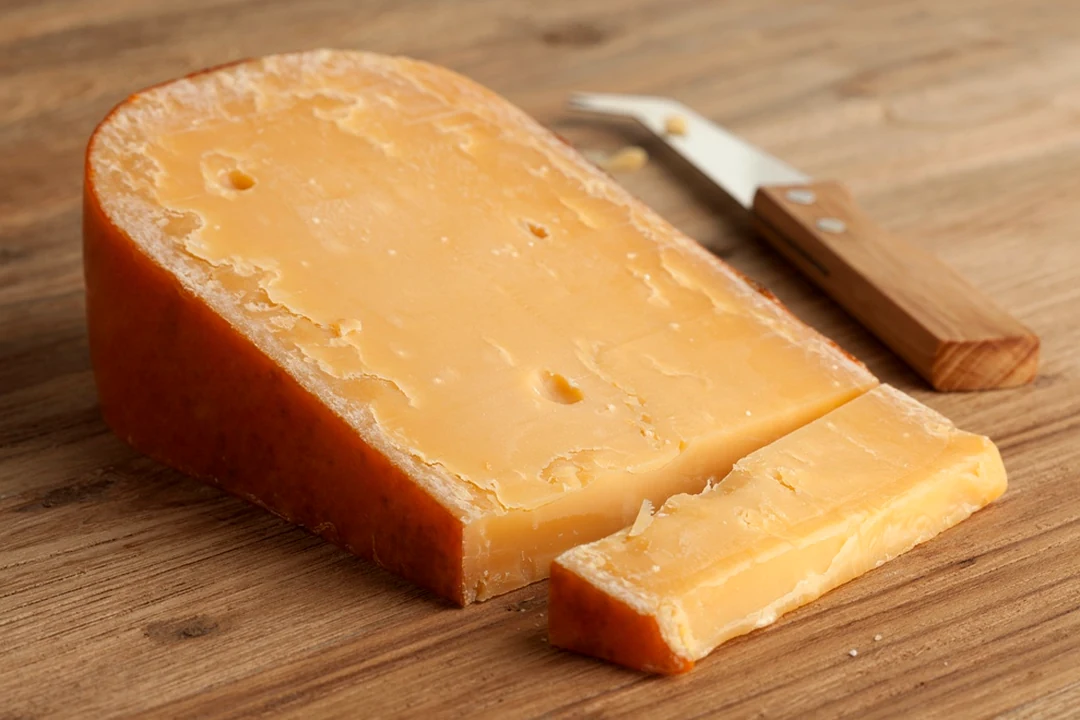
The pinnacle of flavor elevation in Gouda is embodied in Goudse Oude—aged Gouda. After slumbering patiently for anywhere from one to five years on thick pine boards inside historic cellars, the cheese gradually loses moisture and condenses into a firm, deep-amber body. Slicing off a thin sliver immediately reveals tiny white specks of calcium lactate crystals scattered throughout, offering an irresistible, delicate crunch with every bite. Goudse Oude bursts across the palate with complex aromas of roasted hazelnut butter, a lingering butterscotch sweetness, and an unmistakable, savory umami depth. Discerning Dutch locals often enjoy this aged cheese alongside a glass of supple Merlot with rounded tannins, or sip it with a high-gravity Trappist abbey ale whose crisp effervescence cuts cleanly through the richness, leaving an unforgettable finish.
Further north, the town of Edam captivates travelers with a fresher flavor profile through Edammer Kruidenkaas—herb-infused Edam cheese. Unlike the deep richness of Gouda, Edam’s naturally lighter, supple, and lower-fat paste provides an ideal canvas for exotic maritime spices dating back to the golden era of Dutch merchant fleets. Most intriguing of all is Komijnekaas, studded with mildly pungent cumin seeds, alongside batches speckled with whole black peppercorns or wild stinging nettle leaves gathered along canal banks. The interplay between the clean creaminess of semi-skimmed milk and bright, gently warming herbal notes invigorates the palate, turning every slice of red-waxed cheese into an effortless highlight for light meals on canal-side terraces.
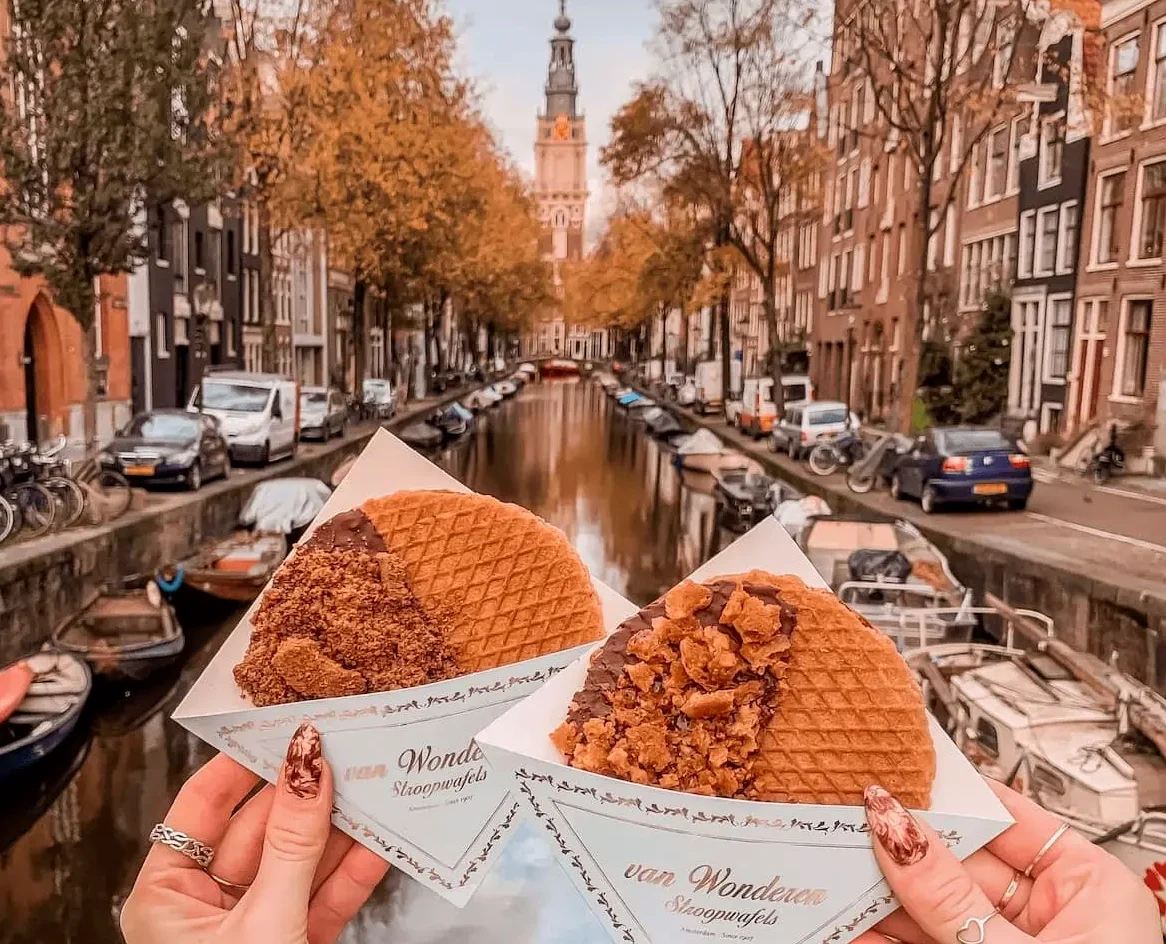
Beyond golden wheels of cheese, the street-food soul of Gouda’s market square belongs to warm, caramel-filled Stroopwafels. Invented right in this town around 1784, the treat began as a thrifty creation by resourceful bakers who kneaded leftover dough scraps, pressed them thin on hot iron griddles, and sandwiched warm brown-sugar syrup between two delicate waffle layers. Standing in the crisp morning market air, holding a freshly griddled Stroopwafel hot off the cast-iron press, listening to the faint sizzle of syrup and tasting its stretchy caramel center, travelers truly grasp the depth of a humble yet heartfelt culinary heritage in the land of windmills.
Journeying to the birthplaces of golden Gouda and Edam is remarkably effortless thanks to the Netherlands’ world-class public transit network. Departing from Amsterdam Centraal station, travelers need just 51 minutes aboard a direct intercity train to step out into the historic heart of Gouda. Those wishing to immerse themselves in Edam’s serene, watercolor-like canal scenery can hop on express EBS bus routes 314 or 316 from the bus station behind Amsterdam Centraal, gliding past lush green pastures in roughly 25 minutes. Furthermore, just a 17-minute train ride north brings visitors to the heritage village of Zaanse Schans—home to centuries-old windmills and the famed Catharina Hoeve cheese farm—forming a golden triangle for discovering Dutch culinary treasures.
To experience the authentic pulse of traditional commerce, timing your visit to coincide with the historic cheese markets is essential. The annual Gouda Cheese Market runs exclusively from April through August, taking place every Thursday morning from 9:00 AM to 12:30 PM. During these hours, the cobbled square in front of the magnificent Gothic City Hall transforms into a grand open-air theater where local cheesemakers and merchants reenact traditional bargaining sealed with resounding handclaps. Meanwhile, the Edam Cheese Market comes alive every Saturday morning from 10:30 AM to 12:30 PM, transporting spectators back to the seventeenth century with ceremonial cheese carriers bearing wheels on curved wooden sledges along tranquil canals. Visitors should plan to arrive at the square at least thirty minutes before opening time to secure a prime viewing spot ahead of arriving tour groups.
Alongside the festive atmosphere, savvy travelers should remain alert to commercial tourist traps increasingly common at transit stops. Local cultural experts routinely caution visitors against suspiciously cheap sightseeing packages or zero-dollar tours that funnel travelers into closed-door commission shops. At such venues, mass-produced industrial cheeses are often marked up three to four times their actual value alongside mass-manufactured wooden clogs lacking true artisan detail. To savor genuine, nutty Gouda Boerenkaas or authentic Edam, look specifically for European Union Protected Geographical Indication (PGI) or Traditional Speciality Guaranteed (TSG) seals embossed on the wax rind. Buying directly from farmers on the official market floor or visiting iconic working farms like Catharina Hoeve remains your best guarantee of top-tier artisanal quality at transparent, posted prices.
Proper preparation of entry documents and personal spending arrangements also plays a vital role in ensuring a smooth, memorable trip. Travelers should make sure their passport holds a valid Schengen visa and stay updated on European Travel Information and Authorisation System (ETIAS) requirements ahead of departure in accordance with current European Union regulations. Although nearly all shops and cheese stalls in the Netherlands accept international contactless cards with ease, carrying a small amount of Euro cash in small denominations remains very useful for market tastings or public square facilities. Once you have selected your favorite wheels or wedges, ask local cheesemongers to vacuum-seal them professionally to preserve their rich flavor throughout your long-haul flight home. To experience these culinary highlights as part of a grand tapestry of Western Europe’s most vibrant cultures, explore our thoughtfully curated 11D10N France – Belgium – Netherlands – Switzerland – Germany tour for a seamless and inspiring journey.