Tracing back through the ancient gazetteers of China’s southwestern karst plateau, the origins of Qingyun Road (青云路)—Guiyang’s legendary culinary thoroughfare—are closely bound to strategic national shifts dating to the early Ming Dynasty. In the 22nd year of the Hongwu era (1389), under Emperor Taizu Zhu Yuanzhang, the imperial court accelerated military agricultural colony policies (tuntian) to consolidate control over its southern frontiers. At that time, this corridor held vital military and commercial significance linking Sichuan, Yunnan, and Guangxi, while also serving as an essential eastern branch of the famed Ancient Tea Horse Road. The name “Qingyun” (“Azure Clouds”) was inspired by the classical Confucian idiom pingbu qingyun (平步青云)—wishing scholars, officials, and travelers passing through these lands a swift, effortless ascent toward high office and illustrious achievement.
Across centuries of historical upheaval, Qingyun Road reached a profound turning point between the 1960s and 1980s during China’s monumental “Third Front Construction” (三线建设) campaign, an ambitious national initiative to build a secure industrial and defense heartland in the rugged interior. Tens of thousands of engineers, master technicians, and intellectuals from leading coastal metropolises such as Shanghai and Beijing answered the call, leaving home behind to settle in the mountains of Guizhou. This large-scale migration not only transformed Guiyang into a hub for precision machinery, optics, and metallurgy, but also sparked a vibrant fusion of coastal urban habits with highland local traditions. After grueling shifts beside blazing factory furnaces, homesick workers gathered along the streets to unwind and share conversation—giving birth to the iconic late-night street dining culture known as Yeli (夜里), where dimly lit corners became melting pots uniting refined eastern coastal palates with the bold, fiery flavors of Guizhou’s mountains.
Between the 1990s and 2010, China’s surging market economy elevated this humble late-night habit into a booming commercial and cultural phenomenon. Qingyun Road evolved organically into a bustling, round-the-clock culinary corridor packed with hundreds of family-run stalls glowing over crackling charcoal grills. Locals and gourmets from afar unhesitatingly crowned it the “King of Night Markets” (夜市之王). The air hung thick with irresistible aromas from beloved specialties etched into collective memory—from golden grilled “lover’s tofu” dipped in local chili powder and tangy sour-and-spicy fish soup to tender, chewy braised pork trotters passed down through generations of street chefs.
To honor its historic soul while embracing modern urban vitality, local authorities carried out an ambitious revitalization and officially reopened the district on December 30, 2021, unveiled under a fresh identity: the Qingyun Market Cultural, Commercial & Culinary Pedestrian Street (青云市集). The project not only upgraded street infrastructure, but also carefully preserved red-brick walls and Third Front-era industrial architecture alongside contemporary visual art. The historic street’s energy surged further with the birth of the “Guiyang Roadside Music Festival” (贵阳路边音乐节)—an open-access, zero-ticket street concert movement welcoming everyone. Erasing boundaries between performers and audiences, visitors and locals, raw acoustic melodies echo straight down the pedestrian street amid thousand-year-old cooking smoke—composing a living anthem to the resilience of a spirited highland city.
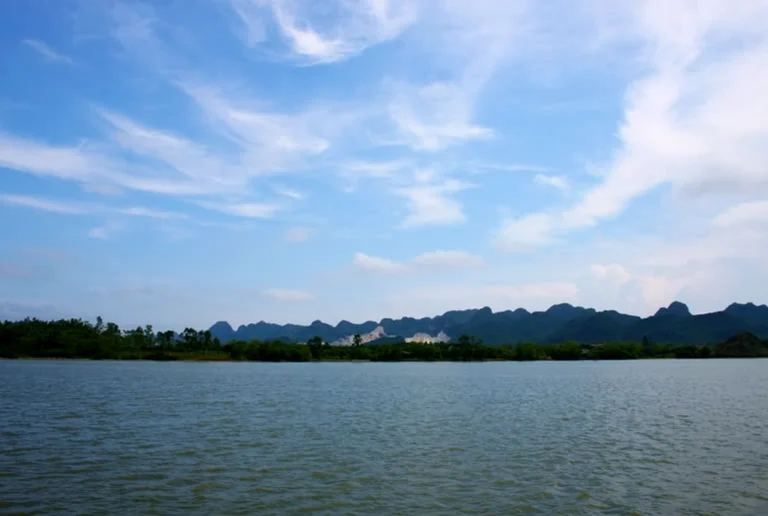
Nestled at the heart of the karst basin on southwestern China’s famed Yunnan–Guizhou Plateau, Guiyang enjoys an exceptional natural geomantic setting defined by the classical ideal of “encircled by mountains, embraced by water.” Nanming District—home to Qingyun Road—stretches gracefully along the winding banks of the Nanming River, flowing like a silk ribbon that gathers prosperity. Through the lens of traditional East Asian feng shui, this sheltered basin surrounded by layered limestone peaks traps harmonious energy and blocks harsh northern winds while welcoming cool, fresh breezes from virgin mountain valleys. Nature’s generosity earned Guiyang its celebrated nickname, “Forest City” (Lincheng)—blessed with a remarkably cool, pleasant microclimate year-round that allows vibrant street dining, cultural gatherings, and open-air concerts to thrive past midnight without oppressive heat.
Whereas ancient chronicles once dismissed Guizhou as an inaccessible wilderness with the proverb “not three feet of flat land” (di wu san chi ping), modern infrastructure has completely reinvented central Nanming as a continental transit hub. State-of-the-art high-speed rail has dramatically compressed southwestern China’s vast distances: the Guiyang–Guangzhou line links the Greater Bay Area in just 4 to 4.5 hours of smooth travel, while direct corridors connect both Chengdu and Kunming to Guiyang in a mere 2 hours. Right in the energetic city center, Qingyun Pedestrian Street sits less than 1.5 kilometers from Guiyang Railway Station, allowing visitors to arrive within minutes on foot or via fully underground trains on Guiyang Metro Lines 1 and 2.
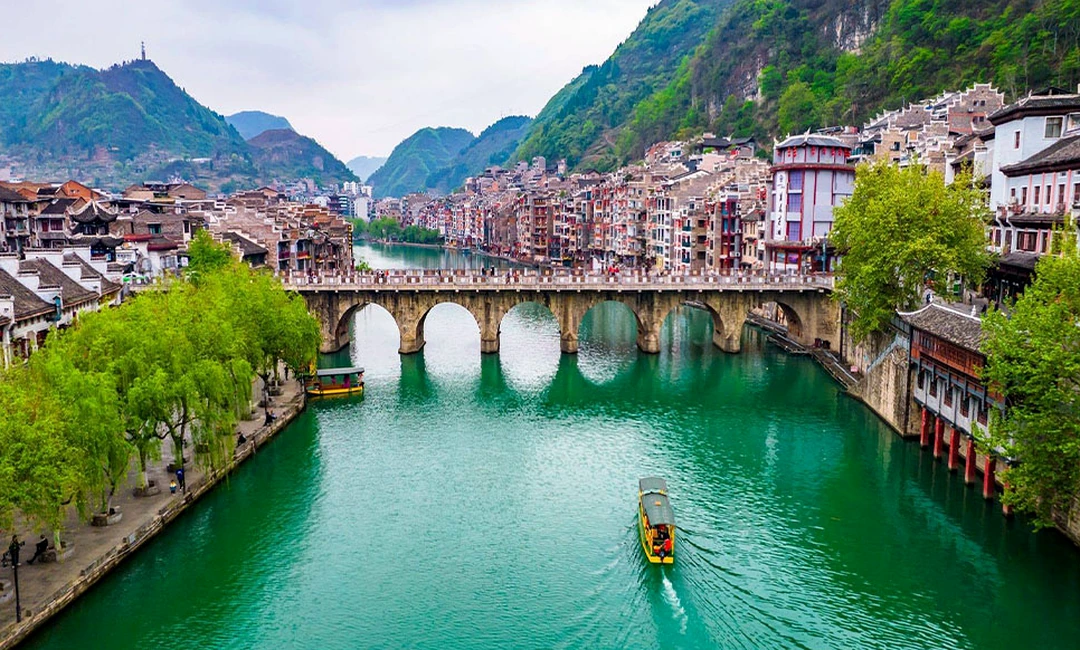
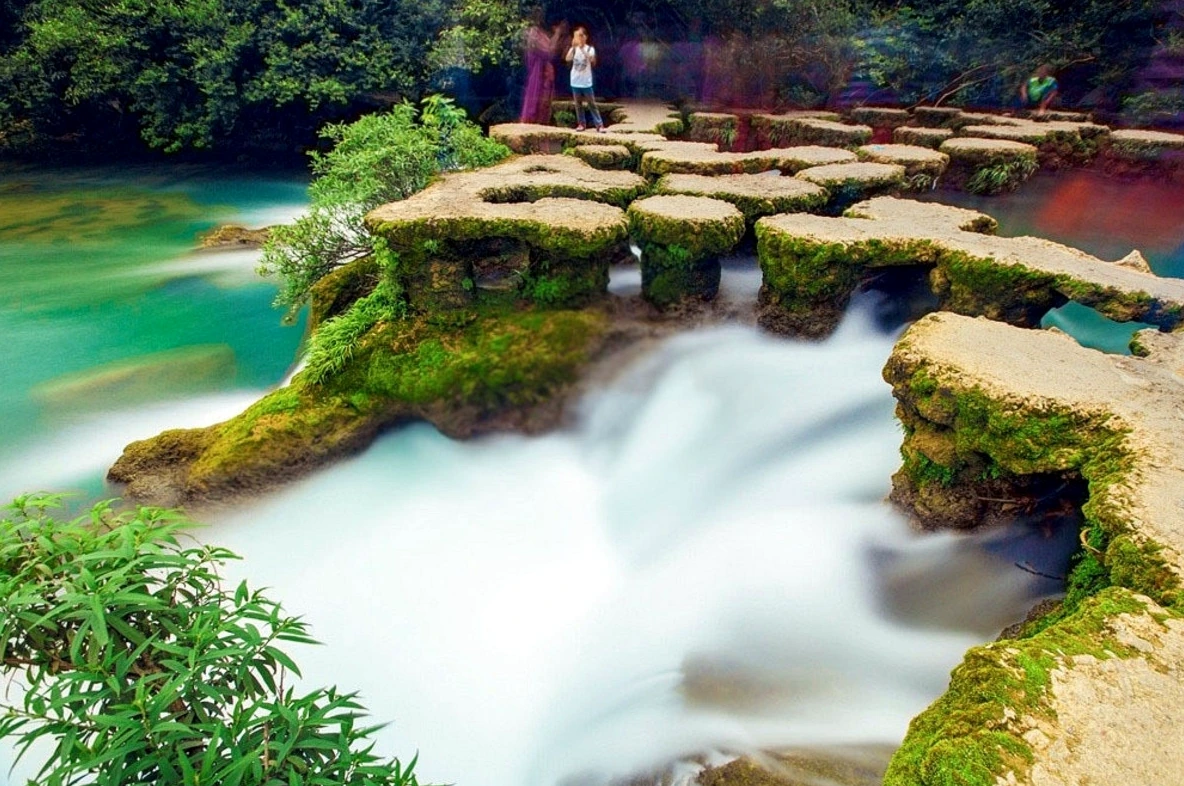
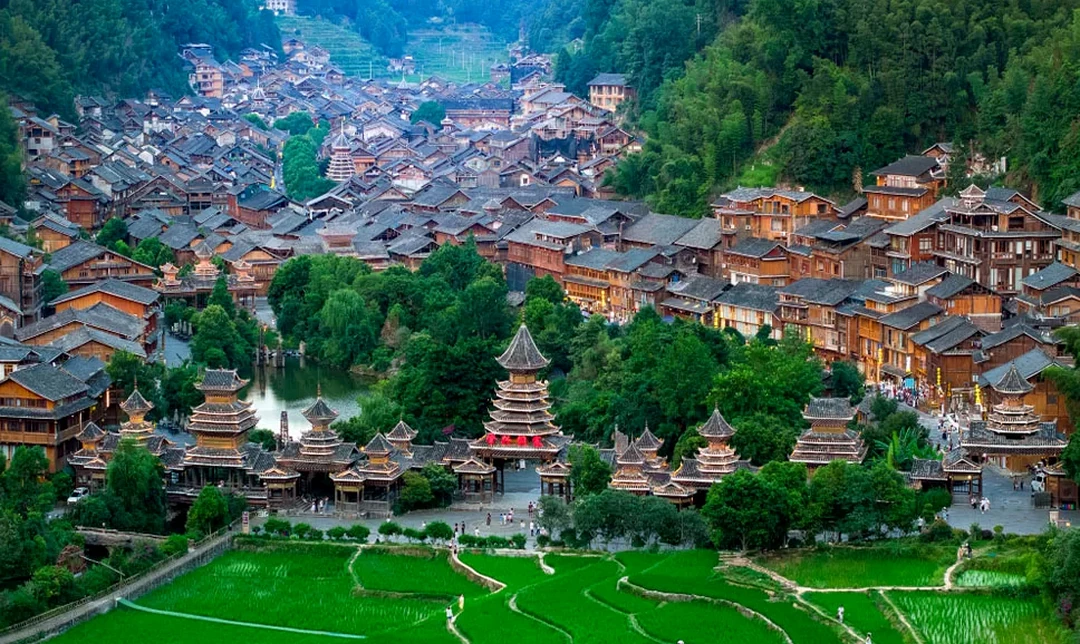
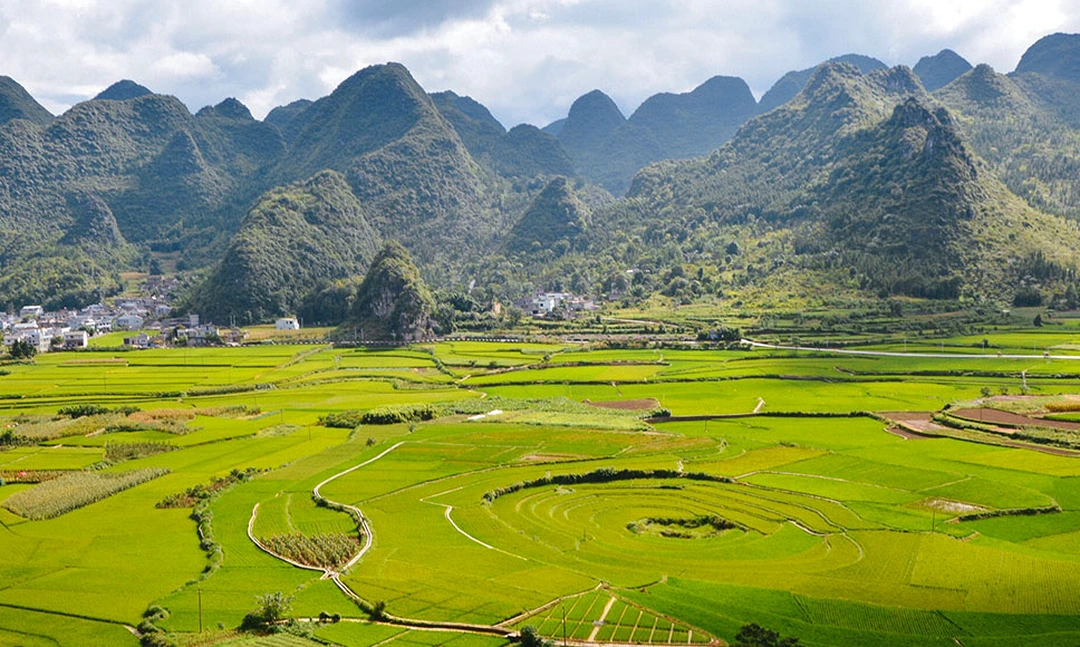
Regional connectivity is further amplified by Guiyang Longdongbao International Airport, welcoming travelers from across China and abroad before they step straight into Nanming’s lively night markets. Far more than a standalone dining lane, Qingyun Road’s strategic location turns it into a natural basecamp and launchpad for exploring Guizhou’s greatest natural wonders. From this vibrant crossroads, three classic overland journeys radiate outward: southeast along the Cultural & Natural Heritage Route linking emerald Libo Karst waters with centuries-old wooden stilt houses in Xijiang Thousand Households Miao Village; west along the Geological Wonders Route through Anshun to the thundering cascades of Huangguoshu Waterfall; and due north into pristine primeval forests and cool highland grasslands.
This seamless interplay between dramatic karst topography and integrated modern transit makes Qingyun Road a rare nexus of favorable timing, prime geography, and human vitality. Travelers flock here not only to savor bold regional flavors, but also to feel the pulse of a city that harmonizes human ingenuity with a thousand-year-old mountain landscape.
Set in the heart of bustling Guiyang, Qingyun Market (青云市集) within Qingyun Pedestrian Street presents a striking new face for Guizhou’s highland nighttime economy. Spanning over 30,000 square meters in its first phase alone, the project executed a remarkable urban transformation—evolving from a chaotic, smoke-filled makeshift night market of decades past into a multi-layered cultural complex uniting “intangible heritage gastronomy with creative industries” (wenchuang – 文创). Rather than merely satisfying appetites, the district now operates as a living open-air museum where collective memory and contemporary urban design blend seamlessly.
The architectural soul of Qingyun Market lies in its humane philosophy of adaptive reuse. Instead of demolishing the past to erect sterile concrete blocks, planners carefully preserved the weathered facades of 1970s and 1980s workers’ dormitory buildings. Time-worn red brick walls, rusted wrought-iron balconies, and exposed utility pipes from the planned-economy era stand celebrated as authentic witnesses to a heroic industrial age. Woven across these nostalgic surfaces is bold contemporary visual art—most notably large-scale colorful murals and graffiti covering gable walls. Painted by modern artists, scenes of everyday Guizhou life—street vendors winding through narrow lanes, the warm smiles of highland weavers, and bustling mountain produce markets—engage in vibrant visual dialogue with curving LED ribbons and retro-cyberpunk neon signs.
The project’s runaway success also stems from intelligent commercial zoning that banishes the clutter of old-fashioned food alleys. Its floor plan is cleanly organized into three distinct experiential zones: an intangible heritage food hall showcasing authentic Guizhou specialties, a local artisan craft and independent fashion quarter, and an open cultural performance plaza. Generous walkways are engineered to accommodate tens of thousands of nightly visitors smoothly without bottlenecks, while concealed underground ventilation, negative-pressure grease-smoke filtration, and automated waste collection stations tucked behind retro facades solve the sanitation challenges that once plagued Guiyang’s street stalls.
Behind its gritty, nostalgic exterior operates a rigorous, standardized smart-management system. One hundred percent of vendors are required to display transparent pricing via digital boards or QR codes linked directly to food-traceability records. Anchoring consumer trust is the “One-Scan Complaint QR Code” (一码通) mounted on every dining table and cashier counter: any feedback regarding service, overcharging, or food hygiene transmits instantaneously to the district’s digital market-supervision command center, triggering an on-site inspection within a guaranteed five-minute response window. This precision micro-governance elevates grassroots street culture to international commercial standards without sacrificing a shred of folk authenticity.
As sunset fades behind the jagged limestone peaks cradling the Guiyang basin, Qingyun Pedestrian Street (青云路步行街) undergoes a dazzling metamorphosis of sight and sound. Once home to machinery workshops and textile mills built during the Third Front era, the corridor has been reborn as a multi-tiered nocturnal stage. Past and present collide in its signature Retro-Industrial aesthetic, where dark red-brick walls, weathered steel trusses, and exposed ventilation ducts glow beneath smart architectural lighting. Warm crimson light from thousands of traditional lanterns hung beneath tiled eaves mingles with vibrant violet, electric-blue, and golden LED strips—evoking a futuristic cyberpunk dreamscape that turns every evening stroll into a journey across contrasting eras.
The emotional anchor powering Guizhou’s nightlife is the cultural phenomenon known as the “Guiyang Roadside Music Festival” (贵阳路边音乐节), coming alive nightly during prime hours from 19:00 to 22:30. Celebrated as the emblem of a “Ticket-Free City of Music,” this living street stage rejects all formal boundaries of concert halls and commercial arenas. With no raised stage or heavy security barricades, performances unfold directly on raw granite paving stones, dissolving every barrier between musicians and spectators. Here, music merges effortlessly with culinary theater as the mouthwatering aroma of roasted chili-and-Sichuan-peppercorn, spicy grilled fish, and pan-seared tofu drifts from neighboring stalls to form a rich sensory backdrop.
Qingyun’s musical pulse blends the raw energy of local Guizhou indie rock bands with the ancient folk traditions of southwestern ethnic minorities such as the Miao and Dong peoples. Amid soaring electric amplification, listeners suddenly hear the haunting trill of a leaf flute or rustic plucked lute woven seamlessly into fiery electric guitar riffs. As vocalists sing out, thousands of locals and travelers stand shoulder to shoulder—holding fragrant late-night skewers—singing along and clapping in unison. Whether an electrified highland folk tune or an emotional contemporary ballad, pure communal energy electrifies every corner of the street.
Later into the night, as street concerts wind down, thoughtful lighting transitions the evening into a quieter yet equally captivating chapter. Smart illumination dims from vivid neon into soft, soothing amber tones enveloping late-night teahouses, craft taverns, and dessert carts serving traditional iced jelly bowls (bingfen). Nightlife here operates not merely as commercial entertainment, but as a living civic symphony where modern light artistry and free-spirited street culture unite—revealing a Guiyang at once ruggedly proud and deeply warm beneath the misty highland night.
Guizhou cuisine—known as Qian cai—has for centuries revolved around an unmistakable culinary philosophy built on two harmonizing poles: sour and spicy. A beloved local proverb declares, “Go three days without eating sour, and your legs will wobble as you walk” (san tian bu chi suan, zoulu da xiao xiao). Stepping onto Qingyun Road after dark immerses diners in a vivid labyrinth of flavor, where roaring flames and billowing steam rise from hundreds of family kitchens to decode the survival wisdom and culinary artistry of a cloud-shrouded mountain province.
Reigning supreme atop Qingyun Road’s culinary map is Guizhou Sour Soup Fish (Suantang Yu), distilled from millennia of culinary wisdom among the Miao people of southeastern Guizhou. The soul of the dish lies in its vibrant crimson broth, crafted from two naturally fermented bases aged in earthenware jars: white sour soup fermented from glutinous rice water and red sour soup distilled from wild mountain cherry tomatoes. As flames leap beneath the pot, chefs slip in fresh-sliced river fish alongside a few drops of essential oil extracted from litsea cubeba root (muliangzi)—an iconic southwestern mountain botanical imparting an intoxicating citrusy, lemongrass-like aroma. Bright, gentle acidity awakens every taste bud, balancing sweet, tender fish and a lingering, warming chili kick that keeps diners spooning up every steaming drop in the cool night air.
Winding deeper through fragrant clouds of steam leads to stalls serving Guizhou Intestine & Blood Noodles—known auspiciously as Changwang Mian (“Longevity & Prosperity Noodles”), a street masterpiece uniting clever wordplay with painstaking culinary craft. Its name puns on enduring prosperity while pairing two core ingredients: meticulously cleaned pork intestines braised until melt-in-your-mouth tender and silky cubes of poached pork blood smooth as jelly. Golden hand-kneaded egg noodles boast a signature springy snap, bathed in rich bone-marrow broth topped with a gleaming layer of fiery chili oil. Crowning the bowl are crispy golden pork cracklings that crunch audibly with every bite—contrasting delightfully against silky blood curd and bouncy noodles.
Family-run culinary heritage on Qingyun Road shines equally brightly in Lei Family Crispy Tofu Balls (Leijia Doufu Yuanzi), an iconic snack dating back to the 13th year of the Tongzhi reign during the Qing Dynasty. Across more than a century, descendants of the Lei family have preserved their exact recipe: mashing silky tofu with secret seasonings, hand-rolling spheres, and deep-frying them in fragrant rapeseed oil. Each tofu ball puffs into a crisp, golden cocoon outside while remaining airy, tender, and steaming moist within. Connoisseurs tear open a small pocket with chopsticks and spoon in a punchy dipping sauce blended from black vinegar, soy sauce, fiery roasted chili powder, scallions, and finely minced fresh houttuynia (fish mint) root—unleashing an unmistakable explosion of bold highland flavor.
Your tasting tour concludes beside sizzling iron griddles of Guiyang Stinky Tofu and fragrant bamboo steamers of glutinous sticky rice. Ash-gray squares of fermented tofu sizzle in hot oil on flat iron plates, flipped continuously before being showered in bright red Guizhou chili powder, minced garlic, and fresh cilantro to release an irresistible, savory aroma. Right beside them, Guiyang Sticky Rice delivers pure rustic comfort: chewy steamed glutinous rice drizzled with rich lard and wrapped tightly around diced smoked Chinese sausage, crunchy roasted peanuts, and spicy pickled radish—encapsulating the warm, unpretentious generosity of Guizhou in every bite.
Experiencing Qingyun Road’s nighttime economy at its peak requires syncing with Guiyang’s highland rhythm. Although stalls begin opening around dusk, the prime window to soak up the street’s electric atmosphere is between 19:00 and 22:30 daily. During these hours, roadside music stages burst with raw acoustic sets and modern rock ballads amid billowing smoke from hundreds of acclaimed food stalls. Vendors continue serving well past midnight, welcoming night owls out for a late stroll in the refreshing cool air of the Wumeng basin.
Located squarely in central Nanming District, Qingyun Pedestrian Street boasts effortless urban transit links. Visitors can ride the Guiyang Metro, alighting at nearby transfer stations on Line 1 or Line 2 before taking a short walk straight to the lantern-lit gateway. Those arriving via traditional taxi or local ride-hailing apps will find a well-organized drop-off zone right at the entrance of East Qingyun Road. For international travelers landing at Guiyang Longdongbao International Airport or arriving via Guiyang North High-Speed Railway Station, streamlined visa policies and digital customs clearance make transfers into downtown smooth and fast—typically taking under thirty minutes.
One essential tip when spending money in contemporary Chinese night markets is preparing for the near-total dominance of cashless digital payments. Even traditional sidewalk vendors selling baked pastries or local milk tea rarely carry cash for change. Before departure, install and verify your identity on WeChat Pay or Alipay and link an international Visa or Mastercard directly. Alongside digital convenience, the Guizhou provincial government enforces transparent pricing via QR codes posted at every stall—eliminating haggling or overcharging under strict market supervision to guarantee a welcoming, trustworthy shopping environment.
Stepping into the culinary realm of ancient Yelang also calls for readiness to embrace bold, numbing-spicy flavors. Guizhou cuisine lives by the motto “no spice, no joy” (bu la bu huan): from famous Kaili Sour Soup Fish to street snacks like “lover’s tofu,” Zhuangyuan braised trotters, and spicy chili noodles, fragrant roasted chilies feature prominently. If you have a sensitive stomach or prefer milder heat, keep the magic phrase “Bu yao tai la” (不要太辣 — “not too spicy, please”) handy when ordering, or ask for chili dipping sauces on the side so you can season each bite to your own comfort.
To enjoy a deeply enriching getaway combining cultural depth with reliable service standards, choosing a professionally vetted itinerary lets you savor every moment without worrying about language barriers or payment logistics. To pair Guizhou’s breathtaking karst wonders with its unforgettable night-food scene, explore our all-inclusive China tour packages—crafted with strict quality commitments, transparent pricing, and zero compulsory shopping stops.