post_content
Tracing back through the chronicles to the origins of Liuzhou’s renowned specialty, this culinary heritage did not arise from lavish palaces and courts, but instead took deep root in the geological sediment of ancient Lingnan. Archaeological excavations at the Bailian Cave site (白莲洞遗址) have uncovered cultural strata dating back to the Paleolithic period, between 20,000 and 25,000 years ago. Hidden beneath the ancient soil layers are meters-thick strata of fossilized freshwater snail shells belonging to the Viviparidae family, serving as resounding proof that since the dawn of humanity, indigenous primitive inhabitants relied on the abundant aquatic resources of the Liujiang River basin to survive, forming a culinary tradition intimately tied to these spiral-shelled mollusks over tens of thousands of years of changes.
During the medieval era, the journey of local flavors marked a profound cultural turning point tied to the footsteps of northern scholars and officials. In the 10th year of the Yuanhe era of the Tang Dynasty (815 AD), the renowned scholar Liu Zongyuan (柳宗元), when banished to serve as the Prefect of Liuzhou, faced the damp, toxic miasma of the wild mountains and hazardous waters. Understanding the principles of health preservation rooted in the local soil, the literary master not only reformed local governance but also documented and encouraged locals to combine pungent mountain herbs with the refreshing sweetness of fresh stream snails to ward off the cold, dispel toxins, and strengthen the spleen. This early concept of the medicine and food homology laid the initial philosophical foundation for Liuzhou snail soup, harmonizing the lightness of aquatic products with the warming nature of natural herbs.
Entering the Ming and Qing dynasties, the appearance of the noodle bowl continued to be refined thanks to transnational maritime trade flows. Voyages along the Maritime Silk Road introduced exotic chili peppers to southern China, where they met the traditional art of fermenting sour bamboo shoots (酸笋 – Suansun) in indigenous clay urns. The accidental fusion of the tongue-piercing pungency of bird’s eye chilis and the warm, tangy flavor of anaerobically fermented bamboo shoots officially shaped the core, immutable flavor profile: Spicy, Sour, Fresh, and Pungent. This distinct flavor blend spread across rural villages, becoming a rustic soup intimately attached to the daily life of the riverbank communities.
The historic encounter that merged the snail soup with rice noodles truly exploded at the dawn of the Reform and Opening-up period, roughly between 1978 and 1982. Under the dim glow of oil lamps at spontaneous night markets along Gububu Street (谷埠街) and South Jiefang Road, street food vendors came up with the initiative to ladle boiling, spicy snail broth over the chewy fresh rice noodles (米粉) of the Zhuang people to serve late-night moviegoers. This accidental combination quickly created an unprecedented street food sensation. By 1983, the first individual business household in the Yufeng commercial district officially registered the trademark Liuzhou River Snail Rice Noodles, marking the moment street-side food stepped into official commercial history as an independent, complete menu item.
The 21st century witnessed a spectacular transformation from local cuisine to large-scale industrialization. In 2014, the technological breakthrough of retort pouch packaging broke geographical barriers, allowing the complete packaging of snail broth and fresh ingredient packs without compromising quality, paving the way for the product to go global. To preserve its original character and establish strict technical standards, local authorities issued the local standard DB45/T 1322-2016 in 2016. Continuing this upward momentum, in 2018, the Liuzhou River Snail Rice Noodle Cultural Industry Park (柳州螺蛳粉文化产业园) was officially launched and established in the Luorong Industrial Zone, gathering a series of deeply automated processing lines and specialized research institutes.
The pinnacle affirming the cultural value of this destination took place on April 26, 2021, when top leaders conducted field inspections and issued a strategic directive: “Small rice noodles, massive industry” (小米粉,大产业) – affirming that a humble bowl of noodles can entirely shoulder a multi-billion-dollar industry. Also that year, the processing technique of Liuzhou river snail rice noodles was officially inscribed in the 5th batch of the National Intangible Cultural Heritage List under identification code VIII-235. By 2022, the entire industrial park complex was rated as a National AAAA Tourist Attraction by the Ministry of Culture and Tourism, establishing an exemplary model of Industrial Tourism combined with the preservation of living culinary heritage.
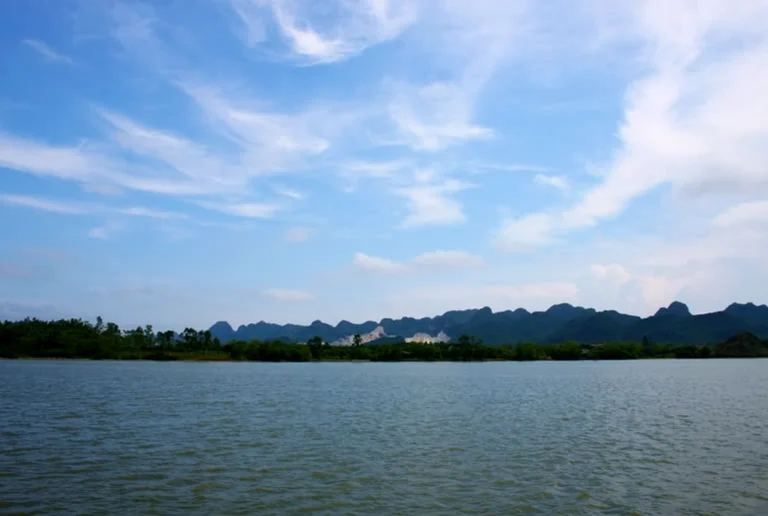
Nestled in the heart of the Guangxi Zhuang Autonomous Region, the ancient city of Liuzhou has long held the vital “choke point” position for transportation, connecting four prosperous southwestern regions including Guangxi, Guizhou, Hunan, and Yunnan. Viewed from the perspective of traditional feng shui, the dragon veins here are nourished by the azure Liujiang River, winding smoothly to form a U-shape that embraces the center like a crouching dragon guarding a precious pearl. This “gathering water and concealing wind” terrain not only brings abundant vitality, protecting commerce and the populace through hundreds of years of upheaval, but also transforms this alluvial basin into one of the most brilliant cultural crossroads in the southern borderlands.
Liuzhou’s natural landscape bears a strong imprint of magnificent tropical flooded karst topography, where steep, towering limestone mountains rise amidst fertile valley basins. The interplay between isolated limestone peaks and a dense hydrological network has created a uniquely distinctive microclimate: scorching, humid summers followed by bone-chilling winters accompanied by thick, swirling mountain mists blanketing the hillsides. To adapt and maintain bodily yin-yang equilibrium against the mountain mists, indigenous residents have cultivated a unique culinary philosophy over generations. The tongue-tingling spiciness of chili oil, the rich and tangy flavor of pickled bamboo shoots, and the nourishing warmth of river snail essence serve as a natural wellness remedy—dispelling cold humidity and elevating river snail rice noodles from a folk health practice into an immortal culinary soul.
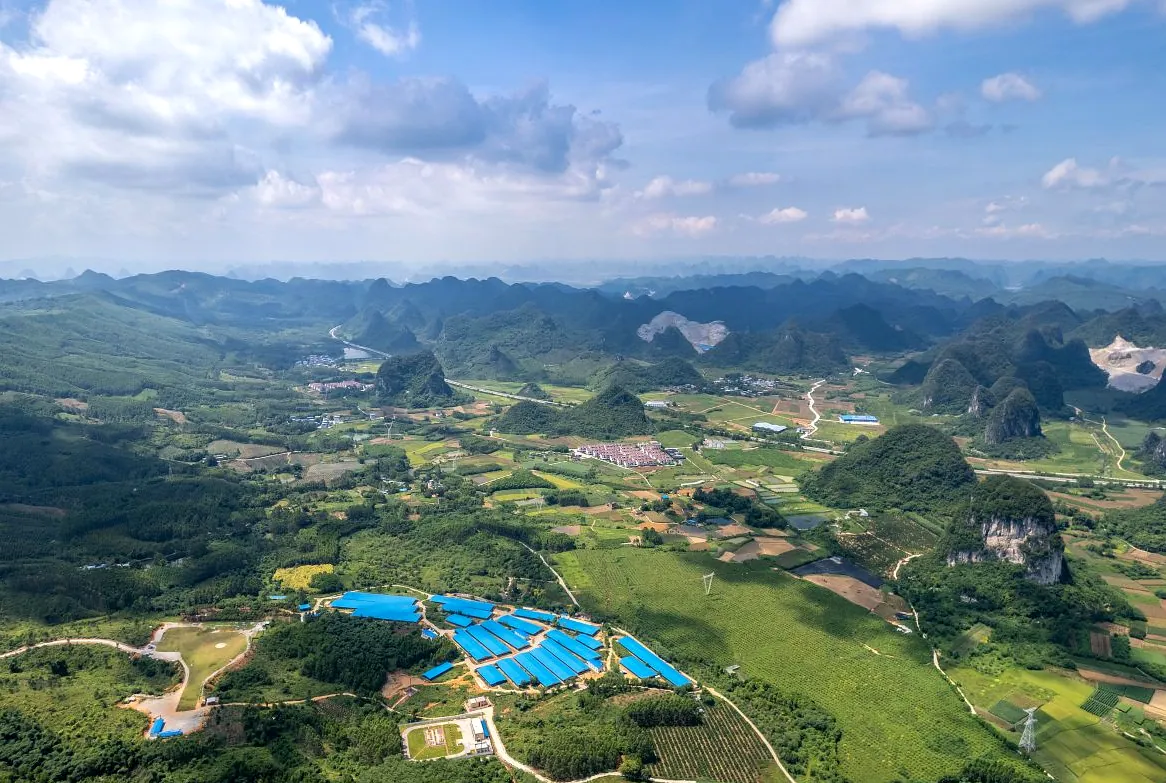
Inheriting this auspicious geomantic source, the Liuzhou River Snail Rice Noodle Cultural Industrial Park—commonly known among traders as the Snail Wholesale Market—is systematically planned in the Luzhong Industrial Zone, bordering the Luozhai high-tech economic development corridor and the bustling Yufeng District. The complex stands impressively at the strategic intersection of the G72 Quannan Expressway and the international intermodal railway network, opening up trade routes stretching directly to southern seaports. The planning space here is a harmonious symphony between the raw beauty of the karst semi-mountainous region and modern industrial infrastructure, where advanced processing workshops blend seamlessly with green, tree-lined landscapes.
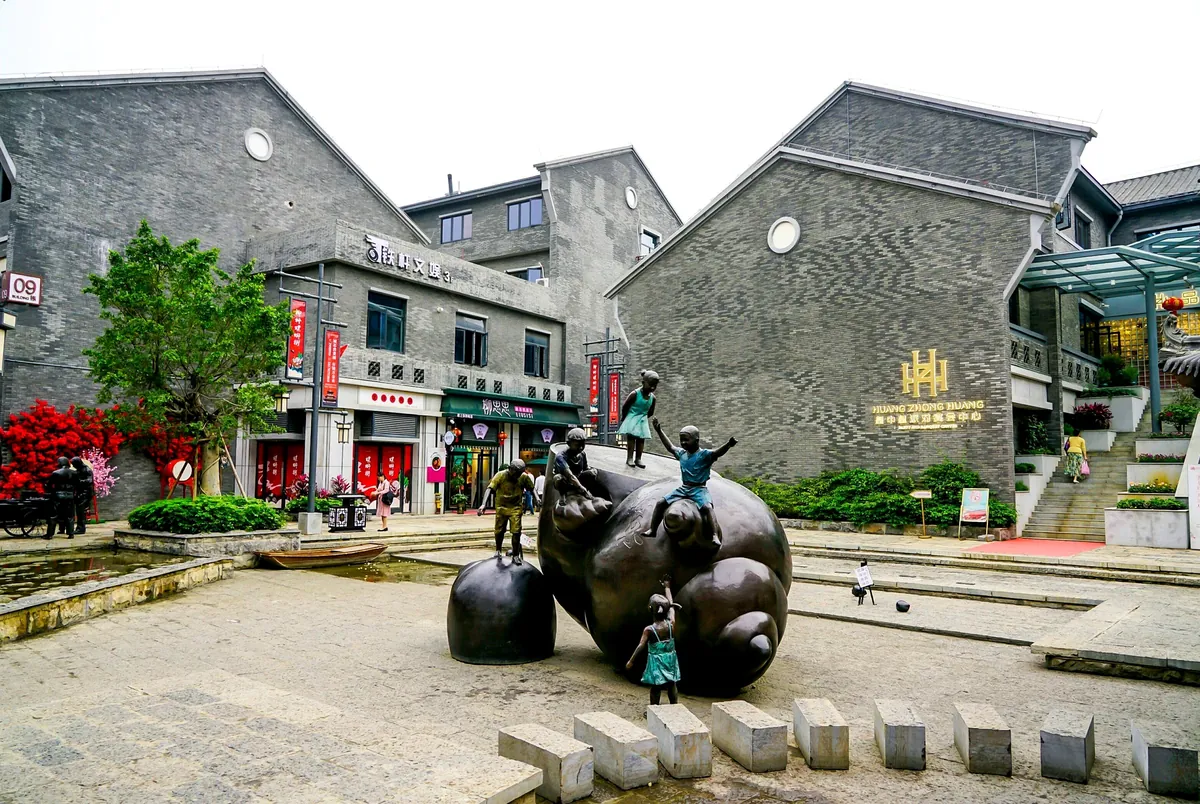
Stepping into the central plaza of the cultural zone, pedestrians are instantly captivated by the spacious pedestrian walkway, surrounded by rows of buildings featuring traditional Chinese architectural styles with antique grey brick walls and tranquil tiled roofs. The centerpiece of this space is a vibrant, large-scale bronze sculpture cluster depicting joyful children climbing and playing on a plump, rounded object with folk symbolic significance. Along the promenade, brilliant red flower bushes intertwine with lush green vegetation and a crystal-clear small pond reflecting the sky, contrasting harmoniously with the bilingual Chinese-English signage of the shops and the spacious convention center behind them.
The subtle resonance between the embracing feng shui terrain of mountains and rivers and thoughtful landscape design has created a distinctive appearance for this cultural industrial park. Far more than just a large-scale processing center, it truly reflects the effort to honor natural origins, transforming local geographical values into a solid foundation for Liuzhou’s culinary culture to spread its enduring value over time.
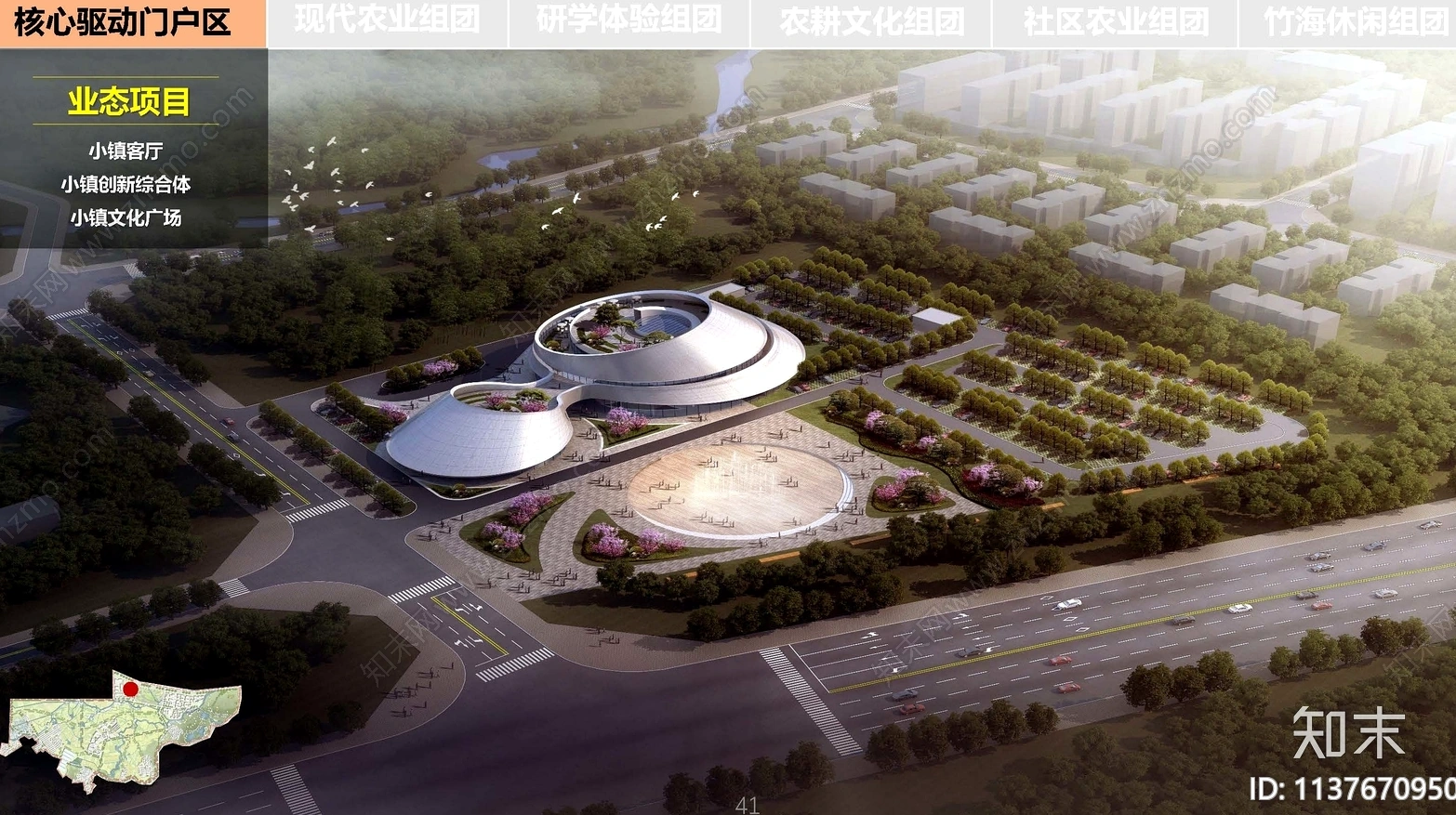
Stemming from magnificent natural sediment sources, the master plan of the Liuzhou River Snail Rice Noodle Cultural Industrial Park is an exceptional symphony of typical karst topography and the aesthetic depth of local stone culture. Architects have cleverly abstracted the familiar spiral snail shell into soft curves resembling “large snail” and “small snail” shapes undulating amidst millennia-old limestone valleys. Built upon a crisp postmodern linguistic foundation, the structure subtly weaves in the traditional stilt-house structural lines of the Zhuang and Dong ethnic minorities through elegant flared pillar systems, combined with robust exposed concrete panels and large-aperture Low-E glass walls that expand panoramic views. Notably, sustainability is brought to life through a unique material processing technique that utilizes tens of thousands of discarded snail shells, finely ground and pressed with bio-glue to create exterior composite wall cladding panels that are both soundproof and reminiscent of local culinary roots.
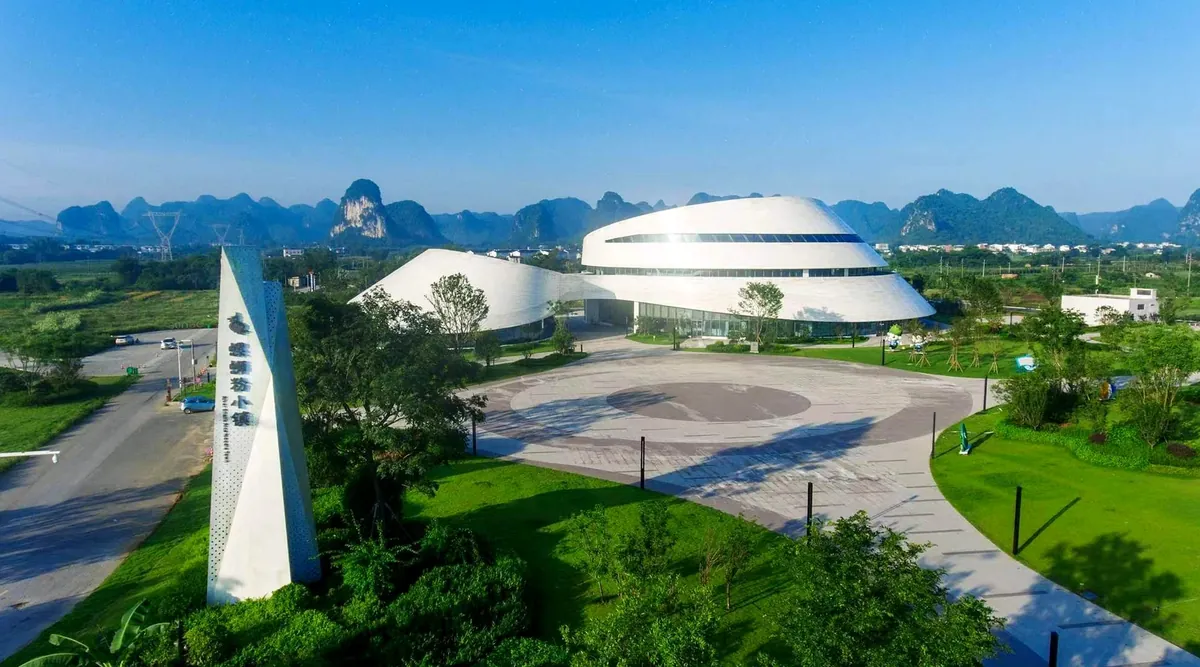
Right from the main approach of the complex, visitors will be impressed by the scenery of a modern architectural complex featuring pristine white buildings with softly curved roof edges, nestled peacefully among lush green lawns and meticulously trimmed landscaped trees. The focal point of the forecourt is a sharp, large triangular sign block, carved with the name “Xiangsi Town” (相思小镇) alongside the steadfast bilingual slogan “Never Forget Never Retreat.” In the distance, the backdrop reveals steep, grey karst limestone peaks standing tall and magnificent against the clear blue sky, creating a breathtaking harmony between contemporary industrial architecture and pristine nature.
The core visitor coordination center of the entire complex is the Liuzhou Snail Rice Noodle Town Welcome Hall, a project with an investment of up to 200 million RMB, peacefully nestled on a 34.13-mu campus (equivalent to about 2.27 hectares). This massive interior space is arranged concentrically around a gigantic skylight, where daylight pierces through a circular glass dome to illuminate the multi-tiered commercial service and exhibition functions. Inheriting that spiral geometric philosophy, the Luobawang Snail Rice Noodle Culture Museum, with a floor area of over 1,200 square meters, is built slanted and soaring high to simulate a spiral shell pointing toward the sky, guiding visitors through the various stages of how a street food evolved into a renowned intangible cultural heritage.
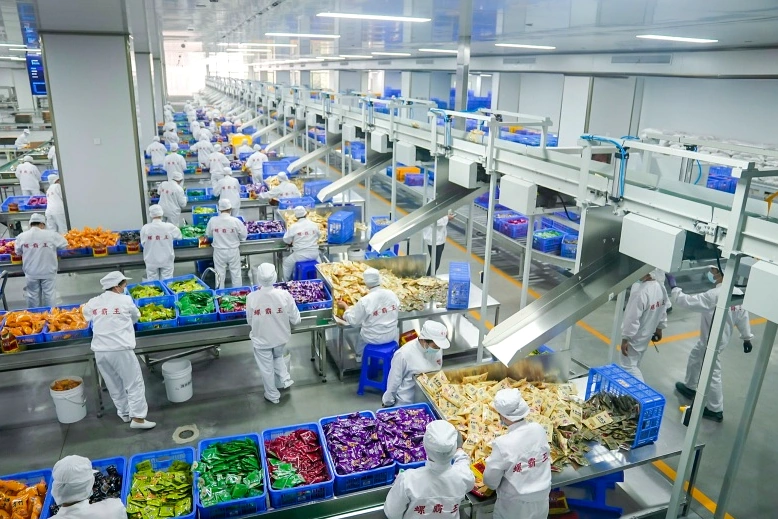
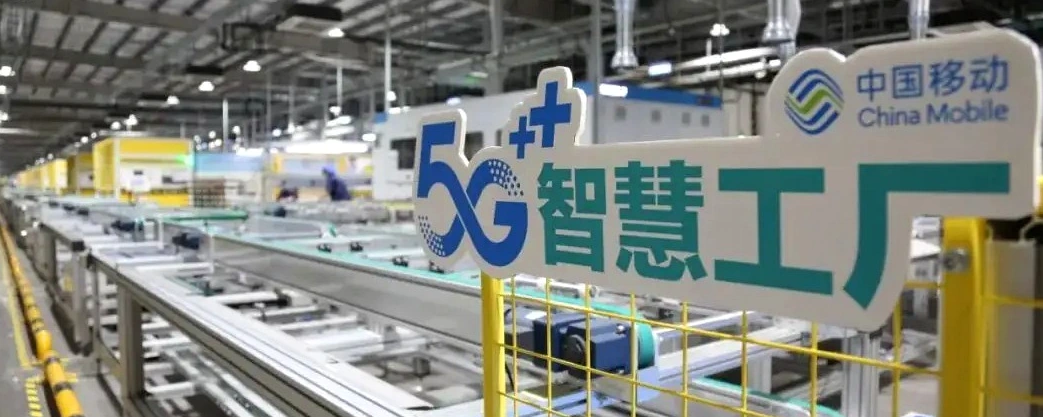
Another breakthrough technical highlight in the master plan is the 800-meter-long transparent tempered glass Skywalk Tour, suspended at a height of 4.5 meters above the floor. This spectacularly winding glass bridge runs continuously through four enclosed factory complexes, applying 5G Internet of Things technology and the ISO 22000 international food safety standards. Standing from the aerial walkway, travelers can directly observe the entire sterile production line, from the selection of pickled bamboo shoots and simmering of herbal snail bone broth to automatic packaging by robotic arms, without interrupting or affecting the cleanroom environment below.
The physical scale of this mega-project is firmly established in the Phase I production concentration zone, covering up to 500 mu (approx. 33.33 hectares), including 5 standardized workshop clusters with a total construction area of 121,000 square meters. Thanks to the synchronized infrastructure foundation and advanced biological wastewater treatment system, this place has attracted 126 leading enterprises in the food processing industry, creating a complete closed-loop supply chain. The resonance between modern infrastructure planning and strategic vision has propelled the total output value of the entire snail noodle industrial chain to reach the milestone of 75.96 billion RMB, while steadily marching toward the proud goal of building a trillion-RMB culinary industrial empire.
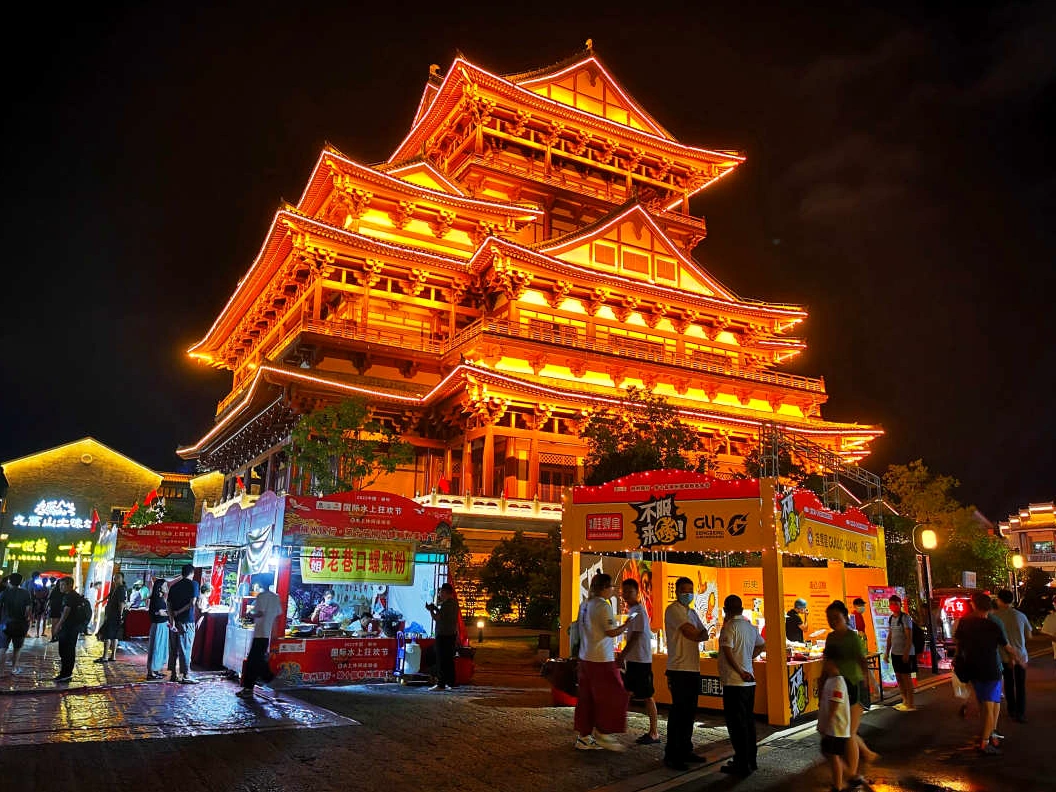
As dusk gradually falls over the Liujiang River valley, the industrial city of Liuzhou sheds the somber look of its mechanical complexes to don a magnificent evening gown woven from lights. The majestic contrast between the daytime factory rhythm and the mesmerizing glow of the night is perfectly reflected on the mirror-like shimmering water, where modern bridges and karst limestone peaks shine brightly under multi-colored artistic border lighting. Standing proudly at the intersection of industrial flow and indigenous culture, the Liuzhou Snail Rice Noodle Industrial Culture Park has become a blazing epicenter of the nighttime economy, directly connecting to the tourism corridor stretching from the profound ancient tile-roofed Yaopu Ancient Town Night Market (窑埠古镇) to the famous traditional night markets along the Gubao axis.
The nighttime space within the complex unveils a vibrant live-action performance of the digital age, where the moniker “Internet Celebrity City” is materialized down to every visual detail. Under the dark night sky, smart production factories operating on a 5G telecommunication foundation continue to glow with lights twenty-four hours a day without rest. Through soundproof transparent glass walls, visitors can admire the rhythmic dance of automated robotic arms, blending with the flashing lights from cross-border e-commerce livestreaming rooms. Hundreds of interactive LED displays continuously show order data charts ticking by the second, turning the entire processing workflow of a rustic dish into a fusion of novel light and technology that is both surreal and deeply imbued with the pulse of our times.
Leaving behind the high-tech glass walls, the true soul of Liuzhou’s night is fully contained within the open-air culinary zones, which brilliantly illuminate the concept of “renjian yanhuoqi” (人间烟火气) – the warm, smoky flavor of the mortal world that captivates countless travelers. Beneath rows of warm yellow lanterns, steam billows thickly from hundreds of giant cast-iron pots boiling incessantly. The shimmering amber broth, meticulously simmered from fresh Liujiang River river snails and pork bone marrow, blends with star anise, cardamom, cinnamon, amomum, and dried chili peppers, releasing a rich aroma that spreads throughout the air. The clinking of chopsticks, the sizzling sound of crispy bean curd skin and julienned pickled bamboo shoots hitting the oil pan, combined with the lively chatter of thousands of diners, create an immensely pristine, vibrant energy field.
Late into the night, the crowds pouring into the experiential space become even denser, turning every street corner and pathway around the park into a permanent, natural film set. Wisps of smoke carrying the distinctive sour and spicy aroma of fermented bamboo shoots, mixed with the damp river mist drifting in from the Liujiang River, create a hazy, ethereal backdrop—the perfect setting for short films and check-in photos by young travelers on social media platforms. Without the need for conventional theater stages or elaborate scripted setups, the seamless synergy between brightly lit automation lines, the bustling riverine lifestyle, and the rising steam from piping-hot bowls of snail rice noodles weaves a grand live-action stage, symbolizing the endless vitality of a sleepless entertainment metropolis on the southern waterside.
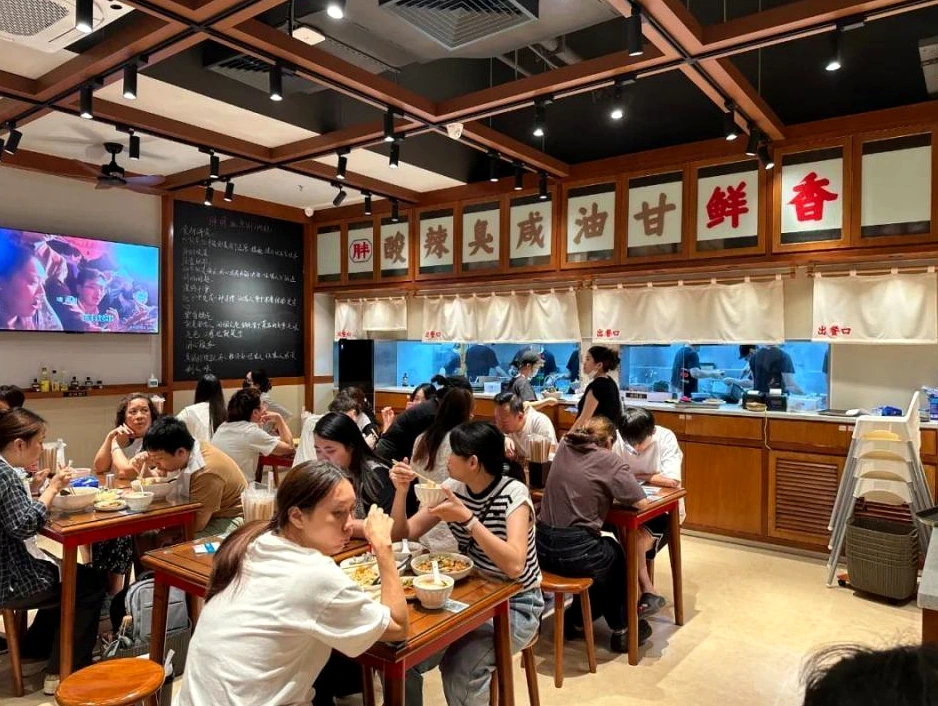
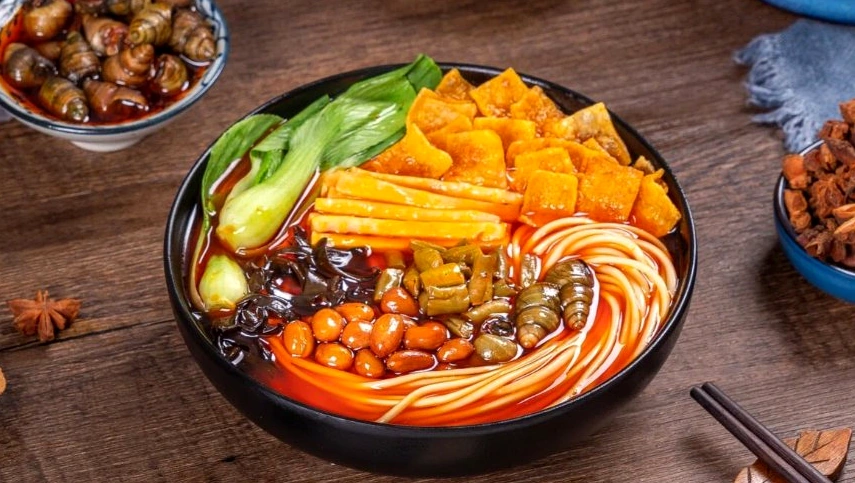
Savoring an authentic bowl of Liuzhou snail rice noodles is not merely a regular culinary experience, but a sensory adventure strictly adhering to the sensory standard of the "Five Flavors and One Heat" (五味一热) passed down through generations. It is a harmonious blend of Sour (refreshing, appetizing tartness), Spicy (fiery, invigorating heat), Fresh (delicate, pure sweetness from organic protein), Crisp (refreshing crunchiness of fresh vegetables), and Hot (scorching heat locking in the aromatic warmth of the boiling broth). The core soul of the noodle bowl lies in the exceptionally meticulous broth-simmering technique (汤底) lasting continuously from eight to twelve hours. Natural river snails harvested from streams must undergo a 48-hour soaking process in clean water to purge all mud and grit, then are stir-fried until aromatic with a rich combination of star anise, cloves, Amomum cardamomum, cinnamon bark, false cardamom, and vibrant red bird's eye chilies. This mixture blends with simmered pork bone broth, creating a shimmering amber-hued liquid that is remarkably clear, completely free of shell fragments, and distilling a rich, savory sweetness that is savory and aromatic without being greasy.
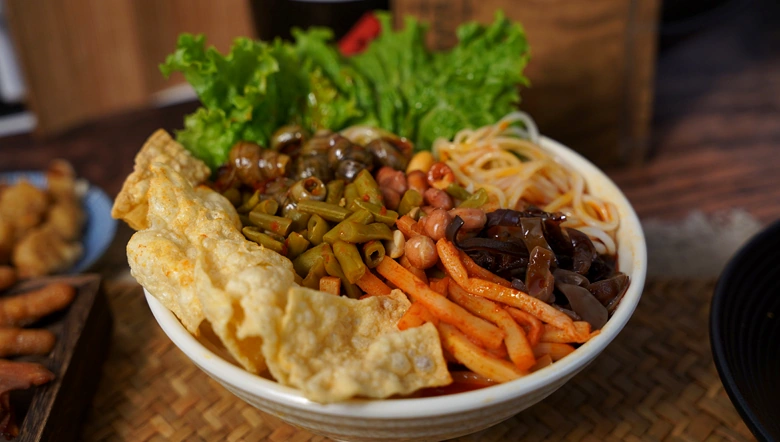
If the broth is the lifeblood, sour bamboo shoots (酸笋 – Suansun) are the unique identity that built the global reputation of this legendary dish. Liuzhou artisans select plump, medium-mature bamboo shoots of the Dendrocalamus latiflorus species, slice them evenly, and subject them to a rigorous anaerobic fermentation process in traditional earthenware jars, soaking them with pure underground well water and coarse sea salt for forty-five days and nights. This natural transformation generates precious organic sulfur compounds, creating a distinct, highly stimulating pungent aroma that is both chewy and retains a refined, tart aftertaste. The structure of the noodle bowl is made even more perfect by the wonderful contrast of its accompanying toppings: honeycomb-like fried yuba bean curd sheets (腐竹) that soak up the spicy soup, crunchy roasted peanuts, shredded wood ear mushrooms, sour pickled yardlong beans (酸豆角) that stimulate the taste buds, and a handful of crisp, vibrant green water spinach. When dining, visitors can hardly miss two classic side dishes: tiger-skin fried duck feet (螺蛳鸭脚) braised to tenderness in savory snail broth, and crispy tornado-fried eggs (炸蛋) that expand into numerous fluffy layers to absorb every drop of the fiery essence.
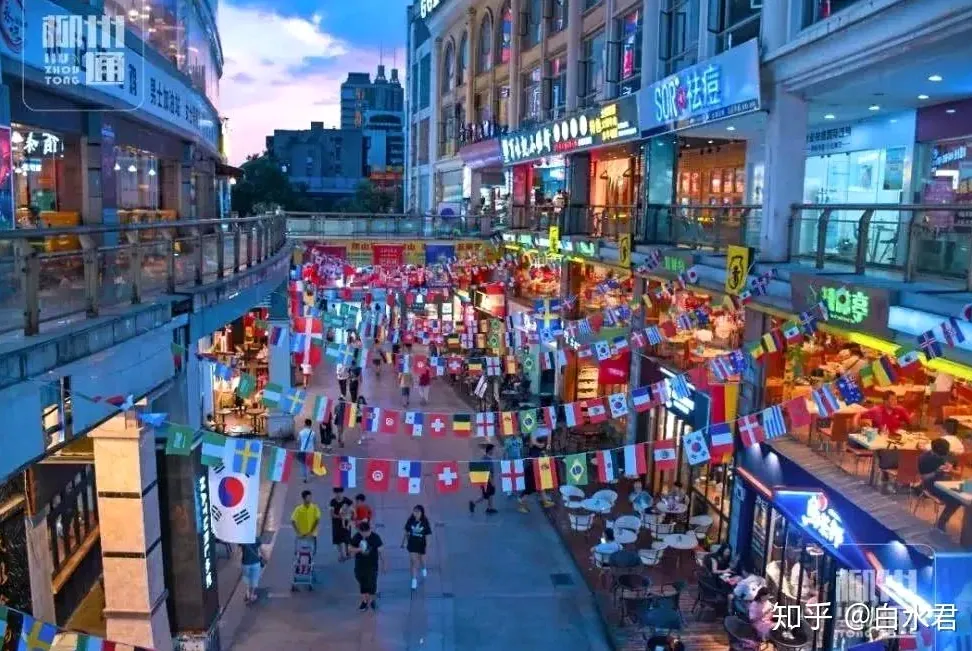
As dusk falls, Liuzhou's culinary cultural space enters its most vibrant moment along the bustling, brightly lit pedestrian street. Rows of colorful multinational flags are hung high, curving gracefully between closely packed high-rise blocks, highlighting the modern urban lifestyle intertwined with traditional touches. The ground floors of the street blocks expand into a chain of open-air restaurants and food courts, where fragrant, spicy plumes of smoke drift through the air. People stroll leisurely, gathering around dining tables set right beside the sidewalks, creating an extremely lively, prosperous, and cozy street banquet scene.
The nocturnal street food culture here does not merely reflect working-class dining habits, but represents the persistent continuation of a community lifestyle intimately connected to the Liujiang River. From modest street stalls by the old ferry pier to the large-scale tasting spaces in today's snail noodle cultural industrial park, the ancestral flavor is preserved intact like an intangible treasure. The clinking of chopsticks and bowls blends with the slurping sounds of enjoying chewy rice noodles made from fermented nonglutinous rice, and cheerful cheers echoing through the spicy steam, creating a vibrant culinary picture full of life. Every bowl of noodle served to the table is not only a satisfaction of the five senses, but also encapsulates the rustic philosophy of the southerners: using warmth to dispel the morning frost, and borrowing the sour and spicy flavors to bond friendships through every changing moon.
Elegantly established at No. 1 Luosi Road (螺蛳路), within the Ludong Industrial Park in Yufeng District, the Liuzhou Snail Rice Noodle Industrial Culture Park welcomes visitors into a vivid world where ancient traditions intersect with contemporary technological standards. To fully enjoy Liuzhou's flavors and magnificent natural landscapes, the most ideal time of the year is from March to May, when the purple Bauhinia flowers burst into vibrant bloom across the ancient town's pathways, or from September to November, when the autumn weather is dry and pleasantly cool, creating perfect conditions for leisurely walks, sightseeing, and appreciating the rich aromatic layers of the legendary snail noodles.
}
This interline journey from Vietnam to the capital of river snail rice noodles opens up two exceptionally convenient routes. The road route departs from the Huu Nghi Quan International Border Gate in Lang Son, connecting directly to the vital G72 expressway with a total distance of 435 kilometers, allowing passenger coaches to roll smoothly into downtown Liuzhou in about five and a half hours. If you choose the railway to admire the frontier scenery, the T8702 international interline train from Gia Lam station to Nanning station is the optimal departure bridge; here, passengers can easily transfer to the Liu-Nan HSR high-speed railway line with an operating density of up to 52 trips per day, taking a mere 1 hour and 05 minutes of travel time and costing 65.5 Chinese Yuan for a second-class ticket. Procedural barriers are also maximally alleviated thanks to the port visa mechanism granting a 15-day stay, applied swiftly for tour groups of 5 members or more with valid sponsorship documents.
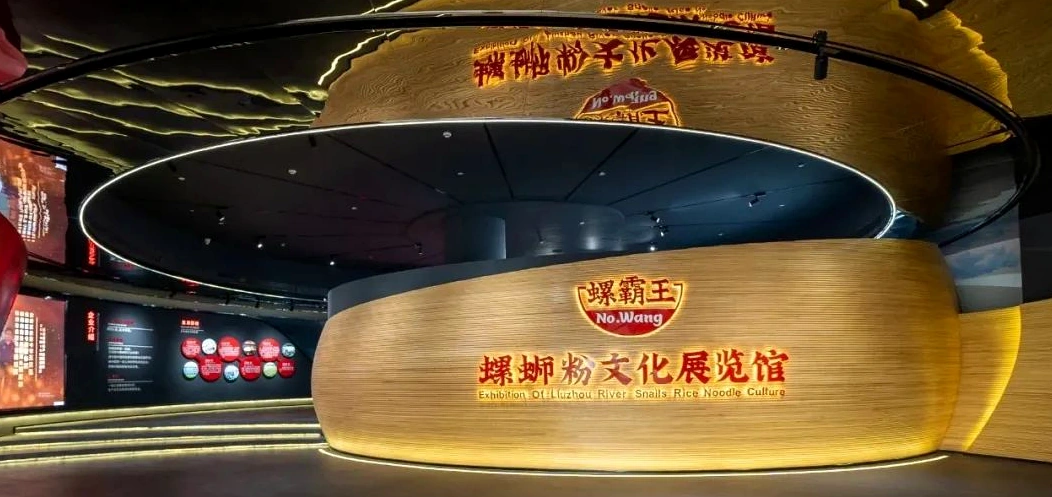
A standardized 3.5-hour experiential itinerary is specially designed for travelers to fully capture the local identity without feeling overwhelmed. Promptly at 09:00 AM, the journey kicks off at the Snail Noodle Museum, which displays archaeological artifacts and the historical evolution of local flavors across different eras. By 10:00 AM, visitors step onto the high-altitude Skywalk glass bridge, gazing down at the entire enclosed production process of the 5G smart factory with robotic arms operating rhythmically below. The 10:45 AM time slot opens up an exciting DIY space where participants can personally mix pickled bamboo shoots, chili oil, light vinegar, and traditional herbal spices according to their personal tastes. The sensory experience peaks at 11:30 AM when visitors enjoy a steaming bowl of freshly made snail noodles right at the workshop, before spending the final 45 minutes at 12:15 PM exploring the B2B trading floor, selecting inspection-certified packaged noodle boxes at original ex-factory prices.
To ensure the trip maintains its academic and cultural experiential nature, travelers must remain vigilant against traps known as “0-dong tours” or absurdly discounted packages ranging from 2,990,000 to 3,990,000 VND. These morphed commercial tricks often slash actual time at the cultural park to less than 30 minutes, replacing it with hours of trapping tourists in enclosed rooms to pressure them into buying expensive latex mattresses, jade, scraping massage tools, or coercing them into purchasing poor-quality, unbranded processed snail noodles. The golden advice for travelers is to resolutely choose pure cultural tour lines like “Pure Liuzhou – 100% No Shopping” (纯玩团) to guarantee supreme rights regarding time, knowledge, and culinary safety. Seeking absolute clarity and peace of mind on every frontier route, entrusting your vacation to a professional all-inclusive tour package is the firmest guarantee for a complete and dignified cultural voyage.