
The Dong Van Karst Plateau, officially recognized by UNESCO as a Global Geopark in 2010, marks a significant milestone as Vietnam’s first title in this prestigious network. Spanning across the four districts of Quan Ba, Yen Minh, Dong Van, and Meo Vac, this region carries geological imprints dating back hundreds of millions of years, showcased by rolling grey limestone mountain ranges that create a landscape both fierce and mesmerizing. It is home to unique natural wonders such as the Tu San Gorge, hailed as the “supreme grand canyon” and Southeast Asia’s deepest gorge with a depth of nearly 1,000m and towering cliffs standing 700-800m high. The jade-green Nho Que River winding at the foot of the Ma Pi Leng Pass is not only a lifeline but also a highlight that paints a mystical watercolor masterpiece, drawing millions of visitors each year to admire and explore.
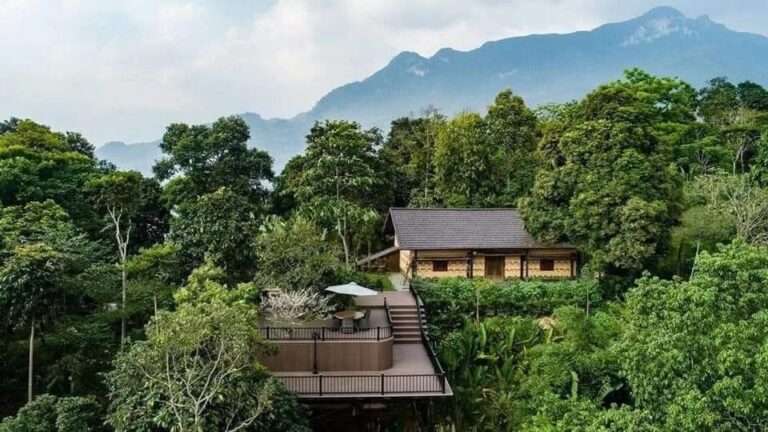
Amidst the rugged terrain and harsh climate of the Karst Plateau, the H’Mông people have resiliently settled and developed a unique culture, clearly manifested through their rammed-earth house architecture. These houses are built entirely of pounded earth, without using cement or steel, yet remain sturdy through centuries, withstanding winter winds and staying cool in summer. The roofs are typically covered with yin-yang tiles, combined with indigenous brocade in the decoration, creating not only a rustic, cozy space but also a symbol of harmony between humans and nature. The presence of resorts like H’Mong Village Resort, with traditional rammed-earth bungalows and unique basket-shaped bungalows (“quẩy tấu”), not only honors but also faithfully recreates indigenous life, allowing travelers to deeply experience the settlement history and cultural essence of the H’Mông people at the country’s northernmost frontier.
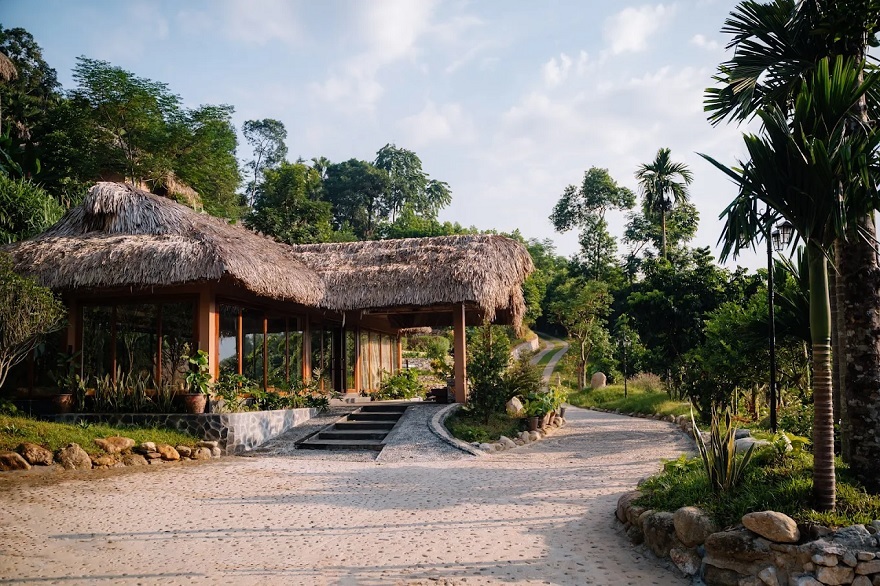
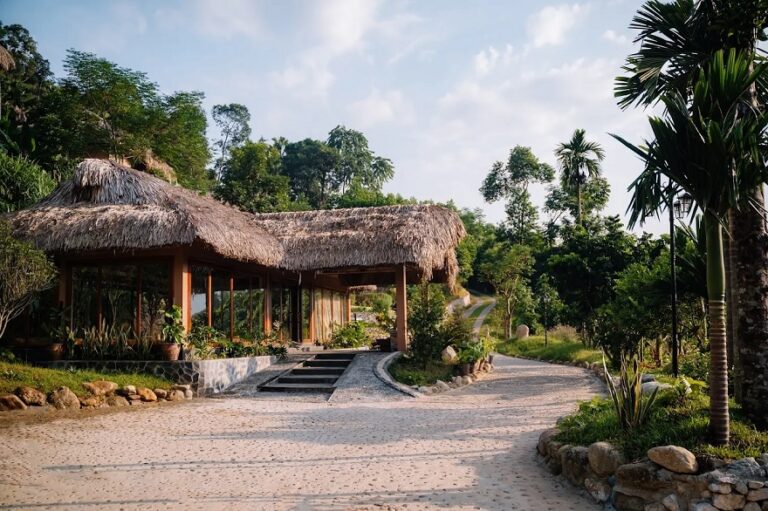
Ha Giang is witnessing a powerful transformation in its tourism industry, shifting from the image of challenging, rugged adventure roads to the trend of high-end eco-cultural retreats. Resorts here, while preserving traditional architecture and local cultural identity, have elevated the experience with upscale 4-5 star amenities. Typical examples include P’apiu Resort, positioned as a “romantic love resort,” offering luxurious, private villas alongside modern facilities such as swimming pools, fine dining restaurants, and a twin Zipline. H’Mong Village Resort and Panhou Retreat are also prominent examples, not only providing unique resort spaces but also integrating profound indigenous cultural experiences such as traditional herbal baths of the H’Mông or Dao people, joining tours to explore linen weaving craft villages, corn wine brewing, or trekking across the Hoang Su Phi terraced rice fields. The harmonious combination of luxury, comfort, and authentic cultural experiences has reshaped Ha Giang’s tourism image, attracting a new segment of travelers willing to pay higher prices for a unique and meaningful vacation.
Ha Giang, with the Dong Van Karst Plateau UNESCO Global Geopark spanning across the four districts of Quan Ba, Yen Minh, Dong Van, and Meo Vac, offers a unique journey of geographical discovery and resort spaces, starting from the gateway of Quan Ba. Quan Ba, prominent for the Twin Fairytale Mountains and cool climate, serves as the first stop for travelers, where eco-resorts like H’Mong Village Resort have clearly shaped the landscape. Located in Trang Kim, Dong Ha commune, H’Mong Village not only provides traditional rammed-earth bungalows and unique basket-shaped bungalows but also integrates an infinity pool with panoramic mountain and forest views, along with indigenous cultural activities such as traditional H’Mong herbal baths and exploration tours of the Lung Tam linen weaving craft village. Continuing the journey, the Yen Minh valley emerges with lush green pine forests, creating a peaceful and private space. Here, P’apiu Resort (Yen Minh/Bac Me) has affirmed its position as a “romantic love resort exclusively for couples,” offering a 4-5 star luxury experience with design inspired by traditional Mong houses, along with unique amenities such as a double Zipline and an “impressive brocade path,” testifying to the development of unique eco-retreat resorts that harmoniously combine modern amenities with local cultural identity.
A journey deeper into the heart of the Dong Van Karst Plateau brings travelers to the ancient town of Dong Van, which preserves geological imprints hundreds of millions of years old with endless interlocking gray jagged limestone mountains, creating a landscape that is both fierce and enchanting. Although information on large-scale resorts in Dong Van is not detailed, this area remains a cultural and historical center, attracting visitors with its ancient architecture and traditional markets. From Dong Van, the legendary Ma Pi Leng pass leads to Meo Vac, home to the Tu San canyon, known as the “greatest majestic wonder” and the deepest canyon in Southeast Asia, with a depth of nearly 1,000m and cliff walls 700-800m high, alongside the meandering emerald-green Nho Que river. The grandeur of the terrain in Dong Van and Meo Vac, especially during the buckwheat flower season (October – December) or the peach and plum blossom season (January – March), creates a strong appeal for experiential tourism, driving the demand for unique types of accommodation, whether traditional homestays or smaller lodging establishments focused on connecting travelers with nature and indigenous culture in the most authentic way. Panhou Retreat in Hoang Su Phi, although not directly on the Quan Ba – Meo Vac route, is also a prime example of this model, with bungalows surrounded by fish ponds and vegetable gardens, along with traditional Dao herbal bath services and trekking tours to explore terraced rice fields, demonstrating the diverse development potential of eco-resorts across Ha Giang province.
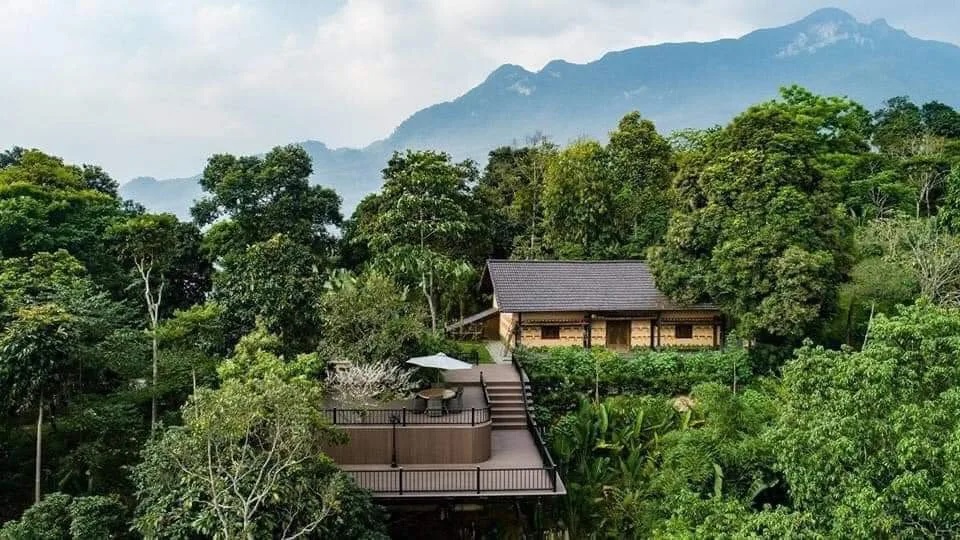
The upgrade of transport infrastructure, particularly the connection of the Tuyen Quang – Ha Giang expressway, is expected to create a major breakthrough in visitor distribution and the development of resort spaces along the entire route from Quan Ba to Meo Vac. This expressway will significantly shorten travel time from Hanoi, transforming Ha Giang from a remote destination into a more accessible choice for both domestic and international travelers. This will not only boost tourist numbers to well-known resorts like P’apiu Resort or H’Mong Village Resort, but also open up opportunities for developing new accommodation projects, especially in central areas like Dong Van and Meo Vac, where tourism potential remains vast but high-end resort infrastructure is not yet fully developed. With more convenient travel, visitors can easily access and fully experience the beauty of the Dong Van Karst Plateau, from the lush green valleys of Quan Ba and Yen Minh to the majesty of the Tu San Gorge in Meo Vac. This connectivity will help distribute tourist flows more effectively, ease pressure on hotspots, and enable other areas within the geopark to develop unique eco-resort models while elevating service quality and the overall visitor experience in 2026 and the years to come.
P’apiu Resort, nestled in isolation among the majestic mountains of Yen Minh and Bac Me, has cemented its position as a “romantic love oasis” exclusively for couples, delivering a top-tier luxury retreat experience. The resort stands out not only for its private, sophisticated space and premium 4-5 star amenities such as swimming pools, restaurants, bars, and 24/7 room service, but also for its impressive 1.7km “brocade path,” a unique cultural highlight for guests to check-in. The villas at P’apiu are designed with inspiration from traditional Mong ethnic houses, blending harmoniously with pristine nature and romantic love stories to create a truly one-of-a-kind sanctuary. Notably, the resort also features a unique wine cellar where guests can savor fine wines in a cozy, private setting, alongside outdoor or subterranean movie-screening experiences and an exhilarating double Zipline.
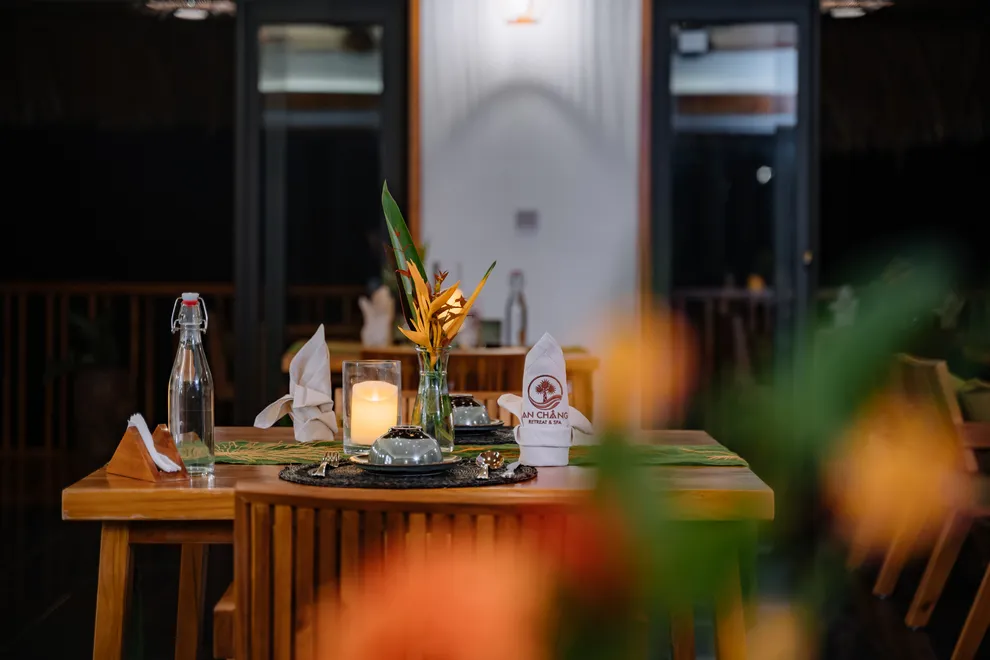
An Châng Retreat & Spa in Quản Bạ, although detailed information has not yet been widely published, is shaped as a lush green space amidst a magnificent rocky valley, where travelers can find peace and a deep connection with nature. Located within the UNESCO Global Geopark, this resort is expected to inherit and promote Ha Giang’s unique eco-retreat architectural spirit, with structures built from natural materials such as rammed earth in the traditional Mong house style, harmoniously combining with the rolling Nụ Mèo limestone mountains and the lush green vegetation of Quản Bạ. An Châng Retreat & Spa promises to deliver a comprehensive healing experience, where visitors can enjoy the fresh air, gaze at the verdant valley and hidden terraced rice fields, while experiencing traditional spa therapies to regenerate energy after journeys exploring the frontier of the Fatherland.
H’Mong Village Resort, located in Trang Kim area, Dong Ha commune, Quan Ba district, is a vivid symbol of H’Mong cultural quintessence, where visitors can immerse themselves in an authentic indigenous space while still ensuring 4-5 star amenities. The unique architectural highlight of the resort consists of traditional rammed earth bungalows and especially the giant bamboo basket ("quay tau") shaped bungalows, providing a one-of-a-kind accommodation experience. From the infinity pool at H’Mong Village, guests can admire the panoramic view of the majestic Trang Kim valley, a breathtaking natural masterpiece that changes with the seasons. The resort also offers a restaurant serving both traditional and modern cuisine, along with deep cultural immersion activities such as traditional H’Mong herbal leaf baths, joining tours to explore the linen weaving craft village in Lung Tam or corn wine brewing in Thanh Van, promising a vacation that is not only relaxing but also rich in cultural value.
Panhou Retreat, nestled in Lang Giang village, Thong Nguyen commune, Hoang Su Phi district, is an ideal destination for those seeking healing and a deep connection with nature and indigenous culture. With uniquely designed bungalows surrounded by ponds and lush vegetable gardens, Panhou creates a peaceful space, completely detached from the hustle and bustle of urban life. The resort is famous for its wellness services such as massages and traditional Dao herbal baths, helping guests relax and restore their energy. In particular, Panhou Retreat is also the gateway to exploring the magnificent Hoang Su Phi terraced rice fields, recognized by UNESCO as a National Heritage, through unique trekking tours that offer the opportunity to meet and learn about the customs of the friendly ethnic minority groups in the area.
The EAV attribute data table below provides transparent comparative information on locations, star ratings, signature amenities, and updated room rate ranges for the 2026 travel season.
| Resort Name | Standard | Location | Weekday Rate (VND/night) | Flower Season Rate (VND) | Amenities & Signature View |
|---|---|---|---|---|---|
| P’apiu Resort Ha Giang | ★★★★★ (Luxury Retreat) | Yen Dinh, Bac Me / Yen Minh | 9,500,000 – 18,000,000 | 12,000,000 – 24,000,000 | Exclusive couples’ resort, 1,700m brocade path, underground wine cellar, open-air forest villas |
| An Chang Retreat & Spa | ★★★★ (4-Star) | Can Ty, Quan Ba, Ha Giang | 1,350,000 – 2,400,000 | 1,850,000 – 3,200,000 | Traditional rammed-earth architecture with yin-yang tiled roofs, Red Dao herbal spa, view of the rocky valley |
| H’Mong Village Resort | ★★★★ (4-Star) | Trang Kim Area, Dong Ha, Quan Ba | 1,450,000 – 2,600,000 | 1,950,000 – 3,500,000 | Unique cone-basket (quay tau) shaped bungalows, mid-mountain infinity pool, local Thang Co and corn wine cuisine |
| Panhou Retreat | ★★★★ (Eco Retreat) | Thong Nguyen, Hoang Su Phi | 1,500,000 – 2,800,000 | 2,100,000 – 3,800,000 | Traditional Red Dao herbal baths, herbal acupressure massage, sweeping views of endless terraced rice fields |
Ha Giang, Vietnam’s northernmost frontier, offers unforgettable sensory-awakening moments, especially when catching the sunrise and hunting for billowing sea of clouds amid stone valleys. From an altitude of thousands of meters on the Dong Van Karst Plateau – a UNESCO Global Geopark, travelers can witness the magnificent spectacle of floating white clouds rolling like sea waves across the valleys of Quan Ba, Yen Minh, and Meo Vac, embracing the endless ranges of sharp, gray cat-ear limestone mountains that have existed for hundreds of millions of years. The chilly mountain air, especially from October to March of the following year, further enhances the majestic and pristine feeling. After being awestruck by nature, a hot bowl of chao au tau (bitter porridge), Ha Giang’s famous specialty, is the perfect choice to banish the cold and recharge your energy for the journey of discovery. With its signature mild bitterness from the au tau tuber skillfully prepared with trotter and terraced rice, this porridge is not just a dish but a unique culinary experience, demonstrating the ingenuity of local people in utilizing natural ingredients to withstand harsh climates.
To truly immerse yourself in local culture and restore your energy, soaking in a traditional herbal bath of the Red Dao people is a highlight not to be missed. Unique eco-resorts like Panhou Retreat in Hoang Su Phi have made this service an indispensable part of the exploration journey. The bathwater is brewed from dozens of rare herbs foraged from deep forests according to the secret recipe of the Dao people, which not only helps relax muscles after trekking the Tu San Gorge or Ma Pi Leng Pass, but also has healing and health-boosting properties. The gentle herbal aroma spreading through the rustic space of a rammed-earth bungalow, combined with yin-yang tiled roofs and local brocade, creates a resort space that is both luxurious with 4-5 star amenities and rich in identity, helping visitors deeply feel the harmony between humans and nature, between tradition and modernity.
Your journey to discover Ha Giang would not be complete without strolling among vast terraced fields of buckwheat flowers, an inseparable symbol of this land. From October to December, especially in November with the famous Buckwheat Flower Festival, the fields burst into vibrant shades of pink and light purple stretching across cat-ear mountain slopes and valleys, creating a magical, enchanting natural picture. Travelers can easily encounter these flower carpets along the route from Quan Ba and Yen Minh to Dong Van and Meo Vac. Walking among the flower rows, gazing at the tiny blossoms reaching out from the gray rock background, not only yields impressive check-in photos but also offers a chance to feel the resilience of nature and the people here. This is also the ideal time to learn about the processing of products made from buckwheat, such as cakes and wine, enriching the unique culinary culture experience of Ha Giang.
The period from October to December every year is the “golden time” to admire Ha Giang in the brilliant colors of buckwheat flowers, an indispensable symbol of the northernmost region of the Fatherland. These flower fields bloom across the rock slopes and valleys of the Dong Van Karst Plateau UNESCO Global Geopark, creating a majestic natural picture, especially in November when the famous Buckwheat Flower Festival takes place, attracting tens of thousands of visitors. Following that, from January to March, Ha Giang puts on its spring coat with the pink of peach blossoms, the pure white of plum and pear blossoms, and the bright yellow of mustard flowers, especially blooming about 1-1.5 months after Lunar New Year. These are peak tourism periods, requiring visitors to proactively book accommodation in areas like Dong Van, Meo Vac, and Yen Minh 2-3 weeks before the trip to ensure satisfactory lodging and avoid sold-out situations due to a sudden surge in visitors.
To have a convenient and comfortable journey from Hanoi to Ha Giang, choosing a high-end sleeper limousine is an optimal decision for the nearly 300km long route. Buses usually depart in the evening, allowing travelers to rest and arrive in Ha Giang city early the next morning, ready for the journey to explore the Dong Van Karst Plateau UNESCO Global Geopark. With modern amenities such as wide reclining seats, air conditioning, USB charging ports, and sometimes personal entertainment screens, the sleeper limousine offers a smooth travel experience, minimizing fatigue on the long road. After arriving in Ha Giang city, travelers can easily rent a motorbike or use local bus services to continue the journey to conquer Quan Ba, Yen Minh, Dong Van, and Meo Vac districts, which conceal magnificent landscapes like the nearly 1,000m deep Tu San canyon or the turquoise Nho Que river winding at the foot of Ma Pi Leng pass.
Due to the high mountainous terrain and harsh climate characteristics, especially in winter from October to March, preparing multi-layered warm clothing is a key factor to ensure health and a complete experience in Ha Giang. Temperatures in high-altitude areas like Dong Van and Meo Vac can drop very low, sometimes even freezing in the coldest months. Visitors should prioritize inner thermal shirts, combined with thick sweaters or fleece for the middle layer, and a windproof, waterproof outer jacket (puffer jacket or thick windbreaker) to cope with sudden temperature changes and cold winds on the mountain passes. Besides, accessories such as thick scarves, wool beanies, warm gloves, and hiking shoes with good grip and slip resistance are indispensable, helping protect the body from the piercing cold and facilitating travel on the steep, rugged mountain roads of the border region, where the landscape is both fierce and enchanting.
Buckwheat flowers begin to bloom from late September, blooming most brilliantly from mid-October to the end of November, creating vast pinkish-purple flower carpets across the rocky slopes.
You can take a high-end cabin limousine from Hanoi straight to Ha Giang city or Quan Ba district (taking about 6 hours), then rent a private car or use the resort’s shuttle service.
}
P'apiu is a resort designed with a completely private concept exclusively for couples (maximum 2 adults per villa) and does not accept children under 18 years of age to ensure absolute tranquility.
