Cai Bau Pagoda is a unique and captivating spiritual and cultural destination in Quang Ninh. Widely regarded as Vietnam’s most scenic coastal pagoda, it sits right along the shores of Bai Tu Long Bay and carries a heroic history linked to the Tran Dynasty’s battles against Mongol invaders. Adorned with solemn Buddha statues and revered traditional architecture, the pagoda also offers visitors a peaceful sanctuary to learn about Buddhism and experience deep inner serenity. In this guide, we will take you through everything you need to know about Cai Bau Pagoda in Quang Ninh—let’s explore!
See more: Top 9 Sacred Pagodas in Quang Ninh
Introduction to Cai Bau Pagoda
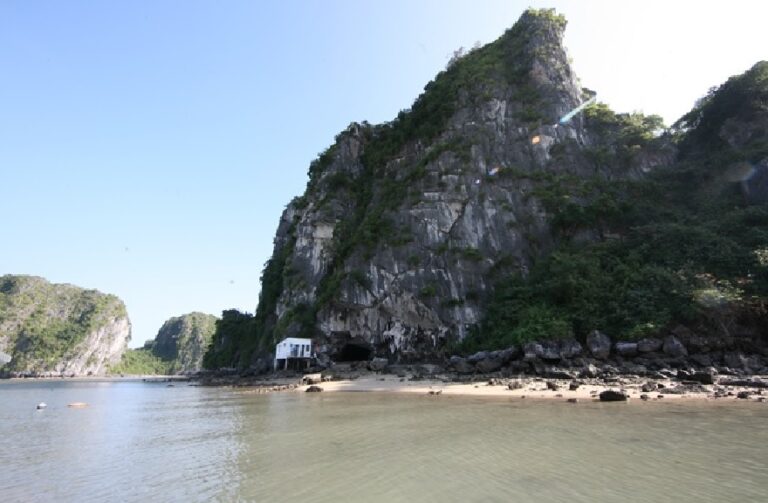
Cai Bau Pagoda, officially known as Truc Lam Giac Tam Zen Monastery, perches on a coastal hillside overlooking Bai Tu Long Bay near the Bai Dai tourist area (Van Don District). The monastery was built upon the foundations of ancient Phuc Linh Tu Pagoda, a 700-year-old sanctuary dating back to the Tran Dynasty. Its location is also believed to be the site of the opening engagement of the historic 1288 Bach Dang River campaign.
Across centuries of historical upheaval, the original pagoda suffered severe destruction until only scattered ruins remained. Although partially restored in the 1990s, those early repairs were modest and lacked cohesive planning. In 2007, full-scale reconstruction of Cai Bau Pagoda began across a 20-hectare site with a total investment of 24 billion VND raised through public contributions. Inaugurated in 2009 in a classic “mountain-backed, water-facing” setting against the hills and looking out over the sea, the pagoda is widely praised by visitors as occupying one of Vietnam’s most breathtaking coastal locations.
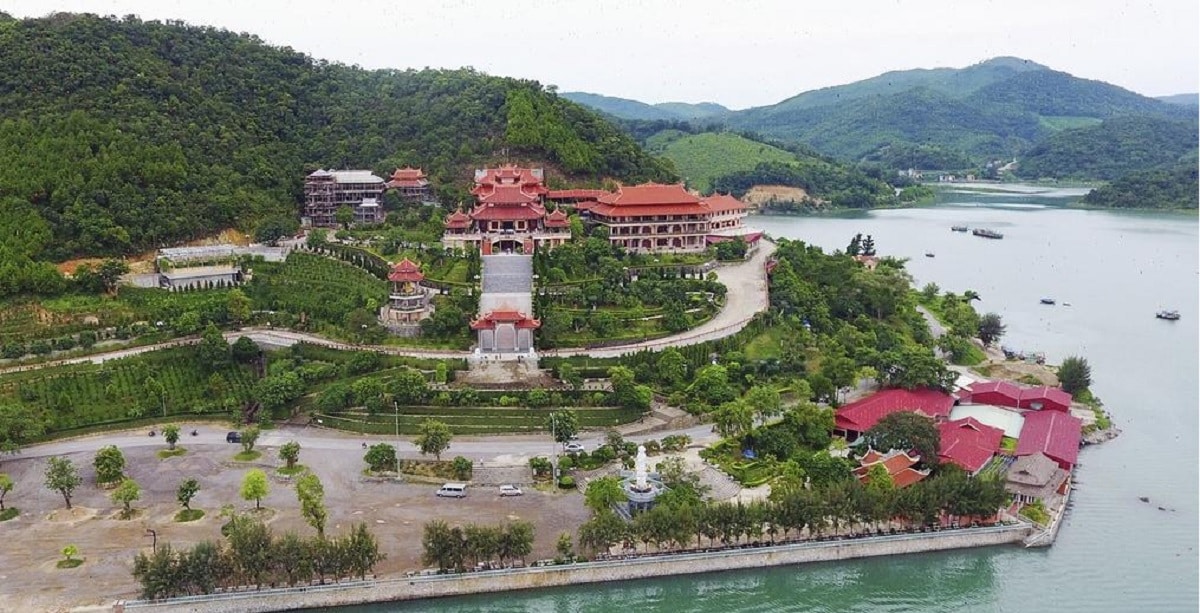
Cai Bau Pagoda nestled in a classic mountain-backed, water-facing setting
The monastery follows traditional Vietnamese Buddhist architectural layout, featuring a two-story main sanctuary spanning 6,000 m2, a triple-arched entrance gate (Tam Quan), ancestral hall, bell tower, senior monks’ quarters, guesthouses for visiting monks and nuns, abbot’s residence, meditation halls, and dining refectory—crowned most impressively by a 50-meter-tall Buddha statue rising on the mountain ridge behind the monastery. Inside the main sanctuary, a statue of Shakyamuni Buddha sits before an intricate bronze bas-relief, flanked on the left and right by Manjushri (Van Thu Su Loi) and Samantabhadra (Pho Hien) Bodhisattvas, symbolizing wisdom and compassion.
Its architectural design, interior arrangement, sculpted reliefs, and stone stairways reflect timeless Vietnamese temple craftsmanship. Cai Bau Pagoda encompasses the 6,000 m2 two-story main hall, a double-tiered triple gate, ancestral hall, bell tower, senior monks’ residences, monastic guesthouses, abbot’s quarters, retreat cells, meditation hall, and refectory exhibition hall—highlighted by the towering 50-meter Buddha monument on the mountainside behind the complex. Within the main hall, Shakyamuni Buddha is enshrined against a bronze relief, flanked by Manjushri and Samantabhadra Bodhisattvas representing supreme wisdom and boundless compassion.
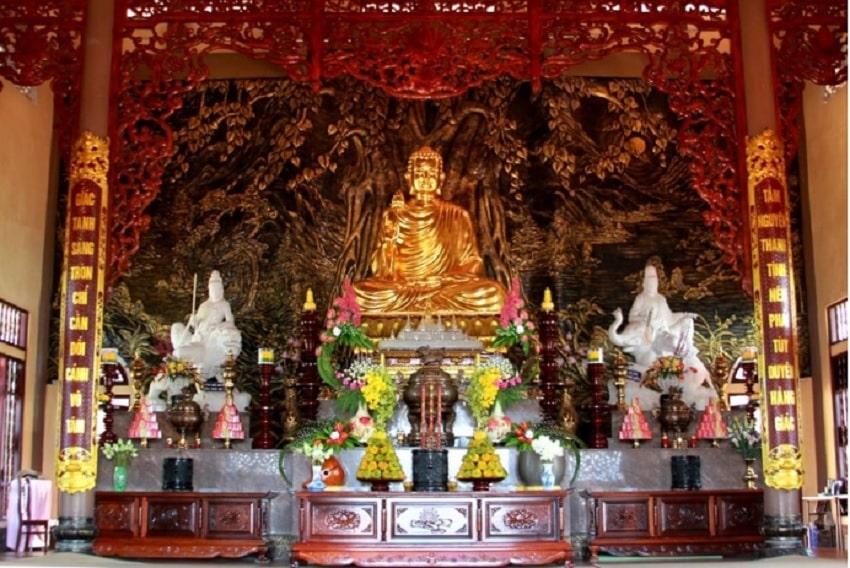
Main Sanctuary of Cai Bau Pagoda
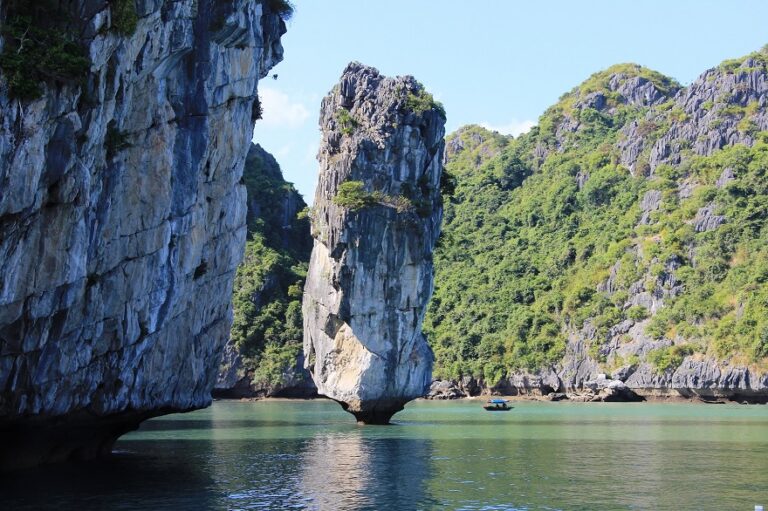
Cai Bau Pagoda is admired as a spiritual and cultural landmark defined by clean, understated elegance. Delicate lotus motifs carved across gate pediments, timber columns, and roof beams imbue the grounds with serene grace. From the monastery’s elevated terraces, visitors gaze across Bai Tu Long Bay to watch boats gliding among countless limestone islets rising from emerald waters while cool, salt-kissed sea breezes drift through the courtyards—creating an uplifting sense of peace and harmony with nature.
How to Get to Cai Bau Pagoda
Cai Bau Pagoda lies roughly 210 km from Hanoi and 60 km from Ha Long City. Travelers can reach the pagoda easily using either of the following transport options:
- Local Bus: From Ha Long, head to Bai Chay Bus Station or stops along National Highway 18 to board the Ha Long – Van Don public bus for only around 14,000 VND per person. The journey takes approximately 90 minutes.
- Intercity Coach: The most popular option when traveling from Hanoi is taking an intercity coach on the Hanoi – Mong Cai route. Reputable operators such as Ha Thanh and Duc Phuc run frequent services and allow advance phone reservations. Fares average around 150,000 VND per ticket one way, with a travel time of approximately 4.5 to 5 hours.
Best Time to Visit Cai Bau Pagoda
- The most vibrant time to experience Cai Bau Pagoda is from the 1st to the 3rd lunar months. During this period, the monastery hosts major Buddhist celebrations such as Vesak (Buddha’s Birthday) and the Vu Lan Filial Piety Festival, offering visitors the chance to join spiritual ceremonies, admire glowing floating lanterns across the water, and pray for peace and well-being for themselves and their families.
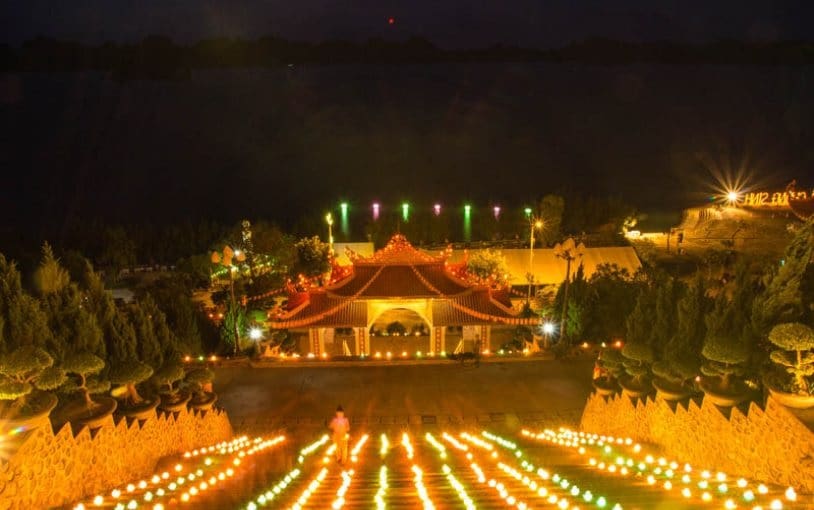
Vu Lan Festival at Cai Bau Pagoda
- If you cannot visit during festival months, Cai Bau Pagoda welcomes visitors year-round, opening daily from 6:00 AM to 6:00 PM. Arriving in the early morning or late afternoon is ideal for avoiding midday heat while enjoying crisp sea air and peaceful surroundings.
Cai Bau Pagoda in Quang Ninh is a truly distinctive spiritual and cultural landmark. Beyond its breathtaking coastal scenery and serene architecture, a visit deepens your appreciation of Vietnam’s history and Buddhist heritage. At Cai Bau Pagoda, you can breathe in fresh ocean air, listen to inspiring Dharma teachings from resident monks and nuns, and offer prayers for peace and good fortune for loved ones. Cai Bau Pagoda is an unmissable stop on any Quang Ninh itinerary—especially during major holidays or full-moon days. Start planning your journey today and discover Vietnam’s most scenic coastal pagoda!