Set along the coast of the Gulf of Thailand in Samut Prakan Province, Muang Boran (Ancient City) was born from the extraordinary vision of cultural philanthropist Lek Viriyaphan and his devoted life partner, Khunying Praphai Viriyahbhun. At the dawn of the 25th Buddhist century—around B.E. 2506 (1963 AD)—as waves of industrialization and modernization swept across the Land of Smiles, threatening countless ancient architectural treasures with erosion and permanent disappearance, the millionaire couple resolved to dedicate their personal fortune to building a monumental project of global stature. Originally conceived as a leisure golf course shaped like the map of Thailand, a profound awakening to the sight of crumbling historical ruins compelled Khun Lek to transform the entire venture into a vast open-air museum devoted to safeguarding and honoring the nation’s soul.
The core philosophy of Muang Boran never stopped at being a mere theme park of replicas; instead, it was conceived as a living historical gazetteer faithfully recreating the territorial contours of Siam in accordance with authoritative historical-geographical cartography. To ensure every brick and roof tile rose true to local spirit and historical chronology, Lek Viriyaphan assembled a council of the era’s foremost scholars, including Professor Dr. Prasert Na Nagara—a preeminent authority on ancient Thai scripts and epigraphy—alongside veteran archaeologists and architects from Thailand’s Fine Arts Department. Following nearly a decade of tireless field research and meticulous reconstruction of lost sculptural motifs, Muang Boran officially opened its gates to the public on February 11, 1972, unveiling an expansive heritage landscape unprecedented anywhere on earth.
Guided by leading scholars and brought to life by master folk artisans, Muang Boran chronicles the entire thousand-year sweep of history across the Land of Smiles. That journey begins with distant prehistoric archaeological traces, moves through the flourishing Buddhist civilization of Dvaravati from the 6th to the 11th centuries—marked by sandstone Dharmachakra wheels and serene Buddha images—and extends southward to reflect the influence of the maritime Srivijaya Empire from the 7th to the 13th centuries. The currents of history then lead travelers to admire the solemn grandeur of Lopburi architecture infused with classic Khmer style, before radiating brilliance in the Sukhothai era—the dawn of Thai independence, birthplace of the Thai script and the graceful elegance of the walking Buddha sculptural tradition.
Beyond these epochs, the panorama in Samut Prakan harmoniously weaves together the diverse cultural hues of the mist-shrouded northern Lanna Kingdom, famed for its gracefully curving wooden temple roofs, alongside architectural echoes of the Lan Xang Kingdom along both banks of the legendary Mekong River. The historical narrative reaches its poignant climax as Muang Boran resurrects the magnificent royal palaces of the former capital Ayutthaya—a dazzling dynasty spanning over four centuries before being reduced to ashes by war in the 18th century—before culminating triumphantly in the glorious revival of the Rattanakosin era in modern-day Bangkok. Every architectural complex across this open-air museum stands as a tangible testament to the resilience, artistic mastery, and deep pride of a nation that knows how to preserve its roots amid the shifting tides of time.
Located in Bang Pu Mai Subdistrict within Mueang Samut Prakan District, Muang Boran spans an expansive territory of over 800 rai—roughly 320 hectares—nestled along the Gulf of Thailand right where the lower Chao Phraya River delta meets the open sea. In ancient geological terms, this stretch of land was originally a low-lying brackish coastal plain covered with wild mangrove swamps and barren salt flats, subjected year-round to surging tides and deep saline intrusion. Viewed through traditional Eastern geomancy, selecting a low-lying coastal marsh to construct an encyclopedic architectural monument might seem an inauspicious defiance of water; yet the planners recognized the hidden essence of this terrain: at the confluence of river and sea, the boundless vitality of converging waterways offered the promise of reviving centuries-old strata of civilization.
To transform hundreds of hectares of saline marshland into a lush, vibrant landscape, the creators executed a sophisticated feat of soil engineering and hydrological reclamation. Engineers and artisans excavated dozens of winding, interconnected canals linked to massive freshwater reservoirs to operate a continuous soil-desalination cycle across successive monsoon seasons. Millions of cubic meters of fertile alluvial silt were transported from inland river tributaries to enrich the topsoil, paired with the introduction of native salt-tolerant shade trees capable of stabilizing the earth. This closed-loop irrigation network not only acts as a microclimatic lung cooling the entire complex, but also sustains lush botanical life, turning a once-harsh coastal wetland into a verdant oasis where tranquil lakes mirror timeless monuments.
The most inspired and audacious stroke of Muang Boran’s spatial master plan lies in sculpting its entire artificial topography into the exact shape of the “Golden Axe” (Khwan Thong)—the sacred geographic emblem of Thailand. Through masterful earthworks and precise cardinal alignment, every hillock, river channel, and slope corresponds directly to the natural geographic regions of the country. Rooted in spatial structuralism, this zoning transforms a visitor’s excursion into an authentic overland journey across heritage routes, where every step across a regional border simultaneously becomes a leap across historical eras and cultural landscapes.
The northern sector of the museum is sculpted with steep hills, dense woodlands, and babbling streams evoking the rugged mountain ranges of Lanna and the Ping River valley. Here, finely carved teakwood temples with sweeping tiled roofs stand in atmospheric serenity, capturing the contemplative spirit of early Lan Xang and Chiang Mai. Transitioning into the northeastern sector, the terrain shifts abruptly into the arid Isan plateau, characterized by lateritic red gravel soil and rising sandstone outcrops. Amid this sun-drenched landscape, temple ruins heavily influenced by Khmer Angkorian civilization rise in imposing majesty, defined by weathered brick red and mystical gray stone.
Turning back toward the central blade of the axe, the scenery brightens into a fertile, water-rich alluvial plain where waterways encircle gilded palaces and soaring stupas from the golden age of Ayutthaya and the Thonburi dynasty. Extending southward down the slender handle of the axe, the topography narrows into a breezy coastal strip flanked by two seas, lined with swaying coconut palms and fine sandy shores. Here, the scenery takes on a pristine maritime character adorned with sacred monuments reflecting the storied Srivijaya artistic tradition. This seamless fusion of terrain sculpting, advanced hydro-soil engineering, and national map-inspired planning endows Muang Boran with an inimitable soul—a self-contained microcosm where nature and heritage merge as one.
Laid out across a ground plan faithfully tracing the ancient axe-shaped borders of the Kingdom of Siam, Muang Boran (Ancient City) achieves the stature of the world’s largest open-air museum, showcasing more than 116 monumental and intimate architectural structures. Rather than a static gallery of exhibits, the grounds form a living historical reconstruction site whose geographic axes align with Thailand’s Northern, Northeastern, Central, and Southern cultural regions. Every vista, canal bend, and artificial mound is calibrated according to traditional geomancy and classical proportions, creating an unbroken visual continuum linking visitors to the millennia-old legacies of the Dvaravati, Khmer, Sukhothai, Ayutthaya, and Rattanakosin civilizations.
The pinnacle of architectural landscape recreation at Muang Boran is epitomized by the replica complex of Khao Phra Viharn (Preah Vihear). To overcome the flat coastal terrain of Samut Prakan, engineers and artisans painstakingly raised a towering artificial stone mountain replicating the sheer escarpment of the Dângrêk Mountains where the original sanctuary perches serenely. Built in the classic Baphuon style of the ancient Khmer Empire, the structure rests upon a sturdy core of dark laterite blocks clad in solid sandstone masonry. Contemporary master craftsmen poured hundreds of thousands of hours into hand-chiseling every molding and carving intricate bas-reliefs across lintels and pediments, bringing Hindu mythological epics to life with fluid, razor-sharp detail imbued with the patina of ages.
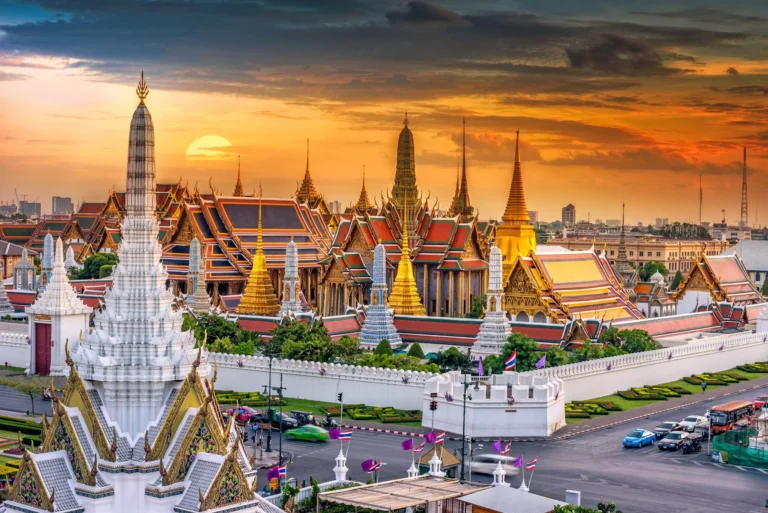
Contrasting with the raw, enigmatic stone ruins of the north is the dazzling opulence of Sanphet Prasat Palace, the crown jewel of the central zone recreating the radiant capital of Ayutthaya. Historically, Sanphet Prasat served as the supreme royal audience hall, witnessing the sovereign splendor of illustrious monarchs from King Borommarachathirat II (Trailokanat) to the golden age of international trade under King Narai the Great. Following the catastrophic fall and burning of the capital in 1767, this masterpiece survived only as shattered brick foundations in chronicles and memory. At Muang Boran, the palace has risen anew from the ashes thanks to precise archaeological blueprints and rare eyewitness accounts penned by 17th-century European envoys.
The architecture of Sanphet Prasat stands as a magnificent union of traditional materials and supreme royal craftsmanship. Its entire load-bearing framework is erected from solid mature teakwood, with interior details and pillar reliefs gilded in pure gleaming gold leaf. Multi-tiered cascading roofs blaze beneath the tropical sun with traditional glazed terracotta tiles, curving gracefully upward into slender chofah finials piercing the azure sky. Above the palace pediment, the figure of Lord Narayana mounted astride the mythical bird Garuda is carved in deep, intricate relief amid swirling kranok foliage motifs curling like clouds. Preserving this splendor against the corrosive coastal air has required cumulative initial construction and ongoing restoration investments totaling hundreds of millions of Baht.
The presence of more than a hundred temples, pagodas, and palaces crafted from precious timber and sandstone at Muang Boran stands as compelling proof of cultural preservation through living architectural reconstruction. Whether built to strict scaled proportions or exact one-to-one dimensions, every edifice reflects uncompromising geometric fidelity and the sacred worldview of its creators. Beyond an outdoor architectural marvel, the complex serves as an open-air academy safeguarding master woodcarving, revived tile-glazing techniques, and ancient timber joinery traditions across Southeast Asia.
As the final rays of sunlight dip below the Samut Prakan horizon where the Chao Phraya River merges into the vast Gulf of Thailand, Muang Boran sheds its daytime tranquility to don an unmatched evening gown of light. The nocturnal museum initiative featuring the Muang Boran Light Fest unlocks an entirely different dimension of discovery, where a thousand years of Thai history no longer rest quietly on chronicle pages but awaken amid a sea of illumination. Cool night breezes carrying the salty tang of the Gulf sweep across coconut groves and glassy lagoons, cultivating a rare poetic ambiance that invites travelers on an enchanted voyage through the rise and fall of storied dynasties.
The crowning highlight of the nocturnal experience is the seamless marriage of cutting-edge architectural lighting and 3D projection mapping cast directly onto heritage monuments. Under the direction of visual artists, the weathered sandstone blocks of Angkorian-style Khmer temples and the intricate dragon-and-garuda carvings crowning Phanom Rung shimmer down to every grain of stone. At Sanphet Prasat Palace—the supreme emblem of the Ayutthaya Kingdom destroyed in the 18th century—artistic spotlights bathe the gilded timber in warm gold, resurrecting the majesty of the Siamese throne. Millimeter-precise digital projections sweep across architectural facades to recount heroic chapters from the founding of Sukhothai and the northern brilliance of Lan Na to the Chakri dynasty’s establishment along the Chao Phraya, accompanied by a stirring orchestral score blending classical Thai instruments with contemporary electronic harmonies.
Amid this luminous setting, ancient court life is breathed back into motion through captivating open-air theatrical performances. Audiences fall hushed before the stately, measured movements of Khon masked dance-drama—recognized among humanity’s Intangible Cultural Heritage. Upon historic palace steps, performers enact iconic episodes from the Ramakien epic, portraying the eternal struggle between Prince Phra Ram, the monkey deity Hanuman, and the demon king Thotsakan through expressive finger gestures and gazes gleaming behind gold-leafed masks. Accompanying the dance are the dramatic, soaring rhythms of a traditional Piphat ensemble—featuring Khong Wong Yai gong circles, pulsing Taphon drums, and the haunting Pi oboe—sending echoes of ancient royal courts rippling into the night.
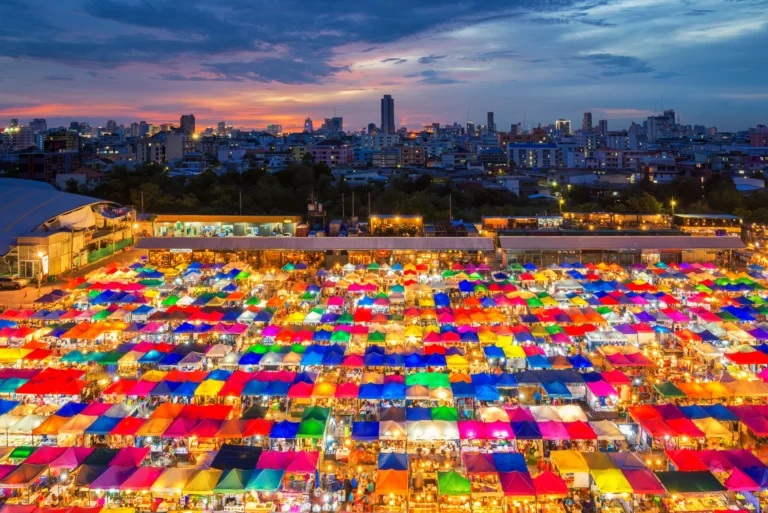
Alongside classical court artistry comes the earthy charm of Lakhon Chatri folk dance-drama and lively traditional dances from Northeastern Thailand. Evening festivities at Muang Boran grow even more enchanting with illuminated waterborne processions recreating centuries of vibrant riverine life. Wooden boats glide single-file along artificial canals beneath glowing lanterns, leading visitors straight into traditional floating markets. Here, classic Siamese street flavors fill the air—from sizzling Pad Thai tossed with fresh river prawns over cast-iron woks and fiery Som Tum papaya salad pounded with bird’s-eye chilies to creamy Khao Niao Mamuang mango sticky rice and smoky grilled skewers sizzling over glowing charcoal. Together, they compose a complete multi-sensory feast where history, light art, and everyday culinary heritage converge beneath the Samut Prakan sky.
Tracing the sweep of history across Muang Boran would remain incomplete without a culinary exploration, where the gastronomic map of Siam is brought to life as an intangible cultural heritage complementing its architecture. Along the threshold connecting the waterborne Floating Market and the historic Overland Market, scenes of everyday life unfold to the unhurried rhythms of old-world Thailand. Unlike noisy, commercialized tourist markets, the culinary quarters here faithfully preserve heirloom flavors cooked over fragrant wood-charcoal hearths, where local artisans still simmer authentic dishes using seasonal herbs harvested by the lunar calendar and fresh seafood landed along the Samut Prakan coast.
The pinnacle of royal culinary artistry recreated at Muang Boran shines brightest in Gaeng Ranyuan, an esteemed palace soup originating during the reign of King Rama II in the illustrious Rattanakosin period. Born from the ingenuity of royal palace ladies repurposing prime grilled beef left over from court banquets, this aromatic broth captivates diners with fragrant kapi shrimp paste sautéed thoroughly with bruised lemongrass, fiery bird’s-eye chilies, sweet basil leaves, and bright lime juice. Every spoonful of amber-brown broth awakens the palate through an exquisite equilibrium of sour, salty, nutty-sweet, and spicy notes, while carrying an elegant story of aristocratic thrift and refinement.
Alongside the rich aroma of this royal soup, traditional tables invite travelers to sample iconic, refined appetizers such as Khao Tang Na Tang and Moo Sarong. Crispy rice crackers—Khao Tang Na Tang—showcase the resourcefulness of traditional Thai cooks, who sun-dried scorched rice crusts from the bottom of iron pots before puffing them crisp in hot oil and pairing them with a velvety dip of minced pork, chopped shrimp, shallots, and rich coconut milk seasoned with pure palm sugar. Meanwhile, Moo Sarong stands as an edible work of art celebrated in classical Siamese poetry: seasoned pork meatballs infused with pepper and coriander root are delicately wrapped in fine strands of dried rice vermicelli like spools of silk thread, then fried to a shattering golden crunch encasing a tender, juicy center.
Returning to the laid-back ambiance of the Floating Market waterways, few travelers can resist the allure of small wooden sampans moored side by side beneath ancient shade trees, wafting the intoxicating fragrance of traditional boat noodles. Simmered for hours from marrow bones with star anise, cinnamon, cardamom, and a velvety touch of traditional enriching broth, this celebrated street-food staple bursts with depth—requiring little more than springy noodles, tender slices of meat, bouncy meatballs, and blanched morning glory to hold travelers spellbound at midday. Glowing charcoal braziers perched at the prow of each boat keep cauldrons bubbling briskly while echoing generations of river-merchant life along the canals of the Chao Phraya basin.
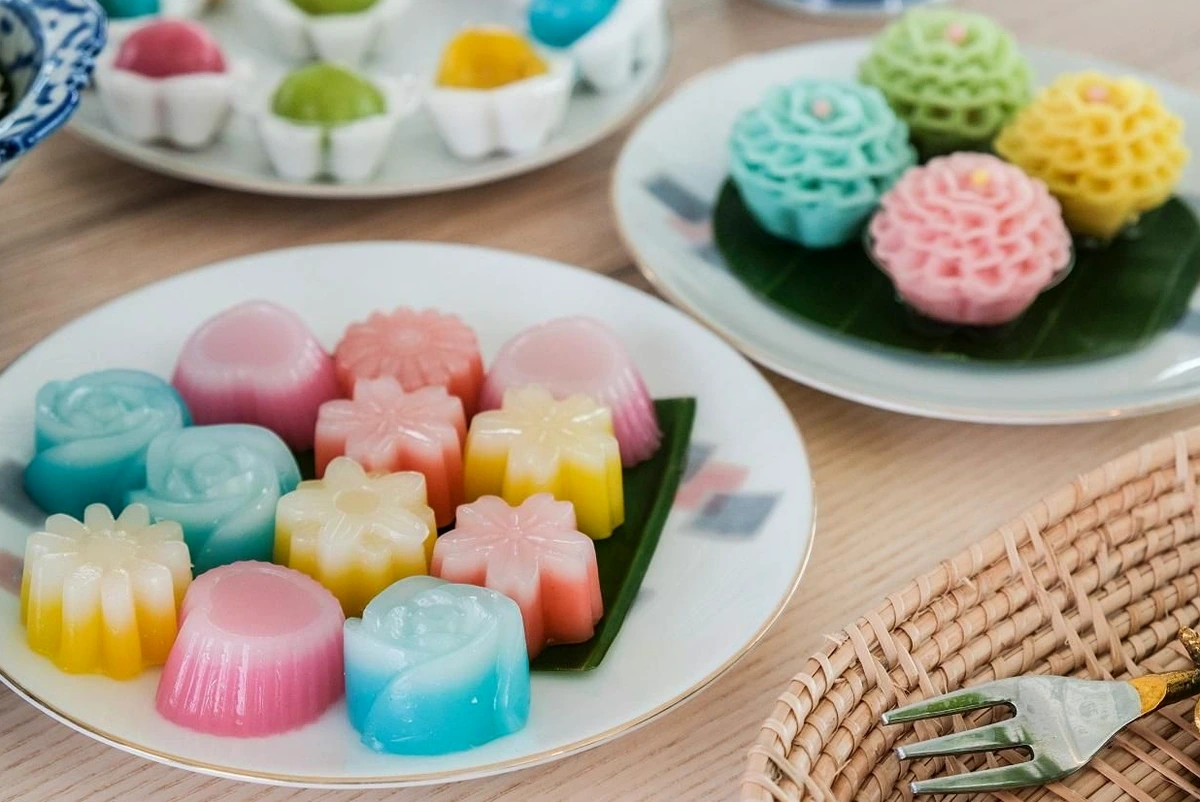
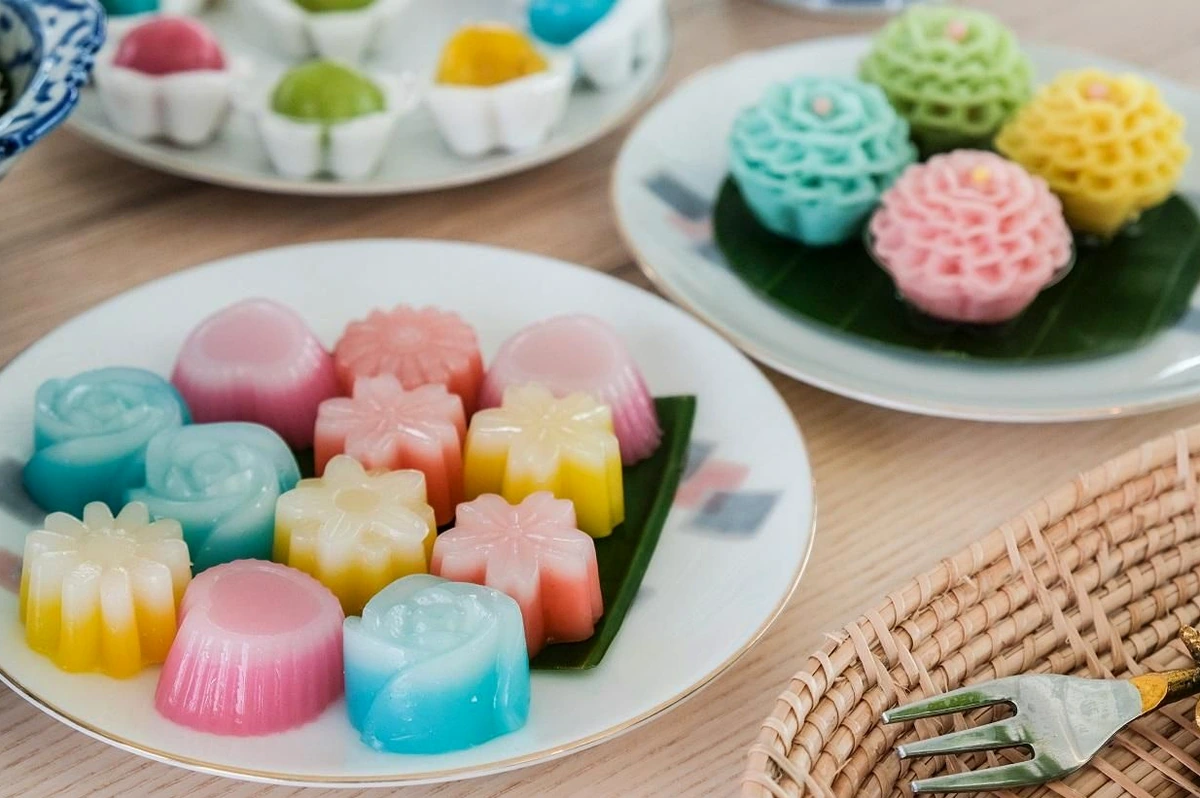
The culinary journey concludes on a sweet note with royal desserts reflecting Ayutthaya’s historic international trade ties. Crisp, lacy Khanom Buang crepes fragrant with rice flour and coconut milk are layered with billowy meringue cream, shredded coconut, and sweet golden egg-yolk threads. Beside them, the famed royal trio of golden confections—flower-petaled Thong Yip, teardrop-shaped Thong Yod, and silken strands of Foi Thong—are still carefully poached in jasmine-scented sugar syrup by skilled hands. The rich sweetness of duck egg yolks infused with native blossoms not only preserves culinary memory, but imparts traditional blessings of prosperity and enduring good fortune to every traveler exploring this celebrated open-air museum.
To fully appreciate the architectural epic and philosophical vision that philanthropist Lek Viriyaphan painstakingly built at Muang Boran, planning your visit carefully—from timing and transit routes to local temple etiquette—is essential. The world’s largest open-air museum welcomes visitors daily from 9:00 AM to 7:00 PM. As dusk settles over the Gulf of Siam, the grounds transition into an enchanting nocturnal museum experience, when gilded palaces and centuries-old stupas glow under artistic illumination, transforming earthly grounds into a celestial realm worthy of the Ramakien epic. Current admission fees are 700 Baht for international visitors and 350 to 400 Baht for Thai nationals and permanent residents, granting full access to every reconstructed archaeological zone from North to South.
Getting to Muang Boran from central Bangkok is straightforward thanks to modern public transit seamlessly paired with local transport. Travelers simply ride the BTS Skytrain Sukhumvit Line to its terminal station, Kheha, near the fertile coast of Samut Prakan. From the station, the museum lies roughly eight kilometers away, offering two atmospheric onward options: a quick taxi ride straight down historic Sukhumvit Road, or boarding Songthaew No. 36 running the Pak Nam–Bang Pu route. Seated on the wooden bench of an open-air converted pickup truck while breathing in salty sea breezes, visitors feel as though they are stepping back decades in time before passing through the timber gates into the ancient sanctuary.
Given the museum’s vast expanse spanning over 800 rai—recreating the entire Golden Axe silhouette of Thailand—exploring purely on foot under the tropical sun is a demanding endurance test. Choosing the right internal transport is therefore key to comfort and thorough sightseeing. Visitors can rent four-seater or six-seater self-drive golf carts to navigate every corner at their own pace simply by presenting a valid driver’s license at the reception desk. Those who prefer a slower rhythm can rent a bicycle to glide peacefully beneath shaded bodhi trees, arched wooden bridges, and fragrant lotus ponds; additionally, scheduled open-air trams operate continuously for larger groups and relaxed touring.
Because Muang Boran is not merely a sightseeing attraction but a sacred complex housing Buddhist relics, venerated statues, and faithful architectural reconstructions of revered sanctuaries such as Wat Phra Si Sanphet and Prasat Hin Phanom Rung, respectful dress codes must be strictly observed. Visitors should wear modest attire covering the shoulders, with trousers or skirts extending below the knees, and must remove shoes before entering ordination halls and sacred palace chambers. Beneath the bright coastal sun of Samut Prakan, an umbrella, wide-brimmed hat, sunscreen, and refillable water bottle are indispensable companions. To recharge between sightseeing legs, stop by the reconstructed floating market for aromatic boat noodles, freshly tossed prawn Pad Thai, or creamy mango sticky rice. Mastering these practical insights not only ensures a smooth visit, but allows travelers to connect deeply with authentic Thai heritage—an experience effortlessly unlocked when joining all-inclusive Thailand tour packages thoughtfully crafted for immersive cultural discovery.