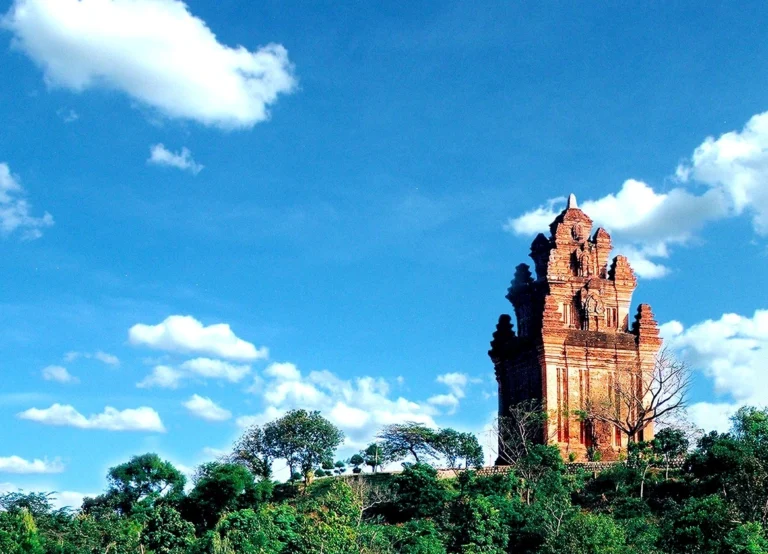
The quiet and poetic land of Phu Yen has long held a timeless architectural, historical, and cultural icon in the hearts of discerning travelers: Mang Lang Church. Located in An Thach Commune, Tuy An District, Phu Yen Province, this ancient sanctuary stands majestically on the left bank of the lower reaches of the gentle Ky Lo River, just a few kilometers north of Tuy An town. Nestled amid prosperous villages shaded by lush coconut palms and classic Vietnamese bamboo hedges, its setting embodies the pristine feng shui values of the land of “yellow flowers on green grass.” The Ky Lo River winds like a soft silk ribbon embracing the region, depositing fertile alluvium and creating a picturesque landscape of mountains and rivers, where sacred spiritual space blends seamlessly into the tranquil rhythm of nature and local life.
Deep within the memories of local parishioners and village elders, the name “Mang Lang” carries a poignant ecological nostalgia. According to local cultural research, this area was once covered by a forest tree species that bloomed with vibrant pinkish-purple flowers and spread a wide, cool canopy—known colloquially as the “mang lang” tree (giant crape-myrtle). Although the passage of time and changing landscapes have pushed those primeval mang lang forests into the past, the resonance of the name endures as a testament to how deeply human life has taken root on this land. The name Mang Lang is therefore not merely the administrative designation of a long-standing parish, but also a repository of ecological memory—a cultural sediment tied to the land reclamation and settlement of Dang Trong pioneers centuries ago.
Along the timeline of history, Mang Lang Church was built and fully completed in 1892 during the reign of Emperor Thanh Thai of the Nguyen Dynasty. Its origins are closely linked to the persistent missionary work of the Paris Foreign Missions Society (M.E.P.) in Tuy An Prefecture, Phu Yen Province. On the foundation of an older chapel that had fallen into severe disrepair since Emperor Tu Duc’s reign, Father Joseph de La Cassagne (affectionately and respectfully called Father Cat by locals)—the founding parish priest—personally drafted the architectural plans, raised funds, and oversaw the construction of a sturdy sanctuary. His presence, alongside the Catholic community along the lower Ky Lo River, not only laid the groundwork for a stable Catholic faith in the region, but also created an architectural heritage of profound humanistic value, bearing witness to the harmonious meeting of Eastern and Western cultures at a pivotal crossroads in national history.
Far more than a conventional religious structure, Mang Lang is celebrated by heritage researchers and travel journalists alike as a living museum of memory safeguarding priceless national treasures. Deep inside the church’s underground crypt lies the very first book printed in the Vietnamese Latin-based script (Chu Quoc Ngu)—”Cathechismus in octo dies divisus” (Eight-Day Catechism) by missionary Alexandre de Rhodes, published in Rome in 1651. This relic, together with the ancient, moss-covered Gothic architecture that has stood for nearly a century and a half, has turned Mang Lang into a landmark destination on the heritage tourism map. It is not simply a haven for souls seeking stillness, but a sacred space for posterity to admire and reflect upon the vicissitudes of script, culture, and faith across the S-shaped land of Vietnam.
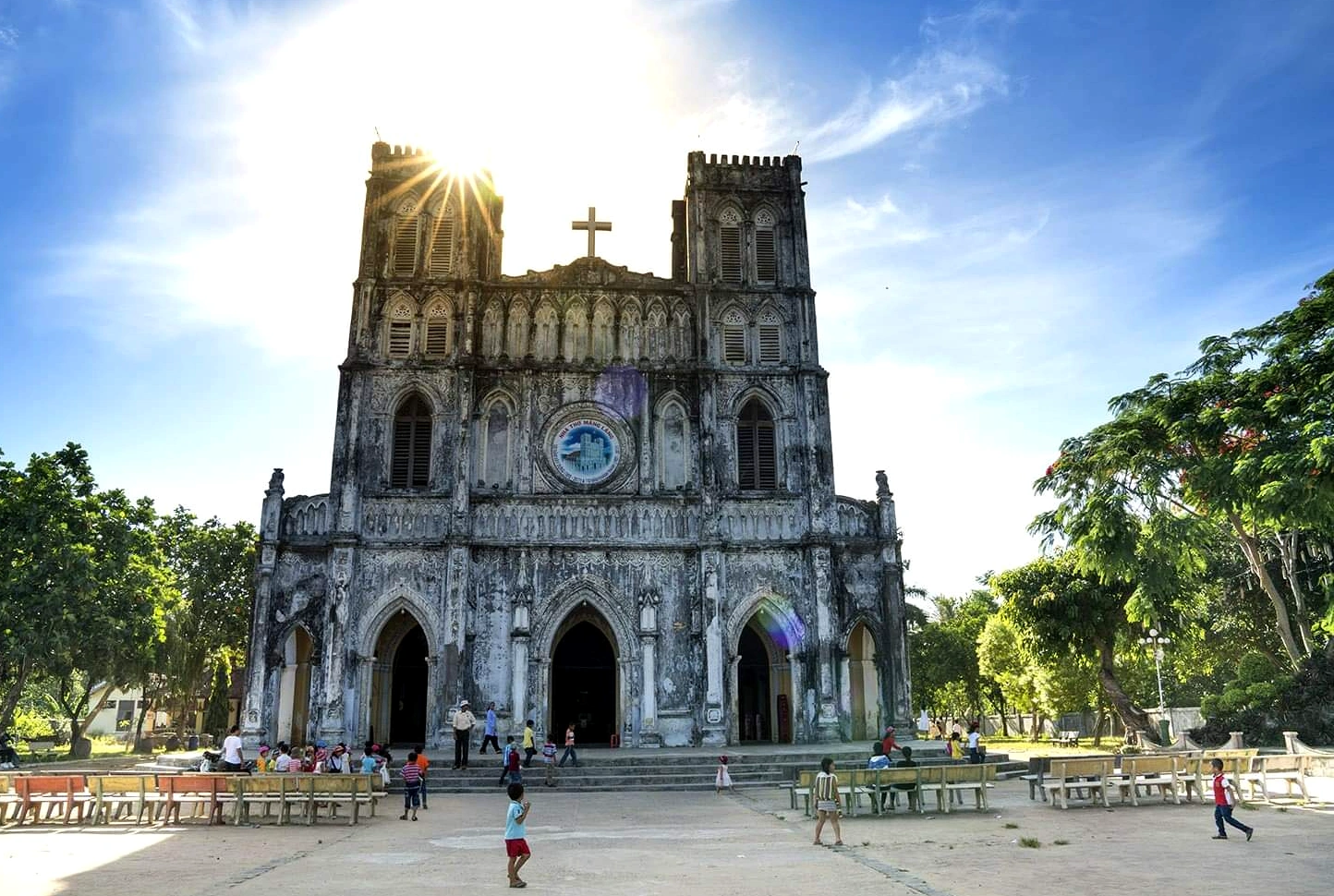
Resting quietly on the left bank of the lower Ky Lo River, Mang Lang Church rises like a distinctive imprint of time amid the serene pastoral countryside of Phu Yen Province. Geoculturists consider its terrain remarkably auspicious: backed by lush green bamboo groves and endless stretches of rice paddies, and facing the lazily flowing river, it forms a magnificent natural panorama that is both solemn and authentically evocative of late-19th-century rural Vietnam.
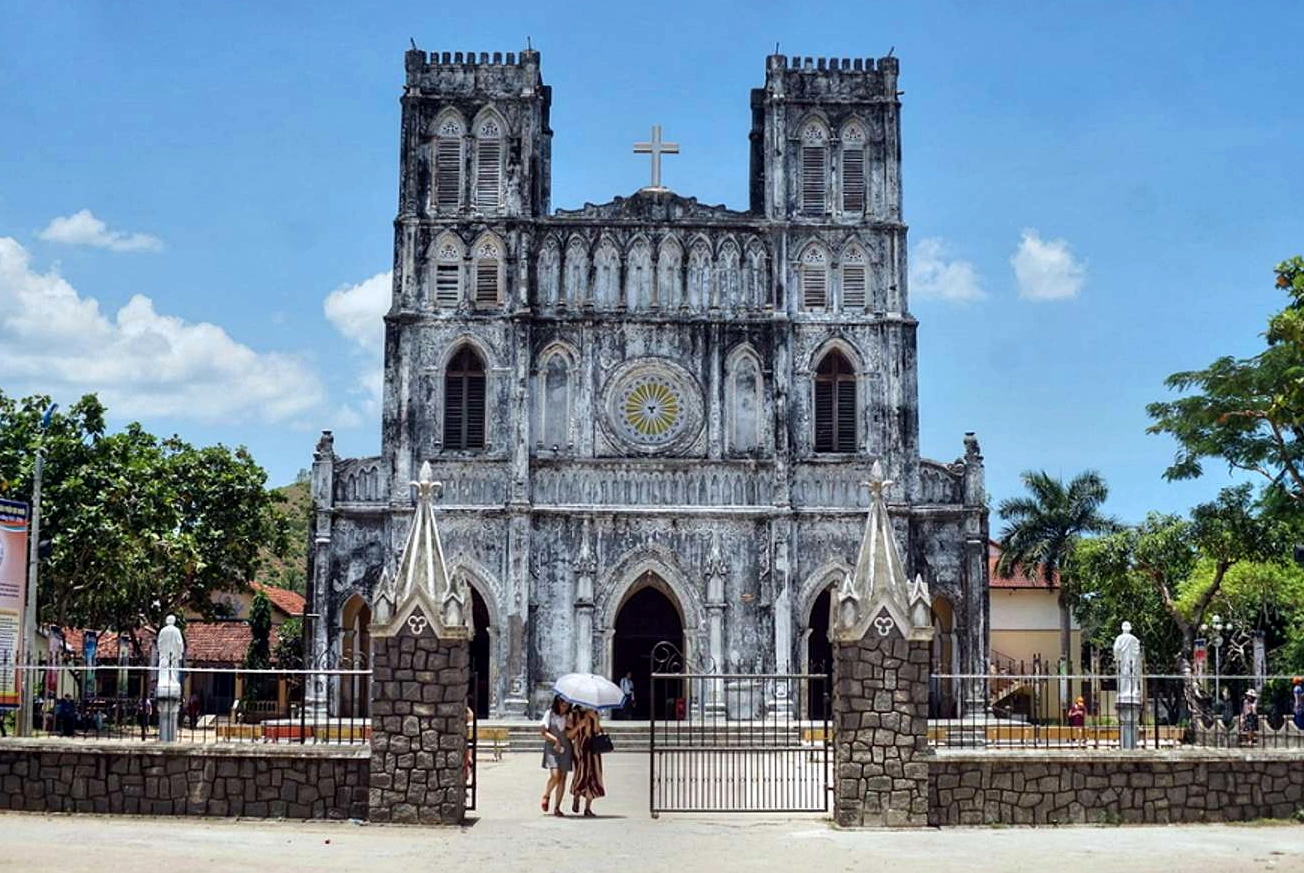
Stepping through its moss-draped gate, the building immediately captivates visitors with its pure Gothic architectural style—a rare artistic school preserved almost intact in Central Vietnam. The entire facade and perimeter walls are coated in a subdued bluish-gray patina of age, artfully crafted from traditional lime mortar and local materials. The most striking visual centerpiece is the symmetrical pair of bell towers soaring steadily skyward on either side, framing the central space where an ancient cross stands. Signature European Gothic pointed-arch windows are arranged thoughtfully along the walls, interspersed with gracefully curved rose ventilation openings that allow ribbons of natural light to filter into the sanctuary, conjuring an ethereal and sacred atmosphere.
Venturing inside, visitors are bound to marvel at the intricate wood carvings adorning the trusses and ceiling of the church. Artisans of yesteryear skillfully blended Western carving techniques with traditional East Asian motifs, producing lines that feel both venerable and intimately familiar. Patterned vintage ceramic floor tiles reflect the warm golden glow of matching pendant lamps, instilling a sense of calm and serenity in everyone who steps across the threshold.
To capture the full beauty of this architectural masterpiece through a lens, photographers and travel writers often share two classic vantage points. The first is in the front courtyard of the sanctuary, where you can frame the twin bell towers rising above the lush green canopies of century-old trees, creating spatial depth that is both antique and poetic. The second lies along the walkway flanking the side of the church, utilizing the pointed-arch windows as natural backdrops for nostalgic, atmospheric portraits.
As for ideal lighting, sunrise (from 5:30 AM to 6:30 AM) offers the most magical window, when the gentle first rays of dawn slant across the bell towers, illuminating the weathered moss and accentuating the quiet dignity of the masonry. Conversely, sunset casts a mystical golden-orange glow across from the Ky Lo River, bathing the entire architectural complex in a wistful, contemplative, and enchanting beauty that captivates every traveler visiting this century-old heritage site.
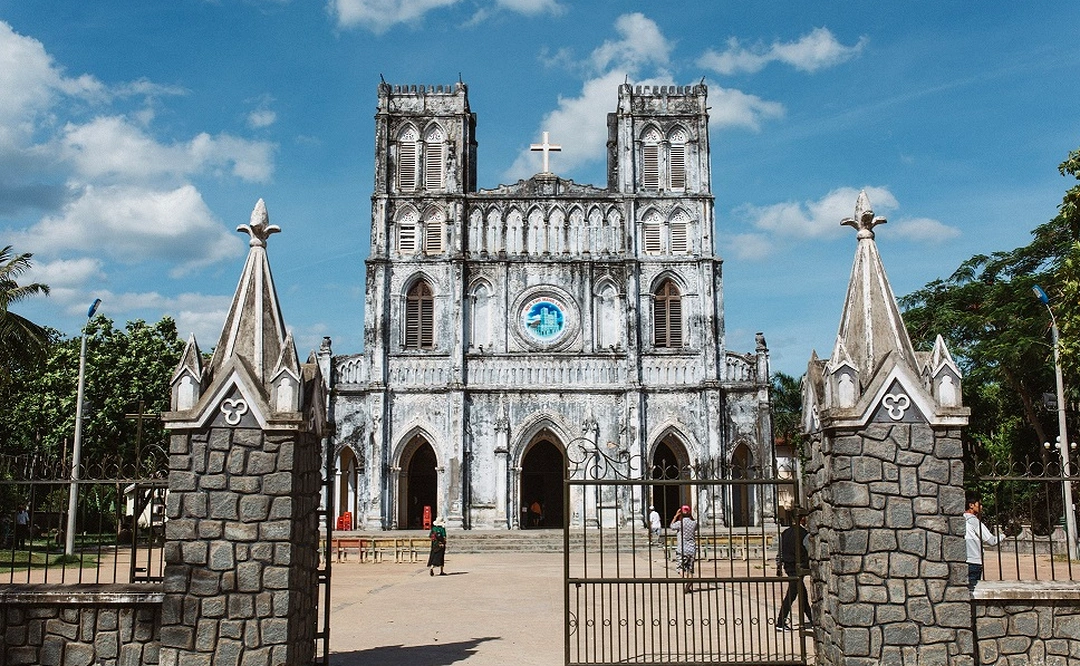
Arriving at Mang Lang Church on a sun-drenched golden afternoon in Phu Yen—the land of “yellow flowers on green grass”—visitors are instantly drawn into a timeless atmosphere where past and present merge into an extraordinarily peaceful melody. From your very first steps across the courtyard shaded by ancient trees, awe at the moss-covered, weathered gray Gothic architecture gives way to deep inner stillness. Free from urban noise and bustle, the grounds radiate an unspoiled, rustic charm that invites anyone seeking tranquility to pause, reflect, and pay spiritual homage.
A journey to discover the full beauty of this site would be incomplete without the poetic, hands-on experiences surrounding the sanctuary. Visitors can leisurely climb small flights of steps to take in panoramic views of the peaceful Tuy An countryside from above, where villages peek out from behind green bamboo hedges and the Ky Lo River meanders gracefully like a silk ribbon. Early morning or late afternoon is the ideal time to hire a small boat to drift downstream, immersing yourself in the untamed natural scenery along both banks, breathing in fresh air tinged with the briny scent of Central Vietnam’s sea breeze, and soaking up the unhurried, simple pace of local life.
The crowning highlight of the visit is descending into the small subterranean crypt beneath the church to admire the very first book printed in Vietnamese script, “Eight-Day Catechism”—a priceless historical treasure. Standing before an original artifact from the 17th century evokes an indescribable emotion, deepening your appreciation for the quiet perseverance with which past generations preserved their culture and faith. The interplay of sacred historical depth and breathtaking natural scenery lends Mang Lang an irresistible allure, making it a stop that touches the deepest chords of every traveler’s heart.
Stepping out of the tranquil church grounds, the local experience at Mang Lang continues to entice visitors with a rustic culinary paradise bursting with the bold flavors of Xu Nau (Phu Yen and Binh Dinh). Right in the surrounding neighborhood, you can savor piping-hot, crispy banh xeo (Vietnamese savory crepes) stuffed with freshly caught seafood, a bowl of chive rice noodle soup (banh canh he) rich with the natural sweetness of ocean fish, or sip an ice-cold glass of sugarcane juice beneath cool shade. Enjoying these celebrated specialties while chatting with candid, open-hearted locals lets you experience the full warmth and hospitality of Phu Yen’s people—leaving lingering, sweet, and unforgettable impressions long after you depart.
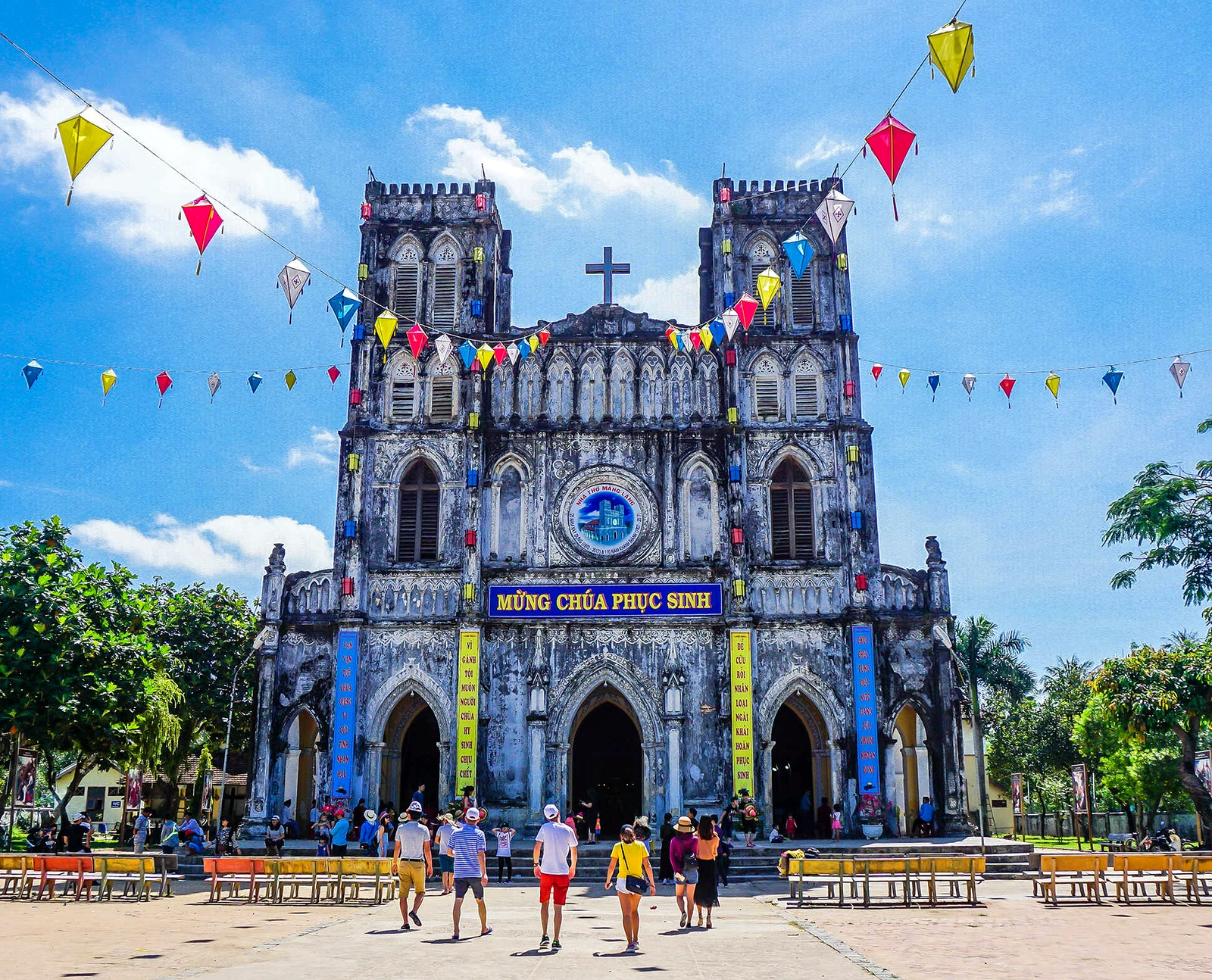
Mang Lang Church is not merely an extraordinary historical and architectural relic, but also a spiritual and cultural destination drawing visitors from near and far to Phu Yen, the land of “yellow flowers on green grass.” To ensure your journey exploring this century-old sanctuary goes smoothly and meaningfully, consult the comprehensive pocket guide below.
Regarding opening hours, Mang Lang Church welcomes visitors every day of the week. Visiting hours typically run from early morning, around 07:30 to 11:30, and reopen in the afternoon from 13:30 to 17:00. During daily Mass or major Catholic liturgical celebrations, access to the interior sanctuary is restricted to maintain reverence. As for admission, entry is completely free of charge for all visitors exploring the grounds and the underground crypt housing the first Vietnamese-script book.
The best time of year to visit Mang Lang is during the dry season, which stretches from the first to the eighth month of the lunar calendar each year. During these months, Phu Yen enjoys wonderful weather with clear blue skies and bright golden sunshine—ideal for outdoor travel and admiring the full antique charm of the moss-green lime-washed walls weathered over time. Aim to arrive in the early morning or late afternoon to enjoy a serene atmosphere and capture stunning souvenir photographs.
Departing from the center of Tuy Hoa City, reaching Mang Lang Church (in An Thach Commune, Tuy An District) is remarkably convenient, covering a distance of about 35 kilometers northward. You can opt for private transportation such as a motorbike or self-drive car to keep your itinerary flexible. The most direct route follows National Highway 1A north; upon reaching Chi Thanh Town, turn right following signs toward Hoi Bridge or ask locals for directions to Mang Lang Church. Along the way, you will be treated to views of lush green rice fields and the quintessential peaceful rural scenery of Central Vietnam.
Because this is a sacred religious space and an active place of worship for the local parish community, visitors must strictly observe dress-code etiquette. Opt for modest, respectful attire and avoid overly short or revealing clothing. At the same time, please maintain quiet order, speak softly, refrain from littering on the grounds, and follow instructions from the site management board to help preserve the solemn, enduring beauty of this historic sanctuary.
To enjoy a seamless getaway and experience the full splendor of Mang Lang Church without worrying about arranging transportation, admission, or travel schedules, travelers can choose VDS Travel’s premier all-inclusive Phu Yen tour packages. Every itinerary is thoughtfully timed for photo stops when the scenery is at its most radiant, accompanied by knowledgeable local guides well-versed in regional culture alongside top-tier hotel and dining standards.