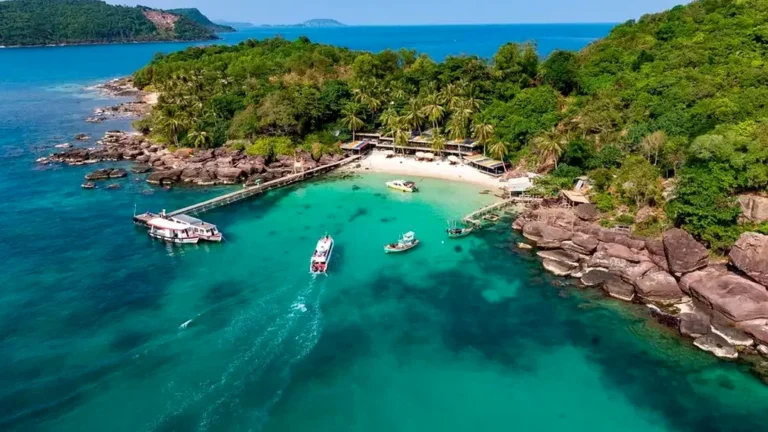
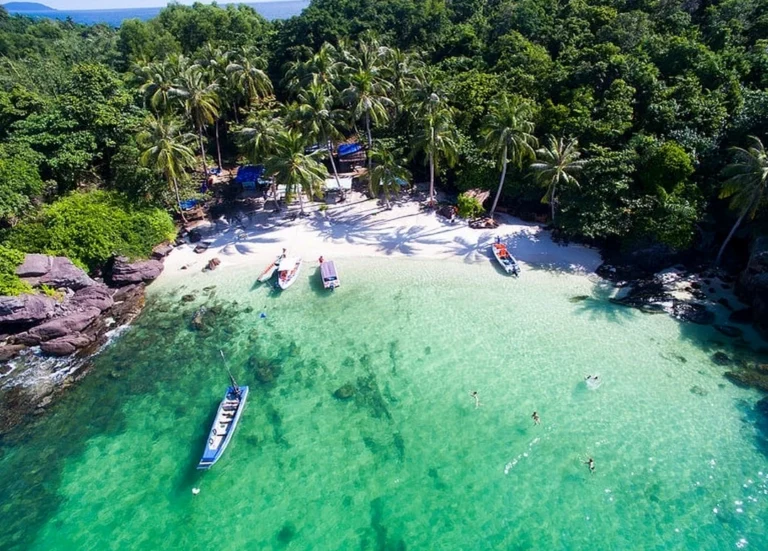
Located at the southernmost tip of the An Thoi archipelago in the pioneering waters of Vietnam’s southwest, Hon Gam Ghi emerges as a magnificent natural landscape sculpted by the boundless hands of time and nature. Possessing a prime position amidst the vast expanse of the Gulf of Thailand, this island is not merely a splendid ecological stopover, but also a living geological museum where centuries-deep layers of history and culture converge. Its terrain is a spectacular blend of million-year-old ancient granite formations eroded by wind and waves, dense primeval coral reefs just beneath the water’s surface, and lush tropical vegetation embracing fine white sand beaches that stretch across the ocean like a pink silk ribbon.
The name Hon Gam Ghi carries both the resonance of waves crashing for millennia and the linguistic imprint of the pioneers who expanded Vietnam’s southern frontier. In ancient nautical charts and imperial records of the Nguyen Dynasty, the island was occasionally identified by its Sino-Vietnamese names, “Kim Khe Dao” or “Cam Khe Au,” evoking the treacherous, winding shapes of submerged reefs embracing calm coves and lagoons. Through various shifts in local linguistic history, the folk name “Gam Ghi” was born as a vivid onomatopoeic portrayal: the roar of ocean waves crashing through jagged rock crevices, or the howling winds gripping the mountain cliffs, creating the deep, resonant symphony of the untamed sea.
Turning back the pages of heroic history, Hon Gam Ghi and the An Thoi archipelago witnessed the poignant footsteps of ancestors who reclaimed and defended the nation. Since prehistoric and protohistoric times, this area served as a familiar stopover for fishermen of the Oc Eo culture and ancient seafarers, leaving behind valuable archaeological traces hidden beneath ocean sediments. Moving into the 17th and 18th centuries, under the Nguyen Lords and the Nguyen Dynasty, as the southward expansion accelerated, this island cluster rose to become a strategic observation post and an outpost system controlling the vital maritime trade route connecting the Gulf of Siam and the Gulf of Ha Tien.
This island territory is also tied to illustrious historical figures in the reclamation and defense of the borderlands. Notable among them are Mac Cuu and the Mac clan in Ha Tien, who raised the banner of defense and established a solid southwestern frontier, frequently dispatching naval patrols to clear out pirates and protect fishermen. Most remarkably, during the arduous years of resisting the Tay Son army, the waters of An Thoi – Phu Quoc and Hon Gam Ghi, with their rugged terrain, numerous natural caves, and submerged reefs, served as familiar ambush bases and temporary sanctuaries providing fresh water and provisions for the forces of Nguyen Anh (later Emperor Gia Long) before braving the rough seas to Siam.
Today, through the lens of heritage researchers and travel journalists, Hon Gam Ghi is celebrated as an unspoiled, uncarved gem where million-year-old geological value blends seamlessly with epic cultural layers. Preserving and studying this landmark goes beyond scientific exploration of island ecosystems or underwater archaeology; it is simultaneously a journey of profound gratitude toward the generations of predecessors who fell to safeguard every sacred inch of Vietnam’s homeland amidst the stormy open sea.
Dubbed the most pristine and captivating untouched land in the heart of the An Thoi archipelago, Hon Gam Ghi appears as a grand sculptural masterpiece crafted by the invisible hands of creation and time. Unlike the bustling atmosphere of ordinary beaches, the terrain here bears a deeply primeval mark with million-year-old granite formations eroded by countless waves to form bizarre, sharp, yet remarkably fluid shapes. Boulders of varying sizes stack upon one another, curving along the water’s edge to form sheer cliffs, natural caverns, and wave-welcoming “skylights,” creating a magnificent natural setting that is both majestic and poetic beside crystal-clear turquoise waters where you can see straight to the seabed.
The highlight that defines Hon Gam Ghi’s special aesthetic value is its vibrant coral ecosystem located right next to the shore, wrapping around the submerged reefs like giant agate rings embracing the heart of the sea. The natural arrangement of the coral reefs, combined with the shallow continental shelf topography, creates a multidimensional visual space where sunlight pierces through the water and refracts off sedimentary rocks, producing a shimmering, magical glow. Strolling along the fine white sandy strip flanked at both ends by wild rocky headlands, visitors feel transported into a world entirely detached from urban hustle, where the only sounds are the whispering sea breeze and the eternal song of waves lapping against the rocky shore.
To capture this majestic beauty through the lens, professional photographers and seasoned travel enthusiasts often share tips on two unmissable “million-view” photo spots. The first shooting angle is located at the natural rock arch on the southwestern side of the island—where stacked boulders form a window frame looking straight out to the open sea, accentuating the vastness of the ocean and the artistic ruggedness of ancient stone. The second spot lies at the clusters of submerged reefs right at the water’s edge at the eastern tip, where visitors can capture the mirror-like stillness of the water reflecting the clouds and sky.
Regarding the most ideal lighting, the sunset window from 4:30 PM to 6:00 PM is considered the golden hour for artistic photography at Hon Gam Ghi. During this time, the late-day sun shifts from a vibrant golden-orange to a deep, contemplative purple, shining through rock crevices to create extraordinary optical effects that transform each sedimentary slab into a sculpture of fire and light. Meanwhile, if you wish to capture crisp, clear photos featuring deep emerald waters and the coral ecosystem distinctly visible beneath the surface, the period between 9:00 AM and 10:00 AM, when the sun shines directly overhead, is the ultimate choice for top-tier shots.
Stepping onto Hon Gam Ghi, the very first impression that awakens every sense is the breathtakingly untamed scenery—a natural masterpiece nestled in the heart of the An Thoi archipelago. The journey of discovery begins aboard a wooden boat cutting through the waves across crystal-clear turquoise waters. The sensation of the brisk sea breeze blowing through your hair, combined with the salty tang of the ocean and the golden morning sunshine, generates a fresh burst of energy that washes away all urban stress. From afar, the island appears like a giant rocky embrace cradling stretches of fine white sand, with granite boulders of myriad shapes polished by millions of years of wind and waves, artfully stacked upon one another.
For adventurous souls eager to explore and conquer, climbing the high rocky outcrops or traversing shaded forest trails on Hon Gam Ghi delivers truly rewarding hands-on experiences. Gazing out from the summit, the entire majestic expanse of the Gulf of Thailand unfolds before your eyes: dozens of large and small islands undulating like sleeping green dragons amidst the boundless waves. That initial awe before the wild, grand scenery quickly gives way to a moment of quiet reflection as visitors stand before small coastal shrines and spiritual spaces—where generations of fishermen have entrusted their prayers for safe passage and expressed reverence for the sacred spirit of ancestors and deities watching over their offshore voyages.
Beyond its landscapes, a journey to Hon Gam Ghi also touches the depths of local culture through snorkeling experiences amidst one of Phu Quoc’s most vibrant coral ecosystems. Beneath the cool water, an enchanting world opens up with colorful coral reefs swaying gracefully, accompanied by schools of small fish darting playfully around ancient rock cavities—places that once witnessed the footprints of explorers and the Nguyen Dynasty navy in bygone eras. This harmony between fascinating nature and deep historical resonance turns every snorkeling moment into a deeply moving dialogue with the past.
Wrapping up an active day, nothing beats savoring renowned local specialties right on floating rafts or along the breezy sandy shore with local fishermen. The rich sweetness of grilled sea urchin with scallion oil, the crunchy texture of herring salad rolled in rice paper with wild herbs, or a platter of freshly caught seafood prepared simply yet delicately—all blend together to create an unforgettable culinary symphony. Savoring the flavors of the sea as sunset descends and the sky shifts from brilliant orange to a mysterious deep violet, visitors will fully experience the profound bond between people, culture, and nature in this southern frontier.
Hon Gam Ghi (part of the An Thoi archipelago, located south of Phu Quoc City) is one of the most pristine and majestic natural destinations in the southwestern sea. To make the most of your journey exploring this historically and ecologically rich island, equipping yourself with practical travel tips is essential.
Regarding the ideal time of year to visit Hon Gam Ghi, the dry season from November to April of the following year is always the top choice. During this period, the marine weather is mild with calm waves, bright golden sunshine, and crystal-clear water offering visibility straight to the seabed—ideal for sea transfers and snorkeling. Conversely, the rainy and stormy season from May to October often brings strong winds and rough seas, so travelers should closely monitor weather forecasts before setting off.
Hon Gam Ghi welcomes visitors freely year-round, as it is an untamed natural area managed under the marine and island conservation system. Visitors do not need to purchase an entrance ticket to visit the island. However, to set foot on the island, you will need to hire a speedboat (cano) or tourist boat departing from An Thoi Port. Charter speedboat prices or shared island-hopping speedboat tour tickets (covering Gam Ghi, May Rut, and Mong Tay) typically vary depending on the tour operator’s services and the size of your group.
The most optimal route from Phu Quoc’s city center (Duong Dong area) is to travel south along the main DT975 arterial road to An Thoi Port (a distance of about 25 to 30 kilometers). You can choose to travel by motorbike, private car, or taxi. Upon arriving at An Thoi Port, visitors will board a speedboat or tourist vessel for a 15-to-20-minute ride across the waves to reach the Gam Ghi island cluster.
Because Hon Gam Ghi’s terrain consists primarily of sharp submerged reefs, wave-lashed ledges, and natural cliffs combined with a sensitive marine ecosystem, appropriate attire requires neatness and flexibility. Visitors should wear comfortable swimwear, bring a light sun-protective jacket, and especially pack specialized water shoes or non-slip sandals to protect their feet while wading in the water and climbing rocky outcrops. If you happen to visit commemorative or spiritual sites tied to ancestral footprints on neighboring islands, please dress politely and modestly to show respect for local culture.
Additionally, visitors must remember to maintain general cleanliness and strictly refrain from littering, breaking coral, or taking rare flora and fauna from the island, helping preserve the intact natural and historical heritage of the An Thoi sea for generations to come.
To enjoy a seamless vacation and take in the full beauty of Hon Gam Ghi without worrying about arranging transportation, booking tickets, or planning itineraries, travelers can choose VDS Travel’s premium all-inclusive Phu Quoc tour packages. Each tour is thoughtfully designed to optimize photo check-in times when the scenery is at its most radiant, accompanied by a team of knowledgeable local guides and top-tier hotel and dining standards.