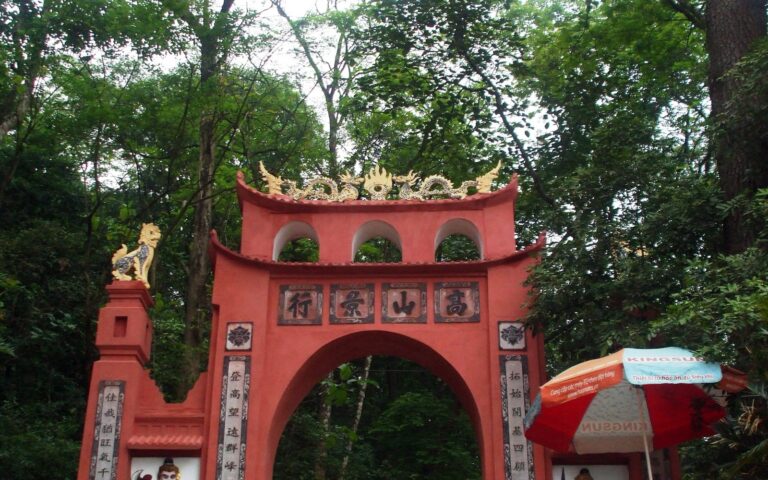
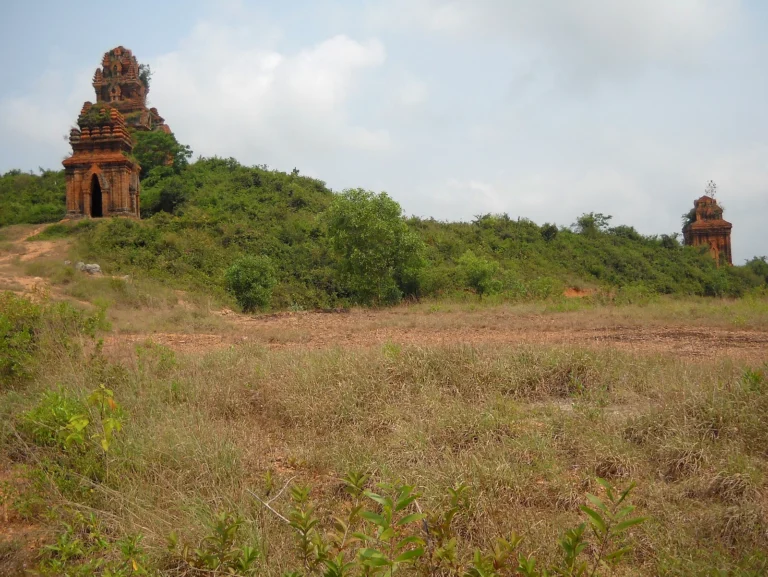
Nestled amidst the lush, profound greenery of the Nghia Linh mountain slope, Ha Temple (known in Chinese-Vietnamese characters as Son Tung tu or Ha dien) emerges as a sacred milestone marking the beginning of the journey of pilgrimage back to the roots of the Vietnamese nation. Located in Co Tich village, Hy Cuong commune, Viet Tri city, Phu Tho province, this historical site sits at geographical coordinates of approximately 21°24’35” North latitude and 105°17’50” East longitude. At an altitude of nearly one hundred meters above sea level, the temple occupies a unique position midway up the mountain range, serving as the first step guiding travelers into the supreme spiritual space of the Hung Temple historical relic complex.
Regarding feng shui terrain, Ha Temple possesses a picturesque landscape that achieves absolute perfection in traditional spatial planning art. The temple leans sturdily against the solemn mountain range of the extended Tam Dao chain, facing south toward the legendary Bach Hac fork where three major rivers of the country converge: the Red River, the Lo River, and the Da River. The intersection of sediment-rich rolling waters creates a vast alluvial gathering posture (minh đường), combined with the “crouching dragon and roaring tiger” land configuration, turning this place into a focal point of vital spiritual energy for our magnificent mountains and rivers. From geological and anthropological perspectives, this area has been a settlement and agricultural ritual practice ground for the vibrant Dong Son culture since the first millennium BCE.
Through the long history of nation-building and defense, Ha Temple carries deep sedimentary layers of culture from prehistoric and protohistoric times to medieval feudal dynasties. Historical records and stele systems indicate that in the beginning, this place was only a small thatched shrine built to worship deities and ancestors. During the Ly, Tran, and especially the Le Trung Hung and Nguyen dynasties, the temple was continually officially recognized, granted royal decrees of deity worship, and subjected to large-scale major renovations. The extant wooden architecture of Ha Temple bears the exquisite artistic imprints of the Le-Nguyen period, a testament to the reverence and unbroken continuation of the tradition of drinking water, remember its source across generations.
Beyond its special architectural and archaeological values, Ha Temple is associated with one of the most sacred legends in the Vietnamese consciousness: where Mother Au Co gave birth to a pouch of one hundred eggs. According to legend, right at this sacred land, Duc Le Thanh Mau gave birth to a pouch of one hundred eggs that hatched into one hundred sons; afterwards, following the call of the land, fifty sons followed their father up the mountains to establish their careers, while fifty sons followed their mother down to the sea to reclaim land and expand territories. This legend has transformed Ha Temple into a noble symbol of maternal love, national solidarity, and the shared origin of compatriots as descendants of the Dragon and Fairy. Today, under the lens of journalism and heritage management agencies, Ha Temple is not merely an indispensable pilgrimage site during every Hung Vuong Death Anniversary, but also a living museum preserving intangible cultural values that endure through time.
Hidden beneath the shady canopy of centuries-old ancient trees such as ancient yew trees and endless green cypress rows, Ha Temple emerges as a traditional wooden architectural masterpiece that harmonizes perfectly with the magnificent natural landscape of the Nghia Linh mountain forest. From the very first steps of pilgrimage across hundreds of mossy stone steps, visitors will clearly feel a solemn, tranquil yet vastly open atmosphere. The terrain of the temple carries a majestic posture as it leans sturdily against the mountain slope, with its front gazing out into an expansive space where sky and mountains interweave. Every architectural detail of the temple—from the massive ironwood columns and intricately carved truss structures to the mossy tiled roofs—bears the deep artistic imprint of the Le Trung Hung and Nguyen dynasties. Ancient artisans skillfully integrated themes of Dragons and Phoenixes, flowers, foliage, and swirling clouds into every piece of wood through highly proficient piercing and relief carving techniques, creating a sacred space that is both authoritative and closely connected to the sacred soul of the rivers and mountains.
Not only possessing unique architectural and historical values, Ha Temple also opens up breathtaking viewpoints, becoming a million-view check-in spot sought after by photographers and travel enthusiasts. To secure the most precious frames, visitors must not miss the photographic angle from the stone steps looking toward the triple gate, where the ancient wooden doorway frames the vast deep blue sky alongside overarching ancient tree branches, creating an endless nostalgic depth for the photo. Another exquisite camera angle lies within the front ceremonial hall courtyard, capturing the curving arcs of the phoenix-tail roof ridges soaring against the sky, combined with natural light filtering through leaves to create a dreamy, magical optical effect.
Regarding ideal lighting times, professional photographers recommend visiting Ha Temple in the early morning between 6:00 AM and 8:00 AM. At this time, the early morning sunrays pierce through the lingering mist on the Nghia Linh mountain slope, casting warm golden streaks onto the mossy walls and ancient wooden columns, highlighting the contemplative and sacred beauty of the temple. Alternatively, visiting at dusk, the gentle sunset falling from the mountain peak casts a nostalgic, brilliant hue over the entire architectural complex, bringing a sense of supreme peace and tranquility to anyone setting foot in this sacred ancestral land.
Stepping foot into Ha Temple amidst the stillness and sacredness of the Hung Temple historical relic complex, my exploration journey was not merely a routine sightseeing visit to a historical site, but truly an emotional journey back to our roots. To reach Ha Temple, visitors must undertake a journey climbing mossy stone steps beneath the shade of centuries-old ancient trees. The melodious chirping of birds blending with the whispering mountain wind through the foliage creates a serene sound that washes away all the hustle and bustle of daily life. Every weary step up the slope suddenly feels weightless when the contemplative and ancient space of the temple, hidden halfway up the legendary Nghia Linh mountain, appears before one’s eyes.
The moment of stepping past the ceremonial gate into Ha Temple quickly turns awe into a settled, reverent feeling. Amidst the fragrant haze of meditative incense, I slowly worshipped at the shrine dedicated to National Ancestor Lac Long Quan, National Mother Au Co, and the Hung Kings. Gazing at the intricate carved patterns bearing strong Le-Nguyen artistic imprints on the wooden trusses, and touching the cool stone slabs carrying the breath of time, an indescribable pride in our Lac Hong bloodline welled up inside. This is also a place for every child of Vietnam to seek their spiritual roots, looking toward Mother Au Co—who gave birth to the pouch of one hundred eggs, laying the foundation for a steadfast national solidarity block spanning thousands of years of history.
Leaving the tranquil space of the sacred temple and casting one’s gaze far into the distance from halfway up the mountain, visitors can admire the exquisite picturesque landscape of the Ancestral Land. Directly ahead lies the historic Bach Hac fork, where three major rivers—the Red, Lo, and Da rivers—meet, carrying alluvial deposits to enrich prosperous villages. This poetic and expansive scenery allows one to fully appreciate the sacred “crouching dragon and roaring tiger” terrain configuration that our ancestors chose as the vital energy convergence point of the nation. Standing amidst the windy skies and surveying the magnificent expanse, the soul suddenly becomes expansive and wonderfully peaceful.
Concluding the practical experience journey at Ha Temple, the trip would not be complete if visitors missed tasting the distinctive local culinary specialties here. Right at the foot of Hung Temple mountain, the aroma of renowned Phu Tho specialties such as Thanh Son sour pork, tai pork cake, sour cassava greens cooked with fish, or sticky upland rice sticky new-crop rice pulls at the traveler’s heartstrings. Savoring a piece of chewy tai cake blended with the savory richness of minced meat filling, sipping a cup of green tea deeply flavored with rural roots in the chilly mountain air, all fatigue from mountain climbing vanishes. All these practical experiences—from mountain climbing, spiritual worship, landscape viewing to tasting cuisine—weaved together an emotional trip, forever lingering in the memory of each person regarding the sacred roots of the nation.
For the pilgrimage and exploration journey of Ha Temple within the Hung Temple historical relic complex to be complete, solemn, and smooth, visitors need to master extremely useful practical experiences. First of all, regarding operating hours, the relic site opens to welcome visitors from early morning to late afternoon every day of the week, including holidays, Tet, and peak periods. Visitors should start their journey early in the morning to enjoy the fresh, chilly air of the Nghia Linh mountain region while avoiding the scorching sun and crowds during peak hours of the day.
Good news for all pilgrims from near and far is that currently, the Management Board of the Hung Temple Historical Relic Site applies a completely free admission ticket policy for all temples, shrines, and museums across the entire complex, including Ha Temple. Visitors only need to pay parking fees at designated parking lots at the foot of the mountain and electric shuttle service fees (if they wish to use them to travel the distance from the main gate to the inner temples).
Regarding transportation and routes, departing from the center of Viet Tri city, visitors can easily access the relic site by car, motorbike, or bus via the extended Hung Vvuong road toward Hy Cuong commune. The distance is only about fifteen kilometers, and the road network is extremely convenient and spacious. For visitors from distant provinces like Hanoi, they can travel by private car or passenger bus via the Noi Bai – Lao Cai expressway (exiting at the IC7 interchange) or take the Hanoi – Lao Cai railway to Viet Tri city, then take a taxi or ride-hailing motorbike straight to the foot of Nghia Linh mountain.
Because Ha Temple is located halfway up the mountain slope, requiring visitors to walk up hundreds of stone steps shaded by ancient trees to reach it, preparation of clothing and footwear is extremely important. Visitors must strictly comply with spiritual cultural regulations: wear modest, polite, and elegant clothing, avoiding overly short or revealing outfits when entering the sacred space. Regarding footwear, absolute priority should be given to sneakers, shoes with good traction, or specialized hiking boots; strictly avoid high heels or slippery flip-flops to ensure foot safety on mossy stone steps.
Finally, the ideal time of year to visit Ha Temple is from the first to the third lunar month (especially during the Hung Vuong Death Anniversary on the tenth day of the third lunar month) to immerse oneself in the vibrant and reverent traditional festival atmosphere. However, if you prefer tranquility and contemplation to leisurely worship, sightsee, and study historical documents, ordinary weekdays during the year or the cool autumn season are the most perfect periods.
To enjoy a complete holiday and fully admire the beauty of Ha Temple without worrying about arranging transportation, booking attraction tickets, or travel schedules, visitors can choose premium all-inclusive Hung Temple Historical Relic Site, Phu Tho tour packages from VDS Travel. Each tour is optimally designed for check-in times when the scenery is most vibrant, accompanied by a team of tour guides thoroughly knowledgeable about local culture and top-standard hotel and culinary service standards.