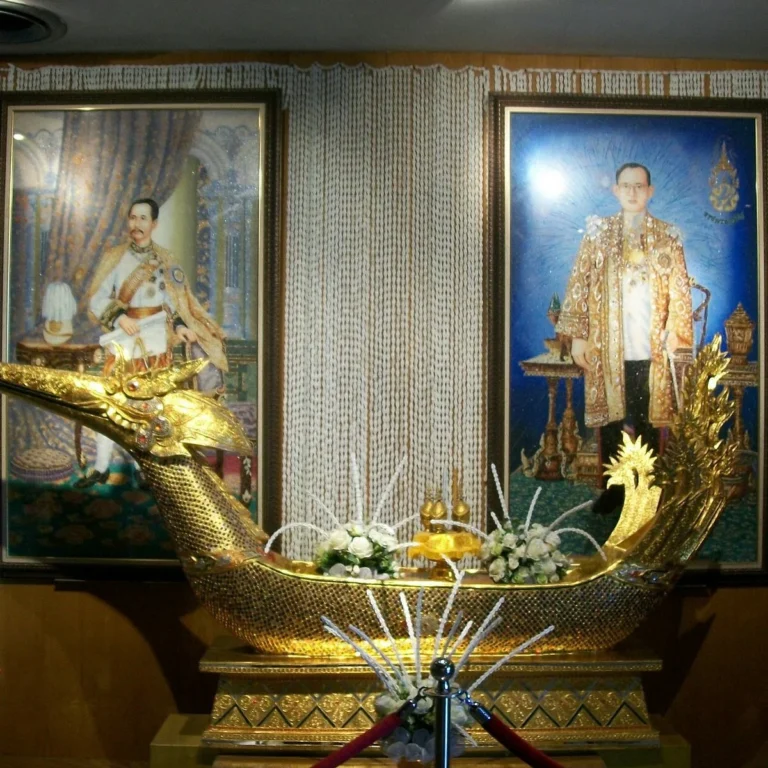
Stretching along the winding banks of the mother river Chao Phraya, the ancient sanctuary of Wat Arun carries centuries of historical sediment accumulated across successive Siamese dynasties. The origins of this sacred site date back to the Ayutthaya period (1350–1767), when it was merely a tranquil monastery serving local residents under the name Wat Makok—meaning “Temple of the Olive Plum” in the Siamese vernacular, named after the lush wild hog-plum trees lining the western riverbank. Throughout the prosperous era of the Ayutthaya Kingdom, Wat Makok quietly served as a humble place of worship for outlying riverside hamlets, greeting the steady rhythm of oars gliding up and down the waterway before the turbulent tides of history forever transformed the destiny of this fertile alluvial land.
The pivotal turning point came with the tragic fall of the Ayutthaya capital in 1767 to foreign invasions. Amid the turmoil of a fractured realm, the brilliant military commander King Taksin the Great rallied resistance forces, led the Siamese people to expel the invaders, and established the Thonburi Kingdom (1768–1782). According to historical lore, in 1768, as King Taksin’s royal flotilla sailed down the Chao Phraya River in search of a new capital site, the first rays of dawn broke across the horizon at the exact moment his bow docked beside the ancient Wat Makok. Recognizing an auspicious spiritual omen in the illuminating dawn, he chose the western district of Thonburi as his new capital and designated Wat Makok as the royal temple within the palace compound. He renamed the monastery Wat Chaeng, signifying the “Light of Dawn” dispelling the darkness of night. It was here that King Taksin ceremoniously welcomed and enshrined the sacred Emerald Buddha (Phra Kaew Morakot) brought from Vientiane for public veneration, before the revered image was relocated to the eastern bank in the following dynasty. At the same time, the local Chinese immigrant community respectfully referred to the sanctuary as Zheng Wang Miao in gratitude to the monarch of Teochew heritage who restored independence to the Land of Smiles.
Entering the Rattanakosin era under the Chakri Dynasty founded in 1782, the seat of power shifted across to the eastern bank to establish Bangkok. Although Wat Chaeng ceased to be a palace-compound temple, it immediately entered a golden age of architectural renaissance. During the reign of King Rama II (r. 1809–1824), the monarch initiated a comprehensive restoration plan and personally sketched the vision to elevate the existing Ayutthaya-era Prang stupa to monumental proportions, creating a spiritual counterpart to the Grand Palace across the river. Nevertheless, this grand masterpiece only reached true completion under the patronage of King Rama III (r. 1824–1851), an enlightened ruler celebrated for his artistic vision and remarkable maritime trade acumen.
King Rama III commissioned the enlargement of the great Prang stupa in the classical Khmer temple-tower style, symbolizing Mount Meru—the sacred center of the universe in Buddhist and Hindu cosmology. Notably, thanks to flourishing maritime commerce with imperial China, tens of thousands of blue-and-white porcelain shards, floral ceramic plates, and colorful stoneware—originally loaded as ballast at the bottom of trading junks sailing from Guangzhou and Fujian—were salvaged by royal decree. Millions of broken ceramic fragments once discarded as waste were transformed by the masterful hands of Siamese royal artisans into blooming lotuses, scrolling botanical motifs, and ornate garments adorning guardian deities across the stupa’s facade. Later, during the reign of King Mongkut, or Rama IV (r. 1851–1868), the temple was officially bestowed its full royal title, Wat Arun Ratchawararam Ratchawaramahawihan, completing its metamorphosis from a humble grove monastery into a porcelain-mosaicked masterpiece presiding proudly over a river steeped in history.
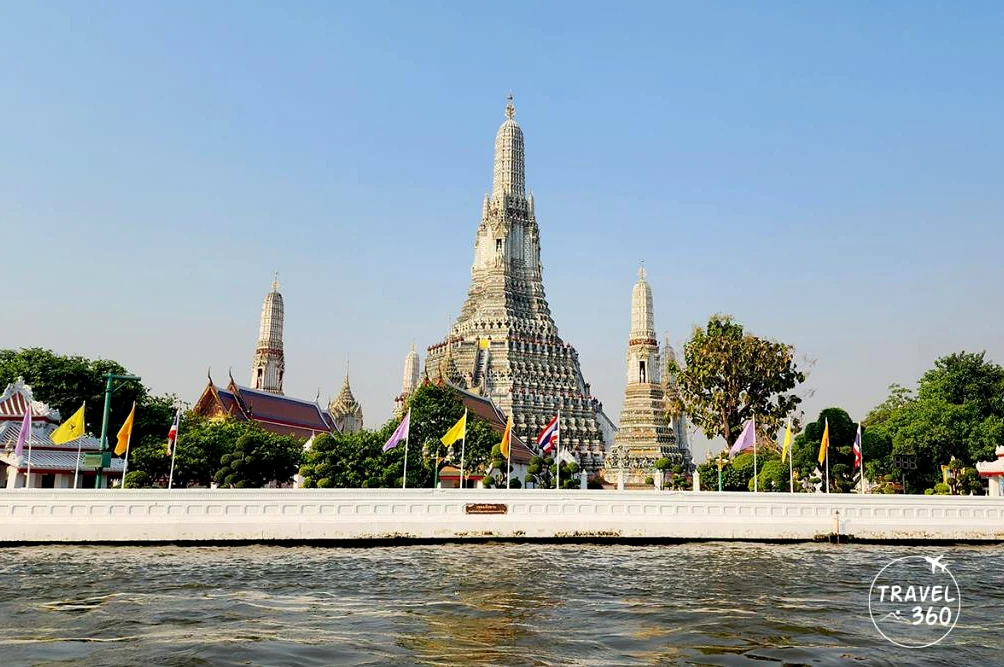
Commandingly positioned on the western bank of the Chao Phraya River within historic Thonburi, Wat Arun occupies one of the most geographically and geomantically auspicious sites in the Thai capital. Winding through Thailand’s central plains, the “River of Kings” has served not only as a life-giving artery depositing rich alluvial soil, but also as the premier maritime and inland trade route linking the Gulf of Thailand with ancient centers of power. Following the fall of Ayutthaya in 1767, it was precisely this strategic riverine terrain in Thonburi that King Taksin the Great selected for his capital, establishing the ancient Wat Makok (predecessor of Wat Arun) as the spiritual anchor integrated into the Thonburi Royal Palace layout. Facing directly onto the broad waterway against a fertile plain, the monastery enjoys an expansive geomantic alignment—open to the water in front and backed by solid ground—welcoming a continuous flow of vital energy generated by the interplay between inland river currents and daily ocean tides.
To erect the monumental Phra Prang rising over seventy meters right at the water’s edge, royal engineers and master builders under King Rama II and King Rama III had to overcome an extraordinary foundation engineering challenge on soft alluvial terrain. Because the riverbank soil along the Chao Phraya is heavily waterlogged and structurally yielding, tens of thousands of massive teakwood trunks treated with natural oils were driven dozens of meters deep into the saturated earth, forming an immense subterranean timber-piling grid that prevented any lateral soil slippage. Above this network of wooden piles lay thick raft foundations of load-bearing green slate and fired bricks, bound together with a traditional lime mortar blended from cane molasses, rice-husk ash, and native tree resins. Its multi-tiered, stepped-pyramid geometry not only replicates sacred Mount Meru in Hindu-Buddhist cosmology, but also distributes thousands of tons of structural weight evenly across all directions, ensuring centuries of resilience against river erosion.
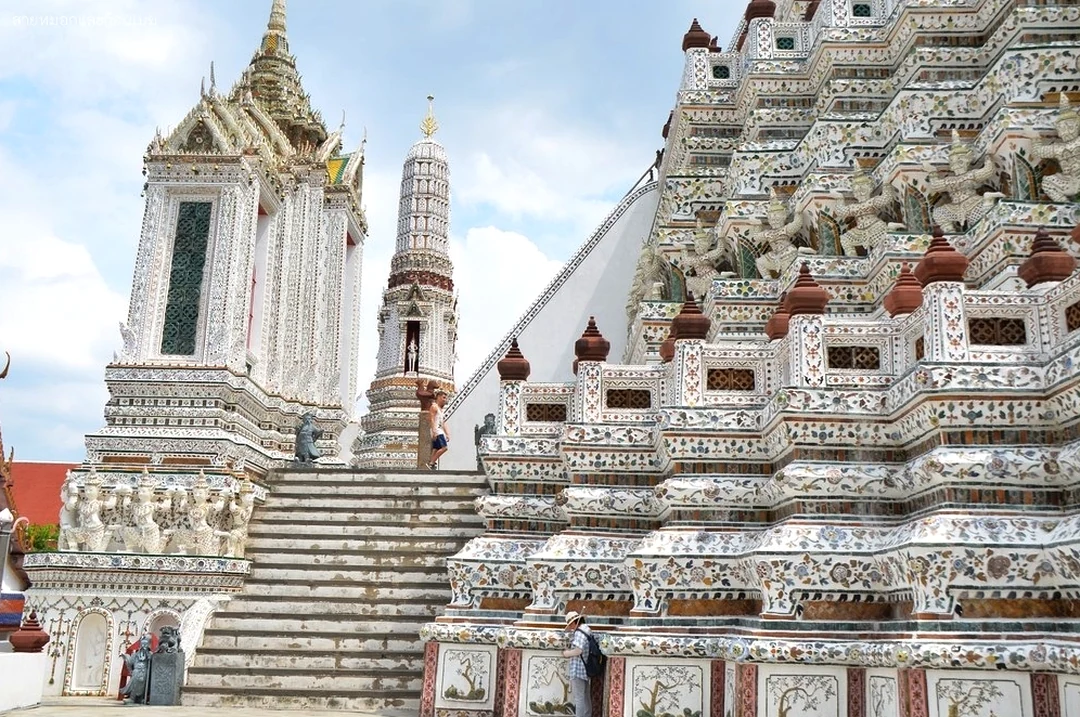
The defining essence behind Wat Arun’s unmatched visual brilliance lies in the unprecedented ceramic mosaic technique used to craft its exterior cladding. During the reign of King Rama III, Siam experienced a golden peak in maritime rice trade with Qing Dynasty China. To stabilize returning sailing junks after unloading cargo, merchants packed countless broken ceramics and blue-and-white bowls into their hulls as ballast against rough seas. Rather than discarding this surplus material, the king ordered every shipment collected and delivered to the grand construction site in Thonburi. Millions of multicolored porcelain fragments—ranging from Kangxi blue-and-white ware and Longquan celadon to vibrant Siamese Benjarong five-color enamels—were hand-chiseled by royal artisans into precise shapes and pressed directly into wet lime stucco. Every chrysanthemum petal, dragon scale, imposing Yaksha guardian demon, and graceful Kinnari celestial bird represents an ingenious synthesis of traditional stucco relief sculpting and visionary upcycled artistry.
The scenery of Wat Arun is never a static monument, but a living entity that transforms magically with the passage of sun and moon. As morning mist dissipates, the first rays of dawn—named after the Hindu god Aruna—stream across from Rattanakosin on the eastern bank, awakening millions of glazed ceramic fragments to shimmer with ruby and amber reflections across the rippling water. Conversely, as twilight descends, the temple recedes into a dramatic silhouette, etching its sharp spire profile proudly against a tropical sunset sky drenched in deep orange and violet. The interplay between bustling cross-river ferries, the wake of traditional long-tail boats, and the serene majesty of the stupa complex weaves a riverside cultural landscape that is both timeless and poetic, distilling a thousand years of Bangkok’s soul.
Rising majestically along the silt-laden western shore of the Chao Phraya River, the Wat Arun complex stands as a splendid geometric marvel that embodies the profound cosmological philosophy of Theravada Buddhism and Hindu mythology. At the heart of this spatial mandala soars the central Phra Prang stupa, piercing the tropical sky at a height of approximately 81 to 82 meters. Within this classic three-dimensional mandala layout, the Phra Prang is sculpted to represent sacred Mount Meru—the cosmic axis supporting the universe and the celestial abode of the gods. Its towering spire ascends through intricate, stepped tiers symbolizing the realms of existence—from the earthly underworld, the Realm of Desire, and the Realm of Form up to the pure Formless Realm—guiding the pilgrim’s consciousness upward from worldly attachments toward the pinnacle of spiritual liberation and enlightenment.
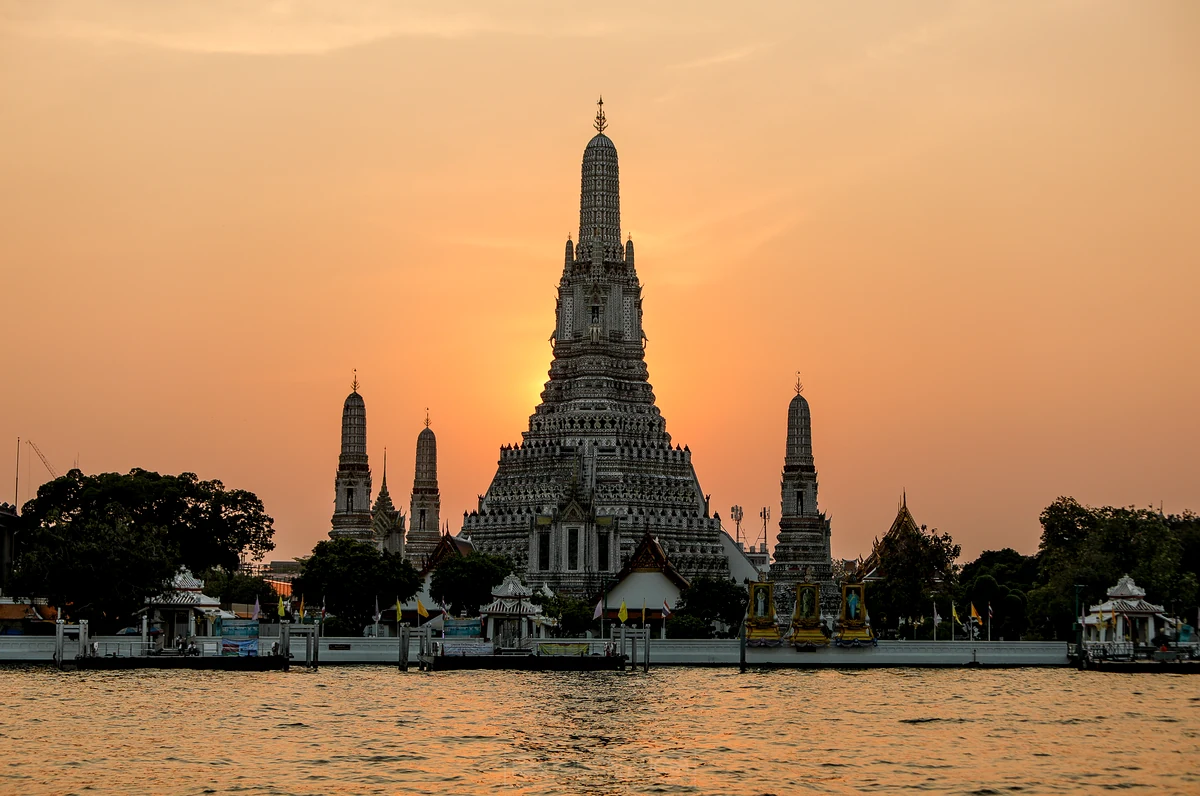
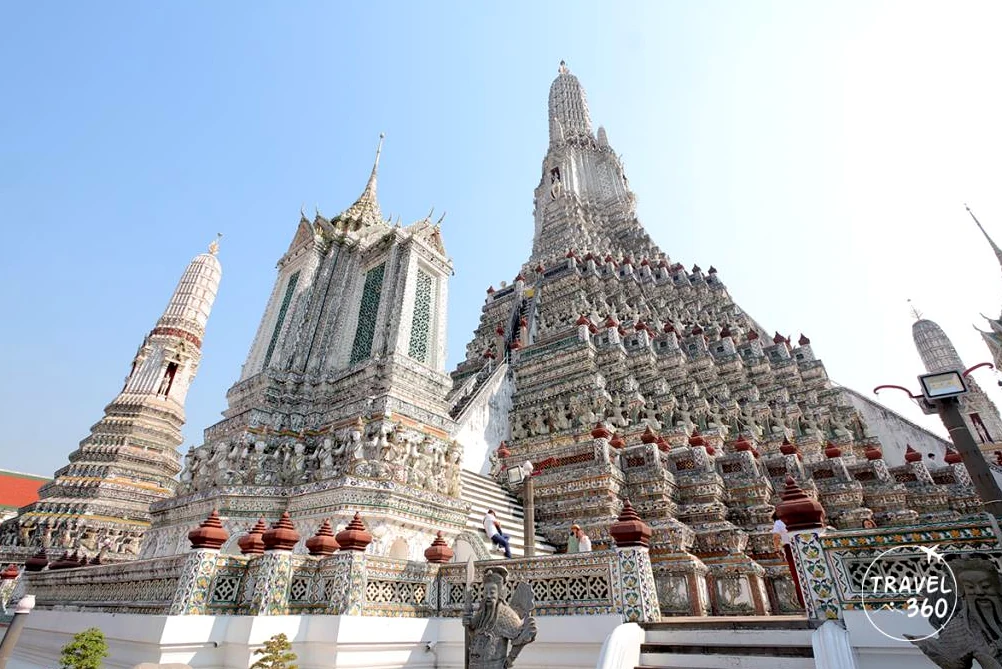
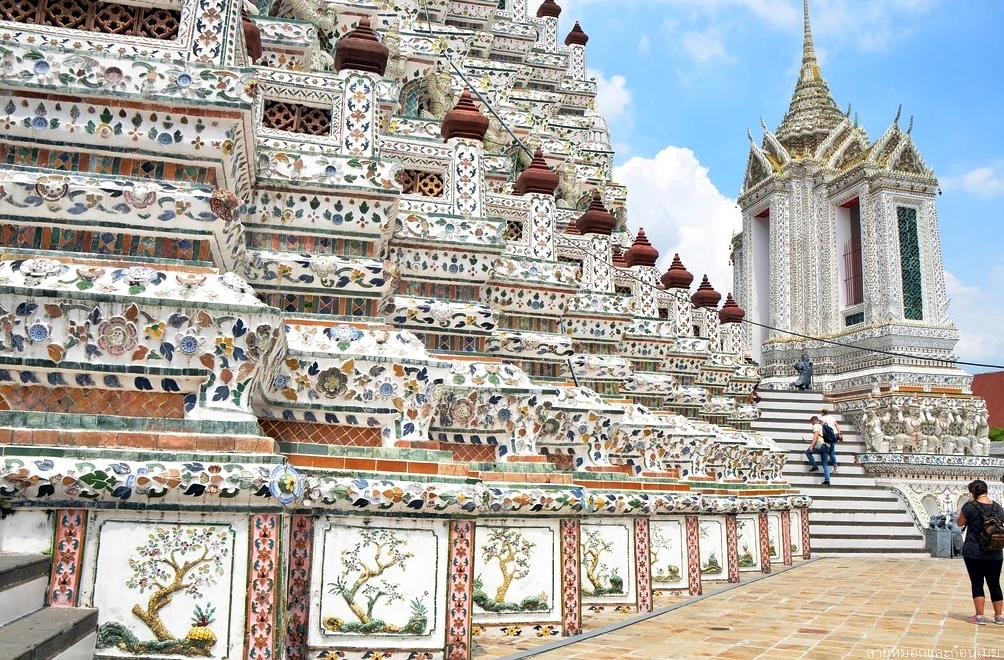
What renders Wat Arun truly peerless on the map of Asian architecture is its supreme mosaic craftsmanship, transforming a colossal brick-and-stucco edifice into a radiant, intricate tapestry of ornamentation. The exterior of the Phra Prang is encrusted with millions of carefully selected glazed porcelain shards from China, originally carried as ballast aboard ocean-going merchant vessels docking in Siam centuries ago. Under the deft hands of early Rattanakosin royal artisans, fragments of celadon, classic cobalt-blue glaze, and delicate blue-and-white porcelain were sorted, trimmed, and harmoniously combined with natural seashells and colored glass tiles. Together they crystallize into countless blooming lotuses, sinuously scrolling vines, and geometric borders that produce a dazzling optical effect: whether kissed by breaking dawn or bathed in late afternoon glow, the porcelain shell refracts light as if inlaid with mystical jade against the Bangkok skyline.
Ascending the steep, tiered terraces of the central spire, visitors encounter a rich sculptural program of statues and bas-reliefs vividly depicting a pantheon of protective deities. Supporting each ascending level are rows of muscular, fierce-visaged Yaksha guardian giants carved with remarkable dynamism, alongside mythical creatures from the sacred Himavanta forest such as the mighty winged Garuda and half-human, half-bird Kinnari maidens. Set within the upper cardinal niches are majestic depictions of Vishnu—the Hindu preserver deity—mounted atop the celestial bird Garuda, a seamless fusion of Siamese royal iconography and religious myth symbolizing the eternal preservation of cosmic order against the ravages of time.
Surrounding the central spire are four smaller satellite towers (Minor Prangs) arranged in perfect symmetry at the four corners, representing the four cardinal directions and the heavenly realms guarding the world. Each minor prang is a refined miniature of the central tower, housing within its ornate arched niches a sacred image of Phra Phai—the Wind God (manifestation of the Vedic deity Vayu)—astride a white steed, gazing outward to bless the four quarters with favorable winds, timely rains, and protection from evil forces. The absolute equilibrium between the four corner towers and the soaring central Phra Prang creates a dignified, monumental ensemble resembling a giant stone lotus blooming in the heart of the capital.
Alongside the grand stupa complex, the most sacred ceremonial heart of Wat Arun is the serene Ordination Hall (Ubosot) situated in the northern courtyard. Exemplifying early Bangkok royal architecture, the hall features sweeping multi-tiered tiled roofs crowned with proud avian chofah finials and crisp white columns framing an airy colonnade. Inside, tranquil stillness envelops the principal golden bronze Buddha image, Phra Buddha Niramitr, whose serene, compassionate countenance is traditionally believed to have been sculpted by King Rama II himself alongside royal craftsmen. Most notably, beneath the lotus pedestal of the Buddha rest the royal ashes of King Rama II—the devoted monarch who poured his heart into restoring and elevating Wat Arun—transforming this sanctuary into an enduring monument uniting royal heritage, national artistry, and timeless Buddhist devotion.
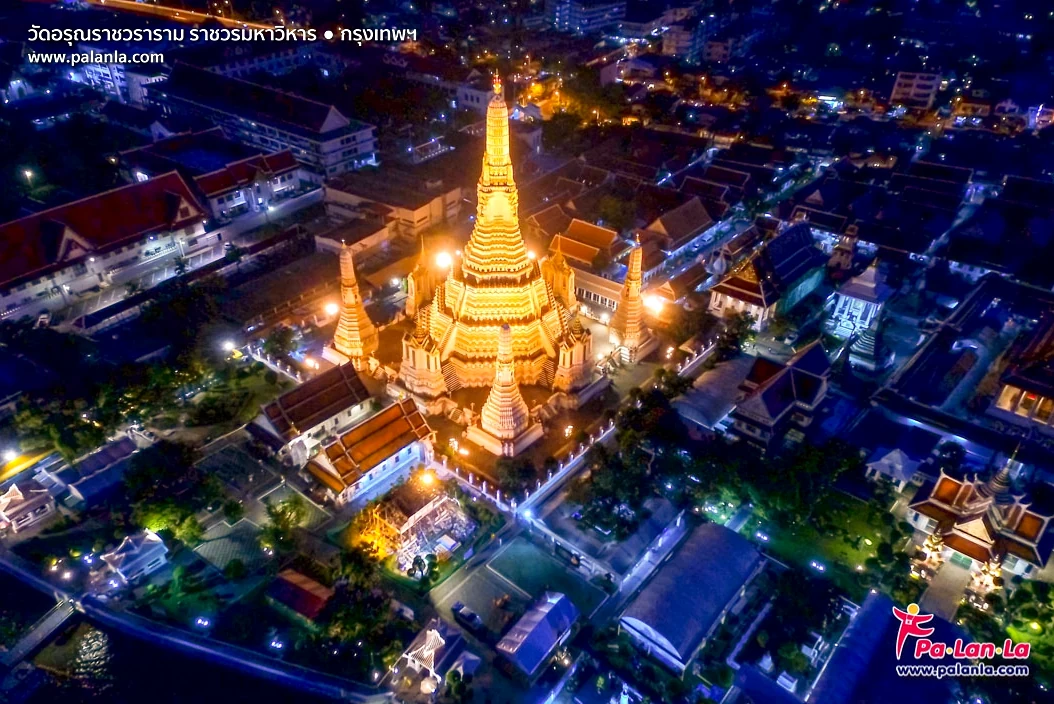
As dusk settles over the rich, silt-red waters of the Chao Phraya and deep indigo twilight yields to night across Thonburi, Wat Arun undergoes a breathtaking visual metamorphosis. Though named after Aruna—the Hindu personification of the reborn morning sun—the temple reveals perhaps its most enchanting, opulent visage once darkness truly falls. Orchestrated through modern architectural lighting design, high-intensity floodlights calibrated in warm amber and golden hues illuminate the entire ancient spire complex in unison. The towering Phra Prang, soaring over seventy meters high, together with its four satellite towers, sheds its quiet daytime austerity to transform into an immense golden reliquary rising against Bangkok’s velvet night sky. The illumination does more than accentuate monumental silhouettes; it traces every curved molding and honors the mosaic artistry of millions of antique Qing-era trade porcelain shards and royal Benjarong ceramics, making them sparkle like myriad stars.
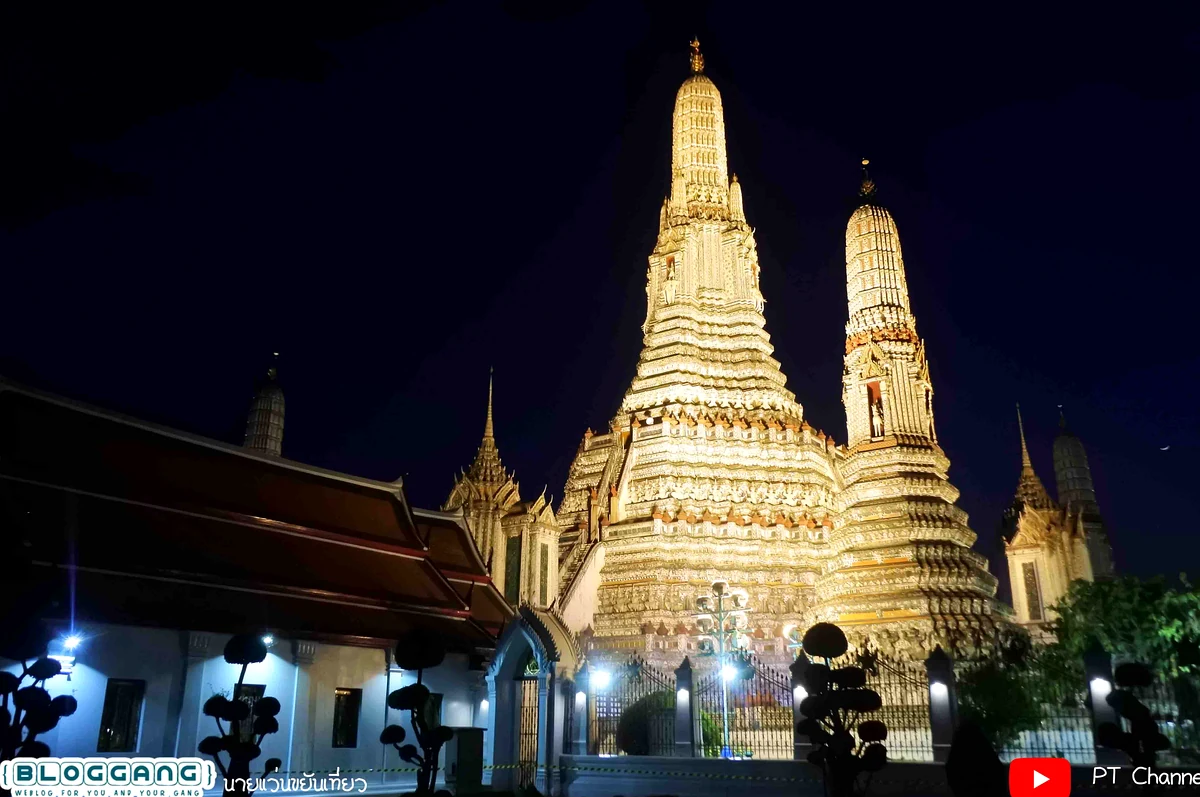
The lighting choreography at Wat Arun is a subtle symphony bridging heritage architecture and Eastern cosmology. Sculpted rows of imposing Yaksha guardians, mythical Hanuman monkey warriors, and auspicious Kinnari celestial beings clinging to the cosmic tiers cast deep dramatic shadows, creating a three-dimensional optical depth both mystical and reverent. At the foot of the spires, the rippling surface of the Chao Phraya acts like an enormous liquid mirror, absorbing and scattering golden beams into thousands of shimmering fragments drifting southward toward the Gulf of Thailand. The contrast between the cloistered tranquility of the Thonburi temple grounds and the ceaseless motion of the river highway produces a tableau at once surreal and nostalgic, leaving onlookers gazing from afar feeling as though they stand before sacred Mount Meru descended onto the mortal realm.
After-dark life around Wat Arun finds its liveliest resonance directly across the water on the historic Rattanakosin peninsula, centered around the bustling Tha Tien pier. Here, heritage shophouses dating back to the reign of King Rama V have been thoughtfully restored into refined art spaces and upscale riverside dining venues. Diners can savor the pinnacles of Royal Siamese cuisine—such as herb-infused Tom Yum Goong river prawn soup, aromatic Massaman curry fragrant with star anise, or refreshing Yum Som-O pomelo salad—while gazing out at an unobstructed, picture-perfect panorama of the illuminated Phra Prang. Swept by cool river breezes, locally infused herbal cocktails or jasmine-scented teas become the ideal accompaniment to a poetic evening where distant temple bells drift across the water to mingle with the vibrant hum of a sleepless metropolis.
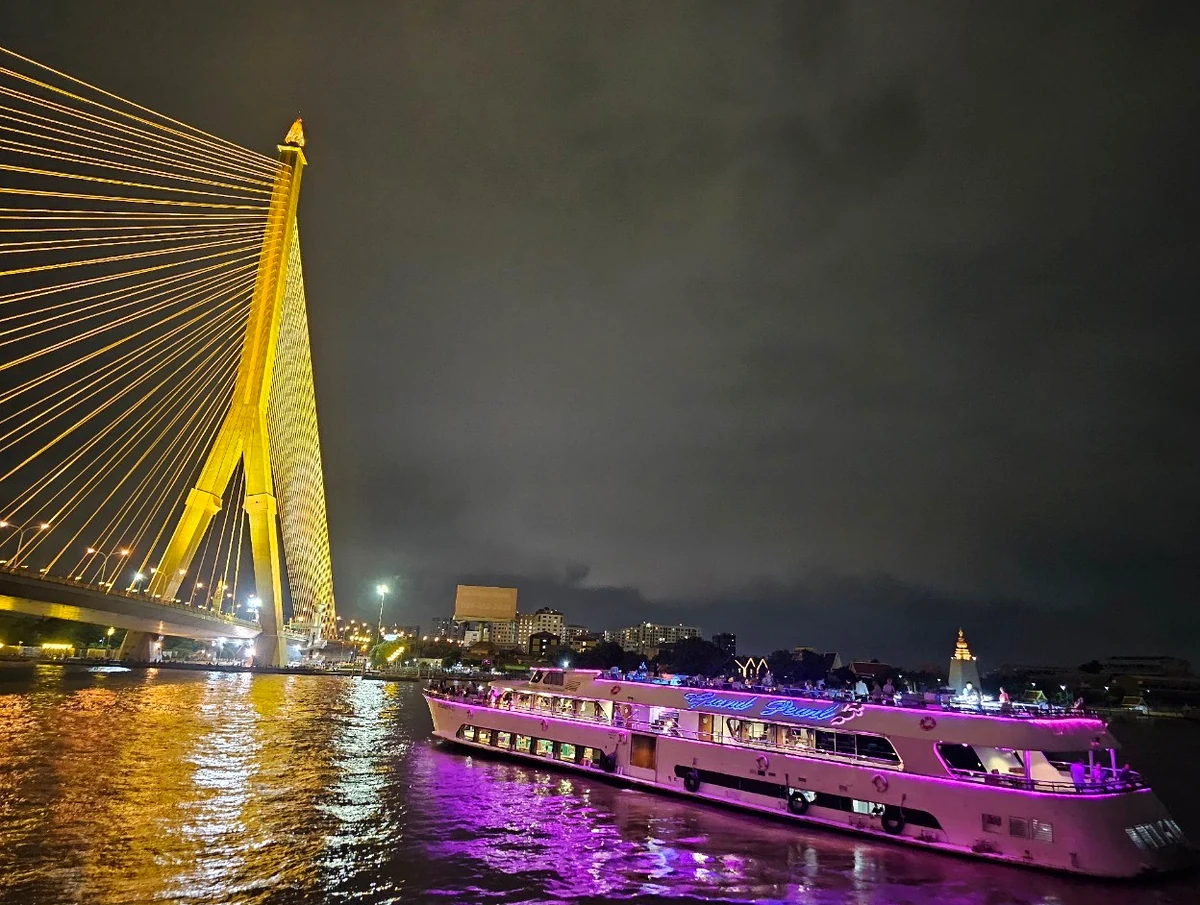
The crowning touch to this nocturnal panorama is the stately glide of Chao Phraya Dinner Cruises parting the currents down the center of the river. From classic teakwood barges evoking the royal elegance of the early Chakri era to sleek multi-deck vessels with panoramic glass floors, every cruise slows down as it passes the facade of Wat Arun, making it the undisputed highlight of the voyage. Accompanied by the melodic strains of traditional Khon masked dance excerpts or smooth live jazz drifting across the open deck, the glowing stupa looms majestically at close range, leaving an indelible impression of a thousand-year-old heritage beating in harmony with modern metropolitan vibrancy. More than simple sightseeing, it is an immersive journey into living heritage where Thailand’s history, artistry, and nightlife converge in captivating style.
Stepping down from the stately stone staircases of Wat Arun, the everyday rhythm of Thonburi leads travelers into a remarkable culinary crossroads stretching along both banks of the Chao Phraya River. From the Thonburi Kingdom under King Taksin to the rise of the Rattanakosin capital across the water, the mother river has carried not only historical memory, but also nurtured a one-of-a-kind riverside food culture. Just a brief cross-river ferry ride linking Wat Arun with the historic Tha Tien market pier plunges visitors into a fragrant labyrinth of local flavors, where heirloom recipes passed down by Siamese natives, Chinese immigrants, and southern settlers have been preserved for centuries.
The aquatic spirit of old Bangkok is captured most vividly in every bowl of Guay Tiew Reua, or traditional boat noodles. Originating from narrow wooden sampans navigating the intricate network of canals (khlongs) weaving through Bangkok and Thonburi, early vendors served compact portions in small bowls to prevent broth from spilling while paddling. Around Wat Arun, boat noodle broth is simmered continuously for dozens of hours with pork or beef marrow bones, infused with cassia bark, star anise, culantro, and fragrant dried herbs. The signature touch behind its fame lies in the final addition of fresh blood and a secret dark soy reduction, yielding a rich, velvety mahogany broth layered with deep umami, subtle creaminess, and a gentle tingle of spice—paired with silky rice noodles and crispy pork cracklings.
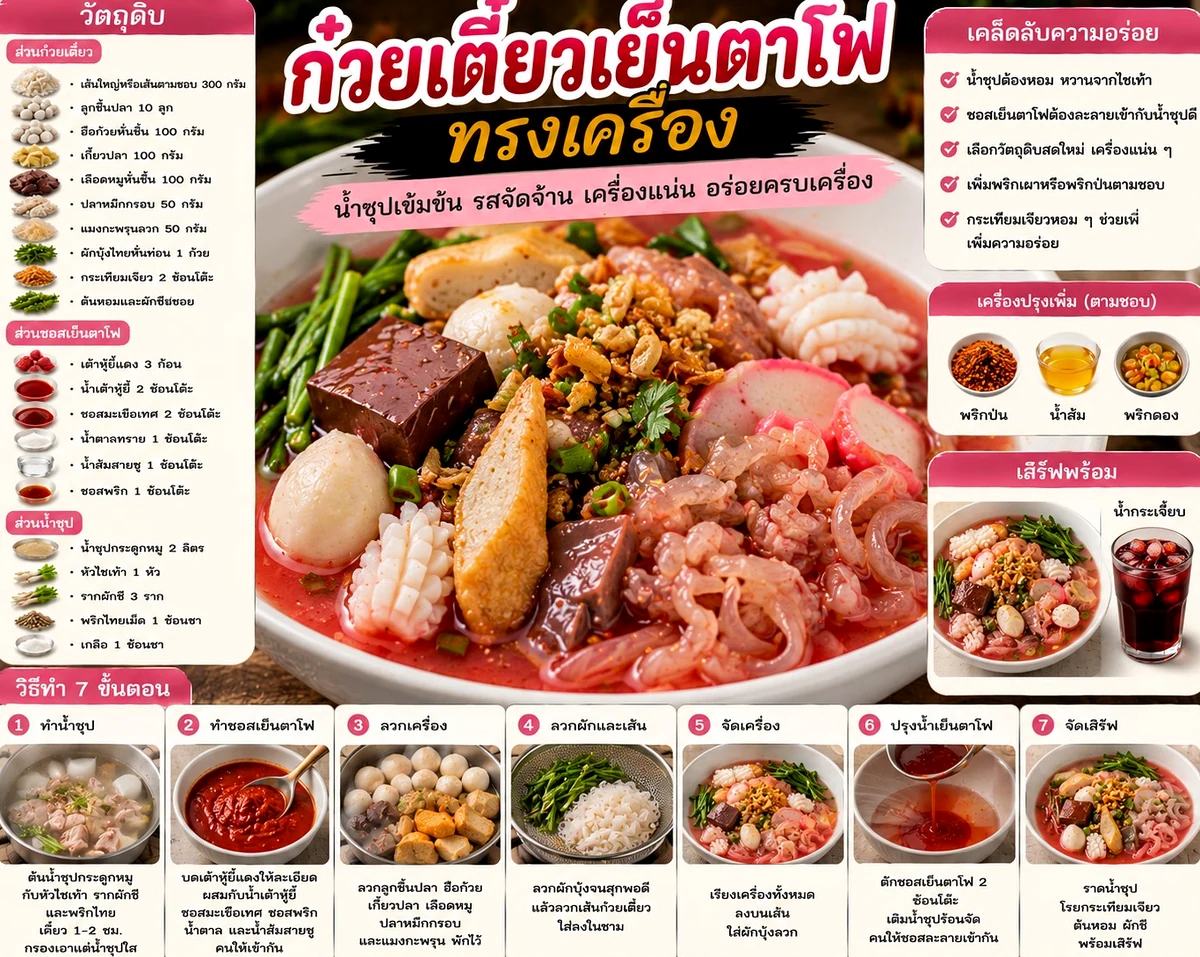
Complementing the bold richness of boat noodles is the distinct allure of Yentafo, the iconic pink noodle soup deeply rooted in the longstanding Teochew Chinese community settled along Tha Tien. The visual and culinary hallmark of Yentafo is its vibrant rosy hue derived from fermented red bean curd blended with rice vinegar, fresh chilies, and tangy tomato paste. Each bowl orchestrates a lively medley of textures: crisp pickled squid, bouncy handmade fish balls crafted from featherback fish, tender congealed pork blood cubes, and crunchy strips of blanched morning glory. Just steps away, the aroma of blazing cast-iron woks from Pad Thai stalls around Tha Tien draws visitors into another classic flavor profile. Flat rice noodles are flash-fried over high heat until smoky, tossed in a balanced glaze of tangy tamarind pulp, warm palm sugar, and pure anchovy fish sauce, stir-fried with plump, sweet river prawns from the lower Chao Phraya, sprinkled with crushed roasted peanuts, and neatly wrapped inside a gossamer-thin egg net.
Beyond bustling street stalls billowing with aromatic steam, the culinary journey around Wat Arun reaches its pinnacle at refined waterfront venues directly opposite the temple, most notably Sala Rattanakosin and View ARUN. As sunset paints the sky deep violet and gilds the proud porcelain-encrusted Prang spires of the Temple of Dawn, guests can sip chilled herbal infusions or indulge in a graceful Royal Siamese dinner. This harmonious contrast between unpretentious street food heritage and the dazzling, dreamlike reflection of an ancient stupa shimmering upon the river creates a complete cultural immersion—awakening every sense and imprinting the lingering taste of Bangkok onto every traveler’s memory.
Visiting and exploring this magnificent riverside sanctuary on the west bank of the Chao Phraya calls for thoughtful preparation in both etiquette and practical logistics. The Wat Arun complex generally welcomes visitors daily from 8:00 AM to 6:00 PM, spanning the full arc of daylight from crisp morning illumination to golden late-afternoon glow. Admission remains modest at roughly 100 THB per foreign visitor, which includes a complimentary small bottle of chilled drinking water offered as a simple gesture of monastic hospitality. Right at the entrance gates, strict Theravada Buddhist dress codes are enforced: both men and women must dress respectfully with shoulders fully covered and bottoms extending well past the knees. Sleeveless tops, above-the-knee shorts, and high-slit skirts are strictly prohibited; if caught unprepared, visitors can easily rent or purchase colorful traditional sarongs from stalls right outside the entrance for a nominal fee.
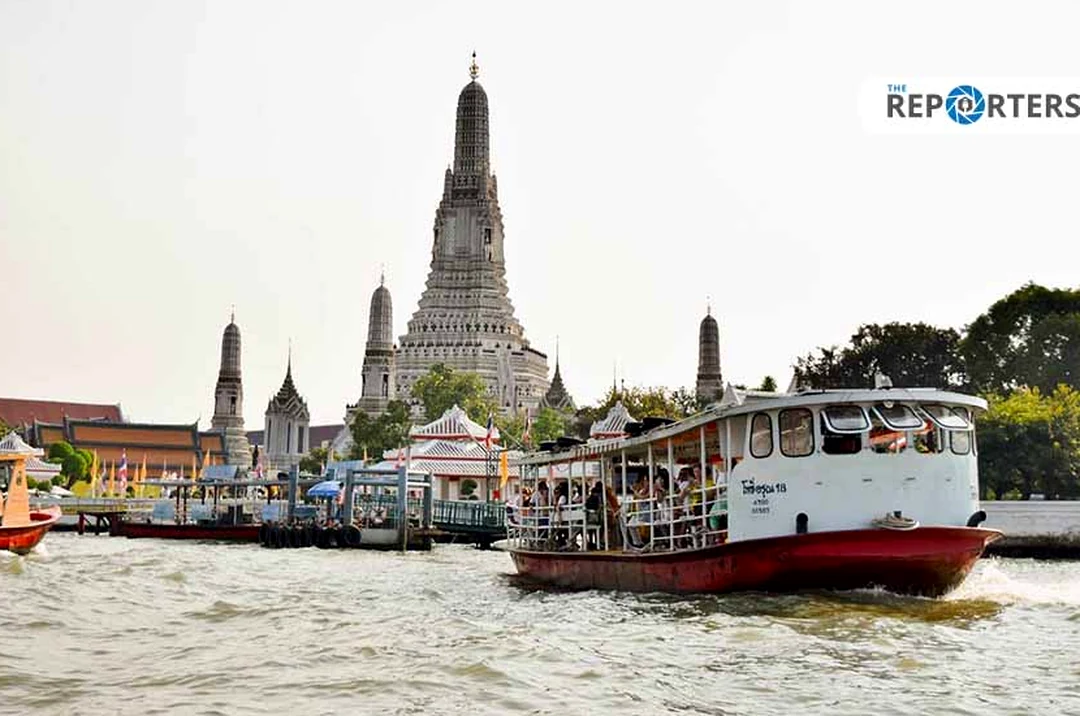
To reach this architectural gem, the most atmospheric and quintessentially local approach is a short river crossing aboard a traditional wooden ferry. After touring the Grand Palace or Wat Pho, visitors can stroll leisurely over to Tha Tien Pier, where shuttle ferries ply back and forth across the Chao Phraya for a fare of just 5 THB per crossing. Standing on the breezy open deck as the eighty-meter-tall Phra Prang steadily fills your field of vision feels like watching a grand cinematic reveal unfold against historic Thonburi. For those who prefer modern urban transit convenience, the MRT Blue Line offers a seamless alternative: simply alight at Itsaraphap Station and take a pleasant 15-minute stroll through the leafy, peaceful lanes of Bangkok Yai, or hop on a local motorbike taxi (win motosai) to reach the temple gates within minutes.
A charming cultural trend that has blossomed around Wat Arun in recent years is dressing up in traditional Chut Thai period attire. Boutiques lining the alleyways leading to the temple offer full rental packages featuring lustrous silk ensembles, intricate gold-plated jewelry, and classic royal Siamese hairstyles. Draped in regal silks while ascending granite staircases and admiring walls inlaid with five-color Benjarong ceramics, visitors feel transported back to the splendor of the Rattanakosin era. The ideal windows for capturing unforgettable photographs are early morning before 9:00 AM—when crisp sunlight catches the glazed porcelain shards in dazzling sparkles before large tour groups arrive—or around 4:00 PM, when late-afternoon sun bathes the misty river surface in warm gold.
While exploring the Land of Smiles, staying alert to common tourist scams around the riverside piers is essential. Be wary of tuk-tuk drivers or overly friendly strangers lingering near Tha Tien Pier who claim Wat Arun is closed for a royal ceremony, attempting to steer visitors toward overpriced private long-tail boat charters or commission-based gem shops. Always walk directly to the official temple ticket booth, keep personal belongings secure in crowded areas, and maintain respectful silence when stepping inside Buddha sanctuaries. Travelers are best served by well-researched independent exploration or reputable itineraries free of forced shopping stops to preserve the authenticity of their cultural journey.
Concluding a visit to this peerless porcelain-mosaicked masterpiece along the legendary Chao Phraya River, every intricate floral motif and sculpted Kinnari figure leaves a lasting impression of human artistry at its zenith. To experience the enchanting beauty of the Land of Smiles without worrying about itinerary logistics or language barriers, travelers may consider choosing a thoughtfully curated, all-inclusive Thailand tour package that opens the door to the spiritual and cultural depths of the kingdom with complete peace of mind.