Stretching along the legendary Thuy Van Road, Back Beach Vung Tau (known historically as Thuy Van or Hau Bai) holds an unrivaled geographic position, curving gracefully around the majestic Small Mountain (Tao Phung) peninsula toward the vast East Sea. Viewed through the lenses of geology and traditional feng shui, this terrain gathers all the vital energy of a premier maritime outpost: backed by lush, tree-covered mountains and facing an ocean of endlessly rolling waves, it forms a steadfast “mountain-backed, sea-facing” posture like a natural rampart guarding the vital gateway into the historic waterways of Gia Dinh.
Tracing back through rich historical records—from Nguyen Dynasty imperial archives to the monumental geography Dai Nam Nhat Thong Chi (Comprehensive Gazetteer of Dai Nam)—the origin of this land’s name is closely tied to our ancestors’ southward expansion, settlement, and coastal defense. When the Nguyen Lords first laid the foundations for reclaiming the southern frontier, this area, together with Front Beach, was designated “Vung Thuyen” (Boat Bay)—a strategic stopover for naval fleets and merchant vessels. Under the reigns of Emperors Gia Long and Minh Mang, the imperial court astutely recognized Tao Phung’s chokepoint significance, establishing watchtowers and observation posts atop the peaks to monitor all maritime traffic entering Vung Tau and the Can Gio river network. Back Beach, then called Hau Bai or Thuy Van, served as the operational, patrol, and garrison grounds for local militias and the royal navy.
The historical journey of this coastal stretch is also deeply etched with the legacy of illustrious forebears. Foremost among them is Marshal Thoai Ngoc Hau (Nguyen Van Thoai)—a revered figure credited with establishing maritime security and patrolling the sea routes and islands from Vung Tau to Con Dao. Beyond its military significance, Back Beach’s heritage resonates with the spiritual aura of long-standing monastic retreats. Clinging to the seaward slopes of Small Mountain since the 19th century, eminent Zen masters of the Linji (Lam Te Chanh Tong) lineage chose this tranquil setting to build thatched hermitages, chanting sutras and praying for national peace, prosperity, and favorable winds for seafarers braving the open ocean.
Through the passage of time, Back Beach Vung Tau today is recognized by heritage authorities and the travel press as far more than a modern resort coastline of golden sands and year-round white-capped waves. It stands as a living museum preserving cultural strata from prehistoric and protohistoric eras—evidenced by traces of the Oc Eo culture—to the heroic spirit of southern reclamation and the serene atmosphere of ancient, contemplative pagodas. Together, these elements endow Back Beach with an inimitable character: a seamless harmony between coastal natural wonders and the spiritual, historical depth of the Vietnamese nation.

Stepping into a realm entirely distinct from the bustle of the city, Back Beach Vung Tau unfolds before visitors as a grand natural masterpiece where sea and sky merge into an immense expanse of turquoise. Spanning more than eight kilometers along the southeastern shore of Small Mountain, Back Beach boasts a unique “mountain-backed, sea-facing” topography, where steep cliffs shelter a strip of fine golden sand sloping gently down to the water’s edge. Nature’s masterful hand has bestowed upon this coast a soft, sweeping curve like a ribbon of rose silk undulating to the rhythm of the ocean. Endless tiers of white-crested waves caress the shore year-round, weaving a soothing symphony of sea breezes, surf, and the briny essence of the southern sky and earth. Under brilliant golden sunlight, the waters of Back Beach shimmer as if dusted with sequins, highlighting an untamed yet proud allure that captivates every traveler who sets foot here.
Beyond its pure natural beauty, the architecture and monumental sculpture lining Thuy Van Road alongside Back Beach bear the unmistakable imprint of spiritual culture and human artistry. Towering above this coastal wonder is the Christ the King Statue (Tuong Chua Kito Vua) atop majestic Tao Phung Peak, rising proudly into the sky as a symbol of protection for safe maritime journeys. This artistic landmark is a monumental sculptural feat, crafted with intricate masonry and carving techniques in natural stone and reinforced concrete that demanded extraordinary dedication from its builders. Winding stairways ascend the mountainside toward the monument, blending man-made architecture seamlessly into lush greenery to create a setting at once solemn and poetic—one that enchants lovers of art and photography alike.
For photographers and travel journalists, Back Beach Vung Tau serves as an endless natural film set brimming with “million-view” vantage points not to be missed. The premier angle favored by professionals is from the Ong Thu Cape area at dawn. Between 5:00 AM and 5:30 AM, as the sun rises slowly above the East Sea horizon, it washes the sky and water in hues of rose, creating an ethereal tableau punctuated by the silhouettes of round coracle fishing boats bobbing upon silver waves. A second standout vantage point runs along the sloping stretch of Thuy Van Road in the early morning or late afternoon, where a lens can capture the entire sweeping curve of fine white sand framed against the towering Christ the King Statue high among the clouds. These frames do more than preserve nature’s grandeur; they vividly convey the quiet, sacred pulse of a historic landmark enduring through time.

Arriving at Back Beach Vung Tau—still carrying the storied aura of windswept Thuy Van Beach—visitors are immediately drawn into a setting both expansive and deeply steeped in southern cultural identity. The first experience to awaken every sense is ascending majestic Small Mountain (Tao Phung). Each step up the moss-covered stone stairs reveals an extraordinary panorama: a ribbon of powdery white sand curving around emerald-green waters, with distant ships quietly cleaving the waves toward the open sea. Standing before the vast meeting of sky and ocean brings a sense of awe that slows the heart and washes away the clutter of modern life.
Leaving the winding trails along the mountain slopes behind, travelers can opt for an offshore boat excursion to admire the entire bay from an entirely fresh perspective. Aboard a wooden boat rocking gently on the swells, listening to the brisk ocean wind and the rhythmic lap of waves against the hull, one gains a deeper appreciation for the arduous yet heroic journeys of past generations who settled and safeguarded these seas and islands. Looking back toward Back Beach from open water, the historic Vung Tau Lighthouse standing tall against the blue sky further accentuates the dignified, timeless beauty of a land rich in heritage.
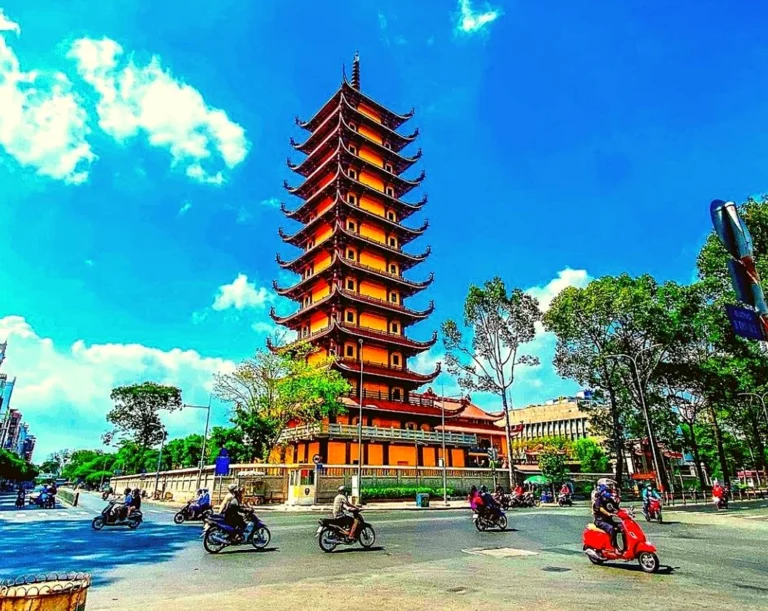
Beyond natural scenery, the region’s cultural depth settles quietly within its serene spiritual sanctuaries. Nestled at the foot of Small Mountain facing the open sea is a cluster of venerable pagodas preserving centuries-old architectural and religious traditions of coastal communities. Stepping into courtyards fragrant with incense, where temple bells resonate softly amid the murmur of breaking waves, brings an extraordinary sense of tranquility. It offers a precious moment of stillness to pay homage, reconnect with ancestral roots, honor past pioneers, and find inner balance and peace.
An exploration of Back Beach would be incomplete without savoring the celebrated coastal specialties of Vung Tau. As dusk descends and gilds the long stretch of sand, the mouthwatering aroma of freshly caught seafood draws visitors to lively beachfront eateries. Indulging in the sweet, succulent meat of steamed blue swimmer crab, crispy savory banh khot (miniature shrimp pancakes) wrapped in wild herbs, or a comforting bowl of southern-style sweet-and-sour fish soup creates an unforgettable culinary harmony. Amid the brisk sea breeze, tasting these rustic yet refined flavors of the South satisfies more than the palate—it leaves a lasting emotional resonance of a land blessed by both nature and history, where cultural heritage flows vibrantly through everyday life.

Back Beach Vung Tau, also known as Thuy Van Beach, has long been an essential stop for anyone visiting this coastal city. To make the most of a journey through a destination rich in history, spirituality, and scenic beauty, equipping yourself with practical local tips is invaluable.
Regarding opening hours, Back Beach is an open public beach accessible 24 hours a day, welcoming visitors to enjoy the seascape and immerse themselves in nature at any hour. However, for maximum safety while swimming, it is best to enter the water during hours when lifeguards are actively on duty, from early morning until late afternoon. As for the spiritual landmarks, ancient pagodas, and cultural sites nestled at the base of Small Mountain along Back Beach, doors typically open from early morning until early evening to accommodate worshippers and sightseers.
One welcome perk for travelers is that visiting and swimming at Back Beach is completely free of charge. You only pay for optional on-site amenities according to your personal needs, such as renting sun loungers and beach umbrellas, motorbike or car parking, or using freshwater shower facilities at public service stations along the shore.
Getting there from central Vung Tau is easiest by motorbike or private car. From the Front Beach area or the administrative center, the drive takes only about 10 to 15 minutes. The fastest and most scenic route follows Ba Thang Hai Street or the Le Hong Phong extension before turning onto Thuy Van Boulevard, which hugs the Back Beach shoreline. The roads are wide, well-paved, and clearly signposted, ensuring a smooth ride for all vehicles.
When visiting historical sites, ancient pagodas, or rocky coastal outcrops around Back Beach, travelers should dress modestly and respectfully in keeping with local customs and sacred spaces. Additionally, if you plan to hike Small Mountain to explore historical relics or walk along the seaside rocks, opt for athletic shoes with good grip, comfortable clothing, a sun hat, and sunscreen to stay protected.
The ideal time of year to visit Back Beach is during the dry season, from November through April. During these months, Vung Tau enjoys sunny skies, calm seas, clear turquoise water, and minimal rainfall—perfect conditions for outdoor activities, heritage sightseeing, and soaking in the full splendor of Vietnam’s southern coast.

To enjoy a seamless getaway and take in the full splendor of Back Beach Vung Tau without worrying about transportation, attraction tickets, or itinerary planning, travelers can opt for VDS Travel’s premier all-inclusive Ba Ria – Vung Tau tour packages. Every itinerary is thoughtfully timed to capture photo spots at their most radiant, accompanied by knowledgeable local guides well versed in regional culture alongside top-tier hotel accommodations and dining standards.