Located right along the main Sukhumvit arterial road in the southern part of Pattaya City, Chonburi Province, the Pattaya Floating Market (Chinese: 芭提雅四方水上市场; official English name: Pattaya Floating Market 4 Regions) emerges as a distinctive riverine gem amid a bustling coastal hub. Unlike floating communities that evolved organically over centuries along major rivers such as Damnoen Saduak or Amphawa on the outskirts of Bangkok, this cultural space is a meticulously planned “Constructed Cultural Landscape.” Its creation carries a special historical mission: to comprehensively recreate and preserve the traditional architecture and riverside lifestyle of ancient Siam, which has been gradually fading under the pressure of modern urbanization.
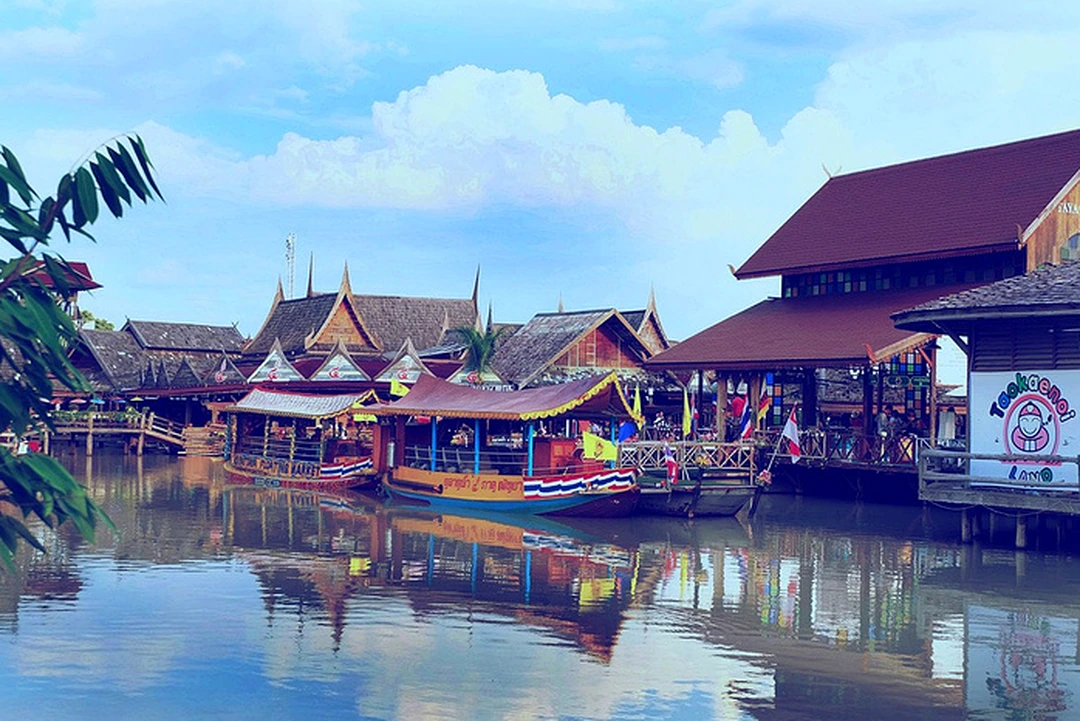
The project was initiated and developed in 2008 through close collaboration between substantial private capital and urban planning support from local administrative authorities. Backed by a massive investment exceeding 100 million Thai Baht, the complex underwent nearly two years of continuous construction before officially opening its doors to its first visitors at the turn of late 2008 and early 2009. The emergence of this venue is far more than a commercial tourist attraction; it represents a strategic effort to rescue and revitalize Thailand’s riverine heritage—a core component of Thai national cultural identity for centuries.
The name “Four Regions” stems from an encyclopedic approach to spatial planning that divides Thai culture into four distinct geo-cultural zones, each reflecting different dynasties and historical imprints. The North is recreated through intricate wood carvings and sweeping, curved roofs steeped in the legacy of the ancient Lanna Kingdom. The Central Region represents the golden era of the glorious Ayutthaya Kingdom blended with early Rattanakosin (early Bangkok) architectural styles. The Northeast (Isan) unfolds as a Mekong River basin setting deeply influenced by ancient Khmer culture and rustic rural life. Meanwhile, the South portrays a waterside environment infused with the signature Islamic aesthetics of the Malay Peninsula, harmonized with a free-spirited oceanic fishing heritage.
Over years of operation amidst changing times, this landmark has continuously evolved to adapt to modern trends. Since undergoing a comprehensive restructuring phase beginning in 2022, Pattaya Floating Market has proactively upgraded its entire operating model. At the heart of this transformation is a shift from a static exhibition space toward dynamically revitalizing Intangible Cultural Heritage (ICH). Traditional folk melodies, classical dances representing historic dynasties, and ancestral artisanal crafts have been brought back onto the water, turning the market into a living museum where past and present converge beside gently bobbing wooden boats.
Commanding an impressive presence along the southeastern boundary of coastal Pattaya, the original terrain of the Pattaya Floating Market (芭提雅四方水上市场) was a low-lying plain featuring a flooded marshland ecosystem typical of a tropical monsoon climate. To transform this untamed land into a living architectural masterpiece, planners thoroughly integrated traditional hydraulic engineering with modern topographical science. An intricate network of artificial canals was systematically excavated, serving not only as the primary waterway transport system but also functioning as a giant natural air conditioner. The continuous circulation of water minimizes the urban heat island effect, lowers ambient temperatures, and maintains a consistently cool, pleasant microclimate even on the most sweltering summer days.
In terms of spatial layout, the master plan was crafted according to traditional Thai geomancy, deeply rooted in Mandalic Spatial Planning cosmology. The market’s structure strictly adheres to the philosophy of “water-land harmony,” establishing a balanced yin-yang equilibrium between water and earth. Framing the outer perimeter is a closed-loop road network paired with an ancient-style perimeter wall that acts as a protective shield for the interior space. Moving inward, the heart of the market comprises a cruciform canal system interwoven with concentric arcs. This unique design gives rise to a dual-circulation system—”gliding by boat on water, strolling on foot along the banks”—allowing visitors to either drift serenely on wooden skiffs or wander along walkways linked by winding wooden bridges.
To adapt seamlessly to the marshy terrain and seasonal water-level fluctuations, the entire architectural ensemble at the Four Regions Floating Market was built using sophisticated traditional wooden stilt house construction. Engineers and folk artisans elevated all residential and commercial floors to heights of 1.5 to 2.0 meters above the water’s surface. This raised-floor engineering completely eliminates the risk of localized flooding during monsoon rains and high tides while playing a vital role in passive cooling. The open space beneath the floorboards creates an aerodynamic corridor that allows cool water breezes to flow freely underneath, carrying away trapped heat and continuously circulating fresh air into the interiors without wasting artificial energy.
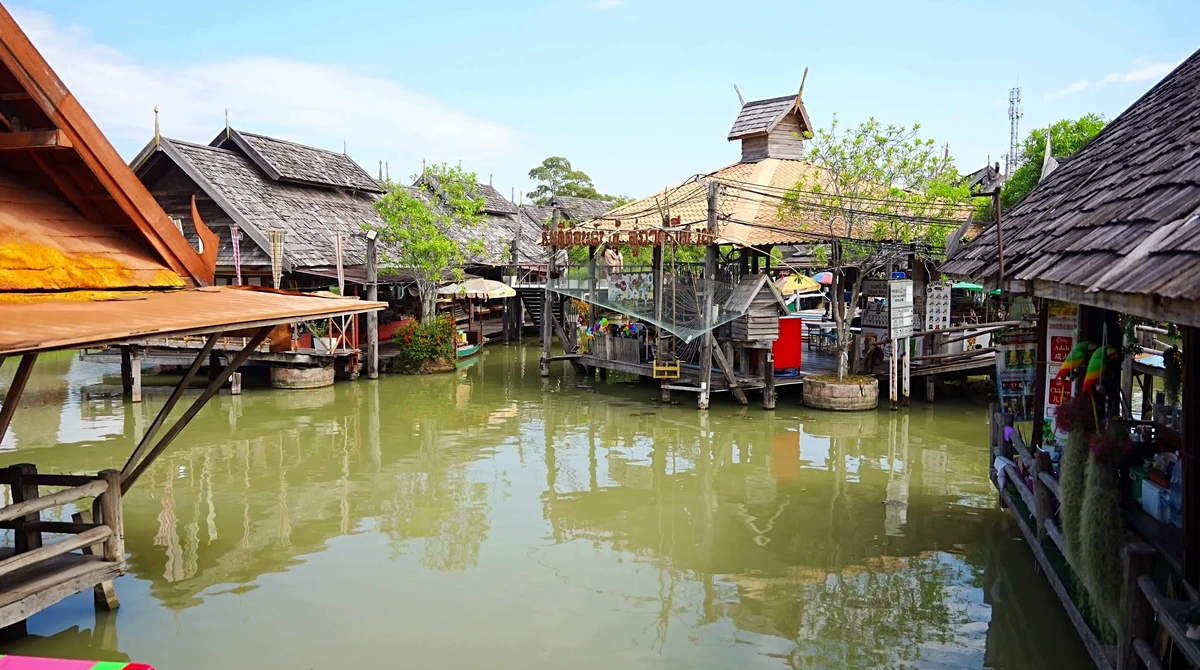
The final yet equally crucial engineering highlight in the indigenous mastery over nature is the system of steep pitched roofs that define traditional Thai architecture. In a tropical monsoon climate characterized by sudden, torrential downpours, steeply angled roofs with wide overhanging eaves shed rainwater rapidly, completely preventing water pooling that could rot the natural timber. These soaring, pitched rooflines—spreading outward like bird wings—not only excel at shielding the timber framework below from sun and rain, but also create an undulating architectural silhouette that harmonizes beautifully with the rippling reflections in the canals below.
Nestled peacefully across an expansive water-and-land estate spanning approximately 100,000 square meters (around 10 hectares), Pattaya Floating Market stands as a monumental masterpiece of rustic yet refined architectural planning. Within this vast complex, waterways and interlacing canals account for nearly one-third of the total area, forming a fluid aquatic ecosystem that embraces hundreds of traditional stilt houses. The floor plan was meticulously engineered both to authentically recreate tropical riverine life and to form a parallel water-and-land transit matrix, where arched wooden bridges guide visitors seamlessly through each distinct cultural zone of the Kingdom of Siam.
The extraordinary craftsmanship and pinnacle of artistry at this landmark lie in its assembly of master carpenters from traditional craft villages across the country. Every structure was rigorously built using Southeast Asia’s finest hardwoods, most notably Burmese teak and ironwood. Rich in natural oils, these prized timbers naturally resist termites, pervasive humidity, and decades of weathering. Remarkably, the construction makes zero use of modern steel nails. Instead, master artisans perfected ancient mortise-and-tenon joinery: from interlocking dovetail joints that cannot be pulled apart and durable post-and-beam structural frames to wooden dowels fitted with millimeter precision. This allows the entire timber skeleton to expand and contract naturally with the seasons while standing steadfast against the water.
Transcending mere technical mastery, every decorative detail adorning the stilt house rooftops forms a sacred symbolic realm steeped in Thai spirituality. At both ends of the sweeping roof ridges, artisans carved the Chor Fa (“sky tassel”), an iconic architectural finial stylized after the outstretched wings of Garuda—the mythical golden eagle steed of the deity Vishnu. The Chor Fa is seamlessly paired with undulating Naga serpents slithering along the bargeboards, interwoven with bas-relief carvings of traditional Kranok flame-and-foliage motifs. As a result, each rooftop does more than shelter against the elements; it serves as a living sculpture expressing harmony between cosmic power, indigenous beliefs, and folk aesthetics.
The spatial division of the Four Regions Floating Market is scientifically organized to capture the authentic essence of Thailand’s four geographic regions. The Northern Zone welcomes visitors with signature Lanna-style houses featuring majestic yet graceful multi-tiered roofs, sheltering artisan workshops where brightly colored, hand-painted oiled-paper umbrellas are crafted. Moving into the Northeastern Zone, the atmosphere shifts distinctly to the agrarian ritual style of the arid Isan region, favoring hand-woven bamboo and coarse, hand-spun ropes that evoke a rustic rice-farming culture deeply tied to indigenous rain-making ceremonies.
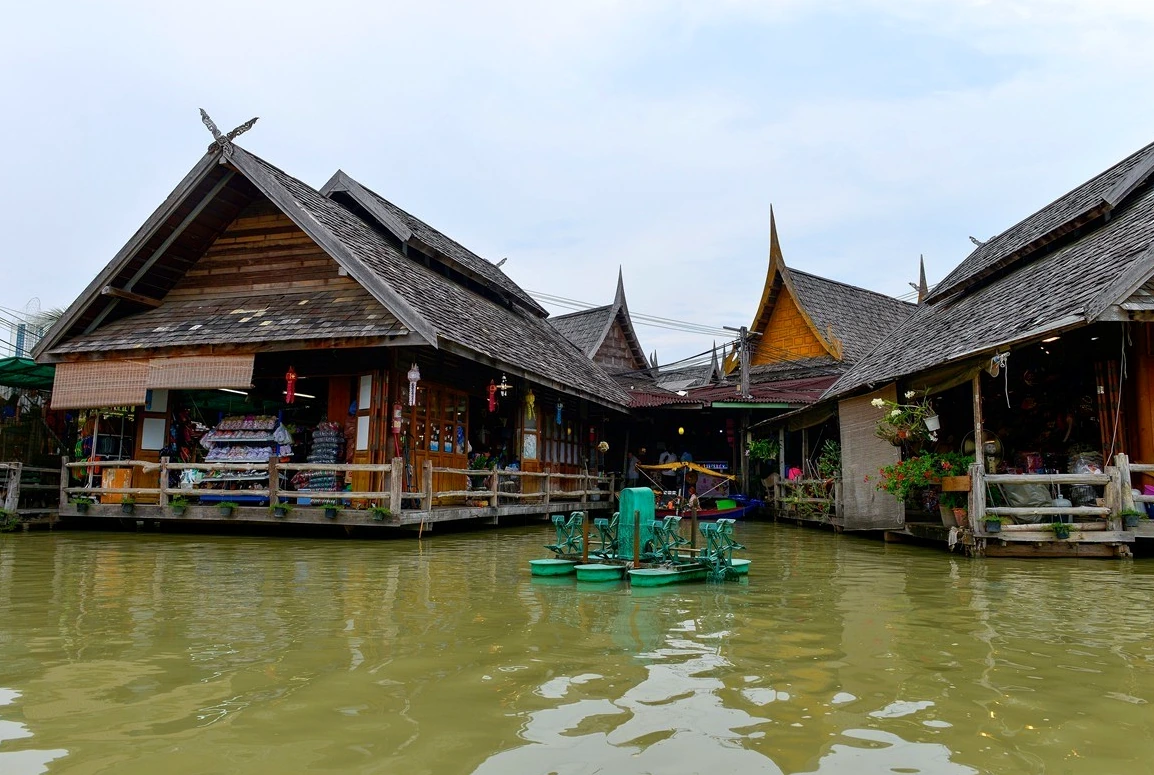
At the very heart of this grand landscape sits the Central Zone, home to a buoyant floating stage and bustling floating piers that host the liveliest traditional art performances and commercial trade. Finally, the Southern Zone offers a remarkably distinctive architectural pause, showcasing the Islamic cultural heritage of Southern Thailand. Pointed Islamic arches blend harmoniously with intricately carved geometric wooden window frames, creating a rich cultural tapestry right in the heart of the waterways. Together, they form an architectural ensemble that is both historically authentic and a testament to the supreme woodworking mastery of Thai folk artisans.
When dusk settles completely over the Chonburi coast, Pattaya Floating Market sheds its bustling daytime persona to drape itself in the enchanting mystique of a Siamese night. The expansive grounds transform under an artfully engineered lighting design that pairs warm-toned LED strips with hundreds of handcrafted lanterns suspended along teakwood eaves. The architectural lighting team strictly applied the classical aesthetic principle of “seeing the light, not the fixture.” Soft, diffused illumination is cleverly concealed beneath overhanging eaves, ebony pillars, and wooden boat hulls, casting a gentle glow onto the mirror-like water. Shimmering across the gentle ripples are the silhouettes of arched bridges, proud Thai stilt roofs, and gliding long-tail boats, conjuring an Oriental romance that is at once tranquil and regal.
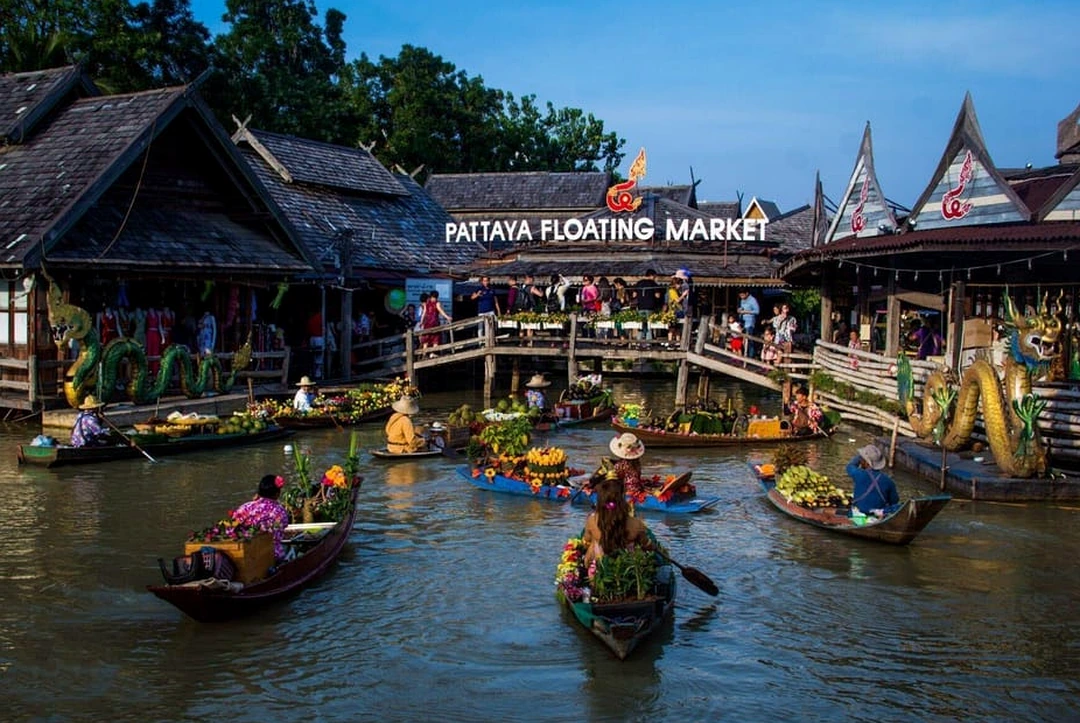
The crown jewel of the market’s nightlife is its vibrant live-action river theatre. Rather than remaining passive spectators on shore, visitors can board traditional long-tail boats and wind through serpentine canals to immerse themselves in the floating theatre performances. From tiered pavilions built along the water’s edge, dancers dressed in resplendent Siamese royal attire perform classical court dances, curving their fingers gracefully to the melodic cadence of the Ranat Ek xylophone and Taphon drums. Alongside this, the cultural identities of Thailand’s four regions (North, Northeast/Isan, Central, and South) come vividly to life through signature folk dances—from the unhurried, fluid grace of northern Lanna’s fingernail dance (Fong Leb) to the joyful, energetic rhythms rooted in northeastern rice-harvest traditions.
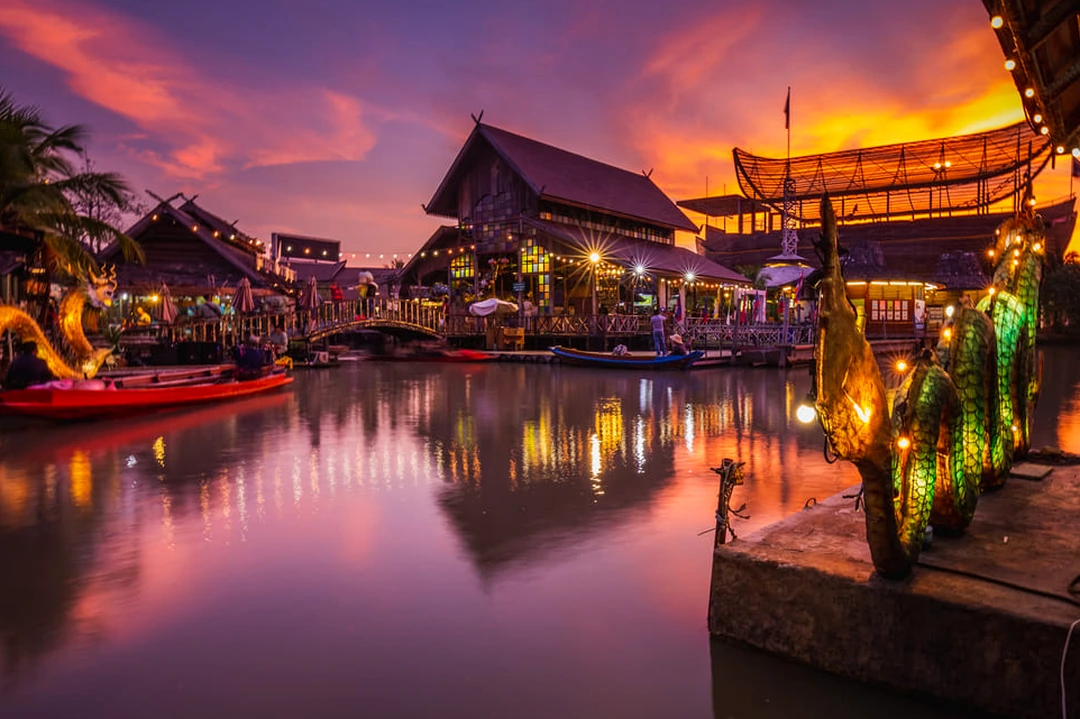
Meanwhile, the evening energy in the central plaza erupts with highly interactive cultural spectacles. Here, the booming resonance of Klong Yao long drums kicks off a jubilant drum parade that winds through the wooden boardwalks. Visitors are treated to spirited Muay Thai exhibitions, where fighters perform the sacred Wai Kru ritual in homage to their masters before showcasing the formidable, razor-sharp techniques of ancient Siamese martial arts. Moments later, the mood shifts and bursts into the colorful local rhythms of the Bamboo Dance. As bamboo poles clap rhythmically against the wooden deck, skilled performers invite guests to step into the circle, dissolving the boundary between artist and audience and turning the floating market night into a deeply unifying community festival.
Amid this fusion of visual artistry and traditional soundscapes, the night dining experience reaches transcendent heights. The heady aromas of coconut mango sticky rice, steaming, richly spiced boat noodles (Kuaitiao Ruea), and herb-marinated grilled skewers waft from vendor boats across the water. Seated at a teakwood table right at the water’s edge, sipping a fragrant glass of iced Thai tea while watching lantern light dance across the ripples and folk songs drift down the canal, travelers absorb the true heritage pulse—both mystical and humble—of the Land of Smiles. Evenings at the Four Regions Floating Market are not merely entertainment, but a multi-sensory awakening where history, the art of living, and Thai lyricism converge intact.
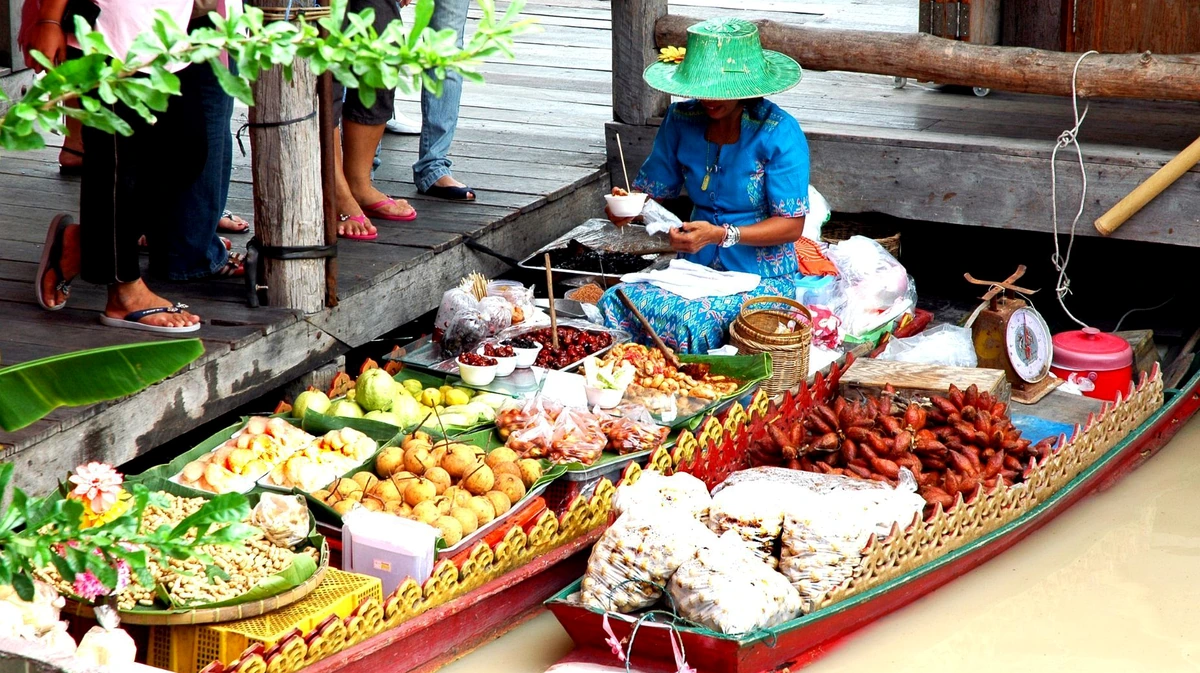
Beyond serving as an architectural monument to riverine life, Pattaya Floating Market has long established itself as a living museum of Thailand’s grassroots culinary culture. Amidst the web of canals, where the rhythmic splash of paddles mingles with the sizzle of glowing cast-iron woks, embarking on a food tour here delivers a complete sensory journey connecting the present day with the historical depth and rustic flavors of all four Thai regions. Every dish handed to visitors from small wooden sampans carries generations-old family recipes alongside the indigenous philosophy of balancing yin and yang.
Topping the culinary map at the floating market is boat noodles, a gastronomic masterpiece with deep roots tracing back to the glorious Ayutthaya period. During an era when merchant vessels crowded the Chao Phraya River, lone vendors had to paddle their boats single-handedly, prompting them to devise a rich, concentrated broth served in small bowls so it wouldn’t spill over the waves. The secret behind its legendary flavor lies in a pork or beef bone broth simmered for hours over glowing embers with a complex bouquet of herbs, including cinnamon, star anise, galangal, and fresh lemongrass. Its crowning touch is a splash of fresh pork or beef blood stirred in near the end of cooking, giving the broth an irresistible velvety richness and deep aroma. An authentic bowl of boat noodles comes loaded with springy thin rice noodles, tender sliced beef or pork, snappy handmade meatballs, and local aromatic herbs.
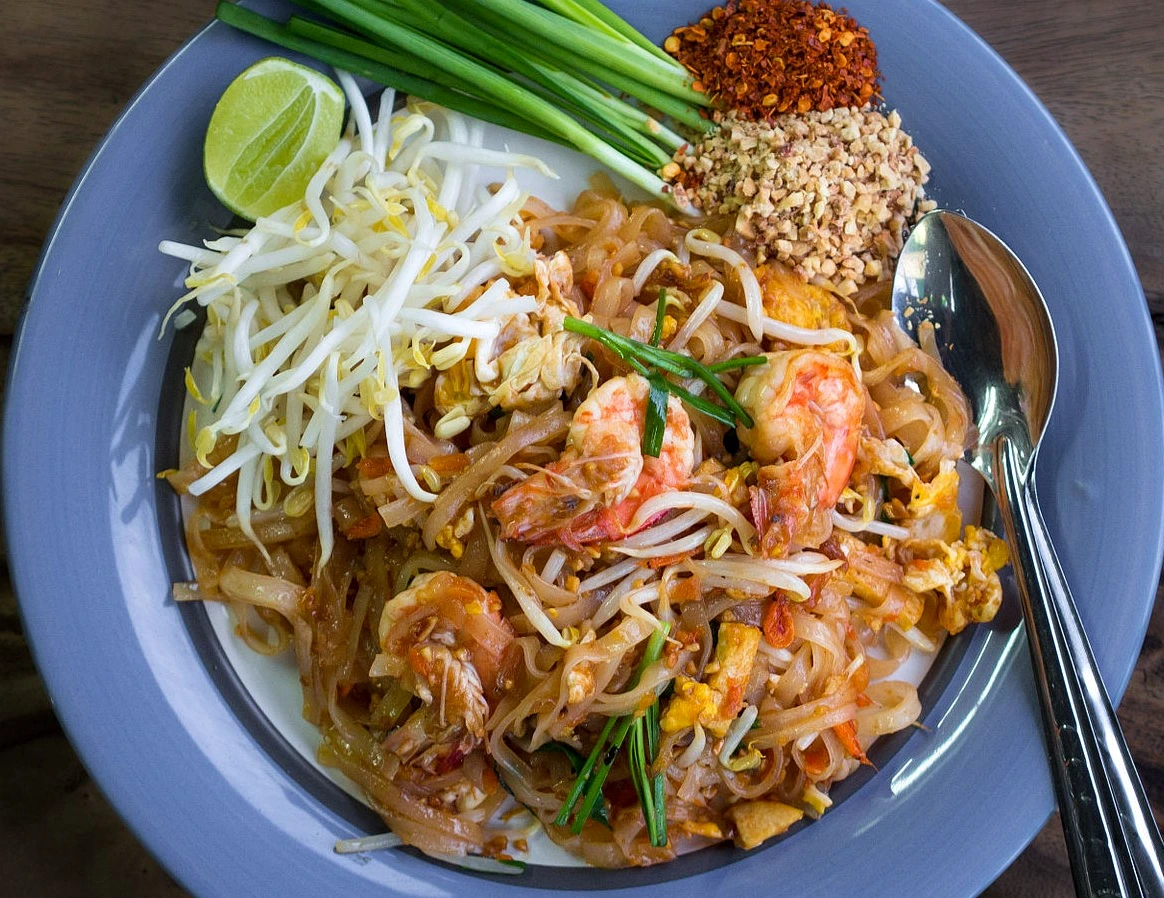
Alongside boat noodles, Pad Thai exemplifies the triumph of everyday street gastronomy through its harmonious balance of four foundational tastes: sour, sweet, salty, and spicy. Starting with flat rice noodles tossed rapidly in a blazing-hot cast-iron wok, the chef folds in plump fresh shrimp, diced firm tofu, garlic chives, and crushed roasted peanuts. The soul of the dish is a naturally tangy tamarind sauce blended to a closely guarded family ratio, coating every glossy strand of noodle to captivate even the most discerning palates. For dessert after such bold savory notes, grilled coconut pancakes (Khanom Krok) are an unmissable treat. This classic confection uses rice flour batter mixed with coconut milk poured into dimpled cast-iron molds and topped with sweet coconut cream; once baked, each bite reveals a crisp, golden-brown shell giving way to a lush, creamy center that melts instantly on the tongue.
Continuing this culinary heritage trail is mango sticky rice (Khao Niew Mamuang), an iconic ambassador of Thai gastronomic refinement. Plump, fragrant long-grain glutinous rice is meticulously steamed with rich coconut milk and paired with slices of sun-ripened, thin-skinned, honey-sweet mango. The interplay between creamy coconut rice and the vibrant sweetness of tropical fruit creates a flawless culinary symphony. Finally, to experience the untamed spirit of northeastern Isan, travelers can sample Khao Lam (bamboo sticky rice). Upland sticky rice mixed with black beans and rich coconut milk is packed tightly into fresh bamboo tubes and slow-roasted over glowing charcoal embers. The sweet aroma of toasted bamboo infuses the nutty, creamy rice, offering a rustic, woodland flavor that preserves cherished ancestral culinary traditions.
Dining at Pattaya Floating Market is never merely about satisfying hunger—it is a multi-sensory cultural dialogue. Sitting beside the gunwale of a wooden boat or strolling across thatch-roofed wooden bridges, savoring heirloom recipes amidst wisps of cooking smoke and fragrant herbs, visitors turn the pages of the living intangible heritage of Thailand—where every dish tells a timeless story of affection and an enduring bond with riverine nature.
To fully immerse yourself in the riverside eco-lifestyle and four-region cultural tapestry at Pattaya Floating Market, knowing its operating schedule and practical insider tips is essential. This riverine architectural complex welcomes visitors daily from 09:00 to 20:00. Although some canal-side stalls begin packing up after 18:30, the floating village stays illuminated with live cultural performances and glowing architectural lighting right until closing time. To maximize both visual and cultural immersion, travelers are advised to opt for combo tickets that bundle general admission with a traditional rowboat or long-tail boat ride, granting effortless access to the market’s quietest, most picturesque water-mirrored corners.
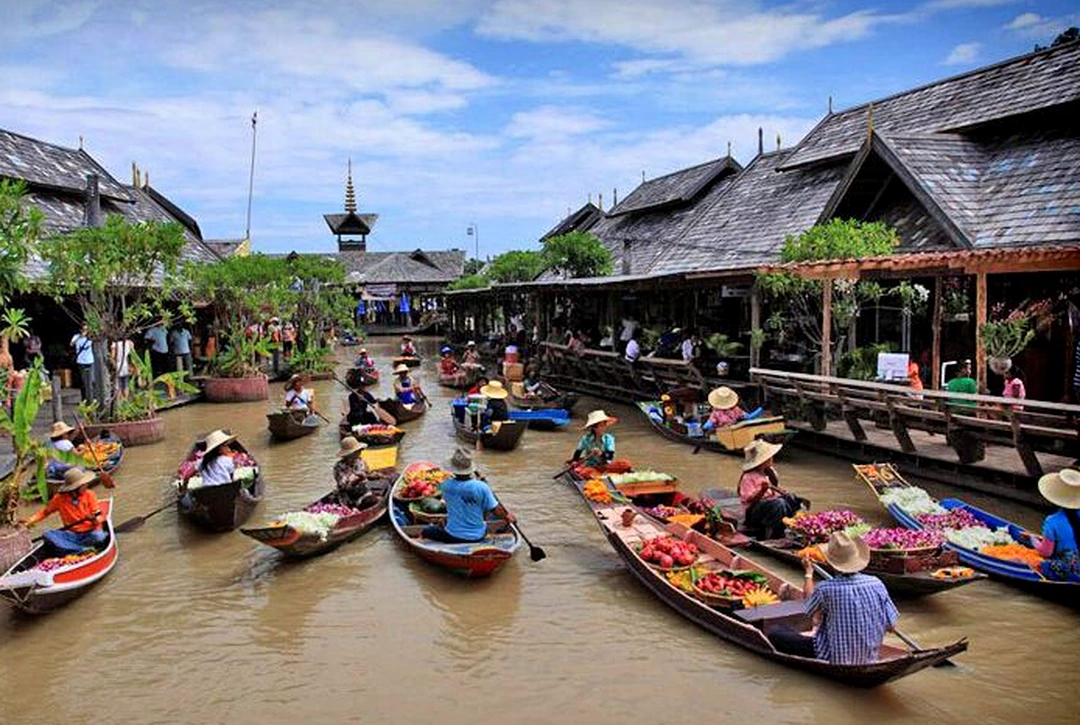
Getting there is straightforward thanks to the market’s prime location right along Sukhumvit Road (Highway 3) in Chonburi Province. Departing from central Bangkok, the drive south takes roughly two hours. For visitors setting out from downtown Pattaya or the lively Walking Street district, the journey takes just 15 to 20 minutes. Travelers can hop aboard a local Songthaew—an iconic Siamese shared pickup truck brimming with local character—or book a ride-hailing vehicle directly to “Pattaya Floating Market,” stepping out right in front of its intricately carved wooden entrance gate.
Timing your visit is an art that dramatically shapes both your photography and overall experience. Arriving between 15:30 and 16:00 is widely considered the sweet spot to begin exploring. By late afternoon, the sun softens into a golden glow that highlights the intricate teakwood roof carvings without oppressive heat. Between 17:30 and 19:30, the waterways undergo a magical metamorphosis as sunset gives way to glowing lanterns shimmering across the twilight surface. The ideal touring strategy is to start with a boat ride to take in a panoramic sweep of all four cultural zones, followed by a leisurely stroll through the labyrinth of wooden bridges to explore hidden food stalls and artisan workshops up close.
Choosing the right attire and footwear is an important detail when navigating an aquatic eco-complex. Movement relies primarily on a network of wooden bridges, planked boardwalks, and floating pontoons that sway gently on the water. Flat shoes with high-traction, non-slip rubber soles are a must to ensure steady footing when stepping between piers and boats. The tropical coastal climate calls for lightweight, breathable clothing, sunscreen, a wide-brimmed hat, and especially high-efficacy mosquito repellent to stay comfortable during evening strolls by the water.
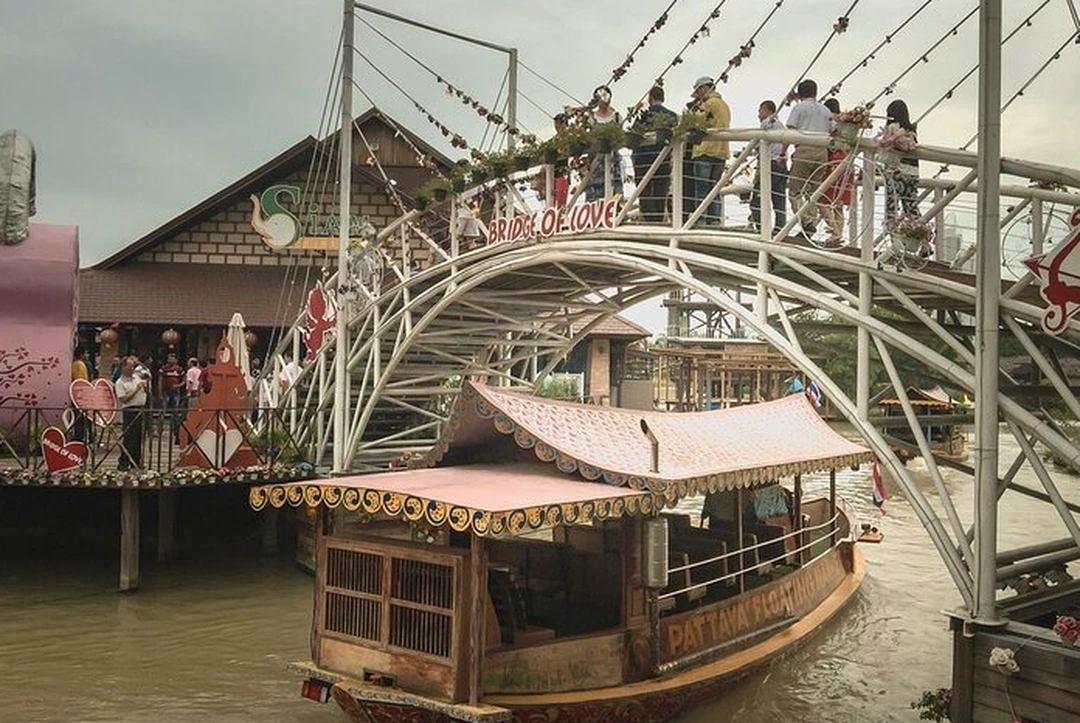
When it comes to spending and payments, the market seamlessly bridges modern convenience and traditional commerce. While many larger shops accept QR code payments via PromptPay, Alipay, or WeChat Pay, visitors are strongly encouraged to carry around 500 to 1,000 Baht in small-denomination cash. Cash is indispensable for quick street-food purchases directly from roving vendor boats and for offering warm, appreciative tips (around 20 to 50 Baht) to the hardworking boat rowers who quietly keep Siamese river culture alive. For travelers seeking a seamless, worry-free cultural excursion, booking all-inclusive Thailand tour packages optimizes the entire journey—from private transfers and admission tickets to insightful commentary from knowledgeable local guides.